THE MALACCA DILEMMA: MATHEMATICAL MODELING OF CHOKEPOINT COLLAPSE
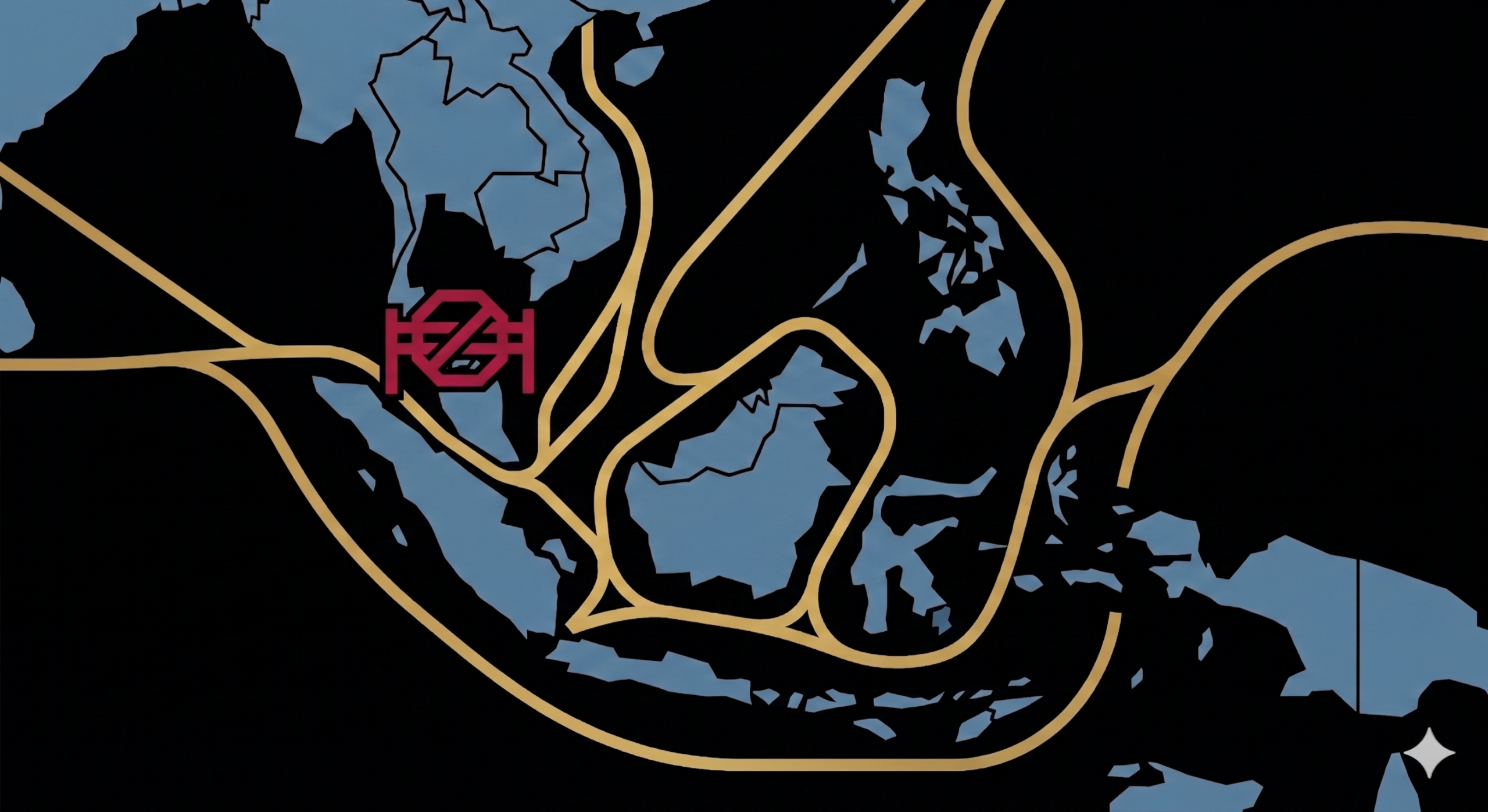
The Malacca Dilemma defines the extreme strategic vulnerability of the 550-mile maritime corridor between Malaysia and Indonesia that processes forty percent of global physical trade.
AT A GLANCE
- Massive Volume: Over 90,000 commercial vessels transit the strait annually.
- Energy Dependency: Roughly 80% of China’s crude oil imports funnel directly through this single channel.
- The Chokepoint: At its narrowest point, the Philips Channel measures exactly 1.7 miles wide.
- Economic Friction: A total blockade costs the global economy an estimated $200 million per hour in stranded capital and disrupted supply chains.
HOW IT WORKS (The Mechanism)
Ships move goods from Asian factories to Western buyers. They take the shortest path. That path is a narrow water pipe called the Strait of Malacca. It acts as the primary artery connecting the Indian and Pacific Oceans.
If a hostile entity plugs the pipe, the ships must detour. They travel thousands of miles south around Indonesia. They route through the Lombok or Sunda straits. The math gets brutal fast. Ships burn more fuel. Schedules break. Ports clog up waiting for delayed fleets.
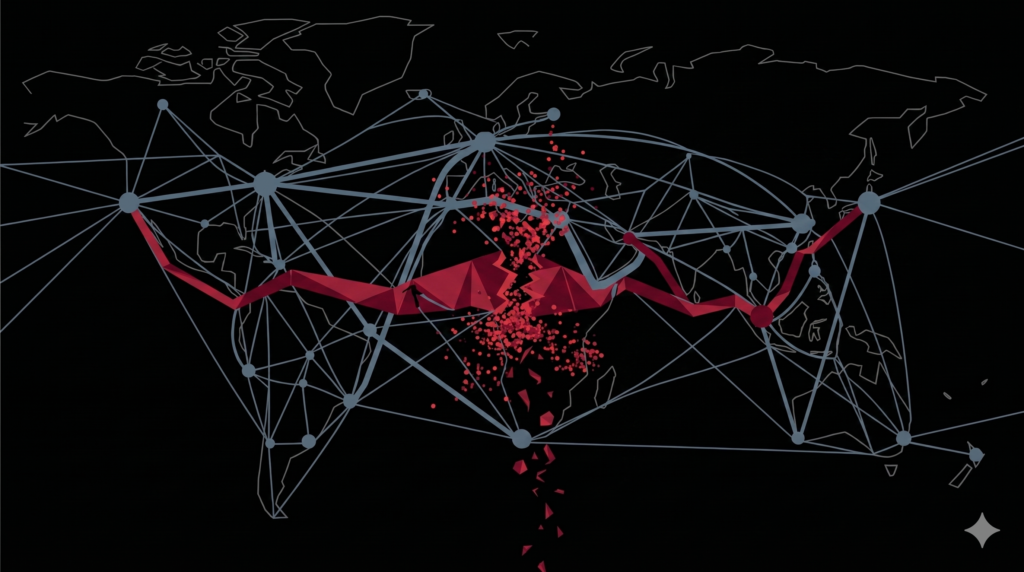
The delay cascades mathematically. One late ship delays the offloading cranes. The idle cranes delay the rail lines. The idle rail lines starve the factories. The system cannot absorb the shock.
WHY IT MATTERS NOW (The Human Impact)
A 48-hour closure immediately fractures the modern economy. War-risk insurance premiums spike across the board. Energy markets panic. When a Very Large Crude Carrier (VLCC) diverts through the Lombok Strait, it adds three days to the voyage and burns an extra $150,000 in bunker fuel. That cost passes directly to the consumer. Gas prices surge globally. Automotive factories in Germany halt production entirely because microcontrollers from Taiwan sit idle on the water. Supply chain executives face mathematically impossible logistical choices.
WHAT MOST PEOPLE MISS
Most analysts treat a blockade as a binary naval operation. It is actually a kinetic traffic jam. You do not need a carrier strike group to close the strait. A single, deliberately sunken mega-freighter in the 1.7-mile Philips Channel achieves the exact same result. The immediate threat is not state-on-state kinetic warfare. It is asymmetric sabotage. A localized cyberattack on Singapore’s port management software could induce a backlog large enough to artificially close the strait without a single shot fired.
THE TRAJECTORY (What Happens Next)
Over the next 36 months, China will aggressively accelerate the construction of overland oil pipelines through Myanmar and rail networks via the Belt and Road Initiative. The strategic goal remains absolute: engineer a physical land bypass to neutralize Western naval leverage over their energy supply.
KEY TERMS
- Malaccamax: The absolute maximum size of a vessel capable of passing through the strait due to depth constraints.
- VLCC (Very Large Crude Carrier): Massive oil tankers that transport up to two million barrels of crude in a single voyage.
- Chokepoint: A narrow geographic feature that forces dense traffic into a highly vulnerable single file line.
- War Risk Premium: An additional insurance cost levied on vessels entering designated high-conflict maritime zones.
- Bunker Fuel: The heavy, highly viscous oil burned by commercial shipping engines.
SOURCES
- U.S. Energy Information Administration (EIA) – “World Oil Transit Chokepoints” (2024).
- Center for Strategic and International Studies (CSIS) – “China’s Maritime Vulnerabilities and the Malacca Dilemma” (2025).
- Lloyd’s List Intelligence – “Global Maritime Traffic and Blockade Modeling” (2026).
- United Nations Conference on Trade and Development (UNCTAD) – “Review of Maritime Transport” (2025).
RELATED TOPICS
Key facts
Related briefs
Add more posts in this category to power stronger internal discovery.