Advertisement
)
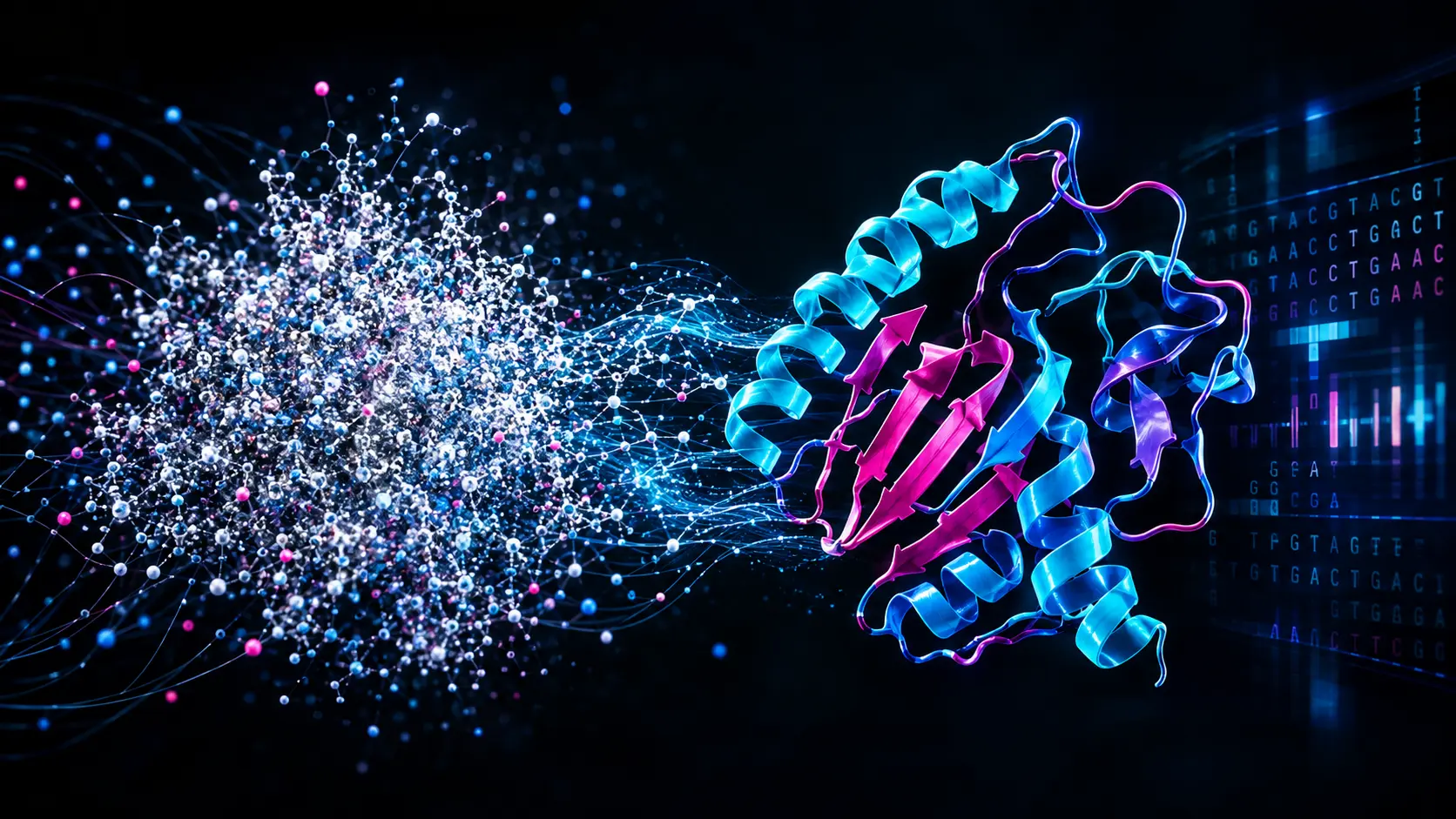

In 2020, mapping the physical shape of a single, naturally occurring protein was considered the holy grail of biology. Today, that achievement is functionally obsolete. Artificial intelligence is no longer just reading biology’s ancient instruction manual; it is writing a completely new one.
Why should you care right now? Because biotechnology companies are using generative AI to “hallucinate” microscopic biological machines that have never existed on Earth. If we want a molecular machine that hunts a specific cancer cell, or an enzyme that digests ocean plastic in days instead of centuries, we no longer have to hope nature evolved one by accident. We simply prompt an AI to design the exact 3D geometric blueprint from scratch. This leap from predicting nature to inventing synthetic biology is poised to compress the billion-dollar drug discovery timeline from years down to weeks, disrupting the foundation of the global pharmaceutical industry.
What is De Novo Protein Design?
De Novo protein design is an advanced biotechnology process that uses artificial intelligence to create entirely new, synthetic proteins from scratch. By leveraging generative diffusion models, scientists can computationally “hallucinate” exact 3D molecular structures and amino acid sequences designed to execute specific medical or industrial tasks that do not exist in nature.
At a Glance
- Concept: Using AI (similar to DALL-E or Midjourney) to generate functional 3D biological molecules instead of 2D images.
- Why it matters: Nature’s proteins evolved to solve nature’s problems. De Novo design creates custom proteins to solve modern human problems, like neutralizing synthetic toxins or attacking novel viruses.
- Who uses it: Vanguard academic hubs (Institute for Protein Design), AI-first biotechs (Generate:Biomedicines, Cradle), and legacy pharma giants.
- Biggest takeaway: AlphaFold was a massive breakthrough, but it only predicted the shapes of proteins that already existed. De Novo models like RFdiffusion invent shapes that have never existed, unlocking infinite biological capabilities.
In Simple Words
Proteins are the microscopic machines that do everything in your body—they digest food, fight viruses, and carry oxygen. They are built out of Lego blocks called amino acids.
For the last 50 years, drug discovery was like rummaging through a giant bin of pre-assembled Lego spaceships (natural proteins) trying to find one that happened to fit into a specific Lego asteroid (a disease). You had to test millions of them, and it usually took 10 years and $2 billion to find a match.
De Novo Protein Design completely flips this process. Instead of searching the bin, scientists show an AI the asteroid. The AI looks at the asteroid’s exact shape and 3D-prints a custom Lego spaceship designed to lock into it perfectly. We stop searching for drugs and start engineering them from scratch.
Why This Matters
For Geneticists, Biotech VCs, and Pharma Researchers, De Novo design solves the Inverse Folding Problem.
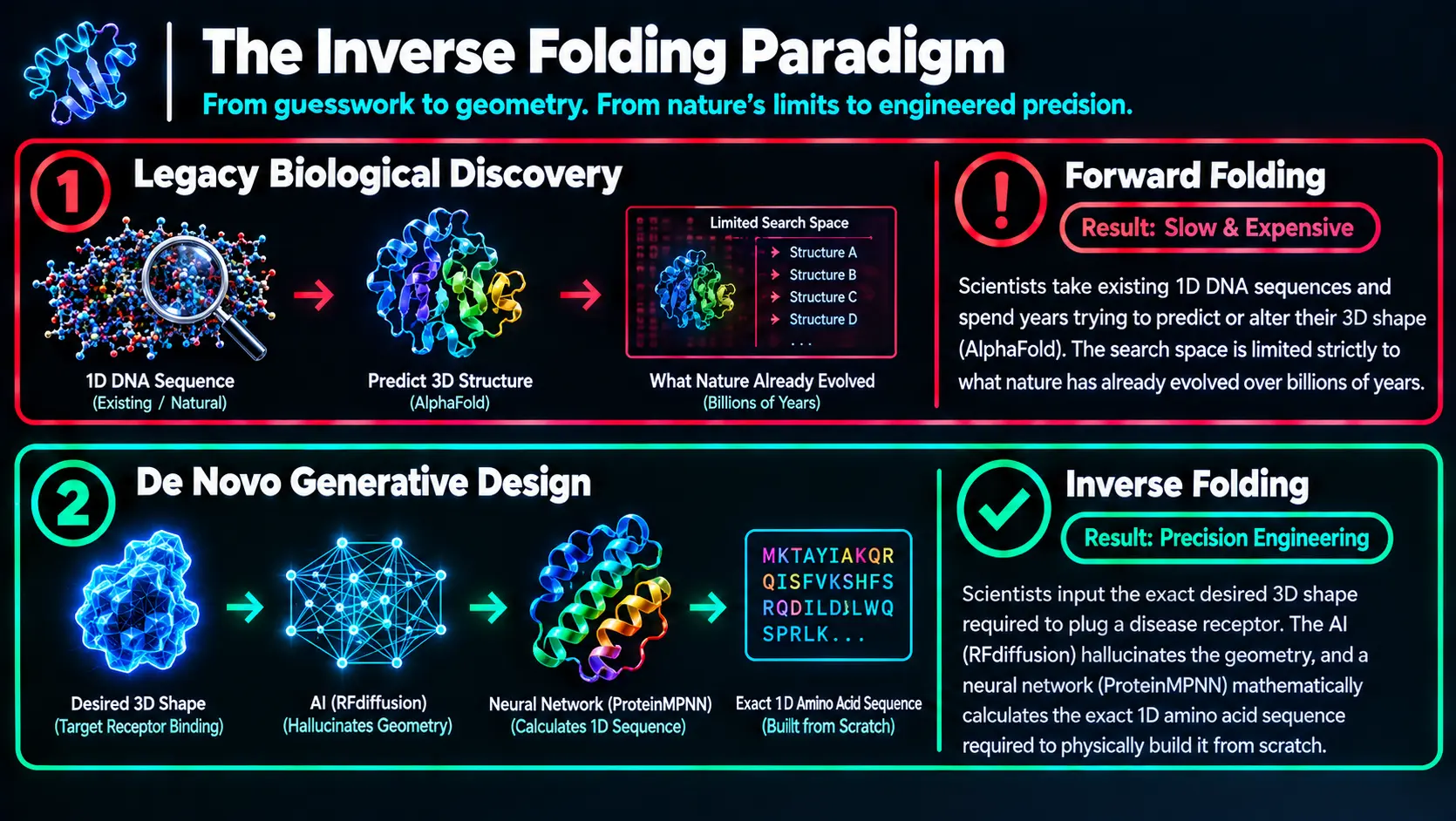
Traditionally, biology moves in one direction: you take a sequence of DNA, translate it into a string of amino acids (1D), and physical laws cause that string to crumple up into a specific 3D shape. Predicting what shape a string will take is the “folding problem” (which AlphaFold solved).
But to cure a disease, a pharmaceutical engineer needs to work backward. They know the 3D shape of the cancer receptor they want to block. They need to figure out what 1D string of amino acids will fold into a shape that perfectly plugs that receptor. This “inverse folding problem” is mathematically brutal because thousands of different amino acid sequences could theoretically fold into the same shape.
By solving this backward math, generative AI allows pharmaceutical companies to design bespoke therapeutics with sub-angstrom precision, drastically increasing the success rate of pre-clinical drug trials and slashing billions in wasted R&D capital.
The Shift to Biological Engineering
We are witnessing the transition from Biological Discovery to Biological Engineering.
We do not “discover” new airplanes by digging through the dirt; we engineer them using physics and mathematics to perform a specific function. Biology is finally adopting this engineering paradigm.
By abstracting the complexity of molecular folding into predictable, software-driven APIs, we are moving biology away from a slow, artisanal laboratory science and turning it into a predictable, deterministic manufacturing industry.
How De Novo Protein Design Solves Inverse Folding
Creating an alien protein inside a computer and ensuring it functions in the physical world requires a flawless orchestration of thermodynamics and machine learning. Here is the first-principles breakdown of the architecture.
1. The Fundamental Problem: Infinite Chemical Space
Biology’s alphabet consists of 20 naturally occurring amino acids. A typical protein is a string of 100 to 300 of these amino acids. The number of possible ways to arrange them is greater than the number of atoms in the observable universe. Human scientists cannot randomly guess sequences and hope they fold into a stable shape; they need a deterministic map.
2. The Core Mechanism: Denoising Diffusion Probabilistic Models
To generate the 3D shape, scientists use diffusion models (specifically RFdiffusion). This is the exact same AI architecture that powers image generators like Midjourney.
The AI starts with a “cloud” of random, chaotic 3D atomic coordinates (pure noise). Step-by-step, the neural network removes the noise, pulling the atoms together until they form a stable, physically viable 3D protein backbone—often featuring perfect alpha-helices and beta-sheets. This process is called “hallucination.”
Plain-English Takeaway: Just as an AI image generator starts with TV static and slowly resolves it into a picture of a cat, RFdiffusion starts with a chaotic cloud of atoms and slowly resolves it into a perfect 3D biological machine.
3. Technical Depth: Sequence Generation (ProteinMPNN)
RFdiffusion only creates the 3D shape (the backbone geometry). It does not tell you which amino acids to use to build it.
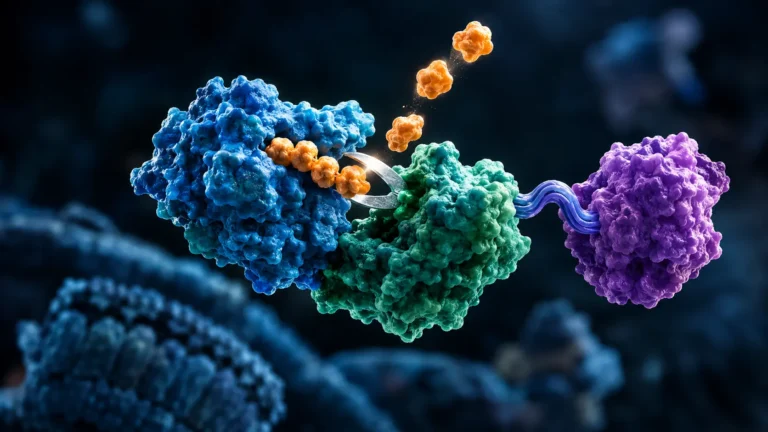
Enter ProteinMPNN, a message-passing neural network. You feed the hallucinated 3D shape into ProteinMPNN, and the AI calculates the exact 1D string of amino acid letters required to force the molecule to fold into that specific 3D shape in the real world.
4. Technical Depth: Functional Motif Scaffolding
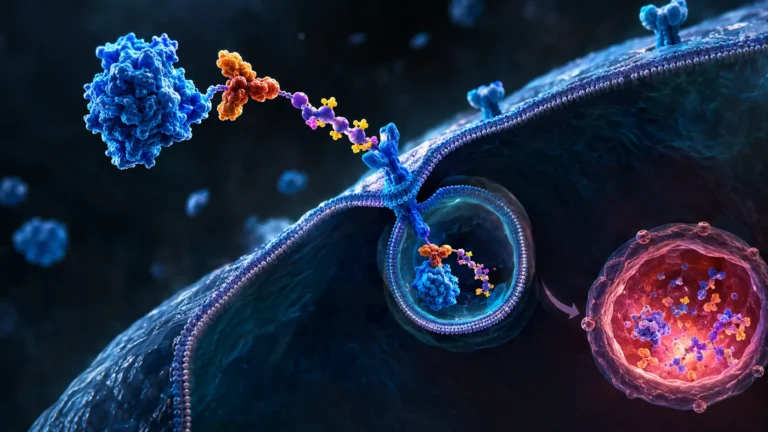
Proteins don’t just need to look pretty; they need to bind to a target (like a virus spike). Scientists take a tiny, known fragment of a protein that binds to the virus (the motif) and freeze it in 3D space. They then ask the diffusion model to “scaffold” an entirely new protein structure around that tiny fragment. The AI hallucinates a stable protein body that acts as a perfect delivery vehicle for the binding fragment.
5. Real-World Consequences: Wet Lab Synthesis
The AI outputs a string of letters (e.g., A-C-G-E-F). Scientists take this digital text file and send it to a DNA synthesizer. The machine prints the physical DNA code. That DNA is inserted into yeast or E. coli bacteria. The bacteria act as microscopic factories, reading the artificial DNA and physically printing the hallucinated protein. When tested in a petri dish, these “alien” proteins fold exactly as the AI predicted and bind to their targets with devastating accuracy.
De Novo Protein Pipeline Simulator
Generative Geometric Hallucination & Inverse Folding Optimization
RFdiffusion Generator
0%
Design Target Objective
Oncology Binder
PET Plastic Enzyme
Geometric Stability
0.0%
Sequence Translation
IDLE
Target Binding Affinity
0.0%
Diffusion Output: 3D Macromolecular Scaffold
CHAOS / UNSTABLE
ProteinMPNN: Inverse Folding & Binding Affinity
Clinical Applications of Synthetic Proteins
De Novo design is rapidly moving from digital simulation to physical clinical trials.
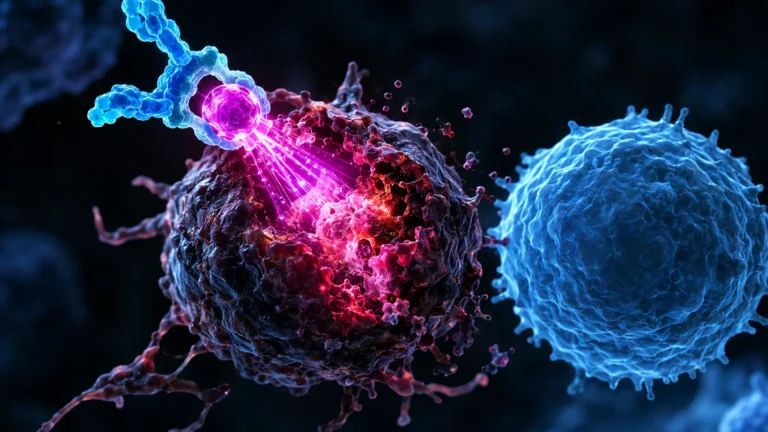
Targeted Cancer Therapeutics (Binders): Traditional antibodies (like those used in immunotherapy) are massive, unwieldy molecules that struggle to penetrate deep into dense solid tumors. Using RFdiffusion, scientists are hallucinating "minibinders"—synthetic proteins that are a fraction of the size of an antibody but grip cancer receptors with identical or superior strength. Because they are tiny, they diffuse deeply into the tumor microenvironment, delivering toxic payloads precisely where they are needed.
Plastic-Degrading Enzymes: Natural enzymes exist that can slowly break down PET plastics, but they take months and only work at specific temperatures. AI is being used to hallucinate novel enzymes with vastly optimized catalytic sites. These synthetic enzymes can withstand the extreme heat of industrial recycling plants and digest plastic waste into raw chemical components in a matter of hours, unlocking true circular recycling economies.
Universal Vaccine Scaffolds: Viruses mutate rapidly (e.g., Influenza, SARS-CoV-2), escaping traditional vaccines. De Novo design allows scientists to identify the exact, tiny, non-mutating core of the virus. They then hallucinate a synthetic geometric scaffold that holds 60 copies of that specific viral core in a perfect sphere. When injected, this highly structured synthetic nanoparticle trains the immune system to recognize the immutable core, potentially creating "universal" vaccines that never require seasonal updates.
Economic & Strategic Impact
The core strategic consequence of De Novo design is the Collapse of the $2 Billion R&D Monopoly.
Historically, developing a novel biologic drug required massive laboratories, thousands of mice, and endless trial-and-error screening by pharmaceutical giants like Pfizer or Merck. It cost over $2 billion to bring a drug to market, creating a massive barrier to entry.
Generative biology democratizes this process. A lean startup of ten computational biologists can use AWS compute clusters to hallucinate, filter, and validate thousands of highly viable drug candidates in a weekend. By moving the highest-failure phase of drug discovery out of the physical wet lab and into the digital cloud, the capital expenditure required to identify a cure plummets. This is shifting market power away from legacy pharmaceutical manufacturers and toward agile, AI-native biotech startups.
Advantages
- Unprecedented Precision: Synthetic proteins are designed with sub-angstrom accuracy to bind exactly to their target, drastically reducing off-target side effects (toxicity) in patients.
- Extreme Stability: Natural proteins often unfold or denature when heated. AI can explicitly hallucinate proteins optimized for extreme thermodynamic stability, meaning drugs may no longer require expensive cold-chain refrigeration for global transport.
- Speed to Iteration: If a virus mutates, an AI can ingest the new viral structure and hallucinate a counter-measure binder in a matter of hours.
Limitations
- The Immunogenicity Threat: The human immune system is designed to attack foreign proteins. Because De Novo proteins are "alien" and have never existed in nature, there is a severe risk that the patient's body will mount a massive, potentially lethal immune response against the synthetic drug.
- The "Valley of Death" in Manufacturing: An AI can design a brilliant protein, but instructing a vat of genetically modified yeast to mass-produce it at an industrial scale without the protein misfolding or clumping together is a brutal bioengineering challenge.
- Dynamic Flexibility Blindspot: Diffusion models are currently great at designing static protein shapes. But real proteins jiggle, breathe, and change shape when they interact with other molecules. Simulating this dynamic flexibility in a generative model requires astronomical compute power.
Takeaway: The AI has mastered the architecture, but biology is squishy. A perfect 3D model on a screen is useless if it clumps into toxic sludge when injected into a human vein. The bridge between digital perfection and physical reality is still fraught with friction.
Common Misconceptions
Misconception: AlphaFold and RFdiffusion do the same thing.
Reality: They do the exact opposite. AlphaFold takes an existing sequence and predicts its 3D shape (Prediction). RFdiffusion hallucinates a brand new 3D shape, and ProteinMPNN generates the sequence to build it (Creation).
Misconception: These are just computer simulations, not real drugs.
Reality: They are highly physical. The AI generates the blueprint, but biotech companies physically print the DNA, synthesize the protein in wet labs, and are actively testing these synthetic molecules in live animal models and early-stage human clinical trials today.
Misconception: De Novo design will instantly cure all diseases.
Reality: Identifying a protein that binds to a cancer cell is only 10% of the battle. The drug still has to survive the human digestive tract, avoid the liver, penetrate the blood-brain barrier, and prove it doesn't cause systemic toxicity—processes that still require years of human clinical trials.
What Most People Miss
The disruptive capability of Open-Source Bioweapon Democratization.
When analysts discuss generative biology, they focus on the cures. What they miss is the dual-use security threat.
The exact same AI models used to hallucinate a protein that binds to cancer can be used to hallucinate a protein that binds perfectly to the human nervous system, creating ultra-lethal, novel toxins that evade all known countermeasures. Because the weights for models like RFdiffusion are heavily open-sourced and accessible on GitHub, the barrier to designing bespoke biological agents is plummeting. The national security apparatus is currently racing to establish "DNA synthesis screening" firewalls to prevent bad actors from physically printing the digital toxins they hallucinate.
Comparison Table
| Metric | Directed Evolution (Legacy Biotech) | De Novo Protein Design (Generative AI) |
| Starting Point | Existing natural protein | Chaotic atomic noise (From Scratch) |
| Design Methodology | Random mutation & selection | Deterministic geometric hallucination |
| Search Space | Limited by evolutionary history | Mathematically infinite |
| Development Speed | Months to Years | Hours to Days |
| Target Affinity | Limited by natural structural physics | Custom-scaffolded for perfect lock-and-key fit |
Future Outlook
Next 12–24 Months
The era of Phase I Clinical Validations. Through 2026, the industry is holding its breath as the first wave of purely AI-hallucinated therapeutics enters human clinical trials. The sole focus is validating the immunogenicity barrier. If these alien proteins prove safe and do not trigger systemic immune rejection in human patients, the floodgates of venture capital will fully open.
Next 3–5 Years
The scaling of Allosteric and Dynamic Enzymes. Currently, De Novo design focuses heavily on "binders" (proteins that just stick to things). By 2029, models will scale to design complex, dynamic enzymes—proteins that stick to a toxin, chemically slice it in half, release it, and move to the next target. This will unlock multi-billion dollar markets in targeted carbon capture and forever-chemical (PFAS) degradation.
Next 10 Years
The Personalized Medicine Compilers. By the mid-2030s, the drug discovery pipeline will be fully inverted. A patient will have their tumor biopsied and sequenced. A generative AI will ingest the unique topology of that specific tumor, hallucinate a bespoke protein designed to kill only that tumor, and send the code to an automated desktop bioreactor in the hospital. The patient will be injected with a completely novel, custom-printed cure within 72 hours of diagnosis.
Most Likely Scenario
De Novo protein design is the most profound technological leap in the history of the life sciences. By escaping the confines of evolutionary biology and leveraging generative diffusion architectures, humanity is acquiring the capability to engineer the physical world at the atomic level. While wet-lab manufacturing and regulatory hurdles will dictate the pace of commercialization, the ability to mathematically dictate biological function guarantees the imminent obsolescence of legacy drug discovery.
Key Takeaways
- AlphaFold predicted the shapes of proteins that already exist in nature. De Novo design uses generative AI to invent entirely new, "alien" proteins from scratch.
- The process uses Diffusion models (like RFdiffusion) to hallucinate a stable 3D geometric shape, acting similarly to how AI image generators create pictures from static noise.
- Once the 3D shape is generated, a neural network (ProteinMPNN) solves the "inverse folding problem" by calculating the exact 1D string of amino acids needed to build it in real life.
- These synthetic proteins are being used to create hyper-targeted cancer therapies, universal vaccines, and industrial enzymes that digest plastics.
- The primary risk is immunogenicity: the human body might recognize these synthetic proteins as foreign invaders and trigger a dangerous immune response, a hurdle currently being tested in clinical trials.
Glossary
Amino Acids: The 20 fundamental chemical building blocks that string together to form all proteins in biology.
De Novo: Latin for "from the beginning" or "anew." In biology, it refers to designing a molecule entirely from scratch rather than modifying an existing natural template.
Diffusion Model: An AI architecture that generates complex data (like images or 3D protein structures) by starting with random noise and iteratively refining it into a stable structure.
Immunogenicity: The likelihood that a foreign substance (like a synthetic protein) will provoke an immune response in the human body.
Inverse Folding Problem: The mathematical challenge of calculating which 1D sequence of amino acids will successfully fold into a specific, desired 3D shape.
Motif Scaffolding: A technique where an AI is given a tiny, highly functional piece of a protein (the motif) and asked to hallucinate a larger, stable protein structure around it to deliver it safely.
Sources
Nature: De novo design of protein structure and function with RFdiffusion
Institute for Protein Design (University of Washington): Generative AI and the Future of Synthetic Biology
Science: Robust deep learning–based protein sequence design using ProteinMPNN
Generate:Biomedicines: The Chroma Model: Programming Biology with Generative AI
MIT Technology Review: How AI is hallucinating new drugs and enzymes