Advertisement
)

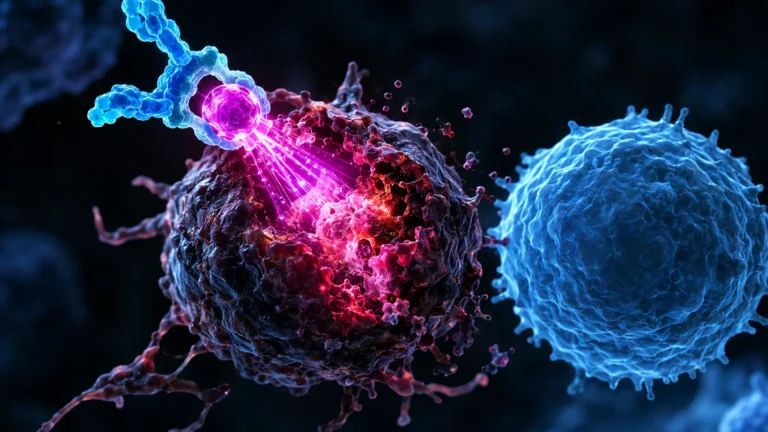
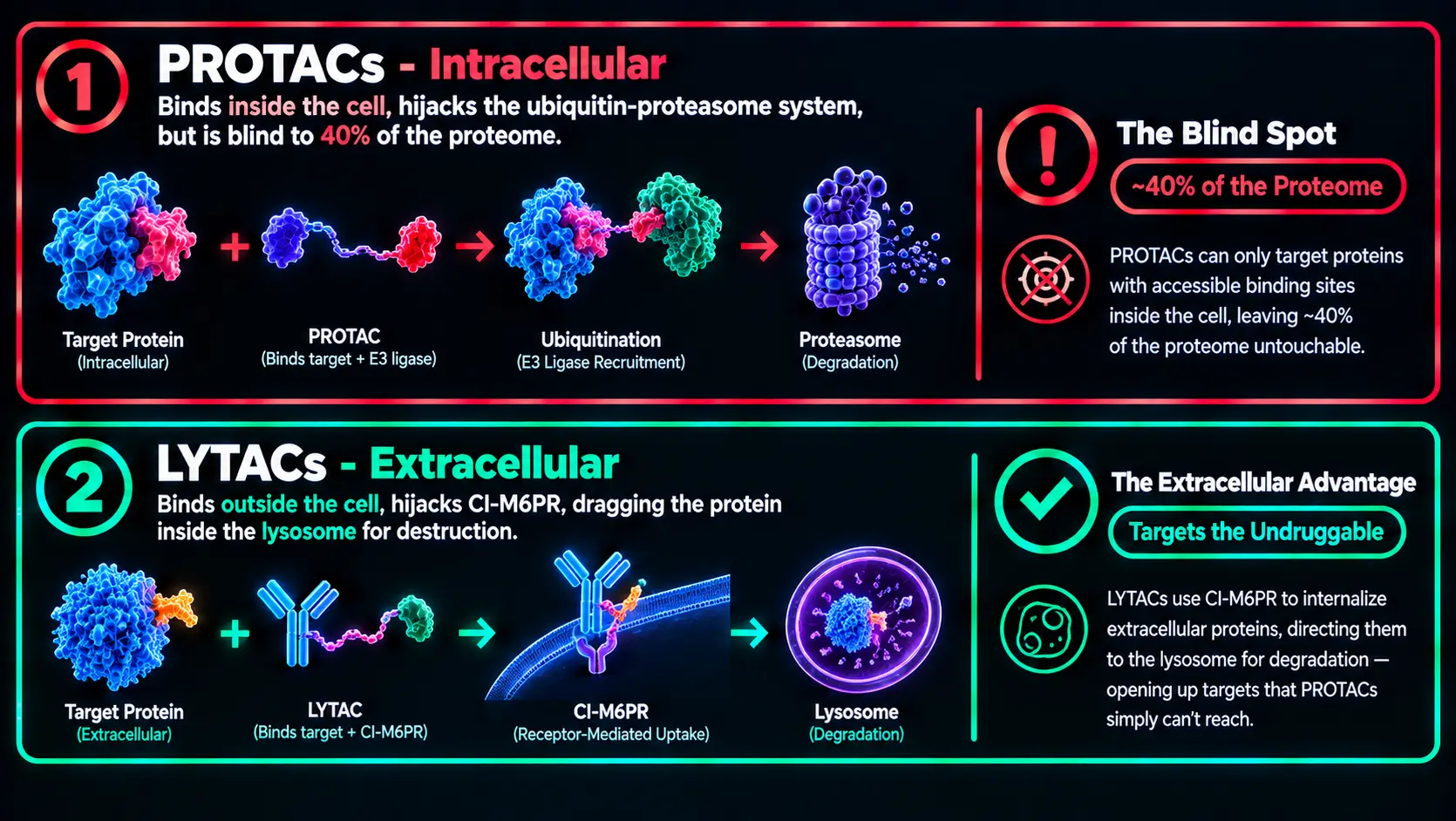
In the last decade, the pharmaceutical industry achieved a miracle by inventing drugs that act like microscopic assassins, hunting and shredding disease-causing proteins inside human cells. But there is a massive, fatal blind spot in this revolution. These molecular assassins—known as PROTACs—are strictly locked indoors. They cannot survive or operate outside the cell membrane. This means 40% of the human proteome, including the critical proteins floating in our bloodstream that drive Alzheimer’s, autoimmune diseases, and aggressive cancers, are completely immune to them.
Why should you care right now? Because researchers just breached the cell wall. They have engineered a new class of molecular machines called Lysosome-Targeting Chimeras (LYTACs). Instead of trying to simply block a disease protein in the bloodstream, a LYTAC physically grabs it, drags it kicking and screaming inside the cell, and throws it into the cell’s acid-filled incinerator. This breakthrough unlocks the “undruggable” extracellular universe, triggering a multi-billion-dollar race to obliterate the diseases that legacy medicines can only temporarily delay.
What are Lysosome-Targeting Chimeras (LYTACs)?
Lysosome-Targeting Chimeras (LYTACs) are engineered, dual-action therapeutic molecules designed to destroy disease-causing proteins located outside of human cells. One end of the LYTAC binds to the target extracellular protein, while the other end binds to a cell-surface receptor, dragging the entire complex inside the cell’s lysosome for permanent acidic degradation.
At a Glance
- Concept: A bi-functional molecule that acts like handcuffs, attaching a rogue protein in the blood to a cell’s recycling receptor.
- Why it matters: Legacy drugs require high doses to constantly block disease proteins. LYTACs destroy the protein entirely, operating at lower doses with longer-lasting effects.
- Who uses it: Vanguard academic labs (Stanford) and heavily funded biotech spin-outs like Lycia Therapeutics.
- Biggest takeaway: LYTACs are catalytic. After dragging a disease protein into the cellular incinerator, the LYTAC survives, exits the cell, and hunts down the next target, acting like a reusable molecular drone.
In Simple Words
Imagine a city where dangerous criminals are roaming the streets (the bloodstream). Traditional drugs act like traffic cones—they just stand in front of the criminals to block them from entering important buildings. This requires millions of traffic cones, and eventually, the criminals walk around them.
Recently, scientists invented PROTACs, which act like elite SWAT teams. They hunt down criminals and eliminate them perfectly. But there is a catch: PROTAC SWAT teams are physically trapped inside the buildings (inside the cells). They cannot go out onto the streets.
LYTACs are the new police force designed specifically for the streets. A LYTAC is a handcuff. It grabs a criminal roaming the bloodstream with one hand, and grabs the doorknob of a cell with the other. It forces the cell to swallow the criminal whole, dropping them directly into the cell’s internal incinerator (the lysosome). The criminal is destroyed, and the LYTAC goes back out to the street to find the next target.
Why This Matters
For Biotech Investors, Pharma Execs, and Molecular Biologists, this technology solves the Event-Driven Pharmacology Ceiling.
The pharmaceutical industry is aggressively transitioning from “occupancy-driven” drugs (inhibitors) to “event-driven” drugs (degraders). Inhibitors require a perfectly shaped binding pocket on the target protein to work. If the protein is smooth, it is deemed “undruggable.” Furthermore, you have to pump massive doses of the drug into a patient’s bloodstream constantly to ensure every single receptor stays blocked.
Degraders (like PROTACs) changed the math. They don’t need a perfect pocket; they just need to grab the protein anywhere and tag it for destruction. Because they are reusable (catalytic), you need vastly lower doses, which limits toxic side effects.
But PROTACs hit a hard ceiling: they only work on the 60% of proteins located inside the cell. The remaining 40%—which includes the circulating antibodies causing lupus, the amyloid plaques driving Alzheimer’s, and the surface receptors shielding tumors—were left behind. LYTACs shatter this ceiling. They apply the lucrative economics of targeted degradation to the extracellular space, doubling the total addressable market of the degradation field overnight.
Micro-Insight: The value of a LYTAC is not just what it destroys, but what it recycles. It co-opts the human body’s existing waste management system, turning our own cell membranes into active drug-delivery engines.
The Mechanization of Synthetic Biology via LYTACs
We are witnessing the Mechanization of Synthetic Biology.
For the past 40 years, biotechnology relied on finding natural molecules (like penicillin) or designing passive blockers (like statins). Today, we are engineering microscopic machines with distinct, moving parts that perform multi-step physical tasks across biological barriers. By modularizing these functions—a hook for the target, a chemical leash, and a key for the cellular door—we are abstracting biology into predictable, programmable hardware.
How Lysosome-Targeting Chimeras Exploit CI-M6PR
Bridging the gap between the extracellular bloodstream and the intracellular incinerator requires exploiting a highly specific recycling pathway. Here is the first-principles breakdown of the architecture.
1. The Fundamental Problem: The Ubiquitin Blind Spot
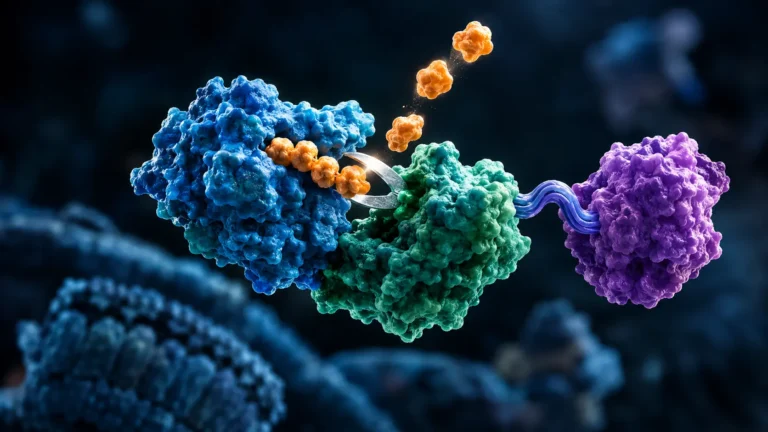
PROTACs work by hijacking the Ubiquitin-Proteasome System (UPS). The UPS is the cell’s internal woodchipper. It only exists inside the cytoplasm of the cell. If a cancer-causing protein is stuck to the outside of the cell membrane, the UPS cannot reach it. The entire PROTAC mechanism is completely blind to the outside world.
2. The Core Mechanism: The Lysosome
To destroy things outside the cell, scientists looked to the Lysosome. The lysosome is the cell’s stomach—a highly acidic membrane-bound organelle filled with enzymes that dissolve complex molecules. Cells constantly “swallow” material from their exterior (a process called endocytosis) and route it to the lysosome for digestion.
3. Technical Depth: The CI-M6PR Hijack
How do you force the cell to swallow a specific disease protein? You hijack a receptor.
The most common target for LYTACs is the Cation-Independent Mannose-6-Phosphate Receptor (CI-M6PR). This receptor sits on the outer surface of the cell membrane. Its natural job is to grab stray enzymes floating in the blood that have a specific sugar tag (Mannose-6-Phosphate) and pull them into the lysosome.
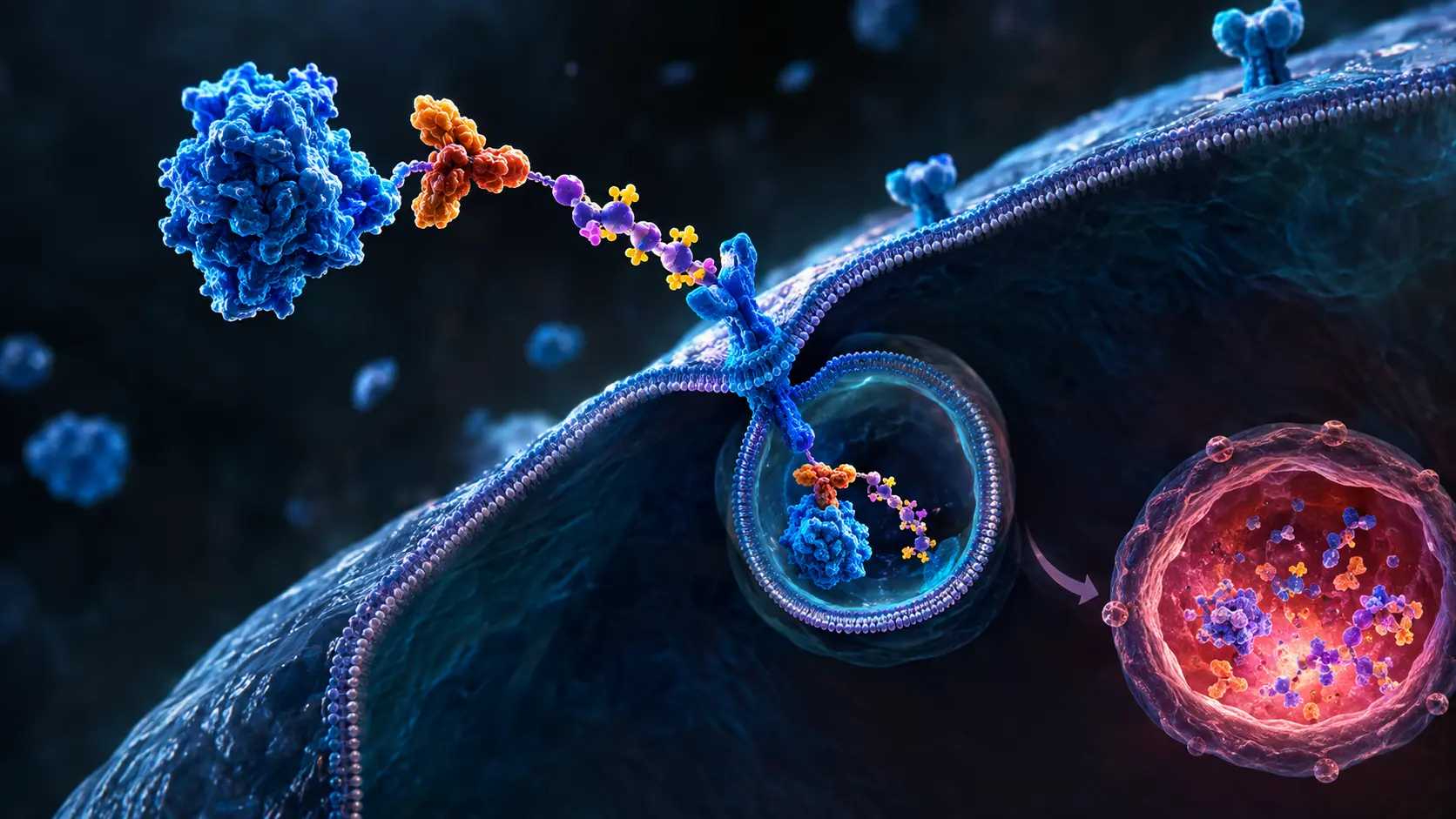
A LYTAC is a chemical chimera. One end is an antibody that tightly binds to the disease protein. The other end is a synthetic polymer covered in Mannose-6-Phosphate (M6P) sugar tags.
4. Technical Depth: Endosomal Trafficking
When the LYTAC binds to the disease protein in the blood, its sugar tags simultaneously bind to the CI-M6PR on the cell surface. The cell’s membrane instantly folds inward (invagination), swallowing the entire complex into a transport bubble called an endosome. As the endosome travels deeper into the cell, its internal environment becomes highly acidic.
5. Real-World Consequences: Catalytic Release
The brilliant physics of the CI-M6PR receptor is that it reacts to acid. When the transport bubble becomes acidic, the receptor physically changes shape, dropping the LYTAC and the disease protein into the lysosome to be shredded. The CI-M6PR receptor then hops on a transport bubble back to the cell surface to be used again. This means a single LYTAC pathway can continuously shovel toxic proteins out of the bloodstream indefinitely.
LYTAC vs. Inhibitor Clearance Simulator
Extracellular Protein Degradation via Endosomal-Lysosomal Hijacking
Drug Dosage Level
Low (30%)
Therapeutic Mechanism
Antibody (Inhibitor)
LYTAC (Degrader)
Active Disease Proteins
100.0%
Pharmacology Type
Occupancy-Driven
Lysosome Activity
Idle (0 Destroyed)
Extracellular Bloodstream & Intracellular Cytoplasm
AWAITING INJECTION
Disease Protein Concentration vs. Time
Clinical Applications of Extracellular Protein Degradation
LYTACs are rapidly transitioning from Stanford chemistry labs into pre-clinical therapeutic pipelines.
Degrading Cancer’s Immune Shield (PD-L1): Many cancers survive by displaying a protein called PD-L1 on their outer surface. PD-L1 acts as a “do not eat me” signal, blinding the patient’s immune system. Traditional blockbuster drugs (like Keytruda) merely cover up the PD-L1 signal. Using LYTACs, scientists have successfully grabbed the PD-L1 protein and dragged it off the surface of the cancer cell entirely. Stripped of its shield, the cancer cell is immediately annihilated by the immune system.
Targeting Epidermal Growth Factor Receptor (EGFR): EGFR is a membrane protein that, when mutated, causes aggressive lung and breast cancers by signaling the cell to divide uncontrollably. Legacy inhibitor drugs inevitably fail because the cancer cell mutates the shape of the EGFR, causing the drug to bounce off. A LYTAC does not care if the protein mutates its internal signaling mechanism; as long as the LYTAC can grab the exterior of the EGFR, it will rip the entire receptor off the cell wall, permanently halting the cancer’s division signal.
Clearing Neurodegenerative Aggregates (Apolipoprotein E4): Alzheimer’s disease is heavily driven by the buildup of toxic protein aggregates (like Amyloid-beta and Tau) outside of brain cells. Genetic risk factors like ApoE4 exacerbate this. LYTAC platforms are actively being engineered to bind to these massive, circulating extracellular plaques and force surrounding glial cells to swallow and digest them, potentially reversing plaque accumulation rather than just slowing it.
Economic & Strategic Impact
The core strategic consequence of LYTACs is the Revaluation of “Failed” Antibodies.
Over the last 30 years, pharmaceutical companies have spent hundreds of billions of dollars developing monoclonal antibodies that ultimately failed in clinical trials. Many of these antibodies bound perfectly to their target disease proteins but failed to actually neutralize the disease, rendering them commercially worthless.
LYTACs turn this pharmaceutical graveyard into a goldmine. Because a LYTAC only requires a binder to grab the target (it doesn’t need the binder to neutralize the target, the lysosome does the killing), pharma companies can take their abandoned, failed antibodies, chemically attach a sugar tag to them, and instantly resurrect them as highly potent LYTACs. This allows legacy pharma to bypass years of early-stage drug discovery and immediately monetize their historical patent libraries.
Advantages
- Access to the Extracellular Proteome: Targets the 40% of human proteins that PROTACs cannot reach, including circulating cytokines, growth factors, and massive protein aggregates.
- Event-Driven Pharmacology: Destroys the target completely rather than just blocking it, leading to longer-lasting therapeutic effects.
- Catalytic Efficiency: A single LYTAC molecule can shuttle multiple disease proteins into the lysosome consecutively, allowing for extremely low, safer dosing protocols.
- Agnostic to Protein Function: Unlike traditional drugs, a LYTAC does not need to bind to the “active site” of a protein. It can grab the protein by any exposed edge and still successfully drag it to the lysosome.
Limitations
- The Massive Molecule Problem: LYTACs are structurally enormous. They consist of a large antibody connected to a sprawling, synthetic polymer chain of sugars. This massive size severely limits their ability to penetrate deep into dense, fibrotic solid tumors.
- Zero Oral Bioavailability: Because they are massive biological constructs, they cannot be taken as a pill. The human stomach would instantly digest them. They must be administered via intravenous (IV) infusion.
- Anti-Drug Antibodies (Immunogenicity): The human immune system is highly sensitive to foreign, synthetic polymers floating in the blood. Chronic administration of LYTACs carries a high risk that the patient’s immune system will recognize the drug as an invader and generate antibodies to neutralize the LYTAC before it can cure the disease.
Takeaway: LYTACs are a masterclass in chemical hijacking, but their sheer size is their greatest enemy. The biotech industry must figure out how to shrink these molecular garbage trucks before they can become standard, everyday therapeutics.
Common Misconceptions
Misconception: LYTACs and PROTACs are competing technologies.
Reality: They are perfectly complementary. PROTACs dominate the intracellular space (inside the cell), while LYTACs dominate the extracellular space (outside the cell). A future oncologist will likely prescribe both simultaneously to attack a tumor from the inside out and the outside in.
Misconception: LYTACs destroy the cell’s receptors.
Reality: The endosomal-lysosomal pathway is naturally recycling. When the CI-M6PR receptor drops the disease protein into the acidic lysosome, the receptor safely detaches and floats back up to the cell surface to be used again.
Misconception: We are introducing toxic chemicals to kill the proteins.
Reality: The drug itself is not toxic. The LYTAC merely acts as a physical delivery mechanism. The actual destruction of the disease protein is carried out entirely by the patient’s own natural, pre-existing cellular acid.
What Most People Miss
The disruptive capability of Tissue-Specific Receptor Targeting.
When analysts discuss LYTACs, they usually focus on the CI-M6P receptor, which is present on almost every cell in the human body. What they miss is the modularity of the technology.
By swapping the sugar tag on the tail of the LYTAC, scientists can target different lysosomal receptors that only exist on specific organs. For example, by using a GalNAc sugar tag instead of M6P, the LYTAC will only be swallowed by the ASGPR receptor, which is exclusively found on liver cells. This allows drug designers to engineer “smart bombs” that pull toxic proteins out of the blood and dump them specifically into the liver for destruction, completely sparing the rest of the body from off-target side effects.
Comparison Table
| Metric | Monoclonal Antibody (Inhibitor) | PROTAC (Intracellular Degrader) | LYTAC (Extracellular Degrader) |
| Target Location | Extracellular / Membrane | Intracellular (Cytoplasm) | Extracellular / Membrane |
| Mechanism of Action | Occupancy-driven (Blocks) | Event-driven (Destroys via UPS) | Event-driven (Destroys via Lysosome) |
| Dosing Requirement | Very High (Constant saturation) | Low (Catalytic) | Low (Catalytic) |
| Receptor Hijacked | None | E3 Ligase | CI-M6PR / ASGPR |
| Molecule Size | Large (~150 kDa) | Small (~1 kDa) | Massive (>150 kDa) |
Future Outlook
Next 12–24 Months
The era of Scaffold Miniaturization. Through 2026, the primary focus of companies like Lycia Therapeutics is shrinking the drug. The first-generation LYTACs used bulky synthetic polymers that caused immune reactions. The current wave of innovation replaces these polymers with small, modular protein scaffolds (like Human Heavy Chain Ferritin or HFn) and utilizes click-chemistry to attach them cleanly. This miniaturization is the absolute prerequisite for securing FDA IND (Investigational New Drug) approvals.
Next 3–5 Years
The scaling of Phase I/II Oncology Trials. By 2029, the first human data for LYTACs targeting membrane-bound cancer proteins (like EGFR and HER2) will be published. The industry will closely monitor the pharmacokinetic (PK) distribution—specifically, whether these large chimeras can survive in the bloodstream long enough to exert a catalytic effect without being cleared by the liver or neutralized by the patient’s immune system.
Next 10 Years
The Extracellular Degradation Standard of Care. By the 2030s, targeted degradation will split the pharmaceutical market entirely. Small-molecule PROTACs will serve as the default treatment for intracellular kinase mutations, while LYTACs will serve as the default treatment for circulating auto-immune antibodies and protein-aggregate diseases like Alzheimer’s. The concept of simply “blocking” a receptor will be viewed as a primitive, legacy medical practice, completely replaced by the targeted, absolute destruction of disease drivers.
Most Likely Scenario
Lysosome-Targeting Chimeras represent the final frontier of targeted protein degradation. While the physical size and immunogenicity of these molecules present brutal bioengineering hurdles, the economic and clinical incentives are too massive to ignore. By successfully weaponizing the human body’s own endosomal-lysosomal waste management system, LYTACs guarantee that the 40% of the proteome once deemed “undruggable” will soon be systematically dismantled, fundamentally redefining the boundaries of molecular medicine.
Key Takeaways
- PROTACs revolutionized medicine by shredding disease proteins, but they are trapped inside the cell. LYTACs are a new technology that destroys disease proteins floating outside the cell.
- LYTACs are dual-sided molecules: one end grabs the disease protein in the bloodstream, and the other end grabs a recycling receptor (like CI-M6PR) on the surface of a human cell.
- The receptor acts as a trapdoor, swallowing the LYTAC and the disease protein, dragging them into the cell’s lysosome (an acidic incinerator) where the disease is destroyed.
- Because LYTACs don’t just block a disease but physically destroy it, they can operate at lower doses and provide longer-lasting therapeutic effects (event-driven pharmacology).
- The primary challenge to commercializing LYTACs is their massive physical size, which makes them difficult to deliver into dense tumors and risks triggering an immune response in patients.
Glossary
CI-M6PR (Cation-Independent Mannose-6-Phosphate Receptor): A receptor on the surface of cells that naturally catches stray enzymes and pulls them into the lysosome. LYTACs hijack this receptor to force the cell to swallow disease proteins.
Endosome: A membrane-bound transport bubble inside a cell that carries materials from the outer cell membrane deep into the cell’s interior, eventually merging with the lysosome.
Event-Driven Pharmacology: A drug mechanism that destroys the target protein entirely (like a LYTAC or PROTAC), meaning the drug can release and catalyze the destruction of multiple targets.
Lysosome: The cell’s “stomach” or incinerator. A highly acidic organelle filled with enzymes designed to break down and recycle complex molecules and cellular waste.
Occupancy-Driven Pharmacology: A traditional drug mechanism where the medicine must physically bind to and constantly block a disease receptor to work, requiring high, continuous doses.
PROTAC (Proteolysis Targeting Chimera): The predecessor to LYTACs. A drug that degrades disease proteins, but only works on proteins located strictly inside the cell’s cytoplasm using the ubiquitin-proteasome system.
Sources
Stanford University (Bertozzi Lab): Lysosome-targeting chimaeras for degradation of extracellular proteins
Nature Chemical Biology: Targeted protein degradation expands its horizons to the extracellular space
Journal of the American Chemical Society (JACS): Modular strategies for the synthesis of Lysosome-Targeting Chimeras
Lycia Therapeutics: Next-Generation Extracellular Protein Degradation Platforms and Pharmacokinetics
Cell Chemical Biology: Harnessing the endolysosomal pathway for targeted therapeutic degradation