Advertisement
)
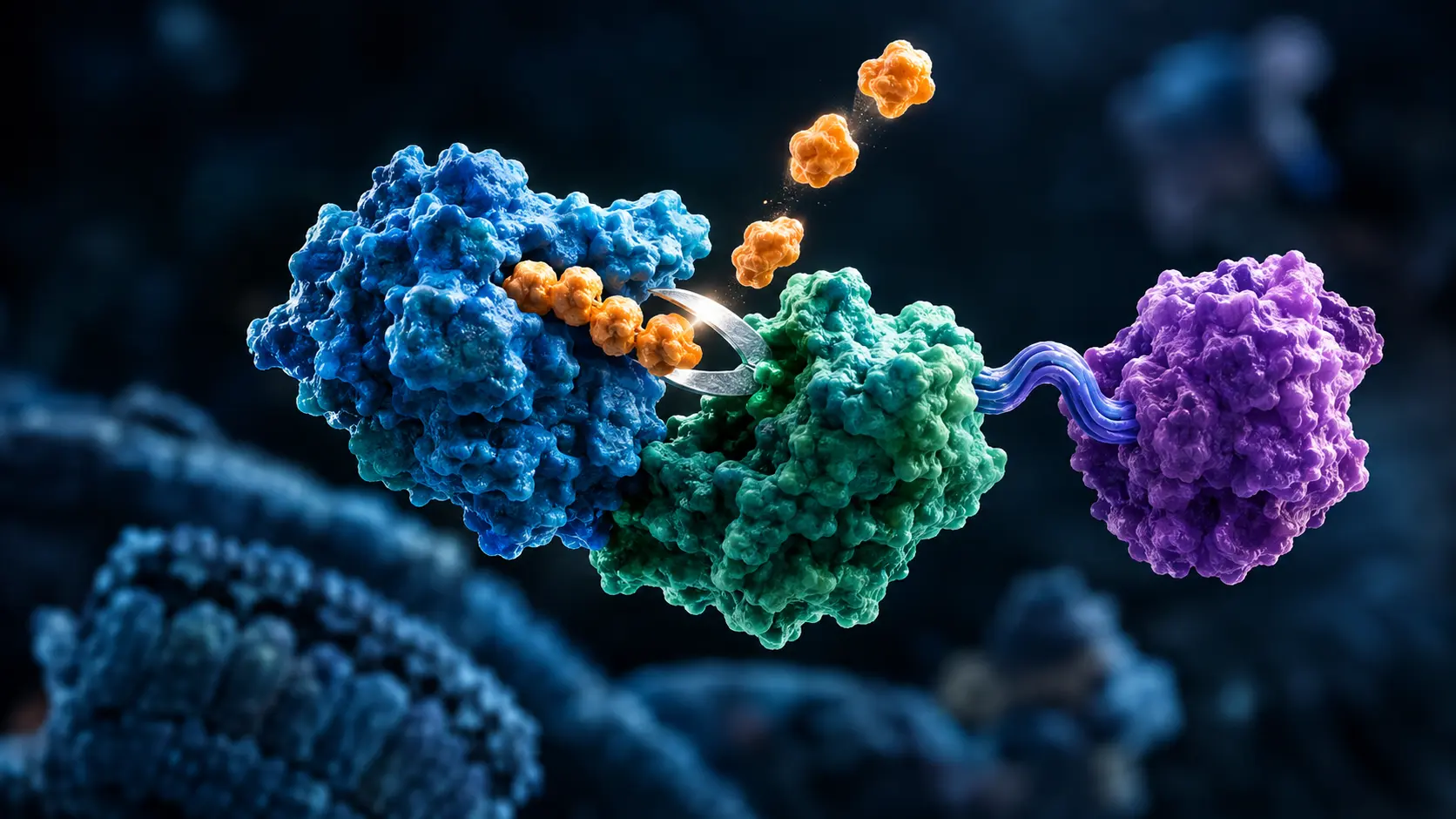

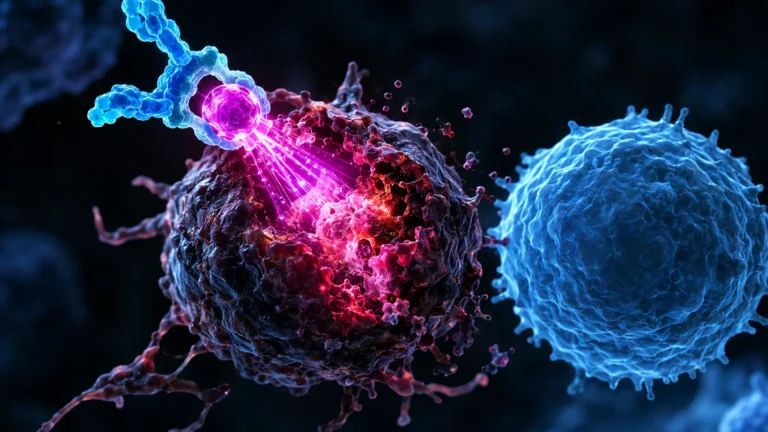
Every second, your cells act as ruthless quality-control inspectors. If a newly built protein looks even slightly misfolded or unusual, the cell slaps a chemical “trash tag” on it and throws it into a microscopic incinerator. Usually, this keeps you alive. But sometimes, the inspector makes a fatal mistake. In genetic diseases like cystic fibrosis, the patient produces a slightly deformed protein. The protein actually works well enough to keep the patient breathing, but the cell’s quality control overreacts, tags it as garbage, and destroys it anyway. The patient dies not because the protein was totally broken, but because the cell refused to let them use it.
Why should you care right now? Because biotech engineers have just figured out how to cancel the garbage truck. Enter Deubiquitinase-Targeting Chimeras (DUBTACs). If traditional drugs act like assassins, DUBTACs act like cellular bodyguards. By recruiting specialized enzymes to physically rip the trash tags off wrongfully condemned proteins, DUBTACs stabilize and rescue the vital biological machinery that the body is trying to shred. This flips the multi-billion-dollar Targeted Protein Degradation (TPD) industry completely upside down, unlocking the ability to cure “loss-of-function” diseases that legacy medicine cannot touch.
What are Deubiquitinase-Targeting Chimeras (DUBTACs)?
Deubiquitinase-Targeting Chimeras (DUBTACs) are engineered, dual-action therapeutic molecules designed to stabilize specific proteins inside a cell. One end of the DUBTAC binds to a target protein facing wrongful destruction, while the other end recruits a deubiquitinase enzyme (DUB) to remove its degradation tags, permanently rescuing the protein.
At a Glance
- Concept: A bi-functional chemical handcuff that grabs a condemned protein and forces an “eraser” enzyme to remove its death sentence.
- Why it matters: The biggest trend in biotech over the last decade was PROTACs (destroying bad proteins). DUBTACs represent the vital missing half of the equation: rescuing good proteins.
- Who uses it: Vanguard academic researchers (UC Berkeley’s Nomura Lab), Novartis, and emerging biotech spin-outs focused on Targeted Protein Stabilization (TPS).
- Biggest takeaway: You cannot cure a disease caused by a lack of a protein by destroying more things. DUBTACs offer the first scalable, event-driven mechanism to actively increase the lifespan of critical proteins inside the human body.
In Simple Words
Imagine a busy office where the boss relies on a strict filing system. When a document is no longer needed, a clerk puts a bright red “TRASH” sticky note on it. At the end of the day, the janitor walks through the office, grabs everything with a red sticky note, and throws it in the shredder.
A PROTAC is a drug that acts like a malicious clerk. It hunts down bad documents (cancer proteins) and slaps a red sticky note on them so the janitor will destroy them.
A DUBTAC is a drug that acts like a bodyguard. It spots a highly important document that accidentally received a red sticky note (a mutant but functional protein). It grabs the document with one hand, and grabs a specialized “eraser” clerk with the other hand. It forces the eraser clerk to peel the red sticky note off. When the janitor walks by, he ignores the document. The document survives and goes back to work.
Why This Matters
For Biotech Investors, Pharmacologists, and Pharma Execs, DUBTACs solve the Loss-of-Function Wall.
The pharmaceutical industry is currently obsessed with Targeted Protein Degradation (TPD). Drugs like PROTACs and molecular glues are generating billions of dollars in venture capital because they efficiently destroy the proteins driving cancer and autoimmune diseases.
But TPD has a massive limitation: it only works on “Gain-of-Function” diseases (where a protein is actively doing something bad). It is mathematically useless for “Loss-of-Function” diseases (where the patient is sick because they are missing a protein).
If a patient is dying because their cells are aggressively shredding a tumor-suppressor protein or a critical respiratory enzyme, sending in a PROTAC to destroy things faster will only kill the patient quicker. DUBTACs establish the era of Targeted Protein Stabilization (TPS). This effectively doubles the total addressable market of the induced-proximity drug class, opening up the treatment of cystic fibrosis, neurodegeneration, and haploinsufficient genetic disorders.
Micro-Insight: PROTACs are the brakes; DUBTACs are the gas pedal. A mature pharmaceutical toolkit requires both to steer human biology.
Mastering Ubiquitin-State Programming
We are witnessing the mastery of Ubiquitin-State Programming.
Ubiquitin is a tiny regulatory protein that acts as the universal barcode system of the human cell. For decades, drugs could only passively block receptors. Now, we are directly hacking the barcode system itself. By commanding E3 ligases (to add tags) and Deubiquitinases (to remove tags), scientists are reading and writing the source code of cellular mortality, shifting biology from a science of discovery into a science of deterministic engineering.
How DUBTACs Recruit OTUB1 for Protein Stabilization
Reversing the cellular death sentence requires hijacking an entirely different class of enzymes than those used by PROTACs. Here is the first-principles breakdown of the DUBTAC architecture.
1. The Fundamental Problem: Polyubiquitination
When a cell’s quality control system flags a protein for destruction, it doesn’t just attach one ubiquitin tag; it attaches a chain of them. This process is called polyubiquitination (specifically using Lysine-48 linked chains). Once a protein receives a long polyubiquitin chain, it is aggressively dragged to the proteasome (the cellular incinerator) and ground into amino acid dust.
2. The Core Mechanism: The Deubiquitinase (DUB)
Nature always balances its equations. Just as cells have E3 ligases to attach ubiquitin chains, they have an opposing class of enzymes called Deubiquitinases (DUBs) to remove them. DUBs are molecular scissors. Their job is to snip ubiquitin chains off proteins that have been tagged by mistake.
3. Technical Depth: Heterobifunctional Architecture
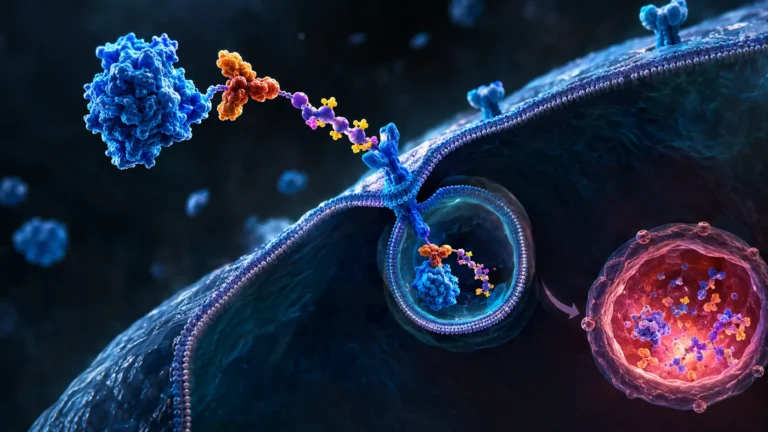
A DUBTAC is a single molecule with two distinct ends connected by a chemical linker.
- The Warhead: One end binds tightly to the specific protein that the patient needs to save.
- The Recruiter: The other end binds to a DUB enzyme floating in the cell (specifically, an abundant DUB called OTUB1).
4. Technical Depth: Covalent Allosteric Recruitment
Recruiting the OTUB1 enzyme is incredibly difficult. Unlike E3 ligases, OTUB1 does not have a deep, obvious “pocket” for a drug to easily snap into.
To solve this, researchers engineered a covalent allosteric binder. The DUBTAC binds to a specific location on the side of the OTUB1 enzyme (allosteric) and forms a permanent chemical bond (covalent). This permanently handcuffs the DUBTAC to the scissors.
5. Real-World Consequences: Catalytic Cleavage
The DUBTAC grabs the wrongfully condemned protein and drags it directly into the jaws of the OTUB1 enzyme. The OTUB1 enzyme snips the ubiquitin chain off. Freed from its death sentence, the rescued protein floats away to perform its biological duty.
Crucially, the DUBTAC/OTUB1 complex remains fully intact and active. It instantly detaches, turns around, and hunts down the next condemned protein. This “catalytic” nature means a single DUBTAC molecule can rescue hundreds of proteins over its lifespan.
Ubiquitin System Simulator: PROTACs vs DUBTACs
Cellular Protein Degradation vs. Targeted Protein Stabilization
Therapeutic Intervention
None
(Natural Decay)
(Natural Decay)
PROTAC
(Degrader)
(Degrader)
DUBTAC
(Stabilizer)
(Stabilizer)
Drug Concentration
50%
Active Target Proteins
100%
Proteasome Destructions
0
Proteins Rescued (Stabilized)
0
Cell Cytoplasm Visualization
NATURAL UBIQUITINATION
Active Protein Population Trajectory
Curing Loss-of-Function Diseases with DUBTACs
DUBTACs are moving rapidly from conceptual chemistry into pre-clinical therapeutic pipelines.
Rescuing Cystic Fibrosis (ΔF508-CFTR): In healthy humans, the CFTR protein regulates fluid in the lungs. In cystic fibrosis, a mutation causes the protein to fold slightly awkwardly. The protein can still function, but the cell’s quality control system destroys it prematurely. DUBTACs successfully recruit OTUB1 to cleave the ubiquitin tags off the mutant CFTR protein. Once rescued, the protein travels to the lung cell surface, potentially restoring normal breathing mechanics and directly addressing the root cause of the disease.
Stabilizing Tumor Suppressors (p53): While cancer is often caused by hyperactive oncogenes, it can also be caused by the rapid destruction of tumor-suppressor proteins (the body’s natural anti-cancer guards). Certain aggressive cancers survive by hijacking the cell’s ubiquitin system to relentlessly shred p53 (the master tumor suppressor). A DUBTAC can be engineered to bind to p53, constantly ripping the ubiquitin tags off to keep the guard alive, allowing the body to naturally halt the tumor’s growth.
Halting Neurodegeneration: Diseases like Alzheimer’s and Parkinson’s involve complex protein imbalances. Often, neuroprotective proteins are prematurely degraded due to cellular stress. By deploying DUBTACs to stabilize these specific protective enzymes, pharmacologists hope to fortify neurons against the toxic plaques that ultimately cause dementia.
The Biotech Market for Targeted Protein Stabilization
The core strategic consequence of DUBTACs is the Monetization of the “Undruggable” Void.
For years, pharmaceutical companies possessed massive libraries of chemical binders that perfectly attached to important human proteins, but failed to actually do anything to the protein’s function. They were considered “silent binders” and discarded as commercially worthless.
DUBTACs turn this chemical graveyard into a multi-billion-dollar asset class. Because a DUBTAC doesn’t need to block the protein’s active site (it just needs to grab the protein anywhere to rip the ubiquitin tag off), pharma companies are resurrecting their failed, silent binders. By chemically attaching a DUB-recruiting tail to these old molecules, legacy pharma companies are instantly generating entirely new, patentable therapeutics without spending a decade in early-stage discovery.
Advantages
- Treats Loss-of-Function Diseases: Solves the massive biological blind spot of PROTACs, allowing doctors to restore missing proteins rather than just destroying bad ones.
- Event-Driven (Catalytic): Just like PROTACs, DUBTACs are not consumed in the reaction. A single DUBTAC molecule can rescue a protein, release it, and move on to rescue hundreds more, allowing for extremely low, non-toxic dosing.
- Bypasses Perfect Folding: Traditional chaperone drugs try to force a mutant protein to fold perfectly to avoid quality control. DUBTACs ignore the folding entirely; they simply remove the death tag, which is mechanically much easier to achieve.
Limitations
- Covalent Toxicity Risks: The current method of recruiting the OTUB1 enzyme relies on a covalent bond (the drug permanently attaches to the enzyme). Covalent drugs carry a high risk of binding to the wrong targets over time, potentially causing severe liver or immune toxicity during chronic human dosing.
- Massive Molecular Weight: DUBTACs are “chimeric” molecules, meaning they are structurally massive. This violates Lipinski’s Rule of Five, making them incredibly difficult to formulate as an oral pill. They struggle to cross cell membranes and often require intravenous (IV) delivery.
- Over-Stabilization Danger: The cellular garbage disposal exists for a reason. If a DUBTAC accidentally stabilizes a protein that truly is toxic and misfolded, it could trigger cellular apoptosis (cell death) by clogging the cell with biological junk.
Takeaway: DUBTACs are a triumph of chemical logic, but they are currently brute-force instruments. The industry must discover “non-covalent” binders that gently recruit DUBs, rather than permanently handcuffing them, before they can safely pass Phase III human trials.
Common Misconceptions
Misconception: DUBTACs just block the garbage disposal.
Reality: DUBTACs do not shut down the proteasome (the garbage disposal). Shutting down the proteasome would instantly kill the cell. DUBTACs are highly precise; they only remove the trash tag from one specific target protein, leaving the rest of the cellular waste system running perfectly.
Misconception: They are the same as Chaperone drugs.
Reality: Chaperones (like Lumacaftor for CF) act like physical scaffolds, holding a broken protein together so it looks normal to the cell. DUBTACs do not fix the structure of the protein at all; they simply intercept the executioner and remove the death warrant.
Misconception: TPD (Degradation) and TPS (Stabilization) are competing technologies.
Reality: They are perfectly complementary. They are the Yin and Yang of the ubiquitin system. A future oncologist will likely prescribe a PROTAC to destroy a cancer-driving protein, and simultaneously prescribe a DUBTAC to stabilize the patient’s immune-boosting proteins.
What Most People Miss
The disruptive capability of Isoform-Specific DUB Recruitment.
Most mainstream analysis focuses solely on recruiting the OTUB1 enzyme. What they miss is that the human genome encodes roughly 100 different Deubiquitinase (DUB) enzymes.
Different DUBs reside in entirely different parts of the cell (e.g., some stay in the nucleus, some stay near the cell membrane). By swapping the tail of the DUBTAC to recruit a different DUB, pharmacologists can achieve extreme spatial precision. If a protein is only needed in the nucleus, engineers can recruit a nucleus-specific DUB, ensuring the protein is only stabilized exactly where it is supposed to operate, drastically minimizing side effects in the rest of the body.
Comparison Table
| Metric | PROTACs (Targeted Degradation) | DUBTACs (Targeted Stabilization) | Small Molecule Inhibitors |
| Primary Goal | Destroy the target protein | Rescue the target protein | Block the target protein |
| Enzyme Hijacked | E3 Ligase | Deubiquitinase (e.g., OTUB1) | None |
| Ubiquitin Action | Attaches polyubiquitin chains | Cleaves polyubiquitin chains | N/A |
| Disease Target | Gain-of-Function (Cancer) | Loss-of-Function (Cystic Fibrosis) | Gain-of-Function |
| Pharmacology | Event-Driven (Catalytic) | Event-Driven (Catalytic) | Occupancy-Driven |
Future Outlook
Next 12–24 Months
The era of Non-Covalent Discovery. Through 2027, the primary race among biotech spin-outs will be discovering non-covalent binders for DUBs. The current reliance on covalent chemistry to grab OTUB1 presents too high a toxicity risk for chronic diseases. Startups leveraging AI-driven molecular docking (using platforms like AlphaFold 3) will race to discover gentle, reversible chemical hooks to recruit DUBs safely.
Next 3–5 Years
The scaling of In Vivo Proof of Concept. By 2029, the first wave of DUBTACs will exit primate trials and enter early human Phase I trials, likely targeting severe, orphan genetic diseases where mutant proteins are aggressively degraded. The industry will closely monitor the pharmacokinetic (PK) profiles to verify if these massive chimeric molecules can actually achieve therapeutic concentrations inside solid lung or brain tissue without being cleared by the liver.
Next 10 Years
The Ubiquitin Editing Paradigm. By the mid-2030s, the rigid distinction between degraders and stabilizers will blur. We will enter the era of true “Ubiquitin Editing.” Doctors will use a unified platform of chimeric drugs to dynamically sculpt a patient’s proteome—selectively deleting toxic proteins and continuously reinforcing protective proteins in real-time. DUBTACs will mature from a novel chemistry experiment into the standard-of-care intervention for all haploinsufficient genetic disorders.
Most Likely Scenario
DUBTACs represent the inevitable, logical completion of the induced-proximity revolution. While PROTACs proved that we can command the cell to destroy, DUBTACs prove that we can command the cell to heal. Despite the brutal medicinal chemistry challenges of optimizing these massive molecules for oral delivery and avoiding covalent toxicity, the sheer economic value of curing previously “undruggable” loss-of-function diseases guarantees that DUBTACs will become a foundational pillar of 2030s pharmacology.
Key Takeaways
- The cellular garbage disposal system (UPS) uses ubiquitin tags to mark defective proteins for destruction. Sometimes, it makes a mistake and destroys a mutant protein that the patient actually needs to survive.
- PROTACs are drugs that force the cell to attach ubiquitin tags to destroy bad proteins. DUBTACs do the exact opposite.
- DUBTACs are two-sided molecules: one side grabs the condemned protein, and the other side grabs an “eraser” enzyme called a Deubiquitinase (like OTUB1).
- The DUBTAC forces the enzyme to snip the ubiquitin trash tag off, rescuing the protein. This allows it to function and cures “loss-of-function” genetic diseases like cystic fibrosis.
- Because DUBTACs act as catalysts—releasing the protein and moving on to rescue another one—they can operate at very low doses, offering a massive advantage over traditional drugs.
Glossary
Allosteric Binder: A drug that binds to the side or back of an enzyme, changing its shape or function, rather than binding directly into the primary “active site.”
Covalent Bond: A permanent, unbreakable chemical link. First-generation DUBTACs use covalent bonds to recruit enzymes, which increases the risk of long-term toxicity.
Deubiquitinase (DUB): A naturally occurring cellular enzyme (molecular scissors) whose sole job is to cleave ubiquitin chains off proteins.
DUBTAC (Deubiquitinase-Targeting Chimera): A dual-action drug designed to rescue proteins from destruction by forcing a DUB enzyme to remove their ubiquitin tags.
PROTAC (Proteolysis Targeting Chimera): The inverse of a DUBTAC. A drug that forces an E3 ligase to attach ubiquitin tags to a protein to destroy it.
Targeted Protein Stabilization (TPS): The emerging pharmacological field focused on saving and reinforcing proteins inside the cell, as opposed to Targeted Protein Degradation (TPD).
Ubiquitin-Proteasome System (UPS): The cell’s primary quality control and garbage disposal system. It uses ubiquitin to tag trash, and the proteasome to shred it.
Sources
Nature Chemical Biology: Deubiquitinase-targeting chimeras for targeted protein stabilization
UC Berkeley (Nomura Research Group): Covalent Allosteric Recruitment of OTUB1 for DUBTACs
Cell Chemical Biology: Harnessing the Ubiquitin System: From Degradation to Stabilization
Journal of the American Chemical Society (JACS): Heterobifunctional Molecules for Rescuing Mutant CFTR
Novartis Institutes for BioMedical Research: The Pharmacokinetics of Induced Proximity Stabilizers