Advertisement
)

At a Glance
- Concept: A zero-waste rocket engine that completely recycles its own pump exhaust to generate maximum thrust.
- Why it matters: It is the only physical engine architecture capable of efficiently powering a reusable, heavy-lift vehicle to Mars.
- Who uses it: Currently, only SpaceX (with the Raptor engine) has successfully flown this architecture in human history.
- Biggest takeaway: By passing 100% of the propellant through the turbines, full-flow engines actually run their fragile internal pumps at cooler temperatures than older, less efficient designs.
In Simple Words
To launch a rocket, you have to mix fuel and oxygen together in a chamber and ignite them. Because the explosion inside that chamber creates immense pressure, you cannot just pour the fuel in. You have to force it in using incredibly powerful mechanical pumps.
Running these pumps requires a massive amount of energy. In older rockets, engineers bolted a smaller, secondary rocket engine next to the pumps just to spin them. The exhaust from this small engine was then dumped overboard into space. This was effectively throwing away perfectly good fuel without using it to push the rocket upward.
Full-flow staged combustion solves this waste. Instead of dumping the pump’s exhaust overboard, the engine routes that exhaust directly into the main combustion chamber to be burned a second time.
Furthermore, instead of pumping liquid into the main chamber, it uses the heat of the pumps to boil both the fuel and the oxygen into hot, pressurized gases. When hot gas mixes with hot gas, it burns with absolute, flawless efficiency. It is the ultimate recycling system, extracting every possible ounce of physical energy from the propellant.
Why This Matters
The physics of spaceflight are dictated by the “rocket equation.” If you want to carry more cargo to space, you need more fuel. But fuel is heavy, which means you need even more fuel to lift the new fuel. This brutal math means that roughly 95% of a rocket’s weight is just propellant.
To build an interplanetary civilization, humanity needs to break this math. We need engines that extract maximum thrust from a minimum amount of fuel. This metric of efficiency is called Specific Impulse (Isp).
Full-flow staged combustion provides the highest possible theoretical specific impulse for a chemical rocket.
However, efficiency is only half the battle. Historically, rockets were thrown in the ocean after one use. Today, space economics demand reusability. An engine must survive the intense heat of a launch, land, and be ready to fly again a week later with zero maintenance.
Achieving maximum efficiency while preventing the engine from melting itself into slag is the holy grail of aerospace engineering. The nation or corporation that perfects the full-flow staged combustion engine will dictate the economic future of deep space exploration, military satellite deployment, and lunar colonization.
The Big Picture
Rockets are essentially giant plumbing systems strapped to controlled bombs. The entire purpose of a rocket engine is to manage the flow of fluids.
When comparing rocket engines, engineers do not just look at thrust; they look at the “power cycle.” The power cycle describes exactly how the engine diverts a fraction of its energy to run its own turbopumps.
Mastering the power cycle separates standard aerospace companies from frontier deep-tech organizations. The full-flow cycle sits at the absolute pinnacle of this engineering hierarchy. Before SpaceX successfully flew the Raptor engine, this specific architecture was widely considered a theoretical “suicide mission” due to the near-impossible metallurgy required to contain high-pressure, super-heated oxygen gas.
How It Works
To understand the brilliance of a full-flow system, you must first understand the flaws it was designed to fix.
Step 1: The Fundamental Problem
A rocket must pump thousands of gallons of liquid fuel and liquid oxidizer into the main combustion chamber every second. The chamber is exploding at thousands of pounds per square inch of pressure. To push liquid into that explosion, the turbopumps must push harder than the explosion itself. Powering these pumps requires generating tens of thousands of horsepower.
Step 2: The Open Cycle (Gas Generator)
The simplest way to power the pumps is the “Open Cycle.” Engineers take a little bit of fuel and oxygen, burn them in a small pre-burner, use that explosion to spin the pump turbine, and then vent the exhaust out the side of the rocket. It is simple and reliable. The Falcon 9 Merlin engine uses this. The problem? Venting exhaust overboard means wasting fuel. It limits the engine’s ultimate efficiency.
Step 3: The Closed Cycle (Staged Combustion)
To stop wasting fuel, engineers invented the “Closed Cycle.” They take the exhaust from the pre-burner and pipe it into the main combustion chamber to burn it again.
This creates a severe metallurgical problem. You cannot burn a perfect ratio of fuel and oxygen in the pre-burner, or it will melt the turbine blades. You must run it “fuel-rich” (mostly fuel, a little oxygen) or “oxidizer-rich” (mostly oxygen, a little fuel). Fuel-rich pre-burners create sticky, black soot that clogs the engine. Oxidizer-rich pre-burners create super-heated oxygen gas, which instantly rusts and eats through almost any metal on Earth.
Step 4: The Core Mechanism of Full-Flow
Full-Flow Staged Combustion (FFSC) abandons the compromise and uses two pre-burners.
The first pre-burner takes all of the liquid fuel and a tiny bit of oxygen. It burns fuel-rich, spins the fuel pump, and turns the fuel into a warm gas.
The second pre-burner takes all of the liquid oxygen and a tiny bit of fuel. It burns oxidizer-rich, spins the oxygen pump, and turns the oxygen into a warm gas.
Both warm gases are then injected into the main combustion chamber.
Step 5: Gas-on-Gas Combustion
This is the mechanical triumph of FFSC. In older engines, liquid fuel is sprayed into the main chamber and must vaporize before it can burn. In a full-flow engine, because both propellants passed through pre-burners, they enter the main chamber entirely as hot, pressurized gases. Gas-on-gas mixing is instantaneous and mathematically perfect, resulting in absolute combustion efficiency and massive thrust.
Real-World Applications
Because the engineering tolerances are so extreme, only three full-flow staged combustion engines have ever been built in human history.
The RD-270 (Soviet Union, 1960s): During the intense space race, Soviet engineers attempted to build an FFSC engine for their massive UR-700 rocket. While they successfully test-fired it, the toxic propellants and unstable metallurgy proved too difficult to manage. The program was canceled before the engine ever flew.
The Integrated Powerhead Demonstrator (USA, 1990s–2000s): NASA and the U.S. Air Force funded a research project to prove that an FFSC engine could run on liquid hydrogen and liquid oxygen. The IPD was a laboratory testbed, not a flight engine. It successfully proved the physics were possible, but it was too heavy and complex to attach to a real rocket.
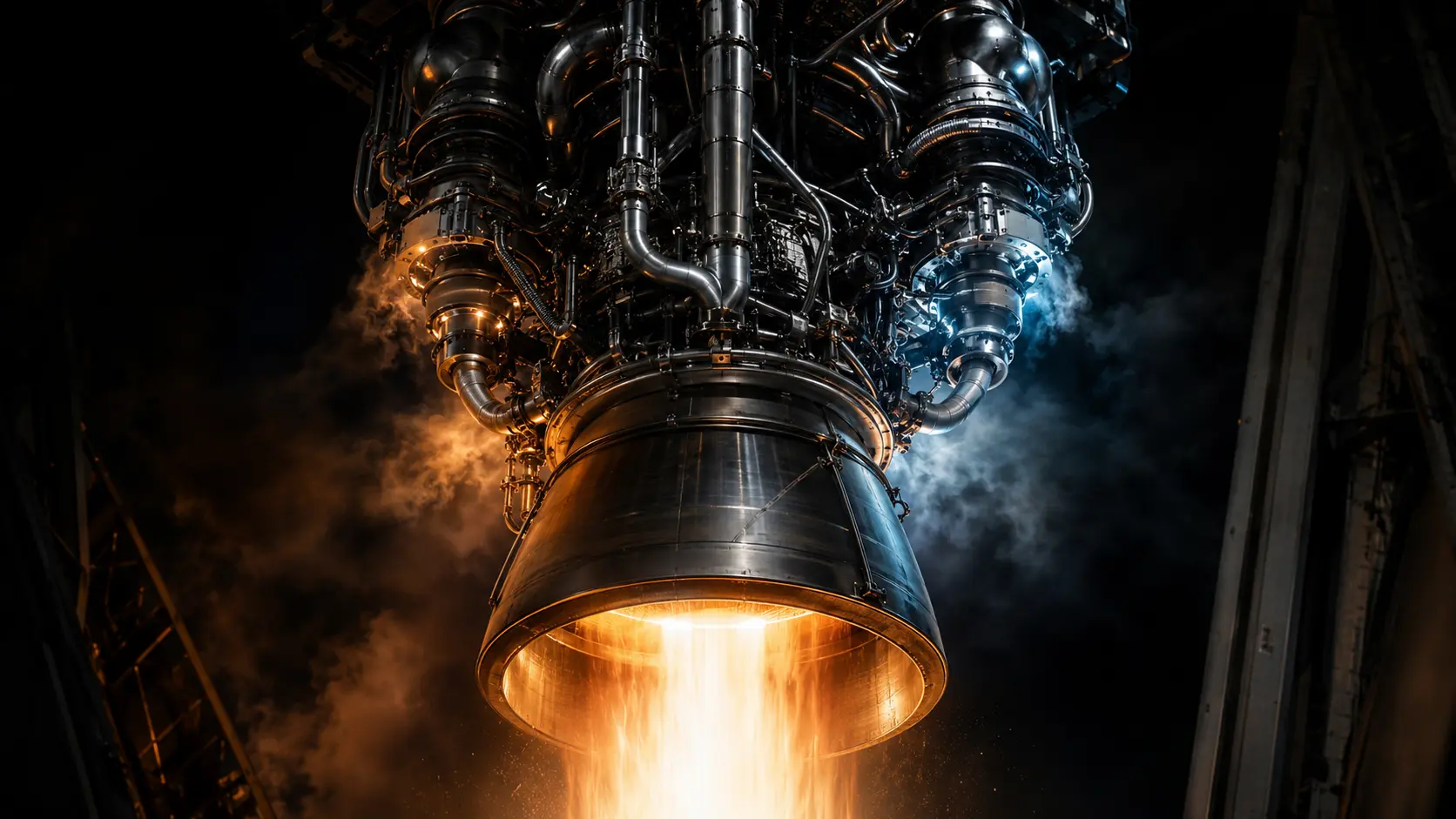
The Raptor (SpaceX, Present): SpaceX achieved what the Cold War superpowers could not. The Raptor uses liquid methane and liquid oxygen. It is the first and only full-flow staged combustion engine to ever power a flying vehicle. It is currently being mass-produced to power the Starship launch system, designed to carry hundreds of tons of cargo to Mars.
Economic & Strategic Impact
The perfection of the full-flow cycle permanently alters the economics of the space domain.
For the commercial space industry, the goal is “aircraft-like operations.” Standard closed-cycle engines run their turbines incredibly hot to generate enough pressure, causing microscopic stress fractures in the metal. After a few flights, the engine must be removed and rebuilt.
Because a full-flow engine passes 100% of its propellant mass through the pre-burners, there is vastly more fluid available to spin the turbines. This means the pre-burners can run at a significantly cooler temperature while still generating the same amount of mechanical work. Cooler turbines mean less thermal stress. Less thermal stress means the engine can theoretically fly hundreds of times without being refurbished, drastically lowering the cost per kilogram to Low Earth Orbit (LEO).
Strategically, the Raptor engine gives the United States a monopoly on next-generation heavy-lift architecture. While rival nations like China are rapidly developing reusable gas-generator engines (similar to the Falcon 9), the leap to full-flow staged combustion requires a mastery of advanced metallurgy and computational fluid dynamics that cannot be easily replicated or reverse-engineered.
Advantages
Absolute Specific Impulse (Isp)
By routing every ounce of pump exhaust into the main combustion chamber, zero propellant is wasted. This extracts the highest possible kinetic energy from the chemical reaction, allowing the rocket to carry heavier payloads into deep space.
Cooler Turbine Temperatures
Because 100% of the propellant mass flows through the turbines to spin them, the pre-burners do not need to burn as hot. This drastically reduces the thermal wear on the delicate turbine blades, ensuring long-term engine reusability.
Perfect Propellant Mixing
By utilizing two pre-burners, both the fuel and the oxidizer enter the main combustion chamber completely vaporized as hot gases. Gas-on-gas combustion prevents localized hot spots in the chamber and achieves a flawless, clean burn.
Higher Chamber Pressures
With two separate turbines doing the pumping work instead of one, the engine can achieve unprecedented pressure inside the main combustion chamber (exceeding 300 bar in the Raptor engine). Higher pressure mathematically equates to a physically smaller engine producing vastly more thrust.
Limitations
Extreme Metallurgical Demands
The oxygen pump is driven by super-heated, high-pressure oxygen gas. Standard steel or titanium will literally catch fire and burn if exposed to this environment. The engine requires custom-invented superalloys to prevent the oxidizer pre-burner from melting itself.
Complex Engine Sealing
The oxygen side and the fuel side must be kept perfectly separated until they reach the main chamber. If high-pressure hot oxygen gas leaks through a microscopic crack in a seal and meets hot methane gas inside the pump housing, the engine will instantly detonate.
Start-Up Sequencing Chaos
Igniting a full-flow engine is a delicate orchestration. You have to ignite two pre-burners and the main chamber simultaneously while valves open at millisecond intervals. If the timing is slightly off, the pressures violently unbalance and tear the engine apart.
Common Misconceptions
Misconception: Full-flow engines are the most powerful rockets ever built.
Reality: They are the most efficient engines. The F-1 engine that took Apollo to the moon was significantly larger and produced more raw thrust, but it used a highly inefficient, fuel-wasting open cycle.
Misconception: They run hotter than older engines.
Reality: The main combustion chamber runs at higher pressure, but the delicate turbine pumps actually run much cooler than in standard closed-cycle engines, which is the secret to their reusability.
Misconception: SpaceX invented staged combustion.
Reality: Soviet engineers pioneered staged combustion in the 1960s because they lacked the massive manufacturing capabilities of the US and needed more efficient designs. SpaceX simply perfected the specific full-flow variant for commercial flight.
What Most People Miss
The choice of fuel is just as important as the engine cycle itself.
The Soviet RD-270 used hypergolic, highly toxic chemicals. The American IPD used liquid hydrogen. SpaceX chose liquid methane (natural gas) for the Raptor.
Methane is the “Goldilocks” fuel for a full-flow engine. It burns incredibly clean, meaning it does not leave black soot inside the fuel pre-burner (a massive problem with kerosene). It is also denser than liquid hydrogen, meaning the rocket’s fuel tanks can be physically smaller.
Most importantly, methane can be synthetically manufactured on the surface of Mars using atmospheric carbon dioxide and subsurface water (the Sabatier reaction). You cannot fly a full-flow engine to Mars if you cannot refuel it for the trip home.
Comparison Table
| Feature | Open Cycle (Gas Generator) | Closed Cycle (Staged Combustion) | Full-Flow Staged Combustion (FFSC) |
| Pump Exhaust | Vented overboard (wasted). | Piped into the main chamber. | Piped into the main chamber. |
| Number of Pre-burners | One. | Usually One. | Two (Fuel-rich and Oxidizer-rich). |
| Chamber Injection | Liquid on Liquid. | Gas on Liquid. | Gas on Gas. |
| Maximum Efficiency | Low. | High. | Absolute Maximum. |
| Turbine Temperatures | Moderate. | Extremely High (causes rapid wear). | Moderate (prolongs engine lifespan). |
| Leading Example | Merlin (SpaceX Falcon 9). | RD-180 (Russian Atlas V). | Raptor (SpaceX Starship). |
Case Study
Situation: SpaceX needed an engine capable of lifting a 5,000-ton vehicle (Starship) off the launch pad, flying it into orbit, landing it safely, and flying it again without needing a major factory overhaul.
Challenge: Existing engine architectures forced a brutal compromise. Open-cycle engines (like the Falcon 9’s Merlin) were reusable but lacked the efficiency to lift heavy cargo to Mars. Closed-cycle engines were efficient but melted their own internal turbines, requiring massive refurbishment after a single use.
Solution: SpaceX committed billions of dollars to commercialize the theoretical Full-Flow Staged Combustion architecture. They developed a proprietary superalloy, dubbed “SX500,” specifically engineered to survive the terrifying environment of the hot-oxygen pre-burner without oxidizing and exploding.
Outcome: The resulting Raptor engine broke the world record for combustion chamber pressure (reaching roughly 350 bar, surpassing the Russian RD-180). Because it achieves gas-on-gas mixing and cooler turbine temperatures, it provides the precise combination of extreme thrust, absolute efficiency, and rapid reusability required for interplanetary transport.
Lessons Learned: Theoretical physics is useless without applied material science. The barrier to deep space exploration was not a lack of mathematical understanding; it was the lack of a metal capable of surviving the math.
Future Outlook
Next 12–24 Months
SpaceX will continue to iterate the Raptor engine from Version 3 into mass manufacturing. The focus will shift from maximizing peak thrust to optimizing manufacturing speed and completely eliminating complex internal plumbing, simplifying the engine into a solid block of 3D-printed superalloys.
Next 3–5 Years
Defense contractors and rival aerospace entities (like Blue Origin and Chinese state firms) will heavily invest in advanced metallurgy to catch up. However, due to the extreme testing infrastructure required to prevent test-stand explosions during the oxidizer-rich pre-burner development, competitors will likely remain years behind the FFSC learning curve.
Next 10 Years
Full-flow staged combustion will prove its core thesis: aircraft-like reusability. Engines will consistently fire, land, and refire dozens of times with zero maintenance. This will drop the cost to Low Earth Orbit from roughly $1,500 per kilogram down to under $50 per kilogram, triggering a massive industrial boom in space-based solar power, zero-gravity manufacturing, and asteroid mining.
Most Likely Scenario
While FFSC represents the absolute peak of chemical rocket engineering, it is the final chapter of traditional combustion. Once humanity establishes a permanent foothold on the Moon and Mars using FFSC engines, the aerospace industry will pivot entirely to nuclear thermal propulsion for faster transit times across the deeper solar system.
Key Takeaways
- Full-flow staged combustion (FFSC) maximizes rocket efficiency by ensuring zero propellant is wasted as pump exhaust.
- It utilizes two pre-burners: one oxidizer-rich and one fuel-rich, converting all liquids into warm gases before main combustion.
- Gas-on-gas mixing in the main chamber creates instantaneous, perfectly efficient thrust.
- Because 100% of the mass flows through the turbines, the pre-burners can run cooler, preventing thermal degradation and enabling rapid engine reusability.
- The primary physical barrier to FFSC is developing superalloys that will not melt or explode when exposed to high-pressure, hot oxygen gas.
- The SpaceX Raptor is the first and only FFSC engine to ever achieve flight in human history.
- The perfection of this architecture is the required technological leap to make Mars colonization economically viable.
Glossary
Closed Cycle: A rocket engine design where the exhaust used to spin the turbopumps is captured and routed into the main combustion chamber to be burned again.
Gas Generator (Open Cycle): A simpler rocket design where the pre-burner exhaust used to spin the pumps is vented overboard and wasted.
Hypergolic: Rocket propellants that ignite spontaneously the instant they come into contact with each other, requiring no ignition spark.
Pre-burner: A small combustion chamber used to burn a tiny fraction of fuel and oxygen to generate the hot gas needed to spin a rocket’s turbopumps.
Specific Impulse (Isp): A mathematical measurement of a rocket engine’s efficiency; essentially “miles per gallon” for a spacecraft.
Turbopump: A massive, turbine-driven mechanical pump that forces thousands of gallons of liquid propellant into a high-pressure combustion chamber.
Frequently Asked Questions
Why don’t all rockets use full-flow staged combustion?
It is incredibly difficult to build. Pumping hot, high-pressure oxygen gas will melt or explode almost any metal known to humanity. Most companies lack the specialized metallurgical foundries required to cast the necessary superalloys safely.
How does an engine cool itself while burning at 3,000 degrees?
Engineers use “regenerative cooling.” Before the liquid, freezing-cold fuel enters the pre-burner, it is pumped through hundreds of tiny channels carved inside the walls of the main combustion bell. The cold fuel absorbs the heat, keeping the metal bell from melting, while simultaneously pre-heating the fuel for combustion.
Is a full-flow engine safer than a regular engine?
For crewed spaceflight, yes. Because the turbines operate at cooler temperatures, there is significantly less stress and metal fatigue. This reduces the risk of a catastrophic turbine blade shattering in mid-flight.
Can a full-flow engine run on liquid hydrogen?
Yes. The American Integrated Powerhead Demonstrator (IPD) proved this in the 2000s. However, hydrogen requires massive fuel tanks because it is incredibly light. Methane is preferred because it is denser and easier to manage.
Does a full-flow engine leave exhaust in space?
Yes, the main combustion chamber still expels a massive plume of exhaust to generate thrust. The term “zero waste” only refers to the fact that the internal pump exhaust is recycled, rather than being vented out the side of the rocket.
Why does the Raptor engine sometimes glow green when it shuts down?
When the engine shuts down, the precise ratio of fuel and oxygen briefly destabilizes. The engine runs slightly “engine rich,” meaning the intense heat begins to burn away the microscopic copper lining inside the combustion chamber, which emits a bright green flame.
Will this engine take us to other star systems?
No. Chemical rockets, even mathematically perfect ones like FFSC, lack the speed for interstellar travel. They are designed to lift heavy cargo out of Earth’s gravity well and travel to local planets like Mars. Interstellar travel requires nuclear or fusion propulsion.
Sources
- European Space Agency (ESA): Rocket Engine Cycles and Propulsion Dynamics
- NASA Technical Reports Server: Integrated Powerhead Demonstrator (IPD) Project History
- American Institute of Aeronautics and Astronautics (AIAA): Advances in Staged Combustion Metallurgy
- SpaceX Technical Overviews: Raptor Engine Architecture and Starship Integration