Advertisement
)

At a Glance
- Concept: Utilizing the “plug-and-play” nature of mRNA to print a custom, polyvalent vaccine containing up to 34 unique mutations (neoantigens) discovered in a single patient’s tumor.
- Why it matters: Even after a surgeon cuts out a tumor, microscopic cancer cells often remain and cause fatal relapses. By teaching the immune system to recognize these exact cells, mRNA vaccines act as a permanent, internal security system. At ASCO 2026, 5-year data proved this approach halved the recurrence rate of deadly melanoma.
- Who uses it: Oncology pioneers including Moderna/Merck (intismeran autogene / mRNA-4157), BioNTech/Genentech (autogene cevumeran / BNT122), and advanced clinical research centers globally.
- Biggest takeaway: The biological science of customized cancer vaccines is no longer in doubt; the bottleneck has shifted entirely to infrastructure. The companies that conquer the 4-to-6 week logistical turnaround time of sequencing a tumor and printing a one-off vaccine will capture a market projected to exceed USD 5 billion by 2030.
In Simple Words
Imagine a highly secure building where the security guards are blind to the criminals inside. The criminals are wearing uniforms that look exactly like the building’s own staff, so the guards simply let them walk the halls. This is how cancer evades the human immune system.
Historically, doctors tried to give the security guards a “most wanted” poster of a generic criminal. But cancer is clever; it mutates uniquely in every single person. A generic poster does not work.
Personalized mRNA Cancer Vaccines completely rewrite the playbook.
When a surgeon removes a patient’s tumor, scientists take that exact tumor into a lab and sequence its DNA. They find the specific, microscopic uniform variations (mutations) unique only to that one patient’s cancer. They type those specific mutations into a computer, print out a piece of genetic code (mRNA), and inject it back into the patient’s arm.
The mRNA acts as a hyper-accurate, custom “most wanted” poster. It teaches the patient’s security guards (T-cells) exactly what the criminals in their specific body look like. The newly educated immune system then sweeps through the body, hunting down and destroying every remaining cancer cell, ensuring the disease never returns.
Why This Matters
For decades, the holy grail of oncology has been a true cancer vaccine. Previous attempts failed because they targeted shared tumor-associated antigens (TAAs)—proteins that are slightly overexpressed in tumors but also exist in healthy tissue. Because these proteins were considered “self,” the immune system’s central tolerance mounted only weak, ineffective responses.
The 2026 era of mRNA vaccines targets neoantigens. These are entirely foreign, mutant proteins generated by the tumor’s genetic chaos. Because they do not exist in healthy tissue, the immune system attacks them with maximum ferocity.
The clinical results are unprecedented. At the ASCO 2026 Annual Meeting, Moderna and Merck presented 5-year follow-up data for their individualized therapy, intismeran autogene (mRNA-4157), in high-risk melanoma. The combination of the vaccine and the immunotherapy drug pembrolizumab reduced the risk of death or recurrence by 49 percent compared to immunotherapy alone. The risk of distant metastasis (cancer spreading to other organs) dropped by 59 percent. These numbers confirm that mRNA vaccines are not a pandemic-era anomaly; they are the foundational operating system for the next century of oncology.
The Big Picture
The success of personalized neoantigen vaccines relies on a critical biological synergy: they cannot work alone.
Cancer cells are masters of immune evasion. They hijack “checkpoint” molecules (like the PD-1 receptor) on the surface of immune cells to forcibly turn the immune system off. If you give a patient a powerful mRNA vaccine, it will generate an army of angry, cancer-killing T-cells. However, if the cancer can still flip the “off switch” on those T-cells, the vaccine fails.
This is why modern mRNA therapeutics are heavily paired with Checkpoint Inhibitors (like pembrolizumab). The checkpoint inhibitor acts as a shield, blocking the cancer’s ability to turn the T-cells off. Once the brakes are removed, the mRNA-educated T-cells flood the tumor microenvironment and execute the cancer cells flawlessly. This combination therapy is the undisputed blueprint for all ongoing Phase 3 trials.
How Personalized mRNA Cancer Vaccines Work
Creating an N=1 (single-patient) therapeutic requires an incredibly precise intersection of bioinformatics, lipid chemistry, and immunology. Here is the first-principles breakdown.
1. The Fundamental Problem: The Mutanome
Every tumor is driven by unique somatic mutations. To teach the immune system to attack, scientists must identify which of these mutations are actually visible on the outside of the cancer cell. The total collection of a tumor’s mutations is called the “mutanome,” and parsing it requires massive computational power.
2. The Insufficiency of Off-The-Shelf Vaccines
Generic vaccines target shared antigens. However, because the body recognizes these shared antigens as normal tissue, the immune system’s T-cells naturally ignore them to prevent autoimmune diseases (central tolerance). A successful therapy must target something 100 percent foreign to bypass this tolerance.
3. The Core Mechanism: Sequencing and AI Prediction
Surgeons extract the tumor and a sample of healthy blood. Next-generation sequencing maps the DNA of both. By comparing them, an AI algorithm isolates the unique somatic mutations (neoantigens) found only in the tumor. Because a single mRNA strand can hold multiple instructions, the algorithm selects up to 34 of the most highly immunogenic neoantigens for the final formulation.
4. Technical Depth: LNP Encapsulation and MHC Presentation
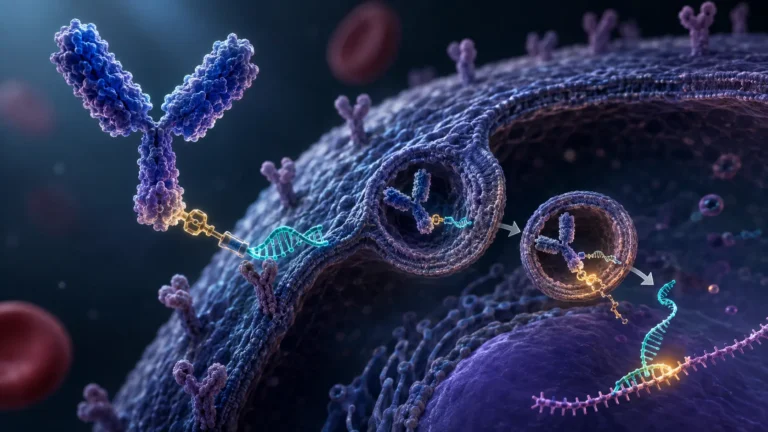
The custom mRNA sequence is synthesized and encapsulated inside a Lipid Nanoparticle (LNP). The LNP protects the fragile mRNA from degrading in the bloodstream. Once injected, the LNP fuses with specialized immune cells called Antigen-Presenting Cells (APCs). Inside the APC, the cellular machinery reads the mRNA and manufactures the 34 neoantigen proteins. The APC then chops these proteins up and displays them on its surface using Major Histocompatibility Complex (MHC) Class I and Class II molecules.
5. Real-World Consequences: The T-Cell Army
The presentation on MHC Class I activates CD8+ cytotoxic T-cells (the assassins that directly kill cancer cells), while presentation on MHC Class II activates CD4+ helper T-cells (the generals that coordinate the broader immune response). This dual-activation creates a robust, highly specific, and durable systemic immune response that circulates throughout the body, permanently hunting down any residual tumor cells expressing those 34 mutations.
Real-World Applications
The clinical footprint of personalized mRNA is expanding rapidly out of early-stage trials into massive, global Phase 3 deployments.
High-Risk Resected Melanoma: This is the flagship indication. The Phase 3 INTerpath-001 trial is fully enrolled, testing intismeran autogene in patients whose skin cancer has been surgically removed but who carry a high risk of the disease returning. The goal is to eradicate the invisible micrometastases that standard scans miss.
Non-Small Cell Lung Cancer (NSCLC): The lung cancer environment is highly mutated (often due to smoking), providing a massive library of neoantigens for algorithms to target. The Phase 3 INTerpath-002 study (NCT06077760) is actively randomizing early-stage NSCLC patients globally to receive 9 doses of the custom vaccine alongside pembrolizumab, aiming to drastically improve disease-free survival.
Pancreatic Ductal Adenocarcinoma (PDAC): Pancreatic cancer is notoriously lethal and historically unresponsive to immunotherapy. However, BioNTech’s candidate, autogene cevumeran (BNT122), demonstrated striking durability. At the AACR 2026 conference, 6-year follow-up data showed that 88 percent of the patients who initially responded to the vaccine were still alive, with functional T-cell memory persisting years after the injection.
Economic & Strategic Impact
The transition from mass-produced blockbuster drugs to individualized therapeutics fundamentally breaks legacy pharmaceutical supply chains.
Currently, manufacturing a personalized mRNA vaccine takes roughly 4 to 6 weeks per patient and costs an estimated USD 100,000 to USD 300,000. In the adjuvant setting—where a patient has just had surgery and is waiting for follow-up treatment—every week of delay increases the risk of microscopic cancer spreading.
This logistical friction is triggering a massive capital allocation toward advanced biomanufacturing. Contract Development and Manufacturing Organizations (CDMOs) are pivoting away from massive 2,000-liter bioreactors toward hyper-modular, automated benchtop synthesizers capable of printing hundreds of N=1 vaccines simultaneously in cleanroom environments. The biotech company that masters this automated “vein-to-vein” logistics software will dominate the USD 7 billion market projected for 2030.
Advantages
- Zero Central Tolerance: Because neoantigens are completely foreign to the body, the immune system attacks them with high-avidity T-cells, bypassing the weak responses that plagued older cancer vaccines.
- Polyvalent Targeting: The mRNA construct can encode dozens of different mutations (e.g., up to 34 for V940). If the tumor mutates to hide one antigen, the immune system has 33 backups to track it down.
- Highly Favorable Safety Profile: At the 5-year ASCO 2026 update, Grade 3 adverse events attributable to the mRNA vaccine were highly uncommon (fatigue at 4.8 percent), and no Grade 4 or 5 fatal events occurred.
- Durable Immunological Memory: Unlike chemotherapy which washes out of the system, mRNA vaccines create living, persistent memory T-cells that patrol the body for years after the final injection.
Limitations
- Turnaround Time: The 4-to-6 week timeline for sequencing, algorithmic prediction, and clean-room synthesis remains a severe clinical bottleneck for patients with rapidly progressing disease.
- Low Mutational Burden Tumors: The therapy works best in cancers with high rates of mutation (like melanoma and lung cancer). “Cold” tumors with very few mutations offer poor targets for the sequencing algorithms.
- Cost Scaling: While the mRNA platform is theoretically cheap, the necessity of maintaining a bespoke, individualized manufacturing run for every single patient pushes initial commercial pricing into the hundreds of thousands of dollars.
Common Misconceptions
Misconception: This vaccine prevents you from getting cancer in the first place.
Reality: Unlike the HPV vaccine (which prevents viral infections that lead to cervical cancer), mRNA neoantigen vaccines are therapeutic. They are given to patients who already have cancer, teaching the immune system to fight an existing or recently removed tumor.
Misconception: The vaccine alters your DNA.
Reality: mRNA never enters the nucleus of the cell where DNA is stored. It is simply a temporary instruction manual. Once the cell reads the instructions and builds the neoantigen proteins, the mRNA naturally degrades and disappears within days.
Misconception: Every patient with melanoma gets the exact same shot.
Reality: Every single syringe is 100 percent unique. Intismeran autogene (mRNA-4157) is a platform, not a uniform liquid. If ten different patients are treated, the manufacturing facility must print ten completely different mRNA sequences tailored to their specific tumor biopsies.
What Most People Miss
The strategic necessity of the Off-The-Shelf Hybrid Model.
While fully personalized vaccines (N=1) grab the headlines, the sheer logistical nightmare of custom printing is driving the development of semi-personalized, “off-the-shelf” hybrids.
Certain cancer mutations are shared across specific subgroups (e.g., common KRAS or TP53 driver mutations). Companies are mass-manufacturing mRNA vaccines targeting these specific, known drivers and storing them in freezers. When a patient is diagnosed, the doctor simply runs a rapid blood test. If the patient has the KRAS mutation, the doctor pulls the pre-made KRAS vaccine off the shelf and injects it immediately, entirely bypassing the 6-week manufacturing wait time.
Comparison Table
| Feature | Legacy Cancer Vaccines (TAAs) | Personalized mRNA Vaccines (Neoantigens) | Off-the-Shelf mRNA (Hybrid) |
| Target Antigen | Shared Tumor-Associated Antigens | Private Somatic Mutations (Neoantigens) | Shared Driver Mutations (e.g., KRAS) |
| Immune Recognition | Poor (Viewed as “Self” tissue) | Excellent (Viewed as 100% Foreign) | High (Targeted subsets) |
| Customization | Generic (Same for everyone) | Fully Individualized (N=1) | Semi-Personalized (Pre-made) |
| Turnaround Time | Immediate | 4 to 6 Weeks | Immediate |
| Production Cost | Low | Extremely High (USD 100K+) | Moderate / Scalable |
| Primary Limitation | Central immune tolerance | Manufacturing logistics & time | Limited to specific mutation groups |
Case Study
Situation: Following surgical resection of high-risk Stage III or IV melanoma, standard of care dictated the use of adjuvant immunotherapy (pembrolizumab). However, a substantial percentage of patients still experienced fatal recurrences within five years because the immunotherapy lacked specific targeting.
Challenge: Oncologists needed a way to direct the unbridled power of checkpoint inhibitors exactly toward the microscopic, residual cancer cells without triggering massive autoimmune side effects.
Solution (The KEYNOTE-942 Trial): Moderna and Merck initiated a Phase 2b trial randomizing 157 patients. The experimental arm received the standard immunotherapy alongside nine doses of intismeran autogene (mRNA-4157/V940)—a custom mRNA vaccine encoding up to 34 neoantigens derived specifically from each patient’s resected tumor.
Outcome: At the landmark 5-year follow-up presented at ASCO 2026, the data confirmed exceptional durability. 68.8 percent of patients receiving the customized mRNA combination remained entirely recurrence-free, compared to just 49.1 percent on standard therapy alone. The risk of distant metastasis collapsed by 59 percent. Crucially, overall survival showed a 92.2 percent survival rate for the combination arm versus 71.3 percent for the control, proving the therapy was not merely delaying recurrence, but actively saving lives.
Lessons Learned: The trial cemented the biological thesis that adding a high-fidelity, custom targeting system (mRNA neoantigens) to a broad immune stimulant (pembrolizumab) fundamentally alters the trajectory of aggressive solid tumors. The robust 5-year data effectively ended the debate on durability, proving the T-cell memory response persists long after the injections stop.
Future Outlook
Next 12–24 Months
The industry is holding its breath for the initial readouts of the fully enrolled Phase 3 INTerpath-001 melanoma trial. Positive results will trigger historic regulatory filings, with the first commercial FDA approvals anticipated by late 2026 or 2027. Concurrently, pharmaceutical giants will aggressively acquire niche AI bio-computing firms to optimize their proprietary neoantigen prediction algorithms, viewing the software as a critical competitive moat.
Next 3–5 Years
The scaling of global “Vein-to-Vein” infrastructure. As regulatory approvals roll in, the operational burden will shift to hospitals and CDMOs. We will see the deployment of localized, decentralized mRNA printing hubs located near major oncology centers (like MD Anderson or Memorial Sloan Kettering). This decentralization will shrink the turnaround time from 6 weeks down to 14 days, drastically improving outcomes for patients with rapidly dividing, aggressive solid tumors.
Next 10 Years
The convergence of mRNA with In Vivo CAR-T and Liquid Biopsies. By 2035, oncology will become highly predictive. A simple blood draw (liquid biopsy) will detect a tumor months before it appears on an MRI. An AI will instantly sequence the circulating tumor DNA, beam the data to an on-site synthesizer, and print a custom mRNA vaccine that same afternoon. This vaccine will not just activate natural T-cells, but will be engineered to reprogram the patient’s immune cells directly inside their body (In Vivo CAR-T), eradicating the cancer before the patient even feels a symptom.
Most Likely Scenario
Personalized mRNA cancer vaccines will become the mandatory foundational layer of adjuvant oncology for high-mutation tumors like melanoma and lung cancer. While the upfront costs will be staggering, health insurance economics will adapt, recognizing that paying USD 200,000 for a custom vaccine is vastly cheaper than paying for five years of palliative care and terminal hospitalization. The legacy “cut, poison, and burn” era of chemotherapy will be permanently replaced by programmable, algorithmic immunology.
Key Takeaways
- Personalized mRNA cancer vaccines are therapeutic drugs custom-built for a single patient by sequencing their tumor to find unique somatic mutations (neoantigens).
- By encoding up to 34 neoantigens into a lipid nanoparticle (LNP), the mRNA teaches the immune system’s T-cells to identify and destroy only the cancer cells, ignoring healthy tissue.
- At ASCO 2026, 5-year data for Moderna/Merck’s intismeran autogene (mRNA-4157) showed a 49 percent reduction in recurrence risk for melanoma patients when paired with immunotherapy.
- These therapies are overwhelmingly combined with Checkpoint Inhibitors (like pembrolizumab) to remove the immune system’s “brakes” and allow the T-cells to attack freely.
- The primary commercial bottleneck is the 4-to-6 week turnaround time required to sequence a tumor and synthesize a custom batch of mRNA for every individual patient.
- The global market for mRNA cancer vaccines is projected to exceed USD 5 billion by 2030, assuming successful readouts in upcoming Phase 3 trials like INTerpath-001 and INTerpath-002.
Glossary
Antigen-Presenting Cells (APCs): Specialized immune cells (like dendritic cells) that ingest foreign material, process it, and display it on their surface to activate the T-cell army.
Central Tolerance: A mechanism by which the immune system naturally deletes or suppresses T-cells that attack the body’s own normal tissues, preventing autoimmune diseases.
Checkpoint Inhibitor: A type of immunotherapy drug (e.g., pembrolizumab) that blocks proteins (like PD-1) used by cancer cells to turn off the immune system.
Lipid Nanoparticle (LNP): A microscopic bubble of fat used to encase and protect fragile mRNA molecules so they can be safely delivered into human cells without degrading.
Major Histocompatibility Complex (MHC): The protein structures on the outside of cells that act as display cases, showing fragments of proteins (antigens) to passing T-cells.
Mutanome: The complete set of unique genetic mutations present within a specific patient’s tumor.
Neoantigen: A completely novel, mutated protein found only on cancer cells. Because it is 100 percent foreign to the body, it triggers a massive immune response.
Frequently Asked Questions
Is this the exact same shot as the COVID-19 vaccine?
It uses the exact same delivery technology (mRNA inside a Lipid Nanoparticle), but the instructions are completely different. Instead of holding the blueprint for a virus spike protein, it holds the blueprint for your specific cancer’s mutated proteins.
Can anyone with cancer get this right now?
Outside of clinical trials, no. As of mid-2026, these vaccines are still undergoing pivotal Phase 3 trials (like INTerpath-001 for melanoma and INTerpath-002 for lung cancer). Broad commercial availability is pending FDA approval, expected by 2027.
Why do we have to combine it with another drug?
Cancer cells are highly evolved; they project a “do not eat me” signal that puts T-cells to sleep. The mRNA vaccine creates an army of T-cells, but the second drug (the checkpoint inhibitor) is required to block the “do not eat me” signal so the T-cells can actually do their job.
Does the vaccine cure the cancer forever?
The 5-year data from ASCO 2026 is highly encouraging, showing 68.8 percent of high-risk melanoma patients remained completely recurrence-free. Because the vaccine creates memory T-cells, it provides durable, long-term protection, but no oncology drug is 100 percent curative for every patient.
Why is it so expensive?
You are essentially running an entire pharmaceutical manufacturing plant for a batch size of one. The cost covers surgical extraction, genomic sequencing, AI supercomputing, clean-room chemical synthesis, and highly secured cold-chain logistics, all executed in a matter of weeks.
Sources
- Merck & Co: Moderna and Merck Present 5-Year Data for Intismeran Autogene in Combination With KEYTRUDA
- Epocrates: ASCO 2026: mRNA vaccine combo halves melanoma recurrence
- eCancer: ASCO 2026: Cancer vaccine sustains 49 percent melanoma reduction after 5 years
- Veristat: ASCO 2026: Next-Generation Immunotherapies
- ASCO Abstracts: The phase 3 INTerpath-002 study design (V940 plus pembrolizumab)
- Cromos Pharma: Cancer Vaccines 2025: The Rise of mRNA Therapies