Advertisement
)

AT A GLANCE
- Concept: The Cowper Cycle: Steel production requires air heated to 1,200 degrees Celsius, which is achieved through a continuous cycle of storing and releasing heat in adjacent stove towers.
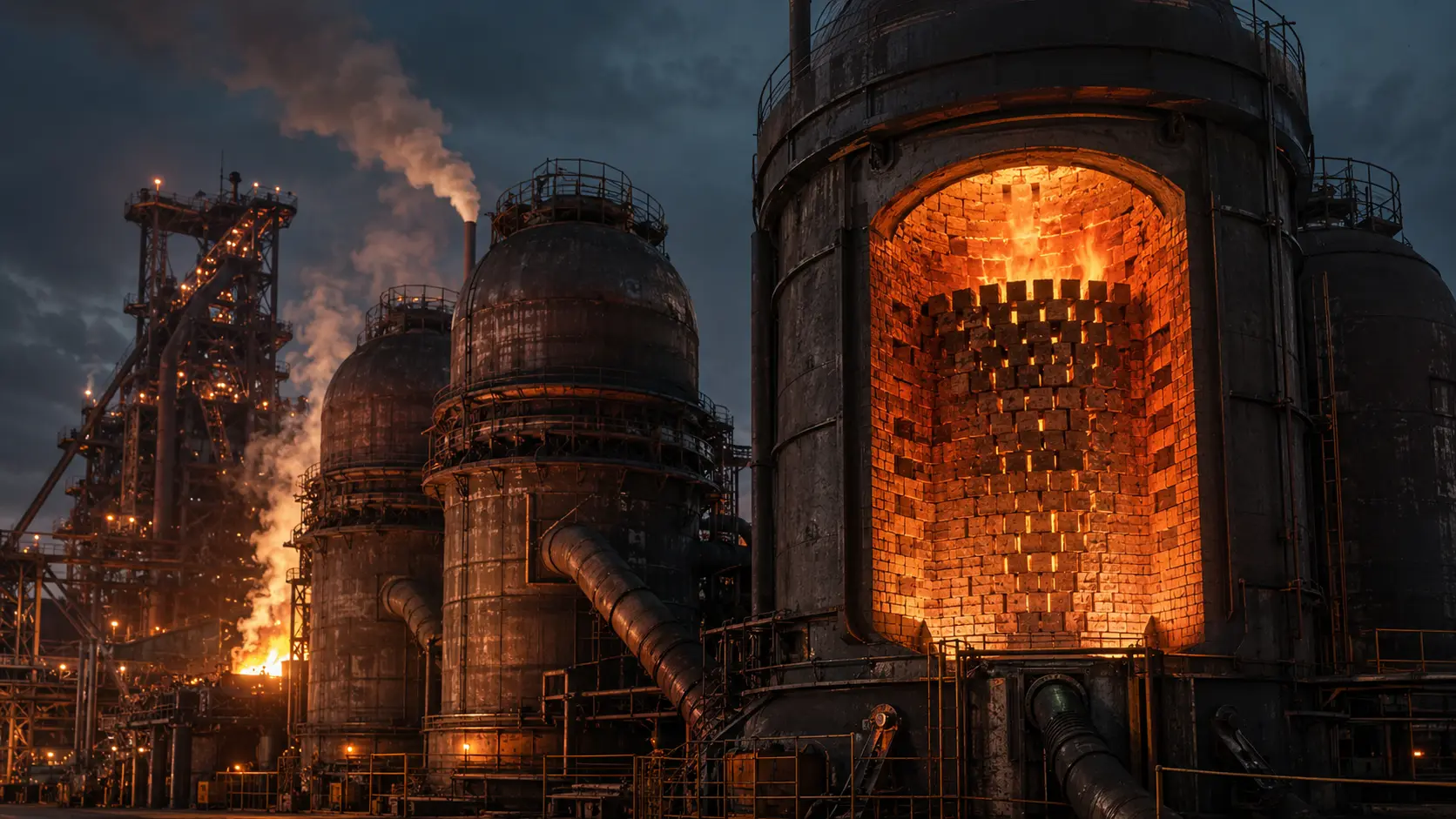
- Concept: Checker Brick Matrix: The inside of the stove is not an empty tank; it is packed with thousands of interlocking silica and alumina bricks designed exclusively to absorb thermal energy.
- Concept: Waste Gas Scavenging: The system operates mathematically on its own exhaust, capturing toxic, carbon-monoxide-rich off-gas from the smelting process and using it as free combustion fuel.
- Concept: Thermal Fatigue: The constant expansion and contraction of heating and cooling slowly shatters the ceramic bricks, dictating the mandatory maintenance downtime of global steel mills.
HOW IT WORKS
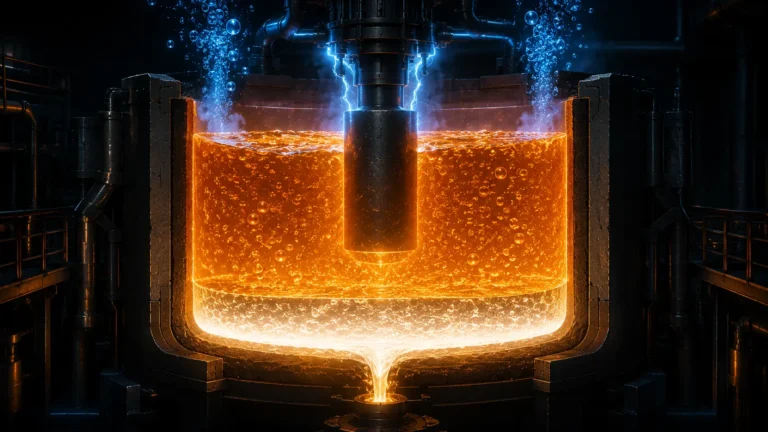
Primary steel manufacturing relies on the blast furnace, a massive chemical reactor that strips oxygen atoms away from raw iron ore to produce molten iron. This chemical reduction requires carbon (coke) and an immense, continuous supply of superheated oxygen (the “hot blast”). Pumping cold atmospheric air into a blast furnace would instantly crash the internal temperature and freeze the liquid iron, destroying the reactor.
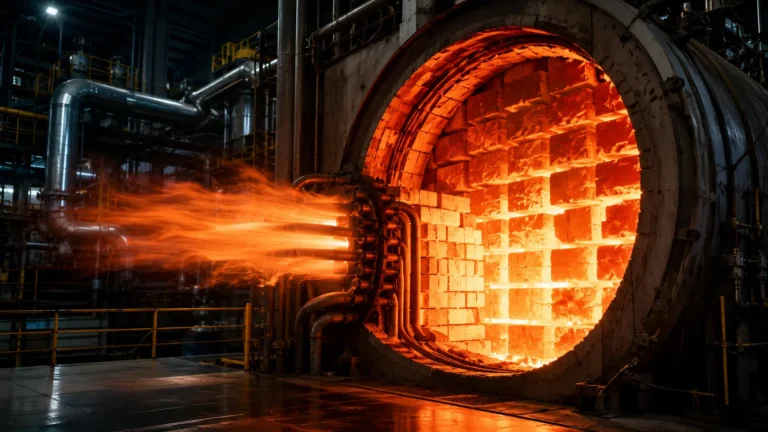
To generate the required 1,200-degree Celsius hot blast, engineers utilize a battery of regenerative heaters known as Cowper stoves. Typically, three massive, dome-topped steel towers stand directly adjacent to the blast furnace. The internal volume of these towers is densely packed with a honeycomb structure of specialized refractory ceramic bricks, known as checker work.
The system operates on an alternating, cyclic thermodynamic loop. First, the stove enters the “on-gas” phase. Highly flammable top-gas—the waste carbon monoxide expelled from the top of the adjacent blast furnace—is piped into the stove and ignited. The intense combustion flames are pulled downward through the honeycomb brick matrix. The ceramic bricks absorb the extreme thermal energy until they glow white-hot, effectively charging the thermal battery.
Once the bricks reach maximum thermal saturation, the stove switches to the “on-blast” phase. The combustion gas is shut off, and massive industrial blowers force freezing atmospheric air upward through the hot bricks. The air aggressively strips the heat from the ceramics, emerging from the top of the stove as a 1,200-degree supersonic wind. This hot blast is piped directly into the bottom of the blast furnace to fuel the iron smelting reaction. Because one stove is always heating while another is blowing, the blast furnace receives an uninterrupted, perfectly stable supply of extreme thermal energy.
WHY IT MATTERS NOW
Primary steel is the physical skeleton of human civilization. Every skyscraper, cargo ship, wind turbine, and nuclear reactor requires massive tonnages of structural steel. The economics of this production are governed entirely by the thermodynamic efficiency of the Cowper stoves.
Heating air to 1,200 degrees Celsius using purchased natural gas would bankrupt a steel mill instantly. The genius of the regenerative stove is its parasitic efficiency. By capturing and burning the toxic waste gas that the blast furnace naturally produces, the steel mill recovers millions of megajoules of thermal energy that would otherwise be vented into the atmosphere. This cyclic heat recovery mathematically drops the baseline cost of raw structural steel by over thirty percent, making modern hyper-construction economically viable.
However, this thermodynamic loop is the single largest point-source of industrial carbon emissions on Earth. The primary steel industry accounts for roughly eight percent of all global carbon dioxide output. Western governments are aggressively legislating the decarbonization of heavy industry through carbon border adjustment mechanisms and severe emission taxation.
Companies like ArcelorMittal and Nippon Steel are desperately attempting to modify their existing blast furnace infrastructure to survive this regulatory hammer. They are retrofitting Cowper stoves to burn hydrogen gas blends or injecting pure oxygen rather than atmospheric air. These modifications physically alter the combustion physics inside the stove dome, pushing the refractory bricks to absolute failure limits. If the bricks melt under the new fuel regimes, the blast furnace loses its hot blast, instantly paralyzing the mill and strangling the localized supply chain for structural materials.
WHAT MOST PEOPLE MISS
Environmental policy debates focus heavily on replacing blast furnaces entirely with electric arc furnaces powered by renewable energy. They completely miss the metallurgical reality of virgin steel.
Electric arc furnaces simply melt down old, recycled scrap steel. They cannot convert raw iron ore into new metal. As the global economy expands—especially across India and Southeast Asia—the demand for steel vastly outstrips the available supply of recyclable scrap. The world mathematically must continue smelting raw rock into new iron. The Cowper stove is not an obsolete relic; it remains the only industrially proven, scalable mechanism for generating the extreme, sustained thermochemical heat required to drag raw iron out of the Earth’s crust.
THE TRAJECTORY
Next 12–36 Months: Steel conglomerates will aggressively deploy AI-driven predictive control models across their stove networks. Machine learning algorithms will ingest thousands of real-time thermal sensor readings to optimize the exact second a stove switches from “on-gas” to “on-blast,” mathematically extracting the absolute maximum thermal yield from the deteriorating brick matrix before forcing a shutdown.
Next Five Years: The industry will standardize the injection of high-concentration hydrogen directly into the hot blast. This will require entirely new classes of ultra-high-alumina refractory bricks inside the stoves to withstand the violently hotter, more concentrated combustion flame of hydrogen gas, forcing a massive capital upgrade cycle across legacy European and Japanese steel mills.
Next Ten Years: The deployment of Direct Reduced Iron (DRI) shafts will begin to cannibalize traditional blast furnace market share in regions with abundant cheap electricity. These systems bypass the Cowper stove entirely, using pure green hydrogen to chemically strip oxygen from iron ore at lower temperatures without requiring the massive, cyclical thermal battery architecture.
What Could Go Wrong: The structural integrity of the ceramic checker bricks relies on predictable thermal expansion. If an unexpected power grid failure forces a sudden, uncontrolled cool-down of the massive stove network, the thermal shock will physically shatter thousands of tons of internal ceramic bricks. The mill would face months of catastrophic downtime to manually excavate and rebuild the internal honeycomb structure.
Most Likely Outcome: The regenerative stove will remain the absolute baseline thermal engine of global industrialization for the next two decades. However, the staggering cost of upgrading the refractory ceramics to handle low-carbon fuel blends will accelerate the consolidation of global steel production, driving smaller, independent mills into bankruptcy.
KEY TERMS
- Cowper Stove: A towering, cylindrical regenerative heat exchanger packed with ceramic bricks used to pre-heat the air blast for a blast furnace.
- Refractory Material: Specialized, non-metallic ceramic materials (like silica and alumina) engineered to physically withstand extreme temperatures and chemical corrosion without melting or shattering.
- Top Gas: The toxic, highly combustible mixture of carbon monoxide and nitrogen that exits the top of the blast furnace, scavenged to fuel the Cowper stoves.
- Hot Blast: The supersonic, 1,200-degree Celsius air stream pumped continuously into the base of a blast furnace to fuel the chemical reduction of iron ore.
- Checker Work: The complex, honeycomb-like geometric stacking of refractory bricks inside the stove designed to maximize the physical surface area available for thermal absorption.
SOURCES
- World Steel Association — Primary Ironmaking Technologies and Thermodynamic Efficiency Baselines
- Journal of Cleaner Production — Energy Recovery and Decarbonization Pathways in Blast Furnace Stove Operations
- Association for Iron & Steel Technology (AIST) — Refractory Degradation Mechanisms in High-Temperature Regenerative Stoves
- ArcelorMittal — Climate Action Report and Hydrogen Injection Metallurgy