Advertisement
)


AT A GLANCE
- Concept: Key Encapsulation: A secure mathematical handshake where two computers agree on a secret passcode over a public network.
- Concept: Shor’s Algorithm: A quantum calculation that instantly breaks the prime-factorization math securing the modern internet.
- Concept: Lattice Cryptography: Hiding data within a complex, multidimensional grid of points that quantum processors cannot efficiently map.
- Concept: Learning with Errors: Injecting deliberate mathematical noise into an equation to prevent adversaries from calculating the exact original values.
HOW KYBER-768 WORKS
Modern internet security relies on the mathematical difficulty of factoring massive prime numbers. A standard computer would take millions of years to break an RSA-2048 encryption key. A sufficiently powerful quantum computer running Shor’s algorithm will break it in hours.
To survive this mathematical inevitability, the National Institute of Standards and Technology (NIST) standardized Kyber-768, now officially known as ML-KEM. This system abandons prime numbers entirely. Instead, it relies on the geometry of multidimensional lattices.
Imagine a grid of dots stretching infinitely in hundreds of dimensions. The protocol hides the encryption key at a specific coordinate within this lattice. Finding the hidden key requires solving the Shortest Vector Problem, a geometric calculation that paralyzes both classical and quantum processors.
The algorithm implements a Module-Learning with Errors (M-LWE) structure. When a server sends a public key to a client, it does not send clean coordinates. It generates a matrix of polynomial rings and injects a mathematically calculated layer of noise.
The exact formula relies on polynomial matrices defined over the ring Rq = Zq[X]/(Xn + 1). By adding small random error vectors to the public key equation t = As + e, the system ensures an attacker intercepting the data only sees mathematically unsolvable static.
Only the client holding the exact private key matrix possesses the mathematical inverse required to filter out the noise. The two machines strip away the artificial errors and successfully agree on a shared, symmetric encryption key.
WHY IT MATTERS NOW
Adversarial nation-states are currently executing massive harvest-now, decrypt-later campaigns. Intelligence agencies are quietly copying petabytes of encrypted global banking data, sovereign communications, and proprietary corporate algorithms.
They cannot read this data today. They are storing it in hyperscale server farms, waiting for the day a functional quantum computer comes online. Once Q-Day arrives, every intercepted historical secret becomes instantly readable.
Implementing Kyber-768 is the only structural defense against this retroactive surveillance. Organizations cannot wait for quantum hardware to mature before upgrading their defenses. By the time a quantum processor breaks legacy encryption, the historical data is already stolen.
This creates an immediate, multi-billion-dollar infrastructure mandate. Global financial institutions, cloud hyperscalers, and military networks are currently rewriting the foundational Transport Layer Security (TLS) protocols of the internet to support ML-KEM handshakes.
WHAT MOST PEOPLE MISS
IT managers frequently treat post-quantum cryptography as a routine software patch, assuming they simply update a library and reboot the server. They entirely miss the brutal network physics of lattice-based algorithms.
Kyber-768 public keys are massive. A standard elliptical curve public key requires just 32 bytes of data, whereas a Kyber-768 public key requires 1,184 bytes. This exponential increase in payload bloats the initial TLS handshake, causing severe packet fragmentation across legacy firewalls and physically slowing down the internet’s core routing infrastructure.
THE TRAJECTORY
Next 12–36 Months: Global web browsers and enterprise servers will force a transition to hybrid cryptography. Systems will wrap data in both a classical elliptical curve algorithm and a Kyber-768 lattice, ensuring security against both current classical attacks and future quantum threats.
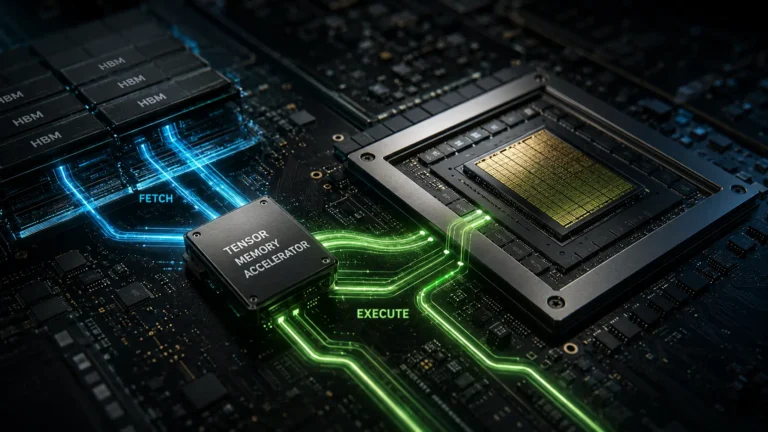
Next Five Years: The hardware ossification of lattice mathematics. Semiconductor designers will embed dedicated ML-KEM acceleration logic directly into network interface cards (NICs) and mobile processors to eliminate the severe computational latency caused by polynomial vector multiplication.
Next Ten Years: The complete deprecation of RSA and Elliptic Curve Cryptography (ECC). Regulatory bodies like the NSA and European cybersecurity agencies will legally ban classical asymmetric encryption algorithms in all government and financial procurement contracts.
What Could Go Wrong: A catastrophic algorithmic break. Lattice-based cryptography is mathematically younger than prime factorization. If a brilliant mathematician discovers a classical shortcut to solve the Learning with Errors problem, the entire ML-KEM framework instantly collapses, leaving the internet defenseless against standard laptops.
Most Likely Outcome: ML-KEM will successfully replace the internet’s aging cryptographic foundation. The sheer geopolitical necessity of protecting state secrets guarantees unlimited funding and forced compliance across all tier-one commercial infrastructure.
KEY TERMS
- ML-KEM: Module-Lattice-Based Key Encapsulation Mechanism, the official federal standard name for the Kyber cryptographic algorithm.
- Shor’s Algorithm: A quantum computing algorithm capable of finding the prime factors of an integer in polynomial time, easily breaking legacy encryption.
- Key Encapsulation Mechanism (KEM): A cryptographic technique used to securely establish a shared symmetric key over an insecure public channel.
- Learning with Errors (LWE): A machine learning and cryptographic problem that creates security by injecting small, random mathematical errors into linear equations.
- Polynomial Ring: A mathematical structure containing expressions of variables and coefficients, used by Kyber to represent vectors in multidimensional space.
SOURCES
- National Institute of Standards and Technology (NIST) — FIPS 203: Module-Lattice-Based Key-Encapsulation Mechanism Standard
- Cybersecurity and Infrastructure Security Agency (CISA) — Quantum-Readiness: Migration to Post-Quantum Cryptography
- Institute of Electrical and Electronics Engineers (IEEE) — Performance Evaluation of Kyber KEM in TLS 1.3 Handshakes
- European Union Agency for Cybersecurity (ENISA) — Post-Quantum Cryptography Integration and Hardware Acceleration