Advertisement
)

AT A GLANCE
- Concept: Open Registry: A national ship registry that allows foreign entities to flag vessels without requiring local citizenship or residency.
- Concept: Admiralty Law: The highly specialized body of international law governing nautical issues and maritime disputes.
- Concept: Tonnage Tax: A fixed tax based on the physical weight capacity of a ship, which completely replaces standard corporate income tax.
- Concept: Port State Control: The inspection mechanism used by destination countries to enforce basic safety rules on foreign-flagged ships entering their waters.
IN SIMPLE WORDS
Imagine buying a massive commercial delivery truck. You live in New York, where vehicle taxes are high, safety inspections are rigorous, and you must pay your drivers a strict minimum wage.
To avoid this, you hire a lawyer to register your truck in a tiny island nation you have never visited. This island charges a tiny flat fee, ignores emissions tests, and lets you pay your driver whatever you negotiate. You legally bolt the island’s license plate to your truck and drive it back into New York to deliver goods.
Modern multi-billion dollar shipping cartels do exactly this with massive cargo ships. By flying the flag of Panama or the Marshall Islands, a shipping conglomerate based in Europe completely bypasses European labor laws and corporate taxes. This geographic loophole makes maritime shipping artificially cheap. It is the primary reason almost every physical product you buy can be transported across the ocean for fractions of a penny.
HOW FLAGS OF CONVENIENCE WORK
The foundation of global maritime trade is the United Nations Convention on the Law of the Sea (UNCLOS). Under UNCLOS, a ship operating in international waters is subject strictly to the exclusive jurisdiction of the state whose flag it flies. The flag state is responsible for enforcing safety, labor, and environmental standards on that vessel.
Historically, ships flew the flags of the countries where their owners resided. These are known as closed registries. Operating a ship under a United States or German flag requires the company to pay standard corporate income taxes and hire domestic, unionized crews.
To bypass this financial burden, the industry created open registries, commonly known as flags of convenience (FOC). Nations like Panama, Liberia, and the Marshall Islands established registries that allow any foreign corporation to flag a ship for a minor administrative fee.
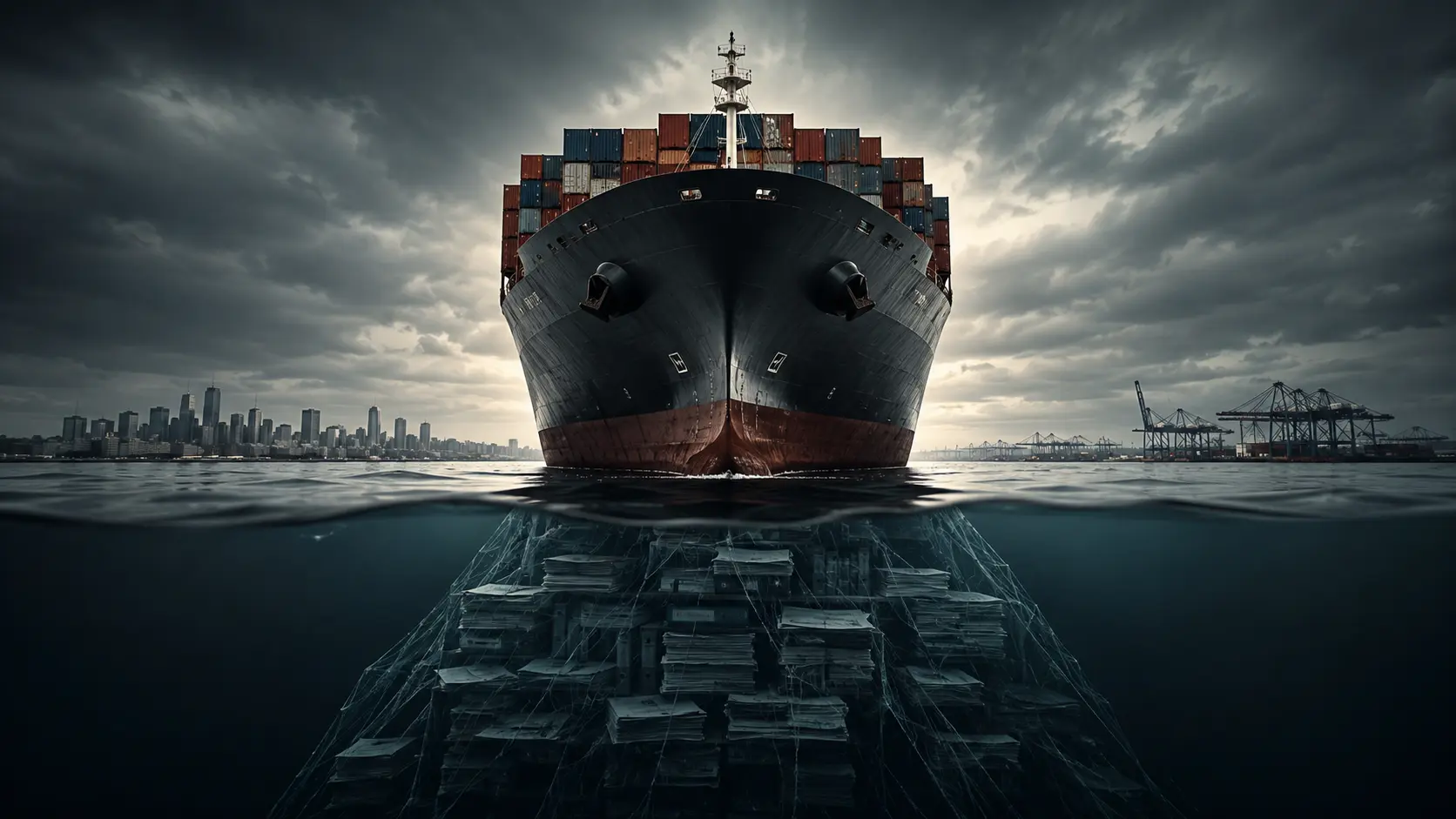
The financial architecture relies on extreme corporate abstraction. A Greek shipping magnate does not simply register a ship in Liberia under their own name. They create an anonymous Special Purpose Vehicle (SPV)—a shell company—located in a tax haven like the British Virgin Islands. That shell company legally owns the physical steel of the ship. The shell company then registers the vessel in Liberia.
This abstraction completely severs the ship from the ultimate beneficial owner (UBO). Once registered under an FOC, the ship is no longer subject to corporate income tax. Instead, open registries utilize a tonnage tax. The ship owner pays a microscopic, flat annual fee based strictly on the cargo capacity of the vessel, regardless of how many billions of dollars in profit the ship actually generates.
Furthermore, the open registry allows the shell company to hire seafarers from developing nations, such as the Philippines or India, paying them wages that would be highly illegal under European or American labor laws.
REAL WORLD EXAMPLE
The Mediterranean Shipping Company (MSC) is currently the largest container shipping line on Earth. The company is headquartered in Geneva, Switzerland, and is privately owned by the Aponte family. Switzerland is a landlocked country with strict corporate oversight.
However, MSC does not fly the Swiss flag on its massive fleet. The vast majority of MSC’s container ships fly the flags of Panama or Liberia. By utilizing this open registry structure, the physical ships never interact with the Swiss tax authority. The ships are legally Panamanian territory while at sea, allowing MSC to aggressively minimize its operational tax burden while dominating global supply chains from a landlocked headquarters.
WHY IT MATTERS NOW
Global maritime trade accounts for roughly 80 percent of all physical goods moved across the planet. The entire architecture of modern globalization is structurally dependent on the artificially low freight rates provided by flags of convenience.
However, this system of jurisdictional abstraction creates severe geopolitical vulnerabilities. In the 2020s, the United States and the European Union attempted to enforce strict economic sanctions and oil price caps against Russia. These embargoes failed entirely because of open registries.
Russia simply assembled a massive “shadow fleet” of aging oil tankers. They registered these ships in highly obscure, under-regulated open registries like Eswatini or Gabon, hiding the true Russian ownership behind layers of anonymous offshore shell companies. Western navies and port authorities struggle to intercept or seize these vessels because untangling the legal ownership structure of a single ship can take months of forensic accounting.
Additionally, the system breaks the logic of naval protection. During the Houthi rebel attacks in the Red Sea, the United States Navy spent billions of dollars intercepting ballistic missiles to protect commercial shipping. Yet, the ships they protected were often owned by European conglomerates, crewed by Indian nationals, carrying Chinese manufactured goods, and flying the flag of the Marshall Islands. American taxpayers funded the military defense of vessels that intentionally pay zero taxes to any Western government.
COMMON MISCONCEPTIONS
- “Flags of convenience mean the ships are pirate vessels.” They are fully legal, highly structured corporate assets. They operate under internationally recognized laws, simply optimizing those laws to the absolute extreme.
- “The registry country builds or owns the ships.” Panama builds almost no ships and owns very few. They simply sell the bureaucratic paperwork and the right to fly their flag to foreign corporations.
- “The crew must be from the flag country.” The defining feature of an open registry is that it specifically allows 100 percent foreign crews, allowing owners to source the absolute cheapest maritime labor available globally.
WHAT MOST PEOPLE MISS
Geopolitical analysts focus on the sovereign nations offering these flags, but they completely miss the hidden privatization of global registries.
Many open registries are not actually run by the governments whose flags they fly. For example, the Liberian Registry—the second largest in the world—is not administered in Monrovia. It is managed by the Liberian International Ship & Corporate Registry (LISCR), a private, for-profit corporation headquartered in Virginia, United States. A private American company legally administers the maritime sovereignty of an African nation, collecting fees from global shipping cartels to shield them from international taxes.
THE ECONOMIC AND STRATEGIC IMPACT
The primary financial beneficiaries are the global shipping cartels and major commodity traders. By erasing corporate taxes and slashing labor costs, companies like Maersk, MSC, and Trafigura maintain immense profit margins during peak demand cycles. Consumers indirectly benefit, as these cutthroat economics keep the final shelf price of imported electronics and clothing artificially low.
The absolute losers are the seafarers. Because ships under FOCs are subject to the labor laws of tiny island nations with little enforcement power, crews frequently face wage theft, abandonment, and unsafe working conditions. If a shipping company goes bankrupt, they simply abandon the ship in a random port, leaving the foreign crew stranded without pay or a way home.
Strategically, national tax authorities lose billions of dollars annually in corporate revenue. Governments are trapped in a race to the bottom; if a Western nation attempts to close the loophole and force its domestic shipping companies to flag locally, the companies will simply relocate their corporate headquarters to a more favorable jurisdiction.
THE TRAJECTORY
Next 12–36 Months: The aggressive expansion of the shadow fleet. State actors facing international sanctions, including Russia and Iran, will increasingly utilize micro-nation open registries to move illicit oil and weapons. These obscure registries will offer absolute corporate anonymity, rendering Western naval embargoes mathematically unenforceable.
Next Five Years: The implementation of mandatory blockchain bills of lading. To pierce the corporate veil of shell companies, global port authorities will attempt to mandate digital, immutable tracking of ultimate beneficial ownership. Ships that refuse to disclose their true owners on a public ledger will face extreme delays and inspections at major Western ports.
Next Ten Years: The weaponization of Port State Control for environmental taxes. Because the European Union cannot force a Panamanian-flagged ship to pay carbon taxes, the EU will aggressively weaponize port entry. They will heavily tax the physical cargo the moment a flag-of-convenience ship docks in Rotterdam or Hamburg, bypassing the registry loophole entirely to enforce climate compliance.
What Could Go Wrong: A catastrophic environmental spill by an anonymous vessel. If an aging, poorly maintained oil tanker flying an obscure flag of convenience breaks apart near a major Western coastline, the anonymous corporate owners will simply dissolve the shell company. The flag state will refuse liability, leaving the local taxpayers to fund a multi-billion dollar environmental cleanup.
Most Likely Outcome: The flag of convenience system will remain permanent. The global economy is too deeply addicted to the ultra-cheap freight rates this legal arbitrage provides. While environmental inspections at destination ports will increase, the actual corporate ownership and taxation of maritime vessels will remain hidden in offshore jurisdictions indefinitely.
KEY TERMS
- Open Registry: A national maritime database that allows foreign-owned ships to fly its flag, offering minimal regulatory oversight and low taxes.
- Closed Registry: A strict national registry that requires a ship’s owner to be a citizen or corporation of that country, enforcing domestic tax and labor laws.
- Flag of Convenience (FOC): The business practice of registering a merchant ship in a sovereign state different from that of the ship’s owners.
- Tonnage Tax: A taxation method where a shipping company pays a flat fee based on the physical size of its fleet, rather than paying tax on its corporate profits.
- Ultimate Beneficial Owner (UBO): The actual human being or parent corporation that truly profits from an asset, often hidden behind layers of offshore shell companies.
- Port State Control: The inspection of foreign ships in national ports to verify that the condition of the ship and its equipment comply with international safety regulations.
BEGINNER FAQ
What does “flying a flag of convenience” mean? It means a shipping company registers its massive cargo ship in a foreign country, like Panama or Liberia, to follow that country’s loose laws instead of the strict laws of the company’s home country.
Why do shipping companies do this? To save massive amounts of money. It allows them to legally avoid paying corporate income taxes and lets them hire crews from poorer countries at very low wages.
Is this practice illegal? No. It is completely legal under international maritime law. It is a highly optimized, universally accepted legal loophole used by almost every major shipping company on Earth.
Do these countries actually own the ships? No. A country like the Marshall Islands simply provides the legal paperwork and the flag. The physical ship is usually owned by a company in Europe or Asia.
Why don’t countries stop this? If a country like the United States forces a shipping company to register locally, the company’s costs will skyrocket. They would just move their headquarters to another country to keep their profits high.
How does this affect the crew on the ship? It leaves them vulnerable. Because the ship follows the labor laws of a tiny island nation, the crew has very few legal protections if the company decides to stop paying them or forces them to work in dangerous conditions.
What happens if the ship spills oil or crashes? It becomes a legal nightmare. Finding the actual humans responsible is incredibly difficult because the ship is owned by an anonymous shell company located in a tax haven.
Does this make the products I buy cheaper? Yes. By keeping taxes and labor costs near zero, shipping cartels can move physical goods across the ocean for fractions of a cent per item, heavily subsidizing the modern global supply chain.
SOURCES
- United Nations Conference on Trade and Development (UNCTAD) — Review of Maritime Transport and Fleet Ownership
- International Transport Workers’ Federation (ITF) — Flags of Convenience and the Exploitation of Seafarers
- International Maritime Organization (IMO) — Port State Control and Open Registry Safety Compliance
- Center for Strategic and International Studies (CSIS) — The Shadow Fleet and Geopolitical Maritime Sanctions Evasion