Advertisement
)

At a Glance
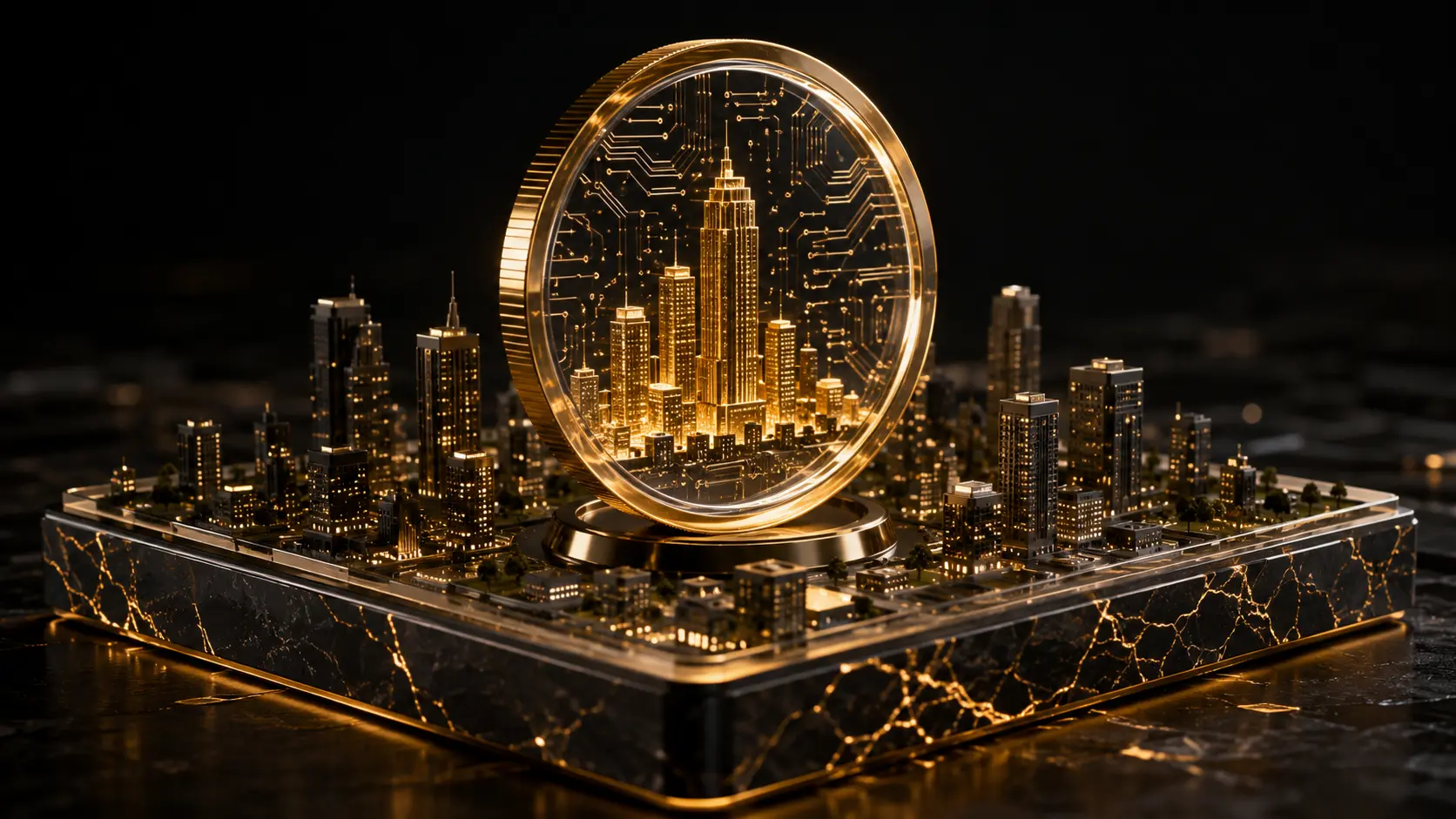
Concept: Representing traditional financial assets and physical property as digital blockchain tokens.
Why it matters: It enables instant, 24/7 trading and settlement for historically slow financial markets.
Who uses it: Global asset managers, central banks, and institutional financial infrastructure providers.
Biggest takeaway: Wall Street is adopting blockchain technology not for cryptocurrency, but to fundamentally upgrade global financial plumbing.
In Simple Words
Imagine buying a commercial building. The traditional process involves mountains of paperwork, title insurance companies, lawyers, and days of waiting for banks to clear funds.
Now imagine the deed to that building is represented by a digital token. If you want to buy a 5% fraction of that building, you send digital cash to a computer program. The program instantly verifies your funds and sends you the token. No waiting. No middlemen.
This is the core of tokenization. It takes real-world assets—like real estate, art, or government bonds—and turns them into digital certificates of ownership on a blockchain. Because these tokens live on a decentralized digital ledger, they can be traded globally, at any time of day, and settled in milliseconds. It turns slow, physical assets into fast, digital code.
Why This Matters
The global financial system currently relies on technological plumbing built in the 1970s.
When you buy a traditional stock or bond, the trade does not actually finish immediately. It undergoes a process called settlement, which typically takes one to two business days (T+1 or T+2). During this waiting period, banks and clearinghouses must hold massive amounts of capital in reserve to guarantee the trade does not fail. This traps trillions of dollars of capital in the financial system simply waiting for computers to verify transactions.
Tokenization eliminates this delay. By putting assets on a blockchain, the transfer of ownership and the transfer of payment happen at the exact same millisecond.
Furthermore, tokenization makes expensive, illiquid assets accessible to a broader market. A $50 million commercial skyscraper cannot be easily sold. However, if that skyscraper is divided into one million digital tokens worth $50 each, investors worldwide can buy and sell fractions of the building from their smartphones. This unlocks liquidity in private equity, real estate, and fine art—markets that were historically reserved only for institutional investors.
HOW TOKENIZATION OF REAL-WORLD ASSETS WORKS
Tokenizing an asset requires bridging the physical legal world with the digital cryptographic world. The system relies on a highly structured technology stack.
1. Asset Origination and Custody: Before an asset can be tokenized, it must be legally secured. If a financial institution wants to tokenize $100 million in U.S. Treasury bonds, they first buy the physical or traditional electronic bonds. They place these assets into a secure, legally audited vault or trust. This ensures that every digital token minted on the blockchain is backed 1-to-1 by a real asset held in the physical world.
2. The Smart Contract: Once the asset is secured, engineers write a smart contract. A smart contract is simply a piece of software code that lives on the blockchain. This code acts as the digital rulebook for the asset. It defines how many tokens exist, who is allowed to hold them (e.g., verifying investors have passed identity checks), and how dividends or interest payments are distributed.
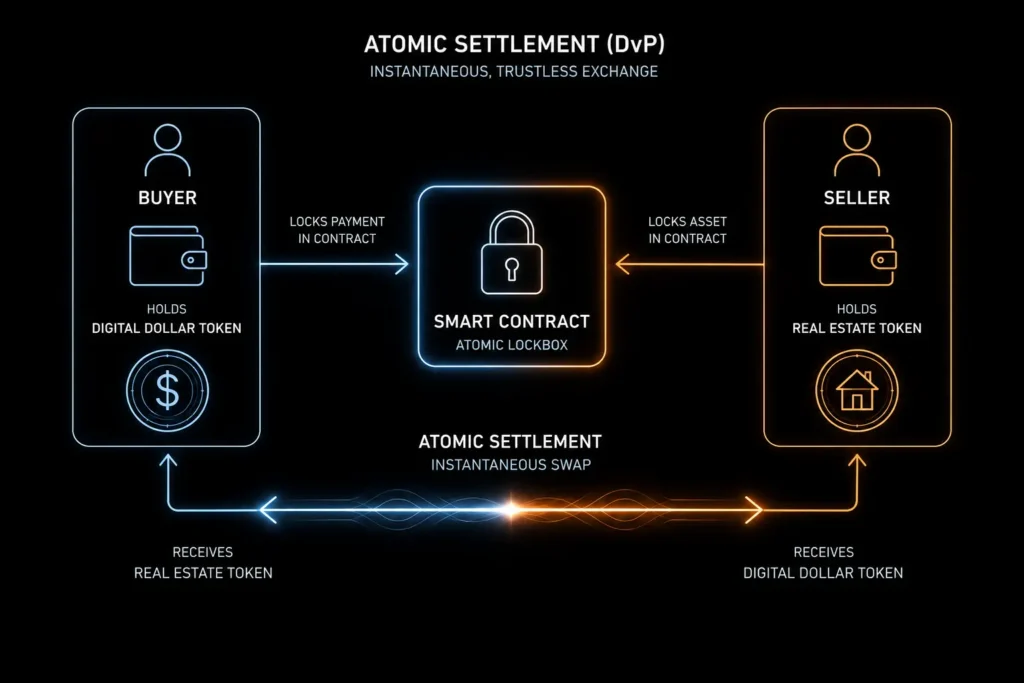
3. Atomic Settlement (DvP): The defining feature of tokenized markets is Delivery versus Payment (DvP). In traditional finance, delivering the asset and making the payment are two separate steps handled by different databases. In a tokenized system, the smart contract executes an atomic settlement. The buyer’s digital cash and the seller’s asset token are swapped simultaneously. If the buyer lacks the funds, or the seller lacks the token, the transaction fails entirely. There is no scenario where money is sent but the asset is not received. This mathematically eliminates settlement risk.
4. Oracle Networks: Blockchains are isolated systems; they cannot “see” the outside world. If a smart contract needs to pay out a dividend based on the current price of gold, it requires an external data feed. Oracle networks solve this problem. An oracle is a decentralized network of sensors and data providers that fetch real-world information—like stock prices, interest rates, or weather data—and securely feed it into the blockchain. This allows tokenized assets to react to real-world market conditions in real-time.
5. System Limitations: The technology works flawlessly, but the legal reality is complicated. If a hacker steals your digital token representing a bar of gold, do they now legally own the gold? In a pure blockchain system, whoever holds the cryptographic key owns the asset. But in the physical world, property rights are enforced by courts and police. Reconciling immutable code with physical property law remains the highest hurdle for the industry.
Real-World Applications
Tokenization has moved entirely out of the experimental phase and into institutional deployment.
Government Bonds: Major asset managers are tokenizing U.S. Treasury bills. These digital funds act like stablecoins but pay the holder a daily yield based on current government interest rates. Investors use these tokens as a safe place to park cash on the blockchain while still earning traditional financial returns.
Private Equity Funds: Global investment firms have started offering tokenized access to their private equity and private credit funds. Historically, investing in these funds required millions of dollars and a ten-year lockup period. Tokenized versions allow smaller institutions to buy in for much less and trade their fund shares on secondary digital markets.
Real Estate: Commercial real estate developers are tokenizing high-value properties. By issuing security tokens backed by the rental income of a building, developers can raise capital globally without relying on traditional banks or highly concentrated real estate investment trusts (REITs).
Economic & Strategic Impact
The tokenization of real-world assets is aggressively restructuring how global capital moves.
For asset managers and banks, it represents a massive reduction in operational costs. By replacing human administrators, reconciliation teams, and clearinghouses with automated smart contracts, financial institutions can reduce the overhead of managing an asset by up to 40%.
For emerging economies, it provides unprecedented access to global capital. Historically, an investor in a developing nation could not easily buy U.S. real estate or European corporate bonds due to capital controls and heavy intermediary fees. Tokenization removes geographic barriers, creating a unified, global liquidity pool where a fraction of a Manhattan office building can be traded in milliseconds from anywhere in the world.
Strategically, the entities that control the blockchain infrastructure and the legal custody of the underlying physical assets will become the new power brokers of Wall Street, quietly replacing legacy clearinghouses like the Depository Trust & Clearing Corporation (DTCC).
Advantages
Instant Settlement: Trades settle in milliseconds rather than days, eliminating counterparty risk and freeing up trapped capital.
Fractional Ownership: Highly expensive assets can be divided into micro-shares, increasing market access for smaller investors.
Programmability: Assets can have compliance rules, dividend payouts, and voting rights baked directly into their code, executing automatically.
24/7 Market Operations: Unlike traditional stock exchanges that close on weekends and holidays, blockchain networks operate continuously.
Limitations
Legal Ambiguity: Many global jurisdictions do not yet recognize a digital token as a legally binding bearer instrument for physical property.
Liquidity Illusions: Tokenizing an asset does not automatically create buyers. A tokenized fraction of an unwanted commercial building is still unwanted.
Oracle Manipulation: If the external data feed providing prices to the smart contract is compromised, the asset can be improperly priced or drained.
Fragmentation: Assets are currently being tokenized across dozens of different, incompatible blockchains, fracturing market liquidity rather than unifying it.
Common Misconceptions
Misconception: Tokenization is the same thing as cryptocurrency.
Reality: Cryptocurrencies like Bitcoin are digital native assets with no physical backing. Tokenized real-world assets are digital representations of traditional legal contracts, backed by physical properties or fiat cash flows.
Misconception: Tokenization removes the need for banks and lawyers.
Reality: While it removes middle-office clearinghouses, it heavily relies on legal trusts, traditional custodians, and auditors to ensure the digital token actually matches the physical asset in the vault.
Misconception: Anyone can buy a tokenized asset anonymously.
Reality: Legitimate tokenized real-world assets (especially securities) use permissioned smart contracts. The code physically prevents a token from being transferred to a wallet that has not passed strict Know Your Customer (KYC) identity checks.
What Most People Miss
The true power of tokenization is not just speed—it is composability.
In traditional finance, different assets sit in different databases that cannot communicate. A bond is in one system, a mortgage in another, and cash in a third.
When all these assets are tokenized on a shared blockchain network, they can interact like financial Lego blocks. An investor could write a single smart contract that automatically uses their tokenized real estate as collateral to borrow digital dollars, which are instantly used to purchase tokenized government bonds. A complex, multi-institution trade that used to take weeks of legal negotiation can now be executed by a computer program in three seconds.
Comparison Table
| Feature | Traditional Capital Markets | Tokenized Asset Markets |
| Settlement Time | 1 to 2 business days (T+1 / T+2). | Instantaneous (Atomic). |
| Trading Hours | Monday through Friday, 9:30 AM to 4:00 PM. | 24 hours a day, 365 days a year. |
| Intermediaries | Brokers, clearinghouses, transfer agents. | Smart contracts, oracle networks, custodians. |
| Asset Divisibility | High minimums; difficult to fractionalize. | Infinite fractionalization. |
| Programmability | Requires manual administration and payouts. | Code automates dividends and compliance. |
| Primary Risk | Settlement delay and counterparty failure. | Smart contract bugs and legal ambiguity. |
| Best Fit | Legacy institutional trading. | High-speed, borderless, automated finance. |
Case Study
Situation: BlackRock, the world’s largest asset manager, recognized that digital asset investors held billions of dollars in stablecoins but were earning zero yield because traditional government bonds could not exist on a blockchain.
Challenge: BlackRock needed a way to bring the safety and yield of U.S. Treasury bills directly onto a public blockchain, allowing digital investors to earn interest without having to convert their crypto back into traditional bank cash.
Solution: BlackRock launched the BUIDL fund (BlackRock USD Institutional Digital Liquidity Fund). They purchased traditional U.S. Treasuries and held them securely at a major custodian bank. They then minted a token on the Ethereum blockchain representing shares of that fund.
Outcome: Within months, the fund attracted hundreds of millions of dollars. Investors received a digital token pegged to $1.00 that paid daily accrued dividends directly into their digital wallets.
Lessons Learned: Institutional capital will eagerly adopt public blockchain infrastructure when the underlying asset is managed by a trusted, regulated entity. The technology works; it simply required Wall Street credibility to scale.
Future Outlook
Next 12–24 Months: Regulatory bodies in the European Union, the UK, and Singapore will establish clear legal frameworks for digital property rights. Traditional financial institutions will focus heavily on tokenizing money market funds and using them as collateral for overnight repo lending, prioritizing operational efficiency over retail access.
Next 3–5 Years: Interoperability protocols will mature, allowing a tokenized asset minted on a private bank blockchain to move seamlessly to a public network like Ethereum. We will see the first major corporate bonds issued natively on a blockchain, completely bypassing traditional underwriting syndicates.
Next 10 Years: The distinction between “traditional finance” and “digital finance” will disappear. Real-world asset tokenization will simply become the invisible back-end technology powering all global markets. Physical deeds, paper stock certificates, and T+2 settlement will be viewed as historical artifacts.
Most Likely Scenario: Tokenization will not immediately democratize all finance for retail investors, as stringent KYC laws will remain. However, it will fundamentally rebuild the institutional plumbing of Wall Street. The clearinghouses that defined the 20th century will either pivot to providing digital smart contract infrastructure or be replaced entirely by decentralized networks.
Key Takeaways
Tokenization converts ownership of physical and financial assets into digital blockchain tokens.
It replaces slow, manual settlement processes with instant, automated smart contract execution.
Atomic settlement (DvP) ensures assets and payments change hands simultaneously, eliminating counterparty risk.
Tokenization allows highly illiquid assets, like real estate, to be fractionalized and traded globally.
Smart contracts make assets programmable, allowing automatic dividend payments and compliance checks.
Oracles are required to feed real-world pricing data securely into the blockchain.
Major financial institutions are driving this shift to reduce operational costs and free up trapped capital.
Glossary
Atomic Settlement (DvP): A process where the delivery of an asset and the payment for that asset occur simultaneously; if one fails, both fail.
Custodian: A regulated financial institution responsible for securely holding the physical assets that back the digital tokens.
Interoperability: The ability for digital tokens to move seamlessly across different, competing blockchain networks.
Know Your Customer (KYC): Financial regulations requiring institutions to verify the identity of an investor before allowing them to hold or trade a token.
Oracle Network: A decentralized system that securely feeds real-world data (like market prices) into a blockchain smart contract.
Real-World Asset (RWA): Any physical or traditional financial asset—such as real estate, gold, or bonds—that exists off-chain.
Smart Contract: Self-executing software code living on a blockchain that automatically enforces the rules and conditions of an agreement.
Tokenization: The process of creating a digital representation of an asset on a distributed ledger or blockchain.
Frequently Asked Questions
Does buying a token mean I actually own the physical asset? It depends on the legal structuring. In most compliant setups, you own a share in a legal trust or Special Purpose Vehicle (SPV), and that trust holds the physical deed to the asset.
Is tokenization just another word for cryptocurrency? No. Cryptocurrencies derive value from their network utility and scarcity. Tokenized assets derive their value entirely from the real-world physical object or financial contract they represent.
What happens to my token if the physical asset is destroyed? The token loses its value. Tokenizing a house does not protect the house from burning down. The asset must still be insured and managed in the physical world exactly as it was before.
Are tokenized assets safe from hackers? The underlying blockchain mathematics are highly secure. However, if a hacker gains access to your private digital wallet, they can transfer your tokens. Institutional assets use permissioned contracts to freeze and recover stolen tokens.
Why do banks want to tokenize assets? Banks spend billions of dollars annually on back-office administration, trade reconciliation, and settlement delays. Tokenization automates these processes, drastically reducing their operational costs.
Can anyone buy a tokenized asset? Not necessarily. While the technology allows anyone to buy them, financial regulations dictate that tokens representing securities can only be transferred to digital wallets that have passed identity and background checks.
How is a tokenized stock different from a regular stock? When you buy a regular stock, your broker holds it in your name at a central depository. When you buy a tokenized stock, you hold the digital certificate directly in your own cryptographic wallet, giving you direct control.
What is the role of an oracle in tokenization? Because a blockchain cannot check the internet, an oracle securely provides external data. For example, if a tokenized bond pays a variable interest rate, the oracle feeds the current federal interest rate into the smart contract.
Sources
Bank for International Settlements (BIS): The Tokenisation Continuum
World Economic Forum (WEF): Building Value with Blockchain Technology
Depository Trust & Clearing Corporation (DTCC): Advancing the Digital Asset Era
BlackRock: Institutional Digital Asset Strategy and BUIDL Documentation