Advertisement
)


At a Glance
- Concept: Utilizing advanced chemistry to tether a highly radioactive atom (Actinium-225) to a biological ligand that specifically binds to receptors found only on the surface of cancer cells.
- Why it matters: Traditional radiation therapy indiscriminately damages healthy organs. Beta-emitting radiopharmaceuticals (like Lutetium-177) improved targeting but can fail in resistant tumors. Actinium-225 emits heavy, devastating alpha particles that shatter cancer DNA beyond repair, representing the ultimate high-precision cure for metastatic disease.
- Who uses it: Pioneering biopharma companies including Actinium Pharmaceuticals, Blue Earth Therapeutics, Fusion Pharmaceuticals, and the broader global oncology ecosystem.
- Biggest takeaway: The success of the “Alpha-Era” in oncology is not constrained by biology; it is bottlenecked by nuclear physics. Generating Actinium-225 requires incredibly complex nuclear supply chains, forcing the industry to transition from extracting 1950s-era nuclear waste to building dedicated linear accelerators and cyclotrons.
In Simple Words
To understand how targeted radiopharmaceuticals work, imagine a war where the enemy hides directly among innocent civilians.
The old way of fighting cancer—chemotherapy or external radiation—was like dropping a massive bomb on the entire city. It killed the enemy, but it also caused devastating collateral damage to the healthy civilians.
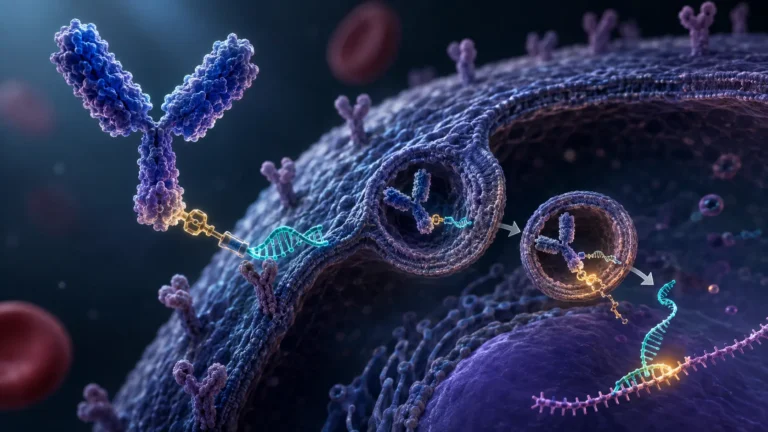
Targeted Radiopharmaceuticals change the rules of engagement. Scientists engineer a microscopic “homing beacon” that perfectly matches a specific lock on the surface of the cancer cell. They then take a tiny, highly radioactive bomb—specifically, an atom of Actinium-225—and superglue it to that homing beacon.
When a doctor injects this medicine into a patient’s bloodstream, the beacon floats harmlessly past billions of healthy cells. It only attaches to the cancer cells. Once attached, the Actinium-225 atom detonates, acting like a microscopic sniper bullet. It blasts heavy radiation only a few cell-widths away, completely obliterating the cancer’s DNA without harming the healthy tissue sitting right next to it.
Why This Matters
The oncology landscape is undergoing a decisive paradigm shift toward the “Alpha-Era”.
For the past decade, targeted radiation relied heavily on beta-emitters like Lutetium-177 (Lu-177). Drugs like Pluvicto (using Lu-177) achieved groundbreaking results in prostate cancer, but beta particles travel several millimeters through tissue, which can damage adjacent healthy cells and occasionally fail to completely eradicate poorly perfused or highly resistant tumors.
Actinium-225 (Ac-225) utilizes alpha particles. Alpha particles carry vastly more kinetic energy but only travel a microscopic distance (a few cell diameters). Early clinical data reveals that patients with metastatic castration-resistant prostate cancer (mCRPC) who failed traditional chemotherapy and beta-therapies are experiencing profound, durable responses after receiving Ac-225 targeted alpha therapy (TAT). As a result, securing the intellectual property for optimal chelators, novel ligands, and raw isotope production is triggering a multi-billion-dollar capital rotation across the global pharmaceutical industry.
The Big Picture
The true revolution lies in the concept of Theranostics (Therapeutics + Diagnostics).
Before administering an extremely potent alpha-emitter, an oncologist replaces the radioactive payload with a safe, imaging isotope (like Gallium-68 or Fluorine-18). The patient undergoes a PET scan. Because the “homing beacon” is exactly the same, the tumor lights up brilliantly on the scan, proving definitively that the cancer expresses the targeted receptor.
If the tumor lights up, the oncologist simply swaps the diagnostic isotope for Actinium-225 and administers the therapeutic dose. This eliminates the guesswork of traditional oncology. You only treat the patients you know will respond, allowing for personalized, mathematically precise radiation dosimetry.
HOW TARGETED RADIOPHARMACEUTICALS WORK
Creating an injectable radioactive guided missile requires mastering nuclear decay, molecular binding, and tumor microenvironments. Here is the first-principles breakdown.
1. The Fundamental Problem: Collateral Damage
External beams burn healthy tissue. Traditional radiation relies on external beams penetrating the body to hit a tumor. We needed a mechanism to introduce the radioactive energy systemically (into the bloodstream) to reach microscopic metastases everywhere in the body without irradiating the patient’s entire system.
2. The Insufficiency of Beta Decay
Electrons travel too far. Early radiopharmaceuticals used Beta decay (high-speed electrons). Because they are light, they penetrate deeply into tissue (several millimeters). This creates a “crossfire effect” that can damage adjacent healthy tissue and lacks the raw impact energy to completely destroy highly resistant cancer DNA structures.
3. The Core Mechanism: Alpha Decay and Linear Energy Transfer
Massive kinetic energy over microscopic distances. Targeted Alpha Therapy (TAT) utilizes isotopes like Actinium-225. Alpha particles are massive (comprising two protons and two neutrons). Because they are extremely heavy, they travel only 50 to 80 micrometers in tissue. However, they deposit an enormous amount of kinetic energy along that incredibly short path, yielding a high Linear Energy Transfer of approximately 80 keV per micrometer. This causes catastrophic double-strand breaks in the cancer cell’s DNA, rendering it physically impossible for the tumor to repair itself.
4. Technical Depth: The Tripartite Molecule
A three-part guided missile. The drug itself comprises three distinct parts. The Ligand is a peptide or antibody designed to bind to an overexpressed tumor antigen. The Linker is a chemical bridge. The Chelator is a molecular “cage” that securely traps the highly reactive Actinium-225 atom, preventing it from floating freely in the bloodstream.
5. Real-World Consequences: Prostate-Specific Membrane Antigen (PSMA) Targeting
Destroying cancer from the inside out. In mCRPC, prostate cancer cells vastly overexpress a protein called PSMA. By designing a ligand that binds perfectly to PSMA, the drug effectively ignores 99% of the patient’s body. The Actinium-225 is internalized directly into the prostate cancer cells, destroying them from the inside out and often resulting in massive, rapid declines in PSA levels within weeks.
Real-World Applications
The clinical acceleration of Actinium-225 is reshaping trial designs and therapeutic pipelines globally.
Advanced Prostate Cancer (mCRPC): This is the flagship proving ground for TAT. Fusion Pharmaceuticals is advancing the pivotal Phase 2/3 AlphaBreak trial evaluating FPI-2265 in treatment-resistant prostate cancers in 2026. Simultaneously, Blue Earth Therapeutics initiated the Phase 1 ACT-RESoLUTE trial in July 2026 for their proprietary radiohybrid alpha-emitter, Ac-225 rhPSMA-10.1, targeting patients who have progressed following standard therapies.
Mutation-Agnostic Lung Cancer Therapies: The utility of Ac-225 is expanding beyond PSMA. Actinium Pharmaceuticals’ ATNM-400 (a novel Ac-225 antibody radioconjugate) has demonstrated durable, mutation-agnostic efficacy in challenging Non-Small Cell Lung Cancer (NSCLC) models, specifically showing immense potential in KRAS-mutated profiles that resist standard EGFR/KRAS targeted inhibitors.
Targeting the Tumor Microenvironment (TME): For tumors that do not express obvious surface antigens, researchers are deploying FAP and FAPI radioligand therapies. These target the Fibroblast Activation Protein (FAP), which is highly prevalent in the stroma (the supportive tissue) surrounding tumors. By bombing the tumor’s life-support system with alpha radiation, the therapy strangles the cancer’s ability to grow, even if the cancer cells themselves lack specific receptors.
Economic & Strategic Impact
The clinical elegance of Actinium-225 masks a severe, geopolitical vulnerability: The Isotope Supply Chain.
Historically, Actinium-225 was milked from “thorium-cows”—decaying stockpiles of Uranium-233 and Thorium-229 generated during mid-20th-century nuclear weapons programs. These legacy stockpiles produce only a few curies per year, an amount completely insufficient to support a global commercial pharmaceutical rollout.
To break this bottleneck, the U.S. Department of Energy (DOE) launched the Tri-Lab effort (Brookhaven, Los Alamos, Oak Ridge). They use massive linear accelerators to blast Thorium-232 targets with high-energy protons to breed new Ac-225. Concurrently, private capital is funding the rapid construction of specialized cyclotrons and electron accelerators designed specifically to produce non-carrier-added (n.c.a.) Ac-225 on a commercial gigascale. The companies that successfully vertically integrate this nuclear supply chain will hold absolute leverage over the multi-billion-dollar radiopharmaceutical ecosystem.
Advantages
- Extreme Lethality (High LET): Alpha particles shatter the double-strand DNA of cancer cells, a catastrophic level of damage that cells cannot repair, overcoming resistance mechanisms common in chemotherapy.
- Localized Precision: Because alpha particles only travel 50 to 80 μm, the “splash damage” to adjacent healthy organs is virtually eliminated compared to beta-emitters.
- Theranostic Personalization: Patients can be pre-screened with PET imaging using the exact same ligand, mathematically proving the drug will hit the target before the radioactive payload is ever administered.
- Overcoming Resistance: It offers a potent salvage therapy for patients who have exhausted traditional lines of treatment (e.g., taxane therapy, androgen receptor inhibitors).
Limitations
- Nuclear Supply Constraints: The global production of high-purity, clinical-grade Actinium-225 remains highly constrained by the limited number of specialized cyclotrons and linear accelerators.
- Daughter Isotope Redistribution: When Ac-225 decays, it transforms into a “daughter” isotope (Francium-221), unleashing extreme kinetic recoil. This recoil can break the chemical bonds of the chelator cage, allowing the daughter isotopes to float freely through the blood and accumulate in the kidneys or salivary glands, causing toxicity.
- Complex Logistics: The drug is literally decaying the moment it is manufactured. Administering a 10-day half-life isotope requires flawless, just-in-time “vein-to-vein” supply chain execution between the radiopharmacy and the clinical infusion center.
Common Misconceptions
Misconception: All radiation therapy makes the patient permanently radioactive.
Reality: Targeted alpha therapies use isotopes with very short half-lives and very short emission ranges. The radiation is entirely localized to the tumor microenvironment and dissipates rapidly, posing minimal secondary exposure risk to family members compared to external beam therapies.
Misconception: Radiopharmaceuticals are a last-resort palliative care measure.
Reality: While initially tested in end-stage, heavily pre-treated patients, the unprecedented efficacy of drugs like Ac-225-PSMA-617 is pushing trial designs further “upfront” into earlier stages of the disease, aiming for curative outcomes rather than mere life-extension.
Misconception: Building more nuclear reactors solves the supply issue.
Reality: Commercial Ac-225 is largely an accelerator and cyclotron problem, not a traditional reactor problem. The push for scalable supply relies on high-energy proton bombardment of Thorium-232, requiring highly specialized particle physics facilities, not standard fission reactors.
What Most People Miss
The critical engineering bottleneck of the Chelator-to-Antibody Ratio (CAR).
While the public focuses on the radioactive isotope, the true bio-engineering masterclass lies in the radiochemistry. Actinium Pharmaceuticals and others invest massive R&D specifically into optimizing how many radioactive cages (chelators) can be glued onto a single targeting antibody. If you attach too few, the drug isn’t lethal enough. If you attach too many, the antibody becomes heavy, deformed, and loses its ability to recognize the tumor. Finding the perfect mathematical ratio is the “secret sauce” that dictates tumor targeting, pharmacokinetics, and ultimately, patient survival.
Comparison Table
| Feature | Beta Therapy (e.g., Lutetium-177) | Alpha Therapy (e.g., Actinium-225) |
| Decay Particle | Electron (β-) | Helium Nucleus (α) |
| Tissue Range | ~1 to 2 Millimeters | ~50 to 80 Micrometers |
| Linear Energy Transfer | Low (~0.2 keV/μm) | Extreme (~80 keV/μm) |
| DNA Damage Type | Single-strand breaks | Double-strand breaks (Irreparable) |
| Isotope Supply | Abundant (Reactor produced) | Severely Constrained (Accelerators/Cyclotrons) |
| Clinical Efficacy | High (Proven in VISION trial) | Superior for resistant/metastatic lesions |
Case Study
Situation: Historically, patients with metastatic castration-resistant prostate cancer (mCRPC) faced grim prognoses once their tumors stopped responding to chemotherapy (like cabazitaxel) and next-generation hormonal therapies.
Challenge: While beta-emitting radiopharmaceuticals like Lu-177-PSMA-617 provided significant progression-free survival benefits (as proven in the pivotal VISION trial), up to 30% of patients exhibited primary resistance, and others eventually relapsed because the beta radiation failed to fully eradicate dense, heterogeneous tumor masses.
Solution (The Alpha Transition): In July 2026, Blue Earth Therapeutics advanced the field by dosing the first patient in the Phase 1 ACT-RESoLUTE trial (NCT07414940). The trial utilized an investigational alpha-emitting radiopharmaceutical, Actinium (Ac-225) rhPSMA-10.1, specifically targeting men whose disease progressed after prior therapy, including those who had already failed beta-therapy (Lu-177).
Outcome: By switching the payload from Lutetium-177 to Actinium-225, the therapy delivered drastically higher localized energy capable of shattering DNA structures that previously resisted beta radiation. Early observations across similar Ac-225 compassionate-use cohorts demonstrated rapid, durable PSA declines exceeding 50% in the vast majority of treated patients, dropping below detection thresholds in many cases.
Lessons Learned: The case study cemented the thesis that payload physics dictates clinical outcomes. The transition to Actinium-225 proved that for aggressive, resistant metastatic disease, the short-range, extreme lethality of an alpha particle is mathematically and biologically superior to legacy beta emissions, prompting the entire industry to accelerate their TAT pipelines.
Future Outlook
Next 12–24 Months
The industry will eagerly monitor the readouts of pivotal late-stage trials, notably Fusion Pharmaceuticals’ Phase 2/3 AlphaBreak trial evaluating FPI-2265 in mCRPC. Simultaneously, the DOE’s Tri-Lab effort will operationalize ongoing facility renovations at Brookhaven and Los Alamos, scaling batch production of accelerator-produced Ac-225 from ~100 mCi to over 1,000 mCi, temporarily relieving the immediate supply bottleneck for critical clinical trials.
Next 3–5 Years
The total dominance of Cyclotron Commercialization. As the commercial gigascale demand for Actinium-225 explodes, proprietary cyclotron-based manufacturing (championed by entities like Actinium Pharmaceuticals and specialized CDMOs) will overtake legacy DOE accelerator routes. This decentralized cyclotron infrastructure will allow high-yield, high-purity n.c.a. Actinium-225 to be synthesized regionally, slashing international logistical friction and stabilizing the commercial pricing of alpha therapies.
Next 10 Years
The democratization of Pre-Targeting Architectures. To solve the “daughter isotope redistribution” toxicity issue, biopharma will perfect pre-targeting systems. An oncologist will inject a “naked” non-radioactive antibody that binds perfectly to the tumor. Days later, a tiny, fast-moving, highly radioactive Ac-225 molecule will be injected. It will lock onto the pre-positioned antibody like a magnet, immediately destroying the tumor. Because it circulates so quickly, if it misses the target, it clears through the kidneys instantly, completely protecting the patient from systemic radiation toxicity.
Most Likely Scenario
Targeted Alpha Therapy will permanently relegate external beam radiation and broad-spectrum chemotherapy to secondary roles in advanced oncology. The companies that successfully secure long-term, commercial-scale Actinium-225 supply agreements today will wield monopolistic pricing power by 2030, commanding the most lucrative, curative therapeutic portfolios in modern precision medicine.
Key Takeaways
- Targeted Alpha Therapy (TAT) uses Actinium-225 to deliver devastating, localized alpha radiation directly inside cancer cells via tumor-seeking ligands.
- Alpha particles have an extreme Linear Energy Transfer (LET) of ~80 keV/μm and travel only microscopic distances, allowing them to shatter cancer DNA without damaging nearby healthy tissue.
- The therapy is proving highly curative in advanced metastatic castration-resistant prostate cancer (mCRPC) patients who have failed all traditional treatments and beta-therapies.
- The global rollout is bottlenecked by the supply of Actinium-225, forcing a massive capital shift toward building proprietary linear accelerators and cyclotron infrastructure to escape legacy “thorium-cow” limitations.
- Pivotal clinical milestones in 2026, such as Blue Earth Therapeutics’ ACT-RESoLUTE trial and Fusion Pharmaceuticals’ AlphaBreak, are signaling the official dawn of the “Alpha-Era” in precision oncology.
Glossary
Actinium-225 (Ac-225): An alpha-emitting radioactive isotope with a 10-day half-life that undergoes a cascade of decays, releasing four high-energy alpha particles.
Chelator: A complex molecular “cage” designed to securely trap the radioactive isotope and attach it to the targeting ligand, preventing the isotope from floating freely in the bloodstream.
Linear Energy Transfer (LET): A measure of how much energy a radioactive particle deposits into surrounding tissue per unit of distance traveled. Alpha particles have a massively higher LET than beta particles.
mCRPC: Metastatic Castration-Resistant Prostate Cancer. An advanced stage of prostate cancer that continues to grow and spread despite the depletion of testosterone.
PSMA (Prostate-Specific Membrane Antigen): A protein vastly overexpressed on the surface of prostate cancer cells, making it the ideal “lock” for targeted radiopharmaceutical “keys.”
Theranostics: The integration of therapeutics and diagnostics. Using the exact same molecular targeting agent first with an imaging isotope for a PET scan, and then with a radioactive isotope for treatment.