Advertisement
)
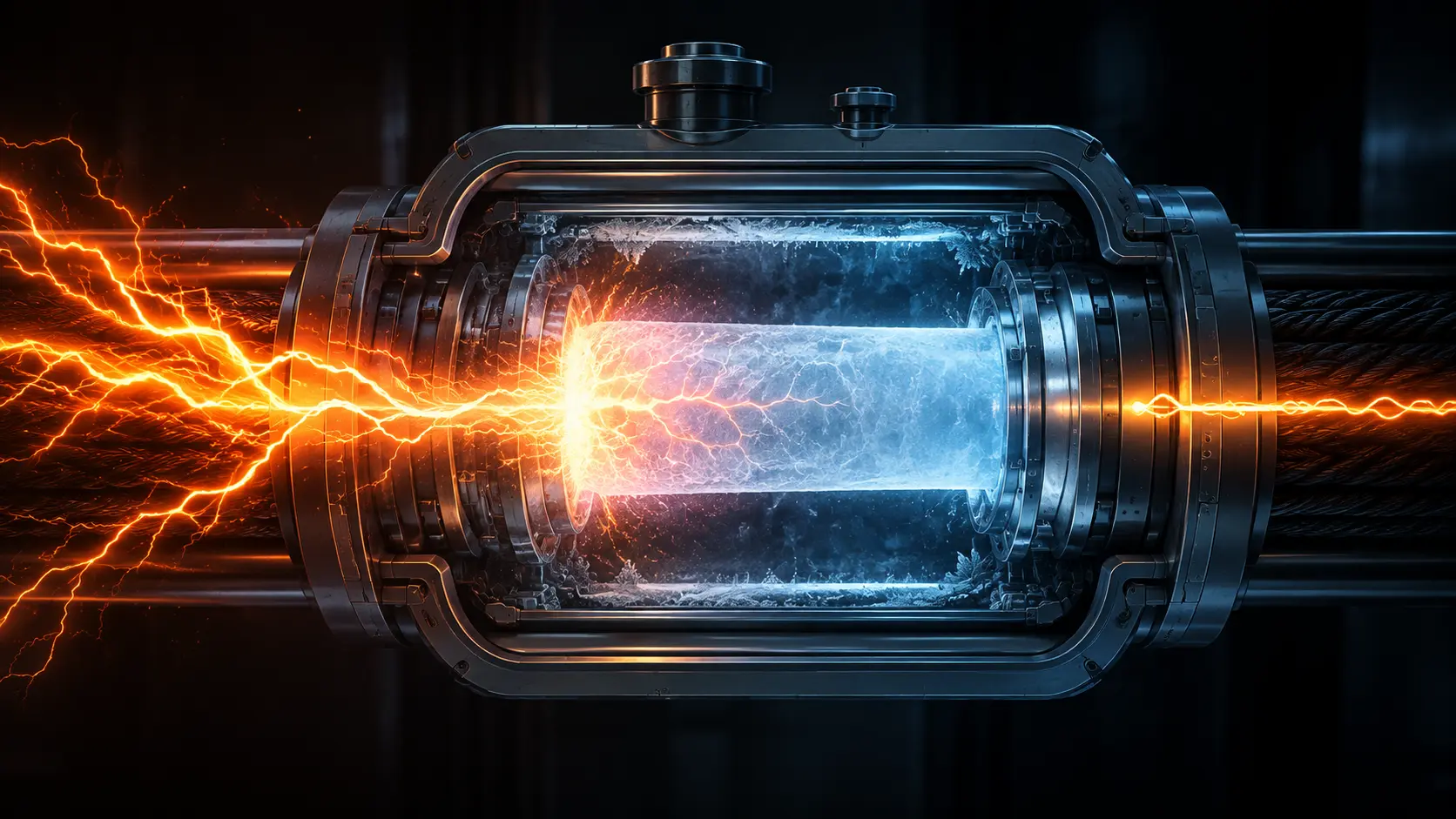

The electrical grid is being pushed to the absolute brink of its physical capacity. As modern cities aggressively transition away from fossil fuels, they are plugging massive offshore wind farms, hyper-dense electric vehicle charging hubs, and gigawatt-scale artificial intelligence data centers directly into aging municipal substations. This massive influx of distributed power creates a terrifying new vulnerability: the fault current. When a short circuit happens on a grid flooded with this much raw energy, an apocalyptic surge of electricity rockets through the transmission lines. Traditional mechanical circuit breakers are simply too slow and physically too small to physically stop a surge of this magnitude before it detonates downstream transformers and plunges entire metropolitan zones into darkness.
To solve this, grid engineers are abandoning mechanical switches and turning to quantum physics. By freezing specialized ceramic wires with liquid nitrogen, they have created a passive, invisible electrical shield that offers zero resistance during normal operations, but instantly turns into an impenetrable brick wall the millisecond a surge hits. Why should you care right now? Because deploying these self-healing, superconducting circuit breakers is the only mathematically viable way to safely integrate the immense power demands of the AI revolution without having to spend trillions of dollars physically rebuilding the entire legacy power grid from the ground up.
What are Superconducting Fault Current Limiters (SFCLs)?
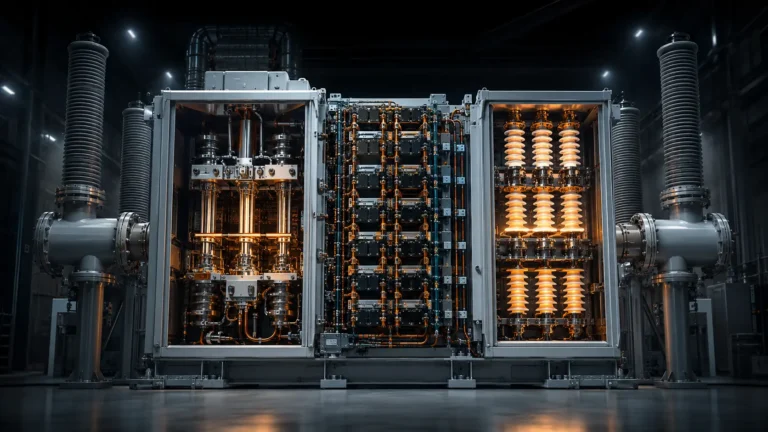
Superconducting Fault Current Limiters (SFCLs) are passive electrical devices installed in power grids to prevent catastrophic damage from short-circuit surges. They utilize cryogenically cooled High-Temperature Superconductor (HTS) materials that offer zero electrical resistance during normal operation but instantaneously develop high resistance to choke and limit excessive fault currents.
At a Glance
- Concept: Utilizing the physical state-change of a superconductor (from zero resistance to high resistance) to act as an instantaneous, automatic brake on dangerous electrical surges.
- Why it matters: Legacy circuit breakers take too long to trip. SFCLs react at the speed of physics—within a fraction of a millisecond—stopping the surge before peak destructive currents are ever reached.
- Who uses it: Forward-thinking municipal utilities, independent power producers managing distributed energy resources (DERs), and hyperscale data center developers securing localized microgrids.
- Biggest takeaway: An SFCL is fundamentally a “CapEx avoidance” tool. By choking the size of potential surges, utilities do not have to spend billions of dollars tearing out and replacing all the downstream, low-capacity switchgear that would otherwise be destroyed by grid modernization.
In Simple Words
Imagine a massive, wide-open highway where cars (electricity) travel at a perfectly smooth 60 miles per hour. Because the highway is so well-paved, there is absolutely zero friction. This represents normal operation through a superconductor.
Suddenly, a massive accident happens upstream, and a terrifying stampede of 10,000 extra cars comes barreling down the highway at 200 miles per hour (a fault current).
If you rely on a traditional toll booth (a mechanical circuit breaker) to stop them, the operator has to see the cars, press a button, and wait for a heavy metal gate to drop. By the time the gate closes, a thousand cars have already smashed through, causing massive destruction.
A Superconducting Fault Current Limiter (SFCL) works like magic asphalt. The moment the cars speed up to a dangerous level, the friction of the tires instantly causes the asphalt itself to turn into thick, deep mud (high electrical resistance). The cars are violently slowed down by the physics of the road itself before they ever reach the toll booth. Once the danger passes and the cars slow back down, the mud instantly freezes back into perfect, smooth asphalt, healing itself without a single human having to flip a switch.
Why This Matters
The global electrical grid was historically built for one-way power flow: from a massive centralized coal or nuclear plant down to the consumer. Today, the grid is multidirectional. Millions of residential solar panels, massive battery arrays, and heavy industrial microgrids push and pull power simultaneously.
For utility planners and power electronics venture capitalists, this bi-directional flow creates an insurmountable “Fault Current Level” crisis. Every time a new gigawatt-scale AI data center or wind farm is connected, the total potential energy available to feed a short-circuit increases. In places like Northern Virginia or Frankfurt, the fault current levels have frequently exceeded the physical breaking capacity of the existing legacy switchgear.
Without SFCLs, integrating these new assets requires a “rip and replace” strategy—tearing out perfectly functioning neighborhood substations simply because they can’t handle the theoretical maximum surge. SFCLs allow utilities to seamlessly couple massive new energy sources to weak legacy grids, protecting the old hardware and saving billions of dollars in infrastructure upgrades.
The Rise of High-Temperature Superconductors (HTS)
The commercialization of SFCLs is deeply tied to the maturation of High-Temperature Superconductor (HTS) tape manufacturing.
In the early 2000s, superconductors required liquid helium to cool them to near absolute zero (4 Kelvin), making them impossibly expensive to operate outside of a laboratory. The discovery of HTS materials—specifically Second-Generation (2G) Yttrium Barium Copper Oxide (YBCO) coated conductors—changed the paradigm. YBCO becomes superconducting at 90 Kelvin, meaning it can be cooled using cheap, globally abundant liquid nitrogen (77 Kelvin).
As companies like SuperPower and Theva successfully scaled the industrial roll-to-roll manufacturing of 2G HTS tape, the cost per kiloampere-meter dropped drastically. Today, the constraint is no longer the magical wire itself, but the operational complexity of maintaining highly reliable, closed-loop cryogenic refrigeration systems inside remote, unmanned utility substations for 20 years.
How a Superconducting Fault Current Limiter Works
Creating an intelligent, physics-based surge protector requires manipulating the delicate thermodynamic threshold of quantum materials. Here is the first-principles breakdown of the resistive SFCL architecture.
1. The Fundamental Problem: Mechanical Latency
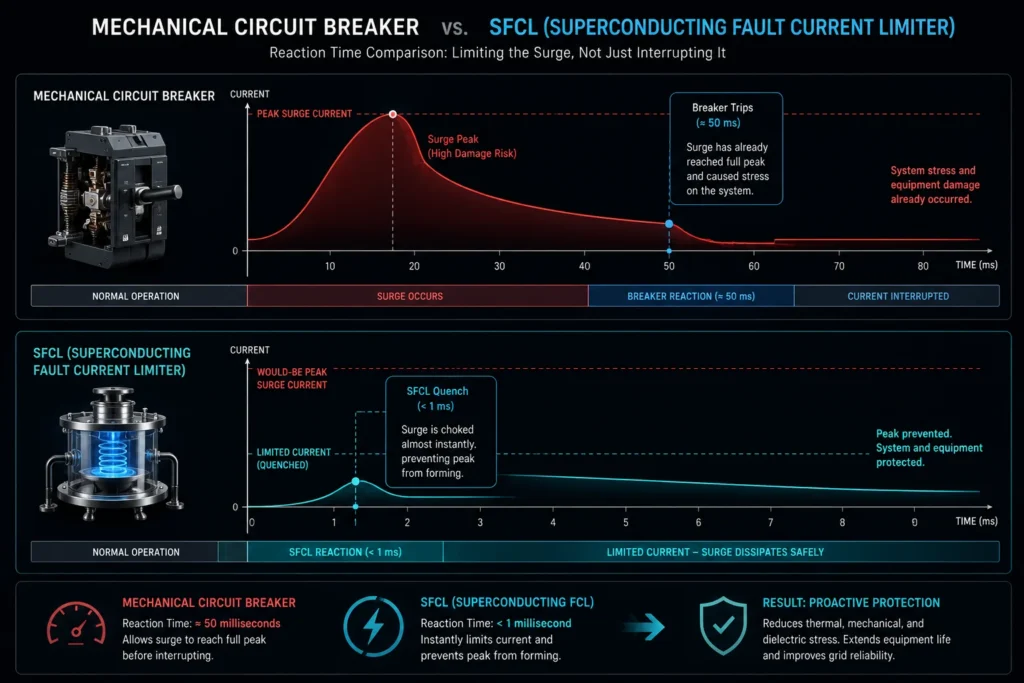
When a massive short-circuit occurs (e.g., lightning strikes a high-voltage line), the current spikes instantly. Traditional mechanical circuit breakers require physical metal contacts to separate, drawing a massive, burning plasma arc that must be extinguished. This mechanical process takes roughly 3 to 5 cycles (50 to 80 milliseconds). In the world of high-voltage surges, 50 milliseconds is an eternity; the maximum destructive force of the surge hits the grid in the very first half-cycle.
2. The Insufficiency of Reactors (Inductors)
Historically, utilities used massive copper coils called “series reactors” to choke surges. However, reactors are “dumb” devices. They constantly present electrical resistance (impedance) to the grid, even during normal operation. This creates massive, continuous energy losses (wasted heat) and causes undesirable voltage drops that destabilize the local grid.
3. The Core Mechanism: The Superconducting State
An SFCL uses a coil of YBCO HTS tape submerged in a bath of liquid nitrogen (77 Kelvin). At this temperature, the tape is in a superconducting state, meaning it has exactly zero electrical resistance and zero impedance. The grid doesn’t even know it is there; power flows through it with absolute perfection and zero wasted heat.
4. Technical Depth: The Quench Dynamics
Every superconductor has a strict physical limit called “Critical Current Density” ($J_c$). When a fault occurs, the massive surge of electricity exceeds this $J_c$ threshold. In less than 1 or 2 milliseconds, the quantum state of the YBCO breaks down. The material instantly undergoes a phase transition known as a “Quench.” The wire flashes from having zero resistance to having incredibly high electrical resistance, acting as a massive physical bottleneck that chokes the fault current down to a manageable, safe level.
5. Real-World Consequences: Self-Healing and Recovery
Because the SFCL chokes the surge so fast, the downstream mechanical circuit breaker can safely open without blowing up. Once the fault is cleared from the grid, the current drops back to normal levels. The liquid nitrogen instantly cools the YBCO tape back down below its critical temperature. Within a few seconds, the material spontaneously returns to its zero-resistance superconducting state, effectively “resetting” the breaker automatically without a utility crew ever having to visit the substation.
Commercial Applications of SFCL Technology
SFCLs are moving from isolated pilot projects into the critical path of urban power resilience.
AI Data Center Microgrid Coupling: Hyperscale AI data centers draw hundreds of megawatts of power. Developers are aggressively building massive natural gas and battery microgrids to power them. However, when these massive private microgrids are physically connected to the vulnerable municipal utility grid, the combined fault current capacity is staggering. SFCLs are being deployed directly at the point of common coupling (PCC). During normal operation, power flows freely between the data center and the city. If a fault occurs, the SFCL instantly isolates the two systems, preventing the data center’s massive generators from accidentally destroying the city’s substations.
Urban Substation Mesh Networks: In dense cities like Chicago, London, and Essen (the AMPAcity project), utility planners want to link multiple neighborhood substations together to share power and improve resilience. Historically, linking them was impossible because connecting two substations doubles the fault current risk. By installing SFCLs between the substations, utilities create a “mesh network.” The neighborhoods can freely share clean power, but if lightning strikes one sector, the SFCL instantly quenches, ensuring the surge doesn’t ripple across the city and cause a cascading blackout.
Shipboard and Naval Architecture: Modern naval vessels and cruise ships use highly integrated, high-voltage direct current (MVDC) electrical grids to power radar, directed energy weapons, and electric propulsion motors. Space and weight are brutally constrained on a ship. Traditional heavy transformers and massive switchgear are impractical. Lightweight SFCLs provide the ultimate insurance policy, ensuring that a battle-damage short circuit on one side of a destroyer does not instantly fry the ship’s entire electrical propulsion system.
Economic & Strategic Impact
The deployment of SFCLs represents a radical shift from Capital Expenditure (CapEx) to Operational Expenditure (OpEx) for municipal utilities.
When a utility must upgrade a substation to handle higher fault currents, replacing the massive mechanical switchgear, busbars, and transformers can easily cost tens of millions of dollars and require shutting down the grid for months. Installing an SFCL completely negates this requirement, saving massive amounts of upfront CapEx and avoiding severe community disruption.
However, the utility assumes a strict, ongoing OpEx burden: maintaining the cryogenic system. An SFCL requires continuous, reliable access to liquid nitrogen and active vacuum-pump maintenance. For historically conservative utility companies accustomed to bolting a piece of steel to a pole and ignoring it for forty years, the requirement to manage high-tech thermodynamic cryocoolers 24/7 introduces an uncomfortable, highly specialized maintenance dependency into the grid architecture.
Advantages
- Sub-Millisecond Reaction Time: The transition from superconducting to resistive is a purely physical phenomenon dictated by quantum mechanics. It reacts instantly, choking the surge in the critical first half-cycle before mechanical breakers can even physically open.
- Zero Normal-State Impedance: Unlike traditional series reactors that constantly waste energy and drop voltage, SFCLs are entirely invisible to the grid during normal operations, maximizing transmission efficiency.
- CapEx Avoidance: Extends the lifespan of existing, aging grid infrastructure by ensuring that massive new loads (like renewables and data centers) never expose legacy equipment to destructive fault currents.
- Automatic Recovery: After the fault clears, the liquid nitrogen cools the HTS tape, restoring zero-resistance operation automatically without requiring manual reset or part replacement.
Limitations
- Cryogenic Dependency: If the refrigeration system fails or the liquid nitrogen leaks, the HTS tape loses its superconductivity and “quenches” during normal operation, inadvertently dropping the power on the grid and causing an unnecessary blackout.
- Recovery Latency: While the quench is instant, the recovery takes time. Depending on the severity of the fault and the volume of liquid nitrogen, it can take anywhere from seconds to several minutes for the tape to cool back down to 77 Kelvin and resume carrying full load.
- Thermal Shock and Degradation: Subjecting the delicate YBCO ceramic tape to violent, sudden temperature spikes (the quench) introduces severe thermo-mechanical stress. If a specific SFCL experiences dozens of major fault currents over a decade, the tape may delaminate or degrade, requiring highly expensive replacement.
Common Misconceptions
Misconception: An SFCL replaces standard circuit breakers entirely.
Reality: SFCLs are not designed to physically disconnect the power entirely. They are “limiters.” They choke a 50,000-amp fatal surge down to a safe 10,000-amp surge, allowing the traditional mechanical circuit breaker to safely open and clear the fault without melting. They work in tandem, not as replacements.
Misconception: Superconductors need to be cooled with impossibly expensive liquid helium.
Reality: That was true in the 1990s (Low-Temperature Superconductors). Modern SFCLs use High-Temperature Superconductors (HTS) like YBCO, which become superconducting at warmer temperatures, allowing them to use cheap, widely available liquid nitrogen (which is ironically cheaper per gallon than milk).
Misconception: A quench destroys the superconductor.
Reality: A quench is a non-destructive phase change. The wire physically heats up and generates resistance, but as long as the system is engineered correctly to distribute the heat, the wire is unharmed and simply cools back down to its zero-resistance state.
What Most People Miss
The strategic difference between Resistive and Inductive SFCL architectures.
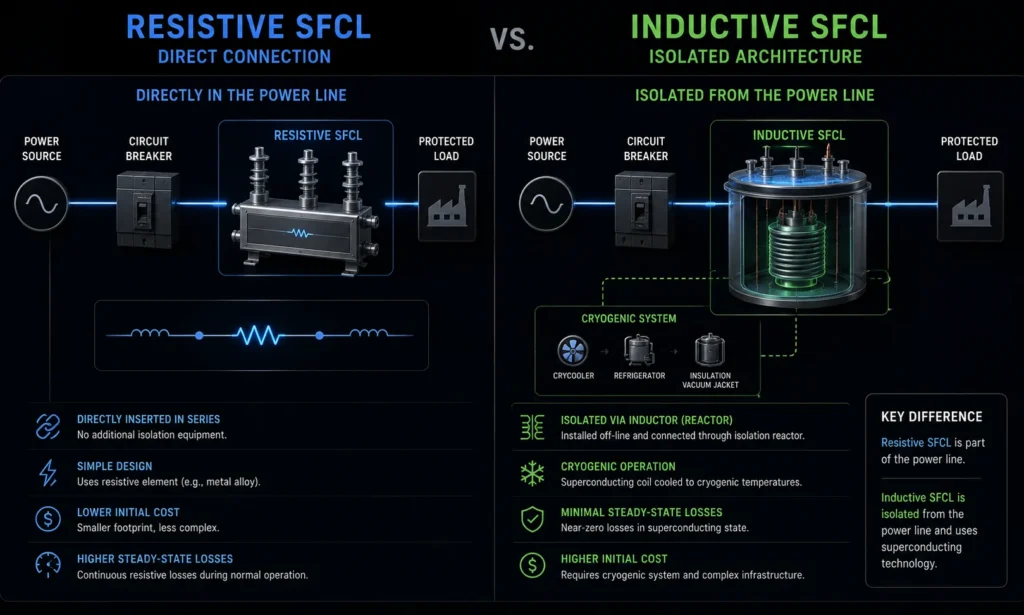
Most media focuses on the “Resistive” SFCL, where the superconducting wire is physically spliced into the main power line and carries the grid current directly.
What most people miss is the safer, but heavier, “Inductive” (or Shielded Core) SFCL. In an inductive design, the grid current flows through a standard copper coil. The superconducting coil sits in a separate, isolated cryogenic chamber wrapped around the copper. When a surge hits the copper, the resulting magnetic field induces a massive current in the superconductor, causing it to quench. The profound advantage is that the highly delicate cryogenic system is never physically touching the dangerous 110,000-volt grid power, drastically improving reliability, even though the device is physically much larger and heavier.
Comparison Table
| Feature | Traditional Mechanical Circuit Breaker | Series Reactor (Copper Coil) | Superconducting Fault Current Limiter (SFCL) |
| Reaction Time | Slow (50 to 80 milliseconds) | Instantaneous | Instantaneous (< 1 millisecond) |
| Normal Operation Efficiency | Very High (Minimal resistance) | Poor (Constant energy waste/voltage drop) | Perfect (Zero resistance/impedance) |
| Action During Fault | Physically separates contacts | Acts as a constant electrical bottleneck | Phase-changes into a high-resistance barrier |
| Maintenance Profile | Low (Occasional mechanical checks) | Very Low (Passive block of metal) | High (Continuous liquid nitrogen cryogenics) |
| Primary Grid Role | Final disconnection of power | Constant current throttling | Intelligent, dynamic surge attenuation |
Case Study
Situation: The city of Essen, Germany, faced a severe urban planning crisis. The downtown electrical grid was overloaded, and the aging 110-kilovolt (kV) transmission cables buried under the city streets were at maximum capacity.
Challenge: Tearing up the dense, historic city streets to install massive new 110-kV cables and upgrading the inner-city substations to handle the higher fault currents would cause catastrophic traffic disruptions and cost tens of millions of euros in civil engineering alone.
Solution (The AmpaCity Project): In a historic pilot program, the German utility RWE (now E.ON) partnered with Nexans to bypass the 110-kV network entirely. They installed a 10,000-volt (10-kV) High-Temperature Superconducting (HTS) cable stretching one kilometer between two major substations, directly integrating a Resistive SFCL to protect it.
Outcome: Because the superconducting cable had zero resistance, it could carry five times more power than a traditional copper cable of the same size at a much lower voltage. The SFCL ensured that if a fault occurred on the massive urban grid, the delicate HTS cable would not be instantly vaporized by a surge.
Lessons Learned: The AmpaCity project successfully ran for years, proving that cryogenic SFCL technology could survive in a gritty, real-world municipal environment. It verified that deploying intelligent superconducting plumbing is a vastly superior economic strategy for upgrading hyper-dense urban environments, directly avoiding the immense civil costs of traditional copper “rip and replace” strategies.
Future Outlook
Next 12–24 Months
The era of Data Center Microgrid Integration. As the backlog in the FERC interconnection queue forces massive AI data centers to build their own gigawatt-scale behind-the-meter power plants (natural gas and battery), utilities are terrified of the fault current potential. Over the next two years, utilities will increasingly mandate that hyperscalers install SFCLs at the point of common coupling before they are legally allowed to connect their massive private microgrids to the public grid.
Next 3–5 Years
The rise of Modular, Dry-Cooled SFCLs. The primary resistance from utility operators is the hassle of managing liquid nitrogen plumbing. By the late 2020s, manufacturers will commercialize “dry-cooled” SFCLs. These systems use advanced closed-loop cryocoolers (using helium gas internally) that simply require a standard electrical plug to cool the YBCO tape by conduction, completely eliminating the need for complex liquid nitrogen pumping stations and drastically lowering the OpEx for remote substations.
Next 10 Years
The Superconducting HVDC Backbone. As nations attempt to transmit massive amounts of offshore wind and desert solar power to coastal megacities, High-Voltage Direct Current (HVDC) lines will become the global standard. Interrupting a massive DC fault current is notoriously difficult because DC power does not have a “zero-crossing” point like AC power. SFCLs will become the mandatory, ubiquitous safety valve for the intercontinental HVDC grid, serving as the critical, instantaneous brake required to prevent multi-country cascading blackouts.
Most Likely Scenario
SFCLs are transitioning from a theoretical physics novelty into a mandatory grid defense mechanism. As the physical limits of traditional mechanical breakers and copper wires are exhausted by the electrification of transportation and artificial intelligence, utilities will have no choice but to absorb the cryogenic maintenance costs. The ability to manipulate the quantum state of a wire to block megawatt surges will become the foundational architecture of the 21st-century smart grid.
Key Takeaways
- Superconducting Fault Current Limiters (SFCLs) are grid protection devices that use cryogenically cooled High-Temperature Superconductors (HTS) to block massive electrical surges.
- During normal operation, the HTS tape offers zero electrical resistance, allowing power to flow flawlessly without wasting energy as heat.
- When a massive short circuit occurs, the current exceeds a physical quantum threshold, causing the tape to “quench” in less than a millisecond, instantly choking the deadly surge.
- Because they react instantaneously based on physics, SFCLs stop the surge before traditional, slow mechanical circuit breakers even have time to open.
- SFCLs save utilities billions in CapEx by preventing massive fault currents, meaning older downstream grid equipment does not have to be torn out and replaced when new energy sources are added.
- The primary drawback is the strict requirement to maintain highly reliable liquid nitrogen or cryocooler refrigeration systems inside remote, unmanned utility substations.
Glossary
CapEx (Capital Expenditure): The massive upfront cost required to buy and install physical grid infrastructure, like new transformers, mechanical switchgear, or SFCLs.
Critical Current Density ($J_c$): The maximum amount of electrical current a superconducting material can carry before its quantum state breaks down and it physically reverts to a normal, high-resistance wire.
High-Temperature Superconductor (HTS): Advanced ceramic materials (like YBCO) that achieve zero electrical resistance at temperatures warm enough to be cooled by liquid nitrogen (77 Kelvin), rather than highly expensive liquid helium.
OpEx (Operational Expenditure): The ongoing, continuous cost required to keep a system running, such as the electricity and maintenance required to run a cryogenic liquid nitrogen cooler for an SFCL.
Quench: The rapid, physical phase transition of a superconductor from a state of zero electrical resistance to a state of high electrical resistance when subjected to excessive current or temperature.
Series Reactor: A traditional, massive copper coil used by utilities to choke fault currents. Unlike an SFCL, it constantly resists the flow of electricity, wasting massive amounts of energy as heat 24/7.
Frequently Asked Questions
Does a quench physically destroy the SFCL?
No. Assuming the device is engineered with proper thermal mass (often wrapping the delicate HTS tape in a layer of copper or steel to absorb the heat), the quench simply makes the wire hot and resistive. Once the surge is gone, the liquid nitrogen cools it back down, and it returns to normal.
How cold is liquid nitrogen?
Liquid nitrogen boils at -196 degrees Celsius (-320 degrees Fahrenheit) or 77 Kelvin. While this sounds incredibly cold, in the world of quantum physics and cryogenics, it is considered “high temperature” and is relatively cheap and easy to maintain compared to liquid helium (4 Kelvin).
Why not just use a giant fuse?
A fuse works by literally melting and snapping a wire to break the circuit. While cheap and effective, it destroys the fuse. You have to send a human out to manually replace it before power can be restored. An SFCL is self-healing, automatically restoring the circuit once the fault clears.
If the SFCL stops the surge, do we still need mechanical circuit breakers?
Yes. An SFCL acts as an instantaneous brake, choking a massive surge down to a small surge. But it doesn’t completely sever the connection. The downstream mechanical circuit breaker is still required to physically snap open and completely disconnect the broken power line from the grid.
What happens if the cooling system breaks?
The SFCL will slowly warm up. Before it reaches a dangerous temperature, sensors will alert the utility. The utility will typically bypass the SFCL using standard mechanical switches, and the HTS tape will simply return to a normal, highly resistive state without exploding.
Sources
[1] U.S. Department of Energy (DOE): Fault Current Limiters for Grid Resilience and Modernization (2025/2026 Analysis)
[2] IEEE Transactions on Applied Superconductivity: Design and Testing of Resistive SFCLs for Urban Distribution Networks
[3] Nexans: Superconducting Fault Current Limiters and the AmpaCity Project Overview
[4] Applied Superconductivity Educational Foundation: High-Temperature Superconductors in Power Grid Applications
[5] Electric Power Research Institute (EPRI): Cryogenic Reliability and Operational Economics of SFCL Deployments