Advertisement
)
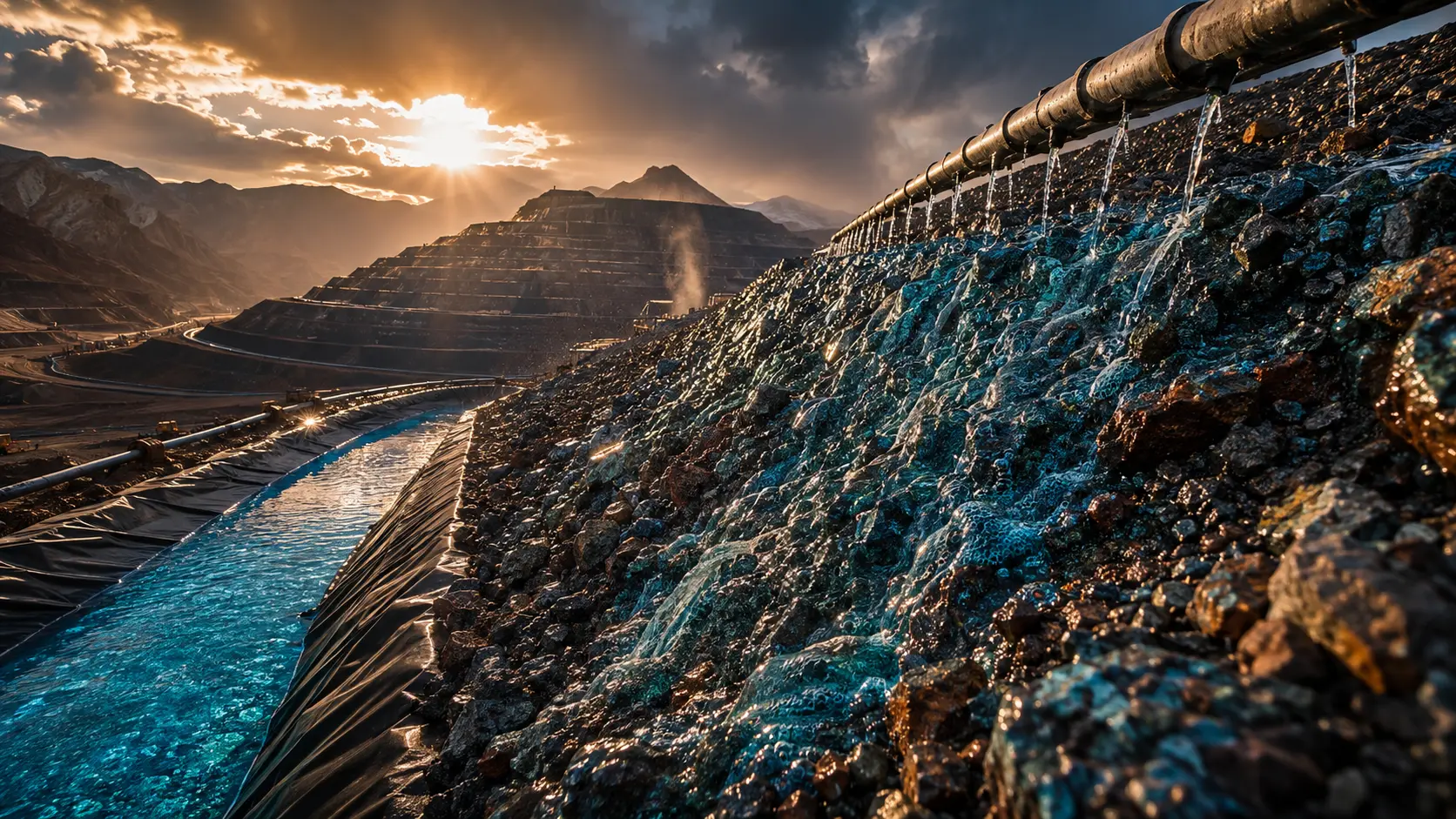

The global transition to electric vehicles and renewable energy grids requires an incomprehensible amount of copper, nickel, and rare earth elements. However, the mining industry is facing a terminal geological crisis: we have already mined all the “easy” metal. Today, mining companies are forced to dig up massive amounts of low-grade rock that contains only microscopic fractions of usable copper. To extract this metal, the industry traditionally relies on smelting—literally melting the rock in blast furnaces—or soaking it in vast pools of toxic sulfuric acid. These legacy methods consume staggering amounts of fossil fuels, produce fatal toxic waste, and are completely cost-prohibitive for low-grade ores, leaving billions of tons of valuable metal trapped in “waste” piles around the globe.
To secure the supply chains of the 21st century, the mining industry is outsourcing heavy industry to the smallest workers on Earth. By harnessing naturally occurring, extremophile bacteria that natively survive in highly acidic, toxic environments, engineers have deployed biological swarms that literally metabolize solid rock. Why should you care right now? Because biomining is transforming global metallurgy. By replacing blast furnaces with bacterial biology, companies are unlocking billions of dollars in stranded, low-grade mineral assets with near-zero carbon emissions, permanently decoupling the extraction of critical minerals from severe environmental destruction.
What is Biomining?
Biomining is an industrial process that uses specialized, naturally occurring microorganisms to extract valuable metals like copper, gold, and rare earth elements from raw ores and mine tailings. By utilizing bacteria to break down solid mineral structures into liquid solutions, biomining offers a low-energy, eco-friendly alternative to traditional smelting.
At a Glance
- Concept: Deploying acid-loving bacteria to oxidize the sulfur and iron in rocks, causing the solid rock matrix to collapse and release the valuable metals trapped inside.
- Why it matters: Smelting low-grade ore wastes massive amounts of money and energy. Biomining operates at room temperature, requires very little infrastructure, and turns toxic mine tailings into profitable metal reserves.
- Who uses it: Global mining conglomerates (BHP, Rio Tinto, Codelco) operating massive copper “heap leaching” pads in South America, and gold miners processing refractory ores.
- Biggest takeaway: Biomining trades time for capital. While a traditional smelter extracts copper in a few hours but costs $2 billion to build, a biomining heap costs a fraction of that but takes several months for the bacteria to complete the extraction.
In Simple Words
Imagine you have a piece of gold encased entirely inside a block of hard plastic. To get the gold out, you could either use a massive blowtorch to melt the plastic (which takes a ton of expensive energy and releases toxic smoke), or you could drop it in a vat of highly dangerous, flesh-eating acid. Both are dangerous and expensive.
Now, imagine you discover a specific type of bug that loves to eat plastic.
You drop the plastic block into a normal tank of water and add the bugs. Over the next few weeks, the bugs happily eat away all the plastic. When they are finished, the gold simply falls to the bottom of the tank, clean and ready to be collected.
Biomining is the industrial version of this. The “plastic” is usually sulfur and iron (sulfide minerals) that lock up valuable metals like copper and gold. The “bugs” are specialized bacteria (like Acidithiobacillus). The bacteria aren’t interested in the copper; they just eat the sulfur and iron for energy. As they eat the rock’s structural foundation, the rock dissolves, and the highly valuable copper is released into a liquid solution that can easily be pumped out and collected.
Why This Matters
The geopolitical race to secure critical minerals is heavily constrained by Environmental, Social, and Governance (ESG) mandates. Western nations desperately want to build domestic supply chains for rare earth elements and battery metals, but local populations vehemently oppose the construction of massive, toxic chemical refineries in their backyards.
For ESG Investors and Supply Chain Executives, biomining is the strategic compromise. Because it operates largely in closed-loop, aqueous environments without releasing sulfur dioxide gas (the primary cause of acid rain linked to smelting), biomining allows mining operations to exist much closer to strict regulatory zones. Furthermore, it allows companies to re-process decades-old “waste dumps” (tailings) left behind by older, inefficient mining operations, extracting the remaining 10% to 20% of copper that legacy tech couldn’t reach, creating massive new revenue streams from previously written-off liabilities.
The Difference Between Bioleaching and Biooxidation
Biomining is not a single process; it is divided into two distinct biological strategies that solve two very different geological problems:
- Bioleaching (Dissolving the Target): Used primarily for base metals like copper, zinc, and nickel. The bacteria attack the rock, and the target metal itself dissolves into the liquid. The liquid is then pumped to a facility where electricity is used to pull the pure copper out of the water (Electrowinning).
- Biooxidation (Freeing the Target): Used primarily for gold. In “refractory” gold ores, microscopic particles of gold are locked tightly inside a cage of pyrite (fool’s gold). The bacteria attack and destroy the pyrite cage. The gold does not dissolve; it stays solid. But because the cage is destroyed, standard cyanide treatments can now easily reach and extract the gold.
How Biomining and Microbial Leaching Works
Harnessing bacteria to execute heavy industrial metallurgy requires precise control over microbial thermodynamics and chemistry. Here is the first-principles breakdown of a Copper Bioleaching operation.
1. The Fundamental Problem: The Sulfide Matrix
Most of the world’s copper is found in chalcopyrite (CuFeS₂) or chalcocite ores. The copper atoms are tightly bonded with iron (Fe) and sulfur (S). Breaking these chemical bonds mechanically or thermally requires temperatures exceeding 1,200°C.
2. The Insufficiency of Chemical Hydrometallurgy
You can pour strong sulfuric acid over the rock to dissolve it, but the acid alone is highly inefficient at breaking down complex sulfide ores. It requires massive volumes of toxic chemicals, and the process stalls out quickly without a strong oxidizing agent.
3. The Core Mechanism: Extremophile Bacteria
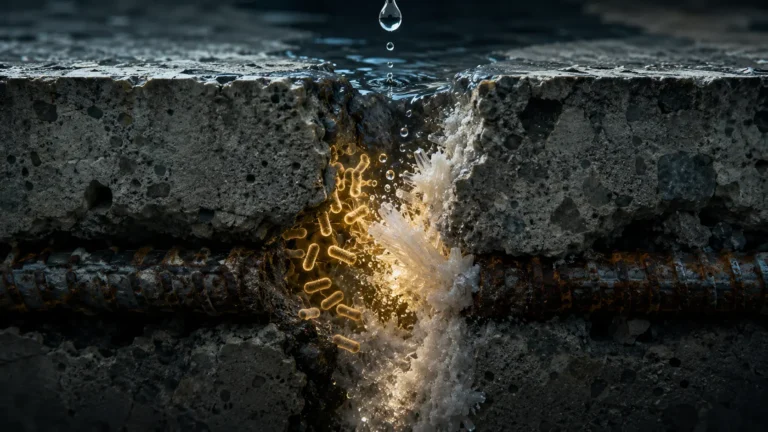
Mining engineers introduce chemolithotrophic bacteria, primarily Acidithiobacillus ferrooxidans. These organisms are “extremophiles”—they thrive in highly acidic, toxic, dark environments. Instead of eating carbon (like humans do), they gain their cellular energy by oxidizing inorganic inorganic compounds: specifically, iron and sulfur.
4. Technical Depth: The Ferric Iron Cycle
The process is an indirect biochemical attack. The bacteria do not “eat” the copper.
First, the bacteria consume ferrous iron (Fe²⁺) naturally present in the environment and excrete ferric iron (Fe³⁺).
4Fe²⁺ + O₂ + 4H⁺ → (Bacteria) → 4Fe³⁺ + 2H₂O
This Ferric iron (Fe³⁺) is a highly aggressive chemical oxidizer. It attacks the solid copper sulfide rock, breaking the bonds. The copper dissolves into the liquid, and the iron is reduced back to Fe²⁺. The bacteria then “eat” the Fe²⁺ again, turning it back into Fe³⁺, creating an infinite, self-sustaining, bacteria-driven chemical engine.
5. Real-World Consequences: Heap Leaching
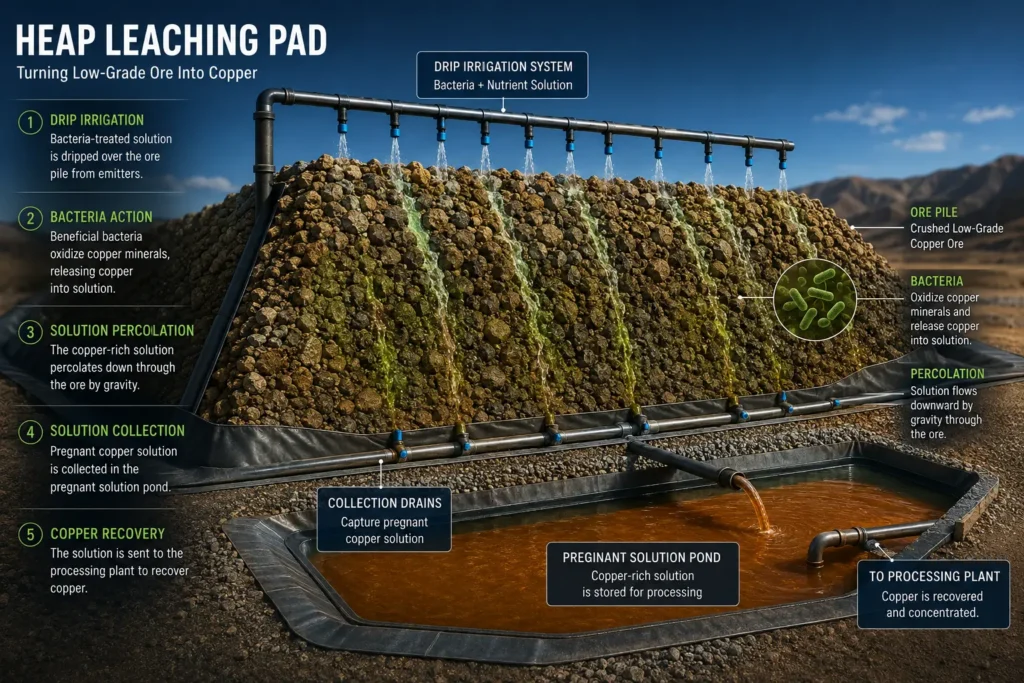
In reality, this takes place on a massive scale known as “Heap Leaching.” Mining companies pile millions of tons of crushed low-grade ore onto massive, waterproof plastic liners. They drip a mild acid solution containing the bacteria over the top of the pile. Air is pumped up from the bottom (because the bacteria need oxygen). As the liquid slowly trickles down through the massive rock pile over several months, the bacteria multiply, the rock breaks down, and a rich, bright-blue liquid (copper sulfate) flows out of the bottom, ready to be turned into solid copper wire.
Commercial Applications of Biomining
Biomining is currently deployed at scale in some of the most remote and hostile industrial environments on Earth.
Chilean Copper Mega-Mines: Chile is the undisputed king of copper bioleaching. At massive open-pit mines like Escondida and Radomiro Tomic, mining conglomerates operate heap leach pads that cover hundreds of acres. These biological operations are entirely responsible for keeping these mines profitable as the average grade of the ore pulled from the ground steadily drops below 0.5% copper.
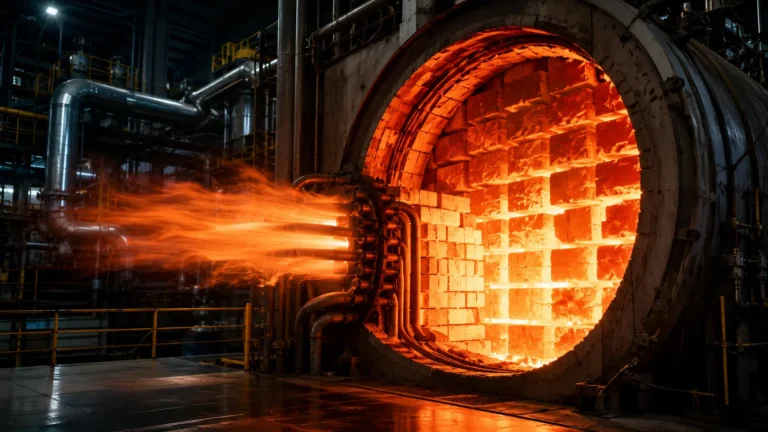
The BIOX Process for Refractory Gold: Developed in South Africa, the BIOX (Biooxidation) process is licensed globally. Gold mines use massive, continuously stirred stainless-steel tanks (bioreactors) filled with heavily aerated pulp and specialized bacteria. The bacteria chew through the pyrite matrix in a matter of days, liberating the gold particles. This biological pre-treatment is significantly cheaper and vastly cleaner than “roasting” (burning) the ore in giant kilns.
Uranium Extraction: During the Cold War and into the modern era, bioleaching has been effectively used to process low-grade uranium ores (such as pitchblende). The bacteria continuously regenerate the ferric iron required to oxidize the insoluble Uranium-IV into highly soluble Uranium-VI, keeping the process moving without the need to constantly inject expensive, harsh chemical oxidizers into the leaching circuit.
Economic & Strategic Impact
The core strategic advantage of biomining is the Capital Expenditure (CapEx) Arbitrage.
Building a modern, traditional copper smelter can easily cost upwards of $1.5 to $2.5 billion. It requires massive physical infrastructure, immense power grids, and complex smokestack scrubbers to capture toxic sulfur dioxide gas. A smelter is only economically viable if it is constantly fed high-grade ore.
A heap bioleaching operation requires drastically less capital—often just a few hundred million dollars. The primary infrastructure is crushed rock, waterproof plastic liners, PVC drip pipes, and standard pumps. The tradeoff is velocity. A smelter turns rock into metal in a few hours. A biological heap pad takes 200 to 300 days to extract the same copper. For mining executives, biomining trades the velocity of capital for the absolute reduction in infrastructure cost, making it the only mathematically viable way to process the Earth’s remaining low-grade reserves.
Advantages
- Low Energy & Low Carbon: Eliminates the extreme heat required for traditional smelting, operating at near room temperature (30°C – 45°C) and drastically slashing the carbon footprint of metal extraction.
- Unlocks Stranded Assets: Makes it profitable to process low-grade ores and legacy waste tailings that contain less than 0.5% copper, vastly expanding global mineral reserves.
- No Toxic Air Emissions: Unlike smelting, which releases massive amounts of sulfur dioxide (SO₂) gas, biomining keeps the sulfur dissolved harmlessly in the liquid solution as sulfate.
- Infrastructure Light: Does not require massive industrial superstructures, allowing operations to be set up in remote, off-grid locations.
Limitations
- Excruciatingly Slow Kinetics: Biological processes are bound by nature. Extracting metal from a bioleaching heap can take 6 to 12 months, trapping working capital in the rock pile for nearly a year before revenue is realized.
- Biological Fragility: Bacteria are living organisms. If the heap gets too hot (from the friction and chemical reactions), or if the acidity levels swing too far, the entire bacterial colony can die, completely halting production until the heap can be re-inoculated.
- Chloride Toxicity: Many major copper mines are located in bone-dry deserts (like the Atacama in Chile). They often have to pump seawater to run their operations. However, the high chloride (salt) content in seawater is highly toxic to traditional biomining bacteria, severely inhibiting extraction rates.
Common Misconceptions
Misconception: The bacteria actually eat the copper and gold.
Reality: The bacteria have absolutely no biological use for copper or gold. They eat the sulfur and iron that surrounds the valuable metals. The release of the copper is just a convenient byproduct of the bacteria seeking energy from the host rock.
Misconception: Biomining is a new, untested startup technology.
Reality: The Romans accidentally used biomining in the Rio Tinto region of Spain over 2,000 years ago (though they didn’t know bacteria were doing the work). The modern commercial bioleaching industry has been operating profitably at a massive scale since the 1980s.
Misconception: Biomining is 100% perfectly clean and green.
Reality: While it is vastly superior to smelting, it still involves pumping millions of gallons of acidic, metal-heavy liquid over rocks. If the plastic liners beneath a heap leach pad tear, highly toxic acid mine drainage can seep into the local groundwater, requiring intense monitoring and strict environmental protocols.
What Most People Miss
The disruptive frontier of Synthetic Biology and Exoelectrogens.
Historically, mining companies simply searched for naturally occurring extremophiles in hot springs and acidic rivers, scooped them up, and threw them on the rock piles.
What most observers miss is that the industry is pivoting toward synthetic biology. Companies are now using CRISPR gene editing to create “super-bugs.” Scientists are genetically engineering bacteria to withstand higher temperatures, tolerate deadly saltwater (solving the desert mining problem), and aggressively target new, exotic materials like rare earth elements. Furthermore, researchers are exploring exoelectrogens—bacteria that can directly transfer electrons to solid minerals, bypassing the need for iron cycling entirely, potentially increasing extraction speeds by an order of magnitude.
Comparison Table
| Feature | Pyrometallurgy (Smelting) | Chemical Hydrometallurgy | Bio-Hydrometallurgy (Biomining) |
| Primary Mechanism | Extreme Heat (Melting) | Toxic Chemical Acids | Microbial Oxidation |
| Target Ore Grade | High Grade Only | Medium to High Grade | Low Grade / Waste Tailings |
| Energy Consumption | Massive | High | Very Low |
| Extraction Speed | Hours | Days | Months (Up to a year) |
| Capital Expenditure (CapEx) | Extreme ($1B – $2B+) | High | Low (Plastic liners and pumps) |
| Environmental Hazard | High (Toxic gas emissions) | Moderate (Acid management) | Low (Closed-loop liquid systems) |
Case Study
Situation: A massive copper mine in the Atacama Desert of Chile had accumulated billions of tons of waste rock over forty years of traditional mining. This rock contained roughly 0.3% copper. Building a smelter to process it was financially impossible, and leaving the rock sitting in piles generated zero revenue while taking up immense geographical space.
Challenge: How to extract the remaining copper from the waste rock efficiently, using minimal energy, in a remote desert environment where fresh water is virtually non-existent.
Solution (The Bioleaching Pivot): The mining operator established a massive, closed-loop heap bioleaching operation. They crushed the waste rock, piled it onto lined pads, and inoculated the heaps with a specialized consortium of Acidithiobacillus bacteria adapted to the local harsh conditions. They continuously dripped a mild, acidic, aerated solution over the massive piles.
Outcome: Over a 10-month cycle, the bacteria successfully oxidized the sulfide matrix. The operation recovered hundreds of thousands of tons of high-purity cathode copper from rock that was previously considered literal garbage. The process was entirely self-sustaining, utilizing the naturally generated heat of the bacterial metabolism to maintain optimal operating temperatures even during cold desert nights.
Lessons Learned: The deployment proved that biomining is not just an environmental initiative; it is a profound economic necessity. It demonstrated that biology can effectively replace heavy industrial machinery, turning multi-decade waste liabilities into highly profitable, low-margin cash cows, extending the total operational life of the mine by decades.
Future Outlook
Next 12–24 Months
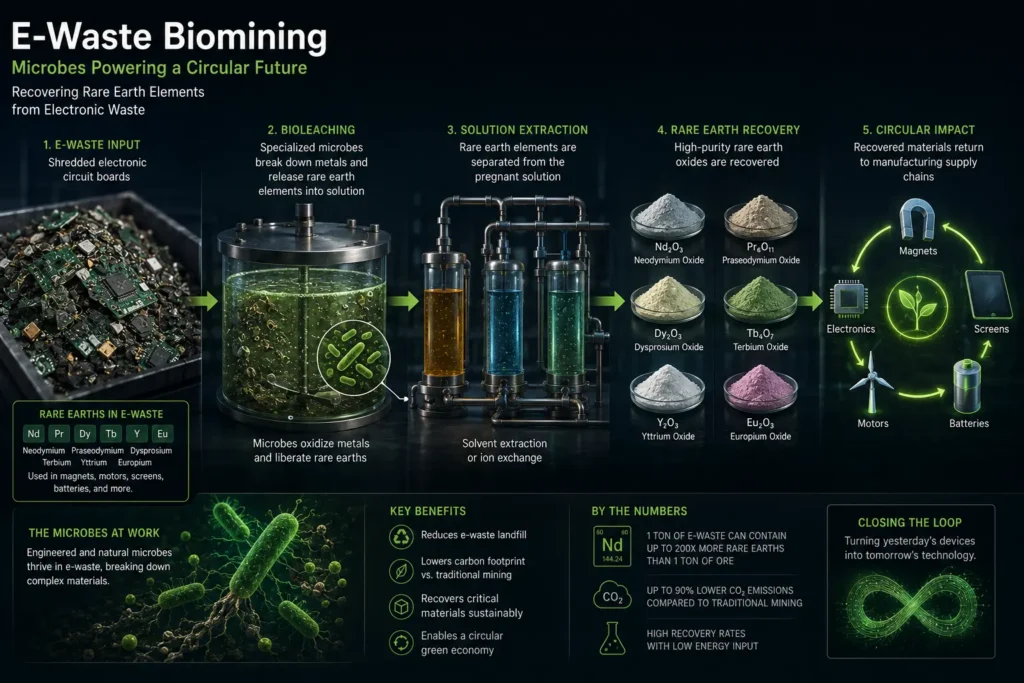
The era of Electronic Waste (E-Waste) Bioleaching. As the world drowns in discarded smartphones, laptops, and EV batteries, traditional recycling methods (melting the motherboards) are proving too toxic and inefficient. Over the next two years, we will see the commercial scaling of “urban biomining” startups. These companies will use modular bioreactors filled with engineered bacteria to selectively dissolve and recover highly valuable gold, palladium, and lithium directly from shredded motherboards, replacing toxic chemical baths with organic biological recycling.
Next 3–5 Years
The Rare Earth Element (REE) Breakthrough. China currently holds a near-monopoly on processing the complex rare earth elements required for electric vehicle motors and wind turbines, largely because the chemical extraction process is an environmental nightmare. By the late 2020s, bio-hydrometallurgy will crack the REE code. Engineered microbes that secrete specialized organic acids (like gluconic acid) will be deployed to selectively bind to and extract neodymium and dysprosium from raw ore, providing Western nations with their first clean, economically viable pathway to break the Chinese REE refining monopoly.
Next 10 Years
The transition to In-Situ Recovery (ISR) Biomining. The ultimate goal of the mining industry is to stop digging giant holes in the Earth altogether. By the 2030s, biomining will advance to In-Situ Recovery. Instead of digging the rock up and moving it to a heap pad, mining companies will simply drill injection wells directly into the underground ore body. They will pump the engineered bacteria directly into the earth, let them dissolve the metals deep underground, and pump the liquid copper straight back up to the surface. This will achieve “invisible mining,” leaving the surface of the Earth completely undisturbed.
Most Likely Scenario
As the highest-grade mineral deposits are completely exhausted, the mining industry has no choice but to rely on microbiology. Biomining will transition from a niche technology used for waste tailings into the primary, baseline extraction method for all new global copper and nickel projects, fundamentally transforming mining from a heavy mechanical industry into a highly advanced biological discipline.
Key Takeaways
- Biomining uses extremophile bacteria (like Acidithiobacillus) to naturally break down solid mineral rocks, extracting valuable metals like copper and gold.
- The bacteria do not eat the metal; they consume the surrounding sulfur and iron for energy, breaking the chemical bonds and releasing the pure metal as a byproduct.
- “Bioleaching” dissolves the target metal (like copper) into a liquid. “Biooxidation” destroys the rock cage holding the target metal (like gold) so it can be extracted later.
- Biomining trades time for money: it takes months to extract the metal, but it eliminates the need to build $2 billion, heavily polluting smelting furnaces.
- The technology is actively used today to recover millions of tons of copper from low-grade “waste” rock left behind by older, inefficient mining operations.
- The future of the industry relies on synthetic biology (CRISPR)—engineering “super-bugs” that can survive harsher environments and extract Rare Earth Elements from discarded electronics.
Glossary
Acidithiobacillus ferrooxidans: The most famous and widely used species of extremophile bacteria in biomining, capable of thriving in dark, highly acidic, heavy-metal environments by oxidizing iron and sulfur.
Bioleaching: A biomining process where the bacteria cause the valuable target metal (e.g., copper) to become highly soluble and dissolve directly into a liquid solution for recovery.
Biooxidation: A pre-treatment biomining process where bacteria destroy the mineral matrix (e.g., pyrite) hiding a precious metal (e.g., gold), leaving the solid gold exposed for standard chemical extraction.
Extremophile: An organism that thrives in extreme environments that would be lethal to most life forms, such as extreme heat, extreme cold, or extreme acidity.
Heap Leaching: The industrial setup for biomining, where millions of tons of crushed low-grade ore are stacked on a waterproof pad and irrigated with a bacteria-infused acid solution over several months.
In-Situ Recovery (ISR): An advanced, theoretical form of biomining where bacteria are pumped directly into the underground rock formation to dissolve the metal without ever digging a physical mine.
Frequently Asked Questions
Are these bacteria dangerous to humans?
No. These bacteria are highly specialized chemolithoautotrophs. They can only survive in extreme, highly acidic environments by eating inorganic rock (iron and sulfur). They cannot survive inside the human body or cause human diseases.
If they are natural, why don’t they just dissolve mountains on their own?
They do! Biomining is just humans speeding up a natural geological process. In nature, this happens very slowly. Mining companies speed it up by crushing the rock to expose more surface area, optimizing the temperature, and pumping in massive amounts of oxygen to supercharge the bacterial reproduction.
Does biomining work for lithium?
It is currently being heavily researched. Lithium is often found in complex rock structures (like spodumene). While bioleaching works flawlessly for copper and gold, engineering bacteria to efficiently and economically crack the silicate bonds holding lithium is still in the developmental phase for commercial scaling.
What happens to the bacteria when the mining is done?
Once the operation is over and the food source (the sulfur and iron in the rock) is exhausted, the bacterial population naturally crashes and dies off. The remaining rock is washed and neutralized.
Why is it better for the environment?
Traditional smelting involves burning rock at 1,200°C, which consumes massive amounts of fossil fuels and releases sulfur dioxide (SO₂), a toxic gas that causes acid rain. Biomining operates at 35°C and keeps all the sulfur trapped safely in a liquid, closed-loop system, generating a fraction of the carbon emissions.
Sources
[1] Nature Biotechnology: Microbial biotechnology for sustainable mining and metal recovery (2025/2026 Analysis)
[2] U.S. Department of Energy (DOE): Bio-Hydrometallurgy and the Supply Chain of Critical Minerals
[3] Minerals Engineering International: Bioleaching of low-grade copper sulfides: Current status and future prospects
[4] CSIRO: Synthetic Biology Applications in E-Waste Biomining and Rare Earth Element Recovery
[5] Journal of Environmental Management: Life Cycle Assessment of Heap Bioleaching versus Pyrometallurgical Copper Production