Advertisement
)
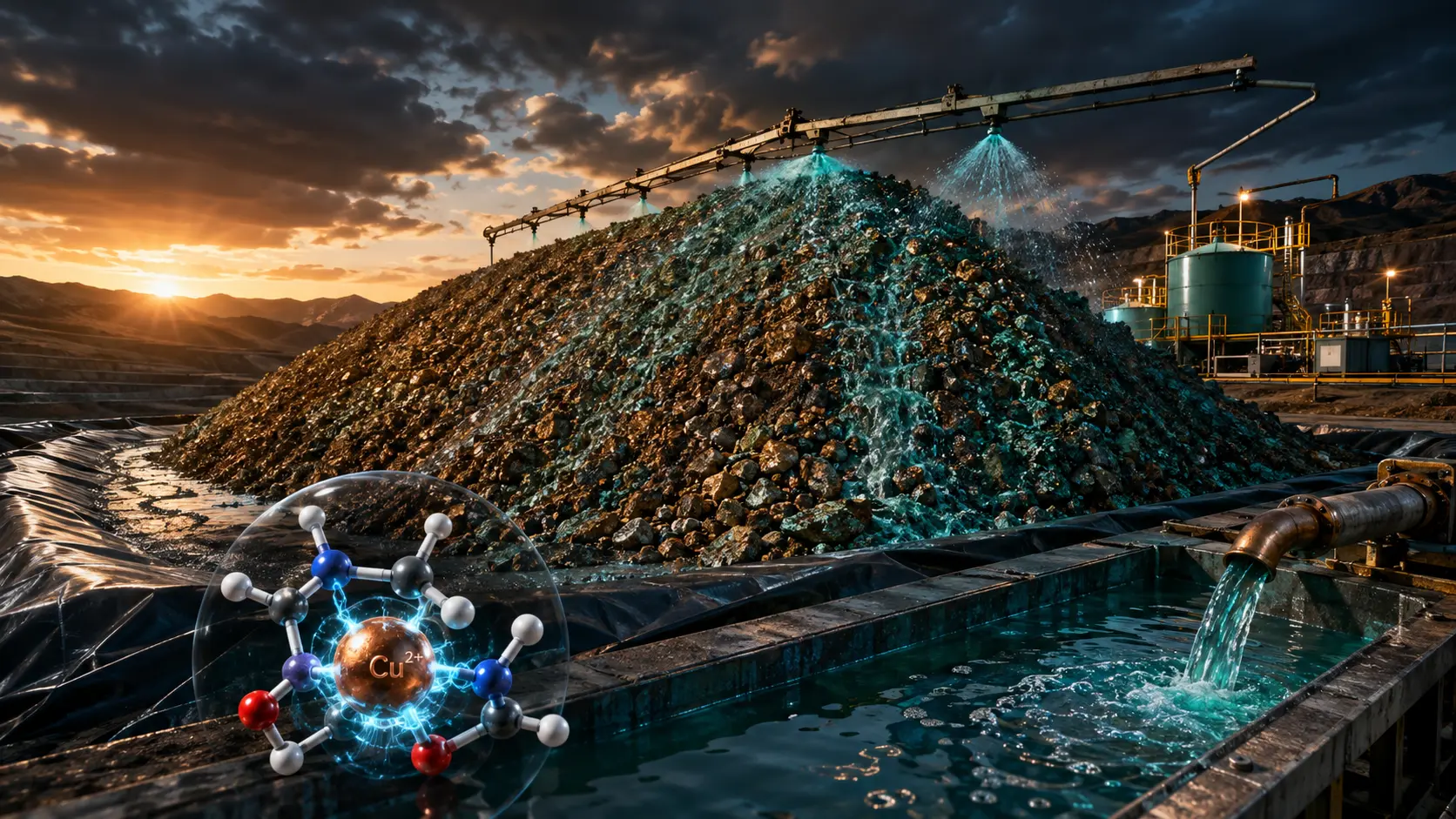

The global transition to electric vehicles and renewable energy is fundamentally a transition to copper. But the Earth is running out of easily accessible, high-grade copper ore. Today, mining companies are forced to dig up billions of tons of dirt just to extract a microscopic yield, leaving behind mountains of toxic waste. Extracting copper from this low-grade rock using traditional smelting requires massive, multi-billion-dollar furnaces that emit catastrophic levels of greenhouse gases and sulfur dioxide.
Why should you care right now? Because the mining industry has found a way to extract pure copper from waste rock without building a single furnace or using a single drop of toxic acid. By combining genetically adapted bacteria with glycine—a common amino acid found in the human body—engineers have developed a biological process that literally eats the rock. This breakthrough, known as bio-hydrometallurgy with glycine leaching, allows companies to profitably extract copper from abandoned mine tailings containing as little as 0.1% ore, unlocking millions of tons of zero-emission copper to feed the electric grid of the 21st century.
What is Bio-Hydrometallurgy with Glycine Leaching?
Bio-hydrometallurgy with glycine leaching is an eco-friendly mineral extraction process. It utilizes chemolithotrophic bacteria to break down complex sulfide ores, followed by the application of glycine—a non-toxic, biodegradable amino acid—as a lixiviant. The glycine selectively dissolves and binds with copper ions, bypassing extreme heat and toxic sulfuric acid.
At a Glance
- Concept: Instead of melting rocks in a giant furnace, you pile the rocks up, spray them with bacteria and amino acids, and let nature separate the copper from the dirt.
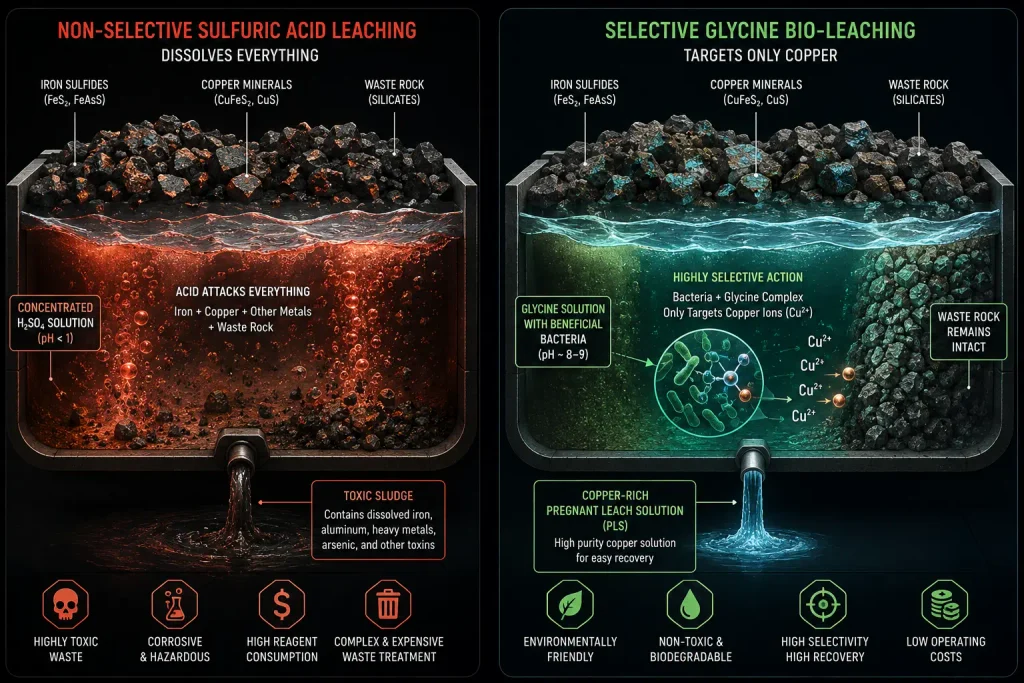
- Why it matters: Sulfuric acid (the old way) melts everything it touches, creating toxic waste. Glycine is a “smart” chemical—it completely ignores worthless dirt and iron, grabbing only the valuable copper.
- Who uses it: Mid-tier mining companies, ESG-focused commodity traders, and metallurgy spin-offs (like Mining and Process Solutions) targeting historical mine tailings.
- Biggest takeaway: This technology allows miners to go back to abandoned mines that were shut down decades ago and re-process the “waste” dirt profitably, acting as a massive recycling program for the global copper supply chain.
In Simple Words
Imagine you have a giant bowl of sand mixed with a few tiny, microscopic pieces of gold, but the gold is glued to the sand.
The Traditional Smelting method is like throwing the entire bowl into a volcano to melt everything down and scrape the gold off the top. It uses massive amounts of energy and creates terrible smoke.
The Traditional Acid method is like pouring bleach into the bowl. It dissolves the glue, but it also dissolves half the sand, creating a toxic sludge that is expensive to clean up.
The Glycine Bio-Leaching method uses nature. First, you drop in a specific type of bacteria. The bacteria eat the glue. Then, you pour in Glycine (a safe protein building block). The Glycine acts like a microscopic magnet designed only to attract gold. It grabs the gold, completely ignores the sand, and floats to the surface. It uses no heat, creates no toxic sludge, and lets you reuse the exact same Glycine for the next bowl.
Why This Matters
For Commodity Traders, Mining Executives, and ESG Investors, glycine leaching re-prices the global copper reserve base.
A mining company’s valuation is tied to its “proven and probable reserves”—the amount of ore it can economically extract. If a mining site has millions of tons of 0.2% grade copper, it is usually classified as “waste” because the cost of smelting it exceeds the value of the copper. Glycine leaching slashes the capital expenditure (CapEx) and operating expenditure (OpEx) of extraction to a fraction of smelting costs. Suddenly, 0.2% “waste” becomes highly profitable ore. This mathematically upgrades billions of tons of global tailings into economically viable reserves, vastly expanding the supply curve without requiring a single new permit to dig a new hole.
The Transition to Bio-Hydrometallurgy and Organic Chemistry
The integration of amino acids into heavy industry bridges the gap between biotechnology and metallurgy.
Historically, hydrometallurgy relied on aggressive, brute-force inorganic chemistry (cyanide for gold, sulfuric acid for copper). These reagents require massive environmental containment systems. Glycine is a benign food additive; you can safely eat it. By proving that highly selective organic chemistry can out-perform aggressive inorganic chemistry at scale, the mining sector is transitioning from an extractive, scorched-earth industry into a precision biochemical discipline.
How Glycine Bio-Leaching Extracts Copper
Extracting a transition metal from a complex sulfide lattice at room temperature requires an elegant, two-stage biochemical attack. Here is the first-principles breakdown of the architecture.
1. The Fundamental Problem: Chalcopyrite and Acid Consumption
Over 70% of the world’s copper is locked in chalcopyrite (CuFeS₂). The copper is tightly bound with iron and sulfur. If you spray this rock with sulfuric acid, the acid struggles to break the CuFeS bond. Worse, the acid aggressively attacks the “gangue” (the worthless surrounding rock, like limestone). The gangue quickly neutralizes the acid, forcing the mining company to buy and dump thousands of tons of expensive sulfuric acid just to keep the reaction going.
2. The Core Mechanism: Bacterial Oxidation
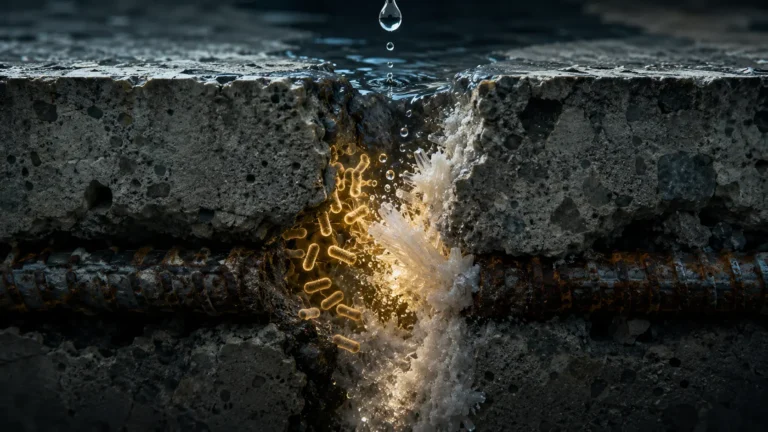
To break open the chalcopyrite without acid, engineers deploy chemolithotrophic bacteria, such as Acidithiobacillus ferrooxidans. These bacteria do not eat sunlight or sugar; they survive by literally eating the iron and sulfur in the rock. As the bacteria oxidize the iron and sulfur for energy, they crack open the mineral lattice, exposing the pure copper trapped inside.
3. Technical Depth: Glycine Lixiviation
Once the copper is exposed, it must be dissolved into a liquid so it can be pumped out. The operator introduces a water-based solution of glycine (NH₂CH₂COOH).
Glycine acts as a “bidentate ligand.” It possesses two binding points that perfectly fit a copper ion (Cu²⁺). When the glycine touches the copper, it wraps around it, forming a highly stable, water-soluble molecule known as cupric glycinate:
Cu²⁺ + 2NH₂CH₂COO⁻ → Cu(NH₂CH₂COO)₂
4. Technical Depth: Alkaline Selectivity
The genius of glycine is its operational pH. Sulfuric acid works in highly acidic environments (pH 1-2). Glycine leaching is optimized in mildly alkaline environments (pH 8-10). Because the environment is not acidic, the worthless “acid-consuming” gangue minerals remain completely solid and inert. The glycine ignores the iron, calcium, and magnesium, resulting in a pregnant leach solution (PLS) that contains almost 100% pure copper.
5. Real-World Consequences: Closed-Loop Reagent Recycling
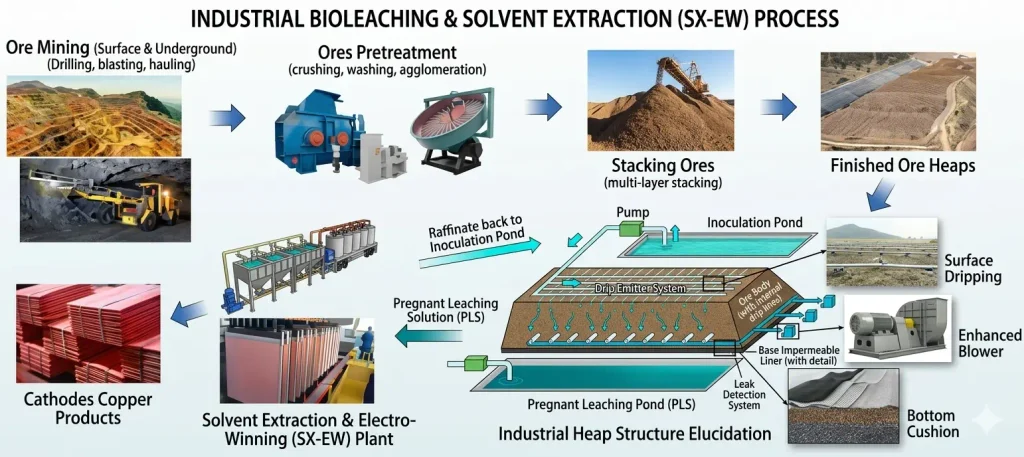
Once the blue, copper-rich liquid is pumped out of the rock pile, the copper is separated from the glycine using standard electrowinning (passing an electric current through the liquid to plate the copper onto a metal sheet). Because glycine is chemically robust and does not degrade during this electrical process, nearly 98% of the glycine is recovered intact. It is simply pumped back to the top of the rock pile to be used again, creating a highly profitable, closed-loop chemical cycle.
Commercializing Glycine Leaching: Tailings and E-Waste
The deployment of glycine bio-leaching is transitioning from university pilot plants to full-scale commercial applications across heavily regulated mining jurisdictions.
Reprocessing Tailings Dams: For decades, mines dumped their low-grade waste rock into massive, environmentally hazardous “tailings dams.” Companies like Mining and Process Solutions (MPS) in Western Australia have successfully commercialized the GlyLeach™ process specifically to target these sites. By applying glycine to the tailings, miners are extracting thousands of tons of “forgotten” copper. This not only generates immediate revenue but simultaneously cleans and detoxifies the historical waste site, converting an environmental liability into a profitable ESG asset.
In-Situ Recovery (ISR): Building a massive open-pit mine requires destroying thousands of acres of forest. Glycine allows for In-Situ (in place) recovery. Miners simply drill a series of small wells directly into an underground copper deposit without moving the rock. They pump the bacteria and glycine down the well, where it quietly dissolves the copper underground, and pump the copper-rich liquid back up through an extraction well. Because glycine is non-toxic and biodegradable, if a spill occurs underground, it naturally breaks down into harmless carbon and nitrogen, satisfying strict environmental regulatory bodies (like the EPA).
E-Waste Recycling: The world produces 50 million tons of electronic waste annually, containing massive amounts of copper locked in complex circuit boards. Traditional smelting of e-waste releases highly toxic dioxins from the burning plastics. Urban mining startups are utilizing glycine to selectively leach the copper and gold directly out of shredded circuit boards in simple, room-temperature tanks, establishing localized, zero-emission supply chains for battery metals inside major cities.
Economic & Strategic Impact
The core strategic value of bio-hydrometallurgy is the Eradication of the Smelting Bottleneck.
Currently, China controls roughly 50% of the world’s copper smelting capacity. If a Western mining company digs up copper ore in Africa or South America, they often must ship the heavy, unrefined rock all the way to China to be melted down into pure copper, exposing the supply chain to severe geopolitical risk and shipping costs.
Glycine leaching bypasses the smelter entirely. A mining company can produce LME Grade-A (99.99% pure) copper cathode sheets directly at the mine site using low-cost solvent extraction and electrowinning (SX-EW). By democratizing the ability to produce finished, battery-ready copper directly at the source, bio-hydrometallurgy shatters the centralized smelting monopoly, allowing Western automakers to secure direct, localized, and transparent critical mineral supply chains.
Advantages
- Extreme Selectivity: Glycine ignores iron, magnesium, and calcium. It only extracts valuable base and precious metals, drastically reducing downstream purification costs.
- Non-Toxic and Biodegradable: It replaces lethal, heavily regulated chemicals (like sulfuric acid and cyanide) with a safe, edible amino acid, virtually eliminating the risk of catastrophic environmental spills.
- Alkaline Operational Window: Operating at a higher pH means the process does not dissolve acid-consuming waste rock, cutting chemical reagent costs by up to 80% compared to traditional acid leaching.
- Low Capital Expenditure: Bypasses the need to build multi-billion-dollar pyrometallurgical smelters. The entire process occurs in standard vats or open-air heaps at room temperature.
Limitations
- Slower Extraction Kinetics: Smelting extracts copper in hours. Glycine bio-leaching is a slow, biological process that can take months or even years to achieve peak recovery rates on massive open-air heaps, creating a delayed cash-flow cycle for mining operators.
- Bacterial Temperature Sensitivity: The chemolithotrophic bacteria required to crack the sulfide ores are living organisms. If the heap leach pad gets too hot from the sun, or too cold in the winter, the bacteria die, instantly halting the extraction process.
- Reagent Loss in Clay: While glycine can be recycled from the liquid, some ores contain highly porous clays that physically absorb and trap the liquid. This “reagent bleed” causes the expensive glycine to be permanently lost inside the waste rock, dragging down project economics.
Common Misconceptions
Misconception: The bacteria actually “eat” the copper.
Reality: The bacteria have no interest in the copper. They eat the sulfur and the iron that surround the copper. The bacteria simply open the door; the glycine is what actually grabs the copper.
Misconception: Bio-leaching is science fiction for the future.
Reality: Bio-leaching is already a massive industry, currently producing over 15% of the world’s copper. The new breakthrough is combining the bacteria with glycine in an alkaline environment, rather than combining bacteria with sulfuric acid.
Misconception: Glycine is an expensive, exotic chemical.
Reality: Glycine is the simplest amino acid and is mass-produced globally by the millions of tons for the agricultural, food, and pharmaceutical industries. It is readily available in bulk and highly commoditized.
What Most People Miss
The disruptive intelligence value of Precious Metal Co-Extraction.
Most analysis focuses on copper. What analysts miss is that copper is rarely alone; it is often found in complex rock matrices alongside microscopic amounts of gold and silver.
Standard sulfuric acid cannot dissolve gold. To get the gold out of traditional copper waste, a mining company has to build a second, highly toxic cyanide-leaching facility. Glycine is uniquely versatile—by slightly altering the chemistry, glycine can dissolve both copper and gold simultaneously. A mining company using glycine doesn’t just extract zero-emission copper; they extract a highly lucrative secondary revenue stream of precious metals from the exact same pile of dirt without ever touching cyanide.
Comparison Table
| Feature | Pyrometallurgy (Smelting) | Traditional Acid Leaching | Glycine Bio-Leaching |
| Primary Reagent | Extreme Heat (1,200°C) | Sulfuric Acid (H₂SO₄) | Bacteria + Glycine |
| Environmental Impact | High (CO₂, SO₂ gas) | High (Toxic acid waste) | Low (Biodegradable) |
| Chemical Selectivity | N/A | Very Poor (Dissolves iron/waste) | Excellent (Ignores iron) |
| Viable Ore Grade | High (>1.0% Copper) | Moderate (~0.5% Copper) | Ultra-Low (0.1% to 0.3%) |
| Capital Expenditure | Massive ($Billion+) | Moderate | Low |
Case Study
Situation: The global push for electric vehicles triggered a massive supply deficit for copper. However, bringing a new copper mine online takes an average of 15 years due to immense environmental permitting hurdles and the multi-billion-dollar CapEx required to build a smelter. Mining companies needed a way to produce copper immediately from assets they already owned.
Challenge: Find a method to extract the millions of tons of copper left behind in legacy tailings dams (waste dumps) at existing mine sites. These dumps contained copper grades around 0.15%—far too low to justify the cost of sulfuric acid, which would be entirely consumed by the surrounding limestone gangue.
Solution (The Curtin University Breakthrough): Researchers at Curtin University in Western Australia patented a process utilizing glycine in an alkaline environment. Commercialized by the spin-off Mining and Process Solutions (MPS), the technology was deployed on low-grade chalcopyrite ores. The operators cultivated local bacterial strains to oxidize the sulfides, then irrigated the heaps with the glycine lixiviant.
Outcome: The alkaline glycine successfully complexed with the copper while completely ignoring the acid-consuming gangue. The operators achieved recovery rates exceeding 80% on rock that was previously considered mathematically worthless. Because the glycine was recovered and recycled through standard electrowinning, the operational costs plummeted. The technology was subsequently recognized with global innovation awards and rapidly licensed by major mining conglomerates across South America and Australia.
Lessons Learned: The breakthrough validated that the future of mining is precision chemistry, not brute force. By prioritizing chemical selectivity over aggressive dissolution, the industry proved it is possible to transform the world’s most toxic environmental liabilities (tailings dams) into the primary zero-carbon supply chain for the energy transition.
Future Outlook
Next 12–24 Months
The era of ESG Premium Offtake Agreements. In the immediate term, automotive OEMs (like Tesla and BMW) will aggressively seek out copper produced via glycine bio-leaching. As strict supply-chain auditing laws take effect in Europe, automakers must prove their materials are sustainably sourced. “Glycine Copper”—produced with zero smelting emissions and zero acid runoff—will be designated as a premium, Tier-1 ESG commodity, commanding a higher market price and securing massive, long-term offtake agreements from tech and auto giants looking to decarbonize their hardware.
Next 3–5 Years
The scaling of In-Situ Deep Seam Extraction. As the surface tailings are exhausted, the technology will move underground. Mining companies will deploy glycine bio-leaching for deep, low-grade copper seams that are physically impossible to mine with excavators. By injecting the bacteria and amino acids directly into the subterranean rock formations and pumping the copper back up, miners will create “invisible mines”—facilities that extract millions of tons of metal with zero surface disturbance, zero open pits, and zero local community displacement.
Next 10 Years
The Synthetic Biology Optimization. By the mid-2030s, the bottleneck of slow bacterial oxidation will be solved by synthetic biology. Using CRISPR and advanced genetic engineering, bio-mining startups will design custom, hyper-aggressive bacterial strains that thrive in extreme temperatures and rapidly devour sulfur bonds ten times faster than wild-type bacteria. This fusion of customized synthetic lifeforms and highly selective amino acid lixiviants will turn bio-hydrometallurgy from a niche process into the dominant, high-speed baseline architecture of the global base metals industry.
Most Likely Scenario
Glycine bio-leaching represents the inevitable biological integration of heavy industry. As high-grade ore naturally depletes, the economic viability of the entire EV revolution relies entirely on processing ultra-low-grade dirt. By weaponizing nature’s own mechanisms for dissolving rocks, the mining sector will ensure a limitless, zero-carbon supply of critical minerals, firmly decoupling technological progress from environmental destruction.
Key Takeaways
- The electric vehicle boom requires massive amounts of copper, but high-quality copper rock is disappearing. The industry must now extract copper from low-grade dirt and old mining waste.
- Standard methods use giant, polluting furnaces (smelting) or toxic sulfuric acid, which are too expensive and environmentally destructive for low-grade rock.
- Bio-hydrometallurgy solves this by using naturally occurring bacteria to “eat” the sulfur and iron in the rock, cracking the mineral open to expose the copper.
- Instead of acid, engineers use Glycine (a safe, common amino acid). Glycine acts like a smart magnet: it bonds perfectly with copper, but completely ignores worthless iron and dirt.
- This method is cheap, uses no extreme heat, produces zero toxic emissions, and the glycine can be endlessly recycled.
- It allows mining companies to bypass Chinese-dominated smelters, producing pure, battery-ready copper directly at the mine site while cleaning up historical toxic waste dumps.
Glossary
Acid-Consuming Gangue: The worthless rock (like limestone) surrounding the copper. If you use sulfuric acid, this rock neutralizes the acid, wasting money and ruining the process.
Chalcopyrite (CuFeS₂): The most common, but most difficult-to-process, copper ore on Earth. The copper is locked tightly in a matrix of iron and sulfur.
Chemolithotrophic Bacteria: Bacteria that get their energy from eating inorganic rock (like iron and sulfur) rather than sunlight or organic matter.
Glycine: The simplest amino acid, naturally found in the human body. In mining, it is used as a highly selective chemical magnet to pull copper out of dirt.
Lixiviant: A liquid chemical used in mining to dissolve and extract a target metal from solid rock.
Tailings: The massive piles of crushed, leftover “waste” rock generated by historical mining operations, which still contain microscopic, valuable amounts of copper.
Sources
Curtin University / WA School of Mines: Leaching of copper ores by glycine solutions
Hydrometallurgy Journal: Alkaline glycine leaching of base and precious metals
Mining and Process Solutions (MPS): GlyLeach™ Technology Overview
MDPI Minerals: Bioleaching of Chalcopyrite: A Review
U.S. Department of Energy (DOE): Critical Minerals Supply Chain and Advanced Extraction Technologies