Advertisement
)
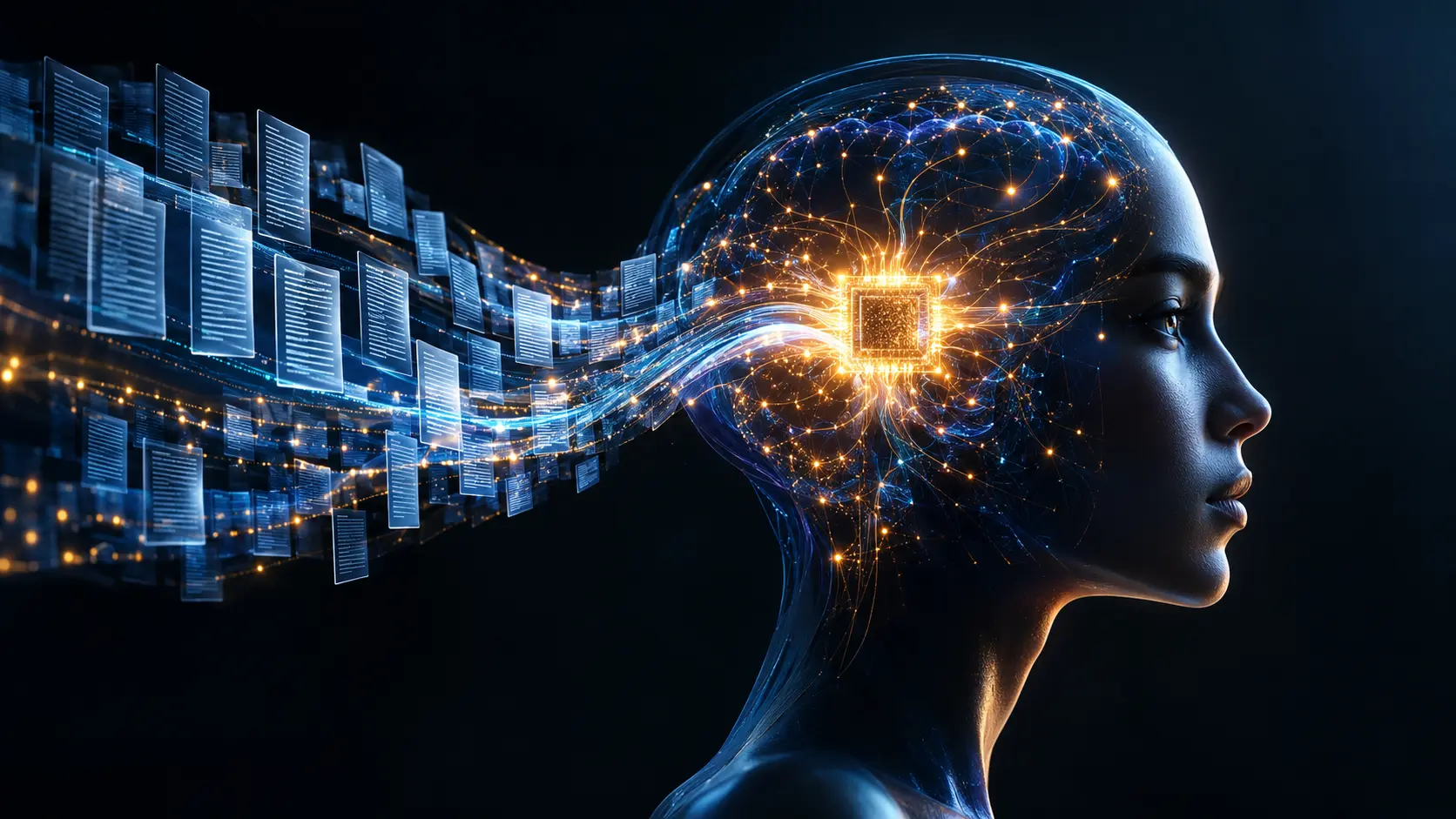

If you talk to the most advanced AI in the world long enough, it will eventually forget your name. This isn’t a glitch; it is a mathematical inevitability. To “remember” a conversation, a modern Transformer model must hold every single word in active, power-hungry RAM—a space known as the context window. As this window fills with millions of tokens, the AI slows to a crawl, hallucinates, and eventually crashes under the sheer computational weight. We are attempting to build omniscient artificial intelligence using the biological equivalent of a goldfish’s working memory.
Why should you care right now? Because Google researchers have mathematically broken this bottleneck. By introducing the “Titans” architecture, they have given AI a permanent, expandable hard drive called Neural Long-Term Memory (NLM). Instead of temporarily juggling words in RAM, Titans actually rewire their own brains at runtime, permanently absorbing new information without expanding their memory footprint. This marks the end of the expensive “context window” arms race and the beginning of AI agents that can remember a decade-long conversation perfectly.
What is Neural Long-Term Memory (Titans Architecture)?
Neural Long-Term Memory (the Titans architecture) is an advanced AI framework that replaces standard context windows with a continuous, trainable memory bank. Instead of temporarily storing past words in active RAM, Titans use test-time gradient updates to permanently encode new information into their neural weights, allowing for infinite memory with linear computational scaling.
At a Glance
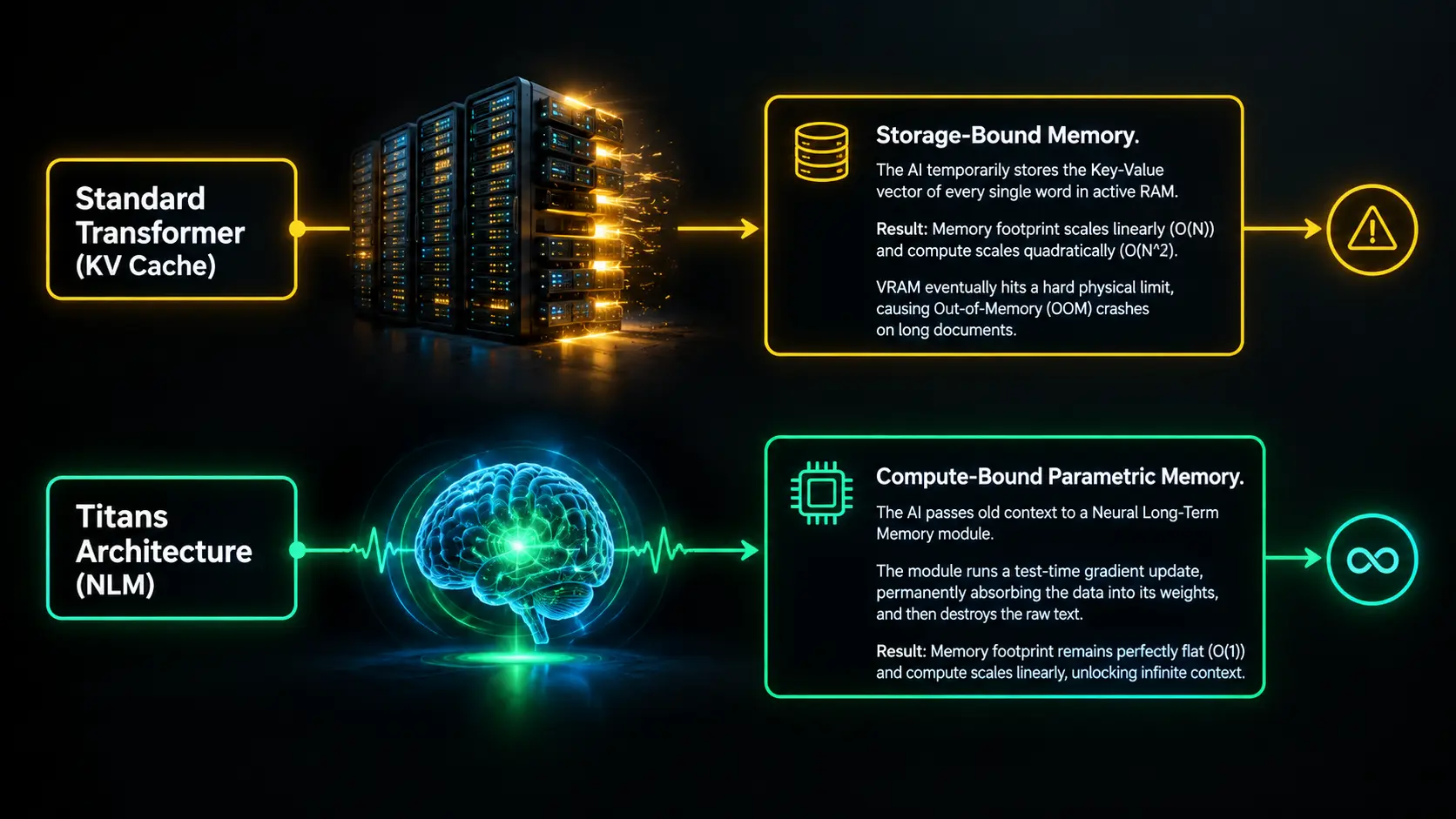
- The Hardware Problem: Standard LLMs use a Key-Value (KV) cache to remember context. A 1-million token context window requires massive amounts of VRAM, making long-term AI agents financially unscalable.
- The Parametric Solution: Titans throw away the KV cache for long-term data. Instead, they use a tiny neural network inside the main AI that continuously learns new data as it reads it.
- The Mechanism: Test-Time Learning. The AI essentially performs mini training-runs during the actual conversation, adjusting its mathematical weights to “absorb” the new text.
- The Strategic Value: Memory footprint becomes flat. Whether the AI reads 10 pages or 10 million pages, the memory consumed on the GPU remains exactly the same.
In Simple Words
Imagine a student taking an open-book exam.
Standard AI (The Transformer) takes the exam by carrying a massive stack of notes. Every time it reads a new page, it adds it to the stack. To answer a question, it must frantically flip through every single page in the stack. This is the KV Cache. If the test goes on for years, the stack of notes becomes so heavy the student collapses and can no longer answer questions.
The Titans AI (Neural Long-Term Memory) doesn’t use notes. When it reads a new page, it actually studies it, understands it, and commits it to memory. The knowledge physically alters the neural pathways in the student’s brain. Because the knowledge is internal, the student can walk into the exam empty-handed. Whether they read one book or a thousand books, the size of their brain doesn’t change, but their understanding is permanent.
Why This Matters
For AI Researchers, MLOps Engineers, and Cloud VCs, Titans solve the High-Bandwidth Memory (HBM) Tax.
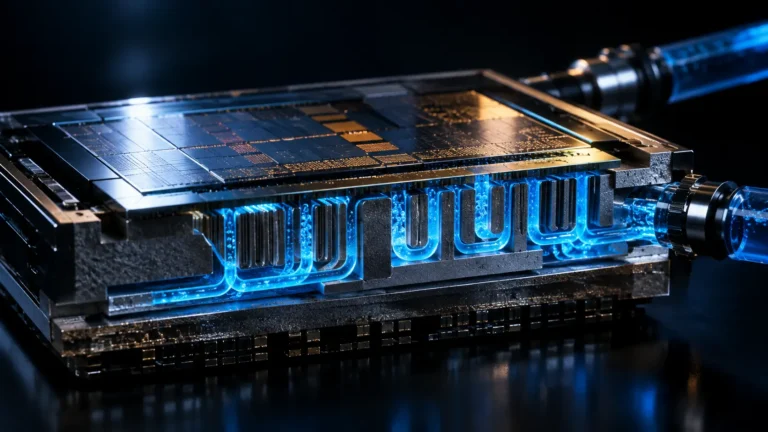
For the last three years, the entire AI industry has been constrained by HBM—the ultra-fast, ultra-expensive memory chips bolted onto Nvidia GPUs. Scaling an LLM’s context window from 100K tokens to 2M tokens requires absurd amounts of HBM just to hold the KV cache open for a single user. This destroys unit economics for AI cloud providers.
Retrieval-Augmented Generation (RAG) tried to fix this by saving documents to an external database and searching for them later, but RAG is slow, clunky, and often retrieves the wrong data. NLM bypasses both. By storing context inside the model’s parameters rather than in RAM, MLOps engineers can deploy infinitely long-context agents with a perfectly flat VRAM footprint, drastically lowering the inference CapEx required to run enterprise AI.
Micro-Insight: The Titans architecture shifts memory from a storage problem (RAM) to a compute problem (processing power).
The Shift to Titans AI Architecture
We are witnessing the Death of the Static Neural Network.
Since the dawn of deep learning, models existed in two distinct phases: Training (where the model learns) and Inference (where the model is frozen and just answers questions). A frozen model cannot learn your preferences unless a developer manually fine-tunes it on a massive server. NLM destroys this barrier. By executing gradient updates during inference, the AI becomes a living, continuously adapting system. The model you talk to on Friday is fundamentally, mathematically different than the model you spoke to on Monday.
How Neural Long-Term Memory (NLM) Works
Replacing a database with a living, real-time neural memory requires elegant calculus and dynamic routing. Here is the first-principles breakdown of the architecture.
1. The Fundamental Problem: Quadratic Attention
In standard Transformers, the “Attention” mechanism compares every new word to every previous word to understand context. If you double the length of the text, the math required quadruples (O(N²)). The model must explicitly store every past token’s Key and Value vectors. Over long horizons, this matrix grows so massive it physically cannot fit inside the GPU.
2. The Core Mechanism: The Memory as Compute (MAC) Framework
The Titans architecture splits the AI’s brain into three distinct modules:
- Core Worker: The main intelligence of the AI that generates the final text.
- Short-Term Memory: A standard, but very small, attention window (KV cache) that only remembers the last few paragraphs to keep immediate conversation flowing smoothly.
- Neural Long-Term Memory (NLM): A secondary, highly condensed neural network running parallel to the Core Worker.
3. Technical Depth: Test-Time Gradient Updates
When data falls out of the Short-Term Memory, it doesn’t just disappear. It is passed to the NLM.
Instead of saving the text, the NLM runs a rapid, miniature training pass on the data (Backpropagation). It calculates a “gradient” and physically updates its own mathematical weights. The text is destroyed, but the representation of the text is permanently etched into the NLM’s parameters. When the Core Worker needs to remember a fact from an hour ago, it queries the NLM, which computes the answer based on its newly updated weights.
Plain-English Takeaway: The AI is constantly fine-tuning itself in the background as you talk to it, turning your raw chat history into permanent robotic instincts.
4. Technical Depth: Surprise-Based Retention
If the AI memorized every single word exactly equally, the neural memory would quickly become saturated with useless noise (“um,” “the,” “and”).
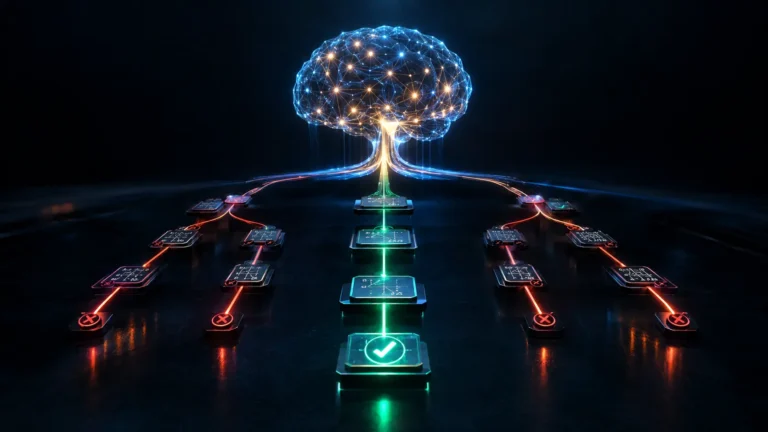
To prevent this, the NLM uses a “surprise” metric (loss-driven updates). Before updating its memory, the NLM tries to predict the data it just received. If it guesses perfectly, the data is deemed expected/unimportant, and the memory update is tiny. If the NLM guesses wrong (i.e., it is “surprised” by a novel fact or plot twist), the mathematical error is huge, triggering a massive, heavy weight update. The model only permanently encodes what it didn’t already know.
5. Real-World Consequences: Linear Scaling
Because the NLM is just a fixed-size neural network, its memory footprint never grows. Updating its weights takes the same amount of math on token 1,000 as it does on token 1,000,000. This achieves linear scaling (O(N),), allowing enterprise users to feed tens of millions of tokens (entire codebases or corporate archives) into the model without crashing the server.
LLM Memory Architecture Simulator
Bypassing the Context Window: KV Cache vs. Neural Long-Term Memory (Titans)
Ingest Context Length
500k Tokens
Model Architecture
Standard (KV Cache)
Titans (NLM)
Tokens Processed
0k
VRAM Consumption
16.0 GB
System Status
IDLE
GPU Memory Architecture Footprint
READY
GPU VRAM Consumption (GB) vs. Context Tokens
Real-World Applications
The shift to parametric memory unlocks use cases previously considered computationally impossible.
The Infinite AI Software Engineer: Current AI coding assistants struggle with massive enterprise codebases. If a repo has 5 million lines of code, it won’t fit in a standard context window. Using RAG to search the codebase often fails because code logic is highly interconnected across hundreds of files. An NLM-powered agent can “read” the entire 5 million lines sequentially, permanently absorbing the exact syntax, architecture, and variable relationships into its weights, allowing it to write flawless, globally consistent pull requests.
Lifelong Personal AI Companions: A standard AI companion resets its memory frequently, relying on clunky external databases to remember your dog’s name or your communication style. A Titans-based AI companion updates its neural weights after every conversation. Over a decade, it naturally molds its underlying intelligence to perfectly mirror your preferences, personality, and history without relying on a vulnerable, external privacy-leaking database.
Continuous Edge Intelligence: Autonomous drones and robots deployed in disconnected environments (like deep-sea exploration or extraterrestrial rovers) cannot ping a cloud server for RAG retrieval. With NLM, the robotic brain adapts and learns from the terrain in real-time, rewriting its own parameters locally to survive novel physical challenges without ever needing a software update from Earth.
Economic & Strategic Impact
The core strategic consequence of Titans is The Hardware CapEx Deflation.
The AI industry is currently trapped in a capex cycle defined by Nvidia’s monopoly on HBM (High-Bandwidth Memory). Every cloud provider is forced to buy the most expensive, memory-dense GPUs simply to host the massive context windows that enterprise clients demand.
NLM effectively decouples context length from hardware memory. By transforming a memory storage problem into a compute processing problem, cloud providers can host massive, infinite-context models on cheaper GPUs with less RAM. This crushes the premium pricing of high-memory accelerators and democratizes the hosting of enterprise-grade, long-horizon AI agents.
Advantages of Titans Over Standard Transformers
- Flat Memory Footprint: VRAM usage remains completely static regardless of how much text the model processes, preventing Out-of-Memory (OOM) crashes.
- Linear Compute Scaling: Processing time scales linearly (O(N),) rather than quadratically, allowing models to ingest millions of tokens exponentially faster than standard Transformers.
- True Understanding vs. Searching: Unlike RAG (which just copy-pastes old text into the prompt), NLM mathematically integrates the knowledge, allowing the model to synthesize and reason across thousands of different documents natively.
- Continuous Lifelong Learning: The model adapts in real-time to shifting user preferences and new daily data without requiring expensive, offline fine-tuning pipelines.
Compute and Catastrophic Forgetting Limitations
- Catastrophic Forgetting: If a neural network is continuously updated with new data, it eventually begins to overwrite and “forget” the oldest data. Tuning the NLM to remember page 1 of a book by the time it reaches page 10,000 without degrading the weights is exceptionally difficult.
- Inference Compute Penalty: While it saves memory, NLM requires the AI to perform backpropagation (gradient updates) during generation. This makes the step-by-step generation of tokens significantly more compute-intensive and slower than standard forward-pass inference.
- Loss of Exact Quote Retrieval: A KV cache perfectly memorizes every word. An NLM absorbs the concept of the words. If you ask an NLM model for a perfect, verbatim quote from a 1,000-page legal document, it may slightly hallucinate the phrasing because it didn’t save the exact text, only the parametric representation.
Takeaway: NLM is brilliant for understanding the macro-plot of a 100-book series, but it is terrible if you need to know exactly what word was on page 42, paragraph 3.
Common Misconceptions
Misconception: Titans is just a new type of RAG (Retrieval-Augmented Generation).
Reality: RAG relies on an external database (vector store) to look up past text. Titans uses no database. The text is destroyed, and the memory is etched directly into the mathematical parameters of the AI itself.
Misconception: The model gets bigger the more it learns.
Reality: The size of the model (parameter count) is strictly fixed. The numbers inside the matrices change values to represent new data, but no new matrices are ever added. The footprint is permanently flat.
Misconception: NLM replaces attention entirely.
Reality: Pure NLM struggles with immediate, short-term reasoning. The Titans architecture uses a hybrid approach: a traditional attention mechanism (KV cache) for the immediate surrounding paragraphs, and NLM for the deep, long-term history.
What Most People Miss
The disruptive capability of Surprise-Driven Active Learning.
The most brilliant aspect of the Titans paper is the “surprise” metric. When humans walk down a familiar street, we don’t memorize every blade of grass; we only form a memory if something unexpected happens (like a car crash).
By using the loss gradient as a proxy for “surprise,” the NLM perfectly mimics human cognitive filtering. If the AI reads boilerplate code, the loss is near zero, and the memory ignores it, saving compute power. If the AI reads a novel algorithm, the loss spikes, triggering a deep, permanent weight update. This active filtering allows the model to process billions of tokens of trash data without degrading its core intelligence.
Comparison Table
| Feature | Standard Transformer (KV Cache) | Retrieval-Augmented Gen (RAG) | Titans NLM (Parametric) |
| Storage Mechanism | Active GPU RAM (VRAM) | External Vector Database | Internal Neural Weights |
| Compute Scaling | Quadratic (O(N²) | Flat (Search based) | Linear (O(N),) |
| Context Limit | Hard limit (e.g., 1M tokens) | Practically infinite | Infinite (Continuous) |
| Verbatim Recall | Perfect (Holds exact text) | High (Retrieves exact text) | Moderate (Conceptual synthesis) |
| Inference Cost | High VRAM Cost | Low VRAM, High Latency | Low VRAM, High Compute |
Future Outlook
Next 12–24 Months
The era of Hybrid Agent Deployment. Over the next two years, Titans-like architectures will not replace standard LLMs for simple web chats. Instead, they will be deployed strictly as specialized, autonomous agents. Coding agents, legal discovery bots, and cyber-threat analyzers will utilize NLM to ingest massive, project-specific datasets locally, creating highly customized “expert” models that live inside enterprise networks without relying on clunky external RAG databases.
Next 3–5 Years
The scaling of On-Device Lifelong AI. By 2029, the flat memory footprint of NLM will trigger a renaissance in edge AI. Apple, Google, and Samsung will deploy NLM architectures directly onto smartphones. Your phone’s AI will listen, read, and observe your daily life, continuously executing tiny background gradient updates. Because the memory is parametric, the AI becomes deeply personalized to you over years of use, all while running securely on a low-memory mobile chip without ever sending your data to the cloud.
Next 10 Years
The Continuous Lifespan Paradigm. By the mid-2030s, the distinction between pre-training, fine-tuning, and inference will completely dissolve. AI models will be instantiated once and left to “live” continuously. Through persistent neural long-term memory, these models will accumulate decades of scientific, social, and empirical knowledge, evolving their intelligence in real-time, effectively mirroring the continuous cognitive development of a human being.
Most Likely Scenario
The traditional context window is a hardware brute-force solution to a software problem. As the demand for infinite-context AI collides with the physical and financial limits of GPU memory, the industry must pivot. By serving as the ultimate KV cache alternative, test-time neural learning, the Titans architecture elegantly solves the VRAM bottleneck. While mitigating catastrophic forgetting will require years of tuning, parametric memory is the definitive architectural leap required to build AI systems that truly learn, adapt, and remember forever.
Key Takeaways
- Standard AI models remember conversations using a “KV cache,” which stores exact words in RAM. This causes VRAM to explode and the AI to crash during long conversations.
- The Titans architecture replaces the KV cache with Neural Long-Term Memory (NLM)—a tiny neural network that learns the conversation by physically updating its weights in real-time.
- Because NLM is a fixed-size network, the memory footprint remains completely flat (O(1)) whether the AI reads ten words or ten million words.
- The memory updates are driven by “surprise.” The AI only executes heavy, permanent memory updates when it encounters unexpected or novel information, ignoring predictable noise.
- By shifting memory from RAM storage to processing compute, Titans slashes the hardware costs of running enterprise AI and paves the way for infinite-context, lifelong AI agents.
Glossary
Attention Mechanism: The mathematical process in a Transformer that allows the AI to weigh the importance of every word in a sequence against every other word.
Catastrophic Forgetting: A flaw in neural networks where learning new information causes the model to rapidly overwrite and completely forget previously learned information.
Gradient Update: The mathematical adjustment of a neural network’s weights based on the error (loss) of its prediction.
KV Cache (Key-Value Cache): The active memory storage in a standard Transformer that holds the mathematical representations of all previous words in a conversation to avoid recalculating them.
Neural Long-Term Memory (NLM): A parametric memory module that stores past context not as raw text, but by continuously training its own neural weights during inference.
AI test-time training: The process of allowing an AI model to execute backpropagation and update its weights while it is being actively used by a consumer, rather than just in a secure lab.
Sources
Google Research / DeepMind: Titans: Learning to Memorize at Test Time
arXiv Preprints / Machine Learning: Transformers with Neural Long-Term Memory
Hugging Face Research: Beyond the Context Window: The Shift to Parametric Memory
SemiAnalysis: The Memory Wall: HBM Economics and the Future of AI Inference
IEEE Transactions on Pattern Analysis: Mitigating Catastrophic Forgetting in Continuous Learning Systems