Advertisement
)

At a Glance
- Concept: A programmable, microscopic targeting system and cutting enzyme derived from bacterial immune defenses.
- Why it matters: It provides the ability to permanently cure inherited genetic diseases, rather than just treating their symptoms.
- Who uses it: Clinical researchers, pharmaceutical companies, and agricultural biotech firms.
- Biggest takeaway: The true power of CRISPR is not just cutting DNA; it is tricking the cell’s natural repair mechanisms into fixing the genetic code after the cut is made.
In Simple Words
The human instruction manual—your DNA—is composed of 3 billion letters. A genetic disease, like sickle cell anemia, is often caused by a single incorrect letter in that massive code.
For decades, scientists knew exactly which letter was broken, but they had no physical way to reach into a living cell, find that specific letter among billions, and change it safely. Previous gene therapies tried to clumsily shove healthy genes into cells using viruses, which often caused dangerous side effects.
CRISPR-Cas9 solves this. It works like the “Find and Replace” function in a word processor. You give CRISPR a short piece of code matching the exact genetic typo you want to find. It acts as a GPS, navigating through the billions of letters of DNA until it finds the exact match. Once there, it acts as a pair of molecular scissors, snipping the bad DNA out. The cell then naturally heals the cut, effectively pasting over the typo.
For the first time in human history, we can edit the code of life directly.
Why This Matters
CRISPR has moved from a theoretical laboratory breakthrough to a clinical reality, fundamentally altering the economics and trajectory of modern medicine.
Historically, pharmaceutical companies built business models around chronic treatments. A patient with a genetic disorder required daily medication, frequent blood transfusions, or continuous hospital care for their entire life. CRISPR-Cas9 threatens this recurring-revenue model by offering a “one-and-done” permanent cure.
In late 2023 and early 2024, the United States Food and Drug Administration (FDA) and the European Medicines Agency (EMA) approved Casgevy. This marked the first-ever approval of a CRISPR-based medicine, designed to cure severe sickle cell disease and beta-thalassemia. Clinical data showed that 95% of treated sickle cell patients experienced zero severe pain crises at their 12-month follow-up.
This transitions medicine from maintenance to genetic correction. However, the price of these single-shot cures is staggering, often exceeding $2 million per patient. This places massive strain on global healthcare systems and insurance providers, forcing governments to invent entirely new reimbursement models to handle the upfront costs of lifetime cures.
Beyond human health, CRISPR is aggressively utilized in agriculture. By editing the genomes of crops to resist drought or pests without inserting foreign DNA, companies are securing global food supplies against extreme climate shifts, bypassing the heavy regulations associated with traditional Genetically Modified Organisms (GMOs).
The Big Picture
To understand how scientists acquired this tool, you have to look at bacteria.
CRISPR was not invented in a human laboratory; it was discovered in nature. For millions of years, bacteria have fought a continuous war against attacking viruses (bacteriophages). When a bacterium survives a viral attack, it snips off a tiny piece of the virus’s DNA and stores it in its own genetic archive—a sequence called CRISPR (Clustered Regularly Interspaced Short Palindromic Repeats).
If that same virus attacks again, the bacterium arms an enzyme called Cas9 with a copy of that archived viral DNA. The Cas9 enzyme acts like a security guard, roaming the cell. If it finds a piece of invading DNA that perfectly matches the archived mugshot, the Cas9 enzyme cuts the virus’s DNA, destroying it.
In 2012, researchers realized they could hijack this ancient bacterial immune system. They discovered they could swap out the viral “mugshot” for any sequence of DNA they chose, turning a bacterial defense mechanism into a programmable, universal genetic editing tool.
HOW CRISPR-CAS9 WORKS
Editing a living human genome requires bypassing the cell membrane, navigating the nucleus, and precisely severing the double helix.
Here is the exact biological mechanism of a CRISPR-Cas9 edit.
1. Designing the Guide RNA (gRNA)
The process begins in a laboratory, where scientists synthesize a custom molecule called guide RNA (gRNA). This molecule contains a sequence of about 20 genetic letters designed to perfectly match the target DNA sequence they want to edit inside the patient.
2. The Cas9 Endonuclease
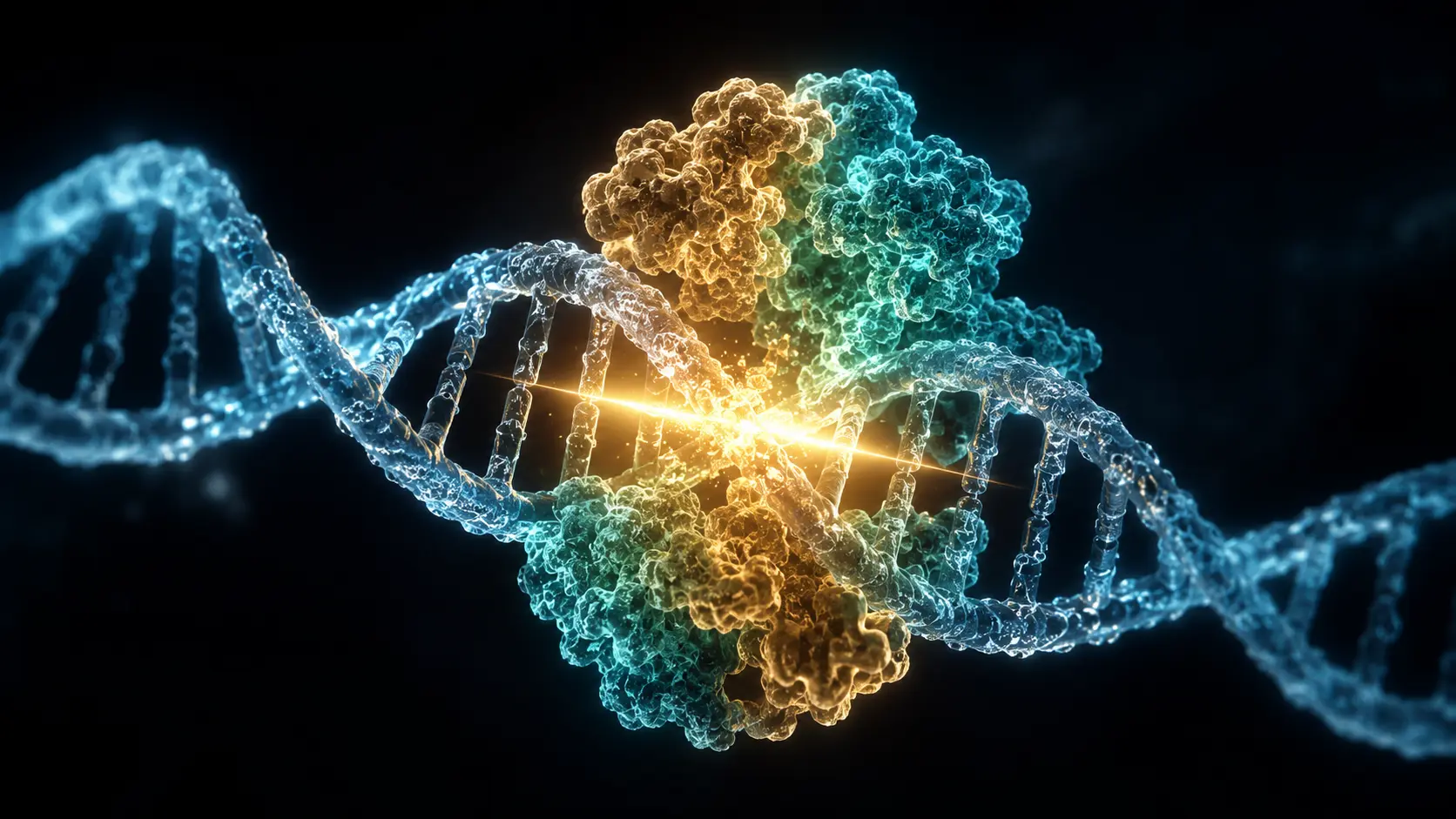
The guide RNA is physically attached to the Cas9 enzyme. Cas9 is an endonuclease—a type of protein specifically evolved to cut through the sugar-phosphate backbone of DNA. Together, the gRNA and Cas9 form the active CRISPR complex.
3. Delivery into the Cell
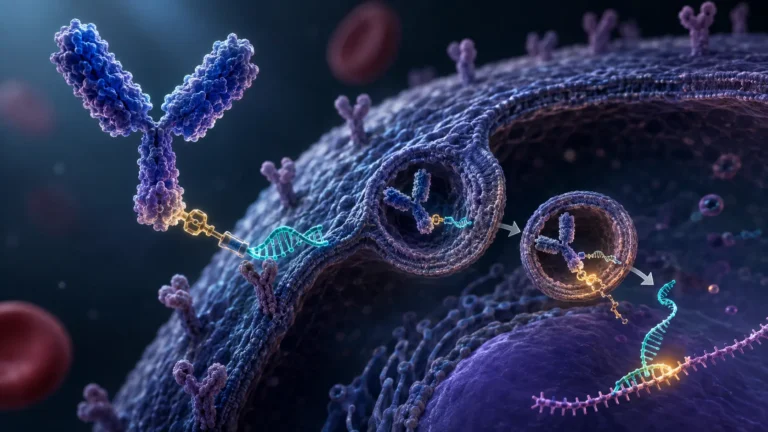
Because the CRISPR complex is too large to pass through a cell membrane on its own, it must be delivered. This is often done ex vivo (outside the body). Stem cells are extracted from the patient, and a brief electrical shock (electroporation) is used to temporarily open pores in the cell membrane, allowing the CRISPR complex to slip inside.
4. Target Identification and Cleavage
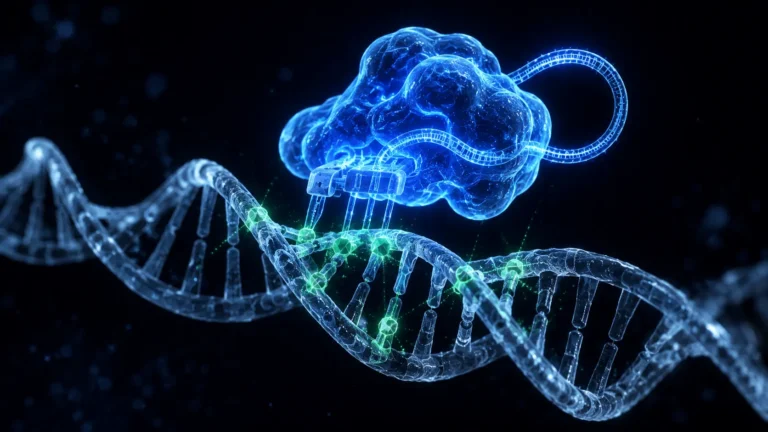
Once inside the cell’s nucleus, the Cas9 enzyme unzips the patient’s double-stranded DNA and compares it to the guide RNA. It scans rapidly. When the gRNA finds a perfect 20-letter complementary match on the patient’s DNA, it binds to it tightly. This binding action triggers a physical shape change in the Cas9 protein, activating its “molecular scissors” to slice straight across both strands of the targeted DNA.
5. Non-Homologous End Joining (NHEJ)
The cut is made, but the disease is not yet cured. The cell detects the severed DNA as fatal damage and panics, activating an emergency repair process called Non-Homologous End Joining (NHEJ). The cell hurriedly jams the broken DNA ends back together. This sloppy repair process usually inserts or deletes a few random letters, permanently breaking (knocking out) that specific gene. If the goal was to stop a harmful gene from producing a toxic protein, the job is complete.
6. Homology-Directed Repair (HDR)
If scientists want to fix a typo rather than just break the gene, they use Homology-Directed Repair (HDR). Along with the CRISPR scissors, they deliver a healthy, synthetic piece of DNA to serve as a template. When the cell tries to repair the CRISPR cut, it copies the provided healthy template, effectively “pasting” the correct genetic sequence into the patient’s genome.
Real-World Applications
The clinical deployment of CRISPR is categorized into two distinct methodologies: Ex Vivo and In Vivo.
Ex Vivo Editing (Blood Disorders): Treatments like Casgevy use ex vivo (out-of-body) editing. Doctors extract bone marrow stem cells from a patient with sickle cell disease. In a sterile lab, they use CRISPR to edit a specific gene (BCL11A), which reactivates the body’s ability to produce fetal hemoglobin. The patient undergoes chemotherapy to clear out their remaining diseased bone marrow, and the newly edited “super-cells” are infused back into their bloodstream, permanently producing healthy red blood cells.
In Vivo Editing (Blindness): Some tissues, like the eye, cannot be extracted, edited, and put back. In 2025, the FDA granted accelerated approval to EDIT-101 for Leber Congenital Amaurosis Type 10 (LCA10), a severe form of genetic blindness. This is an in vivo therapy. Doctors inject a fluid containing the CRISPR instructions directly into the back of the patient’s eye. The CRISPR machinery enters the living retinal cells, cuts out the genetic mutation causing the blindness, and restores light sensitivity to the patient.
CAR-T Cancer Therapies: Oncologists are extracting immune cells (T-cells) from cancer patients and using CRISPR to knock out the PD-1 gene. This gene normally acts as a “brakes” system for the immune system, which tumors exploit to avoid detection. By editing it out, the T-cells become relentless, un-blockable cancer assassins when reintroduced to the patient’s body.
Economic & Strategic Impact
The financial infrastructure of synthetic biology is currently defined by a bitter, decade-long patent war over the intellectual property rights to the CRISPR-Cas9 system.
The core dispute involves two parties: The University of California, Berkeley (representing inventors Jennifer Doudna and Emmanuelle Charpentier), and the Broad Institute of MIT and Harvard (representing Feng Zhang). While Berkeley filed a patent first for the general mechanism, the Broad Institute filed months later with proof that CRISPR specifically worked in eukaryotic (human and animal) cells.
In March 2026, the U.S. Patent Trial and Appeal Board (PTAB) reaffirmed its decision that the Broad Institute holds priority over the invention of single-guide CRISPR-Cas9 for eukaryotic gene editing.
For the biotechnology market, this ruling dictates the flow of billions of dollars. Any commercial pharmaceutical company developing a human CRISPR-Cas9 therapy in the United States must negotiate expensive licensing agreements with the Broad Institute. This heavy IP tax forces smaller biotech startups to either pay steep royalties or abandon Cas9 entirely in favor of alternative, newly discovered cutting enzymes (like Cas12 or Cas13) to avoid the patent blockade.
Strategically, the ability to engineer genetics is recognized as a matter of national security. Governments are investing heavily in domestic synthetic biology infrastructure to prevent reliance on foreign-owned proprietary gene-editing platforms.
Advantages
- Extreme Precision: Guide RNAs can be programmed to find a precise 20-letter sequence out of 3 billion, allowing exact targeting of specific diseases.
- Permanent Cures: Edits made to stem cells permanently alter the patient’s DNA, offering a lifetime cure after a single treatment.
- Rapid Prototyping: Unlike older gene-editing methods that took months to engineer, creating a new gRNA for CRISPR takes only days and costs a few dollars in a lab.
- Multiplexing: Researchers can deliver several different guide RNAs into a cell simultaneously, allowing them to edit multiple genes at the exact same time.
Limitations
- Off-Target Effects: The Cas9 enzyme can occasionally make a mistake and cut a sequence of DNA that looks similar to the target, potentially causing unintended mutations or cancer.
- Delivery Bottlenecks: Getting the large CRISPR protein efficiently into living organs (like the brain or heart) inside a human body remains highly difficult.
- Immune Reactions: Because the Cas9 protein is derived from bacteria, the human immune system often recognizes it as an infection and attacks it before it can edit the DNA.
- No Reversibility: Once a double-strand cut is made and repaired, the genetic code is permanently altered.
Common Misconceptions
Misconception: CRISPR treatments alter the genetics of the patient’s future children.
Reality: Current approved clinical therapies perform somatic editing, meaning they only alter the patient’s blood or organ cells. They do not edit germline cells (sperm or eggs), so the edits cannot be passed down to the next generation.
Misconception: CRISPR inserts artificial, robotic machinery into your blood.
Reality: The CRISPR complex is a purely biological protein and RNA molecule. Once it enters the cell, makes the cut, and completes its task, it naturally degrades and is flushed out of the body within a few days.
Misconception: CRISPR will immediately allow parents to create “designer babies” with enhanced intelligence or height.
Reality: Complex traits like intelligence and height are governed by hundreds of interacting genes and environmental factors. CRISPR is excellent at fixing single-gene defects (like sickle cell), but it is nowhere near capable of safely orchestrating multi-gene enhancements.
What Most People Miss
CRISPR-Cas9 is essentially a blunt instrument. It acts like a sledgehammer that breaks the DNA entirely in half, relying on the cell’s panicked repair mechanisms to fix the damage.
Because this double-strand break is so violent, the cell’s repair process often introduces small, unpredictable errors. For diseases where you simply need to turn a bad gene off (like switching off fetal hemoglobin suppression in sickle cell), this blunt force works perfectly.
However, for diseases requiring delicate, single-letter corrections, the double-strand break is too dangerous. This is why the biotech industry is aggressively moving past traditional Cas9 toward derived technologies like Base Editing and Prime Editing. These next-generation tools use a modified Cas9 that only nicks one strand of the DNA, chemically converting one genetic letter into another without ever breaking the double helix in half.
Comparison Table
| Feature | Traditional Gene Therapy | CRISPR-Cas9 Editing |
| Mechanism | Uses a virus to randomly insert a healthy gene. | Acts as a targeted scissors to cut specific DNA. |
| Precision | Low; the new gene lands in random locations. | Extremely High; guided by custom RNA. |
| Primary Risk | The inserted gene may accidentally disrupt a cancer-preventing gene. | Off-target cuts or dangerous immune responses. |
| Capability | Only adds new genes. | Can delete, silence, or insert genes. |
| Cost to Engineer | High (months to build viral vectors). | Low (days to synthesize guide RNA). |
| Best Fit | Providing missing proteins. | Permanently correcting or disabling mutated genes. |
Case Study
Situation: Transfusion-Dependent Beta-Thalassemia (TDT) is a severe genetic blood disorder. Patients cannot produce enough healthy hemoglobin, requiring them to undergo grueling blood transfusions every few weeks just to survive.
Challenge: The genetic defect preventing adult hemoglobin production is deeply embedded in the patient’s bone marrow. Traditional therapies could only manage the symptoms with transfusions, which eventually caused fatal iron buildup in the patients’ organs.
Solution: Vertex Pharmaceuticals and CRISPR Therapeutics developed Casgevy. They extracted the patients’ blood-forming stem cells and used CRISPR-Cas9 to target and disable the BCL11A gene. Disabling this specific gene removes the biological “brakes” that normally stop humans from producing fetal hemoglobin after birth.
Outcome: Following the re-infusion of the edited cells, the patients’ bodies successfully resumed producing fetal hemoglobin, which compensated for their defective adult hemoglobin. Clinical trials up to 2026 demonstrated that over 90% of TDT patients achieved total transfusion independence.
Lessons Learned: Editing the human genome does not always require fixing the broken gene directly. By using CRISPR to strategically disable a completely different regulatory gene, scientists can trick the human body into deploying its own biological workarounds to cure the disease.
Future Outlook
Next 12–24 Months
The regulatory and commercial focus will shift to manufacturing scale. Producing custom, ex vivo CRISPR stem cell therapies takes months per patient. The industry will rapidly invest in automated, closed-loop bioreactors to reduce wait times and lower the massive manufacturing costs associated with personalized medicine.
Next 3–5 Years
In vivo therapies using Lipid Nanoparticles (LNPs) will dominate new clinical trials. Instead of taking cells out of the body, doctors will inject patients with microscopic fat bubbles carrying CRISPR instructions. These LNPs will travel directly to the liver or brain, delivering the gene-editing payload internally with far fewer immune risks than using viral delivery vectors.
Next 10 Years
Traditional CRISPR-Cas9 double-strand cutting will be largely phased out for human therapeutics in favor of Prime Editing. Prime editors will act as true molecular word processors, allowing scientists to reliably overwrite long stretches of DNA without ever severing the double helix, minimizing off-target mutations entirely.
Most Likely Scenario
CRISPR-derived technologies will become the undisputed standard of care for all single-gene inherited disorders. However, the limitation will not be biological; it will be economic. Global health systems will be forced to adapt to “amortized” payment structures, where governments pay pharmaceutical companies for the genetic cure over a twenty-year period based on the patient’s continued health.
Key Takeaways
- CRISPR-Cas9 is a programmable genetic editing tool adapted from an ancient bacterial immune defense system.
- It uses a guide RNA (gRNA) to navigate the human genome and find a highly specific 20-letter sequence of DNA.
- The Cas9 enzyme acts as molecular scissors, cutting cleanly across both strands of the targeted DNA.
- The actual “edit” occurs when the human cell activates its own natural emergency repair processes (NHEJ or HDR) to fix the cut.
- Casgevy became the first approved CRISPR therapy, curing sickle cell disease by editing stem cells outside the body (ex vivo).
- The Broad Institute currently controls the foundational U.S. patents for using CRISPR in human cells following a 2026 PTAB ruling.
- The future of the industry relies on in vivo editing, delivering CRISPR directly into the patient’s organs without extracting cells.
Glossary
Base Editing: A newer, more precise form of CRISPR that chemically alters a single DNA letter without breaking the double helix.
Cas9 Endonuclease: The protein enzyme responsible for physically unzipping and cutting the DNA strands.
Ex Vivo: A medical procedure where cells are removed from the patient, treated in a laboratory, and then returned to the body.
Guide RNA (gRNA): A synthetic piece of genetic code designed to match a target sequence; it physically guides the Cas9 enzyme to the correct location in the genome.
Homology-Directed Repair (HDR): A cellular repair process where the cell uses a provided healthy DNA template to accurately paste over a severed gene.
In Vivo: A medical procedure where the therapeutic agents (like a CRISPR payload) are administered directly into the patient’s body.
Lipid Nanoparticle (LNP): A microscopic bubble of fat used to safely transport delicate CRISPR instructions through the bloodstream and into targeted organs.
Non-Homologous End Joining (NHEJ): The cell’s sloppy emergency repair process that jams severed DNA back together, usually disabling the targeted gene.
Frequently Asked Questions
Does CRISPR permanently change my DNA?
Yes. For the specific cells that receive the CRISPR payload (such as your bone marrow), the DNA is permanently severed and repaired. That edit will last for the rest of your life.
Can CRISPR be passed down to my children?
No. Current medical therapies are restricted to somatic cells (blood, liver, eyes). Edits are not performed on germline cells (sperm or eggs), so the genetic changes cannot be inherited by offspring.
How does the guide RNA find the right spot?
Your DNA has 3 billion letters. A sequence of roughly 20 specific letters is almost guaranteed to be mathematically unique. The gRNA is programmed to match that exact 20-letter sequence, ignoring everything else.
What happens to the CRISPR protein after the cut?
It does not stay in your body forever. The Cas9 protein and guide RNA are biological molecules. Once they finish their job inside the cell nucleus, cellular enzymes naturally break them down and recycle them within a few days.
Why are CRISPR treatments so expensive?
The engineering is cheap, but the clinical execution is not. Removing a patient’s stem cells, editing them in a highly sterile facility, performing quality control, and administering chemotherapy before reinfusion requires months of specialized labor.
Is CRISPR safe from causing cancer?
It is a recognized risk. If Cas9 accidentally cuts the wrong location (an off-target effect), or if the cell makes a severe error while gluing the DNA back together, it could theoretically trigger cancerous mutations. Long-term safety monitoring spans decades.
Who owns the patent to CRISPR?
It is heavily disputed globally, but in the United States, a 2026 PTAB ruling reaffirmed that the Broad Institute of MIT and Harvard holds the priority patent for using CRISPR-Cas9 in eukaryotic (human/animal) cells.
What is the difference between Cas9 and Cas12?
Cas9 is the original, most famous cutting enzyme. Cas12 is a different enzyme discovered later. Biotech companies frequently use Cas12 to bypass the expensive licensing fees associated with the Broad Institute’s Cas9 patents.
Sources
- Ubie Health: CRISPR Gene Therapy in 2026 Approved Treatments and Clinical Trials
- Gianni Benzi Foundation: EMA Recommends Approval for CRISPR Casgevy
- Morrison Foerster: The PTAB Reaffirms Priority Decision for CRISPR IP (2026)
- Broad Institute: Statements and Background on the CRISPR Patent Process