Advertisement
)
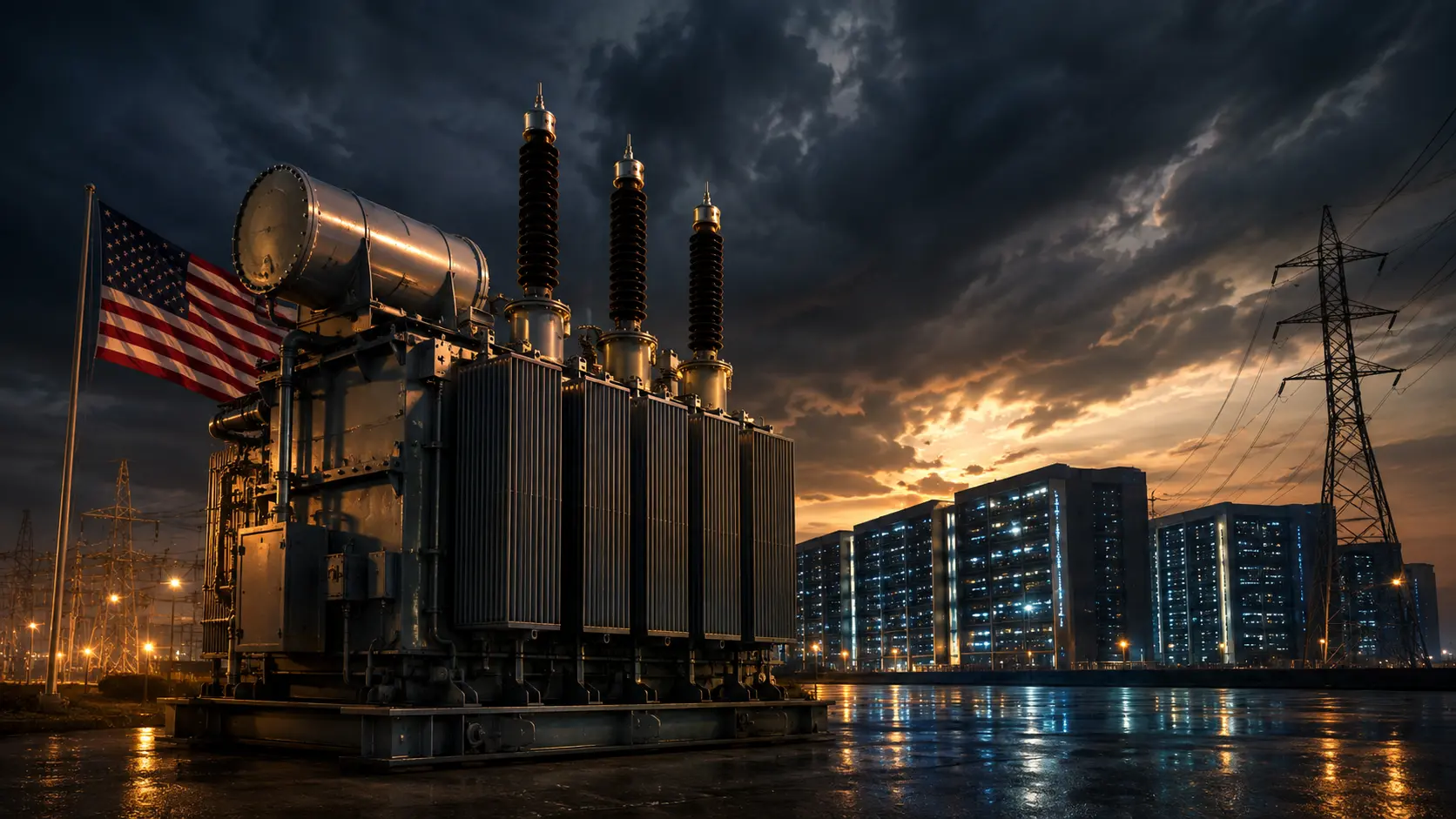

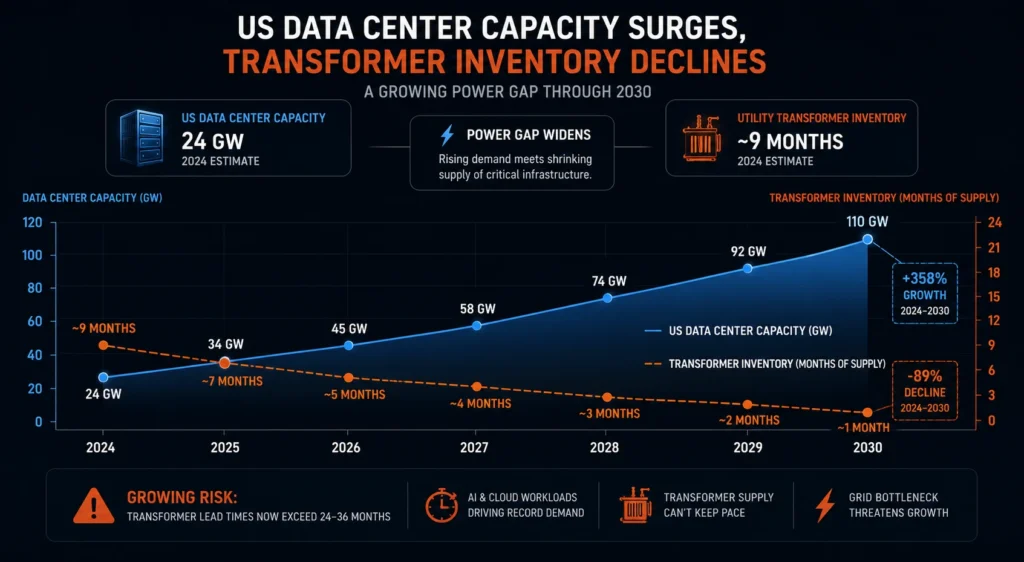
Artificial intelligence is starving for electricity. To train the next generation of frontier models, technology companies are constructing hyperscale data centers that consume as much power as entire sovereign nations. However, there is a fatal physical bottleneck: the electrical grid cannot deliver the necessary energy. The United States has fundamentally run out of the massive high-voltage transformers, circuit breakers, and switchgear required to route this unprecedented power load. The supply chain is so severely crippled that the wait time for a single large power transformer has stretched past three years.
Why should you care right now? Because on April 20, 2026, the White House officially declared this hardware shortage a national security emergency. By invoking the Defense Production Act—wartime powers originally drafted for the Korean War—the federal government is legally commandeering the domestic manufacturing base. Washington is forcing factories to prioritize and build electrical grid components simply to keep the artificial intelligence revolution from collapsing into the dark.
What is the Defense Production Act (DPA)?
The Defense Production Act (DPA) of 1950 is a United States federal law that grants the President emergency powers to direct private companies to prioritize orders for the national defense. Through Section 303, the government provides financial incentives, loans, and purchase commitments to rapidly expand domestic manufacturing capacity for critical industrial resources.
At a Glance
- Concept: Utilizing emergency sovereign powers to force the rapid manufacturing and prioritization of critical electrical grid components.
- Why it matters: Global hyperscale data center power consumption is projected to rise from 80 GW in 2024 to 220 GW by 2030. Without physical grid hardware, these multi-billion-dollar AI facilities cannot turn on.
- Who uses it: The U.S. Department of Energy (DOE), transformer manufacturers, and massive utility operators servicing hyperscalers like Microsoft, Google, and Amazon.
- Biggest takeaway: The DPA formally classifies the civilian electricity grid as a component of the national defense industrial base, allowing institutional infrastructure capital to operate with federal procurement guarantees.
In Simple Words
Imagine a city suddenly decides to build one hundred massive new skyscrapers all at once. To supply water to these buildings, you need giant, specialized water pipes and high-pressure valves. But there are only two factories in the world that make these valves, and they are completely sold out for the next four years.
This is exactly what is happening with artificial intelligence and the electrical grid. Tech companies are building massive “skyscrapers” (data centers) that require unimaginable amounts of electricity. The “valves” are high-voltage transformers. Because the wait time for these transformers has hit 160 weeks, the entire AI expansion is paralyzed.
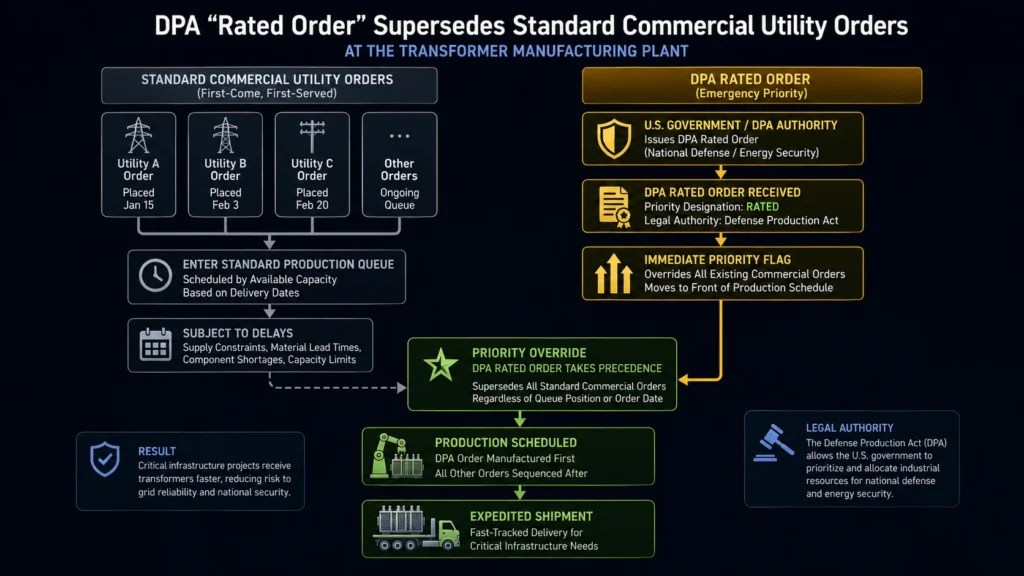
The Defense Production Act (DPA) is the government stepping in as the ultimate authority. The President uses this law to walk into those manufacturing factories and say, “This is a national emergency. You must build these valves immediately, we will pay to double the size of your factory, and you must deliver them to the grid before you fulfill any other commercial orders”.
Why This Matters
The sheer scale of the artificial intelligence buildout has detached from the physical reality of the supply chain. In the United States alone, data center capacity is projected to surge from 24 GW to 110 GW by 2030. By the end of the decade, data centers will consume eight times more electricity than all electric vehicles combined.
For utility planners and infrastructure investors, this creates an unprecedented crisis. Grid equipment availability is now the single largest limiting factor for real estate developers. The entry of the DPA radically alters the risk profile of these investments. Companies with direct DPA-rated order exposure benefit from sovereign counterparty risk, establishing a highly regulated, federally backstopped floor under grid modernization projects.
Why the Defense Production Act Targets the Power Grid
Presidential Determination No. 2026-10, issued on April 20, 2026, marks the most aggressive federal intervention into electricity transmission infrastructure in modern history. It explicitly links the stability of baseload power generation and the grid supply chain directly to the high-energy demands of emerging technologies like artificial intelligence.
This executive signal fundamentally merges national security with commercial computing. By recognizing that foreign adversaries could exploit an inadequate, intermittent energy supply, the United States has weaponized its procurement bureaucracy to guarantee that domestic AI infrastructure does not fail due to a lack of copper wire and circuit breakers.
How DPA Section 303 Solves Transformer Shortages
Resolving a multi-year manufacturing backlog requires bypassing the open market. Here is the first-principles breakdown of how the DPA manipulates the supply chain.
1. The Fundamental Problem: Hyperscale Load and Lead Times
To step down voltage from long-haul transmission lines into a usable format for a data center, utilities require generator step-up transformers and high-voltage circuit breakers. Due to pandemic-era disruptions and explosive AI demand, the manufacturing capacity for these colossal, highly specialized pieces of equipment was exhausted. By early 2026, lead times for step-up transformers exceeded 160 weeks, while circuit breaker lead times hit 125 weeks.
2. The Insufficiency of Traditional Procurement
In a normal free market, high demand triggers companies to build more factories. However, a transformer factory takes years to build and requires specialized, heavily trained labor. Utilities and data center developers cannot afford to wait three years for the market to self-correct; they value “time to market” above all else. Traditional utility capital expenditure plans are entirely too slow to support the AI arms race.
3. The Core Mechanism: DPA Section 303
The Defense Production Act solves the capital and prioritization bottleneck. Under Section 303, the Department of Energy (DOE) is authorized to issue grants, loan guarantees, and binding purchase commitments directly to manufacturers. The government legally absorbs the financial risk of expanding domestic production capacity, guaranteeing that if a company builds a new transformer factory, the federal government will buy the output if the private market fails.
4. Technical Depth: Ranked Orders and the SPARK Program
The DPA allows the government to issue “rated orders.” A rated order legally compels a private manufacturer to bump the government’s order to the absolute front of the production line, legally superseding all other private commercial contracts. Simultaneously, the DOE launched the $1.9 billion “Speed to Power” (SPARK) program in March 2026. This capital is deployed alongside DPA authorities to specifically fund “reconductoring”—replacing old power lines with advanced composite-core wires that double transmission capacity without requiring the decade-long process of permitting new geographical rights-of-way.
5. Real-World Consequences: A Federally Backstopped Grid
By wielding the DPA and the SPARK program together, the federal government forcefully compresses the cost of capital for grid developers. Independent power producers and transmission builders now operate with a federal safety net, drastically accelerating the physical construction of the substations required to power gigawatt-scale AI training clusters.
Real-World Impact of DPA on AI Data Centers
The implementation of wartime industrial policy is actively reshaping modern infrastructure development.
Hyperscale Data Center Connections: Facilities built by hyperscalers require dedicated substations. Developers are heavily utilizing DPA-backed supply chains to procure switchgear and transformers that would otherwise delay facility openings into 2029 or 2030. Ensuring equipment availability allows tech giants to adhere to their aggressive, multi-trillion-dollar CapEx schedules for AI deployment.
Advanced Transmission Reconductoring: The DOE’s $1.9 billion SPARK program is targeting the lowest-latency transmission upgrade pathways. By utilizing DPA allocations to secure advanced composite-core wire, utilities are physically swapping out legacy aluminum-steel cables on existing towers. This rapidly doubles the amount of electricity that can be shuttled from remote baseload power generation facilities directly to urban data center clusters.
Cooling System Infrastructure: As hyperscale power consumption races toward 220 GW globally by 2030, cooling systems alone will account for 30% to 40% of total facility power. The broader industrial push supported by DPA mechanisms ensures that critical components, including smart motors and variable speed drives (VSDs) necessary for highly efficient liquid and air cooling, are manufactured domestically to meet the escalating thermal loads of AI accelerators.
Economic & Strategic Impact
The DPA invocation establishes a bifurcated risk/return environment within the infrastructure capital markets.
Companies that successfully integrate into the DPA-rated order ecosystem suddenly acquire sovereign counterparty risk. Their debt and equity become vastly safer because their revenue streams are federally backstopped. Conversely, developers operating strictly in the commercial market—without DPA prioritization—face an existential threat. They are forced to the back of a 160-week waiting list, entirely unable to guarantee project completion dates to their investors. This dynamic forces institutional capital to aggressively favor developers operating within the federally aligned “strategic infrastructure domain”.
Advantages
- Accelerated Deployment: Legally mandates priority manufacturing, slashing the multi-year wait times for critical electrical hardware required to build out AI data centers.
- Federal Risk Absorption: Section 303 provides purchase commitments and loans, absorbing the financial risk of building new domestic transformer factories.
- Onshoring Supply Chains: Decreases national reliance on foreign manufacturers for highly sensitive, massive electrical grid components, protecting the United States from geopolitical supply shocks.
Limitations
- Market Distortion: Invoking “rated orders” for specific national security projects means that routine, commercial grid upgrades (like fixing a local neighborhood substation) are pushed to the back of the manufacturing line, exacerbating localized vulnerabilities.
- Labor Shortages: The DPA can provide billions of dollars to build a new factory, but it cannot instantly conjure the highly specialized, technically trained labor required to wind high-voltage transformer coils.
- Raw Material Bottlenecks: Expanding transformer manufacturing capacity violently increases the demand for specialized grain-oriented electrical steel (GOES) and raw copper, simply shifting the supply chain bottleneck further upstream.
Common Misconceptions
Misconception: The Defense Production Act is only used during active, declared wars.
Reality: While enacted during the Korean War, the DPA has been reauthorized over 50 times and is routinely used in peacetime. It has been deployed for natural disasters (FEMA), technological innovation (semiconductors), and pandemic response (COVID-19).
Misconception: The government is directly taking ownership of private electrical factories.
Reality: The DPA does not authorize the nationalization or seizure of corporate ownership in this context. It provides financial incentives to expand capacity and legal mandates that dictate the order in which a private company must fulfill its contracts.
Misconception: Solar and wind power can easily solve the data center energy crisis.
Reality: The April 2026 Presidential Determination specifically targeted “coal supply chains and baseload power generation capacity”. AI data centers require 24/7, uninterrupted baseload power, making intermittent renewables insufficient without massive, currently unavailable battery storage systems.
What Most People Miss
The explicit classification of Data Centers as Defense Infrastructure.
Historically, the DPA was used to build aluminum plants, titanium processing facilities, and attack submarines.
What most geopolitical analysts miss is that Presidential Determination No. 2026-10 effectively reclassifies civilian, commercially owned computing facilities as vital national defense assets. By stating that the lack of stable electricity threatens “the high-energy demands of emerging technologies, such as artificial intelligence,” the White House has acknowledged that whoever wins the commercial AI arms race dictates global hegemony. The electricity required to train a Large Language Model is now legally viewed with the exact same strategic weight as the fuel required to launch a fighter jet.
Comparison Table
| Feature | Commercial Grid Procurement | DPA-Backed Procurement (Section 303) |
| Contract Priority | Based on market pricing and order date | Legally mandated priority (Rated Orders) |
| Capital Risk | Absorbed entirely by the private developer | Federally backstopped via purchase commitments |
| Transformer Lead Time | > 160 Weeks | Expedited via production expansion grants |
| Strategic Classification | Civilian Infrastructure | National Defense Industrial Base |
| Financing Mechanism | Standard utility debt/equity | Subsidized via DOE SPARK program / DPA Loans |
Case Study
Situation: The rapid expansion of artificial intelligence infrastructure pushed US data center capacity forecasts to 110 GW by 2030, claiming 40% of the total electrical equipment market under accelerated scenarios. Developers faced a severe crisis as lead times for generator step-up transformers breached 160 weeks in early 2026.
Challenge: Waiting over three years for basic switchgear and transformers was incompatible with the highly aggressive, trillion-dollar CapEx deployment schedules of major hyperscalers. Standard market dynamics were too slow to build the necessary manufacturing facilities.
Solution (Federal Intervention): On April 20, 2026, the White House issued Presidential Determination No. 2026-10 under Section 303 of the DPA. The order empowered the Department of Energy to use rated orders, loan guarantees, and direct capital injections to forcefully expand domestic production of grid infrastructure, running concurrently with the $1.9 billion SPARK transmission funding program.
Outcome: The intervention transformed the financial landscape. By providing sovereign guarantees, the DPA compressed the blended cost of capital for qualifying transmission projects. Manufacturers gained the financial security to immediately break ground on new factory capacity, easing the extreme bottleneck and establishing a regulated-asset floor under the domestic grid supply chain.
Lessons Learned: The crisis proved that the modern tech industry is physically tethered to heavy industrial manufacturing. The intervention demonstrated that securing the digital frontier of artificial intelligence requires the execution of aggressive, physical, 20th-century-style industrial policy to ensure basic electrical reliability.
Future Outlook
Next 12–24 Months
The era of Rated Order Triage. Throughout 2026 and 2027, the Department of Energy will face intense lobbying pressure from utility providers and independent power producers fighting to secure DPA-rated order status for their specific projects. The government will be forced to triage the supply chain, deciding which data center corridors (e.g., Northern Virginia vs. Columbus, Ohio) receive priority hardware, effectively giving federal regulators the power to choose the geographic winners of the AI boom.
Next 3–5 Years
The acceleration of Advanced Transmission Topologies. The $1.9 billion SPARK program will yield immediate physical results across the domestic grid. We will see mass deployment of composite-core wires replacing legacy infrastructure, doubling line capacity without triggering the endless environmental and legal battles required to secure new geographical rights-of-way. This low-latency upgrade pathway will provide a critical stopgap measure while larger, long-term high-voltage corridors are planned.
Next 10 Years
The Decentralization via Microgrids. By the mid-2030s, hyperscalers will recognize that relying on the municipal grid—even a federally subsidized one—is a permanent strategic vulnerability. To bypass the transformer queues and grid instability entirely, major data center operators will pivot fully to self-contained, multi-gigawatt microgrids powered by Small Modular Reactors (SMRs) and advanced geothermal tech, permanently detaching the apex of commercial computing from the public electrical utility sector.
Most Likely Scenario
The Defense Production Act will remain deeply embedded in US energy policy for the rest of the decade. The absolute necessity of powering 220 GW of global AI infrastructure forces governments to treat electricity as a weapon of geopolitical supremacy. Heavy industrial equipment manufacturing will transition into a permanently subsidized, highly regulated sector of the national security apparatus.
Key Takeaways
- The U.S. government invoked the Defense Production Act (DPA) in April 2026 to address a severe national security emergency caused by a lack of electrical grid equipment.
- Data center power demand is surging exponentially, with U.S. capacity expected to grow from 24 GW to 110 GW by 2030, consuming equipment supplies at unprecedented rates.
- The wait time for critical high-voltage step-up transformers exceeded 160 weeks in 2026, physically halting the expansion of AI training clusters.
- DPA Section 303 allows the government to issue “rated orders” that legally force private factories to prioritize critical grid equipment over other commercial contracts.
- The federal government is absorbing the capital risk by providing loans and purchase guarantees to rapidly expand domestic manufacturing capacity for transformers and switchgear.
- This marks a historical shift where civilian commercial data centers and power generation are officially classified as indispensable to the national defense capability.
Glossary
Baseload Power: The minimum amount of electrical power needed to be supplied to the electrical grid at any given time, requiring highly reliable 24/7 generation.
Defense Production Act (DPA): A 1950 U.S. law granting the President emergency authorities to expedite and expand the supply of resources from the domestic industrial base for national defense purposes.
Generator Step-Up Transformer: A highly specialized piece of electrical equipment that steps up the voltage of electricity generated at a power plant for efficient long-distance transmission, or steps it down for localized data center usage.
Hyperscale Data Center: Massive business-critical facilities designed to efficiently support robust, scalable applications, consuming tens to hundreds of megawatts of power primarily for cloud computing and AI workloads.
Rated Order: A legal directive under the DPA that requires a private manufacturer to prioritize and accept a government contract above all other unrated commercial orders.
Reconductoring: The process of upgrading existing power transmission lines by replacing old, heavy cables with advanced composite materials that can carry twice as much electricity over the same physical towers.
Sources
- Tokenova Worldwide: Grid as National Security: The Defense Production Act Enters Transmission Policy (June 30, 2026)
- Tokenova Worldwide: Grid as National Security: The Defense Production Act Enters Transmission Policy – Detailed Analysis (June 30, 2026)
- Wikipedia: Defense Production Act of 1950
- Wikipedia: Defense Production Act of 1950 – Provisions and Use
- The White House: Presidential Determination Pursuant to Section 303 of the Defense Production Act of 1950, as Amended, on Coal Supply Chains and Baseload Power Generation Capacity (April 20, 2026)
- ABB: hyperscale data center power – THE POWER BEHIND THE CLOUD
- ABB: hyperscale data center power – Massive Investment
- The Times of India: AI data center expansion is creating transformer shortages across the US (July 11, 2026)
- WMBD: US power companies scramble to secure equipment as surging data center demand strains supplies (July 9, 2026)