Advertisement
)

At a Glance
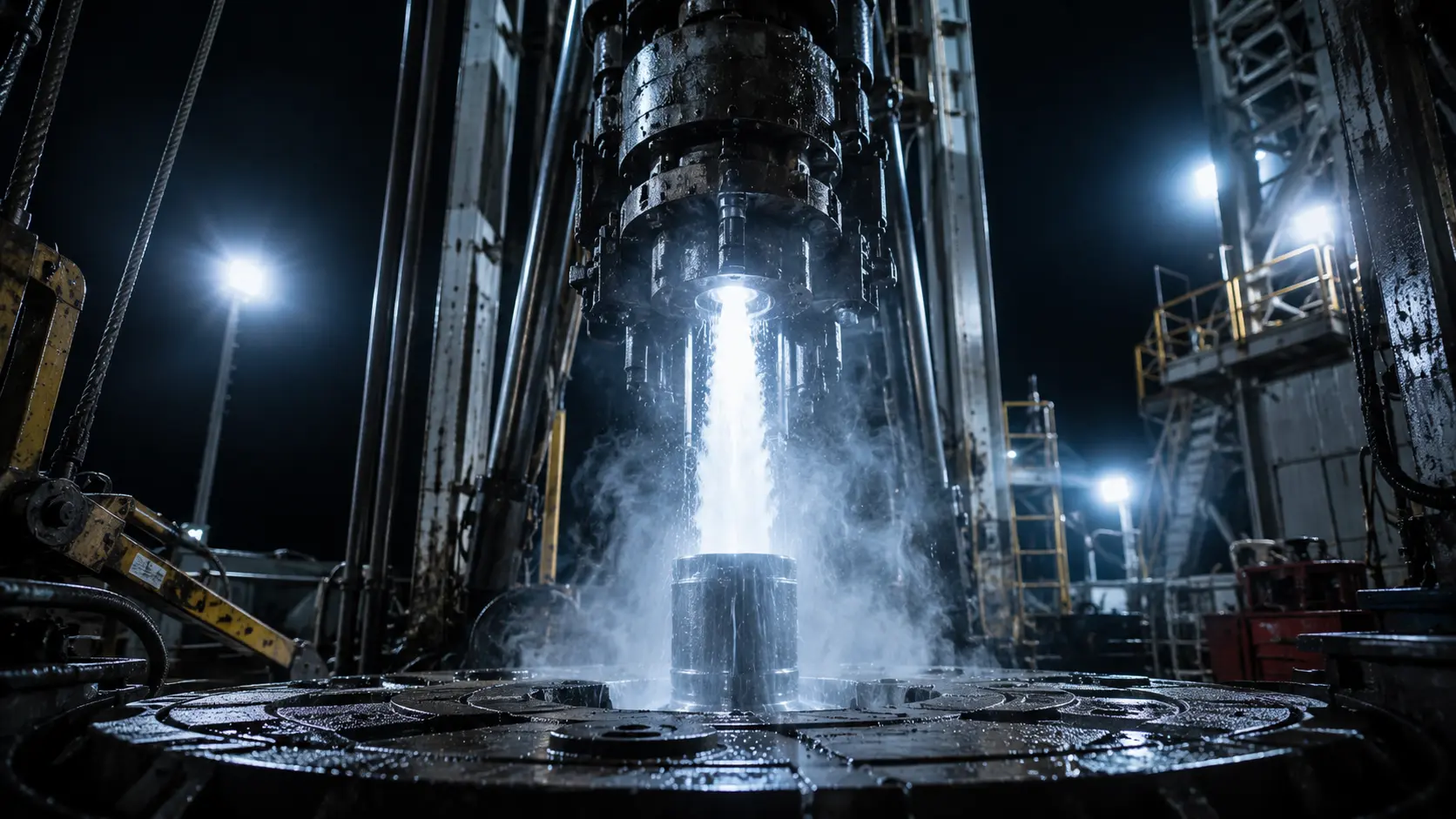
- Concept: Drilling deep into the Earth’s crust to find and extract naturally occurring pockets of pure hydrogen gas, much like the traditional exploration for natural gas or oil.
- Why it matters: To decarbonize heavy industry, the world desperately needs hydrogen. However, manufacturing “green” hydrogen in factories costs upwards of $5.00 per kilogram. Extracting natural “white” hydrogen from the ground targets a staggering production cost of $1.00 per kilogram or less, threatening to upend the entire clean energy supply chain.
- Who uses it: Well-funded exploration startups like Koloma, HyTerra, and Gold Hydrogen, alongside major industrial partners and hyperscalers hunting for massive, uninterrupted clean power for AI data centers.
- Biggest takeaway: The release of the 2025 USGS Geologic Hydrogen Prospectivity Map catalyzed the market. The industry has officially transitioned from academic debate to active, commercial drilling, proving that the Earth is a vast, natural hydrogen factory.
In Simple Words
For the last decade, scientists told us that to save the planet, we needed to use hydrogen fuel. But there was a catch: hydrogen is incredibly difficult and expensive to make. You have to build massive factories, burn fossil fuels (which defeats the purpose), or use immense amounts of precious renewable electricity and purified water just to separate hydrogen atoms in a lab.
Recently, geologists realized we were looking at the problem entirely wrong. We do not have to make it. The Earth is already making it for us.
Deep underground, when groundwater hits specific iron-rich rocks, a natural chemical reaction occurs that bubbles up pure, clean hydrogen gas. For a century, oil and gas drillers ignored it because they were only looking for black gold. Now, a new breed of prospectors is drilling for “white gold.” Instead of building multi-billion-dollar factories to create hydrogen, we can simply punch a hole in the ground and pipe it out, completely redefining the economics of clean energy.
Why This Matters
The global energy transition is bottlenecked by the Levelized Cost of Energy (LCOE).
To decarbonize steel manufacturing, shipping, and chemical production, industries require an astronomical supply of hydrogen. The prevailing strategy has been to manufacture “Green Hydrogen” using solar and wind power to run water electrolyzers. However, the CapEx of these mega-facilities is brutal. In 2026, the LCOE of green hydrogen in many Western markets still hovers between $5.00 and $6.00 per kilogram. “Blue Hydrogen” (using natural gas paired with carbon capture) sits around $2.50 to $3.00 per kilogram but faces intense scrutiny over methane leaks.
Geologic hydrogen completely resets this math. Because the Earth provides the energy required to split the water molecules, exploration companies are targeting an LCOE of $0.80 to $1.00 per kilogram. If these startups can prove sustained, commercial-scale flow rates from their initial 2026 drilling campaigns, white hydrogen will instantly undercut every manufactured hydrogen project on the planet, rendering billions of dollars of planned electrolyzer infrastructure economically obsolete.
The Big Picture
The hunt for white hydrogen marks a rare paradigm shift: the discovery of a new primary energy resource.
Since the mid-20th century, hydrogen has been viewed exclusively as an energy carrier—like a battery, you had to put energy in to get energy out. Geologic hydrogen proves that hydrogen is actually a primary energy source, akin to natural gas or coal, but with zero carbon emissions when burned.
This realization triggered swift regulatory action. Following the landmark USGS prospectivity mapping in early 2025, governments began racing to establish commercial frameworks. The state of Michigan issued Executive Directive 2026-1 to formalize a regulatory environment for subsurface hydrogen, while the Philippines awarded the world’s first highly competitive natural hydrogen exploration concessions. The scramble for subsurface mineral rights has officially commenced.
HOW WHITE HYDROGEN DRILLING WORKS
Extracting the smallest, most elusive molecule in the universe requires merging traditional petroleum geology with advanced geochemistry. Here is the first-principles breakdown.
1. The Fundamental Problem: The Cost of Manufacturing
Hydrogen is the most abundant element in the universe, but on Earth’s surface, it is always bonded to something else (like oxygen in water, or carbon in methane). Breaking those chemical bonds in a surface facility to isolate pure H2 requires an immense, continuous input of raw electrical or thermal energy, driving up the cost of production.
2. The Insufficiency of Biological or Surface Processes
While we can use organic waste or solar-powered electrolysis, these methods require constant human intervention, massive land footprints, and highly purified water supplies. They are factories, subject to supply chain inflation and equipment degradation.
3. The Core Mechanism: Serpentinization
Geologic hydrogen abandons the factory. Deep in the Earth’s crust, natural heat and pressure drive a continuous chemical reaction called serpentinization. When groundwater circulates through ultramafic, iron-rich rocks (specifically a green mineral called olivine), the water oxidizes the iron. This reaction transforms the olivine into a mineral called serpentine and, crucially, releases pure hydrogen gas (H2) as a natural byproduct.
4. Technical Depth: Radiolysis and Migration
A secondary generation mechanism is radiolysis. The natural radioactive decay of trace elements like uranium and thorium in the Earth’s crust emits radiation that physically splits surrounding underground water molecules, liberating hydrogen gas. Once generated, this H2 molecule—which is highly mobile and reactive—migrates upward through fractures in the rock.
5. Real-World Consequences: Accumulation and Trapping
To be commercially viable, this migrating hydrogen must be trapped before it escapes into the atmosphere or is eaten by subsurface microbes. Drillers look for porous reservoir rocks sealed by perfectly impermeable “caprocks” (like dense salt domes). If exploration teams can successfully identify these traps using adapted seismic imaging and geochemical sampling, they can drill into the reservoir and extract continuous streams of pressurized, zero-carbon fuel.
Real-World Applications
The transition from theoretical geology to active, venture-backed drilling is accelerating rapidly across multiple geographies.
Powering AI Data Centers: As of 2026, the artificial intelligence boom has placed unprecedented strain on global power grids. Tech hyperscalers cannot rely on intermittent solar or wind to run gigawatt-class data centers 24/7. Geologic hydrogen offers a holy grail: dispatchable, continuous, clean baseload power. Exploration firms are actively pitching localized natural hydrogen wells tied directly to on-site hydrogen fuel cells to take data centers completely off-grid.
Regional Industrial Hubs (U.S. Midwest & Australia): Startups like HyTerra are aggressively exploring the U.S. Midwest (Kansas and Nebraska), utilizing historical well data where drillers accidentally struck high-purity hydrogen decades ago while looking for oil. Similarly, in South Australia, companies like Gold Hydrogen are leveraging favorable regulatory frameworks to test pilot wells, aiming to supply nearby hard-to-abate industrial zones like steel manufacturing and heavy transport.
Stimulated “Gold” Hydrogen: Taking a page from the geothermal industry, some companies are not just looking for natural pockets; they are attempting to engineer them. By identifying deep, iron-rich rock formations that lack water, operators inject water and specialized catalysts down the well to artificially trigger the serpentinization reaction on demand, effectively turning depleted oil and gas infrastructure into underground hydrogen factories.
Economic & Strategic Impact
The emergence of geologic hydrogen offers a lifeline to the legacy fossil fuel workforce.
The skillset required to find and extract white hydrogen—seismic interpretation, deep-well drilling, reservoir modeling, and pipeline management—is identical to the expertise possessed by the oil and gas industry. This creates a politically frictionless pathway for energy transition. Rather than retraining thousands of roughnecks and petroleum engineers to install solar panels, major energy conglomerates can simply redirect their existing drilling fleets and workforce toward zero-carbon hydrogen exploration.
Financially, this represents a massive threat to the existing electrolyzer supply chain. If commercial flow rates are proven at scale in 2026 and 2027, the billions of dollars allocated in government subsidies (such as the U.S. Hydrogen Hubs program) may be radically re-routed away from surface manufacturing infrastructure and directly into subsurface drilling and midstream pipeline transport.
Advantages
- Unmatched LCOE: Targeting production costs under $1.00/kg, geologic hydrogen is projected to be the cheapest clean energy molecule on Earth.
- Zero-Carbon Footprint: When burned or used in a fuel cell, the only byproduct is water vapor, completely bypassing the carbon capture requirements of blue hydrogen.
- Minimal Land and Water Use: Unlike green hydrogen, which requires massive solar arrays and purified water supplies, a natural hydrogen well has a physical footprint no larger than a standard natural gas rig.
- Continuous Baseload: Subsurface reservoirs provide 24/7 energy availability, solving the intermittency problems of wind and solar power.
Limitations
- Exploration Risk and Containment: Hydrogen is the smallest molecule in the universe. It effortlessly diffuses through materials that would normally trap oil or natural gas. Finding an underground caprock dense enough to hold a massive, high-pressure hydrogen reservoir for millions of years is incredibly geologically rare.
- Material Embrittlement: Hydrogen degrades and embrittles standard steel pipes and drill casings over time. Extracting it requires specialized, expensive metallurgical alloys to prevent the well infrastructure from cracking under pressure.
- Unknown Depletion Rates: It is currently unknown whether these reservoirs behave like finite oil fields that eventually run dry, or if continuous subsurface chemical reactions will allow a single well to naturally recharge itself for decades.
Common Misconceptions
Misconception: Geologic hydrogen is a fossil fuel.
Reality: Fossil fuels are the compressed remains of ancient biological life, containing dense carbon chains. Geologic hydrogen is an inorganic chemical reaction between rocks and water. It contains absolutely zero carbon.
Misconception: We are running out of hydrogen underground.
Reality: The serpentinization process is actively occurring right now deep within the Earth’s crust. It is a continuous, self-renewing planetary mechanism, not a static, decaying resource.
Misconception: White hydrogen competes with green hydrogen for water resources.
Reality: Green hydrogen requires massive amounts of heavily purified, desalinated surface water. White hydrogen is generated by deep, subterranean brines and groundwater interacting with rock miles beneath the surface, completely isolated from human agricultural or drinking water cycles.
What Most People Miss
The strategic importance of Subsurface Microbes.
One of the greatest mysteries of geologic hydrogen exploration is why we haven’t found more of it. The answer lies in biology. The deep subsurface is teeming with lithotrophic microbes—bacteria that literally eat raw hydrogen gas to survive. Often, the Earth generates massive amounts of hydrogen via serpentinization, but as the gas migrates upward, these microbial colonies consume it entirely before it reaches an explorable trap. The true breakthrough for exploration companies is not just finding the right rocks; it is finding geological environments (like extreme hypersaline or high-temperature zones) that are too toxic for these hydrogen-eating microbes to survive.
Comparison Table
| Feature | Green Hydrogen | Blue Hydrogen | White (Geologic) Hydrogen |
| Production Method | Electrolysis of water | Steam Methane Reforming + CCS | Natural subsurface drilling |
| Primary Energy Source | Renewable electricity (Solar/Wind) | Fossil Natural Gas | Earth’s internal chemistry/heat |
| Target LCOE (2026 Est.) | ~$5.00 – $6.00 / kg | ~$2.50 – $3.00 / kg | <$1.00 / kg |
| Carbon Emissions | Near zero | Low/Moderate (methane leakage risk) | Near zero |
| Critical Bottleneck | Electrolyzer CapEx, clean grid power | CCS infrastructure, pipeline limits | Exploration risk, reservoir containment |
Case Study
Situation: Despite decades of accidental discoveries (such as the famous Bourakébougou well in Mali that supplied clean electricity to a local village for years), the broader energy industry dismissed natural hydrogen as an unscalable geological anomaly.
Challenge: To unlock institutional capital, the industry needed to transition from academic speculation to rigorous, data-driven commercial exploration, proving that massive, extractable reservoirs existed in accessible, geopolitically stable regions.
Solution (The Koloma Acceleration): Between 2023 and 2026, a U.S.-based startup named Koloma executed an aggressive commercialization roadmap. Backed by a massive $91 million foundational round led by Bill Gates’ Breakthrough Energy Ventures, Koloma’s total capital raised swelled to an estimated $340 million by 2026. Rather than relying on blind wildcat drilling, Koloma partnered with Fleet Space in February 2025 to utilize advanced satellite-based subsurface mapping technology, narrowing down prime drilling targets in regions like Idaho.
Outcome: Koloma’s technological and financial momentum legitimized the sector. Their expertise culminated in being awarded the world’s first competitive natural hydrogen exploration concessions in the Central Luzon region of the Philippines, expanding their operations to a global scale.
Lessons Learned: The Koloma case study proved that applying advanced tech-sector funding models and modern orbital telemetry to legacy petroleum exploration can rapidly de-risk novel commodities. By bringing world-class geochemists and Silicon Valley capital together, the company moved geologic hydrogen from the fringes of science directly into the center of the global energy transition debate.
Future Outlook
Next 12–24 Months
The industry is squarely in the “Validation Phase.” Through the remainder of 2026 and 2027, the market will closely monitor the flow testing results of the initial commercial wells drilled in the U.S. Midwest and South Australia. If operators can demonstrate sustained, high-pressure flow rates of pure hydrogen over a multi-month period without steep pressure drops, it will trigger an avalanche of institutional capital into the sector, validating the sub-$1/kg LCOE models.
Next 3–5 Years
The scaling of midstream infrastructure and Stimulated Hydrogen. As primary reserves are mapped and tapped, technology will pivot toward “Gold Hydrogen” techniques. Operators will inject proprietary catalysts and high-pressure water into depleted oil and gas wells, artificially stimulating the iron-rich rock below to generate hydrogen on demand. This will allow the industry to bypass wildcat exploration risks entirely and repurpose billions of dollars of abandoned fossil fuel infrastructure.
Next 10 Years
The disruption of the global LNG and Green Hydrogen markets. By the mid-2030s, successful geologic hydrogen basins will establish themselves as the new energy capitals of the world. Pipeline infrastructure will aggressively shift away from transporting natural gas toward localized hydrogen distribution. Massive industrial off-takers—ranging from green steel refineries to hyperscale AI data centers—will co-locate directly above these geological basins to secure decades of ultra-cheap, continuous, zero-carbon power.
Most Likely Scenario
Geologic hydrogen will not entirely replace manufactured green hydrogen, but it will dominate the heavy industrial baseline. Green hydrogen will be relegated to localized, specialized use-cases where drilling is geographically impossible. The discovery and exploitation of white hydrogen reserves will be recognized as the critical macroeconomic shock that finally decoupled global economic growth from carbon emissions, rescuing the energy transition from the crippling capital constraints of surface manufacturing.
Key Takeaways
- Geologic (white) hydrogen is a primary, clean energy source naturally generated deep within the Earth’s crust, completely bypassing the need for expensive surface factories or electrolyzers.
- The primary generation mechanism is serpentinization, a chemical reaction where underground water oxidizes iron-rich rocks (like olivine), releasing pure hydrogen gas.
- By adopting traditional oil and gas drilling techniques, exploration companies are targeting a production cost of $1.00/kg or less, drastically undercutting manufactured green and blue hydrogen.
- The release of the 2025 USGS Geologic Hydrogen Prospectivity Map served as a massive catalyst, formalizing the search for resources across the United States.
- Startups like Koloma have raised hundreds of millions in venture capital, partnering with aerospace firms to deploy satellite mapping to identify high-pressure, commercial-scale underground reservoirs.
- The primary engineering challenges remaining are identifying caprocks dense enough to trap the highly mobile molecule and managing the embrittlement of drilling metals.
Glossary
Caprock: A layer of exceptionally dense, impermeable rock (such as salt or certain shales) that sits above a porous reservoir, preventing gases like hydrogen from escaping to the surface.
Embrittlement: A physical phenomenon where hydrogen molecules penetrate the microscopic structure of metals (like steel pipes), causing them to lose their ductility and crack under pressure.
LCOE (Levelized Cost of Energy): A financial metric used to compare the total lifetime cost of building and operating a power-generating or fuel-producing asset, expressed as a cost per unit (e.g., dollars per kilogram of hydrogen).
Radiolysis: A secondary geologic process where the natural radiation emitted by trace elements like uranium and thorium splits deep underground water molecules, generating hydrogen gas.
Serpentinization: The primary geological process generating natural hydrogen. It occurs when water reacts with iron-rich ultramafic rocks (olivine) under heat and pressure, producing serpentine minerals, magnetite, and hydrogen gas.
White Hydrogen: The colloquial industry term for naturally occurring geologic hydrogen. It is often referred to interchangeably as “Gold Hydrogen” when the extraction process involves engineered or stimulated subsurface reactions.
Frequently Asked Questions
Is geologic hydrogen completely clean to burn?
Yes. Whether you burn it in a turbine or run it through a chemical fuel cell, the only byproduct of consuming pure hydrogen is water vapor. It produces absolutely no carbon dioxide or greenhouse gas emissions.
If the Earth is always making it, why didn’t oil companies drill for it decades ago?
They weren’t looking for it, and their sensors weren’t calibrated to detect it. Hydrogen is an incredibly small, light, and odorless molecule. Historically, if drillers struck a pocket of hydrogen while looking for oil, they considered it a non-commercial hazard and simply plugged the well and moved on.
Does drilling for hydrogen cause earthquakes like fracking?
Current natural hydrogen exploration relies on tapping into naturally pressurized reservoirs, much like conventional natural gas drilling, which carries a very low risk of induced seismicity. It does not inherently require the high-pressure shale fracturing (fracking) associated with modern oil extraction.
Can we pipe this hydrogen to people’s homes?
Eventually, yes, but it requires infrastructure upgrades. Because hydrogen embrittles certain types of legacy steel and requires different pressure management than natural gas, existing municipal pipelines must be retrofitted or blended carefully before delivering 100% hydrogen to residential stoves or heaters.
Who is funding this new industry?
A mix of top-tier climate venture capital firms (like Breakthrough Energy Ventures and Congruent Ventures), forward-looking automotive companies (like Toyota), and massive industrial conglomerates looking to secure their own future clean energy supply chains.
Sources
- American Association of Petroleum Geologists (AAPG): Geologic Hydrogen Prospectivity (December 2025)
- U.S. Geological Survey (USGS): Geologic Hydrogen Prospectivity Map Explorer and Data Release (January 2025)
- Asia Pacific Energy Research Centre (APERC): Hydrogen Report 2024 (March 2025)
- Enki AI / Industry Analysis: Koloma Hydrogen 2026 and Geological Hydrogen Commercial Projects