Advertisement
)

The human genome is a vast instruction manual containing 3.2 billion letters. In thousands of deadly genetic diseases, the entire difference between life and death comes down to a single typographical error—one incorrect letter out of billions. For the past decade, biotechnology has attempted to fix these typos using CRISPR-Cas9, a revolutionary tool that acts as molecular scissors. But using scissors to fix a typo is inherently violent; standard CRISPR completely severs both strands of the DNA ladder, forcing the cell into a panic to glue the ends back together. This chaotic repair process frequently scrambles the surrounding genetic code, creating a lethal risk of chromosomal damage or cancer.
We no longer have to rely on scissors; biotechnology has invented a pencil. Why should you care right now? Because in early 2026, a new class of genetic medicines known as in vivo base editors proved in human clinical trials that they can permanently cure severe genetic diseases with absolute precision. By infusing lipid nanoparticles directly into a patient’s bloodstream, these microscopic machines navigate to the liver, chemically erase a single mutant DNA letter, and rewrite it with the correct one, all while leaving the DNA structure completely intact. This leap from chaotic cutting to flawless chemical rewriting is fundamentally de-risking gene therapy, turning rare, fatal diseases into scheduled, single-dose cures.
What is In Vivo Base Editing?
In vivo base editing is a precision genetic therapy that chemically alters a single incorrect DNA letter—such as an A, C, T, or G—directly inside a living patient’s body. By utilizing a modified CRISPR protein attached to a deaminase enzyme, it cures genetic diseases without causing dangerous double-strand DNA breaks.
At a Glance
- Concept: A programmable molecular machine injected into the bloodstream that navigates to diseased cells, unzips the DNA, and chemically converts one specific DNA letter into another without cutting the double helix in half.
- Why it matters: Roughly 60% of all known human pathogenic genetic mutations are caused by “point mutations” (a single incorrect letter). Base editing allows doctors to precisely reverse these exact typos with vastly superior safety profiles compared to traditional CRISPR.
- Who uses it: Cutting-edge biotech firms (YolTech Therapeutics, Beam Therapeutics, Verve Therapeutics) developing permanent, single-dose cures for metabolic, cardiovascular, and liver-based diseases.
- Biggest takeaway: Recent 2026 clinical milestones (like YOLT-202 for Alpha-1 Antitrypsin Deficiency) prove that this technology works powerfully inside the human body, achieving over 95% functional correction of mutant proteins within a single week of treatment.
In Simple Words
Imagine a massive, multi-volume encyclopedia. On page 5,000, there is a single word spelled incorrectly: “C-A-T” instead of “B-A-T”.
If you use Traditional CRISPR, you highlight the incorrect word, and the system literally cuts the entire page in half with scissors to remove it. You then throw a bunch of loose letters into the gap and hope the page tapes itself back together correctly. Often it works, but sometimes the page gets glued back together crooked, or a sentence gets deleted entirely.
If you use Base Editing, you don’t use scissors at all. You use a highly specific chemical eraser. The machine finds the “C”, gently erases the curve to turn it into a “B”, and moves on. The page is never cut in half. The structural integrity of the encyclopedia remains flawless, and the typo is permanently fixed.
Why This Matters
For Biotech Investors, Pharma Executives, and Geneticists, the transition from ex vivo to in vivo therapy is the ultimate commercial multiplier.
First-generation CRISPR therapies (like Casgevy for Sickle Cell) are ex vivo—they require removing stem cells from a patient, editing them in a billion-dollar cleanroom facility, subjecting the patient to brutal chemotherapy, and re-infusing the cells. It costs millions of dollars per patient and scales terribly.
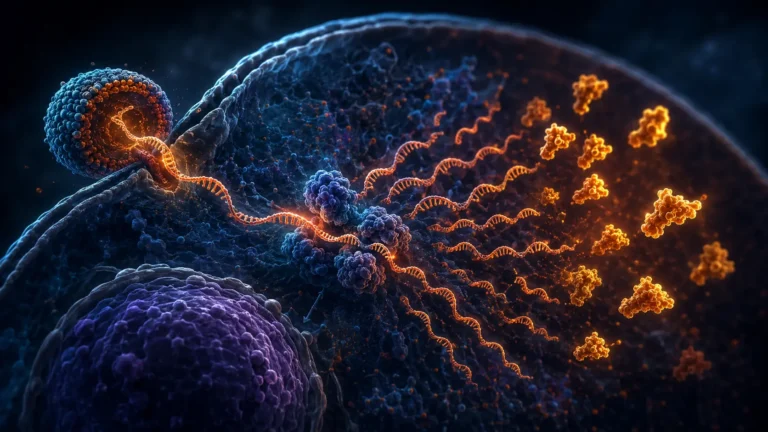
In vivo base editing bypasses this entire supply chain nightmare. The editing machinery is packaged into a microscopic fat bubble (a Lipid Nanoparticle, or LNP) and administered via a simple, one-hour IV drip at a standard hospital. By combining the pristine safety profile of “no double-strand breaks” with the logistical simplicity of an IV infusion, base editing unlocks a scalable business model capable of treating millions of patients globally, rather than just a few dozen at elite research hospitals.
The Evolution of Cytosine and Adenine Base Editors
The invention of base editing was pioneered by David Liu’s laboratory at the Broad Institute of MIT and Harvard. The technology is divided into two primary distinct “pencils”:
- Cytosine Base Editors (CBEs): Convert a Cytosine (C) to a Thymine (T), or a G to an A on the opposite strand.
- Adenine Base Editors (ABEs): Convert an Adenine (A) to a Guanine (G), or a T to a C.
Because point mutations (single-letter swaps) account for nearly two-thirds of all known human genetic diseases, these two specific chemical conversions allow scientists to theoretically reverse the vast majority of human genetic suffering, provided they can safely deliver the “pencil” to the right tissue.
How In Vivo Base Editing Works
Rewriting the genome without breaking it requires an incredibly sophisticated fusion protein. Here is the first-principles breakdown of the architecture.
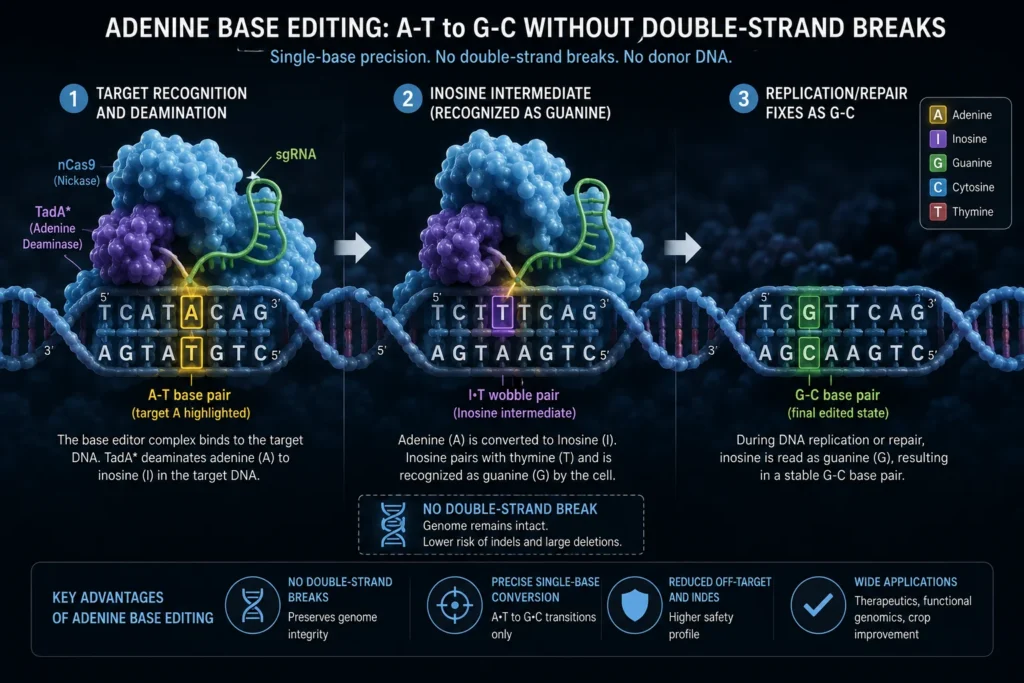
1. The Fundamental Problem: The Danger of DSBs
Standard CRISPR uses the Cas9 nuclease to create a Double-Strand Break (DSB). The cell’s primary emergency repair system is Non-Homologous End Joining (NHEJ). NHEJ is sloppy; it forcefully glues the DNA back together, frequently inserting or deleting random base pairs (indels) to deactivate a gene. Using DSBs to actively correct a gene relies on Homology-Directed Repair (HDR), which is painfully inefficient in non-dividing human cells (like the liver, heart, or brain).
2. The Core Mechanism: The Fusion Protein
A Base Editor is a two-part molecular machine:
- The Navigator: A modified CRISPR-Cas9 protein. Its cutting blades have been blunted (creating a “nickase” that only cuts one strand, or a “dead” dCas9 that cuts neither). It uses a guide RNA to find the exact target location.
- The Editor: A deaminase enzyme physically tethered to the Navigator.
3. Technical Depth: Transition Mutations
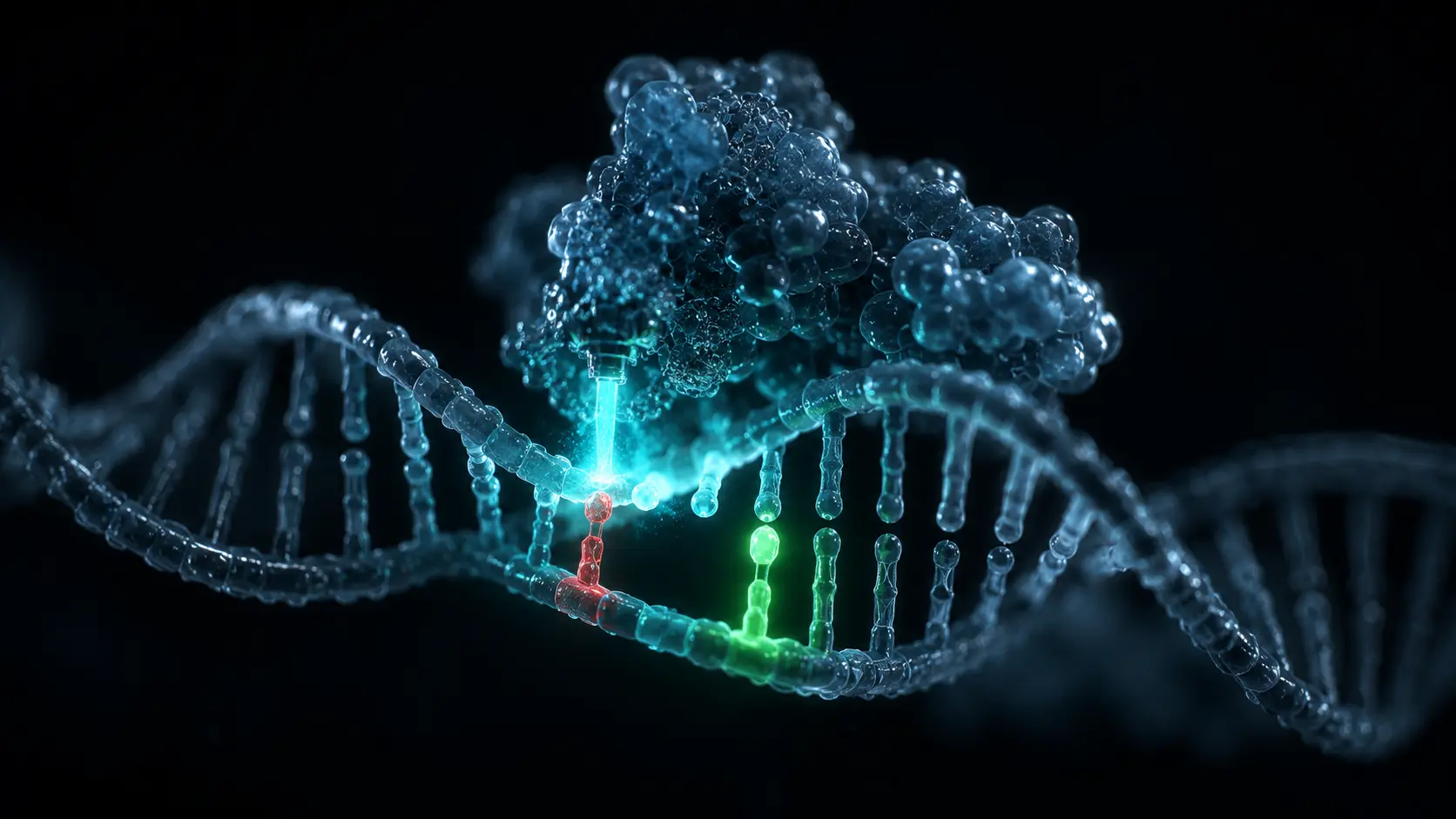
When the Navigator unzips the DNA at the target site, it exposes a small “bubble” of single-stranded DNA. The tethered deaminase enzyme chemically removes an amino group from the target base.
For an Adenine Base Editor (ABE), the enzyme converts Adenine (A) into Inosine (I). The cell’s DNA replication machinery naturally reads Inosine as Guanine (G). Therefore, the A•T base pair is permanently transitioned into a G•C base pair without ever severing the double helix.
4. Bypassing Cellular Defense: UGI
The human cell is smart; it has proofreading enzymes (like uracil DNA glycosylase) that constantly scan for strange chemical bases and attempt to undo the base editor’s work. To prevent this, Cytosine Base Editors (CBEs) are equipped with a Uracil Glycosylase Inhibitor (UGI). This tiny protein acts as a molecular bodyguard, temporarily blocking the cell’s defense systems until the new, edited base is permanently locked into the genome.
5. Real-World Consequences: Resolving the Nick
To ensure the unedited opposite strand of DNA updates to match the newly edited strand, the Cas9 “nickase” makes a tiny, single-strand scratch (a nick) on the unedited strand. This tricks the cell into thinking the unedited strand is damaged. The cell replaces the nicked strand using the newly edited strand as the master template, finalizing the permanent genetic correction.
Clinical Applications of In Vivo Base Editing
The clinical deployment of in vivo base editing is rapidly accelerating, focusing heavily on diseases rooted in liver dysfunction.
Alpha-1 Antitrypsin Deficiency (AATD): AATD is a severe genetic disorder causing progressive lung and liver damage, primarily driven by the “PiZ” point mutation (a single G-to-A typo). Companies like YolTech Therapeutics (with YOLT-202) and Beam Therapeutics (with BEAM-302) use intravenous LNPs to deliver adenine base editors to the liver. These editors execute a flawless A-to-G correction, stopping the toxic buildup of misfolded proteins and restoring healthy AAT levels to the blood.
Heterozygous Familial Hypercholesterolemia (HeFH): Patients with HeFH possess a mutation causing dangerously high LDL cholesterol, leading to early heart attacks. Verve Therapeutics (VERVE-101) and YolTech (YOLT-101) use base editing not to correct a gene, but to precisely turn off the PCSK9 gene in the liver. By silencing this specific gene with a single base swap, the liver aggressively pulls bad cholesterol out of the blood, providing a “one-and-done” permanent cure for genetic heart disease without daily statins.
Multiplex Editing for CAR-T Cells: Beyond in vivo therapies, base editing is revolutionizing ex vivo cell therapies. Standard CRISPR struggles to make multiple edits at once; making three separate double-strand breaks in a T-cell often causes the chromosomes to shatter and rearrange fatally. Base editing can easily perform multiplex editing (altering 3 to 4 genes simultaneously) without breaking the DNA, enabling the creation of hyper-advanced, “off-the-shelf” CAR-T therapies for aggressive leukemias.
Economic & Strategic Impact
The transition to in vivo LNP delivery permanently alters the Cost of Goods Sold (COGS) in Genetic Medicine.
Current ex vivo cell therapies are bespoke, artisanal medical procedures. Because the patient’s own cells must be harvested, edited, and expanded in a lab, the manufacturing process alone can cost hundreds of thousands of dollars per patient, restricting these therapies strictly to the wealthy, developed world.
In vivo base editing is essentially a pharmaceutical product. The base editor mRNA and guide RNA are encapsulated into lipid nanoparticles and mass-produced in giant stainless-steel bioreactors. Once manufactured, vials of YOLT-202 or BEAM-302 can be shipped globally and stored in standard medical freezers. This shifts the economic model from specialized service delivery to high-margin, high-volume drug manufacturing, giving pharmaceutical companies the margins necessary to tackle massive indications like cardiovascular disease.
Advantages
- No Double-Strand Breaks (DSBs): Eradicates the massive safety risks associated with standard CRISPR, including large genomic deletions, complex chromosomal translocations, and p53-mediated cellular toxicity.
- High Precision Correction: Achieves incredibly clean outcomes. In early 2026 trials, YOLT-202 demonstrated greater than 95% structurally corrected, functional protein production in the highest dose group.
- Systemic In Vivo Delivery: Encapsulation inside Lipid Nanoparticles (LNPs) allows the therapy to be administered via a simple, one-time intravenous infusion, completely bypassing the brutal chemotherapy conditioning required for older gene therapies.
Limitations
- Restricted Edit Types: Base editors are highly specific. An ABE can only change A to G; it cannot insert a massive new paragraph of DNA to replace a totally missing gene, and it cannot fix transversions (like swapping an A to a C).
- Bystander Edits: The deaminase enzyme operates within a specific “editing window” (usually 4-5 base pairs wide). If there are multiple Adenines right next to each other in that window, the editor might accidentally convert all of them, leading to unintended “bystander” mutations.
- LNP Tropism: Current lipid nanoparticles overwhelmingly traffic to the liver. While this is perfect for AATD or high cholesterol, delivering these massive base editor payloads safely into the brain (for Huntington’s) or muscle (for Duchenne Muscular Dystrophy) remains a severe delivery bottleneck.
Common Misconceptions
Misconception: Base editing is a competitor that replaces Prime Editing.
Reality: Base editors and Prime editors are complementary. Base editing is the most efficient, safest tool for making single-letter transition mutations (A-to-G, C-to-T). Prime editing is a more complex “search-and-replace” tool capable of inserting large strands of DNA or performing any base swap. Base editing remains the superior choice for sheer efficiency when the disease only requires a simple transition correction.
Misconception: Base editors alter the DNA of the patient’s future children.
Reality:In vivo therapies like YOLT-202 and VERVE-101 are specifically engineered to edit somatic cells (like the liver). They do not target the germline (sperm or egg cells). The genetic correction dies with the patient and is not passed on to offspring.
Misconception: The patient’s DNA is continually being edited for years.
Reality: The therapy is transient. The LNP delivers mRNA instructions to the liver. The liver cell builds the base editor protein, makes the edit exactly once, and then the base editor protein degrades and vanishes within 48 to 72 hours. The edit is permanent, but the machine is gone.
What Most People Miss
The strategic brilliance of Disease-Agnostic LNP Platforms.
Most media attention focuses on the specific disease being cured, like Alpha-1 Antitrypsin Deficiency. What most analysts miss is that the core technology is highly modular.
For a company like YolTech or Beam Therapeutics, the massive hurdle is proving that their specific LNP and their proprietary Adenine Base Editor are safe inside the human body. Once the FDA approves the platform for AATD, curing a completely different liver disease does not require inventing a new drug; the company simply swaps out the 20-letter “guide RNA” sequence inside the exact same LNP shell to point the editor at a different gene. This plug-and-play architecture will exponentially accelerate the regulatory approval timeline for subsequent therapies, collapsing R&D cycles from decades into months.
Comparison Table
| Feature | Traditional CRISPR-Cas9 | In Vivo Base Editing | Prime Editing |
| Mechanism | Double-Strand Break (DSB) | Single-Strand Nick + Deamination | Single-Strand Nick + Reverse Transcription |
| Primary Use Case | Gene Disruption / Knockout | Point Mutation Correction (Transitions) | Insertions / Deletions / Any Base Swap |
| Efficiency (in non-dividing cells) | Poor (Relies on HDR) | Very High | Moderate to High |
| Safety Profile (Indels) | High risk of random errors | Very Low | Very Low |
| Molecular Size | Small (Easier delivery) | Large (Requires LNPs/Split AAVs) | Massive (Hardest delivery) |
Case Study
Situation: Alpha-1 Antitrypsin Deficiency (AATD) is a severe genetic disease causing toxic protein buildup in the liver and progressive lung damage. The PiZ mutation—a single G-to-A point mutation in the SERPINA1 gene—drives the most severe form of the disease. Standard treatments involved lifelong, expensive weekly intravenous infusions of augmented protein, which treated the symptoms but did not cure the underlying liver toxicity.
Challenge: Develop an in vivo genetic therapy capable of precisely correcting the PiZ mutation back to the healthy PiM sequence in human liver cells, without triggering the toxic double-strand breaks associated with legacy CRISPR systems.
Solution (The YOLT-202 Clinical Trial): YolTech Therapeutics advanced YOLT-202, an in vivo base-editing therapy utilizing Lipid Nanoparticles to deliver a high-precision adenine base editor. The therapy was evaluated in a first-in-human, open-label, single-dose escalation study for adult patients genetically confirmed with the severe PiZZ genotype.
Outcome: In February 2026, interim clinical data revealed a breakthrough milestone. Patients treated with the 45 mg dose showed rapid, dose-dependent increases in functional AAT levels, surpassing the 11 μM protective threshold within one week. Crucially, the therapy restored AAT to the normal range (>20 μM) with over 95% structurally corrected, functional M-AAT.The therapy was well tolerated, with only manageable, transient, low-grade infusion-related reactions reported.
Lessons Learned: The YOLT-202 milestone unequivocally proved that in vivo base editing works at therapeutic levels inside living humans. It validated the LNP delivery mechanism and the high-precision profile of the adenine base editor, signaling to the FDA and the broader market that single-dose, permanent genetic correction without double-strand breaks is a scalable, safe, and commercially viable reality for the late 2020s.
Future Outlook
Next 12–24 Months
The era of Phase 2/3 Efficacy Readouts and IND Filings. Following the monumental success of early-phase trials, the next 24 months will see a rush of regulatory momentum. Companies like YolTech will formalize Investigational New Drug (IND) filings with the U.S. FDA to expand YOLT-202 into pivotal, late-stage trials. Simultaneously, rival programs like BEAM-302 and VERVE-101 will release expanded cohort data. We will witness the optimization of pre-treatment regimens (managing transient liver enzyme elevations) and the fortification of commercial-scale LNP manufacturing supply chains.
Next 3–5 Years
The scaling of Extra-Hepatic Delivery Platforms. The fundamental bottleneck of base editing is that LNPs naturally flow to the liver. By the late 2020s, the next wave of biotech unicorns will be defined by “extra-hepatic tropism.” Researchers will engineer specialized lipid envelopes or utilize targeted antibodies to direct base editor payloads specifically to hematopoietic stem cells in the bone marrow, neural tissues in the brain, or muscle fibers for Duchenne Muscular Dystrophy, radically expanding the total addressable market of the technology.
Next 10 Years
The Preventative Genetic Shielding Paradigm. By the mid-2030s, as long-term safety data proves the absolute absence of oncogenic off-target effects, in vivo base editing will shift from curing rare fatal diseases to preventative medicine. If a patient is born with a genetic predisposition to high cholesterol or Alzheimer’s, doctors will not prescribe lifelong medication. Instead, they will administer a simple, one-time prophylactic base-editing infusion during adolescence, permanently switching off the disease-causing genes decades before the first symptom ever arises.
Most Likely Scenario
In vivo base editing will rapidly eclipse traditional CRISPR-Cas9 as the standard of care for any genetic disease driven by a point mutation. While Prime Editing will eventually mature to handle massive insertions and deletions, the elegance, sheer efficiency, and flawless safety profile of the base-editing “pencil” guarantee its position as the foundational pillar of the genetic medicine revolution for the next two decades.
Key Takeaways
- In vivo base editing uses a deactivated CRISPR protein and a chemical enzyme to erase and rewrite a single typo in a patient’s DNA without cutting the double helix.
- Traditional CRISPR relies on double-strand breaks (DSBs), which can cause dangerous, unpredictable genetic scrambling. Base editing entirely bypasses this massive safety risk.
- The therapy is delivered directly into the patient’s bloodstream via Lipid Nanoparticles (LNPs), which traffic straight to the liver to execute the cure in a single dose.
- In early 2026, therapies like YOLT-202 achieved massive success in human trials for Alpha-1 Antitrypsin Deficiency, restoring normal protein levels within a week.
- Other major clinical programs are using base editors to permanently switch off the PCSK9 gene, providing a one-time cure for genetic high cholesterol.
- Because base editing does not rely on the cell’s inefficient repair pathways, it can edit non-dividing organs (like the liver, heart, and brain) with unprecedented efficiency.
Glossary
Adenine Base Editor (ABE): A specialized fusion protein that chemically converts the DNA base Adenine (A) into Inosine (I), which the cell subsequently reads and permanently locks in as Guanine (G).
Double-Strand Break (DSB): A complete severing of the DNA double helix. It triggers a panic repair response in human cells that frequently causes unpredictable, dangerous mutations.
Lipid Nanoparticle (LNP): A microscopic bubble of fat used to protect the fragile mRNA instructions of the base editor from being destroyed in the bloodstream, delivering them safely into the target cells.
Nickase (Cas9n): A modified version of the famous CRISPR-Cas9 protein. Instead of cutting through both strands of the DNA (which is dangerous), it only “nicks” or cuts a single strand to guide the repair process gently.
Point Mutation: A genetic typo involving a single incorrect DNA letter. Point mutations are responsible for roughly 60% of all known human genetic diseases.
Transition Mutation: A specific type of DNA mutation where a purine is swapped for a purine A → G or a pyrimidine for a pyrimidine (C → T). Base editors are engineered specifically to correct these.
Sources
HCPLive: Single Dose YOLT-202 Gene-Editing Therapy Increases Functional AAT Levels in AATD (February 19, 2026)
HCPLive / Hepatology Data: Single Dose YOLT-202 Gene-Editing Therapy Increases Functional AAT Levels in AATD – Interim Analysis (February 19, 2026)
YolTech Therapeutics: YolTech Therapeutics Reports 24-Week Clinical Data for YOLT-101 in Nature Medicine (March 04, 2026)
CRISPR Medicine News: Clinical Trial Roundup: Base Editors in the Clinic
Beam Therapeutics: BEAM-302 Pipeline and RMAT Designation