Advertisement
)


At a Glance
- Concept: Utilizing Lipid Nanoparticles (LNPs) or engineered viral vectors to deliver mRNA or DNA directly into specific T-cells inside the human body, instructing them to build Chimeric Antigen Receptors (CARs).
- Why it matters: Legacy CAR-T therapy costs over USD 400,000 per patient, requires shipping living blood across the country to a sterile lab, and takes weeks to manufacture—during which time aggressive cancers often kill the patient. In vivo therapy turns this complex procedure into a simple, off-the-shelf injection.
- Who uses it: Major pharmaceutical giants (Eli Lilly, AbbVie, AstraZeneca, Gilead) actively acquiring cutting-edge biotech startups (Capstan, Kelonia, Interius, EsoBiotec) to dominate the next generation of immunotherapy.
- Biggest takeaway: The transition to in vivo CAR-T fundamentally destroys the existing “vein-to-vein” cell therapy supply chain. It shifts the economic value away from giant, sterile cell-processing factories (CDMOs) and directly back to the pure chemistry of mRNA and nanoparticle design.
In Simple Words
Your immune system has “T-cells,” which act like police officers patrolling your body for disease. Unfortunately, cancer cells are masters of disguise; they wear “fake IDs” so the T-cells ignore them.
For the past decade, doctors used traditional ex vivo CAR-T therapy to fix this. They would hook a patient up to a machine, filter out their T-cells, put them in a cooler, and fly them to a million-dollar laboratory. In the lab, scientists genetically engineered the T-cells to grow special goggles (CARs) that could see through the cancer’s disguise. Weeks later, they froze the cells, flew them back, and re-injected them into the patient. It was miraculous, but incredibly slow, insanely expensive, and logistically fragile.
In vivo CAR-T therapy skips the airplane and the laboratory entirely.
Instead of taking the police officers out of the city to train them, scientists built a microscopic delivery van (a lipid nanoparticle). They pack the training manual (mRNA) inside the van and inject it directly into the patient’s arm. The van drives through the bloodstream, finds the T-cells, and hands them the manual. The T-cells read it, build the special goggles themselves right there in the bloodstream, and immediately start hunting cancer.
Why This Matters
The commercialization of in vivo CAR-T is the most aggressive pivot in modern biotechnology.
Between 2024 and mid-2026, the biopharma industry committed over USD 10 billion in M&A capital specifically to acquire in vivo CAR-T platforms. This is not speculative R&D; this is a highly calculated existential pivot. Legacy ex vivo therapies like Kymriah and Yescarta proved that cell therapy cures cancer, but their bespoke, artisanal manufacturing processes are mathematically unscalable for global populations.
If you can replace a month-long, $400,000 biological manufacturing process with a scalable, $10,000 mRNA injection, you do not just disrupt oncology—you unlock entirely new Total Addressable Markets (TAMs). This off-the-shelf scalability allows the therapy to be deployed against systemic autoimmune diseases (like Lupus and Multiple Sclerosis) where patients desperately need immune “resets” but cannot tolerate the toxic chemotherapy preconditioning required by legacy CAR-T.
The Big Picture
To understand the pivot, you must understand the delivery vehicle.
The breakthrough that made in vivo CAR-T possible is the same technology that ended the global pandemic: the Lipid Nanoparticle (LNP). However, the LNPs used in COVID-19 vaccines were “dumb”—they simply flooded into muscle and liver cells.
To create CAR-T cells in vivo, the LNP must be “smart.” It must ignore billions of red blood cells, liver cells, and organ tissues, and dock exclusively with specific T-cells (like CD8+ cells). Achieving this requires Surface Functionalization—literally coating the outside of the microscopic fat bubble with targeting antibodies that act as a homing beacon. The mastery of this targeted delivery is what triggered the massive multi-billion-dollar buyouts of 2025 and 2026.
HOW IN VIVO CAR-T WORKS
Transforming the human circulatory system into a bioreactor requires mastering synthetic immunology and nanochemistry. Here is the first-principles breakdown.
1. The Fundamental Problem: Cancer Evasion and Manufacturing Friction
Cancer proliferates because it evades immune detection. Engineering T-cells to express Chimeric Antigen Receptors (CARs) forces the immune system to recognize tumor antigens (like CD19 on B-cell lymphomas). However, engineering cells outside the body (ex vivo) requires extreme logistical friction: leukapheresis, cryopreservation, viral transduction in a Good Manufacturing Practice (GMP) facility, and a 3-to-4 week waiting period during which the patient’s disease aggressively progresses.
2. The Insufficiency of Ex Vivo Delivery
Beyond cost and time, ex vivo CAR-T requires “lymphodepleting preconditioning.” The patient must be given highly toxic chemotherapy to wipe out their existing immune system so the newly engineered, lab-grown T-cells have room to expand once injected. This toxicity makes legacy CAR-T too dangerous for many frail patients and practically unusable for non-lethal autoimmune diseases.
3. The Core Mechanism: In Vivo Reprogramming
In vivo CAR-T injects the genetic instructions (either mRNA or DNA) directly into the patient. The payload is encapsulated in a targeted delivery vehicle—either an engineered Lentiviral Vector (LV) or a Lipid Nanoparticle (LNP).
4. Technical Depth: Targeting and Translation
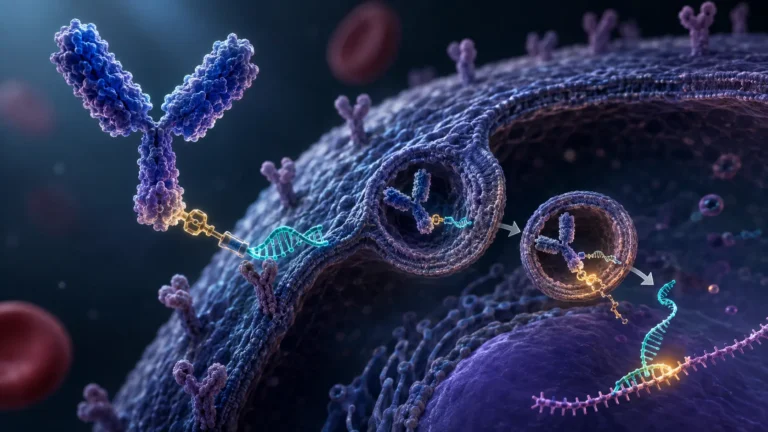
If using an LNP, the nanoparticle is coated with targeting ligands (like anti-CD8 antibodies). When injected intravenously, the LNP floats through the blood and binds exclusively to the CD8 receptor on the surface of a T-cell. The LNP fuses with the cell membrane, dumping the mRNA payload inside. The T-cell’s native ribosomes instantly read the mRNA and synthesize the CAR protein, embedding it into the cell’s outer membrane. The T-cell is now fully weaponized and begins multiplying.
5. Real-World Consequences: Transient vs. Stable Expression
If mRNA is used, the CAR expression is transient. Because mRNA degrades naturally, the T-cell will eventually lose its cancer-hunting goggles. This acts as an inherent safety switch, preventing the CAR-T cells from running rampant and causing severe, prolonged toxicity (like Cytokine Release Syndrome). If the cancer or autoimmune disease returns, the doctor simply administers another off-the-shelf LNP injection to re-arm the immune system, transforming cell therapy from a risky “one-shot” gamble into a controllable, manageable pharmaceutical regimen.
Real-World Applications
The in vivo approach is aggressively expanding the clinical horizon for cell therapy.
Autoimmune Disease “Immune Resets”: This is the most explosive growth sector in 2026. Autoimmune diseases like Systemic Lupus Erythematosus (SLE) and Myasthenia Gravis occur when rogue B-cells attack the patient’s own tissue. By injecting an in vivo CAR-T targeted at CD19 or BCMA, the engineered T-cells hunt down and eradicate the rogue B-cells, allowing the immune system to reboot. Companies like Tempest Therapeutics and MagicRNA are actively running clinical trials, proving that patients can achieve deep remission without the toxic preconditioning of legacy therapies.
Aggressive Hematologic Malignancies: For fast-moving blood cancers like Acute Lymphoblastic Leukemia (ALL), patients simply do not have three weeks to wait for a lab to engineer their cells. In vivo CAR-T allows an oncologist to pull a vial from the hospital freezer and inject the patient immediately upon diagnosis, closing the deadly “vein-to-vein” time gap to zero.
Overcoming the Solid Tumor Barrier: Legacy ex vivo CAR-T cells often arrive at a solid tumor (like breast or lung cancer) exhausted from the laboratory expansion process, failing to penetrate the dense, immunosuppressive tumor microenvironment (TME). Because in vivo CAR-T cells are generated naturally inside the patient’s own bloodstream, they are vastly more robust, “fitter,” and exhibit stronger natural infiltration capabilities against solid tumors.
Economic & Strategic Impact
The transition to in vivo engineering triggers a massive devaluation of legacy cell therapy infrastructure.
Over the last decade, biopharma companies spent billions building massive, sterile cell-processing factories to handle autologous (patient-specific) CAR-T manufacturing. The triumph of in vivo LNPs renders these specific facilities largely obsolete.
The economic leverage has shifted to companies that control the intellectual property for Ionizable Lipids and Targeting Ligands. Consequently, the Contract Development and Manufacturing Organizations (CDMOs) that dominate the next decade will not be those building massive cell-culture incubators, but rather those specializing in high-throughput mRNA synthesis and microfluidic LNP encapsulation. For investors, the “picks and shovels” of biotech have fundamentally changed.
Advantages
- Zero Manufacturing Delay: Eliminates the 3-to-4 week “vein-to-vein” wait time, allowing for immediate, point-of-care administration.
- Cost Collapse: Moves manufacturing from bespoke, million-dollar biological handling to standardized, highly scalable chemical synthesis, dropping the cost of goods sold (COGS) exponentially.
- No Toxic Preconditioning: By utilizing mRNA, many in vivo therapies do not require the severe, lymphodepleting chemotherapy that makes traditional CAR-T so dangerous.
- Dose Titration: Transient mRNA expression allows physicians to control the intensity of the immune response through repeat dosing, drastically reducing the risk of fatal neurotoxicity and Cytokine Release Syndrome (CRS).
Limitations
- Immunogenicity: The human body often views Lipid Nanoparticles or engineered Lentiviral Vectors as foreign invaders. If the immune system attacks the delivery vehicle before it reaches the T-cells, the therapy fails.
- Off-Target Toxicity: If the “targeting beacon” on the LNP is imperfect, the mRNA might be dumped into the wrong cells (like liver or lung cells). If a liver cell starts expressing a CAR protein, the immune system will attack the patient’s own liver.
- Durability Unknown: Legacy ex vivo CAR-T integrates the DNA permanently, providing a “living drug” that patrols the body for decades. mRNA does not alter DNA; it degrades. Whether transient in vivo therapies can truly “cure” cancer long-term without requiring lifelong, continuous injections remains the sector’s biggest unanswered clinical question.
Common Misconceptions
Misconception: In vivo CAR-T uses generic donor cells (Allogeneic therapy).
Reality: Allogeneic (off-the-shelf donor cells) is a completely different technology that still requires lab manufacturing and carries severe risks of Graft-Versus-Host Disease (GVHD). In vivo CAR-T uses the patient’s own cells; it just programs them inside the body rather than in a lab.
Misconception: The injection attacks the cancer directly.
Reality: The LNP/mRNA injection does absolutely nothing to the cancer. It only targets the T-cells. It is the newly upgraded T-cells that subsequently hunt down the cancer. It is a biological relay race.
Misconception: mRNA permanently changes your immune system’s DNA.
Reality: mRNA cannot enter the nucleus of the cell and cannot alter DNA. It acts as a temporary blueprint. Once the T-cell reads the mRNA to build the CAR protein, the mRNA naturally degrades and disappears within days.
What Most People Miss
The strategic difference between LNP-mRNA platforms and In Vivo Lentiviral platforms.
The media heavily focuses on the mRNA/LNP approach (championed by Capstan Therapeutics and Orna). However, companies like Umoja Biopharma and Interius BioTherapeutics are using a completely different method: injecting engineered Lentiviral Vectors (LVs).
Lentiviruses do integrate into the DNA. If an in vivo lentiviral vector successfully targets a T-cell, it permanently alters that cell’s genome inside the body. This provides the lifelong durability of legacy CAR-T with the convenience of an off-the-shelf injection. The intense, multi-billion-dollar race between transient mRNA platforms (safer, requires repeat dosing) and stable Lentiviral platforms (permanent, higher risk of off-target mutations) will dictate the clinical standard of care for the 2030s.
Comparison Table
| Feature | Legacy Ex Vivo CAR-T | In Vivo CAR-T (mRNA-LNP) | In Vivo CAR-T (Lentiviral) |
| Administration | Vein-to-Vein (Extracted & Reinfused) | Direct IV Injection | Direct IV Injection |
| Time to Treatment | 3 to 4 Weeks | Immediate (Off-the-shelf) | Immediate (Off-the-shelf) |
| Genetic Alteration | Permanent (DNA Integration) | Transient (mRNA degrades) | Permanent (DNA Integration) |
| Preconditioning | Mandatory (Toxic Chemotherapy) | Often Not Required | Often Not Required |
| Cost of Goods (COGS) | Astronomical (~$100k+) | Low (Scalable Chemistry) | Moderate (Viral Manufacturing) |
| Primary Clinical Risk | Severe CRS / Neurotoxicity | Off-target delivery / Repeat dosing | Off-target DNA mutations |
Case Study
Situation: By early 2026, major pharmaceutical companies realized that while their legacy ex vivo cell therapies (like Yescarta and Abecma) were clinical miracles, they were commercial nightmares. The manufacturing bottlenecks, combined with patient deaths occurring while waiting for cell processing, capped the revenue growth of the entire sector.
Challenge: How could a pharmaceutical giant capture the immense clinical efficacy of T-cell reprogramming without inheriting the catastrophic, unscalable logistics of running bespoke sterile laboratories for every single patient?
Solution (The M&A Spree): In a staggering display of capital rotation, the industry abandoned ex vivo expansion. In mid-2025, AbbVie acquired Capstan Therapeutics for USD 2.1 billion to secure their targeted mRNA-LNP technology. Shortly after, Gilead’s Kite Pharma—the undisputed pioneer of legacy ex vivo CAR-T—hedged its own survival by acquiring Interius BioTherapeutics (an in vivo lentiviral startup) for USD 350 million. The ultimate validation arrived in April 2026, when Eli Lilly signed a massive USD 7 billion agreement to absorb Kelonia Therapeutics and their in vivo gene delivery platform.
Outcome: These acquisitions signaled the death knell for traditional cell therapy scaling. The giants realized that owning the intellectual property for the delivery vehicle (the LNP or the viral envelope) was vastly more valuable than owning the actual cell processing facility.
Lessons Learned: In biotechnology, clinical efficacy is meaningless without logistical scalability. The $10 billion pivot proved that the ultimate winner in the oncology wars will not be the company that engineers the best cell in a lab, but the company that figures out how to program the body to do the engineering for them.
Future Outlook
Next 12–24 Months
The clinical data generated between late 2026 and 2027 will be the crucible for the industry. Early-phase trials for systemic autoimmune diseases (like SLE and Myasthenia Gravis) using targeted LNPs will report their durability data. If patients maintain deep B-cell depletion without requiring toxic preconditioning, the FDA will aggressively fast-track these therapies, initiating the widespread displacement of traditional monoclonal antibodies in the immunology sector.
Next 3–5 Years
The optimization of Surface Functionalization. Currently, coating an LNP with an antibody to target a T-cell is structurally unstable and difficult to scale. By 2029, we will see the commercialization of proprietary “aptamers” and specialized lipid-anchors that guarantee the LNP only docks with CD8+ T-cells, virtually eliminating the terrifying risk of off-target liver toxicity. This precision will allow oncologists to safely escalate mRNA doses, finally cracking the defensive shield of aggressive solid tumors (like pancreatic and lung cancer).
Next 10 Years
The democratization of cellular engineering. As patents expire and LNP synthesis becomes commoditized, in vivo CAR-T will transition from a highly experimental oncology treatment in Western hubs to a globally distributed pharmaceutical. Vials of targeted mRNA will be shipped globally at room temperature, allowing doctors in rural clinics in developing nations to administer elite, life-saving immunotherapies with a simple syringe—achieving total global equity in advanced cancer care.
Most Likely Scenario
In vivo CAR-T will bifurcate the market based on disease chronicity. For fast-moving, aggressive cancers, in vivo lentiviral vectors will become the standard, providing immediate, permanent genomic immune defense. For chronic autoimmune conditions, transient mRNA-LNPs will dominate, allowing patients to periodically “reset” their immune systems via simple, recurring outpatient injections, effectively turning complex cell therapy into a routine pharmaceutical subscription.
Key Takeaways
- In vivo CAR-T therapy skips laboratory cell manufacturing entirely, using targeted injections to reprogram the patient’s immune system directly inside their body.
- The technology relies on advanced delivery vehicles—Lipid Nanoparticles (LNPs) or engineered Lentiviral Vectors (LVs)—to deliver mRNA or DNA specifically to circulating T-cells.
- Between 2024 and 2026, pharmaceutical giants deployed over USD 10 billion to acquire in vivo startups, signaling a massive industry pivot away from unscalable ex vivo manufacturing.
- Because it is an “off-the-shelf” injection, it eliminates the deadly 3-to-4 week waiting period required by traditional CAR-T, allowing for immediate treatment upon diagnosis.
- By using transient mRNA, the therapy can avoid the need for toxic, lymphodepleting chemotherapy, unlocking massive new markets in the treatment of autoimmune diseases like Lupus and Multiple Sclerosis.
- The primary clinical hurdle remaining is proving long-term durability and ensuring the delivery vehicles do not accidentally reprogram the wrong cells (off-target toxicity).
Glossary
CAR (Chimeric Antigen Receptor): A synthetic, engineered receptor that is programmed into a T-cell, allowing it to recognize and bind to specific proteins (antigens) hiding on the surface of cancer cells.
CDMO (Contract Development and Manufacturing Organization): Massive outsourcing companies that handle the physical manufacturing of drugs and biological therapies for pharmaceutical brands.
Ex Vivo: Latin for “out of the living.” Refers to medical procedures where cells are extracted, modified in a laboratory, and then returned to the body.
In Vivo: Latin for “within the living.” Refers to therapies where the genetic modification occurs directly inside the patient’s body.
Leukapheresis: The complex, hours-long medical procedure required in traditional CAR-T therapy where a patient’s blood is filtered through a machine to extract white blood cells.
Lipid Nanoparticle (LNP): A microscopic bubble of fat used to protect fragile mRNA from being destroyed in the bloodstream and deliver it safely inside a target cell.
Surface Functionalization: The biochemical process of attaching specific targeting molecules (like antibodies) to the outside of an LNP so it acts like a homing missile for a specific cell type.
Frequently Asked Questions
Why is traditional CAR-T so expensive?
Traditional ex vivo CAR-T requires highly customized, patient-specific manufacturing. You must ship live blood in cryogenic freezers, rent space in a highly regulated, sterile biological clean-room, employ specialized scientists to engineer the cells, and rigorously test the final product for contamination. It is artisanal biology, which mathematically cannot be scaled cheaply.
If the mRNA degrades, doesn’t the cancer come back?
That is the critical debate. Because mRNA degrades, the T-cells eventually lose their CAR goggles. For autoimmune diseases, this temporary “reset” might be enough to cure the patient. For aggressive cancers, doctors may need to administer the LNP injection repeatedly (like a booster shot) to keep the immune system armed until the tumor is completely eradicated.
How does the LNP know to only enter T-cells?
Scientists coat the outside of the fat bubble with specific antibodies that match the “locks” (receptors) found only on the surface of T-cells (such as the CD8 receptor). When the LNP bumps into a liver cell, it ignores it. When it bumps into a T-cell, the antibody locks in, and the cell absorbs the payload.
Is this the same technology as the COVID-19 vaccine?
Yes and no. It uses the same foundational architecture (mRNA wrapped in a Lipid Nanoparticle). However, the COVID vaccine LNPs were untargeted and simply designed to provoke a general immune response. In vivo CAR-T LNPs are highly targeted, complex, and designed to perform microscopic genetic surgery on specific immune cells.
When will this be available for patients?
Early-phase clinical trials are already underway globally as of 2026 (e.g., HN2301 for Lupus, TPST-4003 for MS/MG). Depending on FDA fast-tracking and safety data, the first wave of commercial, off-the-shelf in vivo therapies is widely projected to hit the mainstream oncology and immunology markets between 2028 and 2030.
Sources
- Precedence Research: In Vivo CAR-T Therapy Market Size, Share and Trends 2026 to 2035
- Journal of Hematology & Oncology: In vivo CAR-T cell therapy: latest updates from 2025 ASH annual meeting (April 2026)
- Noah AI / BioPharma Insights: Next-Generation In Vivo CAR-T Therapies (2026–2029): Immune Reprogramming and Biopharma Acquisition Strategy
- MDPI Biomedicines: In Vivo mRNA-Lipid Nanoparticle CAR-T Cell Engineering: Advances, Challenges, and Clinical Translation (June 2026)
- BioSpace: Tempest Unveils Next-Generation In Vivo CAR-T Pipeline (July 2026)