Advertisement
)
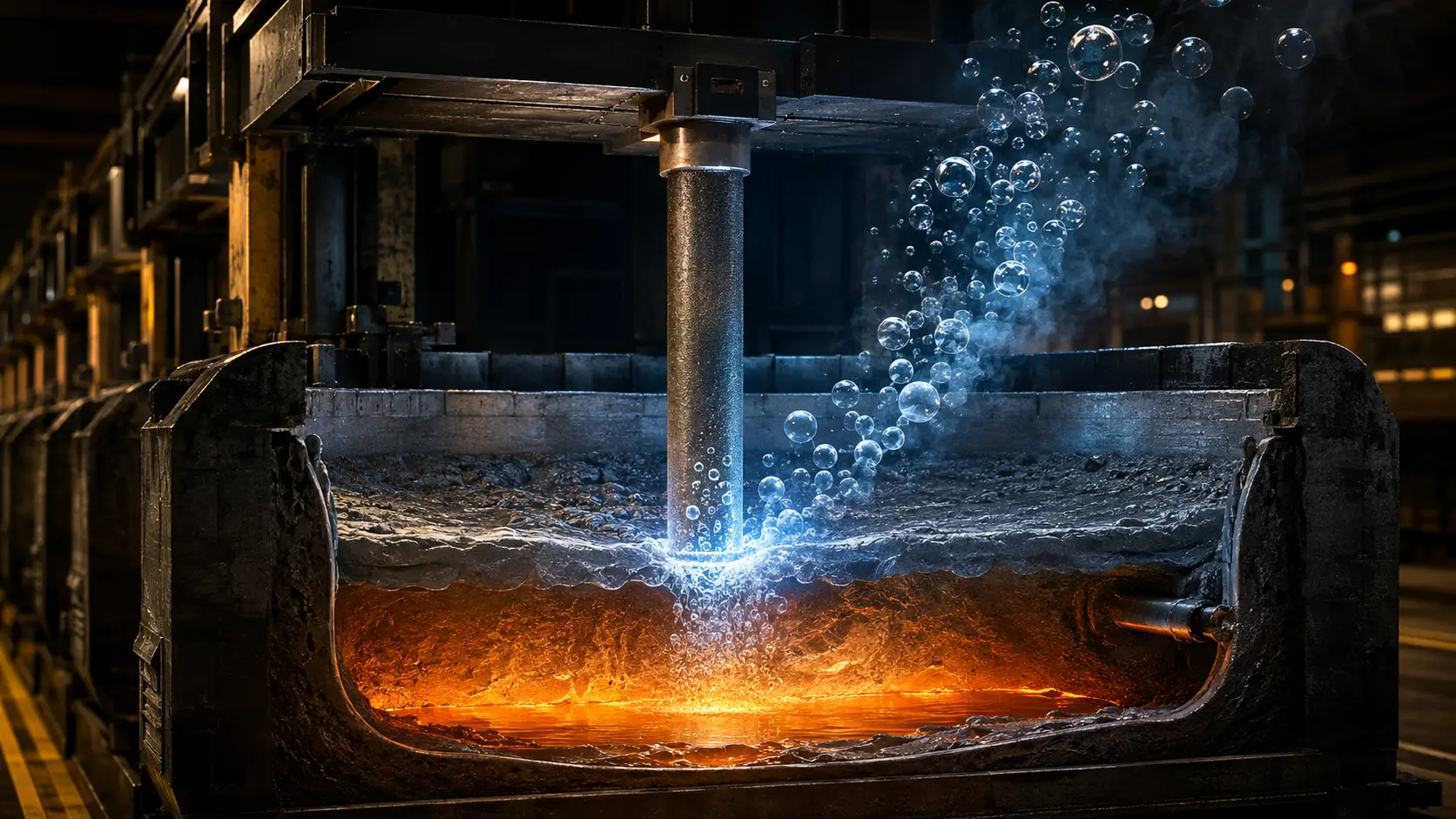

Aluminium is the backbone of the modern economy, critical for manufacturing everything from electric vehicles and aerospace frames to high-voltage power lines and consumer electronics. Yet, despite its role in building the green economy, the way we make aluminium is an environmental disaster. Since 1886, the industry has relied on a single method: dipping massive blocks of pure carbon into a scorching bath of molten salt and electrifying them. As the metal forms, the carbon blocks literally burn away, releasing millions of tons of carbon dioxide and toxic, hyper-potent fluorinated gases directly into the atmosphere. The carbon footprint is so severe that global aluminium smelting accounts for roughly 2% to 3% of all human greenhouse gas emissions.
Why should you care right now? Because materials scientists have finally engineered a way to rewrite this 130-year-old chemical equation. By deploying a breakthrough technology known as “Inert Anodes,” massive industrial smelters are replacing the consumable carbon blocks with indestructible ceramic alloys. This subtle material swap fundamentally changes the physics of the factory: instead of burning and releasing thick clouds of toxic CO2, the new machines silently exhale pure, breathable oxygen. Backed by joint ventures between global mining titans and tech giants like Apple, this technology is moving out of the lab and into commercial mega-factories, offering a permanent, zero-carbon solution for one of the most stubborn, hard-to-abate sectors of global infrastructure.
What is Inert Anode Aluminium Smelting?
Inert anode aluminium smelting is an advanced electrochemical manufacturing process that replaces the traditional consumable carbon anodes used in the Hall-Héroult process with non-consumable ceramic or cermet (ceramic-metal) electrodes. Because the inert anode does not react with oxygen during electrolysis, the smelting process emits pure oxygen gas instead of carbon dioxide.
At a Glance
- Concept: Swapping the sacrificial carbon rods used to make aluminium with permanent ceramic rods, changing the exhaust of the factory from greenhouse gas to pure oxygen.
- Why it matters: Standard aluminium production forces a chemical reaction that inherently creates
CO₂even if the factory runs on 100% renewable solar power. Inert anodes eliminate this “baked-in” chemical emission entirely. - Who uses it: ELYSIS (a joint venture by Alcoa and Rio Tinto), advanced metallurgy researchers, and massive OEMs (like Apple and Audi) demanding zero-carbon supply chains.
- Biggest takeaway: Beyond saving the climate, inert anodes save factories millions of dollars. Carbon anodes burn up every 25 days and must be constantly replaced. Inert anodes last for years, allowing smelters to run continuously without stopping to swap out parts.
In Simple Words
To get pure aluminium, you have to rip it away from oxygen.
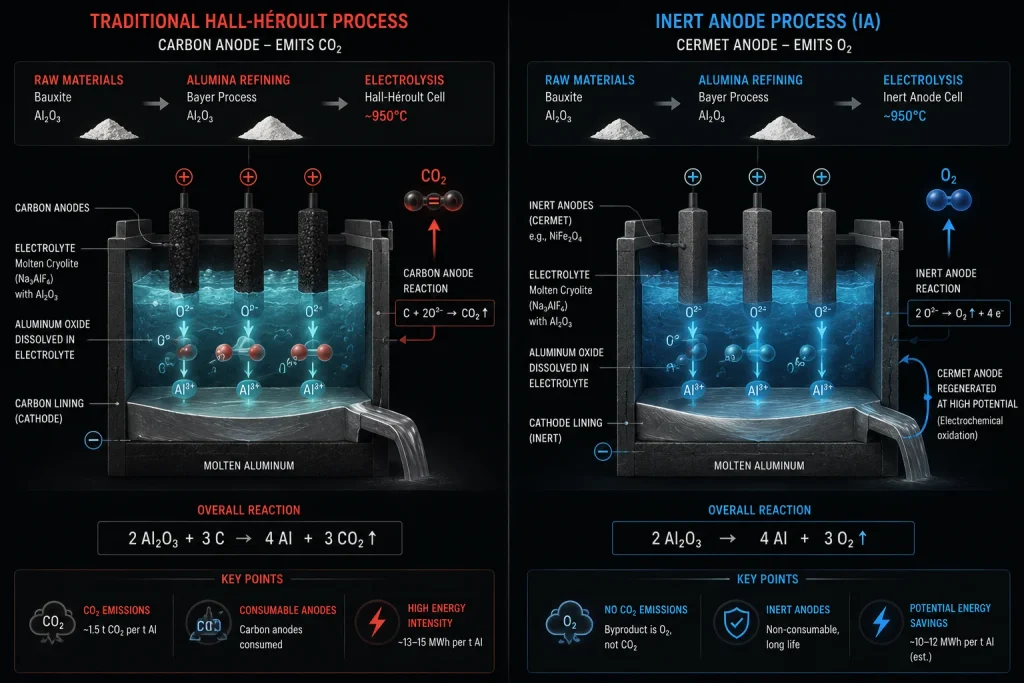
In the Traditional Process, you melt the raw material in a 950°C bath and stick a giant block of carbon into it. You turn on the electricity. The electricity rips the oxygen away from the aluminium. The oxygen immediately attaches to the carbon block, forms carbon dioxide (CO₂), and floats away as smoke. Because the carbon block is slowly turning into smoke, it literally vanishes over a few weeks and must be constantly replaced.
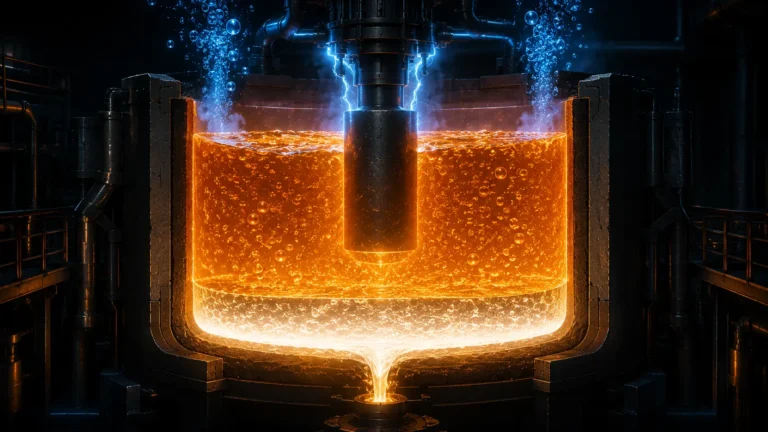
In the Inert Anode Process, you do the exact same thing, but instead of carbon, you stick a high-tech ceramic-metal rod into the bath. When the electricity rips the oxygen away from the aluminium, the oxygen tries to attach to the rod, but the high-tech ceramic ignores it. The rod doesn’t burn. Instead, the pure oxygen simply bubbles to the surface and floats away as clean, breathable air. The factory stops making smoke, and the rod never has to be replaced.
Why This Matters
For Materials Scientists, Industrial Decarbonization VCs, and ESG Analysts, inert anodes represent the ultimate “Scope 1” emission elimination.
For years, aluminium producers attempted to lower their carbon footprint by sourcing renewable hydro-electricity to power their smelters (Scope 2 emissions). However, even with 100% green electricity, the fundamental chemistry of the Hall-Héroult process dictated that the carbon anodes would burn, releasing roughly 1.5 tons of CO₂ for every 1 ton of aluminium produced. This meant true “green aluminium” was mathematically impossible. Inert anodes shatter this chemical ceiling. By eliminating the carbon anode entirely, the smelting process drops to absolute zero direct emissions, allowing manufacturers to sell legally certified “zero-carbon” aluminium at a massive premium to eco-conscious automakers and tech hardware companies.
The Materials Science of Cermet Inert Anodes
The holy grail of metallurgy is finding a material that can survive a 950°C bath of highly corrosive molten cryolite while conducting massive amounts of electricity and resisting aggressive oxidation.
For decades, this was deemed impossible. Any metal that conducted electricity well would instantly melt or corrode in the bath. Any ceramic that could survive the bath was an insulator and couldn’t carry the electrical current. The breakthrough required the invention of “Cermets”—complex composite materials that blend the high conductivity of metals (like copper or nickel) with the extreme thermal and chemical resilience of ceramics (like nickel ferrite). These proprietary alloys have finally achieved the durability required to survive the harshest industrial environment on Earth.
How Inert Anode Aluminium Smelting Works
Rewriting the Hall-Héroult equation requires mastering extreme-temperature electrochemistry. Here is the first-principles breakdown of the architecture.
1. The Fundamental Problem: The Carbon Penalty
In the traditional process, alumina (Al₂O₃) is dissolved in molten cryolite. The overall reaction using a carbon anode is:
2Al₂O₃ + 3C → 4Al + 3CO₂
The carbon (C) is an active participant in the chemistry, actively lowering the electrical voltage required for the reaction to occur, but permanently sacrificing itself as CO₂ in the process.
2. The Core Mechanism: The Non-Consumable Cermet
Inert anode smelting changes the chemistry. A non-consumable cermet (ceramic-metal) anode is submerged into the bath. Because the anode does not react, the chemical equation fundamentally shifts:
2Al₂O₃ → 4Al + 3O₂
The oxygen ions (O²⁻) migrate to the inert anode, surrender their electrons, form pure oxygen gas (O₂), and bubble harmlessly to the surface.
3. Technical Depth: Eliminating the Anode Effect and PFCs
In traditional smelting, if the alumina concentration drops too low, the voltage spikes and the carbon anode reacts with the molten cryolite itself, releasing Perfluorocarbons (PFCs) like CF₄ and C₂F₆. These gases are roughly 7,000 to 12,000 times more potent than CO₂ at warming the atmosphere. Because inert anodes contain zero carbon, it is physically impossible for the system to generate fluorocarbon gases, immediately neutralizing the industry’s most toxic climate liability.
4. Real-World Consequences: Continuous Cell Operation
Carbon anodes are massive, heavy blocks that burn away in 20 to 30 days. Replacing them requires giant robotic cranes to constantly open the sealed smelting “pots,” exposing workers to extreme heat and toxic fumes, and destabilizing the delicate thermal balance of the liquid bath. Inert anodes last for years. The smelting pots can be permanently sealed, heavily insulated, and run continuously without interruption, drastically reducing labor costs and improving operational safety.
5. The Thermodynamic Penalty: The Voltage Gap
There is a catch. Because carbon naturally “wants” to bond with oxygen, using a carbon anode acts as a chemical battery, actually helping to drive the reaction forward at a lower voltage (typically around 4.0 to 4.5 Volts). Inert anodes do not offer this chemical assistance. Therefore, breaking the Al₂O₃ bond without carbon requires applying a higher electrical voltage (roughly 0.5 to 1.0 Volt higher per cell). This means inert anode smelting consumes significantly more raw electricity than traditional smelting.
Commercializing ELYSIS Zero-Carbon Aluminium
The transition to inert anodes is driven by a massive, highly capitalized joint venture aimed at commercializing the technology by the late 2020s.
ELYSIS Joint Venture: Formed by mining titans Alcoa and Rio Tinto, and supported heavily by Apple and the Canadian government, ELYSIS is the undisputed leader in this space. They have successfully moved from laboratory R&D to producing commercial-scale batches of zero-carbon aluminium. Apple has already incorporated early batches of ELYSIS aluminium into the manufacturing of devices like the iPhone and MacBook Pro.
Greenfield vs. Retrofit Deployments: The technology is being designed for two distinct markets. First, for brand-new “greenfield” smelters, engineers can design radically new cell architectures. Because inert anodes don’t need to be constantly replaced, the cells can be built vertically instead of horizontally, drastically reducing the physical footprint of the factory. Second, the technology is being packaged as “retrofits”—allowing existing, legacy smelters to rip out their old carbon hardware and drop inert anodes into their existing pots without tearing down the building.
The Automotive “Green Steel and Aluminium” Race: European automakers (like Audi and BMW) are facing strict Scope 3 emissions reporting laws. The aluminium in a car chassis accounts for a massive percentage of the vehicle’s manufacturing carbon footprint. These OEMs are signing advance-purchase off-take agreements to buy inert-anode aluminium at premium prices, ensuring they can market their future EV fleets as truly “carbon neutral” from the mine to the assembly line.
Economic & Strategic Impact
The core strategic vulnerability of inert anodes is the Zero-Carbon Electricity Bottleneck.
Because inert anodes require higher voltage (they lack the chemical energy assistance of burning carbon), a factory retrofitted with inert anodes will see its electrical demand increase by roughly 10% to 15%.
If the smelter is located in a region powered by coal or natural gas (like many smelters in China and the Middle East), switching to inert anodes is an environmental disaster. The factory stops burning carbon directly, but the local power plant has to burn significantly more coal to provide the extra electricity, increasing the overall net global emissions. Therefore, inert anode technology is economically and environmentally viable only in regions with massive, cheap, stranded renewable energy—specifically the massive hydroelectric dams of Quebec, Canada, and the geothermal fields of Iceland.
Advantages
- Absolute Zero Direct Emissions: Entirely eliminates the release of
CO₂and highly toxic, hyper-warming perfluorocarbons (PFCs) from the smelting process, exhausting only pure oxygen. - Operational Efficiency: Carbon anodes must be replaced every 3-4 weeks. Inert anodes last for years, allowing the smelting pots to be permanently sealed, heavily insulated, and run with vastly fewer human operators and robotic cranes.
- Premium Pricing: Generates a highly coveted, verifiable “green” commodity that commands significant pricing premiums from consumer electronics and automotive manufacturers bound by strict ESG targets.
Limitations
- The Thermodynamic Penalty: Breaking the chemical bond of alumina without the help of reacting carbon requires significantly higher electrical voltage, driving up the operating expenditures (OpEx) for electricity.
- Cermet Degradation and Contamination: The extreme 950°C corrosive environment of molten cryolite slowly degrades even the best inert anodes over years. Microscopic traces of the anode’s metals (like nickel, iron, or copper) dissolve into the bath and contaminate the final aluminium, lowering its purity grade and requiring complex post-smelting filtration.
- CapEx of Retrofitting: While retrofitting is possible, changing the thermal dynamics of a smelting pot designed for consumable carbon blocks to accommodate permanent inert anodes requires massive capital expenditure and prolonged factory downtime.
Common Misconceptions
Misconception: “Green Aluminium” is already common because smelters use hydropower.
Reality: Using hydropower only eliminates the emissions from generating electricity. A hydropower smelter using traditional carbon anodes still emits millions of tons of CO₂ from the chemical reaction itself. Inert anodes are the only way to eliminate the chemical emissions.
Misconception: Inert anodes will be deployed globally in a few years.
Reality: Because inert anodes require more electricity, they will likely only be deployed in regions with massive, excess renewable power (like Canada or Norway). Deploying them in regions powered by fossil fuels would mathematically increase total global emissions.
Misconception: The oxygen produced will solve global warming.
Reality: While emitting oxygen is better than emitting CO₂, the amount of pure oxygen generated by a smelter is negligible on a planetary scale. It will not significantly alter the atmospheric composition or fix global warming on its own; it simply stops the factory from making the problem worse.
What Most People Miss
The disruptive intelligence value of Dynamic Load Following (Demand Response).
Traditional aluminium smelters are incredibly rigid. If you alter the electrical current going into the pot, the thermal balance crashes, the molten salt freezes (a catastrophic failure known as “freezing a pot”), and the carbon anodes react unpredictably.
What most analysts miss about inert anodes is that they stabilize the cell architecture. Because the anodes do not burn or change shape, and the pots can be heavily insulated, the thermal mass of the cell is vastly more stable. This stability allows the factory to become a “virtual battery.” If the electrical grid experiences a massive spike in wind or solar power, the smelter can instantly ramp up its electricity consumption. If the grid suffers a sudden shortage, the smelter can quickly throttle down its power usage without freezing the pot. Inert anodes transform heavy industry into the ultimate grid-balancing tool for renewable energy networks.
Comparison Table
| Feature | Traditional Hall-Héroult (Carbon Anode) | Inert Anode Smelting (ELYSIS) |
| Anode Material | Calcined Petroleum Coke & Pitch | Cermet / Ceramic Composites |
| Anode Lifespan | 20 to 30 Days (Consumable) | Multiple Years (Non-Consumable) |
| Direct Chemical Emissions | CO₂, Carbon Monoxide, PFCs (CF₄, C₂F₆) | Pure Oxygen (O₂) |
| Electrical Energy Demand | Baseline (~13-15 MWh/ton) | High (+10% to 15% Thermodynamic Penalty) |
| Labor & Maintenance | Intense (Constant robotic replacement) | Minimal (Permanently sealed, insulated pots) |
Case Study
Situation: Aluminium production is one of the most carbon-intensive industrial processes on Earth. While recycling aluminium saves 95% of the energy, the world still requires massive amounts of “primary” newly smelted aluminium to meet the surging demand for electric vehicles and power grid infrastructure. Sourcing zero-carbon electricity was insufficient; the carbon anodes themselves had to be eradicated.
Challenge: Develop a highly conductive material capable of surviving the violently corrosive, 950°C molten cryolite bath of a commercial smelter without dissolving, oxidizing, or contaminating the pure aluminium output.
Solution (The ELYSIS Joint Venture): In 2018, Alcoa and Rio Tinto launched ELYSIS, consolidating decades of proprietary R&D to commercialize inert anode technology. Backed by a $144 million initial investment involving Apple and the Canadian government, the venture established an Industrial Research and Development Center in Saguenay, Quebec.
Outcome: By 2024, ELYSIS successfully completed the construction and operation of its first commercial-scale prototype cells, proving that the cermet anodes could survive industrial continuous operations. The facility successfully produced high-purity, zero-carbon aluminium, emitting only pure oxygen. Apple secured the first commercial batches to integrate into the supply chain for the iPhone SE and MacBook Pro, proving that top-tier OEMs were willing to pay a premium to secure absolute Scope 3 supply chain decarbonization.
Lessons Learned: The ELYSIS milestone proved that the 130-year-old carbon chemistry of the Hall-Héroult process was not an insurmountable law of physics. By leveraging advanced materials science and securing massive, cross-industry financial partnerships, the industry validated that the most stubborn industrial emissions can be engineered out of existence, provided there is access to abundant, cheap renewable electricity to offset the thermodynamic penalty.
Future Outlook
Next 12–24 Months
The era of Commercial Greenfield Retrofits. The immediate focus will be the transition from isolated R&D centers to active, commercial smelter integration. ELYSIS will execute its roadmap to install inert anode technology at Rio Tinto’s Alma smelter in Quebec. Throughout 2026 and 2027, the industry will closely monitor the metallurgical purity of the aluminium produced at full commercial scale. Any trace contamination from the degrading cermet anodes will require rapid innovation in downstream filtration, dictating whether this metal can be used for aerospace-grade alloys or relegated to lower-tier construction materials.
Next 3–5 Years
The scaling of Geopolitical Green Aluminium Pricing. As production scales, a bifurcated global market will emerge. Smelters utilizing inert anodes powered by Canadian or Nordic hydro-electricity will produce highly coveted “Zero-Carbon Primary Aluminium.” Driven by strict EU Carbon Border Adjustment Mechanisms (CBAM), this metal will command significant price premiums over standard, high-carbon metal smelted in coal-heavy regions like China. Commodities exchanges (like the LME) will formally splinter their aluminium contracts to reflect the massive geopolitical and environmental value of the inert anode production method.
Next 10 Years
The Vertical Cell Revolution. By the mid-2030s, the design of the aluminium factory will fundamentally transform. For 130 years, smelters were built as massive, sprawling horizontal warehouses to accommodate the giant overhead robotic cranes needed to constantly swap out burning carbon blocks. Because inert anodes never need to be swapped, new “greenfield” factories will completely abandon the horizontal design. They will stack the permanent inert anodes vertically, packing massively more production capacity into a fraction of the physical land footprint, radically improving the thermal insulation and overall energy efficiency of the global supply chain.
Most Likely Scenario
Inert anode technology guarantees the survival of primary aluminium production in a net-zero future. However, its adoption will be highly localized. Because it demands more raw electrical power, the technology will physically tether the future of green aluminium to regions that possess overwhelming, permanent surpluses of renewable energy, permanently redrawing the global map of heavy industry.
Key Takeaways
- Traditional aluminium is made by dipping massive carbon blocks into a 950°C molten bath and electrifying them. The carbon burns away, releasing massive amounts of CO2 and highly toxic fluorinated gases (PFCs).
- Inert Anode technology replaces the consumable carbon blocks with indestructible, advanced ceramic-metal (cermet) rods.
- Because the ceramic rods do not burn, the chemical reaction fundamentally changes. Instead of toxic smoke and CO2, the factory emits pure, breathable oxygen.
- Carbon blocks burn up in 25 days and require constant, dangerous replacement. Inert anodes last for years, allowing factories to seal their machinery and drastically reduce labor and maintenance costs.
- Because burning carbon actually helps power the chemical reaction, taking the carbon away creates a “thermodynamic penalty.” Inert anodes require roughly 15% more raw electricity to function.
- To actually save the planet, inert anode smelters must be built in places with massive, cheap renewable energy (like Canadian hydro-dams or Icelandic geothermal fields). If powered by coal, they make the problem worse.
Glossary
Anode Effect: A dangerous malfunction in traditional smelting where voltage spikes cause the carbon anode to react with the molten salt bath, releasing extremely potent greenhouse gases (PFCs). Inert anodes eliminate this entirely.
Cermet: A high-tech composite material blending a ceramic (for extreme heat and corrosion resistance) with a metal (for electrical conductivity). The foundational material for inert anodes.
ELYSIS: A massive joint venture between aluminium titans Alcoa and Rio Tinto, dedicated to commercializing and deploying inert anode technology globally.
Hall-Héroult Process: The standard, 130-year-old chemical process used globally to smelt primary aluminium. It involves dissolving alumina in molten cryolite and passing a current through it using carbon anodes.
Perfluorocarbons (PFCs): Synthetic gases (like CF₄ and C₂F₆) occasionally released during traditional aluminium smelting. They are thousands of times worse for global warming than CO2.
Thermodynamic Penalty: The physical reality that breaking apart aluminium and oxygen without the chemical “help” of burning carbon requires applying significantly higher electrical voltage.
Sources
ELYSIS: Our Technology – Zero Carbon Aluminium Smelting
Alcoa: ELYSIS advances towards commercialization of zero-carbon smelting technology
Nature / Materials Science: Inert anodes for the Hall–Héroult process: a review of the state of the art
U.S. Department of Energy (DOE): Industrial Decarbonization Roadmap – Aluminium
Rio Tinto: Apple buys first commercial batch of carbon-free aluminium