Advertisement
)

At a Glance
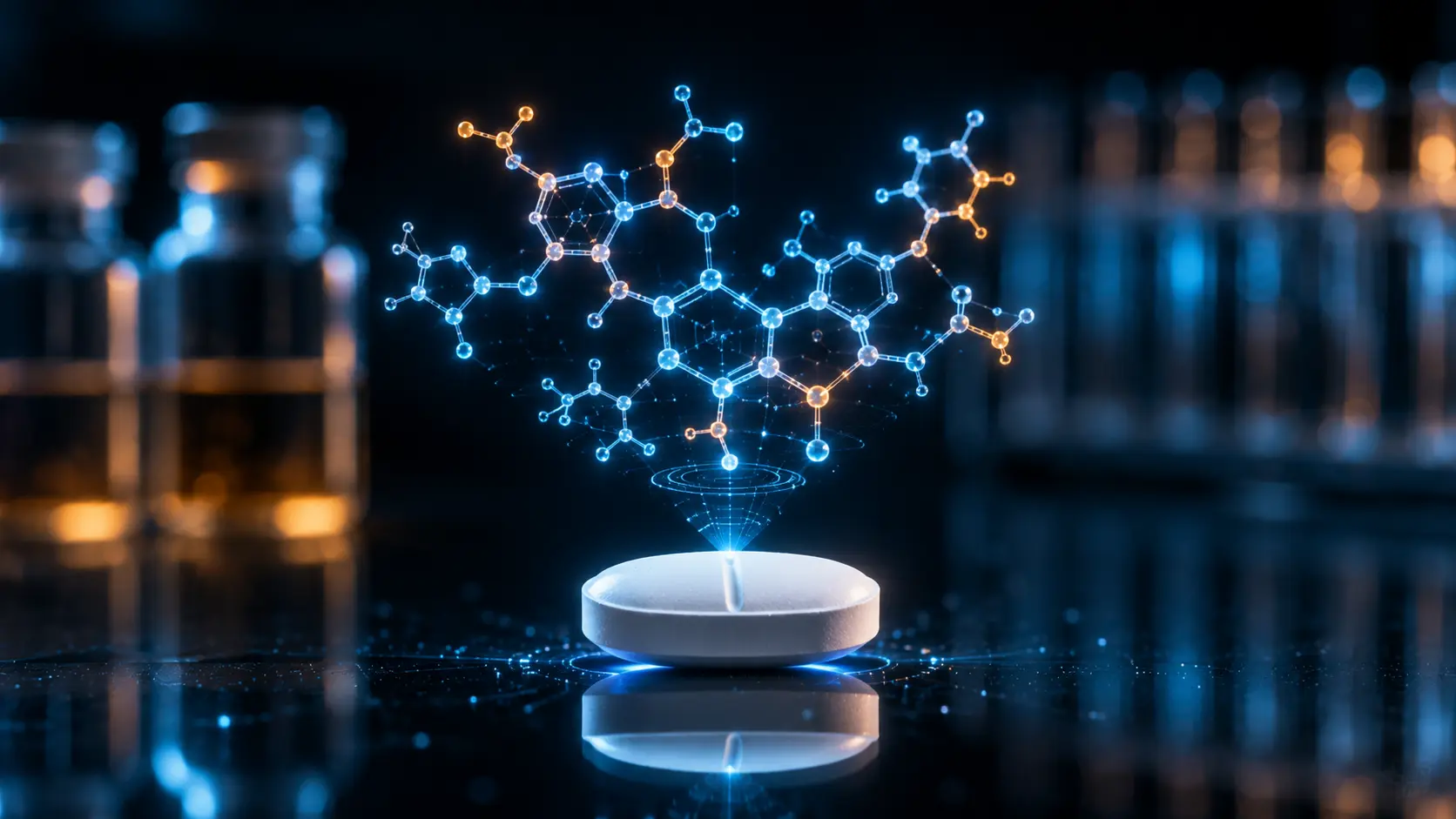
- Concept: Engineering a synthetic chemical molecule that perfectly fits into the body’s GLP-1 receptors to trigger satiety and insulin production, entirely bypassing the need for injectable proteins.
- Why it matters: The global demand for weight-loss drugs like Ozempic and Wegovy vastly outpaced the world’s ability to manufacture the sterile plastic injector pens required to deliver them. Pills delete this manufacturing bottleneck entirely.
- Who uses it: Tens of millions of patients via direct-to-consumer telehealth platforms (like LillyDirect), eliminating the need for cold-chain shipping or clinical injection training.
- Biggest takeaway: The true revolution of the April 2026 FDA approval of drugs like orforglipron (Foundayo) is not just weight loss—it is the underlying chemistry. It transitions the most lucrative drug class in human history from a complex biologic into a traditional, dirt-cheap-to-manufacture chemical pill.
In Simple Words
Your body naturally produces a hormone called GLP-1 when you eat. It tells your pancreas to release insulin and tells your brain that you are full.
For years, pharmaceutical companies mimicked this hormone to treat diabetes and obesity. However, hormones are “peptides”—large, fragile proteins. If you swallow a peptide, your stomach acid and digestive enzymes instantly destroy it, treating it exactly like a piece of steak. To get the drug into the bloodstream, patients had to inject it through the skin with a needle.
Injectable pens are incredibly difficult and expensive to manufacture. They require highly sterile factories, cold-chain refrigeration, and complex plastic mechanics.
Small-molecule GLP-1s solve this problem using clever chemistry. Instead of building a fragile protein that mimics the hormone, scientists built a tiny, tough chemical structure that looks nothing like the hormone but happens to fit perfectly into the exact same “lock” in the brain and pancreas. Because it is a tough chemical (a small molecule) and not a fragile protein, it effortlessly survives stomach acid. You can press it into a standard pill, put it in a cheap plastic bottle, and ship it to a patient’s doorstep.
Why This Matters
The commercialization of oral small-molecule GLP-1s represents the largest unlocking of Total Addressable Market (TAM) in modern pharmaceutical history.
Throughout the early 2020s, the global obesity market was defined by chronic shortages. Novo Nordisk and Eli Lilly had drugs that worked phenomenally well, but they were structurally bound to the “sterile fill-finish” manufacturing capacity of the global supply chain. There were simply not enough factories on Earth to put liquid peptides into sterile glass syringes.
The watershed moment occurred in April 2026 with the FDA approval of Eli Lilly’s orforglipron (Foundayo). This approval signaled the beginning of the end for the injection bottleneck. By shifting the drug format to a small molecule, production moves from highly constrained biological manufacturing to standard Active Pharmaceutical Ingredient (API) chemical synthesis. A factory that makes ibuprofen or statins can, theoretically, be retooled to stamp out millions of GLP-1 pills a day. This effectively democratizes access to obesity treatment, paving the way for the drug class to achieve the ubiquity of daily vitamins.
The Big Picture
It is critical to distinguish between the two distinct eras of “Oral GLP-1s.”
Generation 1 (Peptide-Based Pills): In the early 2020s, Novo Nordisk achieved a miracle by turning its injectable peptide (semaglutide) into a pill (Rybelsus, and later the high-dose Wegovy pill approved in late 2025). To stop the stomach from destroying the peptide, they wrapped it in a chemical “shield” called SNAC. It worked, but it had miserable bioavailability (around 1%). To absorb that 1%, the patient had to take the pill on a completely empty stomach with exactly four ounces of water and wait 30 minutes before eating or drinking anything else. If the patient violated this rule, the drug failed.
Generation 2 (Small-Molecule, Non-Peptide Pills): Drugs like orforglipron represent the second generation. Because they are not peptides, they do not need the SNAC shield. They have inherently high bioavailability. A patient can take the pill with breakfast, with coffee, or right before bed. This eradication of “food restrictions” drastically improves patient compliance and real-world efficacy.
How It Works
Replacing a massive biological protein with a microscopic chemical compound requires a masterpiece of molecular engineering.
1. The Fundamental Problem: The Gastric Gauntlet
The human stomach is an evolutionary furnace designed to break down organic matter. Peptides (short chains of amino acids) are rapidly cleaved by gastric acids and proteolytic enzymes (like pepsin) the moment they enter the gastrointestinal tract. Furthermore, peptides are hydrophilic (water-loving) and massive, making it physically impossible for them to easily cross the lipophilic (fat-loving) cellular membranes of the intestinal wall to enter the bloodstream.
2. The Insufficiency of Absorption Enhancers
The Generation 1 solution—using the SNAC molecule to locally neutralize stomach acid and momentarily force the intestinal wall open to let the peptide slip through—was highly inefficient. It required manufacturing massive amounts of the active ingredient just to get a microscopic fraction into the blood, exacerbating the global peptide shortage rather than solving it.
3. The Core Mechanism: Non-Peptide Receptor Agonism
Generation 2 solves this by abandoning the peptide entirely. Using advanced, AI-assisted spatial modeling, biochemists mapped the exact 3D structure of the GLP-1 receptor. They then synthesized a “small molecule” (a chemical compound with a low molecular weight, typically under 900 Daltons). This molecule is engineered to bypass the main peptide-binding site and instead attach to an “allosteric” site on the receptor, or it is shaped perfectly to trigger the main orthosteric site despite being a completely different chemical class.
4. Technical Depth: Pharmacokinetics and Bioavailability
Because small molecules are compact and chemically stable, they easily survive the low pH of the stomach. Their lipophilic nature allows them to passively diffuse through the intestinal lining directly into the portal vein. This results in oral bioavailability profiles that are orders of magnitude higher than peptide pills. The liver processes the molecule via standard cytochrome P450 pathways (like CYP3A4), maintaining a steady concentration in the blood with a once-daily dosing half-life.
5. Real-World Consequences: The End of Cold Chain
Because small molecules are chemically stable at room temperature, they do not require refrigeration. An injectable peptide left in a hot car is ruined. A bottle of orforglipron pills shipped in a standard cardboard box across the equator remains perfectly viable. This completely removes the “cold chain” logistics requirement, enabling aggressive expansion into developing nations, rural telehealth networks, and mail-order pharmacy distribution channels.
Real-World Applications
The introduction of small-molecule GLP-1s is actively restructuring consumer healthcare and chronic disease management.
Telehealth and Direct-to-Doorstep: Companies like Eli Lilly have launched direct-to-consumer portals (e.g., LillyDirect). A patient logs on, completes a virtual consultation with a physician, receives a prescription, and the oral GLP-1 is mailed directly to their house. By eliminating the anxiety of needle injections and the friction of visiting a physical pharmacy, the barrier to initiating obesity treatment has effectively dropped to zero.
Type 2 Diabetes Management: For patients with Type 2 Diabetes who are needle-phobic, small-molecule pills are replacing legacy oral medications (like Metformin or DPP-4 inhibitors) as frontline therapies. Clinical trials (like the ACHIEVE program) demonstrated that orforglipron lowered A1C levels significantly better than standard oral competitors, while simultaneously driving double-digit percentage weight loss—a dual benefit previously exclusive to injectables.
Maintenance Therapy: Many patients use highly potent injectable GLP-1/GIP dual-agonists (like tirzepatide/Zepbound) to rapidly lose 20% of their body weight over a year. However, once the target weight is achieved, patients often experience “injection fatigue.” Small-molecule pills serve as the ultimate “maintenance phase” drug. The patient transitions off the expensive, cumbersome injection and takes a cheap, simple daily pill to sustain their new metabolic baseline for the rest of their life.
Economic & Strategic Impact
The financial shockwaves of oral small-molecule GLP-1s extend far beyond the pharmaceutical sector.
For the biotech industry, it initiates a brutal price war. As small molecules bypass the expensive sterile fill-finish manufacturing bottleneck, the cost of goods sold (COGS) collapses. Lilly priced its lowest dose of Foundayo at an aggressive USD 149 per month for self-pay patients, drastically undercutting the USD 1,000+ list prices of early injectable biologic pens. This commoditization forces insurance companies and national health services to rapidly update their formularies, expanding coverage to tens of millions of new patients.
Macroeconomically, widespread access to a highly effective, cheap weight-loss pill alters the foundational metrics of the consumer economy. The food and beverage industry, fast-food conglomerates, and airlines are forced to recalibrate their revenue projections as a significant percentage of the global population permanently lowers their daily caloric intake and alters their consumption habits.
Advantages
- Manufacturing Scalability: Produced via standard chemical synthesis and tablet-pressing, bypassing the global shortage of sterile glass syringes and biologic manufacturing suites.
- Zero Administration Friction: Taken orally with or without food and water, completely eliminating the strict fasting rules of first-generation peptide pills and the pain of injections.
- Logistical Supremacy: Stable at room temperature, eliminating the expensive and failure-prone cold-chain shipping required for liquid biologics.
- Cost Collapse: Fundamentally cheaper to manufacture, package, and distribute, unlocking mass-market affordability and broader insurance reimbursement.
Limitations
- Gastrointestinal Tolerability: Like all GLP-1 drugs, small molecules cause nausea, vomiting, and diarrhea during the initial dose-escalation phase. In clinical trials, GI side effects remained the primary reason patients discontinued the drug.
- Liver Enzyme Interactions: Small molecules are processed by the liver’s cytochrome P450 system (specifically CYP3A4). This introduces complex drug-drug interactions. If a patient is taking certain statins, blood thinners, or antidepressants, the oral GLP-1 could alter how those other drugs are metabolized.
- Efficacy Ceiling: While small molecules drive impressive weight loss (roughly 10% to 12% over 72 weeks), they have not yet matched the staggering 20% to 25% weight loss achieved by the most advanced, multi-receptor injectable biologics (like Retatrutide or high-dose Tirzepatide).
Common Misconceptions
Misconception: All GLP-1 pills work the same way.
Reality: The difference between a peptide pill (like oral semaglutide) and a small-molecule pill (like orforglipron) is night and day. The peptide pill requires a completely empty stomach and a 30-minute fasting window. The small-molecule pill has zero food or water restrictions.
Misconception: Pills will completely replace injections.
Reality: Injectables will remain the gold standard for achieving maximum absolute weight loss in severe obesity cases. Furthermore, new long-acting injectables being developed only require one shot per month. The market will bifurcate: injectables for massive initial weight reduction, and pills for mass-market convenience and lifelong maintenance.
Misconception: You only take the pill until you lose the weight.
Reality: Obesity is a chronic metabolic disease, not a temporary condition. If a patient stops taking the small-molecule GLP-1 pill, the suppressed appetite returns, and the vast majority of the weight is regained within a year. It is a lifelong medication.
What Most People Miss
The true intellectual property (IP) arms race in 2026 is no longer about hitting the GLP-1 receptor—it is about Poly-Pharmacology in a Single Pill.
While the first approved small molecules (like orforglipron) target only the GLP-1 receptor, biotech startups (such as Structure Therapeutics and Viking Therapeutics) are engineering small molecules that hit multiple receptors simultaneously (e.g., GLP-1 plus GIP, or GLP-1 plus Glucagon). Engineering a single chemical compound small enough to survive the stomach, yet structurally complex enough to act as a “skeleton key” unlocking multiple distinct metabolic receptors in the brain and pancreas, is the holy grail of modern computational biochemistry.
Comparison Table
| Feature | Injectable Peptides (e.g., Wegovy, Zepbound) | Gen 1 Oral Peptides (e.g., Rybelsus / Oral Semaglutide) | Gen 2 Small Molecules (e.g., Foundayo / Orforglipron) |
| Molecule Type | Large Biologic Protein | Large Biologic Protein + SNAC | Small Chemical Compound |
| Delivery Method | Subcutaneous Injection (Weekly) | Oral Pill (Daily) | Oral Pill (Daily) |
| Food Restrictions | None | Strict (Empty stomach, wait 30 mins) | None (Take anytime) |
| Storage Requirement | Cold Chain (Refrigerated) | Room Temperature | Room Temperature |
| Manufacturing | Sterile Fill-Finish (Bottlenecked) | High API requirement (Expensive) | Standard Chemical Synthesis (Highly Scalable) |
| Average Weight Loss | 15% to 22%+ | ~10% to 15% | ~10% to 12% |
Case Study
Situation: By the mid-2020s, Eli Lilly had secured dominance in the injectable obesity market with Zepbound (tirzepatide). However, they faced an insurmountable mathematical problem: the global demand for the drug exceeded the physical capacity of the world’s sterile glass syringe and auto-injector manufacturing supply chain.
Challenge: To truly conquer the multi-hundred-billion-dollar global obesity market, Lilly needed a drug that could bypass biological manufacturing bottlenecks entirely and appeal to the massive demographic of patients who outright refused to inject themselves with needles.
Solution (The Molecule): Lilly acquired a promising small-molecule GLP-1 agonist originally discovered by Chugai Pharmaceutical. Leveraging advanced chemical optimization, they developed orforglipron. Instead of a fragile peptide, it was a robust, non-peptide molecule that bound to the GLP-1 receptor.
Outcome: In the ATTAIN phase 3 clinical trials, orforglipron demonstrated roughly 12.4% body weight reduction at 72 weeks. Crucially, it did not require the miserable fasting rules of competitor oral peptides. In April 2026, the FDA approved orforglipron (branded as Foundayo). Lilly immediately capitalized on the scalable pill format, launching it via LillyDirect for as little as USD 149 a month for self-pay patients, instantly establishing a new, ultra-accessible tier in the global obesity market.
Lessons Learned: The future of metabolic medicine is convenience. By transitioning from a complex biologic to a simple small molecule, Lilly decoupled its revenue growth from the constraints of the medical supply chain, proving that the ultimate winner in the obesity wars will be determined by manufacturing scalability, not just raw efficacy.
Future Outlook
Next 12–24 Months
The immediate aftermath of the 2026 approvals will trigger a fierce battle for primary care physicians. Telehealth infrastructure will scale massively. Companies like Pfizer, Roche, and AstraZeneca will aggressively accelerate their own oral small-molecule pipelines (many acquired via multi-billion-dollar buyouts) to catch up to Eli Lilly’s first-mover advantage. Expect aggressive direct-to-consumer television and social media advertising campaigns positioning the “daily weight-loss pill” as a ubiquitous lifestyle intervention.
Next 3–5 Years
The transition to combination therapies. As small-molecule GLP-1s become commoditized, pharmaceutical companies will combine them with other oral medications. We will see the launch of “polypills”—a single tablet containing an oral GLP-1 to drive weight loss, combined with a statin for cholesterol, and a SGLT2 inhibitor for cardiovascular protection. This will consolidate the entire metabolic disease management protocol into a single, daily morning routine for the aging global population.
Next 10 Years
Oral small-molecule GLP-1s will achieve the global market penetration currently held by statins or blood pressure medications. As the patents on the earliest small molecules begin to expire toward the late 2030s, generic manufacturers in India and China will flood the global market with cents-on-the-dollar equivalents. The chronic disease burden of obesity in developing nations, previously untreatable due to the cost of injectables, will crater as governments distribute the pills as a baseline public health initiative.
Most Likely Scenario
Injectable biologics will remain the tip of the spear for extreme obesity and complex metabolic disorders, pushing the boundaries of absolute weight reduction. However, oral small molecules will become the undisputed backbone of global weight management. By eliminating the friction of needles, fasting rules, and cold-chain logistics, small-molecule GLP-1s will successfully transition obesity treatment from specialized endocrinology clinics into the everyday reality of global primary care.
Key Takeaways
- Oral small-molecule GLP-1s (like orforglipron) are chemical compounds designed to trigger the body’s satiety and insulin receptors, offering a highly effective alternative to weight-loss injections.
- Unlike first-generation peptide pills (which require strict fasting to avoid being destroyed by stomach acid), small molecules are robust and can be taken at any time, with or without food.
- The shift to small molecules solves the greatest bottleneck in modern medicine: it transitions manufacturing from highly constrained sterile auto-injectors to globally ubiquitous, cheap pill-pressing factories.
- Eli Lilly’s April 2026 FDA approval of Foundayo (orforglipron) effectively established a new paradigm of mass-market, highly accessible obesity treatment via direct-to-doorstep telehealth.
- While highly convenient, small molecules are metabolized by liver enzymes (CYP3A4), which introduces potential drug-drug interactions that physicians must actively manage.
- The long-term trajectory of the market is bifurcated: advanced injectables for maximum weight loss, and cheap, accessible daily pills for mass-market adoption and lifelong weight maintenance.
Glossary
Active Pharmaceutical Ingredient (API): The biologically active component of a drug. For small molecules, API is synthesized via standard, highly scalable chemical processes.
Allosteric Modulator: A molecule that binds to a receptor at a site other than the primary active site, changing the receptor’s shape and altering how it responds to the body’s natural hormones.
Bioavailability: The proportion of a drug that successfully enters systemic circulation (the bloodstream) when introduced into the body and is able to have an active effect.
Cold Chain: A temperature-controlled supply chain required to preserve the chemical integrity of fragile biological drugs (like injectable peptides) from the factory to the patient.
Cytochrome P450 (e.g., CYP3A4): A crucial family of enzymes in the liver responsible for metabolizing the vast majority of small-molecule drugs, dictating how long the drug remains active in the body.
Peptide: A short chain of amino acids. Legacy GLP-1 drugs are peptides, meaning they are structurally similar to proteins and easily destroyed by stomach acid if swallowed without protective mechanisms.
Small Molecule: A low molecular weight organic compound that is synthesized chemically. Due to their small size and lipophilic nature, they easily pass through the intestinal wall into the bloodstream.
Frequently Asked Questions
Why did it take so long to make a GLP-1 pill?
The GLP-1 receptor in the body is designed to bind to a large, complex protein (a peptide). Finding a tiny chemical (a small molecule) that could perfectly fit into that massive biological lock and actually turn it on was considered nearly impossible. It required years of advanced computational modeling and AI-driven drug discovery to find the exact chemical shape.
Are small-molecule pills as effective as injections?
They are highly effective, but currently, the most advanced injections hold the crown for maximum weight loss. Orforglipron drives roughly 12% weight loss, while the newest dual-agonist injections can drive over 20%. However, for millions of patients, 12% is a life-changing, clinically significant outcome.
Do these pills cause muscle loss like the injections?
Yes. Whether delivered via pill or injection, rapid weight loss driven by GLP-1 receptor activation causes a loss of both fat and lean muscle mass. This is why the FDA approval mandates the drug be used in conjunction with increased physical activity (specifically resistance training) to preserve muscle.
Can anyone get a prescription for these pills?
No. The FDA strictly regulates them for adults with a Body Mass Index (BMI) of 30 or higher (obesity), or a BMI of 27 or higher (overweight) with at least one weight-related comorbidity like hypertension, sleep apnea, or dyslipidemia.
How does this impact the price of weight-loss drugs?
It crashes the price floor. Because manufacturing a chemical pill costs pennies compared to manufacturing a sterile glass auto-injector, pharmaceutical companies can aggressively drop the cash price (e.g., USD 149/month for Foundayo) to capture patients whose insurance refuses to cover the expensive injectables.
Sources
- U.S. Food and Drug Administration (FDA): Approval of Foundayo (orforglipron) for Obesity and Overweight (April 2026)
- New England Journal of Medicine (NEJM): Daily Oral GLP-1 Receptor Agonist Orforglipron for Adults with Obesity (ATTAIN-1 Trial Data)
- American Diabetes Association (ADA) 2026 Scientific Sessions: ACHIEVE Trials – Orforglipron vs. Dapagliflozin
- Market Intelo: Oral Non-Peptide GLP-1 Receptor Agonist Market Research Report 2034 (May 2026)
- Eli Lilly and Company: Foundayo U.S. Availability and LillyDirect Pricing Strategy (April 2026)