Advertisement
)

AT A GLANCE
- Concept: Linear Optimization: Software calculates the absolute lowest-cost combination of power plants to meet grid demand instantly.
- Concept: Marginal Losses: Electrons dissipate as thermodynamic heat during transmission, making electricity more expensive over long distances.
- Concept: Thermal Constraints: Copper transmission lines physically melt if grid operators push too much electrical current through them.
- Concept: Congestion Pricing: When a cheap power plant sits behind a maxed-out wire, the algorithm forces expensive local plants online, spiking node prices.
HOW LOCATIONAL MARGINAL PRICING WORKS
Grid operators cannot store electricity at scale; they must balance supply and demand instantly across vast geographic areas. To execute this physical balance, Regional Transmission Organizations (RTOs) utilize a market mechanism called Locational Marginal Pricing (LMP). This software algorithm determines the exact financial cost to buy or sell one additional megawatt of power at thousands of specific physical intersections across the grid.
The LMP algorithm deconstructs the price of electricity into three distinct mathematical components. The first is the system energy price, representing the base cost of generating the raw electricity itself from a natural gas turbine or a solar farm. The second is the cost of marginal losses, accounting for the physical electrons that bleed off the wires as thermodynamic heat during long-distance transmission.
The third and most dominant component is the congestion cost. High-voltage transmission lines possess strict physical thermal limits. Pushing excessive electricity through a copper wire heats the metal, causing the line to sag into trees and physically melt.
When a transmission line hits this thermal capacity, the grid operator cannot mathematically dispatch the cheapest power available to a specific city. The linear programming optimization software instantly intervenes to prevent a catastrophic grid collapse. It forces the grid operator to throttle back cheap generation on the wrong side of the congested wire, simultaneously dispatching more expensive generators located closer to the demand node to keep the lights on.
This forced physical substitution mathematically generates the congestion price. The wholesale price of electricity at the specific demand node spikes dramatically, precisely reflecting the financial premium the grid must pay to bypass the physical transmission bottleneck.
WHY IT MATTERS NOW
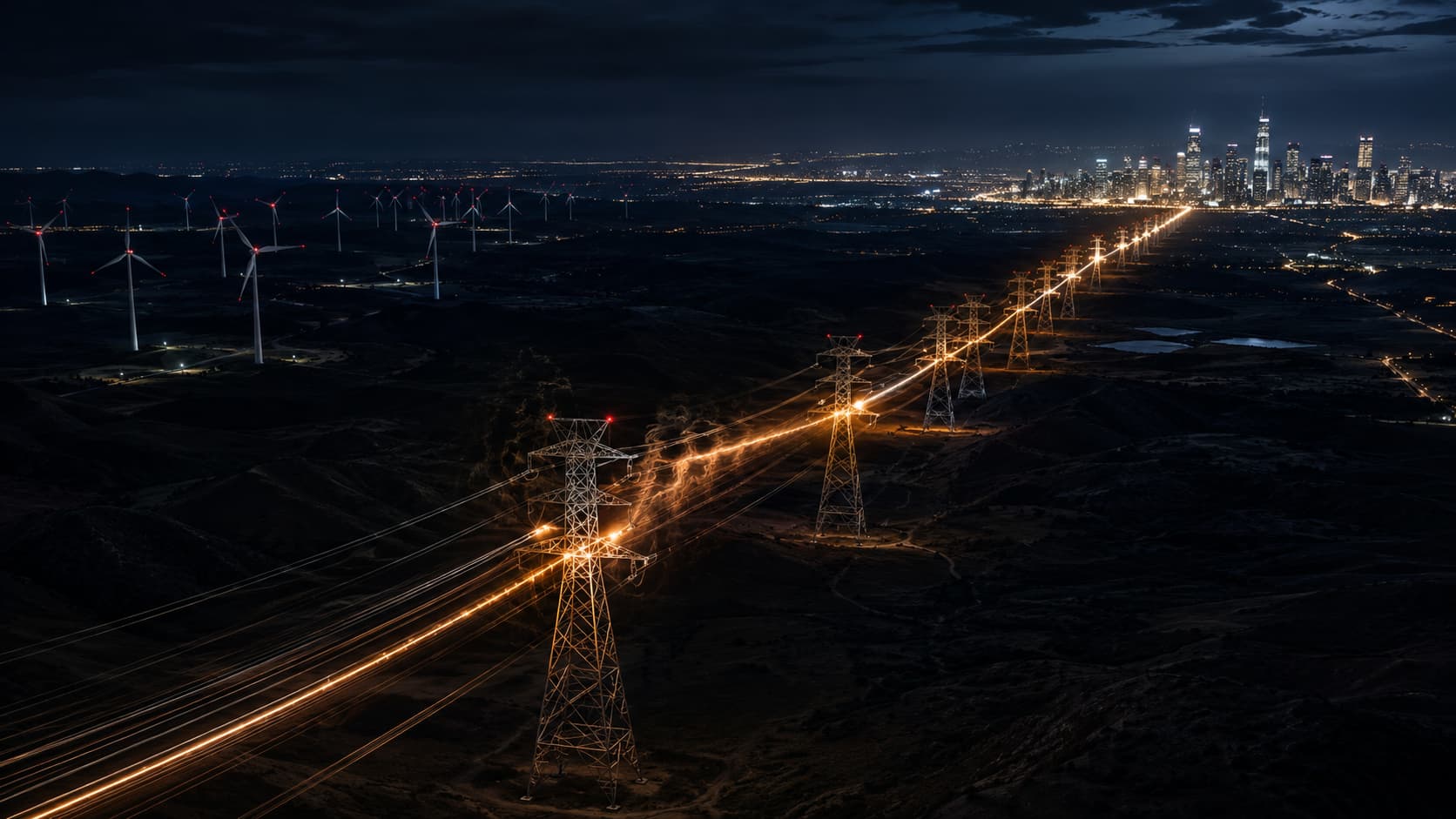
The rapid integration of utility-scale renewable energy exposes severe geographic mismatches across continental transmission grids. Wind and solar farms require massive land footprints, frequently forcing developers to build them hundreds of miles away from major urban load centers. This geographic distance physically bottlenecks the wholesale electricity market every single day.
A concrete example exists in the Texas ERCOT market. West Texas generates massive volumes of near-zero marginal cost wind energy, but the transmission lines connecting West Texas to the Dallas metropolitan area frequently reach maximum thermal capacity. The LMP algorithm immediately fractures the state’s pricing map to reflect this physical reality.
The trading nodes in West Texas experience negative pricing, while the nodes in Dallas experience massive price spikes. This node-level price distortion acts as a pure, mathematical investment signal. It informs institutional capital exactly where to build new high-voltage transmission lines or where to deploy grid-scale battery storage to capture the arbitrage spread.
Wall Street hedge funds actively trade these mathematical congestion nodes using Financial Transmission Rights (FTRs). These financial derivatives allow traders to bet on future congestion costs between two specific grid nodes without ever generating or consuming physical electricity. This financialization injects massive liquidity into the grid operator’s hedging markets, subsidizing the cost of physical grid expansion.
WHAT MOST PEOPLE MISS
Energy commentators frequently assume that negative electricity pricing indicates a failed or oversupplied market. They entirely misunderstand the baseline operational physics of massive base-load generation. Negative LMP occurs primarily because shutting down and restarting a nuclear reactor or a massive coal boiler costs millions of dollars and takes several days.
When transmission congestion traps massive amounts of wind energy in a specific region, local supply massively exceeds local demand. To avoid the extreme mechanical cost of shutting down their physical turbines, traditional plant operators will mathematically pay the grid to take their electricity.
This localized negative pricing mathematically subsidizes highly mobile, energy-dense operations like cryptocurrency mining and AI training clusters. Bitcoin miners physically relocate their mobile server containers directly adjacent to congested grid nodes, getting paid by the grid operator to consume the trapped electricity that the transmission lines physically cannot export.
THE TRAJECTORY
Next 12–36 Months: The mass adoption of Dynamic Line Ratings (DLR). By using localized weather sensors, grid operators will dynamically adjust the thermal limits of transmission lines based on real-time wind cooling. This will temporarily expand wire capacity and crash localized congestion prices during severe weather events.
Next Five Years: The deployment of topology optimization algorithms. Rather than just changing which generator dispatches, grid software will autonomously open and close physical high-voltage circuit breakers across the grid. This capability will mathematically reroute power flows around congested nodes, acting as a software-defined expansion of the physical grid.
Next Ten Years: Nodal market saturation by algorithmic battery arbitrage. Massive fleets of AI-dispatched virtual power plants and grid-scale batteries will perfectly map the LMP algorithms. They will charge off cheap, negative-priced nodes and discharge instantly into high-priced nodes, permanently flattening the geographic price variations across the continent.
What Could Go Wrong: Malicious algorithm manipulation. If a massive generation conglomerate strategically trips a transmission line offline during a heatwave, they can mathematically force a congestion event that spikes the LMP at a node where they exclusively own the backup natural gas peakers. This manipulates the optimization software to legally extort the regional grid.
Most Likely Outcome: Locational Marginal Pricing will remain the absolute mathematical foundation of wholesale electricity markets. The localized price of power will increasingly reflect physical transmission limits and copper shortages rather than the baseline cost of raw natural gas or sunlight.
KEY TERMS
- Locational Marginal Pricing (LMP): The calculated wholesale price of electricity at a specific physical point on the grid, accounting for generation, losses, and transmission constraints.
- Congestion Cost: The price premium added to a grid node when transmission lines lack the physical thermal capacity to deliver the cheapest available electricity.
- Linear Programming: A mathematical modeling technique used by grid software to find the absolute lowest-cost combination of generators to run while respecting all physical transmission limits.
- Financial Transmission Right (FTR): A financial contract that entitles the holder to a stream of revenues based on the hourly congestion price differences across the grid.
- Node: A specific physical location on the high-voltage transmission network, such as a substation, where grid operators calculate the injection or withdrawal price of power.
SOURCES
- Federal Energy Regulatory Commission (FERC) — Energy Primer: A Handbook of Energy Market Basics
- PJM Interconnection — Locational Marginal Pricing (LMP) and Congestion Management Mechanics
- Massachusetts Institute of Technology (MIT) Center for Energy and Environmental Policy — The Physics and Economics of Nodal Pricing
- IEEE Power and Energy Society — Linear Programming Optimization in Multi-Node Wholesale Electricity Markets