Advertisement
)

AT A GLANCE
- Concept: Intercalation: The physical process of inserting and removing ions from a material’s crystalline structure to store and release energy.
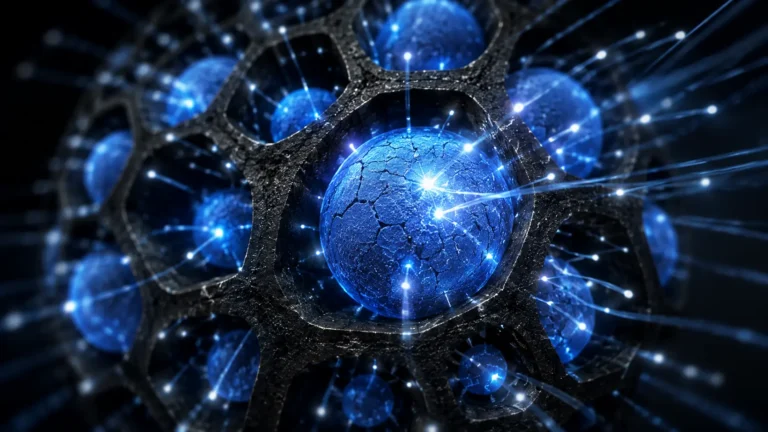
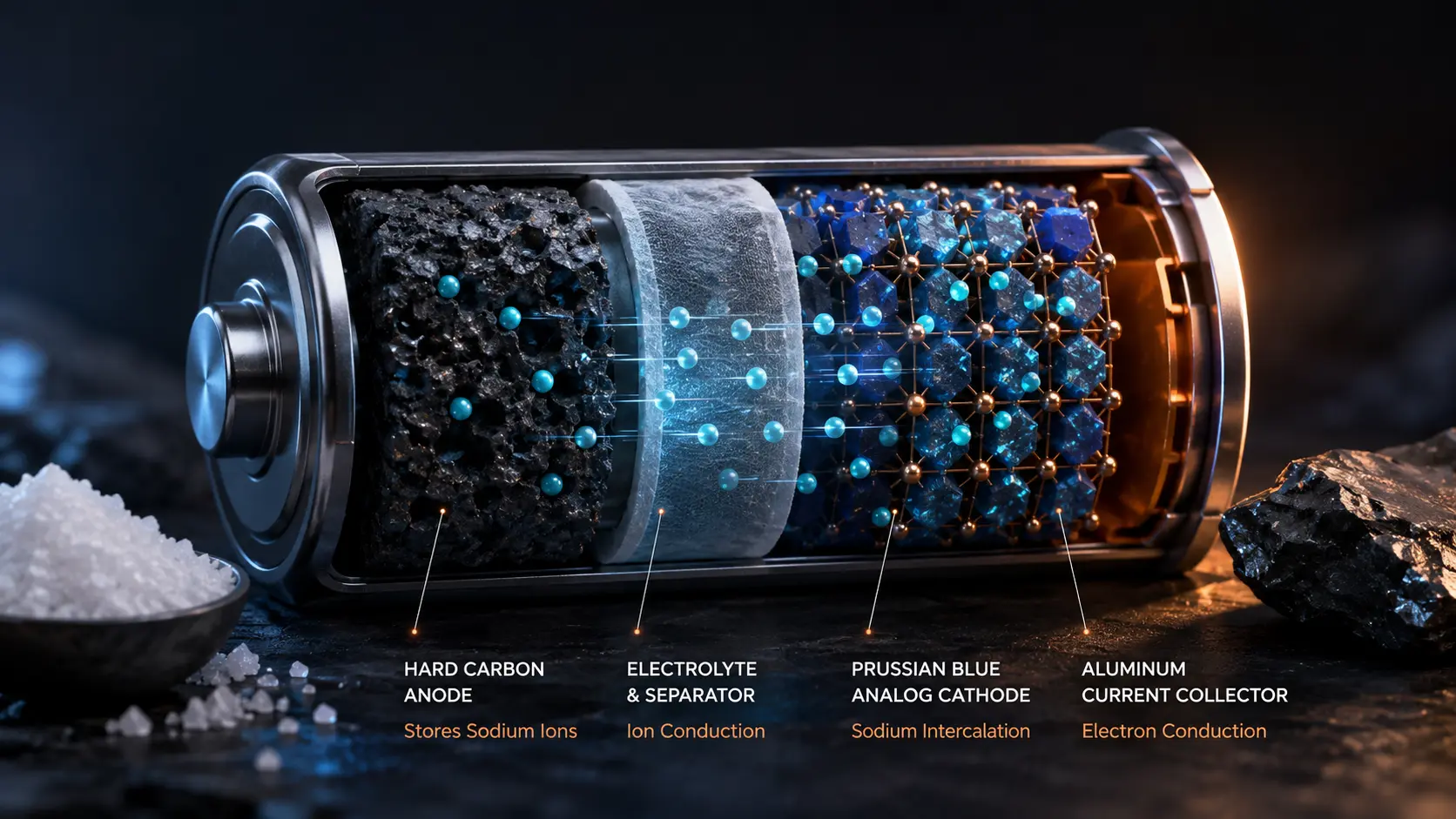
- Concept: Hard Carbon Anode: A disorganized carbon structure with microscopic voids large enough to physically fit bulky sodium ions.
- Concept: Prussian Blue Analogs: A highly porous cathode material that allows sodium ions to move rapidly without fracturing the battery internally.
- Concept: Layered Oxides: Alternative cathode materials that stack chemical layers to trap and release sodium efficiently during charging.
IN SIMPLE WORDS
Lithium-ion batteries run the modern world, but lithium is expensive, difficult to mine, and controlled by a few global supply chains. If we want to store enough solar and wind energy to power entire cities, we need a battery chemistry that is infinitely cheaper and universally available.
Sodium-ion batteries solve this problem by swapping lithium for sodium, which is essentially common table salt. Sodium is one of the most abundant elements on Earth and can be extracted directly from seawater anywhere on the planet.
While sodium-ion batteries are slightly heavier and hold less energy per pound than lithium, they are significantly cheaper to manufacture. For stationary grid storage facilities where weight does not matter, this chemistry provides a massive, inexpensive energy reservoir that cannot be bottlenecked by international resource monopolies.
HOW SODIUM-ION BATTERIES WORK
The fundamental electrochemistry of a sodium-ion cell mirrors a lithium-ion cell, but it requires entirely different structural materials. The primary mechanical challenge is atomic size. A sodium ion is roughly 25 percent larger than a lithium ion.
Because of this physical bulk, sodium ions cannot efficiently insert, or “intercalate,” into the standard graphite anodes used in modern electronics. The carbon sheets in graphite are packed too tightly together. Instead, sodium-ion batteries utilize hard carbon anodes. Hard carbon is highly disordered, creating wider, irregular microscopic voids that easily accommodate the larger sodium atoms without causing the electrode to swell and crack.
On the cathode side, battery engineers use two primary structural architectures: layered transition metal oxides or Prussian blue analogs. These materials act like rigid molecular sponges. Their open-framework structures allow the large sodium ions to flow in and out rapidly during charge and discharge cycles, minimizing mechanical stress on the crystal lattice.
During operation, the sodium ions migrate across a liquid electrolyte. As they settle into the hard carbon anode, a Solid-Electrolyte Interphase (SEI) layer forms. This microscopic film is critical because it protects the anode from continuous chemical breakdown.
However, sodium is chemically more reactive than lithium, and it dissolves more easily in certain solvents. Maintaining SEI stability over thousands of charging cycles remains the primary engineering challenge for scaling sodium-ion technology to commercial longevity.
REAL WORLD EXAMPLE
In late 2023, CATL (Contemporary Amperex Technology Co. Limited), the world’s largest battery manufacturer, moved sodium-ion batteries from the laboratory into commercial mass production.
They partnered with the Chinese automaker Chery to launch the first electric vehicle powered entirely by CATL’s sodium-ion cells. While the car does not boast the extreme 400-mile range of premium lithium-ion vehicles, it represents a monumental shift for urban commuting. By utilizing sodium, CATL produced a completely viable daily driving vehicle that completely bypassed the volatile lithium commodity markets, drastically lowering the final retail price for consumers.
WHY IT MATTERS NOW
The global transition to renewable energy is strictly bottlenecked by the availability of rare earth metals and lithium. The supply chains for lithium, cobalt, and nickel are heavily concentrated in South America, Africa, and China, creating severe geopolitical chokepoints.
Sodium completely neutralizes this geopolitical risk. It is the sixth most abundant element in the Earth’s crust. It can be mined in massive quantities in the United States, Europe, or literally extracted from the ocean. Nations can instantly secure domestic energy storage supply chains without relying on foreign commodity imports.
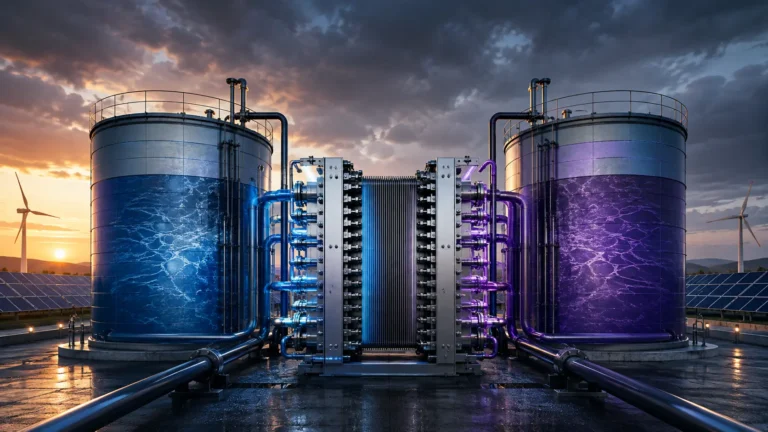
Furthermore, grid-scale energy storage requires massive scale, not microscopic packaging. For utility installations—where batteries sit stationary in shipping containers next to solar farms—weight and physical volume are largely irrelevant.
Cost per kilowatt-hour is the only metric that dictates utility profitability. Sodium-ion chemistry slashes raw material costs by up to 30 percent compared to lithium. This alters the baseline economics of renewable energy, making it financially viable to store excess daytime solar power for nighttime use on a planetary scale.
COMMON MISCONCEPTIONS
- “Sodium batteries will replace lithium batteries in everything.” Sodium is too heavy for applications where weight is critical. Lithium will always dominate smartphones, laptops, and high-performance electric vehicles, while sodium will dominate stationary grid storage and cheap micro-mobility.
- “They are dangerous because pure sodium explodes in water.” Commercial sodium-ion batteries do not use pure, highly reactive sodium metal. They use stable sodium chemical compounds (like sodium-ions inside hard carbon), making them structurally very safe.
- “They use the exact same manufacturing equipment.” While the factories look similar, the internal chemistry requires entirely different aluminum current collectors and distinct drying protocols, meaning lithium gigafactories require expensive retrofitting to switch to sodium.
WHAT MOST PEOPLE MISS
Financial analysts focus heavily on the lower energy density of sodium-ion, but they completely ignore its extreme temperature advantages.
Traditional lithium-ion electrolytes freeze and become highly resistant at sub-zero temperatures, destroying an electric vehicle’s range during winter. Sodium-ion electrolytes remain highly conductive in extreme cold. A sodium battery retains nearly 90 percent of its capacity at -20 degrees Celsius, making it the perfect energy storage architecture for high-latitude nations, remote research stations, and cold-weather grid stabilization.
THE ECONOMIC AND STRATEGIC IMPACT
The primary financial beneficiaries are utility-scale infrastructure funds and stationary storage operators. The ability to deploy containerized sodium batteries at a fraction of the cost of lithium drastically lowers the capital expenditure required to balance wind and solar farms.
For the commodity markets, sodium-ion acts as a structural price ceiling on lithium. Whenever lithium prices spike due to mining shortages, battery manufacturers can now quickly pivot their low-end product lines to sodium, instantly destroying excess lithium demand. This will permanently stabilize global battery pricing.
Strategically, nations that lack domestic lithium reserves view sodium-ion as an issue of national security. Governments in Europe and India are heavily subsidizing domestic sodium-ion startups. This ensures their national power grids can transition to renewable energy without becoming totally dependent on Chinese-controlled lithium refining hubs.
THE TRAJECTORY
Next 12–36 Months: The massive rollout of sodium-ion micro-mobility. Two-wheeled electric scooters, rickshaws, and golf carts in emerging markets will rapidly abandon lead-acid and cheap lithium batteries in favor of highly durable, low-cost sodium-ion packs.
Next Five Years: The dominance of stationary grid storage. Massive mega-pack installations next to solar fields and wind turbines will transition almost entirely to sodium-ion. The cost savings will allow utility companies to overbuild storage capacity, effectively eliminating rolling blackouts during peak summer demand.
Next Ten Years: The commercialization of solid-state sodium batteries. Engineers will replace the highly flammable liquid electrolyte with a solid ceramic or polymer structure. This will prevent internal short circuits and allow the use of pure sodium metal anodes, finally pushing the energy density of sodium close to modern lithium-ion levels.
What Could Go Wrong: A catastrophic crash in lithium commodity prices. If new mining technologies make lithium virtually free to extract, the primary economic incentive for sodium-ion vanishes. Gigafactories would abandon sodium research and simply scale up cheap lithium production, leaving early sodium investors with stranded, uncompetitive assets.
Most Likely Outcome: The battery market will permanently split into two distinct tiers. Lithium-ion will remain the premium technology for high-performance mobility and aerospace, while sodium-ion will become the invisible, ultra-cheap backbone of the global electrical grid.
KEY TERMS
- Intercalation: The physical insertion and removal of ions into the lattice structure of a material to store and release electrical energy.
- Hard Carbon: A highly disorganized carbon material with large voids, explicitly engineered to hold bulky sodium ions that cannot fit into standard graphite.
- Prussian Blue Analog: A synthetic chemical structure used as a battery cathode, known for its rigid, open framework that allows rapid ion movement.
- Solid-Electrolyte Interphase (SEI): A microscopic protective layer that forms on the battery’s anode, preventing the liquid electrolyte from degrading the carbon structure over time.
- Energy Density: The total amount of energy a battery can store relative to its physical weight or volume, determining how heavy a battery must be for a specific task.
- Transition Metal Oxides: Chemical compounds containing oxygen and transition metals (like iron or manganese) arranged in layers, used to trap sodium ions in the cathode.
BEGINNER FAQ
What is a sodium-ion battery? It is a rechargeable battery that stores energy using sodium—the same element found in common table salt—instead of expensive lithium.
Why is it better than a lithium-ion battery? It is significantly cheaper and relies on materials that are abundant all over the world. This makes it impossible for any single country to control the supply chain.
Are they going to put them in iPhones or laptops? Probably not. Sodium batteries are slightly larger and heavier than lithium batteries. They are better suited for large-scale uses where extra weight does not matter.
How is a sodium battery physically different inside? Because a sodium atom is physically larger than a lithium atom, it cannot fit into the standard carbon materials used in normal batteries. Engineers must use a special, spongier material called hard carbon to hold the sodium.
Do they explode or catch fire easily? No. In fact, sodium-ion batteries are generally more chemically stable than lithium-ion batteries. They are safer to transport and less prone to spontaneous thermal runaway (fire).
Why do power companies want them? Power companies need massive warehouses of batteries to store solar energy for the night. Since sodium batteries are incredibly cheap, utility companies can afford to build massive storage farms.
Do they work in the winter? Yes. Unlike lithium batteries that lose power quickly in freezing temperatures, sodium-ion batteries perform exceptionally well in extreme cold, making them ideal for winter climates.
When will these batteries be widely available? They are already in commercial production today. You will see them dominate massive grid storage projects and small urban vehicles over the next three years.
SOURCES
- Department of Energy (DOE) — Next-Generation Energy Storage and Sodium-Ion Intercalation
- Argonne National Laboratory — Hard Carbon Anode Architectures for Non-Lithium Batteries
- Journal of Materials Chemistry — Prussian Blue Analogs as Cathodes for Aqueous Sodium-Ion Batteries
- International Energy Agency (IEA) — Global Battery Supply Chains and Grid Storage Economics