Advertisement
)
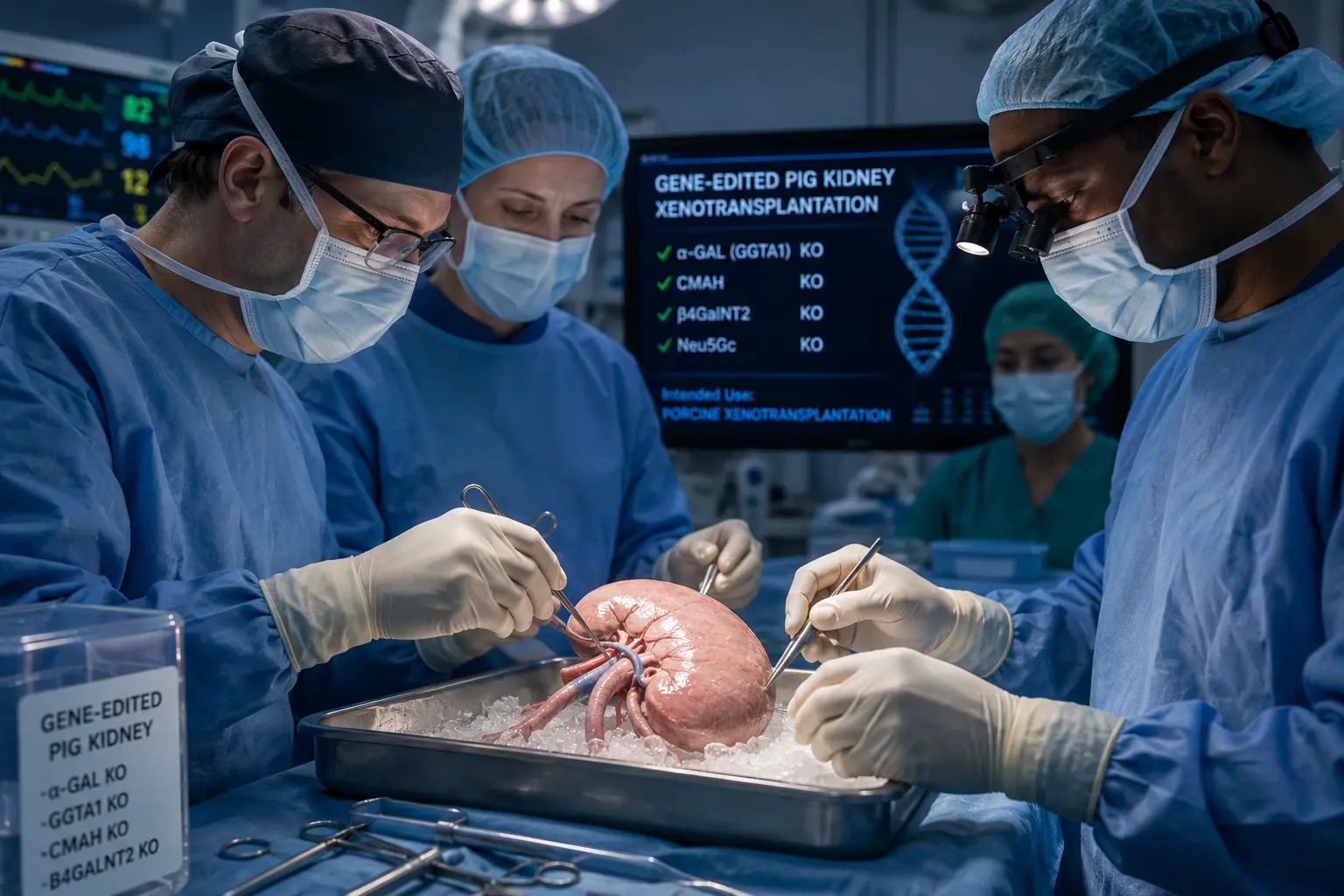

Every ten minutes, a new name is added to the national organ transplant waitlist. For the vast majority of these patients, the wait is a grueling, multi-year ordeal tied to a dialysis machine, entirely dependent on the tragic, unpredictable death of a compatible human donor. The math of the current system is fatal: there simply will never be enough human organs to meet the demand. To solve this, scientists realized they had to stop waiting for donors and start manufacturing them.
Instead of relying on human tragedy, bioengineers are turning to designated, pathogen-free agricultural facilities. By using advanced gene-editing tools to surgically rewrite the DNA of pigs, they have created animals whose kidneys and hearts are virtually indistinguishable to the human immune system. Why should you care right now? Because what was once considered science fiction officially transitioned into regulated human medicine. Throughout 2025 and 2026, the U.S. Food and Drug Administration (FDA) greenlit the first formal clinical trials for gene-edited pig kidneys, moving the technology from isolated “compassionate use” experiments into a standardized pipeline. This breakthrough promises to eradicate the transplant waitlist entirely, transforming end-stage organ failure from a death sentence into a scheduled, curable surgery.
What is Porcine Xenotransplantation?
Porcine xenotransplantation is the medical procedure of transplanting genetically modified pig organs—such as kidneys or hearts—into human patients. Utilizing advanced CRISPR gene-editing to remove animal antigens and insert human proteins, the process prevents immediate immune rejection and aims to provide an unlimited supply of transplantable organs.
At a Glance
- Concept: Surgically removing a failing human organ and replacing it with an organ harvested from a pig that has been genetically “humanized” to trick the recipient’s body into accepting it.
- Why it matters:In the U.S. alone, nearly 90,000 people are waiting for a kidney, and 11 die every day while waiting. Gene-edited animal organs could instantly erase this deficit.
- Who uses it: Leading transplant centers (Mass General, NYU Langone, University of Maryland) in partnership with cutting-edge biotech firms like eGenesis and United Therapeutics (Revivicor).
- Biggest takeaway: A normal pig organ will turn black and die within minutes of being sewn into a human due to “hyperacute rejection.” The entire technology relies on precisely editing out the specific pig sugars that cause this violent reaction.
In Simple Words
Imagine trying to install a piece of Mac software onto an old Windows computer. The computer will immediately recognize the software as foreign, flag it as a threat, and block it from running.
The human immune system works exactly the same way. If you put a standard pig kidney into a human, the human’s immune system instantly sees molecular “tags” on the outside of the pig cells. It sounds the alarm, attacks the kidney, and destroys it in minutes.
Porcine Xenotransplantation works by physically rewriting the software of the pig before it is born. Using gene-editing tools, scientists go into the pig’s DNA and delete the code that creates those foreign “tags.” Then, they write in new code—human code—that tells the pig organ to produce the exact same friendly identification tags that human cells have. When this “humanized” pig kidney is placed into a patient, the patient’s immune system scans it, reads the friendly human tags, and allows the organ to function normally.
Why This Matters
For Biotech Investors and Pharma Executives, the commercialization of xenotransplantation represents a structural disruption of the $30 billion+ dialysis industry.
Currently, a patient with end-stage renal disease (ESRD) costs the healthcare system hundreds of thousands of dollars annually just to be kept alive via mechanical blood filtering (dialysis). The five-year survival rate on dialysis is under 50%. By successfully bringing xenografts to market through FDA-approved Biologics License Applications (BLAs), biotech firms are creating a curative, high-margin product that drastically lowers long-term Medicare expenditures. The companies that hold the foundational patents on these multi-gene edits will effectively control the exclusive supply chain for the ultimate medical commodity: human life extension.
The History of Porcine Xenotransplantation & Zoonosis
The leap to FDA clinical trials in the mid-2020s was predicated on solving a decades-old fear: Zoonosis.
In the 1990s, early xenotransplant research was frozen because scientists discovered that pig DNA contains dormant, ancient viruses called Porcine Endogenous Retroviruses (PERVs). There was a severe fear that transplanting a pig organ into an immunosuppressed human could awaken these viruses, potentially sparking a new, global pandemic.
The breakthrough came via CRISPR-Cas9. Pioneers like Dr. George Church at Harvard University successfully used CRISPR to hunt down and slice out all 62 copies of PERVs from a pig’s genome simultaneously. This unprecedented feat of genomic engineering birthed companies like eGenesis and finally provided the FDA with the safety data required to allow these organs to cross the species barrier.
How Gene-Edited Pig Organs Bypass Immune Rejection
Convincing the human immune system to accept a foreign species requires a symphony of targeted genetic deletions and insertions. Here is the first-principles breakdown of the architecture.
1. The Fundamental Problem: Hyperacute Rejection
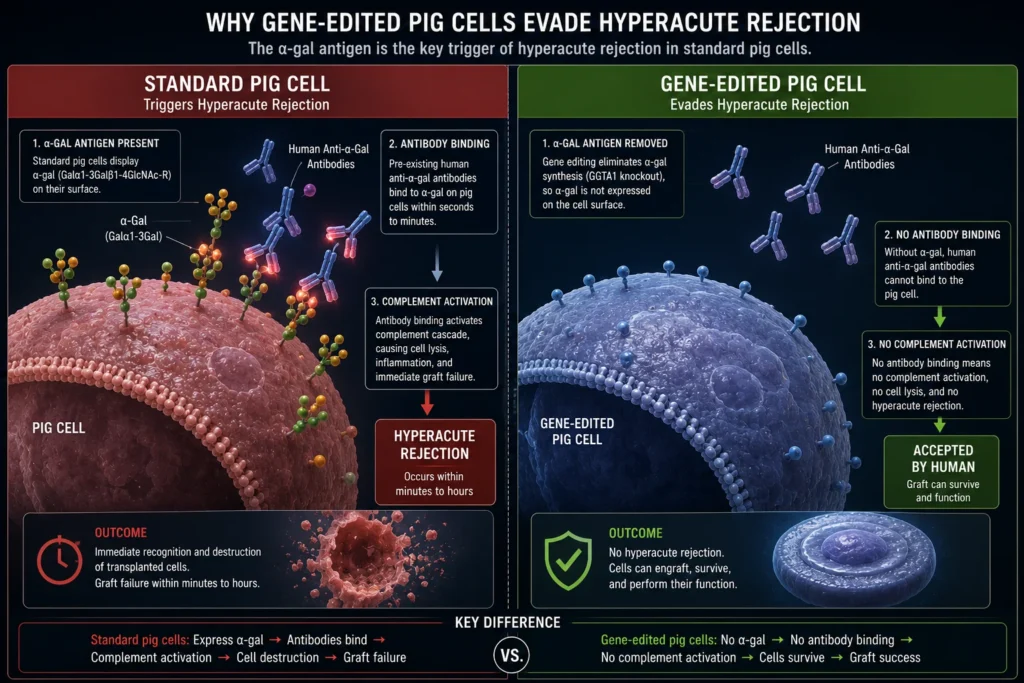
Humans naturally possess high levels of circulating antibodies against specific carbohydrate molecules (glycans) found in lower mammals. The most prominent is galactose-alpha-1,3-galactose (alpha-gal). If a standard pig organ is connected to human blood, these antibodies bind to the alpha-gal on the pig’s blood vessels within minutes, triggering a catastrophic immune cascade that destroys the organ.
2. The Insufficiency of Immunosuppressive Drugs
Standard anti-rejection drugs (like tacrolimus or mycophenolate) used in human-to-human transplants are designed to suppress T-cells over weeks and months. They are completely useless against the immediate, violent antibody response of hyperacute rejection.
3. The Core Mechanism: Glycan Knockouts
The foundation of modern xenotransplantation is the “Triple Knockout” (3KO). Using CRISPR or somatic cell nuclear transfer, scientists delete the pig genes responsible for creating three specific enzymes. This permanently strips the alpha-gal, Neu5Gc, and SDa carbohydrate tags from the surface of the pig’s cells, rendering the organ effectively invisible to the initial wave of human antibodies.
4. Technical Depth: Human Transgene Insertion
Deleting pig tags isn’t enough; the organ must actively tell the human immune system to stand down. Scientists insert human transgenes into the pig’s DNA.
- Complement Regulators (CD46, CD55): These human proteins sit on the surface of the pig cells and deactivate the human “complement system” (a series of proteins that punch holes in foreign cells).
- Coagulation Regulators (Thrombomodulin, EPCR): Pig organs can cause human blood to clot uncontrollably. Inserting human coagulation proteins prevents microscopic blood clots from destroying the xenograft’s delicate filtering vessels.
5. Real-World Consequences: Cloned Biomanufacturing
Once the perfect “founder pig” is engineered with all these edits, scientists use cloning technology to replicate the animal. These pigs are raised in hyper-sterile, designated pathogen-free (DPF) facilities—massive bio-secure warehouses with specialized air filtration—to ensure the animals never contract any outside infections before their organs are harvested for human surgery.
FDA Clinical Trials for Porcine Xenotransplantation
The clinical landscape is currently dominated by two distinct genetic architectures battling for FDA approval.
The 69-Gene Edit Pathway (eGenesis): Targeting absolute safety against zoonosis, eGenesis developed the EGEN-2784 kidney.This organ features 3 glycan knockouts to prevent hyperacute rejection, 7 human transgenes to regulate immune and blood clotting responses, and an astonishing 59 edits to completely inactivate PERVs from the genome.In September 2025, the FDA cleared this 69-edit kidney for a Phase 1/2/3 study targeting dialysis-dependent patients over 50.
The 10-Gene Edit Pathway (United Therapeutics / Revivicor): United Therapeutics argues that PERV inactivation may be unnecessary and focuses strictly on immune compatibility and anatomical control. Their “UKidney” features the standard 3 glycan knockouts, 6 human transgenes, and a critical 10th edit: a knockout of the growth hormone receptor.This ensures the pig kidney doesn’t continue growing inside the human host.Their IND was cleared by the FDA in February 2025, paving the way for their own clinical cohort.
Cardiac Xenotransplantation: While kidneys are the focus of current INDs, the heart is closely following. United Therapeutics’ “UHeart” made history in high-profile compassionate use cases at the University of Maryland. The ability to engineer pig hearts with the exact same 10-gene edits offers a direct lifeline for patients with terminal heart failure who are too sick to survive the human donor waitlist.
Economic & Strategic Impact
The core strategic shift is the transition from Organ Donation to Organ Manufacturing.
For the entire history of medicine, transplantation has been an unpredictable logistical nightmare. A surgeon gets a phone call at 2:00 AM that a donor died in a car crash; a private jet scrambles to retrieve the organ; the organ sits on ice, degrading every minute it spends outside a body.
Xenotransplantation replaces this chaos with scheduled supply chain manufacturing. United Therapeutics recently inaugurated a clinical-scale, designated pathogen-free facility in Virginia capable of producing 125 organs per year. Because the organs are grown to spec, a surgeon can schedule a kidney transplant for a Tuesday at 9:00 AM. The organ is harvested in the adjoining sterile facility at 8:45 AM and implanted with zero ischemic (cold) time. This logistical predictability drastically improves surgical outcomes and allows hospitals to radically scale their transplant volume.
Advantages
- Unlimited Supply: Completely eradicates the artificial scarcity of the human donor waitlist, offering an immediate, curative organ to anyone in end-stage renal or cardiac failure.
- Zero Ischemic Time: Because the surgeries are scheduled and the animals are kept on-site, the organ doesn’t degrade in an ice cooler for hours during cross-country transport, ensuring peak cellular health upon implantation.
- Customizable Genetics: As the technology matures, bioengineers can tailor the organ’s gene edits to match specific human blood types or patient immunologies, further driving down rejection rates.
Limitations
- Complex Immunosuppression Regimens:Despite the heavy gene editing, patients must still take intense, specialized drug cocktails—including complement inhibitors and costimulatory blockers like belatacept—which heavily suppress their natural immune system.
- The Zoonotic Unknown: While PERVs can be edited out, pigs carry other native viruses (such as porcine cytomegalovirus, or pCMV). If a pathogen-free facility suffers a biosecurity breach, a latent animal virus could infect an immunosuppressed human host.
- Anatomical and Physiological Mismatches: Pigs walk on four legs; humans walk on two. The blood pressure required to filter human blood is different than a pig’s. Whether a pig’s delicate kidney nephrons can survive years of upright, high-pressure human blood flow remains unproven.
Common Misconceptions
Misconception: You can just use a normal farm pig for a transplant.
Reality: Normal pig organs are instantly rejected. The pigs used for xenotransplants are highly valuable, multi-million dollar intellectual property assets. They are meticulously cloned, heavily gene-edited, and raised in laboratory-grade sterile bubbles.
Misconception: Pig DNA will mix with the patient’s DNA.
Reality: The genetic edits are confined strictly to the cells of the transplanted kidney or heart. The pig organ filters blood or pumps it, but it does not shed its DNA into the recipient’s reproductive system or alter the human’s own genetic code.
Misconception: We solved the whole problem because of one successful surgery.
Reality: The early compassionate-use surgeries (like Richard Slayman in 2024 or Lisa Pisano) were monumental, but they often ended with complications or patient deaths within months due to secondary infections or late-stage rejection. FDA clinical trials (starting in 2025) are designed specifically to transition these heroic one-offs into long-term, statistically viable science.
What Most People Miss
The critical necessity of the Growth Hormone Receptor (GHR) Knockout.
Early xenotransplant researchers faced a bizarre mechanical problem: pigs grow incredibly fast and get incredibly large (up to 400-600 lbs). If you put a young pig’s kidney into a human, the kidney naturally wants to keep growing to support a 400-lb animal.
What most people miss is that without intervention, the pig kidney will continuously expand inside the human body until it physically crushes the surrounding human organs. To solve this, developers like United Therapeutics specifically engineered a targeted knockout of the porcine growth hormone receptor. This edit essentially “locks” the organ at a standard human size, proving that successful xenotransplantation requires mastering both immunology and physical anatomy.
Comparison Table
| Feature | Human Deceased Donor Allograft | 10-Gene Edit Xenograft (UT UKidney) | 69-Gene Edit Xenograft (eGenesis) |
| Availability | Extreme Scarcity (Waitlist) | Manufactured / Scheduled | Manufactured / Scheduled |
| Glycan Knockouts | N/A | 3 (Prevents hyperacute rejection) | 3 (Prevents hyperacute rejection) |
| Human Transgenes | N/A | 6 (Immune & Coagulation) | 7 (Immune & Coagulation) |
| PERV Inactivation | N/A | No | Yes (59 viral copy edits) |
| Growth Control | N/A | Yes (GHR Knockout) | No / Managed via breed size |
| Current Status | Standard of Care | FDA Phase 1/2 Clinical Trials (2025) | FDA Phase 1/2 Clinical Trials (2025) |
Case Study
Situation: Despite isolated, headline-grabbing “compassionate use” surgeries authorized under emergency expanded access (such as early cases at UMB, NYU, and Mass General in 2022-2024), the biotech industry needed to prove to the FDA that xenotransplantation was safe and reliable enough for the general public.
Challenge: Biotech firms had to demonstrate consistent survival data in non-human primate (baboon) preclinical models and standardize their designated pathogen-free (DPF) manufacturing supply chains before the FDA would allow formal human testing.
Solution (The 2025 FDA IND Clearances): In early to mid-2025, both United Therapeutics and eGenesis crossed the regulatory Rubicon. eGenesis submitted comprehensive safety and efficacy data for their EGEN-2784 kidney, featuring an unprecedented 69 gene edits. Concurrently, United Therapeutics submitted data for their 10-edit UKidney.
Outcome: The FDA officially cleared Investigational New Drug (IND) applications for both companies. These clearances allowed the initiation of Phase 1/2/3 multi-center clinical trials, aiming to enroll dialysis-dependent patients who were otherwise ineligible for human organs or facing imminent mortality on the waitlist.
Lessons Learned: This regulatory milestone proved that xenotransplantation was no longer a fringe scientific experiment. By establishing clear regulatory endpoints (e.g., 24-week organ survival and zoonosis monitoring), the FDA formalized the path to commercialization, establishing a clear framework for how animal organs will be legally integrated into the U.S. healthcare system by the end of the decade.
Future Outlook
Next 12–24 Months
The era of Phase 1 Data and Regimen Refinement. Throughout 2026 and 2027, the medical community will be hyper-focused on the data reading out from the initial cohorts of the eGenesis and United Therapeutics FDA trials. Surgeons will heavily refine the immunosuppressive drug cocktails, finding the exact balance of complement inhibitors and costimulatory blockers (like belatacept) needed to keep the pig organ alive without fatally weakening the patient’s ability to fight off normal colds and flus.
Next 3–5 Years
The scaling of Multi-Organ BLAs. As the kidney trials hit their primary 24-month safety and efficacy endpoints, biotech firms will submit Biologics License Applications (BLAs) to the FDA. Following the kidney’s lead, cardiac (UHeart) and hepatic (liver) xenograft programs will enter their own formal clinical trials. By 2030, the first gene-edited pig kidneys are projected to receive full FDA approval, officially becoming a standard, insurance-covered medical therapy for end-stage renal disease.
Next 10 Years
The Eradication of the Waitlist. By the mid-2030s, the concept of a transplant waitlist will be a historical relic. Mega-facilities capable of breeding thousands of designated pathogen-free, gene-edited pigs will be distributed geographically near major transplant centers across the globe. As costs plummet due to scale, xenotransplantation will transition from a last-resort option for the dying into a front-line elective surgery, saving global healthcare systems billions in chronic dialysis care and radically extending human longevity.
Most Likely Scenario
Xenotransplantation is the most profound surgical advancement since the invention of anesthesia. While the threat of insidious chronic rejection and the ethical complexities of animal organ farming will generate ongoing debate, the staggering mathematical reality of the organ shortage ensures that gene-edited porcine organs will become the primary architecture of transplant medicine in the 21st century.
Key Takeaways
- Porcine xenotransplantation uses CRISPR to edit pig DNA, allowing their organs to be safely transplanted into humans without triggering immediate immune rejection.
- Because standard pig cells contain foreign sugars (like alpha-gal), human antibodies will destroy a normal pig kidney in minutes. Xenotransplantation relies on deleting these sugar genes.
- Advanced organs, like the eGenesis kidney, feature up to 69 edits. This includes inserting human immune proteins and inactivating hidden pig viruses (PERVs) to ensure absolute safety.
- Other architectures, like the United Therapeutics UKidney, use 10 edits, specifically knocking out the pig’s growth hormone receptor to stop the organ from crushing human tissue as it grows.
- In 2025, the FDA officially authorized the first formal clinical trials for both companies, moving the technology past one-off emergency surgeries into the standard pharmaceutical approval pipeline.
- The primary risk moving forward is managing the intense, specialized immunosuppressive drugs required to prevent long-term, chronic rejection over a 10-year lifespan.
Glossary
Allograft: The transplant of an organ or tissue from one individual to another of the same species (e.g., human-to-human).
Alpha-gal: A carbohydrate molecule found in most mammals but absent in humans. It is the primary trigger for the hyperacute rejection of pig organs.
CRISPR-Cas9: A revolutionary gene-editing technology that allows scientists to precisely cut out and replace specific sequences of DNA in a living organism.
Investigational New Drug (IND): The formal authorization from the FDA required to administer an experimental biological product (like a gene-edited kidney) to humans in a clinical trial.
PERV (Porcine Endogenous Retrovirus): Ancient viruses permanently embedded in the DNA of all pigs. eGenesis uses CRISPR to inactivate them to prevent the theoretical risk of infecting humans.
Xenotransplantation: The medical procedure of transplanting living cells, tissues, or organs from one species to another (e.g., pig-to-human).
Frequently Asked Questions
Why do we use pigs instead of monkeys for transplants?
While non-human primates (like baboons) are closer to humans genetically, they grow too slowly, their organs are too small, and they carry a much higher risk of transmitting lethal, cross-species diseases (zoonosis). Pigs reach human size quickly, have organs remarkably similar in size to ours, and are already farmed at an industrial scale.
Can a person with a pig kidney eat pork?
Yes. The gene edits made to the pig organ (like knocking out the alpha-gal sugar) actually make the organ more human-like. Receiving the organ does not create an allergy to pork. (Ironically, a tick bite that causes the alpha-gal syndrome makes humans allergic to regular pork, but they would theoretically not be allergic to the edited pig).
Will the pig kidney keep growing inside the human?
If left unedited, yes, because farm pigs naturally grow to over 400 pounds. To prevent this, companies like United Therapeutics use a targeted gene edit to knock out the growth hormone receptor, permanently locking the kidney at standard human size.
Are these pigs kept on normal farms?
No. The founder pigs are cloned and raised in extreme, bio-secure environments called Designated Pathogen-Free (DPF) facilities. The air and water are hyper-filtered to ensure the pigs are never exposed to outside bacteria or viruses before their organs are harvested.
When will this be available to the general public?
The technology is currently in Phase 1/2 clinical trials as of 2025/2026. If the 24-month safety data holds up, the first Biologics License Applications (BLAs) could be approved by the FDA around the end of the decade, making them widely available in the 2030s.