Advertisement
)

To make the steel and critical metals that build our modern world, we dig dirt out of the ground, mix it with coal, and set it on fire. This ancient, brutal chemistry—known as carbothermic smelting—is responsible for nearly 10% of all global carbon dioxide emissions. For thousands of years, there was no alternative; ripping oxygen away from metals like iron or niobium required carbon to act as a chemical crowbar, permanently linking human infrastructure to massive atmospheric pollution.
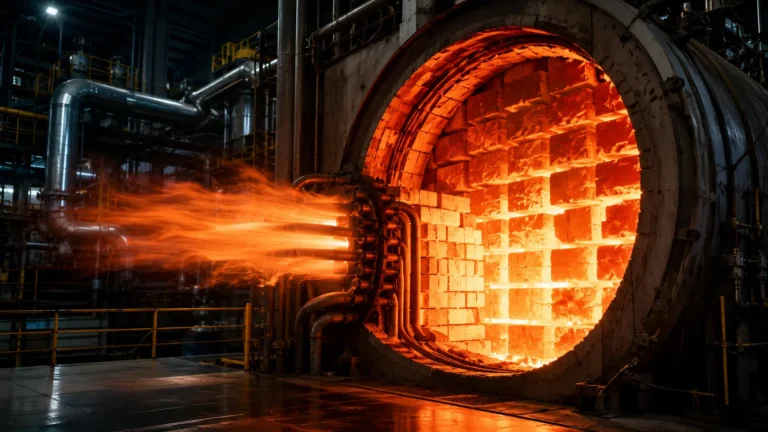
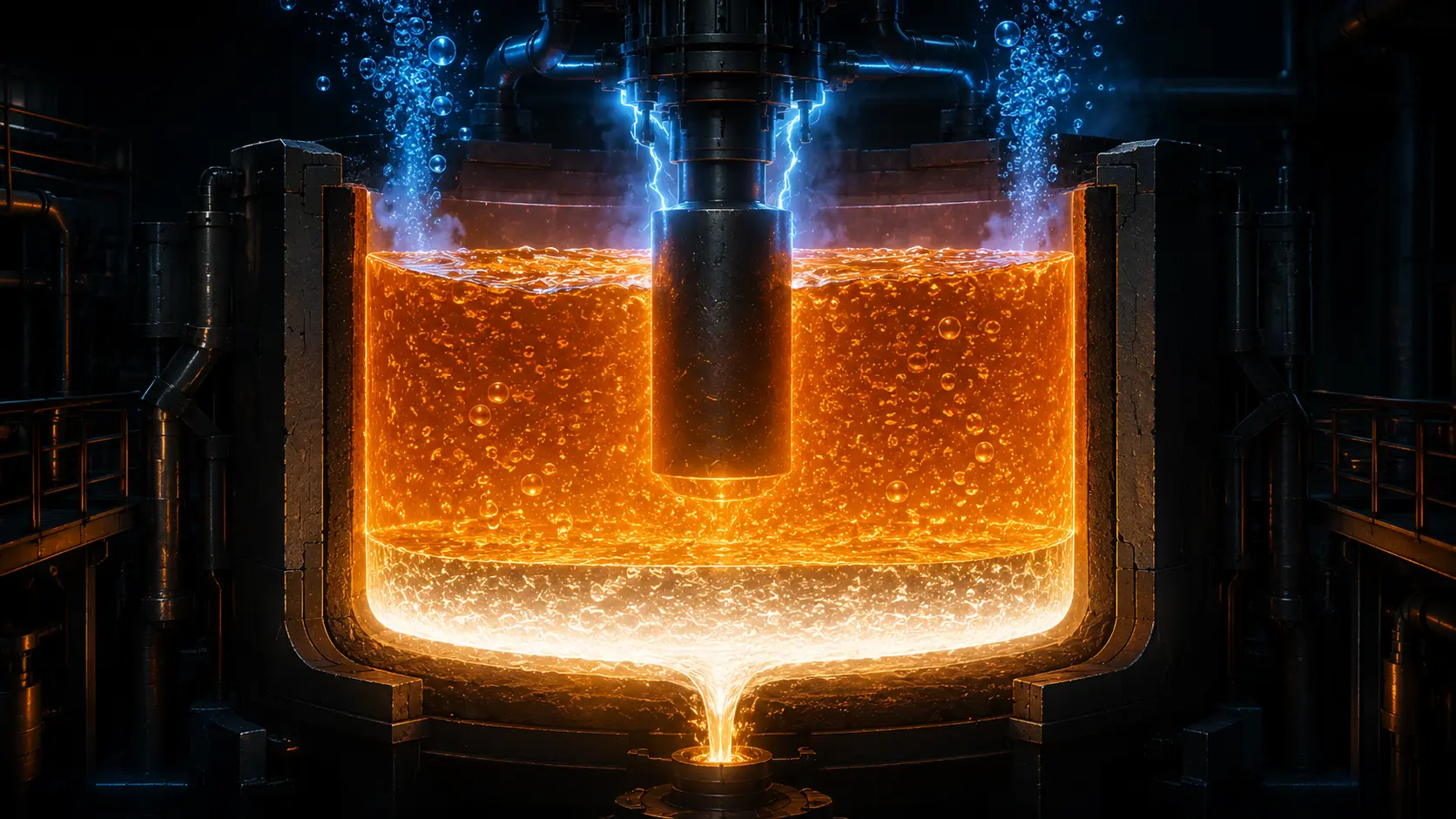
Why should you care right now? Because materials scientists have finally engineered a way to extract ultra-valuable metals from raw dirt using nothing but electricity. By deploying a breakthrough technology known as Molten Oxide Electrolysis (MOE), metallurgical startups are replacing coal-fired blast furnaces with school-bus-sized electrochemical reactors. Operating at a staggering 1,600°C, these liquid reactors shock the metal oxides with electricity, forcing the molecules to shatter. Pure liquid metal pools at the bottom, while pure, breathable oxygen gas vents from the top. This zero-carbon architecture is not only decoupling heavy industry from fossil fuels but is also unlocking billions of dollars in critical defense metals previously trapped in discarded mining waste.
What is Molten Oxide Electrolysis (MOE)?
Molten Oxide Electrolysis (MOE) is an extreme-temperature electrometallurgical process that uses renewable electricity to extract pure liquid metal from metal oxides. By utilizing a liquid electrolyte and a specialized inert anode, the process directly separates the elements, producing high-purity metal at the cathode and emitting pure oxygen gas without requiring carbon as a reducing agent.
At a Glance
- Concept: Running a massive electrical current through a pool of 1,600°C liquid dirt to separate the valuable metal from the oxygen.
- Why it matters: It completely eliminates the need for coal in metal smelting, stopping Scope 1 CO₂ emissions at the source.
- Who uses it: Cutting-edge green metallurgy companies like Boston Metal (an MIT spin-off), critical mineral mining conglomerates, and the U.S. Department of Energy.
- Biggest takeaway: The secret to the technology is the “Inert Anode.” For decades, the metal rods used to shock the liquid would melt or burn up. Scientists finally invented an alloy that can survive the 1,600°C liquid volcano without disintegrating.
In Simple Words
Imagine you have a piece of rust (iron oxide), which is just iron chemically glued to oxygen.
If you want the pure iron, you have to break the glue.
The Traditional Method is throwing the rust into a furnace with coal. The coal burns, grabs the oxygen, and floats away as carbon dioxide (CO₂) smoke, leaving the iron behind. This works, but it causes massive pollution.
Molten Oxide Electrolysis abandons the coal. Instead, it drops the rust into a massive bathtub of 1,600°C liquid salts. Then, it plugs the bathtub into the electrical grid. The intense electrical shock acts as an invisible knife, slicing the glue between the iron and the oxygen. The heavy liquid iron sinks to the bottom where it can be tapped like a keg, and the oxygen simply floats into the air as pure, breathable gas. No coal, no smoke, just pure metal and oxygen.
Why This Matters
For Materials Scientists, Industrial VCs, and Commodity Traders, MOE represents the ultimate Low-Grade Ore Arbitrage.
The world is running out of high-purity metal deposits. Mining companies are sitting on mountains of “tailings”—leftover dirt from old mines that contain tiny, heavily mixed amounts of valuable critical metals like niobium, tantalum, and nickel. Traditional smelting cannot process this low-grade waste; it requires pure, expensive feedstocks.
Because MOE operates on electricity, it can be mathematically tuned. By adjusting the voltage of the reactor, the process can selectively target specific metals within a complex, low-grade soup of liquid dirt. It transforms toxic, worthless mining liabilities into highly lucrative critical metal assets, establishing a closed-loop, hyper-efficient extraction economy.
The Electrification of High-Temperature Metallurgy
Using electricity to extract metal (electrowinning) is not new. The aluminum industry has used it for a century (the Hall-Héroult process). However, aluminum melts at a relatively low 800°C, and the process still relies on carbon anodes that burn up and release CO₂.
Transition metals—like iron, chromium, and niobium—require temperatures exceeding 1,500°C. Building an electrical reactor that can survive these temperatures without the internal components melting or corroding was considered impossible. The successful commercialization of MOE proves that the boundaries of high-temperature electrochemistry have been broken, opening the door to electrify the entirety of the global heavy metals supply chain.
How Molten Oxide Electrolysis (MOE) Works
Achieving a continuous, zero-carbon liquid metal tap at 1,600°C requires mastering thermodynamics and extreme metallurgy. Here is the first-principles breakdown of the architecture.
1. The Fundamental Problem: The Carbon Reductant
In traditional steelmaking, iron ore (Iron Oxide, Fe₂O₃) is fed into a blast furnace along with coke (pure carbon). The carbon strips the oxygen from the iron, resulting in CO₂. If you want to eliminate the CO₂, you must find a way to strip the oxygen without using carbon.
2. The Core Mechanism: The Liquid Electrolyte
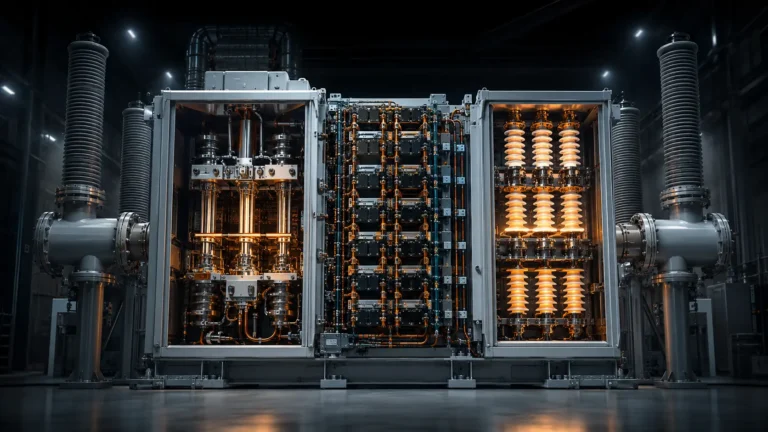
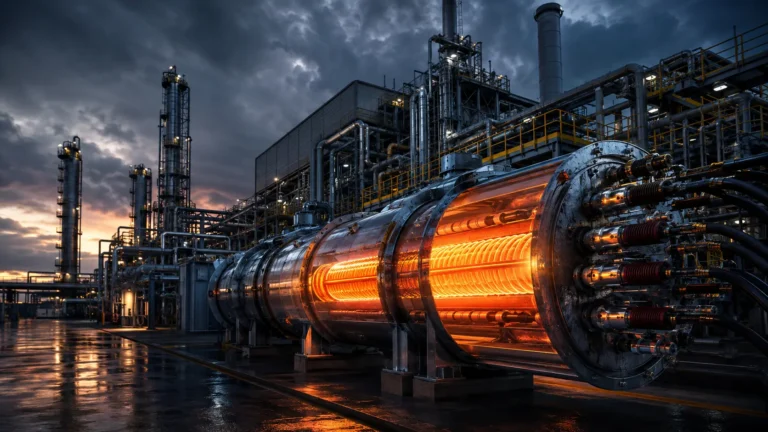
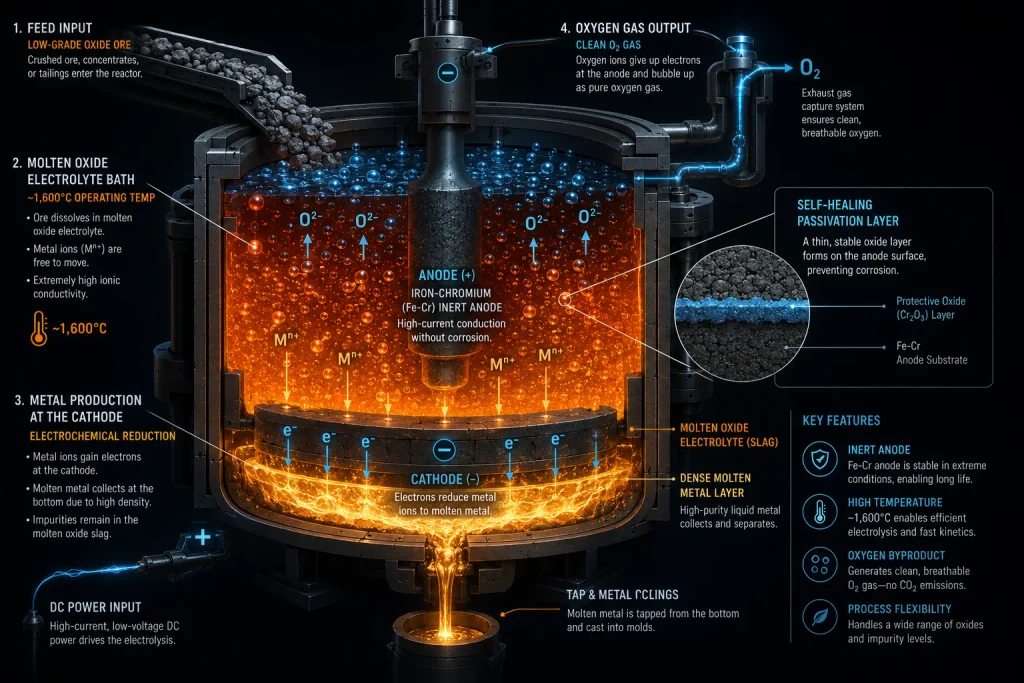
In an MOE reactor (about the size of a school bus), the metal oxide ore is dissolved into a proprietary mixture of molten metal oxides (the electrolyte) maintained at 1,600°C. This immense heat is actually self-sustaining; the resistance of the liquid against the electrical current (Joule heating) keeps the bath permanently molten, meaning no external fires or heaters are needed once the machine is running.
3. Technical Depth: The Inert Anode Breakthrough
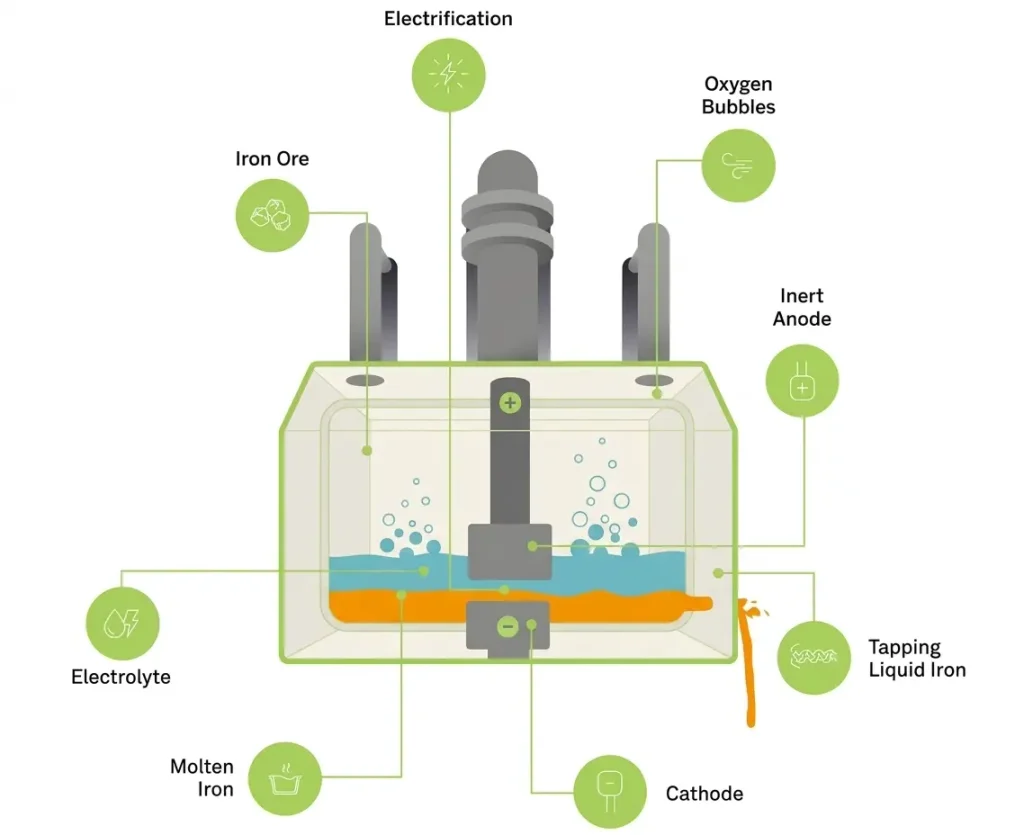
An electrical current must pass from an anode (positive) to a cathode (negative) through the liquid.
In the past, if you put a metal anode into 1,600°C liquid oxygen, it would instantly rust, corrode, and dissolve. In 2012, MIT researchers discovered an iron-chromium alloy that forms a microscopic, self-healing oxide layer on its surface. This layer acts as a permanent shield. The anode becomes “inert”—it conducts electricity perfectly but completely refuses to react with the corrosive liquid or the oxygen gas.
4. Technical Depth: Electrowinning Separation
With the inert anode in place, massive direct current (DC) electricity flows through the bath. The electricity forces a chemical reduction at the cathode. The metal ions grab electrons and turn into pure, neutral liquid metal. Because liquid metal is denser than the electrolyte soup, it sinks to the floor of the reactor.
5. Real-World Consequences: Tapping the Metal
Simultaneously, at the inert anode, oxygen ions dump their electrons and bond together to form O₂ gas, bubbling out of the top of the reactor. The operator simply opens a tap at the bottom of the reactor, and the pure, white-hot liquid metal pours out into a ladle, ready to be cast into ingots. The process bypasses coke ovens, sintering plants, and blast furnaces entirely.
Commercializing MOE: Boston Metal and Green Steel
MOE has graduated from academic theory and is actively deploying into the highest-margin sectors of the global commodity markets.
Boston Metal and Critical Metals in Brazil: Founded by the MIT researchers who perfected the inert anode, Boston Metal is the vanguard of commercial MOE. Rather than starting with cheap commodity steel, their first full-scale commercial deployment is targeting critical metals. At their facility in Minas Gerais, Brazil, they are running MOE reactors to extract highly valuable niobium, tantalum, and tin directly from discarded mining waste (tailings). By generating revenue from dirt that was previously considered a toxic liability, they are proving the unit economics of the technology.
Ultrapure Chromium Production: Critical defense and aerospace applications require ultrapure chromium, which is incredibly difficult to refine without introducing carbon impurities using legacy methods. In late 2023, the U.S. Department of Energy (DOE) selected Boston Metal to negotiate a $50 million grant to build an advanced MOE facility in Weirton, West Virginia. This plant will use MOE to manufacture ultrapure chromium metal natively in the United States, securing a vital node in the defense supply chain.
Green Steel (The Holy Grail): While critical metals prove the technology, the ultimate goal is steel. The global steel industry produces 2 billion tons of metal annually. By replacing the traditional blast furnace with MOE reactors powered by dedicated wind and solar farms, companies can produce high-quality liquid iron entirely free of fossil fuels. As carbon border taxes (like the EU’s CBAM) penalize dirty steel, MOE-produced green steel will command a massive premium from automakers aiming to decarbonize their vehicle supply chains.
Economic & Strategic Impact
The core strategic vulnerability of MOE is the Electrical CapEx and Opex Penalty.
MOE solves the chemistry of smelting, but it demands an astronomical amount of electricity. To produce millions of tons of green steel, an MOE facility requires dedicated, gigawatt-scale power connections.
In regions where electricity is expensive or generated by coal, MOE is economically and environmentally useless. The technology only reaches profitability in geographies with massive, ultra-cheap, stranded renewable energy (such as hydroelectricity in Quebec or solar in Western Australia). The adoption of MOE will force a geographical realignment of the global metals industry, shifting power away from nations with cheap coal and toward nations with boundless, cheap electrons.
Advantages
- Zero Direct Emissions: Emits pure oxygen gas instead of CO₂, completely eradicating Scope 1 emissions from the smelting process.
- Feedstock Flexibility: Traditional furnaces require highly processed, pelletized, premium ores. MOE can melt down raw, unrefined, low-grade dirt and chemically extract the valuable elements.
- Process Simplification: Replaces a sprawling, multi-step facility (coke ovens, sintering plants, blast furnaces, basic oxygen furnaces) with a single, modular electrical reactor that produces liquid metal ready for ladle metallurgy.
- Scalability: Because MOE cells are modular (the size of a bus), a mining company can install a single unit to test viability, and then scale up by simply adding more units side-by-side, avoiding the massive $5 billion upfront risk of building a traditional steel mill.
Limitations
- Inert Anode Fatigue: While the iron-chromium alloys are vastly superior to graphite, surviving a 1,600°C liquid oxygen environment is the most brutal metallurgical test on Earth. The long-term degradation rate and replacement cost of the inert anodes over a multi-year commercial cycle remain closely guarded corporate secrets.
- Massive Electrical Demand: The process requires continuous, heavy baseload electricity. If a renewable power grid fluctuates and the reactor loses power, the 1,600°C liquid metal could freeze solid inside the reactor, completely destroying the machine.
- Economic Margins on Steel: Niobium sells for roughly $40 a kilogram, making it highly profitable to extract via MOE. Crude steel sells for roughly 40 cents a kilogram. Scaling the technology to compete with the ruthless, sub-penny margins of Chinese coal-fired steel production is a monumental financial hurdle.
Common Misconceptions
Misconception: MOE requires green hydrogen.
Reality: Competing green steel technologies (like Direct Reduced Iron, or DRI) require massive amounts of green hydrogen to strip the oxygen from the ore. MOE requires absolutely zero hydrogen, bypassing the complex and expensive hydrogen pipeline supply chain entirely.
Misconception: The electricity is used to heat the metal.
Reality: The primary purpose of the electricity is chemical—it provides the electrons necessary to break the molecular bonds of the iron oxide. The intense heat (Joule heating) is just a convenient byproduct of pushing so much electricity through the resistant liquid.
Misconception: The reactor emits toxic gases.
Reality: Assuming a clean ore feedstock, the only byproduct bubbling out of the molten oxide electrolyte is pure O₂ (oxygen).
What Most People Miss
The disruptive capability of Slag Valorization and Lunar Mining.
When MOE extracts the valuable metal from the dirt, the remaining liquid dirt (the slag) doesn’t just get thrown away. Because the process is so hot and uniform, the remaining slag can be instantly spun into high-quality mineral wool or cast into premium, zero-carbon cement replacements, creating a secondary revenue stream.
Furthermore, NASA and aerospace companies are actively funding MOE research. Why? Because the dirt on the Moon (lunar regolith) is primarily made of metal oxides. By deploying a small MOE reactor to the Moon, astronauts can dump raw moon dirt into the machine, plug it into a solar panel, and extract pure liquid metal to 3D-print a lunar base, while simultaneously capturing the emitted oxygen gas to breathe.
Comparison Table
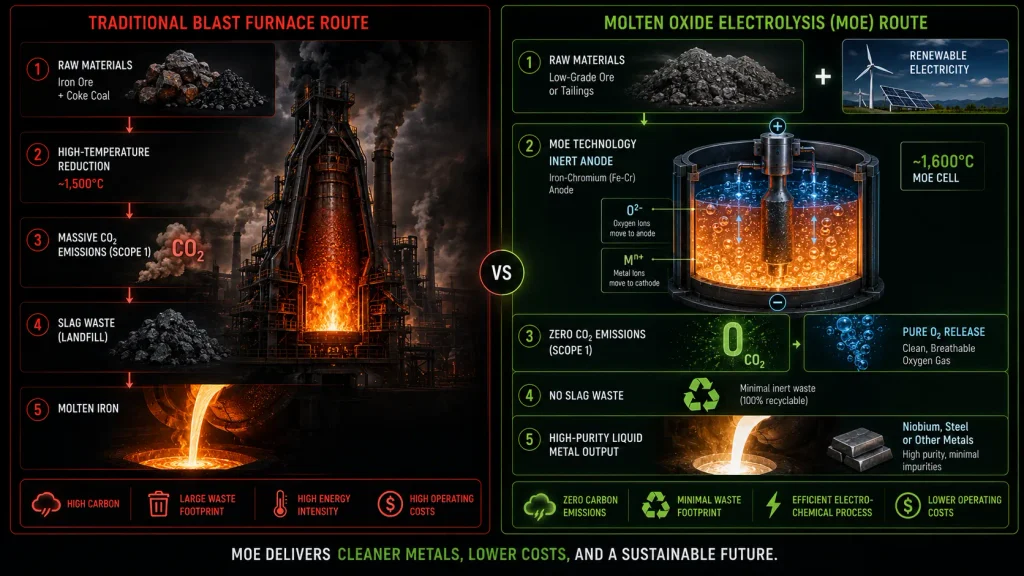
| Feature | Traditional Blast Furnace | Direct Reduced Iron (DRI) | Molten Oxide Electrolysis (MOE) |
| Reducing Agent | Coal / Coke (Carbon) | Green Hydrogen Gas | Electrons (Electricity) |
| Primary Emission | Massive CO₂ | Water Vapor (H₂O) | Pure Oxygen (O₂) |
| Feedstock Requirement | High-Grade, Pelletized Ore | High-Grade, Pelletized Ore | Flexible (Can use low-grade waste) |
| Process Complexity | High (4+ major facility steps) | High (Requires H₂ infrastructure) | Low (Single-step to liquid metal) |
| Primary Economic Hurdle | Carbon Taxes / ESG Bans | Cost of Green Hydrogen | Cost of Continuous Electricity |
Case Study
Situation: The global push to decarbonize heavy industry placed a massive target on the steel and critical metals sector. While Direct Reduced Iron (DRI) using green hydrogen was gaining traction in Europe, it required pristine, high-grade iron ore, which is in short supply globally. Concurrently, mining companies were sitting on millions of tons of hazardous “tailings”—low-grade waste from which extracting residual valuable metals using traditional chemicals was economically unviable.
Challenge: Develop a single-step, zero-carbon smelting architecture capable of operating at 1,600°C, resilient enough to process complex, low-grade mining waste, and reliant solely on electricity rather than volatile hydrogen or coal supply chains.
Solution (The Boston Metal Commercialization): Stemming from foundational research by Dr. Donald Sadoway at MIT, Boston Metal was formed to commercialize Molten Oxide Electrolysis. They perfected the design of a proprietary inert anode using an iron-chromium alloy capable of surviving the violent, oxygen-evolving environment of the molten bath. In 2024, they initiated the construction of an industrial MOE plant near São João del Rei in Minas Gerais, Brazil.
Outcome: The Brazilian facility was designed specifically to target high-margin critical metals. By dissolving the local mining waste into the 1,600°C electrolyte, Boston Metal proved the system could selectively recover high-value niobium, tantalum, and tin. The success of this modular approach attracted massive capital, allowing the company to secure federal DOE funding to design an ultrapure chromium facility in the United States, effectively validating the unit economics of MOE for critical metal recovery.
Lessons Learned: The deployment validated that the transition to green metallurgy does not have to start with low-margin commodity steel. By leveraging the extreme selectivity of electrochemical extraction on high-value, low-grade critical metals, the industry can fund the R&D necessary to eventually scale the technology to challenge the global blast furnace monopoly.
Future Outlook
Next 12–24 Months
The era of Critical Metal Validation. In the immediate term, all eyes will be on the operational uptime of Boston Metal’s Brazilian and U.S. facilities. The primary metric for success will not be the purity of the metal (which is already proven), but the mechanical survival rate of the refractory linings and the inert anodes during continuous, multi-month industrial operation. If the reactor can run without requiring frequent, expensive shutdowns for parts replacement, industrial venture capital will aggressively greenlight the technology for broader deployment.
Next 3–5 Years
The scaling of Boutique Green Steel Alloys. Before taking on the massive rebar and structural steel markets, MOE will target high-end, specialty steel alloys used in aerospace and advanced manufacturing. Because MOE operates without carbon, it completely eliminates carbon contamination in the final metal. Foundries will use MOE to produce ultra-clean, bespoke metal alloys that command a high price premium, subsidizing the operational footprint while establishing the supply chain logistics required for heavier manufacturing.
Next 10 Years
The Stranded Renewable Mega-Foundry. By the mid-2030s, the geographical map of global steel production will be redrawn. We will see the construction of massive MOE mega-foundries located explicitly in regions with excess, stranded renewable energy (such as remote solar deserts or massive offshore wind hubs). Because electricity will be virtually free in these localized zones, the operating cost of the MOE reactors will plummet, finally allowing zero-carbon liquid steel to undercut the price of Chinese coal-fired steel on the global commodity markets.
Most Likely Scenario
Molten Oxide Electrolysis represents the final stage of industrial electrification. It proves that there is no chemical process on Earth that strictly requires the burning of fossil fuels. As global carbon borders (CBAM) tax dirty imports, and as the demand for critical defense metals surges, MOE will transition from an MIT laboratory experiment into the foundational smelting architecture of the 21st century, permanently severing the tie between metal production and atmospheric destruction.
Key Takeaways
- To make metals like steel or niobium, the industry burns coal to strip the oxygen away from the metal ore, releasing billions of tons of CO₂.
- Molten Oxide Electrolysis (MOE) replaces the coal furnace with a giant electrical reactor. It drops the ore into a 1,600°C liquid bath and shocks it with intense electricity.
- The electricity acts as a chemical knife, separating the pure liquid metal (which sinks to the bottom) from the oxygen (which bubbles out the top as breathable air).
- The breakthrough that made this possible is the “Inert Anode”—a special metal rod that pushes the electricity into the liquid without melting or rusting in the extreme heat.
- MOE is incredibly valuable for mining companies because it can extract expensive critical metals (like niobium and chromium) out of low-grade dirt and discarded waste that traditional furnaces cannot process.
- While MOE perfectly solves the pollution problem, it requires massive amounts of continuous electricity, meaning it is only profitable in regions with abundant, cheap renewable power.
Glossary
Carbothermic Reduction: The ancient and highly polluting process of using carbon (coal or coke) in a blast furnace to strip oxygen away from metal ore, producing CO₂.
Direct Electrowinning: The process of using electricity to extract a metal directly from its ore dissolved in a liquid. MOE is an extreme-temperature version of this.
Electrolyte: The liquid soup inside the reactor that holds the dissolved metal ore and allows electricity to flow between the anode and cathode.
Inert Anode: The holy grail of MOE technology. A metallic or ceramic rod that pushes electricity into the 1,600°C liquid without melting, reacting, or producing carbon dioxide.
Joule Heating: The process where the physical resistance of a material against the flow of electricity generates intense heat. This is what keeps the MOE reactor at 1,600°C without any external fires.
Scope 1 Emissions: The direct greenhouse gases emitted by a factory. By emitting pure oxygen instead of CO₂, an MOE reactor reduces its smelting Scope 1 emissions to absolute zero.
Sources
Boston Metal: Molten Oxide Electrolysis (MOE) Technology Overview
MIT Department of Materials Science: Electrolysis of Molten Iron Oxide with an Inert Anode
MDPI (Metals Journal): Iron Production by the Use of Molten Salt Electrolysis
U.S. Department of Energy (DOE): Advanced Industrial Decarbonization and Electrification
Canary Media / MIT Technology Review: Scaling Zero-Carbon Steel and Critical Metals