Advertisement
)
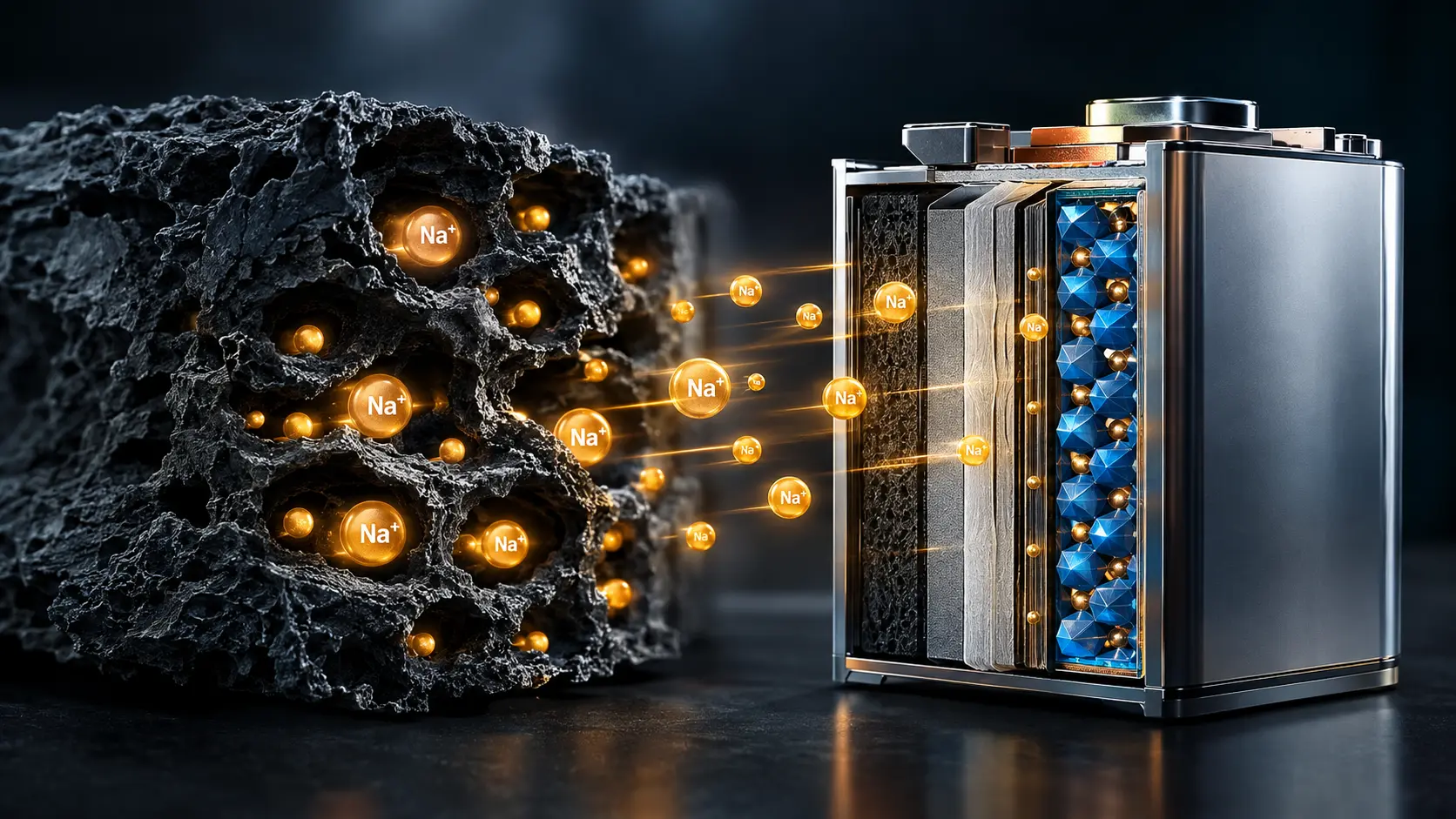

The global clean energy transition is currently held hostage by a single, geographically concentrated element: lithium. To back up the world’s electrical grid with solar and wind energy, humanity must build terawatt-hours of massive, stationary battery farms. But relying on lithium for these massive grid batteries creates a devastating supply chain bottleneck, pitting electric vehicle (EV) manufacturers against utility companies in a bidding war for a finite resource. We cannot mine lithium fast enough to do both.
Why should you care right now? Because battery engineers have successfully swapped lithium for one of the most abundant elements on the planet: sodium. By physically altering the microscopic structure of carbon to perfectly fit these slightly larger salt ions, scientists have unlocked the commercialization of Sodium-Ion Batteries (SIBs). These “hard carbon” batteries bypass the lithium supply chain entirely, utilize cheap aluminum wiring, and can safely be drained to absolute zero volts for shipping. They are the dirt-cheap, highly scalable missing link required for grid scale battery storage to permanently decarbonize the power grid, and they are entering mass production today.
What are Sodium-Ion Batteries (SIBs)?
Sodium-Ion Batteries (SIBs) are rechargeable energy storage devices that use sodium ions to carry electrical charge instead of lithium. To accommodate the larger physical size of sodium ions, SIBs replace traditional graphite anodes with disordered “hard carbon” structures, enabling cheap, mass-scalable battery production using globally abundant salt.
At a Glance
- The Physics Problem: Sodium is incredibly cheap, but the sodium ion is physically too fat to slide into the standard graphite anodes used in modern batteries.
- The Hard Carbon Solution: Engineers “mess up” the carbon structure. By using non-graphitizable “hard carbon,” they create large, chaotic microscopic voids that easily swallow the larger sodium ions.
- The Material Mechanism: SIBs eliminate the need for cobalt, nickel, and copper—the three most expensive and geopolitically sensitive metals in standard battery manufacturing.
- The Strategic Value: SIBs possess lower energy density than lithium (they are heavier), making them suboptimal for long-range EVs. But for stationary grid storage—where weight does not matter, but cost matters everything—they are the undisputed future.
In Simple Words
Imagine a battery anode like a parking garage.
In a standard Lithium-Ion Battery, the garage is made of Graphite. Graphite has perfectly straight, neatly stacked floors with very low ceilings. Lithium ions are like sports cars—they are small, low to the ground, and can easily zip in and out of these tight parking spaces.
If you try to put Sodium ions into that same garage, you have a problem. Sodium ions are like delivery trucks. If you try to force them into the low-ceiling graphite parking garage, they physically crack the concrete and destroy the building.
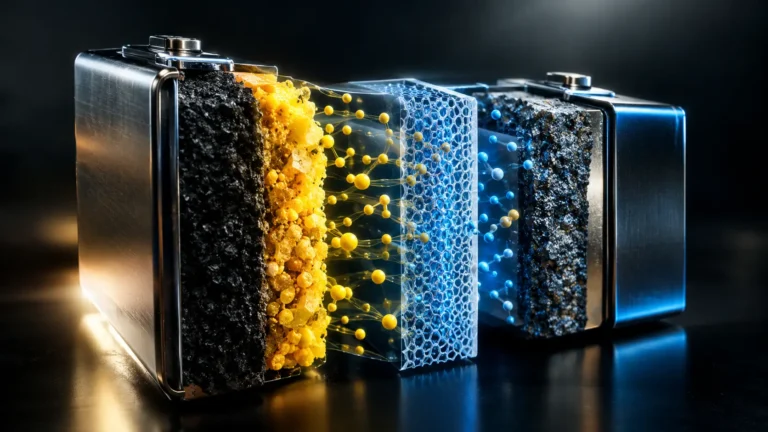
To build a Sodium-Ion Battery, engineers invented Hard Carbon. Instead of perfectly stacked floors, hard carbon looks like a messy house of cards. The floors are slanted, chaotic, and propped open, creating massive, high-ceiling caverns (nanopores). The delivery trucks (sodium ions) can easily drive in, park, and back out thousands of times without damaging the structure. By changing the shape of the parking garage, we can now power the world using cheap, abundant salt.
Why This Matters
For Battery Engineers, Cleantech VCs, and Utility Planners, SIBs resolve the Commodity Volatility Trap.
Building a billion-dollar BESS sodium ion facility for a utility grid requires predictable capital expenditure (CapEx). Over the last decade, lithium carbonate prices have experienced violent, triple-digit percentage price swings based on geopolitical tensions, mining strikes, and EV demand surges. You cannot plan a 20-year utility infrastructure rollout when your primary raw material triples in price overnight.
Sodium carbonate (soda ash) costs less than $300 a ton and is virtually infinite. Furthermore, SIBs use iron and manganese for their cathodes instead of conflict-mined cobalt or expensive nickel. For Cleantech VCs, SIBs represent the ultimate decoupling. They detach the cost of energy storage from the volatile global commodities market, establishing an absolute, rock-bottom price floor for stationary electricity storage.
Micro-Insight: Lithium is for mobility, where weight is penalized. Sodium is for the grid, where cost is the only metric that truly matters.
The Bifurcation of Lithium vs Sodium Battery Markets
We are witnessing the Bifurcation of the Battery Market.
For the last 30 years, the lithium-ion battery dominated everything from Apple AirPods to Tesla Model 3s to massive grid batteries. It was a one-size-fits-all monopoly. Ensure it strictly reads: “The commercialization of the hard carbon anode marks. High-performance, weight-sensitive applications (aerospace, long-range EVs, consumer electronics) will retain lithium. Stationary, weight-agnostic applications (grid storage, backup data center power, low-speed urban transit) will rapidly transition to sodium. The battery market is no longer a monopoly; it is a dual-chemistry ecosystem.
How Sodium-Ion Batteries (SIBs) Work
Forcing an oversized ion to seamlessly charge and discharge without degrading the battery requires a masterpiece of materials science. Here is the first-principles breakdown of the architecture.
1. The Fundamental Problem: The Intercalation Bottleneck
In a rechargeable battery, ions move from the cathode to the anode when charging. This process is called intercalation (slipping the ion between the layers of the anode material). Standard graphite has an interlayer spacing of 0.335 nanometers. A lithium ion easily slides in. A sodium ion is roughly 25% larger by volume. When voltage forces sodium into graphite, it causes massive volumetric expansion, pulverizing the anode after just a few charge cycles.
2. The Core Mechanism: Hard Carbon Synthesis
To solve this, engineers use “Hard Carbon.” Unlike graphite, which is mined or synthetically crystallized at extreme heat, hard carbon is created by burning organic polymers (like resin, pitch, or even agricultural waste like coconut shells) at lower temperatures (~1,000°C to 1,500°C). Because it is not fully heated into perfect crystals, the carbon sheets remain stubbornly disordered, cross-linked, and full of microscopic voids. It is physically impossible to graphitize it—hence the name “hard” carbon.
3. Technical Depth: The “Adsorption-Intercalation-Pore Filling” Model
When a SIB charges, the large sodium ions behave differently than lithium. They enter the hard carbon in phases:
- Adsorption: First, sodium ions stick to the chaotic, defective edges of the carbon sheets.
- Intercalation: Next, some squeeze into the slightly widened gaps between the slanted carbon layers.
- Pore Filling (The Secret Weapon): Finally, as the voltage drops near zero, massive amounts of sodium ions flood into the large, empty microscopic caverns (nanopores) created by the “house of cards” structure, clustering together like metallic sodium pools. This pore-filling mechanism is responsible for the massive capacity of the hard carbon anode.
Plain-English Takeaway: Hard carbon doesn’t just squeeze the sodium between layers; it traps vast pools of it inside microscopic caves, allowing the battery to hold a massive electrical charge without physically swelling.
4. Technical Depth: Cathode Selection
While hard carbon solves the anode, the cathode requires an equally cheap material. The industry has converged on two primary options:
- Layered Transition Metal Oxides: Similar to lithium cathodes but substituting cheap iron and manganese. They offer higher energy density but lower cycle life.
- Prussian Blue Analogues (PBAs): A deeply fascinating crystal structure that forms massive, open molecular frameworks (like microscopic scaffolding). Sodium flows through the scaffolding with almost zero physical resistance, allowing PBAs to charge and discharge at incredibly fast speeds, though they are highly sensitive to moisture during manufacturing.
5. Real-World Consequences: 0-Volt Safe Transport
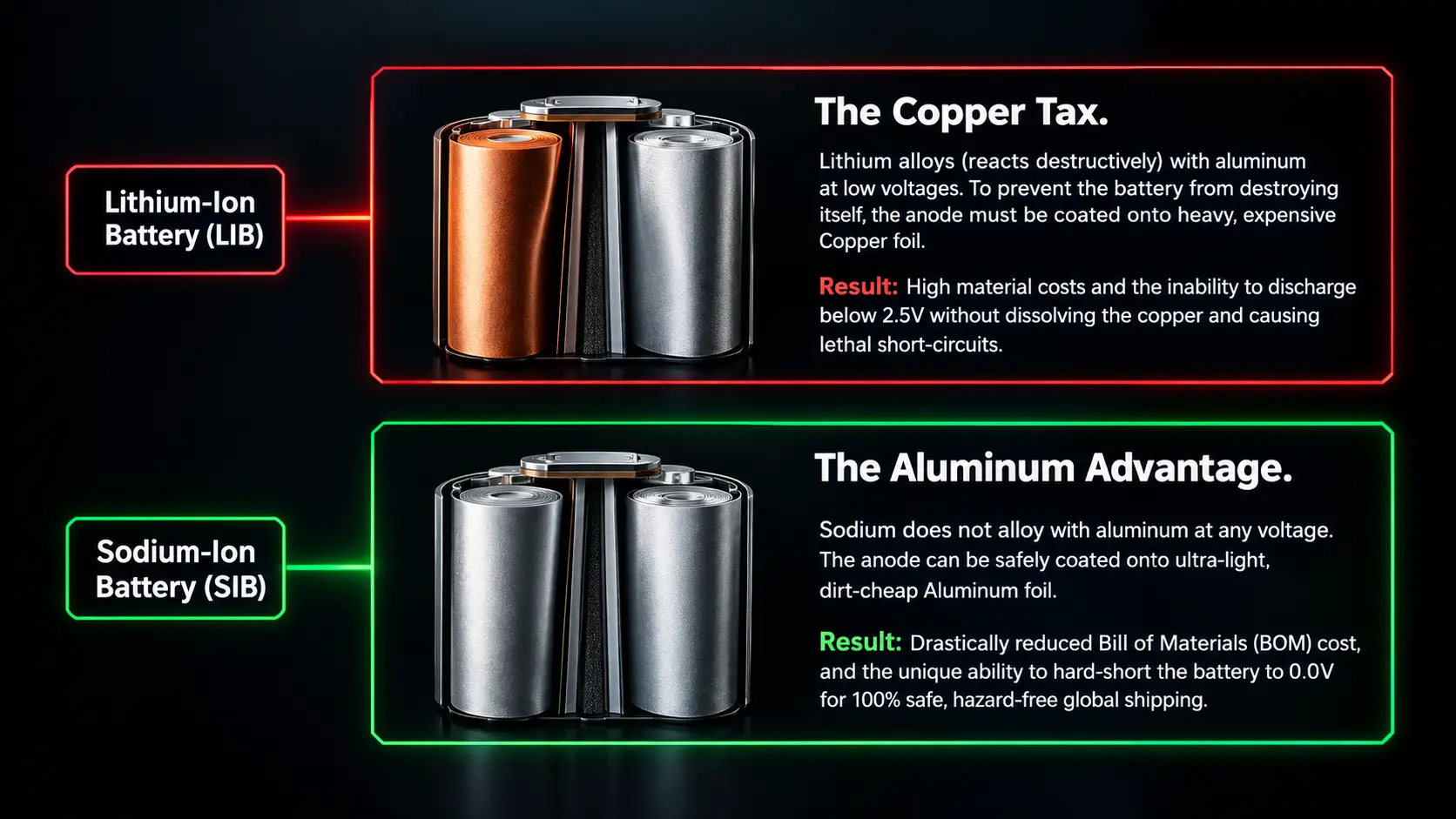
A hidden superpower of SIBs lies in their discharge capability. If you drain a Lithium-Ion battery to 0 Volts, the internal copper current collector dissolves. When you try to recharge it, the dissolved copper forms spikes (dendrites) that short-circuit the battery, causing a lethal fire. Therefore, lithium batteries must be shipped partially charged (around 30%), classifying them as dangerous, highly regulated hazardous cargo.
Because sodium uses aluminum instead of copper, a SIB can be drained to absolute 0.0 Volts with zero damage. It can be shipped across the ocean as completely inert, safe cargo, drastically lowering global logistics costs.
Ion Intercalation Simulator
Graphite vs. Hard Carbon Anode Mechanics in Battery Systems
Charge Carrier Ion
Lithium (Small)
Sodium (Large)
Anode Structure
Crystalline Graphite
Hard Carbon
Structural Stress
0.0%
Charge Capacity
0 mAh/g
Intercalation Status
IDLE
Atomic Lattice & Ion Flow
READY
Capacity & Structural Integrity Over Time
Real-World Applications
The hard carbon transition has officially moved from the laboratory to megawatt-scale industrial deployments.
CATL’s AB Battery Packs: Contemporary Amperex Technology Co. Limited (CATL), the world’s largest battery manufacturer, is rolling out first-generation SIBs for electric vehicles. Because early SIBs have a slightly lower energy density than lithium, CATL uses an “A-B” pack integration. They place both lithium-ion and sodium-ion cells inside the exact same EV battery pack. The battery management system (BMS) uses the sodium cells for extreme cold weather performance and rapid acceleration, while relying on the lithium cells for long-range cruising, perfectly bridging the gap for consumer adoption.
Grid-Scale BESS (China Datang): In 2024, China Datang Corporation connected a 50 MW / 100 MWh sodium-ion battery energy storage system to the grid in Hubei province. Utilizing over 40,000 large-format hard carbon SIB cells, the facility stores excess solar power during the day and discharges it at night. This proves that gigawatt-hour scale sodium infrastructure is structurally sound, chemically stable, and capable of replacing lithium for bulk renewable shifting.
Micro-Mobility and Two-Wheelers: Brands like Yadea and NIU are replacing the heavy, toxic lead-acid batteries in millions of electric scooters and e-bikes with sodium-ion packs. SIBs are vastly lighter than lead-acid, charge in a fraction of the time, and operate flawlessly in freezing temperatures, immediately capturing the micro-mobility market across Asia and Europe.
Economic & Strategic Impact
The core strategic consequence of SIBs is The De-weaponization of the Battery Supply Chain.
Lithium, cobalt, and nickel are geopolitically fraught. The vast majority of these critical minerals are mined in a handful of countries (Australia, Chile, DRC) and refined almost exclusively in China. This creates a severe strategic vulnerability for the US and Europe.
Sodium-ion batteries dismantle this choke point. The cathode uses iron and manganese; the anode is hard carbon made from agricultural waste or petroleum coke; the electrolyte is simply salt. A nation does not need a massive mining industry to build a sodium-ion gigafactory. SIB technology effectively democratizes energy storage, allowing any nation with basic chemical manufacturing to achieve complete sovereign energy independence.
Advantages of Grid Scale Sodium-Ion Battery Storage
- Abundant and Cheap: Sodium is the 6th most abundant element on Earth. It costs literally pennies per kilogram compared to highly volatile lithium pricing.
- Extreme Cold Performance: SIBs exhibit phenomenal low-temperature kinetics. While lithium batteries lose half their range and refuse to fast-charge at -20°C, SIBs retain over 90% of their capacity and charge safely in freezing environments.
- 0-Volt Safe Logistics: The ability to use aluminum current collectors on the anode allows SIBs to be hard-shorted to 0.0V for absolutely safe, unclassified global transport without the risk of thermal runaway.
- Fast Charging: The unique pore-filling mechanism of hard carbon allows sodium ions to move with surprisingly low resistance, allowing SIBs to charge from 10% to 80% in under 15 minutes without plating.
Limitations of Hard Carbon SIBs
- Lower Energy Density: Sodium ions are heavy and large. First-generation SIBs cap out around 140–160 Wh/kg, whereas advanced lithium-ion cells exceed 250–300 Wh/kg. They are simply too heavy for aerospace or 400-mile range electric trucks.
- Hard Carbon Supply Chain: While the raw material (carbon) is cheap, the specific high-temperature pyrolysis process required to consistently manufacture highly uniform hard carbon at scale is currently a severe manufacturing bottleneck.
- Lack of Cycle Life Maturity: Lithium Iron Phosphate (LFP) batteries can now survive 8,000 to 10,000 charge cycles. Current commercial SIBs typically last between 3,000 and 5,000 cycles. Closing this longevity gap is essential for 20-year grid storage amortization.
Takeaway: Sodium-ion will never beat Lithium-ion in a race for maximum range or minimum weight. It wins entirely on the economics of scale, cold-weather resilience, and total supply chain security.
Common Misconceptions
Misconception: Sodium-ion batteries use table salt (NaCl).
Reality: You cannot just dump Morton’s salt into a battery. The batteries use specialized, synthesized sodium salts (like Sodium Hexafluorophosphate, NaPF₆) dissolved in advanced organic solvents, very similar to standard lithium electrolytes.
Misconception: They are completely fireproof.
Reality: While they are safer to transport at 0V, when fully charged, SIBs still use highly flammable liquid organic electrolytes. They are much safer than Nickle-Cobalt lithium batteries, but a severe physical puncture can still cause a fire. (True fireproof status requires a solid-state electrolyte).
Misconception: Sodium batteries are a brand-new technology.
Reality: Research on SIBs occurred parallel to lithium in the 1980s. The industry largely abandoned sodium because early portable electronics (like camcorders and cell phones) demanded the absolute lightest battery possible, leading lithium to win the initial 1990s commercialization race.
What Most People Miss
The disruptive capability of The Aluminum Current Collector Pivot.
In traditional lithium-ion manufacturing, the anode is coated onto copper foil. Copper is incredibly heavy and highly expensive, accounting for up to 10% of the raw material cost of the entire battery cell. Lithium forces you to use copper because if you put lithium onto aluminum at low voltages, the lithium eats the aluminum, forming an alloy and destroying the cell.
Sodium does not alloy with aluminum. This quirk of chemistry allows SIB manufacturers to coat both the cathode and the anode on standard, dirt-cheap, ultra-light aluminum foil. This single material substitution strips massive cost and weight out of the cell design, permanently altering the bill of materials (BOM) economics of global battery manufacturing.
Comparison Table
| Feature | Lithium-Ion (LFP) | Sodium-Ion (SIB) |
| Charge Carrier Ion | Lithium (Li⁺) | Sodium (Na⁺) |
| Anode Material | Crystalline Graphite | Disordered Hard Carbon |
| Anode Current Collector | Heavy, Expensive Copper | Light, Cheap Aluminum |
| Energy Density | High (~160 – 200 Wh/kg) | Moderate (~120 – 160 Wh/kg) |
| Transport Safety | Hazardous (Shipped at 30% charge) | 100% Safe (Shipped at 0.0V) |
| Extreme Cold (-20°C) | Poor performance / Risk of plating | Excellent (>90% capacity retention) |
Future Outlook
Next 12–24 Months
The era of Micro-Mobility and LFP Price Wars. Over the next two years, SIBs will achieve massive scale in the two-wheeler and micro-mobility markets in Asia. However, because lithium prices have recently crashed, cheap Lithium Iron Phosphate (LFP) batteries will fiercely defend their market share in the EV space. SIB manufacturers will focus on optimizing hard carbon yields to aggressively push prices below the $50/kWh threshold, making them mathematically untouchable by lithium.
Next 3–5 Years
The scaling of The BESS Grid Monoliths. By 2029, utility-scale Battery Energy Storage Systems (BESS) will firmly pivot to sodium. Megawatt-scale solar farms require immense batteries to shift afternoon solar generation into evening peak demand. Because physical weight and footprint are irrelevant in a stationary concrete facility, utility developers will overwhelmingly choose SIBs to secure 0V safe transport, remove copper costs, and insulate themselves from geopolitical lithium supply shocks.
Next 10 Years
The Solid-State Sodium Revolution. By the mid-2030s, researchers will successfully marry the cheap cost of sodium with the absolute safety of solid-state electrolytes. By replacing the flammable liquid solvent with a solid ceramic or polymer sodium-ion conductor, these future batteries will become entirely fireproof. This will allow massive battery banks to be safely installed in the basements of residential high-rises and hyper-dense urban data centers, achieving the ultimate goal of distributed, invisible, omnipresent energy storage.
Most Likely Scenario
The world cannot transition to a 100% renewable grid if energy storage relies exclusively on a scarce, expensive, and heavily localized element. The physics of hard carbon solved the volumetric bottleneck of the sodium ion, transforming an abundant ocean salt into a viable grid-scale battery. While lithium will forever own the skies and the highways, sodium-ion batteries will quietly inherit the earth, serving as the massive, invisible, dirt-cheap anchor of the 21st-century power grid.
Key Takeaways
- Sodium is thousands of times more abundant than lithium, but the sodium ion is physically too large to fit into the standard graphite anodes used in today’s batteries.
- Engineers solved this by inventing “Hard Carbon,” a disorganized, chaotic carbon structure with large microscopic voids (nanopores) that perfectly swallow the bulky sodium ions.
- Because sodium does not chemically react with aluminum, SIBs can eliminate expensive, heavy copper wiring entirely, using cheap aluminum for both the positive and negative ends.
- This aluminum quirk allows SIBs to be completely drained to 0.0 Volts without destroying themselves, unlocking entirely safe, unclassified global shipping.
- While they are slightly too heavy for long-range electric vehicles, SIBs are the ultimate cheap, infinitely scalable solution for stationary grid storage (BESS) and backup power.
Glossary
Adsorption: The process where ions or molecules adhere to the surface of a material rather than fully embedding inside it.
Current Collector: The metal foil (copper or aluminum) inside a battery that conducts the electrical current away from the active chemical materials and out to the device being powered.
Graphite: A highly ordered, crystalline form of carbon made of perfectly stacked sheets (graphene). Perfect for small lithium ions, but too tight for large sodium ions.
Hard Carbon: Non-graphitizable carbon with a chaotic, disorganized structure. It features massive microscopic voids (nanopores) that allow large sodium ions to pool inside without breaking the material.
Intercalation: The physical process of an ion sliding into the gaps between the molecular layers of a battery’s anode or cathode during charging and discharging.
Prussian Blue Analogue (PBA): A type of crystal structure used in SIB cathodes. It features a massive, open molecular scaffolding that allows sodium ions to flow through it extremely fast, enabling rapid charging.
Sources
Nature Energy: Rational design of hard carbon anodes for sodium-ion batteries
Joule: The role of nanopores in hard carbon for sodium-ion batteries
Contemporary Amperex Technology Co., Limited (CATL): First Generation Sodium-Ion Battery Whitepaper
Advanced Materials: Prussian Blue Analogues for High-Rate Sodium-Ion Storage
Department of Energy (DOE) – Argonne National Lab: Supply Chain Resiliency and the Sodium-Ion Alternative