Advertisement
)

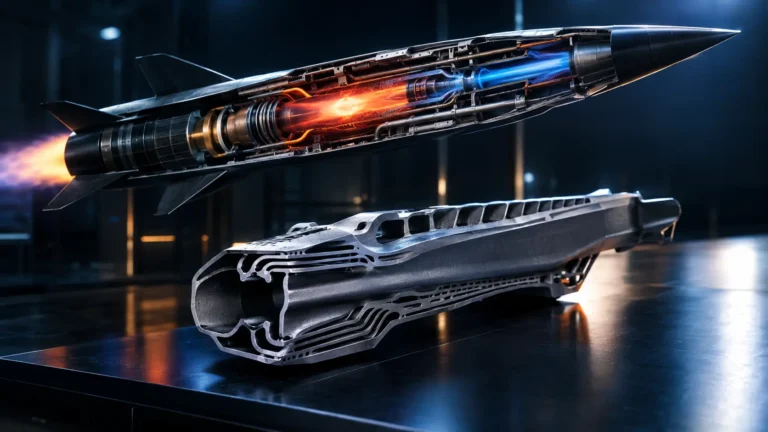
If a global superpower conflict erupts tomorrow, the United States will run out of precision-guided munitions in less than three weeks. The bottleneck halting the restocking of the American arsenal is not a lack of microchips, software, or steel. It is the rocket’s fuel. For seventy years, the defense industry has manufactured Solid Rocket Motors (SRMs) using an antiquated, highly dangerous baking recipe. Contractors mix hundreds of gallons of explosive slurry in giant metal vats, pour it into a steel tube like cake batter, and bake it in massive ovens for weeks. If the military needs a missile with a different flight profile, engineers must spend months machining custom metal molds.
Why should you care right now? Because the Pentagon recognized this single point of failure and invoked the Defense Production Act to fundamentally change how rockets are built. Agile aerospace startups have answered the call by applying additive manufacturing to high explosives. They are physically 3D printing the solid rocket fuel layer by layer. This eliminates the giant vats, the multi-week baking process, and the custom metal molds. Additive manufacturing transforms the SRM supply chain from a slow, heavy-industrial monopoly into a fast, software-defined logistics network.
What is Additive Manufacturing of Solid Rocket Motors (SRMs)?
Additive Manufacturing of Solid Rocket Motors (SRMs) is an advanced aerospace production technique that uses 3D printing to precisely deposit explosive chemical propellants layer by layer. This modern approach replaces slow, dangerous liquid-casting methods, allowing defense contractors to instantly alter rocket thrust profiles and manufacture tactical missiles in days instead of months.
At a Glance
- Concept: 3D printing the explosive fuel inside a missile, rather than pouring it in as a liquid and waiting for it to harden.
- Why it matters: It eliminates the single largest bottleneck in global weapons manufacturing, allowing allied forces to replenish depleted missile stockpiles rapidly.
- Who uses it: Agile defense startups like Ursa Major and X-Bow Systems, backed by Defense Innovation Unit (DIU) contracts.
- Biggest takeaway: 3D printing the fuel allows engineers to design complex internal geometries that are physically impossible to create using traditional metal molds, resulting in smarter, more efficient rockets.
In Simple Words
Think about how you make a traditional candle. You melt wax in a large pot, pour it into a glass jar around a wick, and wait hours for it to cool and harden. If you want a candle shaped like a star, you have to buy a special star-shaped mold. This is how the defense industry makes Legacy Solid Rocket Motors. They pour explosive liquid into a tube around a metal mold, and wait weeks for it to cure.
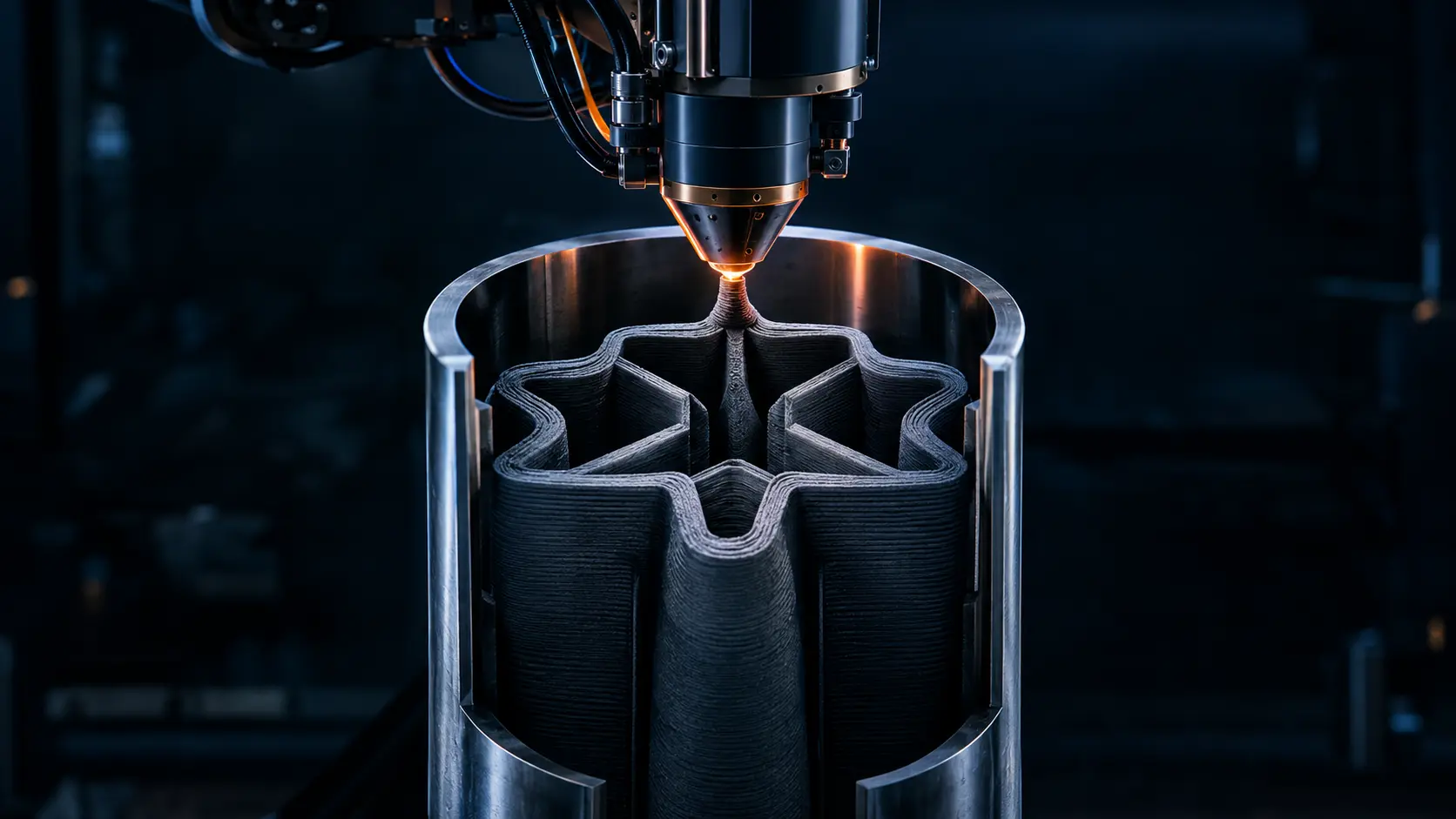
Additive Manufacturing (3D Printing) works completely differently. Instead of pouring a liquid into a mold, a robotic nozzle acts like a high-tech hot glue gun. It squirts out the rocket fuel exactly where it needs to go, building the fuel up layer by layer.
Because the robot places the fuel perfectly, you don’t need a metal mold, and you don’t need a giant vat of liquid explosives. You just print the rocket, screw the cap on, and it is ready to fly.
Why This Matters
For Aerospace Engineers, Procurement Officers, and Defense VCs, this technology solves the Prime Consolidation Crisis.
In the 1990s, the US defense industrial base had dozens of companies capable of building rocket motors. Through decades of mergers and acquisitions, the industry consolidated into a strict duopoly: Northrop Grumman and L3Harris. Because these two giants were the only games in town, they had no financial incentive to modernize their 1960s-era manufacturing infrastructure.
When the wars in Ukraine and the Middle East simultaneously drained the US stockpile of Javelin anti-tank missiles and GMLRS (Guided Multiple Launch Rocket Systems), the DoD asked the Primes to surge production. The Primes could not. Building new batch-mixing vats and curing ovens takes years and billions of dollars in CapEx.
Additive manufacturing completely bypasses the legacy supply chain. Startups are building compact, automated 3D-printing cells that can be set up in a fraction of the time and cost. The DoD is aggressively funding these 3D-printing startups because they desperately need a “third source” for rocket motors to break the monopoly and restore elasticity to the munitions supply chain.
Micro-Insight: The defense crisis isn’t about designing better missiles; it is entirely about finding a way to manufacture the missiles we already have faster.
The Shift to Software-Defined Solid Rocket Motors
We are witnessing the transition to Software-Defined Propulsion.
In a solid rocket, you cannot put a throttle on the engine like you do in a car. Once you ignite the solid fuel, it burns until it is gone. To control how fast the rocket flies, engineers change the physical shape of the hole running down the center of the fuel (called the “propellant grain”).
Historically, creating a complex shape required machining an expensive physical metal tool (a mandrel) to stick inside the wet fuel. With additive manufacturing, the shape of the fuel is controlled purely by software. If a general wants a missile to accelerate faster off the launchpad, an engineer simply uploads a new CAD file, and the 3D printer instantly alters the geometry of the next rocket on the assembly line.
How Additive Manufacturing of Solid Rocket Motors Works
Printing a high-explosive chemical compound without accidentally detonating the factory requires an immaculate convergence of chemistry and robotics. Here is the first-principles breakdown of the architecture.
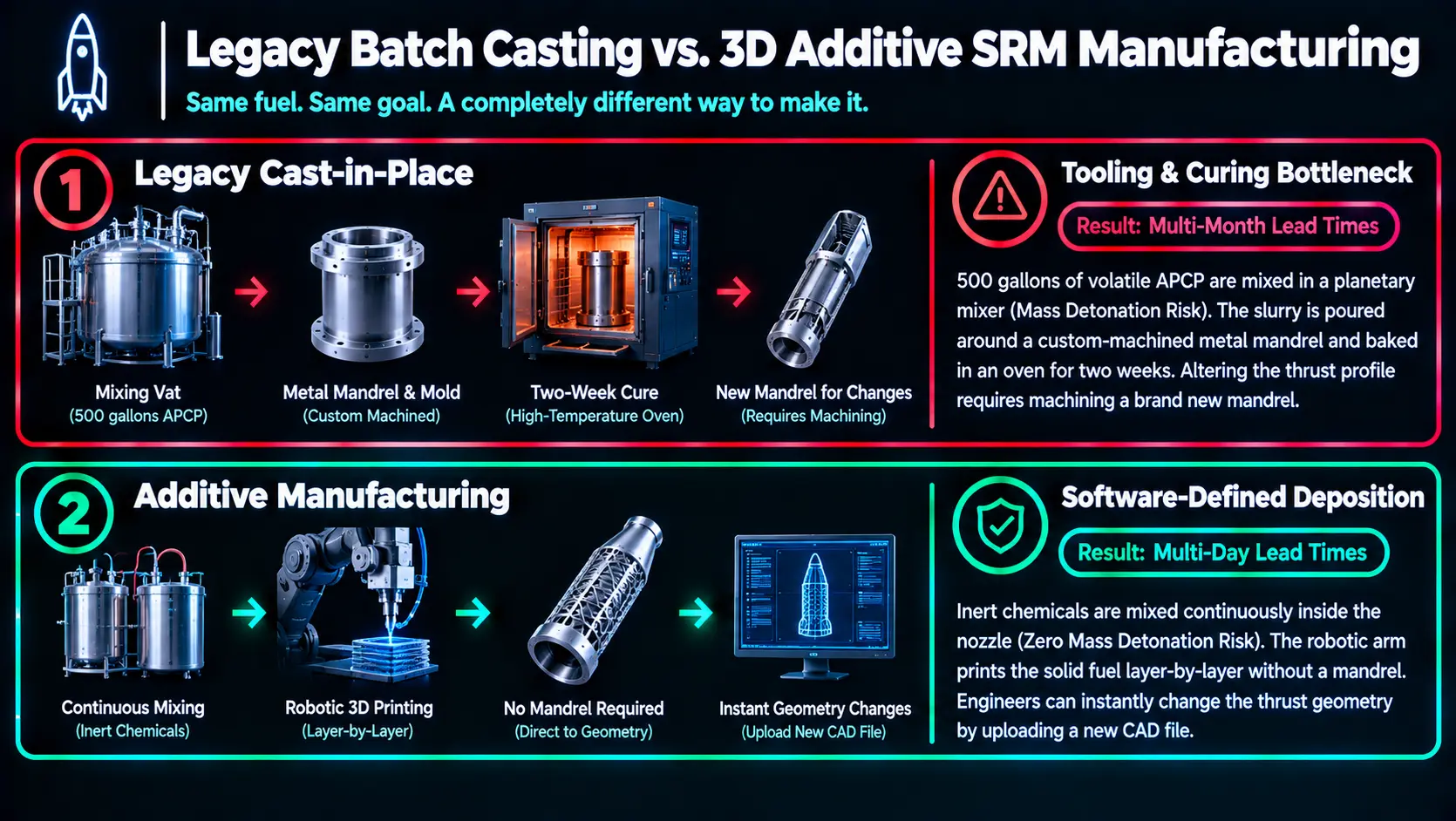
1. The Fundamental Problem: Batch Mixing Dangers
Legacy APCP (Ammonium Perchlorate Composite Propellant) is mixed in 500-gallon planetary mixers. Mixing raw explosives creates immense friction. If a mixer blade strikes a spark, the entire 500-gallon batch detonates, leveling the facility. Because of this, legacy factories are spread out across thousands of acres of remote desert, housed in massive concrete bunkers.
2. The Core Mechanism: Continuous Mixing
Additive manufacturing solves this by using “Continuous Mixing.” Instead of mixing 500 gallons at once, the raw ingredients (ammonium perchlorate oxidizer, aluminum fuel powder, and a rubbery HTPB binder) are kept perfectly separate. They are pumped into a specialized print head where they are mixed at the microscopic level just milliseconds before being extruded through the nozzle.
Plain-English Takeaway: If a spark occurs in a continuous mixer, there is only a tiny ounce of mixed explosive in the nozzle to ignite, rather than a 500-gallon bomb, making the factory exponentially safer and easier to build.
3. Technical Depth: Additive Deposition and Curing
As the robotic nozzle traverses the rocket casing, it deposits the APCP in thin, highly precise layers. Because the propellant is mixed with specialized rapid-curing agents, it begins to harden almost immediately upon leaving the nozzle. This eliminates the need for the massive, gas-fired curing ovens that hold legacy rockets captive for up to two weeks.
4. Technical Depth: Eliminating the Mandrel
In traditional casting, you pour the slurry around a metal core (mandrel) to form the hollow center. Pulling that mandrel out after the fuel cures is a highly delicate, labor-intensive process; if the fuel cracks during extraction, the entire rocket is scrapped. Additive manufacturing prints the fuel around empty space, completely eliminating the need for a mandrel, slashing tooling costs to zero.
5. Real-World Consequences: Complex Finocyl Grains
To maximize performance, modern missiles use “Finocyl” (fin-in-cylinder) grain geometries—complex, star-like patterns inside the fuel that burn highly efficiently. Machining a metal mandrel to create a 3D Finocyl shape is notoriously difficult and limits design freedom. A 3D printer can effortlessly print geometries with internal overhangs, varying densities, and gradient fuel mixtures that are strictly impossible to manufacture using liquid casting.
Solid Rocket Motor: Manufacturing Comparison
Legacy Batch Casting vs. 3D Additive Manufacturing (Continuous Mixing)
Propellant Grain Complexity
50%
Manufacturing Process
Legacy Batch Casting
3D Additive Manufacturing
Units Produced
0
Tooling Cost / Mandrel
$0
Production Status
STANDBY
Factory Floor Visualization
AWAITING START
Production Output vs. Time
Defense Applications for 3D Printed SRMs
The DoD is actively injecting capital into this specific technology to ensure its deployment across critical weapons platforms.
GMLRS Replenishment: The M142 HIMARS system relies on GMLRS rockets, which have been heavily consumed in recent conflicts. Startups like Ursa Major have received direct funding to qualify their 3D-printed SRMs as drop-in replacements for the standard GMLRS motor. Because the printed motors use the same APCP chemistry as the legacy motors, they can be seamlessly integrated into the existing Lockheed Martin assembly line.
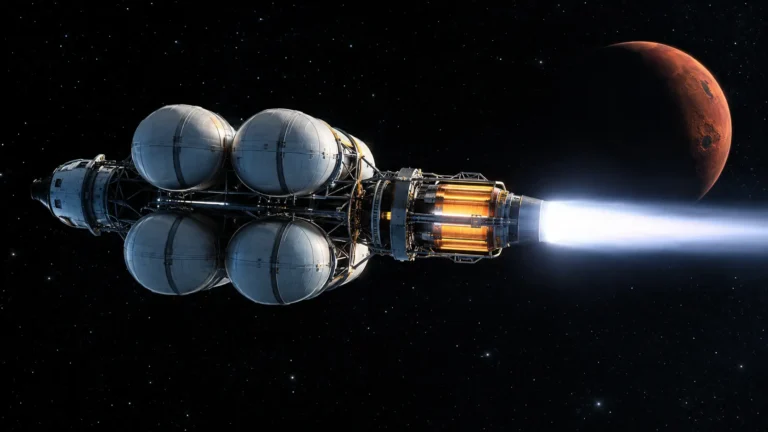
Hypersonic Glide Vehicles: Hypersonic weapons require incredibly powerful booster motors to achieve Mach 5+ speeds before releasing their glide vehicles. Additive manufacturing allows engineers to print multi-material propellants—meaning the bottom of the rocket burns a slow, steady mixture, while the top of the rocket burns an ultra-fast, high-energy mixture. This precise layering optimizes the thrust curve for hypersonic ascent without needing complex, heavy multi-stage engines.
Air-to-Air Missiles: Weapons like the AIM-120 AMRAAM require compact, highly reliable motors. Additive manufacturing can print the structural casing and the propellant simultaneously in a single, continuous process. This drastically reduces the weight of the missile and eliminates the microscopic air gaps between the casing and the fuel, preventing catastrophic mid-air failures.
Economic & Strategic Impact
The core strategic consequence of SRM Additive Manufacturing is Distributed Defense Production.
Because legacy batch-mixing requires thousand-acre danger zones and massive concrete bunkers, the US only has a handful of places capable of building rockets. If an adversary attacks those two facilities, American missile production halts completely.
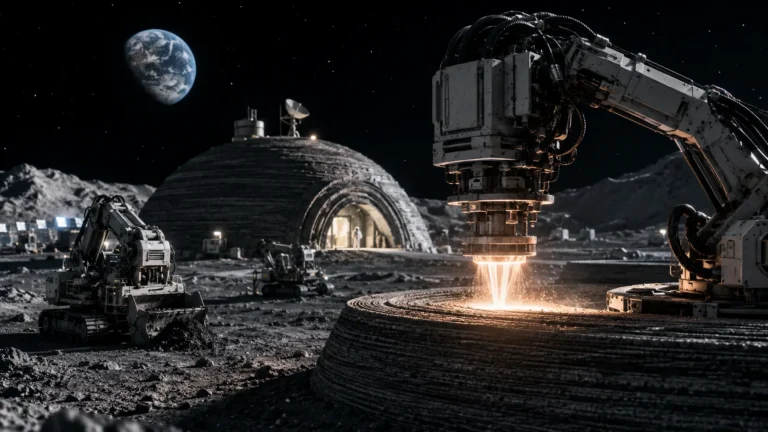
Continuous-mix 3D printers are highly compact and exponentially safer. They can fit inside a standard shipping container. This enables distributed manufacturing. Instead of building all rockets in Utah and shipping them across the ocean, the military can forward-deploy an automated 3D-printing cell to a base in Poland or Taiwan. Raw, inert chemicals are shipped safely on commercial freighters, and the actual explosive rockets are printed on-demand, directly at the tactical edge.
Advantages
- Supply Chain Elasticity: Eliminates the 6-to-12 month lead time required to design and machine physical metal mandrels for new rocket designs.
- Safety Profile: Continuous mixing isolates the volatile chemicals, eliminating the risk of mass-casualty batch mixer explosions.
- Geometrical Freedom: Unlocks complex, mathematically optimized internal grain structures (like Finocyl) that are physically impossible to cast using traditional molds.
- Cost Reduction: By removing the curing ovens, mandrels, and heavy industrial safety infrastructure, the CapEx required to stand up a new SRM factory plummets.
Limitations
- DoD Qualification Testing: Rockets are strapped to jets worth $100 million and carried by human pilots. The DoD requires agonizingly strict qualification testing (vibration, thermal shock, aging) before trusting a new manufacturing method. Getting a 3D-printed motor officially qualified takes years of bureaucratic navigation.
- Surface Finish Quality: 3D printing leaves microscopic ridges (stair-stepping) on the surface of the propellant. If the surface isn't perfectly smooth, the fuel might burn unevenly, causing erratic flight paths.
- Chemical Viscosity: Printing a liquid that needs to instantly cure into a solid rubber requires exact chemical balancing. If the binder cures too fast, it clogs the nozzle; if it cures too slow, the rocket slumps into a puddle before it hardens.
Takeaway: The hardware and robotics are fully operational today. The true barrier to entry is the rigorous, uncompromising nature of military safety compliance.
Common Misconceptions
Misconception: They are 3D printing the metal tube of the rocket.
Reality: While some companies do 3D print metal casings, the true disruptive breakthrough of this technology is printing the highly explosive chemical fuel (propellant) inside the tube.
Misconception: 3D printed fuel uses completely new, experimental chemicals.
Reality: To speed up DoD adoption, companies are printing with the exact same legacy APCP chemistry (Ammonium Perchlorate, Aluminum, HTPB) that the military has used for decades. The chemistry is identical; only the application method has changed.
Misconception: 3D printing is too slow for mass production.
Reality: While standard 3D printing a plastic toy is slow, continuous-mix aerospace printers use massive industrial nozzles that can deposit hundreds of pounds of propellant per hour, vastly outpacing the overall end-to-end timeline of legacy casting and weeks of oven curing.
What Most People Miss
The disruptive capability of Gradient Propellant Printing.
When analysts look at printed SRMs, they focus on the shape of the fuel. What they miss is the composition of the fuel.
In a traditional cast rocket, the chemical mixture is uniform throughout the entire tube. A 3D printer can change the chemical mixture on the fly. It can print the bottom layer with 20% aluminum powder, and smoothly transition the top layer to 5% aluminum powder. This allows the rocket to execute a powerful, high-energy boost phase off the launchpad, and automatically transition into a cooler, smokeless sustain phase to hide its trajectory from enemy radar—all without moving parts or complex staging mechanisms.
Comparison Table
| Metric | Legacy Cast-in-Place Manufacturing | Additive Manufacturing (3D Printed) |
| Mixing Process | 500-Gallon Planetary Batch Mixer | Microscopic Continuous Mixing |
| Tooling Required | Expensive Machined Metal Mandrels | None (Software-Defined) |
| Curing Time | Days to Weeks in Gas Ovens | Immediate / In-Situ |
| Safety Profile | Extreme Hazard (Mass Detonation Risk) | High Safety (Inert until nozzle) |
| Grain Geometry | Limited by mold extraction physics | Unlimited (Overhangs, Gradients) |
Future Outlook
Next 12–24 Months
The era of Tactical Hot-Fire Validations. Through 2026, agile startups will aggressively test their printed SRMs on static test stands in the desert. The primary objective is proving to the DoD that printed motors achieve the exact same thrust-time curves as the legacy motors made by Northrop Grumman. Securing these official qualification certificates will trigger massive Phase III production contracts from the Pentagon.
Next 3–5 Years
The scaling of Automated Modular Micro-Factories. As the process proves reliable, startups will containerize their continuous-mixing print nodes. Rather than building massive new campuses, the defense industry will deploy modular shipping containers equipped with robotic arms to allied nations. This will establish a decentralized, anti-fragile munitions supply chain immune to single-point strikes.
Next 10 Years
The End of the Duopoly. By the 2030s, additive manufacturing will break the 30-year monopoly held by legacy Primes over solid rocket motors. Software-defined propulsion will become the DoD standard. Future missile programs will mandate the use of printed gradient propellants and complex Finocyl geometries from day one, drastically increasing the range, speed, and lethality of the American arsenal while permanently lowering the cost per unit.
Most Likely Scenario
Additive manufacturing of SRMs is not an experimental luxury; it is a national security mandate. The inability of the legacy supply chain to surge production during peacetime has forced the Pentagon's hand. By replacing the dangerous, tooling-heavy casting process with software-driven robotics, additive manufacturing successfully abstracts rocket production away from heavy industry, ensuring that the critical chokepoint in Western defense logistics is permanently eliminated.
Key Takeaways
- The US military is facing a severe shortage of missiles because traditional defense contractors take too long to build the Solid Rocket Motors (SRMs) that power them.
- Legacy manufacturing relies on dangerous "batch mixing," where hundreds of gallons of explosives are poured into a mold and baked for weeks.
- Additive manufacturing (3D printing) uses "continuous mixing." It safely mixes tiny amounts of explosive material at the exact moment a robot nozzle deposits the fuel layer by layer.
- This entirely eliminates the need for expensive metal molds (mandrels), multi-week curing ovens, and giant explosive hazard zones.
- 3D printing allows engineers to change the rocket's thrust profile instantly via software and enables complex, highly efficient fuel geometries that are physically impossible to create using traditional liquid casting.
Glossary
APCP (Ammonium Perchlorate Composite Propellant): The standard solid rocket fuel chemistry used by the military. It combines a crystalline oxidizer, aluminum powder for energy, and a rubbery binder.
Batch Mixing: The legacy method of mixing hundreds of gallons of highly explosive rocket fuel in a single giant vat, presenting extreme safety hazards.
Continuous Mixing: The modern method where raw, inert ingredients are kept separate until the absolute last millisecond, mixing at the microscopic level inside the print nozzle.
Defense Production Act (Title III): A federal law allowing the US President to direct private companies to prioritize and scale the production of materials deemed critical to national security.
Mandrel: A custom-machined metal rod or star-shape inserted into a wet rocket casing. Once the fuel hardens around it, it is pulled out to leave a hollow core.
Propellant Grain: The specific physical shape of the hollow core running down the center of the solid rocket fuel, which dictates how fast and aggressively the rocket burns.
Sources
Defense Innovation Unit (DIU): Commercial Solutions Opening for Solid Rocket Motor Modernization
Department of Defense (DoD): National Defense Industrial Strategy - Munitions Supply Chain Resilience
Ursa Major: Continuous Mixing and Additive Manufacturing for Solid Propulsion
X-Bow Systems: Software-Defined Solid Rocket Motors and Additive Energetics
Journal of Aerospace Engineering: The Impact of 3D Printed APCP Geometries on Thrust Optimization