Advertisement
)

AT A GLANCE
- Concept: Bare Metal: A physical server operating without any pre-installed operating system or shared software.
- Concept: Ring-0 Privilege: The deepest execution level where the hypervisor controls the central processor directly.
- Concept: Virtual Machine: A completely isolated software computer running inside a shared physical host server.
- Concept: Nested Page Tables: The memory mapping system that assigns physical RAM to individual virtual machines safely.
IN SIMPLE WORDS
Think of a physical server as a massive, empty office building. If a single startup rents the entire building, ninety percent of the desks remain empty. This is how old corporate data centers operated—highly expensive and terribly inefficient.
A hypervisor acts as the building manager. It walks into the empty building and installs invisible, soundproof walls, dividing the massive space into hundreds of perfectly isolated private offices. Each company gets its own key, its own secure desk space, and its own electricity.
The companies have no idea they are sharing the building with competitors. By slicing one massive physical server into dozens of smaller, rentable virtual computers, hypervisors created the modern cloud. They turned static hardware into a flexible utility that can be rented by the minute.
HOW A CLOUD HYPERVISOR WORKS
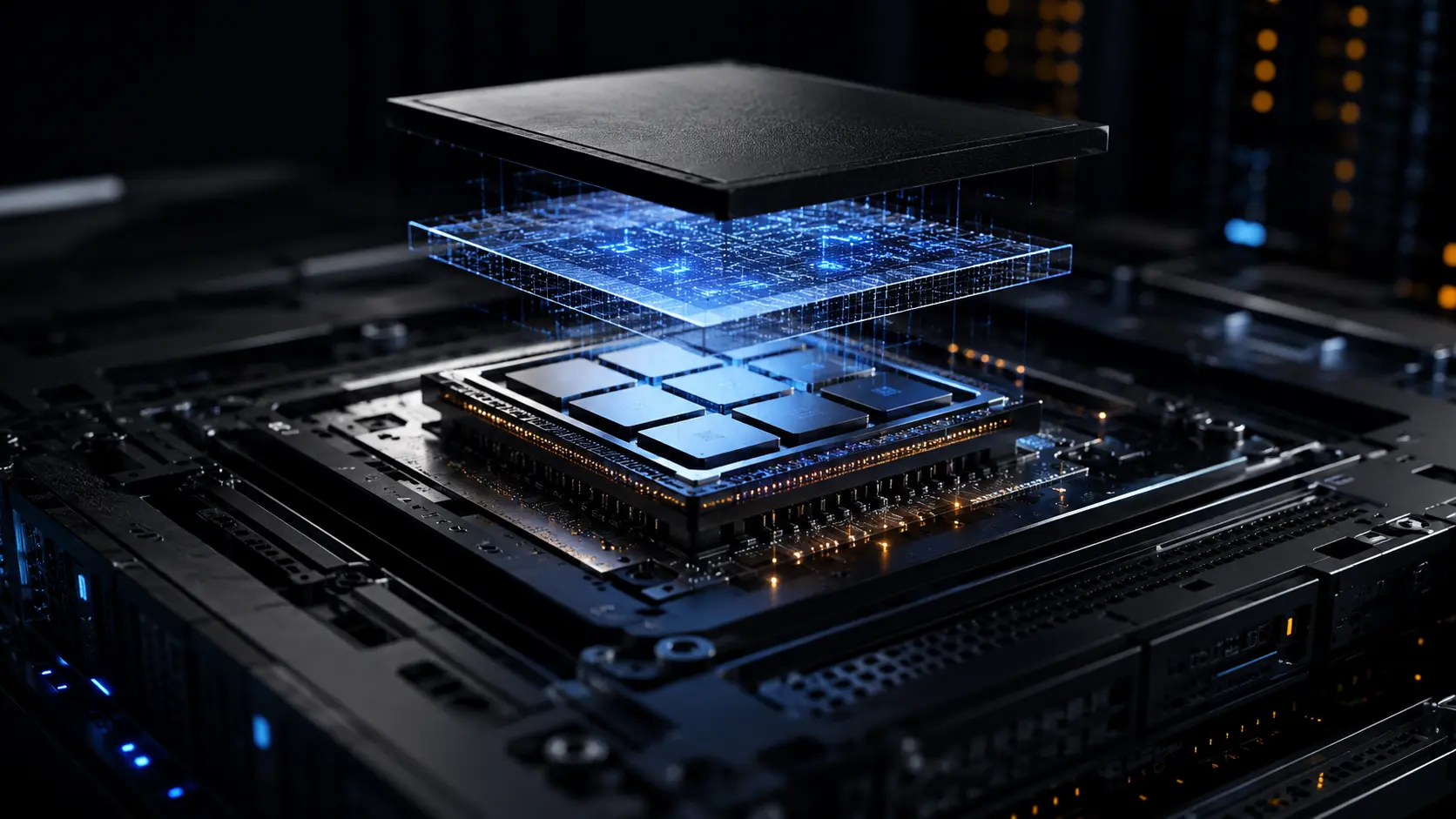
The foundation of modern cloud architecture is the Type-1, or “bare-metal,” hypervisor. Unlike standard applications that run on top of an operating system, a Type-1 hypervisor is installed directly onto the raw server hardware. It intercepts all commands between the physical silicon and the guest virtual machines.
When a user requests a cloud instance, the hypervisor allocates a rigid boundary of compute resources. It creates a Virtual Machine (VM) that operates under the illusion it owns actual physical hardware.
Modern x86 processors enforce strict security through hierarchical protection rings. The hypervisor operates in Ring-0, or even a deeper Ring -1 using hardware virtualization extensions like Intel VT-x. This grants the hypervisor absolute execution privilege, forcing guest operating systems to operate in a higher, restricted ring.
Memory virtualization requires immense computational overhead to prevent data corruption. Hypervisors solve this physical bottleneck using nested page tables, mapping the guest VM’s virtual memory to the guest’s perceived physical memory, and then translating that directly to the host’s actual bare-metal RAM.
To prevent network bottlenecks, hyperscalers completely bypass the host operating system kernel. They use Single Root I/O Virtualization (SR-IOV) to grant the virtual machine a direct, physical channel to the Network Interface Card. This hardware-enforced isolation guarantees that a malicious tenant cannot break out of their VM to intercept another tenant’s data packets on the same server rack.
REAL WORLD EXAMPLE
Historically, hypervisor software consumed up to thirty percent of a server’s processing power simply managing the virtual walls between tenants. Amazon Web Services (AWS) solved this massive tax by inventing the Nitro System.
Instead of running the hypervisor on the main server processor, AWS engineers moved the hypervisor software onto custom-built silicon cards. The Nitro Controller handles all memory allocation, networking, and security encryption independently. This offloading leaves one hundred percent of the primary Intel or AMD processor available for the customer to rent, drastically lowering the hardware cost of running the AWS cloud.
WHY IT MATTERS NOW
The explosion of generative artificial intelligence requires massive parallel processing across thousands of graphics processing units. Managing these massive clusters efficiently is mathematically impossible without ultra-low-latency virtualization.
Hyperscale cloud providers are currently redesigning their entire data center architectures to support these workloads. They are aggressively moving away from legacy software hypervisors and adopting hardware-accelerated hypervisors embedded in specialized Data Processing Units (DPUs).
This architectural shift directly dictates global cloud profit margins. A hypervisor that consumes five percent less overhead allows Microsoft or Google to pack five percent more paying customers onto the exact same server rack. At a planetary scale, this microscopic efficiency translates into billions of dollars of pure profit.
Furthermore, sovereign governments require absolute data isolation. Defense agencies will only migrate to public clouds if the provider can mathematically prove that tenant isolation is enforced at the silicon level. This absolute security guarantee prevents hostile state actors from breaking out of adjacent virtual machines.
COMMON MISCONCEPTIONS
- “Containers are completely replacing hypervisors.” Containers share the exact same operating system kernel, making them lightweight but inherently less secure. Hypervisors provide deep hardware-level isolation, which is why cloud providers still run containers inside hypervisor-managed virtual machines.
- “Virtualization heavily slows down the computer.” Modern Type-1 hypervisors, aided by built-in hardware extensions, introduce near-zero latency. They operate within a fraction of a percent of true bare-metal hardware speeds.
- “The cloud is just someone else’s physical computer.” The cloud is actually millions of computers fused together by software, which are then mathematically sliced apart by hypervisors into highly specific, temporary rented environments.
WHAT MOST PEOPLE MISS
Financial analysts focus heavily on the hourly cost of compute instances, but they completely overlook the hidden incentives of hypervisor lock-in.
If an enterprise builds its infrastructure on VMware’s proprietary ESXi hypervisor, moving those virtual machines to a cloud built on open-source KVM requires complex, highly risky reformatting. Hypervisors act as the ultimate structural moat. They physically bind a company’s entire data architecture to a specific cloud vendor’s ecosystem, making migration financially punishing.
THE ECONOMIC AND STRATEGIC IMPACT
The clear financial winners of this transition are custom silicon designers like Nvidia, Marvell, and AMD. These companies build the specialized Data Processing Units (DPUs) that modern data centers require to physically offload hypervisor networking tasks from the main processors.
Legacy enterprise software vendors face existential threats. Companies that built expensive, proprietary hypervisors for on-premise data centers are losing market share as corporations migrate to highly modified, open-source KVM engines operated by the cloud giants.
Investors heavily monitor this metric because the efficiency of the hypervisor dictates the ultimate yield of a data center. Cloud providers that fully own and optimize their proprietary hypervisor stack maintain absolute control over their physical hardware lifecycle, granting them a massive advantage in operating margin expansion.
THE TRAJECTORY
Next 12–36 Months: The massive adoption of Data Processing Units will become standard. Every major hyperscaler will fully offload networking, storage, and security hypervisor tasks to specialized PCI-e cards, freeing the main server CPU entirely for customer rental.
Next Five Years: The rise of confidential computing hypervisors. New architectures will mathematically encrypt data while it is actively being processed in RAM. The hypervisor will completely lock the cloud provider out, ensuring that even a rogue infrastructure engineer cannot access the customer’s raw data.
Next Ten Years: Artificial intelligence will orchestrate micro-virtualization. Machine learning algorithms will predict global traffic spikes in milliseconds. They will automatically resize the memory and CPU boundaries of millions of virtual machines across the planet without dropping a single packet of data.
What Could Go Wrong: A catastrophic hypervisor escape vulnerability. If a sophisticated hacker discovers a zero-day flaw in the hypervisor code, they could break out of their rented virtual machine. This would grant them absolute “Ring-0” access to the underlying bare metal, compromising every other corporate virtual machine running on that physical server.
Most Likely Outcome: Hardware-accelerated hypervisors will become entirely invisible to the end user. The distinction between bare-metal performance and virtualized infrastructure will permanently vanish, delivering absolute tenant isolation with zero computational penalty.
KEY TERMS
- Type-1 Hypervisor: Specialized software that runs directly on bare-metal hardware to control the system and manage guest virtual machines.
- Ring-0: The most privileged execution level of a computer processor, allowing direct, unrestricted control over the physical hardware.
- Nested Page Tables: A complex memory management technique where the hypervisor translates a virtual machine’s simulated memory directly to physical RAM.
- Bare Metal: A physical server operating in its raw state, without any virtualization layer or shared resources installed.
- Hypervisor Escape: A critical security breach where a malicious user breaks out of their isolated virtual machine to control the host server.
- Data Processing Unit (DPU): A specialized microchip designed specifically to handle networking and virtualization tasks, offloading work from the main central processor.
BEGINNER FAQ
What exactly is a hypervisor? It is a highly specialized software program that divides a single massive physical computer into multiple, perfectly separated virtual computers.
What is a virtual machine (VM)? A VM is a software-based computer that runs inside a physical computer. It has its own operating system and behaves exactly like a real physical machine.
Why do cloud companies use them? They allow Amazon, Google, or Microsoft to rent small pieces of a massive server to dozens of different customers at the same time, maximizing hardware efficiency and profit.
Is sharing a server with other companies safe? Yes. The hypervisor acts as an impenetrable digital wall. Customers cannot see, access, or affect the data of other companies sharing the exact same machine.
What does “bare metal” mean? It refers to the physical, raw hardware of the computer itself, untouched by any virtualization software.
Does a hypervisor slow down the computer? In the past, yes. Today, specialized silicon built into modern microchips processes the hypervisor’s commands instantly, making the slowdown almost unnoticeable.
What happens if the physical server breaks? The hypervisor can instantly take a digital snapshot of your virtual machine and move it to a completely healthy physical server without interrupting your work.
How is it different from an operating system like Windows? Windows manages regular applications for one user. A Type-1 hypervisor manages entire operating systems for multiple users simultaneously, sitting underneath Windows or Linux.
SOURCES
- National Institute of Standards and Technology (NIST) — Guide to Security for Full Virtualization Technologies
- Institute of Electrical and Electronics Engineers (IEEE) — Hardware-Assisted Virtualization and Nested Page Tables
- Amazon Web Services (AWS) Architecture Blog — The Nitro System: Hardware-Accelerated Hypervisors
- Linux Kernel Organization — Kernel-based Virtual Machine (KVM) Architecture