Advertisement
)

At a Glance
- Concept: Bypassing the traditional “wet” battery manufacturing process by using shear force to bind dry active materials into a solid, conductive film.
- Why it matters: To meet global EV demand, the world needs hundreds of new battery gigafactories. Traditional factories are bottlenecked by massive, football-field-sized ovens required to bake wet chemicals. DBE deletes these ovens, cutting factory construction costs by 30% and energy bills by half.
- Who uses it: Tesla (via its acquisition of Maxwell Technologies), Volkswagen’s PowerCo, LG Energy Solution, and next-generation battery startups targeting highly scalable production.
- Biggest takeaway: The secret to DBE is not just the powder; it is the binder. By using a specific polymer (PTFE) that turns into microscopic spider webs when squeezed, engineers can hold the battery powder together without ever using a single drop of liquid solvent.
In Simple Words
Imagine you are trying to attach a layer of sand to a piece of aluminum foil.
The traditional way (the Wet Process) is to mix the sand with glue and a toxic liquid solvent to make a muddy paste. You paint the wet paste onto the foil. Because you cannot put a wet battery into a car, you must put the foil into a massive, 300-foot-long industrial oven to bake off and evaporate all the toxic liquid until only the dry sand and glue are left. This wastes immense amounts of electricity and space.
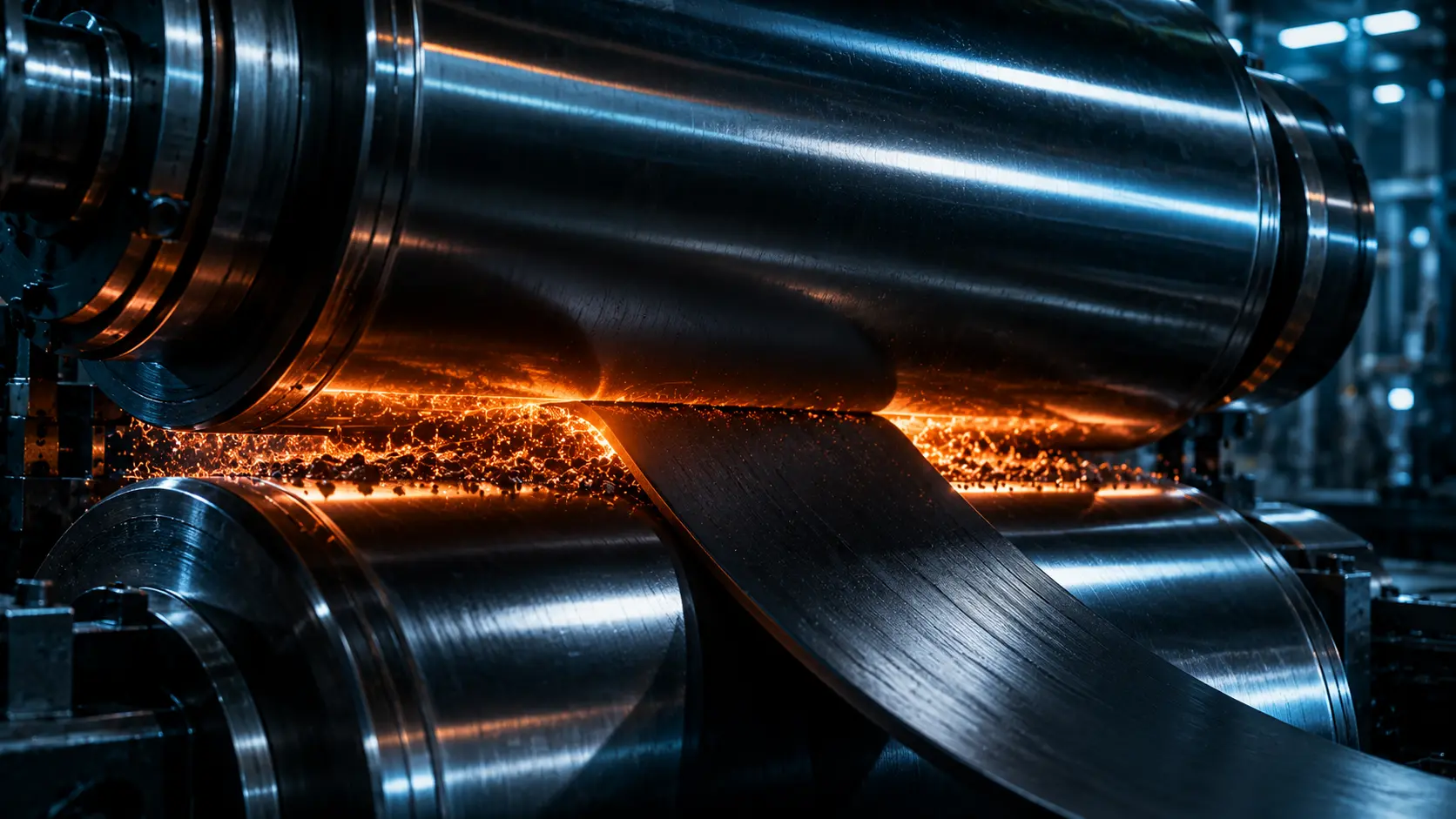
The new way (the Dry Process) skips the mud entirely. You mix the dry sand with a special dry plastic powder. You dump this dry mixture into a machine with two massive steel rollers. The rollers squeeze the powder so hard that the plastic stretches out into tiny, sticky threads that trap the sand, instantly crushing it into a perfect, dry sheet of “paper.” You press that paper onto the foil.
There is no wet mud, no toxic liquids, and no massive baking ovens. It is faster, cheaper, and fundamentally changes how batteries are made.
Why This Matters
The mathematics of the global electric vehicle transition rely on battery cell costs dropping.
For the last decade, battery costs fell primarily due to raw material scale and chemistry tweaks. However, the manufacturing process itself hit a plateau. A traditional gigafactory is a capital-intensive nightmare. Because the wet slurry process uses N-Methyl-2-pyrrolidone (NMP)—a highly toxic and strictly regulated solvent—factories must install massive, multi-million-dollar solvent recovery systems to capture the evaporated gas before it hits the atmosphere.
Dry Battery Electrode (DBE) manufacturing attacks this operational bloat. By eliminating the solvent, the ovens, and the recovery loops, DBE reduces the capital expenditure (CapEx) required to build a factory by nearly 30%. It slashes the operational expenditure (OpEx)—specifically the electricity bill—by up to 50%. Whoever masters high-yield DBE production effectively wins the margin war in the global automotive industry, enabling the profitable mass production of $25,000 electric vehicles.
The Big Picture
DBE is the manufacturing bridge to the next generation of energy storage: Solid-State Batteries.
Solid-state batteries replace the liquid electrolyte inside a battery with a solid piece of ceramic or polymer, offering vastly higher energy density and zero fire risk. However, solid-state materials are notoriously sensitive to moisture and solvents. If you try to manufacture a solid-state battery using the traditional wet slurry process, the liquid solvent often destroys the advanced solid electrolyte.
Therefore, DBE is not just a cost-cutting measure for today’s lithium-ion batteries; it is the mandatory prerequisite for tomorrow’s technology. By perfecting dry manufacturing today, automakers are quietly building the exact assembly lines required to scale solid-state chemistry in the 2030s.
How Dry Battery Electrode Works
Creating a structurally sound, highly conductive battery film out of pure dust requires exploiting the physical properties of specific polymers. Here is the first-principles breakdown of DBE.
1. The Fundamental Problem: The Oven Bottleneck
In a standard cell, active materials (like lithium, nickel, or graphite) must be securely bonded to a metallic current collector (copper or aluminum foil). If you paint these materials on as a wet slurry, the drying process causes problems. As the solvent evaporates in the oven, the active materials can migrate or settle unevenly, creating microscopic cracks. This physical limitation prevents manufacturers from making the electrode layer extremely thick, which limits how much energy the battery can hold.
2. The Insufficiency of Water-Based Binders
Some manufacturers attempted to replace the toxic NMP solvent with pure water (aqueous processing). While this eliminates toxicity, water takes incredibly high energy to boil off. Furthermore, water causes severe oxidation (rust) when mixed with highly reactive cathode materials like high-nickel NMC, making aqueous processing unviable for the most energy-dense battery chemistries.
3. The Core Mechanism: PTFE Fibrillization
DBE abandons liquids entirely. The active battery powder and conductive carbon are mixed with a dry binder, almost universally Polytetrafluoroethylene (PTFE)—commonly known as Teflon. PTFE has a unique mechanical property. When subjected to intense physical shear force (rubbing or squeezing), the microscopic PTFE particles unravel. They unspool into millions of tiny, sub-micron string-like fibers. This process is called Fibrillization.
4. Technical Depth: Calender Rolling
To trigger fibrillization, the dry powder mixture is fed into a massive machine called a calender. This machine features heavy, heated steel rollers pressing against each other with immense pressure. As the powder passes through the microscopic gap between the rollers, the extreme shear force rips the PTFE open. The resulting “spider web” of PTFE fibers permanently entraps the active material particles, pressing them into a continuous, self-supporting, freestanding dough-like film. This film is then directly laminated onto the metal foil.
5. Real-World Consequences: Ultra-Thick Electrodes
Because the DBE film is structurally bonded by a solid PTFE web rather than dried glue, it is vastly more mechanically robust. This allows engineers to manufacture ultra-thick electrodes without the cracking associated with wet-drying. A thicker electrode means more active material per square inch of foil, directly increasing the volumetric energy density of the final battery cell.
Real-World Applications
The race to commercialize DBE is the most fiercely contested engineering challenge in the automotive supply chain.
Tesla’s 4680 Cell Ramp: Tesla triggered the DBE arms race when it acquired Maxwell Technologies (the pioneer of the process) in 2019. Tesla’s primary goal for the massive 4680 cylindrical cell was to utilize DBE for both the anode and cathode. By 2024–2025, Tesla successfully scaled the dry process for the graphite anode at its Texas Gigafactory, significantly reducing the footprint of the assembly line.
Volkswagen and PowerCo: VW’s battery subsidiary, PowerCo, has aggressively pursued DBE, partnering with printing press manufacturer Koenig & Bauer to develop specialized dry-rolling machinery. PowerCo’s “Dry Coating” process targets a 30% reduction in energy consumption. By standardizing this process across its unified cell design, VW aims to rapidly deploy identical, highly efficient gigafactories across Europe and North America.
Supercapacitors: Long before DBE was applied to lithium-ion EV batteries, it was the standard manufacturing process for ultracapacitors (which require extremely thick electrodes). Companies producing grid-stabilization hardware and rapid-discharge power systems have utilized PTFE fibrillization for years; the modern challenge is simply adapting it to the abrasive chemistries of lithium-ion.
Economic & Strategic Impact
The implementation of DBE fundamentally alters the barrier to entry for battery manufacturing.
Currently, building a 50 GWh gigafactory costs roughly USD 3 billion to USD 4 billion. A massive portion of that capital is dedicated to the infrastructure required for the wet process: clean rooms, mixing vats, miles of convection ovens, and highly regulated NMP toxic solvent distillation towers.
By moving to DBE, the footprint of the electrode manufacturing line shrinks by up to 50%. The elimination of gas-fired or heavy electric convection ovens slashes the factory’s baseline energy draw. This allows companies to build smaller, more modular, and vastly cheaper battery plants. For Western nations attempting to on-shore battery supply chains and break China’s manufacturing dominance, mastering DBE is the ultimate economic equalizer, allowing domestic factories to compete on price without relying on cheap, subsidized energy.
Advantages
- CapEx and OpEx Collapse: Eliminates massive drying ovens and solvent recovery systems, saving up to 30% in factory capital costs and 50% in energy bills.
- Environmental Superiority: Completely eradicates the use of NMP, a highly toxic chemical that requires extreme safety protocols and hazardous waste management.
- Higher Energy Density: The structural integrity of the fibrillated PTFE web allows for thicker electrodes, packing more active energy storage material onto less metal foil.
- Enables Solid-State: Bypasses the solvent degradation issues that currently plague the manufacturing of next-generation solid electrolyte batteries.
Limitations
- The Cathode Bottleneck: Graphite anodes are soft and self-lubricating, making them easy to dry-roll. Cathode materials (like Nickel and Cobalt) are incredibly hard and abrasive. They tear the PTFE film and physically damage the expensive steel calender rollers during high-speed production.
- Yield Rates: Achieving a perfectly uniform thickness at the microscopic level without any pinholes or tears is extraordinarily difficult at gigascale speeds. A flawed dry film leads to short circuits and dead battery cells.
- Binder Resistance: PTFE is highly structurally stable, but it is electrically insulating. If too much PTFE is used to hold the powder together, it blocks the flow of electrons, increasing internal resistance and harming the battery’s charging speed.
Common Misconceptions
Misconception: A Dry Battery Electrode means the final battery has no liquid in it.
Reality: The final lithium-ion battery still contains a highly flammable liquid electrolyte that sloshes between the anode and cathode. “Dry” only refers to the manufacturing process of the electrodes, not the final state of the cell.
Misconception: DBE is a new type of battery chemistry.
Reality: It is a manufacturing agnostic technique. You can use DBE to make standard Lithium-Ion batteries, LFP (Lithium Iron Phosphate) batteries, Sodium-Ion batteries, or Solid-State batteries. It replaces the oven, not the chemistry.
Misconception: Tesla invented dry electrode manufacturing.
Reality: Maxwell Technologies patented and perfected the process for ultracapacitors in the 1990s and early 2000s. Tesla acquired Maxwell specifically to adapt that existing technology to lithium-ion EV batteries.
What Most People Miss
The physics of Roller Deflection.
When you press dry, hard powder between two massive steel cylinders (calenders) to create a film, the powder pushes back. At the center of the cylinder, the immense opposing pressure causes the solid steel roller to microscopically bow or bend outward. This is called “deflection.”
Because of deflection, the resulting battery film is often slightly thicker in the middle than it is on the edges. In a battery, uneven thickness causes uneven charging, lithium plating, and rapid degradation. Solving roller deflection—through advanced metallurgy, variable pressure hydraulics, and ultra-precise gap control—is the absolute hardest mechanical engineering challenge in scaling DBE to high-volume production.
Comparison Table
| Feature | Wet Slurry Manufacturing | Dry Battery Electrode (DBE) |
| Solvent Used | NMP (Highly Toxic) or Water | None (100% Dry) |
| Binder Type | PVDF / SBR (Dissolved) | PTFE (Fibrillated) |
| Drying Ovens Required | Massive (Up to 100 meters long) | Zero |
| Energy Consumption | Extremely High (Baking/Boiling) | Low (Mechanical Rolling) |
| Electrode Thickness | Limited by drying migration/cracking | Ultra-thick (Mechanically stable) |
| Current Scaling Hurdle | High CapEx and Space limits | Cathode abrasion and yield rates |
Case Study
Situation: When Tesla announced the 4680 cylindrical cell form factor, the core economic premise relied heavily on scaling Dry Battery Electrode manufacturing for both the anode and the cathode. This was projected to reduce the factory footprint by roughly ten times compared to traditional gigafactories.
Challenge: While transitioning the soft graphite anode to the dry process proved successful early on, the cathode was a disaster. The nickel-rich cathode material was highly abrasive. When fed into the calender rollers, it shredded the PTFE film, destroyed the steel rollers, and resulted in abysmal yield rates that bottlenecked the production of the Cybertruck.
Solution (The Engineering Iteration): Tesla engineers undertook a multi-year iteration cycle. They refined the exact percentage of PTFE binder, altered the particle size distribution of the nickel, and completely redesigned the hydraulic pressure systems of the calender rollers to manage deflection and abrasion.
Outcome: By late 2025 and 2026, industry reports indicated Tesla had finally achieved commercial yield rates on the dry cathode. The achievement allowed Tesla to significantly ramp up 4680 cell production while officially realizing the massive CapEx and OpEx reductions promised years earlier, proving that while DBE is brutally difficult to scale, the physics do work at high volume.
Lessons Learned: The transition from wet chemistry to dry mechanical shear is not a plug-and-play upgrade. It requires completely discarding decades of slurry expertise and mastering high-precision mechanical metallurgy, making it a “winner-takes-all” bottleneck for legacy automakers trying to catch up.
Future Outlook
Next 12–24 Months
The industry will witness the “Anode First” rollout. Because dry-rolling soft graphite is a solved engineering problem, nearly all tier-1 battery manufacturers (LG, SK On, CATL) will transition their gigafactory expansions to utilize dry anodes, instantly realizing partial CapEx savings. Simultaneously, a brutal talent war will escalate as automakers poach mechanical engineers with expertise in high-tension printing presses to solve their ongoing dry cathode bottlenecks.
Next 3–5 Years
The standardization of Dry LFP. Lithium Iron Phosphate (LFP) is dominating the budget EV market. LFP particles are structurally different from high-nickel cathodes and are highly responsive to dry processing. By 2029, the combination of cheap LFP chemistry with the ultra-cheap DBE manufacturing process will push pack-level battery costs well below USD 60/kWh, unlocking the mass profitability of sub-USD 20,000 electric vehicles globally.
Next 10 Years
DBE will trigger the Solid-State Supercycle. By the mid-2030s, as solid-state batteries (which replace liquid electrolytes with solid ceramics or sulfides) move into mass production, DBE will be the mandatory, exclusive manufacturing standard. The legacy wet slurry factories built in the 2010s will be deemed obsolete stranded assets, unable to process solid-state materials. The gigafactories built today with modular dry-rolling lines will seamlessly transition to printing the most advanced batteries on earth.
Most Likely Scenario
Dry Battery Electrode manufacturing is the definitive endpoint for battery production. While the teething pains of cathode yield rates will cause delays and burn billions in R&D capital for legacy automakers, the sheer thermodynamic and financial absurdity of boiling toxic solvents in massive ovens guarantees that wet processing will be entirely eradicated from top-tier gigafactories within the decade.
Key Takeaways
- Dry Battery Electrode (DBE) manufacturing eliminates the toxic solvents and massive drying ovens used in traditional battery production.
- Instead of a wet slurry, DBE mixes dry active battery powder with a PTFE (Teflon) binder.
- Intense mechanical pressure from calender rollers causes the PTFE to “fibrillate”—stretching into a microscopic spider web that binds the powder into a solid film.
- DBE reduces gigafactory CapEx by roughly 30% and energy consumption (OpEx) by up to 50%.
- Because the dry film is structurally robust, manufacturers can create ultra-thick electrodes, significantly increasing the battery’s energy density.
- While applying DBE to soft anodes is commercially proven, scaling the immense pressure required for hard, abrasive cathode materials remains the industry’s greatest mechanical engineering challenge.
Glossary
Calender Roller: A massive industrial machine featuring heavy steel cylinders that apply extreme, precise pressure to squeeze powders or materials into ultra-thin, continuous films.
CapEx (Capital Expenditure): The upfront financial cost required to physically build the gigafactory and purchase the manufacturing equipment.
Fibrillization: The physical process where high shear force causes a polymer (like PTFE) to unspool and stretch from a solid particle into a web of microscopic threads.
NMP (N-Methyl-2-pyrrolidone): A highly toxic chemical solvent used in traditional wet battery manufacturing to turn powders into a paintable slurry. It requires expensive recovery systems to prevent environmental contamination.
OpEx (Operational Expenditure): The ongoing costs to run the factory, primarily driven by the massive electricity required to heat traditional drying ovens.
PTFE (Polytetrafluoroethylene): A synthetic polymer, best known by the brand name Teflon, used as the essential dry binder in DBE manufacturing due to its unique ability to fibrillate under pressure.
Solid-State Battery: A next-generation battery that replaces the flammable liquid electrolyte with a solid material. DBE is highly favorable for solid-state because wet solvents often destroy solid electrolytes.
Frequently Asked Questions
Why did we ever use the wet process if it is so expensive?
The wet slurry process was inherited directly from the magnetic cassette tape and printing industries. When lithium-ion batteries were invented for camcorders and laptops in the 1990s, using existing slurry-coating machines was the fastest, most reliable way to manufacture them. The process scaled up, but the inefficiencies remained.
If DBE is so great, why isn’t every company doing it?
It is mechanically excruciating. Squeezing highly abrasive nickel and cobalt powders into a perfectly uniform, microscopic film without tearing it or destroying the steel rollers takes years of trial, error, and proprietary metallurgy to master.
Does DBE make the battery charge faster?
Not necessarily. In fact, if too much PTFE binder is used, it can actually increase internal electrical resistance, which can slow down charging. The primary benefit of DBE is making the battery cheaper to manufacture and denser, not necessarily faster charging.
How does DBE help the environment?
It completely eliminates the use of NMP, a toxic solvent that poses severe health risks to factory workers and the surrounding environment. It also slashes the factory’s energy consumption by removing the natural gas or high-voltage electricity needed to run massive convection ovens.
Are there dry batteries in my car right now?
If you own a recently manufactured Tesla with 4680 cells, it is highly likely that the anode inside those batteries was manufactured using the dry process. As of 2026, fully dry cells (both anode and cathode) are beginning to ramp up in mass production.
Sources
- Fraunhofer Institute for Systems and Innovation Research (ISI): Dry Battery Electrode Coating – Technological and Economic Assessment (2025/2026)
- Tesla, Inc.: Battery Day Presentations and 4680 Production Updates (2024–2026)
- Volkswagen Group / PowerCo: Dry Coating Process and Gigafactory Scaling Announcements
- Nature Energy: The renaissance of dry-process electrodes for lithium-ion and solid-state batteries
- Benchmark Mineral Intelligence: Gigafactory Cost Structures and the Impact of Dry Electrode Manufacturing