Advertisement
)

At a Glance
- Concept: The financial and thermodynamic reality of running Large Language Models (LLMs) in production.
- Why it matters: The hype cycle is over. Once a model finishes training, it becomes a permanent operational expense. A popular AI feature generating 1 billion tokens daily can cost an enterprise over $360,000 annually. If companies cannot drive the unit cost of a token down, their AI products will bankrupt them.
- Who uses it: AI Cloud Providers (AWS, Runpod, Spheron), FinOps Managers, and Machine Learning Operations (MLOps) engineers fighting to maximize GPU utilization.
- Biggest takeaway: Generating a word with an LLM is a memory problem, not a math problem. The processor does the math in a fraction of a millisecond, but it spends 90% of its time sitting idle, waiting for the data to arrive from the memory chips.
In Simple Words
Imagine you are a brilliant translator sitting at a desk. You can translate a word in one second.
However, the dictionary you need to use is stored in a library down the hall. To translate a single word, you have to run down the hall, grab the heavy dictionary, run back to your desk, translate the word, and then return the dictionary. You spend almost all your energy and time running down the hallway, and barely any time actually translating.
This is exactly how an AI chip works.
The “brain” of the chip is incredibly fast, but to generate a single word, it has to fetch the entire model’s dataset from its memory banks. This data transfer is painfully slow and burns immense amounts of electricity.
To solve this, engineers stopped trying to make the “brain” smarter and focused entirely on the hallway. They invented software tricks to let the translator carry 100 words at a time, dropping the cost of AI significantly. Today, Wall Street does not care how smart the translator is; they only care about how many words the translator can generate per watt of electricity consumed.
Why This Matters
The cost of LLM inference has plummeted faster than nearly any computing commodity in human history. A capability that cost $60 per million tokens in late 2021 now costs between $0.06 and $0.40 per million tokens.
However, companies are experiencing a brutal paradox: token prices are crashing, yet their monthly cloud bills are exploding.
This occurs because modern “reasoning” models often “think” internally, burning through 100 invisible background tokens for every 1 token they output to the user. Furthermore, as AI is integrated into thousands of automated background tasks (like reading emails and coding), total volume scales exponentially. The industry has realized that training a frontier model is a one-time capital expenditure (CapEx) of a billion dollars, but running that model globally is a permanent, multi-billion-dollar operational expenditure (OpEx). Surviving this era requires ruthless mastery of AI unit economics.
The Big Picture
For decades, the semiconductor industry measured success in FLOPs (Floating Point Operations Per Second)—the raw mathematical horsepower of a chip.
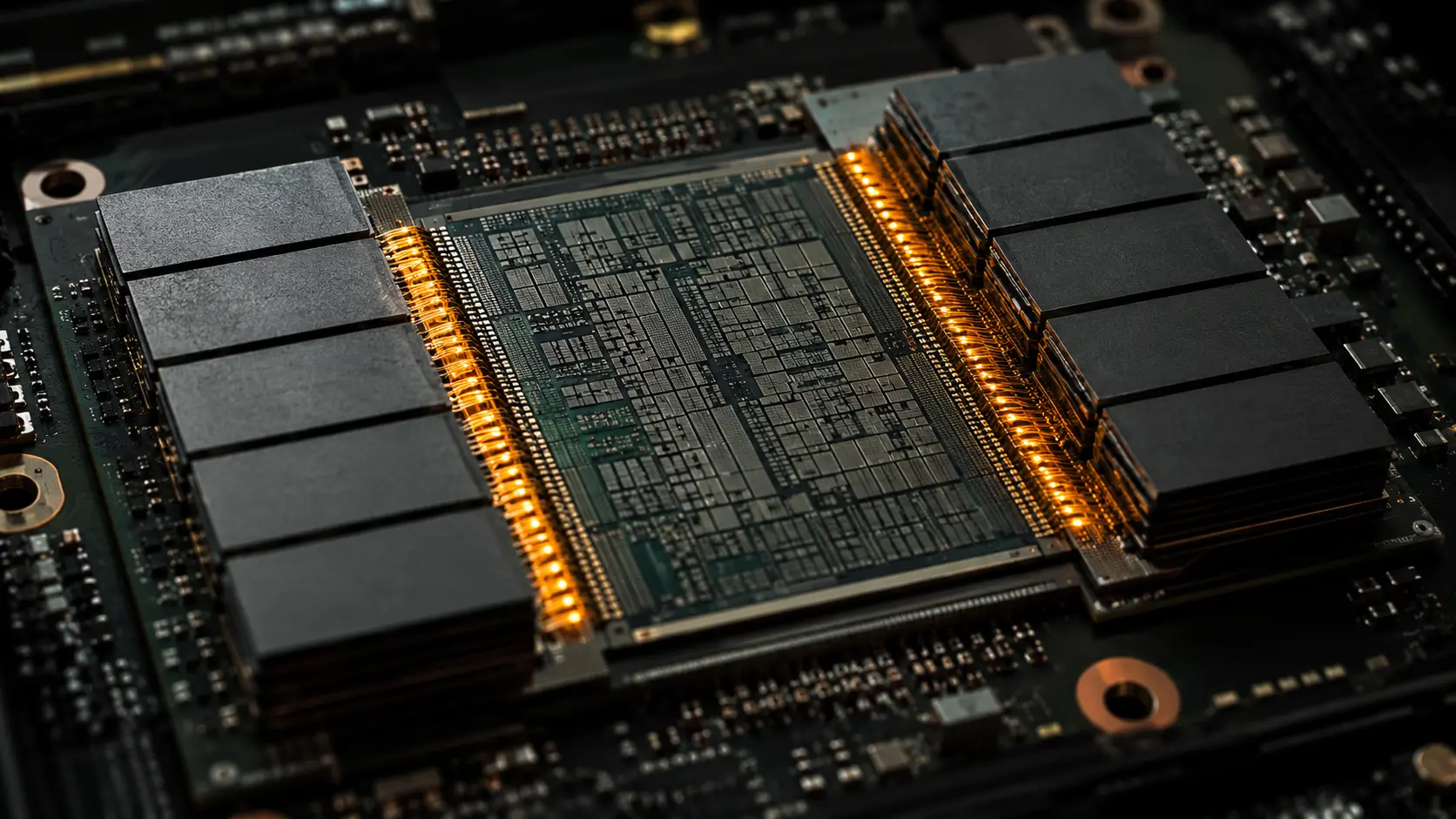
In the era of LLMs, FLOPs are a vanity metric. If you buy a massive NVIDIA GPU with astronomical FLOPs, you will discover that during text generation, those math cores sit completely idle up to 80% of the time. The bottleneck is the Memory Wall. The speed of AI is entirely dictated by how fast you can pipe gigabytes of weights out of High Bandwidth Memory (HBM) and into the compute cores.
Therefore, the ultimate Key Performance Indicator (KPI) has shifted to Tokens-per-Watt. It strips away the marketing jargon and answers the only question that matters to a data center architect: How much electricity does it cost to make this model talk?
HOW LLM INFERENCE WORKS
To understand the economics of inference, you must understand the physical constraints of the GPU and the software algorithms designed to bypass them.
1. The Fundamental Problem: The Autoregressive Loop
LLMs generate text autoregressively—one token at a time. To generate token $N+1$, the GPU must read the entire model’s weights into its compute cores. If you are running a 70-billion-parameter model, the GPU must physically move roughly 140 Gigabytes of data across the silicon just to print the word “The.” The math takes less than a millisecond, but moving 140GB of data takes tens of milliseconds. The GPU is mathematically starved.
2. The Insufficiency of Static Batching
The obvious solution is batching: instead of processing one user’s prompt, process 100 prompts simultaneously. The GPU loads the 140GB of weights once and applies it to all 100 users, drastically increasing efficiency.
However, traditional “static” batching is deeply flawed. If a batch contains four users, and User A asks for a 5-word sentence while User B asks for a 500-word essay, User A’s process finishes almost instantly. In a static batch, the GPU resources reserved for User A sit completely idle and locked while it waits for User B to finish writing 500 words.
3. The Core Mechanism: Continuous Batching
The breakthrough that dropped the cost of AI was the invention of Continuous Batching (or iteration-level batching). It operates on a continuous, high-speed loop. The moment User A’s 5-word sentence is finished, the software instantly evicts User A from the GPU and immediately slots User C’s new prompt into the empty space on the very next millisecond.
4. Technical Depth: The KV Cache Memory Constraint
To make continuous batching work, the GPU must remember the context of every user’s conversation. It saves this data in the Key-Value (KV) Cache. A 13-billion-parameter model requires roughly 1MB of KV Cache memory for every single token in a sequence. If you have hundreds of users with massive 80k-token context windows, you will run out of physical GPU memory long before you run out of math compute. Advanced memory management like PagedAttention breaks this KV Cache into non-contiguous blocks, preventing memory fragmentation and allowing the continuous batcher to cram more users into a single piece of silicon.
5. Real-World Consequences: The Thermodynamic Cost
By maximizing batch sizes and preventing idle time, continuous batching pushes GPU utilization from a dismal 20% up to nearly 70% or 85%. This efficiency directly translates to the bottom line. Research indicates that generating a 500-token query consumes approximately 0.3 watt-hours of energy. By optimizing the memory pipeline, companies extract vastly more tokens out of that same 0.3 watt-hours, improving their Tokens-per-Watt ratio and dropping the Cost Per Million (CPM) tokens to fractions of a penny.
Real-World Applications
The mastery of continuous batching and memory management forces companies into a brutal architectural decision: Self-Hosting vs. API Consumption.
Multi-Tenant API Providers: Companies like OpenAI, Anthropic, or specialized providers like Runpod and Spheron achieve massive economies of scale. Because they serve thousands of different clients across different time zones, they can pool uncorrelated demand. This massive, chaotic traffic ensures their continuous batching algorithms always have a waiting queue of requests, allowing them to run their NVIDIA H100 clusters at incredibly high utilization rates (driving their unit costs down).
High-Volume Self-Hosting: If an enterprise (like a major bank) generates over 50 million tokens per day, relying on an API becomes mathematically ruinous. They must self-host. By renting naked cloud GPUs (e.g., an 8x H200 pod) and installing an optimized open-source inference engine (like vLLM or TensorRT-LLM), they bypass the API markup. At scale, an optimized self-hosted Llama 3.1 70B model can run for roughly $1.90 per million tokens, compared to $5 to $15 per million for a proprietary frontier model API.
Spot-Instance Batch Processing: For background tasks that do not require real-time latency (like summarizing 10,000 PDF documents overnight), FinOps engineers use “spot instances.” They rent cheap, older GPUs (like L40S or A10G) during off-peak hours at a massive discount, dropping the cost to a few cents per million tokens.
Economic & Strategic Impact
The shift toward Tokens-per-Watt is restructuring the physical layout of global data centers.
Because power is the ultimate constraint, tech giants are evaluating the exact thermodynamic cost of every parameter. A data center running 100 GPUs at 400W each consumes 40kW continuously. Generating 1 billion standard queries equates to roughly 300 Megawatt-hours (MWh) of electricity—enough to power 1,000 average American homes for a day.
This energy reality breaks the illusion that AI scaling can continue indefinitely without hardware redesign. It has sparked fierce investment into alternative architectures. Startups like Groq are attacking the memory wall by entirely deleting the HBM from the chip and replacing it with massive pools of ultra-fast SRAM, attempting to outmaneuver NVIDIA strictly on the metric of Tokens-per-Watt.
Advantages
- Drastic Cost Reduction: Shifting from static to continuous batching allows a single server to handle vastly more traffic, reducing the total number of GPUs a company needs to buy or rent.
- Lower Queue Wait Times: Because the continuous algorithm admits new requests instantly at the token level, users experience much lower Time-To-First-Token (TTFT) latency during peak traffic spikes.
- FinOps Predictability: Normalizing inference costs to a “Cost Per Million” (CPM) metric allows Chief Financial Officers to accurately forecast the exact gross margins of a new AI product feature.
Limitations
- The Erlang-C Latency Trap: Running GPUs at 90% utilization to save money comes with a severe mathematical risk. Queueing theory (the Erlang-C formula) proves that as a system approaches maximum capacity, a tiny spike in user traffic causes the queue wait time to explode exponentially. A GPU fleet pushed too hard will suddenly freeze, leaving users staring at a loading screen.
- Context Window Constraints: Even with perfect batching, if a user uploads a 100-page PDF, the KV Cache for that single request balloons to tens of gigabytes. This consumes the memory bandwidth ceiling, leaving zero headroom to batch other users alongside them, collapsing the system’s efficiency back to square one.
- Engineering Overhead: Implementing continuous batching, PagedAttention, and automated spot-instance routing requires a dedicated, highly skilled MLOps team, erasing the cost savings for small companies with low traffic volume.
Common Misconceptions
Misconception: Faster processors (more FLOPs) automatically make AI run faster.
Reality: For generating text (decode phase), the processor is waiting on memory. Buying a chip with double the FLOPs will yield almost zero speed improvement unless you also double the memory bandwidth to feed it data faster.
Misconception: The cost of an API call is just the “price per token.”
Reality: The true cost of a token includes the hidden, massive energy footprint and the context window competition. Every token you generate consumes precious context space that could have been used for richer instructions, limiting the overall reasoning capability of your application.
Misconception: Self-hosting is always cheaper than using OpenAI or Anthropic.
Reality: Self-hosting is only cheaper if you maintain consistent, high volume. If your user traffic is highly erratic (e.g., massive spikes during the day, zero users at night), you are paying for idle GPUs. In highly variable workloads, pooling your traffic into a multi-tenant API is structurally cheaper.
What Most People Miss
The mathematical inevitability of the Erlang-C Formula.
When companies self-host, they often look at the average requests per minute and buy exactly enough GPUs to handle that average. This is a fatal error.
Queueing theory dictates that system utilization is a function of arrival rate, service time, and GPU count. Crucially, the expected queue wait time contains a critical multiplier based on remaining capacity.
This means that if you run your GPUs at 50% utilization, your wait time is normal. If you try to squeeze out efficiency and run at 90% utilization, the wait time multiplier skyrockets to 10x the baseline. A small burst of traffic forces the queue to grow unbounded. Therefore, operating a self-hosted AI cloud requires massively over-provisioning expensive hardware just to absorb the spikes, which destroys the perceived unit economics.
Comparison Table
| GPU Config (8x Node) | Acquisition Cost (Est) | On-Demand ($/hr) | Llama 3.1 70B Throughput | Cost Per Million Tokens (CPM) |
| A100 (80GB) | ~$120,000 | ~$8.40 | ~1,400 tok/s | ~$1.67 |
| H100 (SXM5) | ~$300,000+ | ~$19.20 | ~2,800 tok/s | ~$1.90 |
| H200 (141GB) | ~$320,000+ | ~$36.32 | ~3,600 tok/s | ~$2.80 |
| B200 (SXM6) | Supply Constrained | ~$59.44 | ~5,200 tok/s | ~$3.18 |
(Note: Data reflects spot/on-demand rates using vLLM continuous batching for FP16 precision in mid-2026. Higher throughput hardware often carries a higher absolute CPM due to premium acquisition costs.)
Case Study
Situation: An enterprise e-commerce platform deployed a conversational AI assistant for its merchants, processing 10 million daily conversations (roughly 2 billion tokens per day). Initially, they provisioned multiple racks of unoptimized H100 GPUs.
Challenge: The raw compute cost reached an unsustainable ~$39,100 per month. The system relied on static batching, resulting in a dismal average GPU utilization of just 22%. They were burning cash paying for GPUs that sat idle waiting for users to finish reading long responses.
Solution (The FinOps Overhaul): The MLOps team executed a three-pronged optimization strategy. First, they transitioned the inference engine to utilize continuous batching, allowing the server to dynamically shuffle users in and out of the GPU at the token level. Second, they applied FP8 quantization, shrinking the memory footprint of the model. Finally, they routed asynchronous, non-urgent summarization tasks to cheap, off-peak “spot” instances.
Outcome: The results were profound. Continuous batching drove GPU utilization from 22% up to 68%. Because the hardware was operating highly efficiently, they halved their physical hardware footprint, serving 1.8x the traffic with fewer servers. The total monthly spend collapsed from ~$39,100 down to roughly ~$16,151.
Lessons Learned: The case study proved that throwing more money at faster GPUs is the wrong solution. True AI profitability is unlocked in the runtime layer. By treating LLM inference as a memory management and traffic routing problem, enterprises can slash their infrastructure bills by over 50% without altering the intelligence of the underlying model.
Future Outlook
Next 12–24 Months
The industry will standardize Speculative Decoding paired with continuous batching. Rather than moving 140GB of data to generate a single token, a smaller “draft” model will guess five tokens in advance, and the massive target model will verify all five simultaneously. Because verifying five tokens takes the exact same memory bandwidth as verifying one, this software hack will effectively double the Tokens-per-Watt efficiency of existing H100 and H200 server racks without requiring new silicon.
Next 3–5 Years
The bifurcation of silicon architectures. As the thermodynamic reality of generating trillions of tokens sets in, hyperscalers will stop using general-purpose GPUs for inference. We will see the mass deployment of highly specialized Language Processing Units (LPUs). By discarding high-bandwidth memory (HBM) entirely and relying on massive pools of on-chip SRAM, these chips will avoid the memory wall altogether, targeting a 10x to 30x improvement in pure Tokens-per-Watt efficiency.
Next 10 Years
The ultimate limitation of LLMs will become national power grids. If a single trillion-parameter query consumes a fraction of a watt-hour, serving billions of global citizens continuous, real-time spatial video and text will require gigawatt-scale data centers. The success of the AI revolution will no longer depend on software engineering; it will depend entirely on securing cheap, zero-carbon electricity (like Small Modular Nuclear Reactors) to subsidize the raw thermodynamic cost of global digital cognition.
Most Likely Scenario
The era of subsidized AI API pricing is coming to an end. As venture capital dries up, providers will be forced to charge the true thermodynamic cost of inference. The companies that survive will be those that have mastered the “Tokens-per-Watt” metric. Generating text will become a highly optimized utility commodity, and the profit margins will flow strictly to the infrastructure architects who can manipulate memory bandwidth and queueing mathematics better than their competitors.
Key Takeaways
- The cost of LLM inference has dropped significantly, but exploding usage volumes mean infrastructure bills are the primary existential threat to AI companies.
- LLM text generation is bound by memory bandwidth, not compute. The GPU processor spends the vast majority of its time idle, waiting for the massive model weights to transfer from memory.
- Traditional static batching wastes money because fast queries must wait for long queries to finish.
- Continuous batching (iteration-level batching) solves this by evicting finished sequences and inserting new prompts at the millisecond token level, rocketing GPU utilization from 20% to over 70%.
- The KV Cache is the ultimate ceiling on batch size. Every token generated requires roughly 1MB of memory, meaning GPUs run out of memory space long before they run out of math capability.
- Because AI inference is an energy-intensive process (0.3 watt-hours per 500 tokens), the industry’s ultimate performance metric has shifted from FLOPs to “Tokens-per-Watt.”
Glossary
Continuous Batching: An algorithmic strategy where an inference engine dynamically adds newly arrived requests to the active batch and removes completed requests at each token iteration, keeping the GPU constantly utilized.
Erlang-C Formula: A mathematical queueing theory equation used to calculate the probability that a new request will have to wait in a queue, demonstrating that wait times explode exponentially as system utilization approaches 100%.
FLOPs (Floating Point Operations Per Second): A measure of pure mathematical computing power. Highly relevant for training AI, but less relevant for inference, which is limited by memory speed.
KV Cache (Key-Value Cache): The physical memory buffer where a GPU stores the mathematical context of an ongoing conversation so it does not have to re-process the entire prompt for every new word it generates.
Memory Wall / Memory-IO Bound: A computational bottleneck where the speed of a system is limited by how fast data can be moved across the chip, rather than how fast the processor can do the math.
Tokens-per-Watt: The ultimate metric of AI economic efficiency, measuring exactly how much electricity is required to generate a specific volume of output.
Frequently Asked Questions
Why can’t I just buy a faster GPU to lower my costs?
If you buy a GPU with double the math processing power (FLOPs) but the same memory bandwidth, your text generation will not speed up. The GPU will just sit idle faster. To lower costs, you must buy hardware with massive memory bandwidth or use software (like continuous batching) to keep the chip busy.
Is it cheaper to run my own open-source model or pay OpenAI/Anthropic?
If you have low or highly unpredictable traffic, the API is cheaper because the provider absorbs the cost of idle hardware. If you are processing over 50 million tokens per day consistently, self-hosting an open-source model on rented cloud GPUs can slash your costs by up to 80%.
What is the “KV Cache” and why does it matter?
When you have a long conversation with ChatGPT, it has to “remember” what you said earlier. It stores this memory in the KV Cache. Because this cache requires real physical memory space on the GPU (about 1MB per word for large models), long conversations limit how many people the server can handle at once.
Why does my AI app sometimes freeze or take forever to start typing?
This is the Erlang-C queueing trap. If the cloud provider is running their GPUs at 90% capacity to save money, a sudden 5% spike in users will cause the queue wait time to skyrocket 10x or 20x the normal wait.
Will AI costs keep dropping forever?
No. While software optimization (like quantization and batching) has driven costs down by 1,000x over the last few years, we are approaching the hard physical limits of thermodynamics and silicon manufacturing. Future cost reductions will be incremental, not exponential.
Sources
- AI Superior: LLM Inference Cost 2026: Complete Pricing Guide
- Hebbia: The Hidden Economics of LLM Inference
- Spheron Blog: AI Inference Cost Economics in 2026: GPU FinOps Playbook
- arXiv: The Economics of AI Decoding Chips
- GIGAGPU: Tokens per Watt: Energy Efficiency
- Medium: Continuous Batching in LLM Inference
- Hivenet: A practical guide to continuous batching for LLM inference
- Anyscale: How continuous batching enables 23x throughput in LLM inference
- Introl Blog: Cost Per Token Analysis: Optimizing GPU Infrastructure
- Epoch AI / Rahul Powar: The Hidden Cost of “Hello”