
AT A GLANCE
- The C5 Monopoly: Only five central banks hold permanent, unlimited access to Fed dollars.
- Peak Injection: The Fed pumped out nearly $450 billion in swap line liquidity during the March 2020 panic.
- Zero Exchange Risk: The protocol locks the exchange rate at the initial transaction to eliminate market volatility.
- The Ultimate Filter: Washington alone decides which nations survive an offshore dollar shortage.
HOW IT WORKS (The Mechanism)
Global trade runs on dollars. Foreign banks need dollars to function. During a crisis, panic sets in. Everyone hoards cash. The offshore dollar market freezes. Foreign central banks cannot print dollars. They face immediate default.
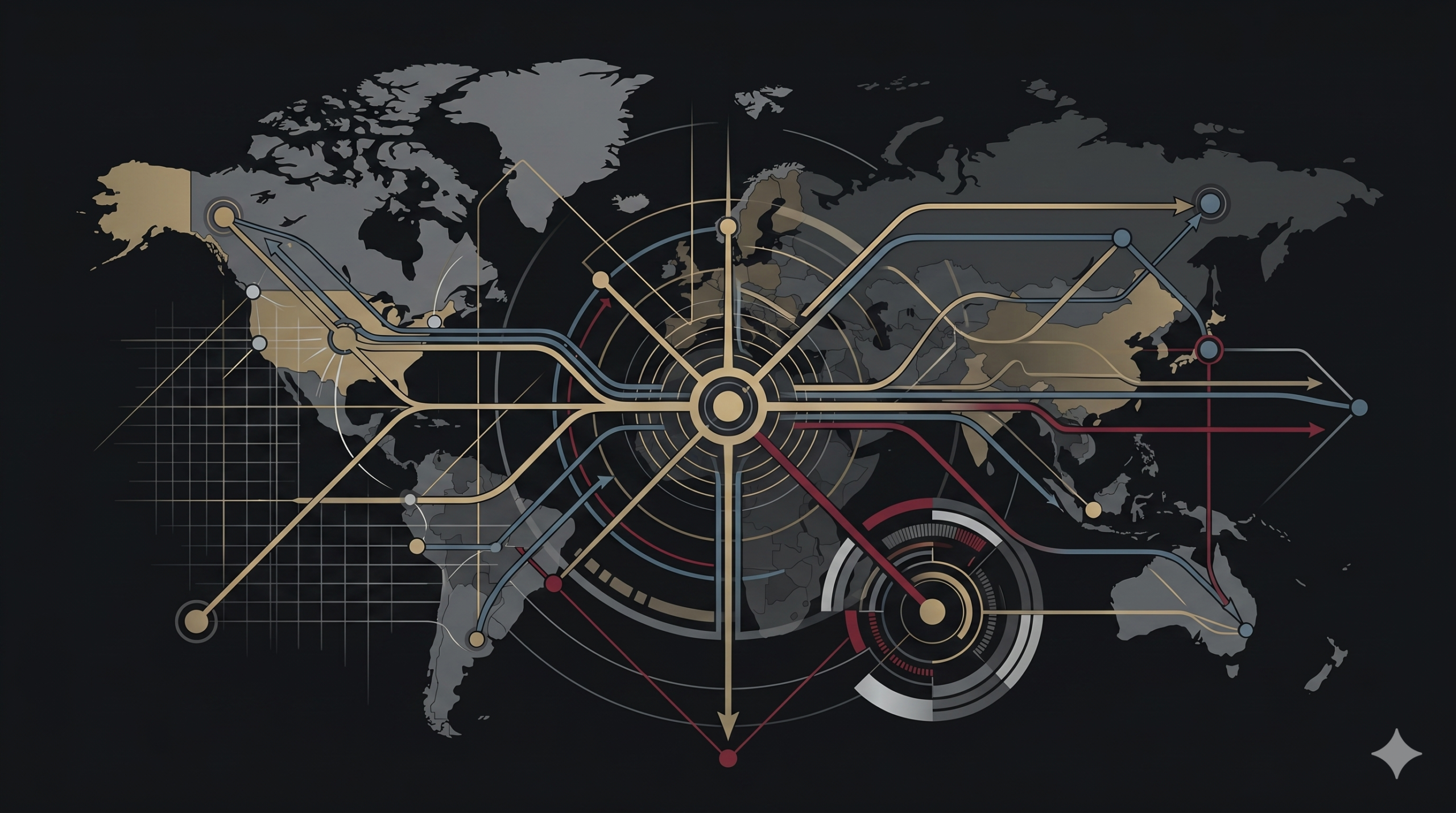
The Fed intervenes. It opens a liquidity pipe. The European Central Bank (ECB) requests $10 billion. The Fed sends the dollars. The ECB sends the equivalent in euros to the Fed at today’s exchange rate. They set a timer. It usually runs for 7 to 84 days.
When the timer ends, they reverse the transaction. They use the exact original exchange rate. The ECB returns the $10 billion. They pay a predetermined interest rate. The Fed returns the euros. Nobody takes on currency risk. The market stabilizes.

WHY IT MATTERS NOW (The Human Impact)
Institutional macro traders monitor these lines to gauge systemic fear. When swap line usage spikes, the global financial system is choking. Without these dollar injections, foreign banks cannot clear dollar-denominated debts. Trade stops. Importers cannot buy oil. Emerging markets default. In 2022, the Bank of Japan aggressively tapped its swap line to defend the yen against a brutal dollar rally. The Fed backstop prevented a catastrophic bond market collapse in Tokyo, which would have triggered a global recession within hours. Supply chains require dollars to clear the physical movement of goods. Swap lines keep those physical ships moving.
WHAT MOST PEOPLE MISS
Economists frame swap lines as neutral monetary stabilization tools. They act as weapons. The Fed operates these lines as a geopolitical sieve. The standing network includes only allied Western powers: Canada, England, Japan, Switzerland, and the Eurozone. When a crisis hits, Washington dictates who gets a temporary lifeline. South Korea and Mexico receive rescue capital. Hostile states face the void. By denying swap access, the United States weaponizes the offshore dollar shortage. It forces non-aligned economies into extreme inflation and default without deploying a single soldier.
THE TRAJECTORY (What Happens Next)
Over the next 36 months, emerging economies will accelerate their integration into alternative settlement networks like mBridge. They must build non-dollar liquidity pools to survive future shocks, as Washington increasingly ties dollar swap access to strict geopolitical alignment.
KEY TERMS
- C5 Central Banks: The five core allied central banks that hold permanent, standing swap line arrangements with the Federal Reserve.
- Eurodollars: US dollar-denominated deposits held in financial institutions outside the United States.
- Liquidity Premium: The extra yield investors demand for holding assets that cannot easily convert into cash during a panic.
- Lender of Last Resort: An institution that provides emergency credit to financial entities experiencing temporary liquidity crises.
- Currency Swap: A financial derivative where two parties exchange the principal and interest in different currencies.
SOURCES
- Federal Reserve Board – “Central Bank Liquidity Swaps” (Official Policy Archive).
- Bank for International Settlements (BIS) – “The US dollar exchange rate and the demand for foreign currency borrowing” (2025).
- Council on Foreign Relations (CFR) – “The Fed’s International Dollar Liquidity Facilities” (2024).
- National Bureau of Economic Research (NBER) – “Swap Line Efficacy During the COVID-19 Shock” (2021).
RELATED TOPICS
- Read Next:
The Malacca Dilemma: Mathematical Modeling of Chokepoint Collapse - Read Next: The ASML High-NA EUV: The Kinetic Physics of Microchip Hegemony
- Read Next: The SWIFT-CIPS Fault Line: The Architecture of Financial Warfare