Advertisement
)


AT A GLANCE
- Concept: Replicase Complexes: Non-structural proteins form polymerases that drive intracellular template replication.
- Concept: Subgenomic Transcription: High-velocity promoters optimize downstream antigen production inside host cytoplasm.
- Concept: Supply Compression: Reducing dose size drops necessary bioreactor manufacturing volumes by 99 percent.
- Concept: Pathogen Neutralization: Fast biological replication accelerates antibody generation against emerging biodefense threats.
HOW IT WORKS
Conventional messenger RNA platforms operate as linear, single-use instruction scripts. Following injection, cellular mechanisms internalize these nanoparticles, where ribosomes translate the sequence into antigens a finite number of times. Cellular enzymes then systematically dismantle the synthetic strand, halting antigen production.
The self-amplifying mRNA replicon fundamentally alters this constraint by borrowing the enzymatic core of positive-sense alphaviruses. Instead of carrying only the target antigen code, the sequence includes instructions for four non-structural viral proteins.
Upon entering the host cell’s cytoplasm, cellular machinery translates these four proteins to assemble an RNA-dependent RNA polymerase complex known as a replicase. This custom enzyme complex immediately treats the injected synthetic strand as a template, producing an intermediate negative-strand copy.

The replicase then uses this negative strand to generate two distinct types of positive-strand output. It synthesizes full-length genomic copies to sustain the replication loop, while simultaneously binding to a subgenomic promoter sequence to transcribe shorter subgenomic RNA fragments at high velocity.
This subgenomic transcription mechanism targets the cellular machinery solely toward mass antigen production. Because a single delivered replicon produces thousands of subgenomic transcripts, the cell manufactures immense quantities of defensive proteins from an incredibly tiny initial seed dose.
WHY IT MATTERS NOW
The threat architecture of asymmetric biological warfare requires rapid, population-scale medical countermeasure deployment. Conventional mRNA factories require massive, capital-intensive bioreactors to generate kilograms of raw material during a public health emergency.
Self-amplifying configurations break this logistical dependency by shifting the raw material scaling burden from external factories to the host’s own cellular biology. Because each dose requires less than one percent of the active ingredient of standard mRNA vaccines, a single small-scale bioreactor can supply an entire nation’s biodefense stockpile.
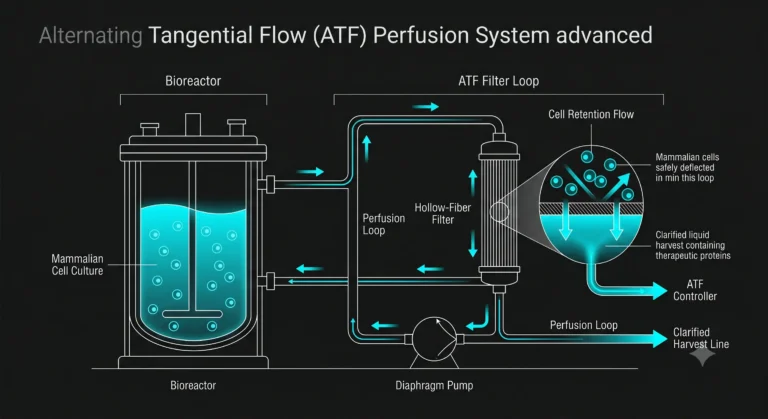
This manufacturing compression drops necessary raw material volume requirements by 99 percent. Biodefense production runs that previously required thousands of liters of enzymatic synthesis fluid now take place inside compact, benchtop single-use vessels.
This biological efficiency drastically alters national biodefense procurement frameworks managed by agencies like the Biomedical Advanced Research and Development Authority (BARDA). Strategic supply networks are moving to insulate themselves from raw material supply bottlenecks like clean room consumables, specialized enzymes, and synthetic nucleotides.
Commercial entities like Arcturus Therapeutics and CSL Seqirus are scaling this technology globally, securing regulatory clearances for multi-pathogen pandemic preparedness platforms. Their platforms prove that scaling domestic biodefense lines no longer requires expanding physical manufacturing square footage.
WHAT MOST PEOPLE MISS
Mainstream pharmaceutical analysts focus exclusively on the lipid nanoparticle casing, assuming that delivery chemistry is the sole determinant of vaccine success. They treat the inner genetic cargo as a passive variable, ignoring the reality that intracellular transcription kinetics dictate global logistics.
The operational paradox of self-amplifying vectors lies in balancing the intracellular innate immune response. If the replicase enzyme generates double-stranded RNA intermediates too rapidly, it trips the host cell’s internal sensor networks, shutting down protein translation entirely before the cell manufactures sufficient protective antigens.
THE TRAJECTORY
Next 12–36 Months: Biodefense programs will expand clinical pipelines using freeze-dried, room-temperature stable samRNA formulations. This advancement will remove the requirement for deep-freeze cold chains, allowing immediate decentralized distribution during a biological crisis.
Next Five Years: Militaries will deploy mobile, automated micro-bioreactor units directly to remote operational bases. These suitcase-sized production lines will utilize samRNA’s low-volume requirements to brew thousand-dose vaccine lots locally within hours of identifying an unknown pathogen.
Next Ten Years: Synthetic biology foundries will establish cross-reactive replicon libraries capable of targeting entire viral families via programmable logic circuits. Autonomous threat detection arrays will automatically select and print sequence-specific countermeasures to neutralize engineered bioweapons in real-time.
What Could Go Wrong: The intense innate immune activation triggered by replicating viral RNA can cause severe localized inflammation and reactogenicity in sensitive patient populations. If clinical testing profiles reveal persistent adverse safety signals, regulatory authorities will restrict samRNA applications strictly to high-threat military personnel.
Most Likely Outcome: The samRNA replicon will replace legacy linear mRNA as the foundational baseline for global pandemic readiness reserves. The 99 percent drop in required raw materials will centralize global biodefense procurement within a few state-backed automated facilities.
KEY TERMS
- Self-Amplifying mRNA (samRNA): A type of modified genetic material that encodes both a target antigen and the enzymatic machinery required to copy itself inside host cells.
- Replicase: An RNA-dependent RNA polymerase complex synthesized inside the cytoplasm to execute continuous duplication of a genetic template.
- Subgenomic RNA: A truncated genetic strand transcribed from an internal promoter sequence that directs the cell to rapidly manufacture target proteins.
- Lipid Nanoparticle (LNP): A protective microscopic fatty envelope that safely transports fragile nucleic acid sequences across cellular membranes.
- Reactogenicity: The physical manifestation of an inflammatory immune response to a vaccine, including fever, muscle soreness, and localized swelling.
SOURCES
- Biomedical Advanced Research and Development Authority (BARDA) — Strategic Medical Countermeasure Infrastructure and Pandemic Preparedness Frameworks
- Arcturus Therapeutics — STARR Self-Amplifying mRNA Technology Platform Specification Documentation
- Journal of Virology — Alphavirus-Based Replicons Demonstrate Different Interactions with Host Cells and Can Be Optimized to Increase Protein Expression
- bioRxiv — Next-Generation saRNA Platforms: Systematic Screening and Engineering Enhances Superior Protein Expression and Organ-Specific Targeting