Advertisement
)


AT A GLANCE
- Concept: Multi-Locus Knockout: Scientists simultaneously delete dozens of specific target genes from a donor animal’s DNA.
- Concept: Alpha-Gal Elimination: Removing specific carbohydrate molecules prevents the human body from triggering hyperacute organ rejection.
- Concept: Viral Deactivation: Genome editing permanently neutralizes porcine endogenous retroviruses embedded within the donor’s genetic code.
- Concept: Organ Scaling: Standardizing genetic modifications allows specialized biocontainment facilities to mass-produce transplantable human replacement organs.
HOW IT WORKS
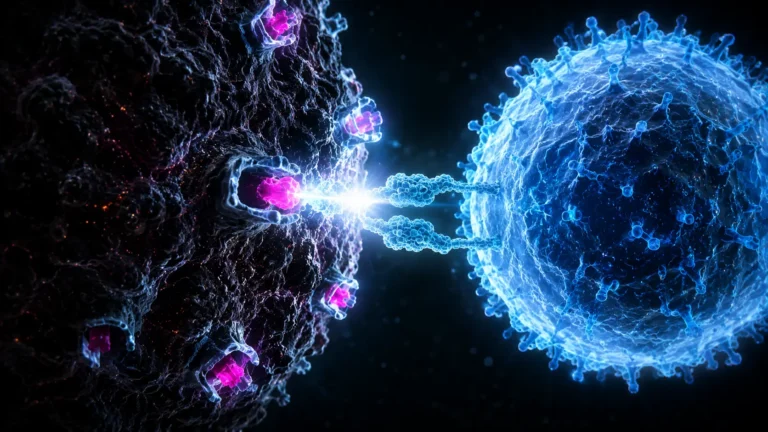
Human immune systems aggressively attack foreign tissue. The immediate barrier to transplanting pig organs into humans is hyperacute rejection. This violent biological response occurs because human antibodies instantly recognize and attack a specific carbohydrate molecule called galactose-alpha-1,3-galactose (alpha-gal), which coats the surface of porcine blood vessels.
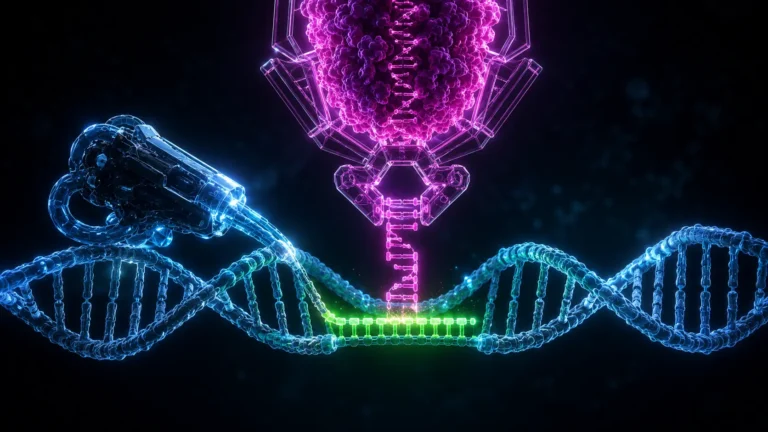
To bypass this immune response, scientists execute targeted genetic knockouts. Using the CRISPR-Cas9 endonuclease system, bioengineers deliver a targeted double-strand break into the GGTA1 gene of a pig embryo. This edit effectively shuts off the specific enzyme responsible for producing the alpha-gal carbohydrate.
Engineers repeat this exact knockout process across multiple loci to remove other rejection-triggering antigens, specifically targeting the structures producing Neu5Gc and Sd(a) carbohydrates. By erasing these chemical markers, the resulting organ becomes practically invisible to the immediate defenses of the human immune system.
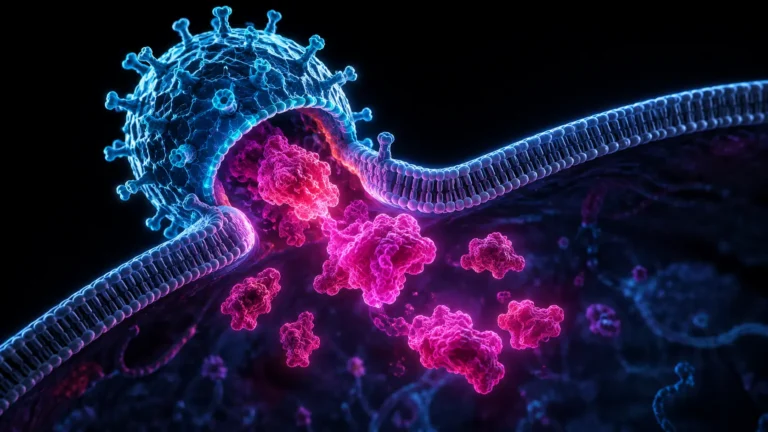
Deleting carbohydrates only solves the immunological rejection problem. The secondary threat is virological. The genome of every living pig contains dormant, fossilized viral sequences called Porcine Endogenous Retroviruses (PERVs). If left intact, these retroviruses pose a massive biohazard because they can awaken, replicate, and infect human cells post-transplant.
Because PERVs exist in dozens of separate locations across the pig genome, scientists cannot edit them sequentially. Instead, they deploy highly multiplexed CRISPR arrays. They introduce guide RNAs that simultaneously target and cut the viral sequences at over 60 distinct genomic locations. This massive simultaneous edit permanently scrambles the DNA syntax of the retroviruses, rendering them biologically inert before the organ even begins to grow in the host animal.
WHY IT MATTERS NOW
The global organ shortage represents a structural demographic failure. Hundreds of thousands of patients sit on dialysis machines globally, consuming massive portions of national healthcare budgets while waiting for a limited, highly unpredictable supply of human donor kidneys.
End-stage renal disease alone costs the United States healthcare system tens of billions of dollars annually. Xenotransplantation shifts organ replacement from a tragedy-dependent human donor network into a predictable, scalable biomanufacturing pipeline.
Corporate momentum has accelerated this transition. Companies like eGenesis and Revivicor have advanced past theoretical laboratory work into successful non-human primate trials and FDA-approved early human compassionate-use transplants. These milestone surgeries prove the multi-locus gene editing matrix can successfully sustain human life for extended periods.
This capability carries immense geopolitical and economic weight. Developing a sovereign, standardized supply of genetically engineered organs isolates national healthcare systems from international transplant bottlenecks and illicit organ trafficking networks. The capacity to mass-cultivate biological replacement parts establishes a strategic pillar for advanced national bioeconomies.
WHAT MOST PEOPLE MISS
Public perception assumes that cross-species transplantation simply requires suppressing the patient’s immune system with standard drugs. They miss the severe, fundamental physiological incompatibilities between species, such as aggressive blood coagulation cascades and hormone signaling mismatches.
To solve this, scientists do not just delete pig genes; they actively insert human transgenes into the pig embryo. By embedding human genes that regulate blood clotting and immune suppression directly into the donor genome, the organ acts as a genetic Trojan horse. It chemically signals the host body to accept the tissue, preventing the human blood from instantly clotting as it passes through the foreign vascular network.
THE TRAJECTORY
Next 12–36 Months: Clinical trials will expand from emergency compassionate-use cases to carefully selected living patients requiring kidney transplants, establishing initial regulatory baseline data for long-term PERV monitoring.
Next Five Years: Specialized pathogen-free biomanufacturing facilities will scale up cloning operations, producing standardized herds of gene-edited donor animals raised under strict indoor biocontainment protocols.
Next Ten Years: The complete humanization of xenograft immune profiles will reduce the need for heavy, toxic immunosuppressant drugs, allowing routine organ replacement for heart failure and liver disease long before patients reach critical, end-stage condition.
What Could Go Wrong: A dormant, undetected zoonotic pathogen could bypass the genetic screening matrix, crossing the species barrier during a transplant and triggering a novel global pandemic.
Most Likely Outcome: Xenotransplantation will transition from a high-risk experimental procedure into a highly regulated, commercially produced medical commodity, fundamentally curing the global organ shortage.
KEY TERMS
- Xenotransplantation: The surgical transfer of living cells, tissues, or organs from one species to another.
- Porcine Endogenous Retroviruses (PERVs): Dormant viral genetic sequences permanently embedded within pig DNA that carry the potential to infect human cells.
- Hyperacute Rejection: A massive, immediate immune system attack that destroys a transplanted organ within minutes, triggered by pre-existing antibodies recognizing foreign antigens.
- Multi-Locus Editing: The simultaneous modification of multiple specific DNA sequences across different genes within an organism’s genome.
- Alpha-Gal: A carbohydrate molecule present in most mammals but absent in humans, acting as the primary target for severe immune rejection during cross-species transplants.
SOURCES
- U.S. Food and Drug Administration (FDA) — Guidance for Industry: Source Animal, Product, Preclinical, and Clinical Issues concerning the Use of Xenotransplantation Products
- National Institutes of Health (NIH) — Multiplexed CRISPR/Cas9-based genome editing to inactivate porcine endogenous retroviruses
- eGenesis — Preclinical Efficacy and Safety of Genetically Engineered Porcine Organs
- Journal of the American Medical Association (JAMA) — Clinical Xenotransplantation: Scientific and Ethical Considerations