Advertisement
)
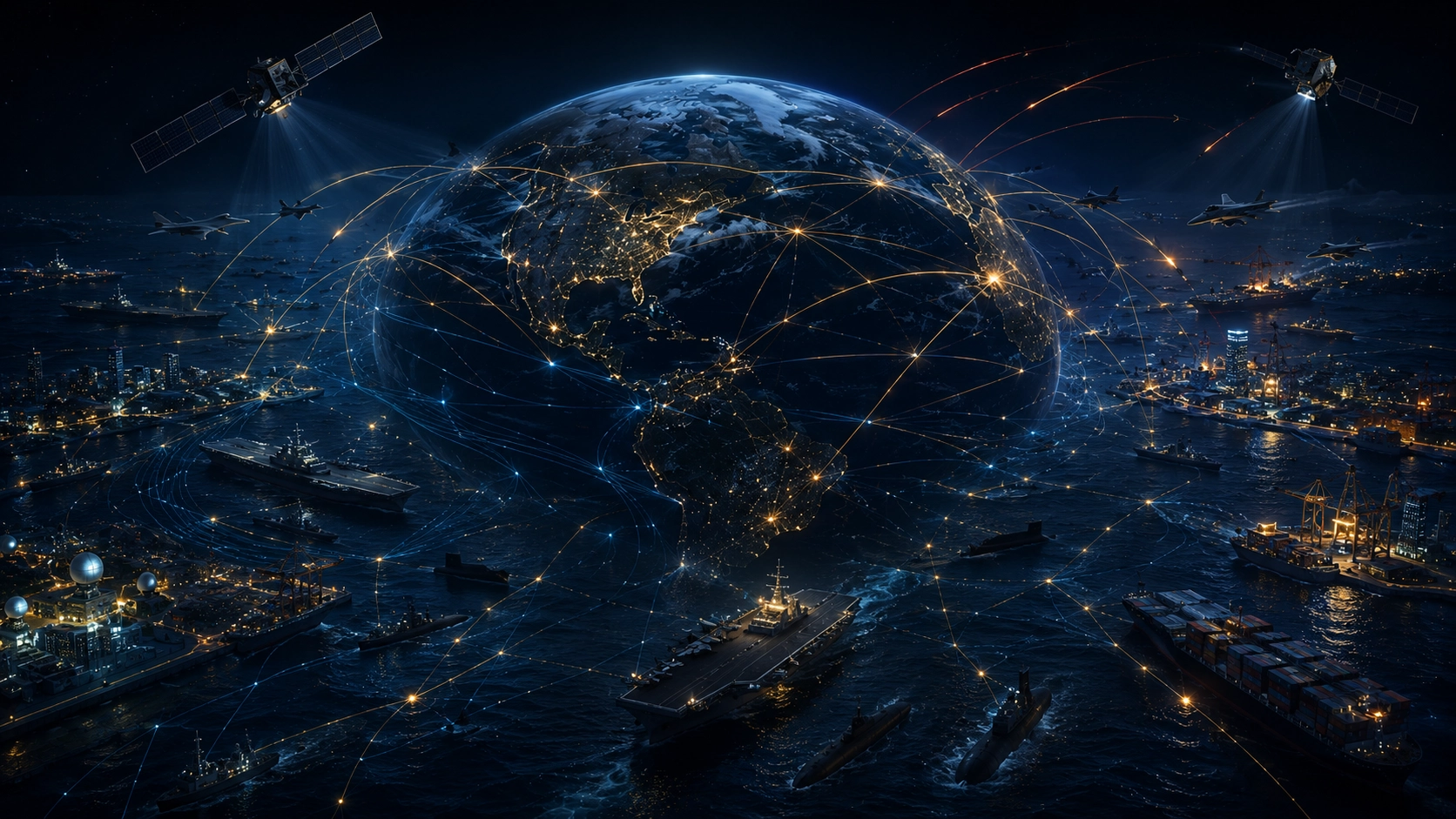

AT A GLANCE
- Concept: Sovereign Anarchy: There is no global police force; nations must secure their own physical survival independently.
- Concept: Multi-Domain Competition: Power is no longer exclusively terrestrial; it spans orbital space, cyberspace, and deep-ocean floors.
- Concept: Techno-Nationalism: Controlling advanced technologies like artificial intelligence directly equates to absolute military supremacy.
- Concept: Economic Coercion: Weaponizing trade networks and financial clearinghouses replaces traditional kinetic blockades in modern statecraft.
WHY THIS SYSTEM MATTERS
Capital does not flow in a vacuum. Semiconductors are not manufactured in a borderless utopia. Every economic and technological system on Earth relies entirely on the physical security provided by the geopolitical order.
When that global order fractures, supply chains snap, structural inflation spikes, and physical conflict erupts. The post-Cold War era of hyper-globalization is permanently dead. We have entered a period of extreme strategic fragmentation. Great powers are actively decoupling their economies to reduce their vulnerability to foreign adversaries.
Global defense spending is rapidly approaching three trillion dollars annually. Nations are preparing for sustained, high-intensity conflict across multiple domains. Understanding geopolitics is no longer optional for investors or engineers.
State intervention dictates exactly which technologies receive funding and which global markets remain accessible. If you do not understand how nations compete, you cannot accurately predict the future of the industries building modern civilization. The geopolitical system is the ultimate physical constraint governing all human ambition.
HOW THE SYSTEM WORKS
Nations operate in a state of structural anarchy. Because no supreme authority exists to enforce international law, states must maximize their relative power to ensure their own survival.
This drive creates a permanent security dilemma. When one nation builds defensive weapons, its neighbor perceives an offensive threat and arms itself in response. This mathematical cycle drives continuous arms races and alliance formations.
Modern geopolitics functions through a complex matrix of deterrence and coercion. Deterrence physically prevents an adversary from attacking by guaranteeing an unacceptable, overwhelming counter-strike. Coercion forces an adversary to change behavior through the direct application of economic or military pain.
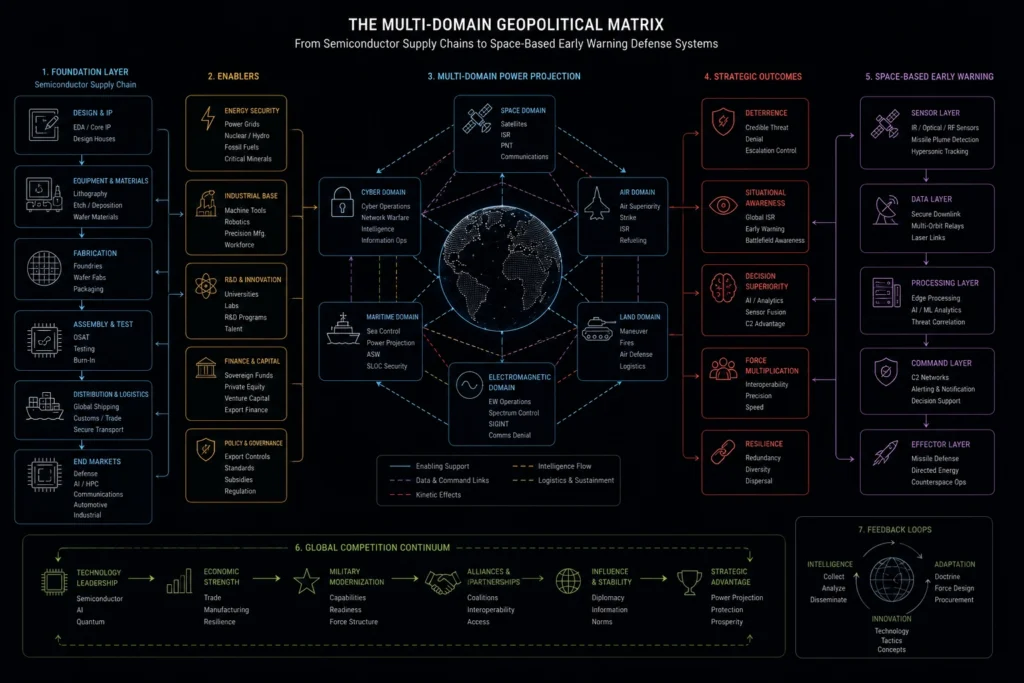
To execute these strategies, nations build alliances and project power across physical geography. The oceans remain the primary conduit of global wealth. Superpowers maintain massive naval fleets to guard maritime choke points, ensuring the free flow of energy and capital. Simultaneously, they weaponize technological standards to trap allied nations inside their proprietary digital ecosystems, utilizing code and silicon as instruments of state power.
MAJOR COMPONENTS
Defense Systems and Kinetic Power: Military strength forms the ultimate backstop of national sovereignty. The paradigm has shifted entirely from mass infantry to precision strike and autonomous defense. Modern militaries prioritize hypersonic glide vehicles, autonomous drone swarms, and directed-energy weapons. These platforms compress the decision-making loop, requiring artificial intelligence to calculate interception vectors against threats traveling at Mach 10. True power is no longer defined strictly by the size of an army, but by the software integrating its sensor networks.
Aerospace and the Orbital Domain: Space is the new primary warfighting domain. Without satellites, terrestrial militaries are completely blind and deaf. Nations are deploying proliferated low-Earth orbit (LEO) constellations, such as the Hypersonic and Ballistic Tracking Space Sensor (HBTSS) networks, to actively track advanced missile threats. Controlling orbital real estate and the lunar surface directly dictates the survival of terrestrial military operations. Space dominance is the absolute prerequisite for global power projection.
Intelligence and Security: Information asymmetry wins conflicts before they begin. Intelligence agencies utilize signals intelligence (SIGINT), synthetic aperture radar, and algorithmic data harvesting to meticulously map adversarial capabilities. Cyber warfare heavily replaces physical sabotage. State-sponsored hackers routinely infiltrate rival power grids, water treatment facilities, and financial networks to plant dormant malware for future extortion, operating completely below the threshold of kinetic war.
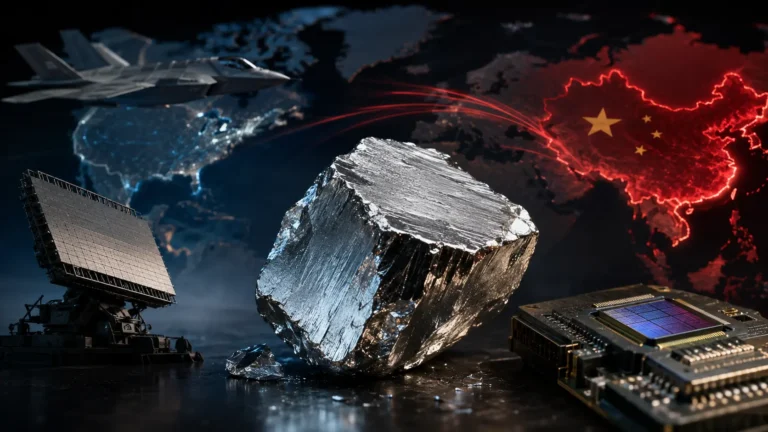
Strategic Competition and Techno-Nationalism: Technology is the new geography. Nations compete ruthlessly to dominate the supply chains for extreme ultraviolet lithography, advanced artificial intelligence, and critical minerals. Export controls and sanctions physically blockade adversaries from acquiring the silicon necessary to train next-generation neural networks. The state that dominates the computing stack dictates the future geopolitical order.
Great Powers and Middle Power Alignments: The unipolar American system has transitioned into a highly fragmented multipolar reality. China and the United States engage in a structural, multi-decade competition for hegemonic dominance. Simultaneously, highly capable middle powers—like India, Turkey, and Japan—are heavily leveraging this division. They execute multi-aligned foreign policies, extracting military hardware and capital investments from both superpowers without committing to rigid alliances.
THE ECONOMICS
Geopolitics aggressively dictates the flow of global capital. Strategic competition forces governments to execute massive industrial policies, directly subsidizing domestic manufacturing to secure critical supply chains.
This localized production destroys the extreme economic efficiency of free trade. As nations prioritize physical security over cheap goods, inflation becomes a structural feature of the global macro economy. Nations are rapidly expanding their military-industrial bases, driving massive capital flows into defense technology startups, aerospace contractors, and rare-earth mining operations.
Economic statecraft heavily weaponizes the international banking system. Superpowers utilize the SWIFT financial messaging network and dollar-clearing mechanisms to execute devastating financial sanctions. This coercion forces rival nations to engineer parallel financial rails and settle trade in local currencies, actively fracturing the unified global capital market into competing regional blocs.
GEOPOLITICAL IMPORTANCE
The geopolitical system determines the survival of the state. Failure to correctly interpret the strategic environment results in national subjugation or physical destruction.
Grand strategy requires perfectly aligning a nation’s finite economic resources with its absolute security requirements. Geography is destiny. A nation’s physical location dictates its vulnerability. Island nations require dominant navies to survive, while landlocked nations must maintain massive standing armies to secure porous borders.
Modern grand strategy attempts to overcome these physical geographic constraints through the deployment of autonomous systems and space-based architectures. The ability to project power globally without deploying physical troops defines the modern superpower. Control over the geopolitical system allows a nation to write the rules of global finance, extract asymmetric wealth from global trade, and secure the thermodynamic energy required to sustain its domestic population.
CURRENT CHALLENGES
The geopolitical system is currently destabilized by extreme technological velocity. The deployment of hypersonic weapons and autonomous kill vehicles severely compresses the time available for human decision-making.
If a space-based sensor detects an incoming Mach 8 glide vehicle, a human leader has less than three minutes to authorize a counter-strike. This speed forces militaries to integrate artificial intelligence directly into their nuclear command and control architectures.
Delegating lethal authority to algorithms introduces the severe risk of automated escalation. A sensor malfunction or an undetected cyber intrusion could mathematically trigger a catastrophic, global kinetic conflict before human diplomats can intervene. Furthermore, the proliferation of cheap, precision-guided munitions allows non-state actors to successfully contest major powers. A militant group using commercial drones and asymmetric naval tactics can blockade strategic maritime choke points, holding trillions of dollars of global trade hostage against billion-dollar superpower navies.
WHAT MOST PEOPLE MISS
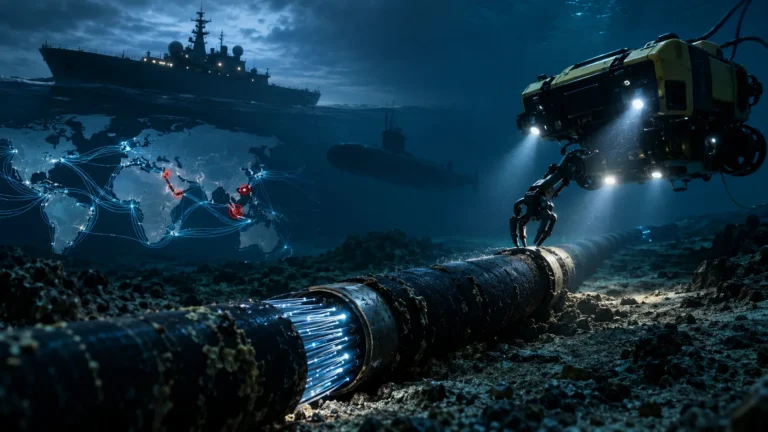
Public discourse focuses entirely on territorial disputes and kinetic border skirmishes. They completely miss the silent, structural warfare occurring within technical standards bodies and submarine cable networks.
True power projection relies on controlling the invisible plumbing of civilization. If a nation successfully dictates the global engineering standards for 6G telecommunications or quantum cryptography, they physically embed their intelligence-gathering architecture into the hardware of their adversaries. Wars in the twenty-first century are frequently fought and won in corporate boardrooms and international regulatory committees decades before the public notices a physical crisis.
THE FUTURE
- Next 12–36 Months: Global defense spending will heavily exceed three trillion dollars annually. The United States and its Pacific allies will rapidly accelerate the deployment of proliferated space architectures to track hypersonic threats. Middle powers will increasingly assert localized dominance over regional maritime domains.
- Next Five Years: The decoupling of high-technology supply chains will harden into permanent, impenetrable barriers. Global artificial intelligence research will fracture into distinct, heavily classified sovereign silos. Nations will treat massive computing clusters as highly restricted sovereign weapons systems.
- Next Ten Years: The militarization of the lunar surface and cis-lunar space. Superpowers will establish permanent orbital outposts to secure the gravitational high ground. Space-based energy capture and asteroid mining will become primary geopolitical objectives to secure critical physical resources.
- What Could Go Wrong: An accidental collision in orbit destroys a critical early-warning satellite. Due to the lack of clear escalation protocols for space warfare, the affected nation interprets this as a preemptive nuclear blinding attack. The automated command systems instantly launch a devastating terrestrial retaliation, triggering unintended global conflict.
- Most Likely Outcome: The global system will solidify into a state of permanent, high-intensity cold conflict. Absolute economic decoupling will fail, resulting in a complex, volatile matrix where nations trade aggressively in basic commodities while executing continuous, shadow warfare in cyberspace and orbit.
FREQUENTLY ASKED QUESTIONS
- What is the security dilemma? The security dilemma is a core concept where actions taken by a state to increase its own security cause reactions from other states, which in turn lead to a decrease rather than an increase in the original state’s security.
- How do hypersonic weapons alter geopolitics? Hypersonic weapons travel at highly unpredictable trajectories at Mach 5 or faster. They completely bypass traditional missile defense systems, drastically reducing the reaction time of targeted nations and threatening absolute strategic stability.
- What is a middle power? A middle power is a sovereign state that is not a superpower but possesses sufficient economic and military strength to heavily influence international events within its specific geographic region.
- How is the global economy being weaponized? Superpowers use their control over global banking networks, reserve currencies, and technical supply chains to enforce sanctions and embargoes. This economically starves adversaries without resorting to physical military action.
- What is the significance of maritime choke points? Choke points are narrow, highly congested physical straits—like the Strait of Hormuz or the Malacca Strait—where massive volumes of global energy and trade must pass. Controlling or blocking these straits grants immense geopolitical leverage.
- How does space architecture impact terrestrial warfare? Terrestrial militaries rely entirely on satellites for GPS navigation, secure communications, and missile warning. The nation that controls orbital space can instantly blind an adversary’s terrestrial forces, rendering them combat ineffective.
- What is techno-nationalism? Techno-nationalism is a political ideology that inextricably links a nation’s technological capabilities to its national security and economic prosperity. It drives policies that aggressively protect domestic technology from foreign acquisition.
- Why is extreme ultraviolet lithography geopolitically important? Extreme ultraviolet (EUV) lithography is the only physical method to manufacture the world’s most advanced microchips. Controlling the companies that build these machines equates to controlling the future of global computing and artificial intelligence.
- What is a proliferated satellite constellation? Instead of relying on a few massive, expensive satellites, militaries now deploy hundreds of small, cheap satellites in low-Earth orbit. If an adversary destroys one satellite, the rest of the networked constellation continues to function seamlessly.
- How do economic sanctions actually work? Sanctions mathematically cut off a target entity from the global financial clearing system. A sanctioned nation cannot buy imports, sell exports, or access its foreign currency reserves, rapidly inducing domestic economic collapse.
- What is deterrence theory? Deterrence theory relies on possessing overwhelming retaliatory military force. The goal is to mathematically convince an adversary that the cost of attacking will vastly outweigh any potential strategic benefit they could hope to achieve.
- How does artificial intelligence change military strategy? Artificial intelligence processes massive arrays of sensor data instantly. It identifies targets, predicts enemy movements, and calculates intercept trajectories thousands of times faster than a human commander, fundamentally accelerating the pace of modern warfare.
- What is signals intelligence (SIGINT)? SIGINT is the interception and mathematical decryption of electronic communications, radar emissions, and digital data flows. It provides militaries with a constant, invisible map of adversarial capabilities and intentions.
- What is a unipolar versus a multipolar world? A unipolar world is dominated by a single, undisputed superpower holding absolute hegemony. A multipolar world contains multiple major powers of roughly equal strength, constantly competing and forming shifting alliances to balance each other.
- What constitutes the nuclear triad? The nuclear triad is a strategic military posture consisting of land-based intercontinental ballistic missiles (ICBMs), submarine-launched ballistic missiles (SLBMs), and strategic bombers. This distributed architecture guarantees that a nation can always launch a retaliatory nuclear strike.
KEY TERMS
- Security Dilemma: The paradoxical situation where a nation’s attempt to increase its own security mathematically forces its neighbors to do the same, decreasing overall stability.
- Hypersonic Glide Vehicle: A highly maneuverable weapon that skips along the upper atmosphere at extreme speeds to evade traditional ballistic missile tracking radars.
- Deterrence: The strategic deployment of military power to physically discourage an adversary from initiating an attack.
- Techno-nationalism: The fusion of technology policy and national security, treating advanced commercial research as a vital sovereign asset.
- Grand Strategy: The continuous alignment of all national resources—economic, military, and diplomatic—to achieve long-term geopolitical objectives.
- Middle Power: A regional sovereign state capable of shaping global outcomes without possessing absolute superpower status.
- Economic Coercion: The aggressive use of sanctions, tariffs, and capital controls to force political concessions from adversarial states.
- Space Domain Awareness: The continuous, mathematical tracking and categorization of all physical objects, satellites, and debris in Earth’s orbit.
- Signals Intelligence (SIGINT): The collection of intelligence by intercepting electronic signals, communications, and radar telemetry.
- Choke Point: A highly vulnerable, narrow geographic corridor that serves as a mandatory transit route for massive volumes of global trade.
- Multipolarity: A global system where power is distributed among several competitive states rather than concentrated in a single hegemon.
- Nuclear Triad: The three-pronged military force structure of land, sea, and air nuclear delivery systems designed to ensure a survivable second strike.
- Zero-Day Exploit: A highly valuable cyber weapon targeting a software vulnerability that the manufacturer is entirely unaware of, granting the attacker immediate system access.
- Autonomous Kill Vehicle: A robotic weapons platform capable of independently identifying, tracking, and destroying a target without human intervention.
- Hegemony: The absolute political, economic, and military dominance of one sovereign state over all others within the international system.
SOURCES
- Stockholm International Peace Research Institute (SIPRI) — Trends in World Military Expenditure and Global Arms Transfers 2026
- Department of Defense (DoD) — Space Development Agency Proliferated Warfighter Space Architecture Guidelines
- International Institute for Strategic Studies (IISS) — The Military Balance 2026 and Shifting Global Power Dynamics
- Defense Intelligence Agency (DIA) — Challenges to Security in Space and Hypersonic Threat Assessments
- Center for Strategic and International Studies (CSIS) — Economic Coercion, Techno-Nationalism, and Supply Chain Vulnerabilities