Advertisement
)


The bottom of the Pacific Ocean is littered with trillions of dollars’ worth of black, potato-sized rocks. These “polymetallic nodules” contain more high-grade cobalt, nickel, and manganese than every terrestrial mine on Earth combined. As the electric vehicle revolution threatens to drain global land-based metal reserves, an unprecedented industrial race to vacuum the abyss has begun.
But there is a catch: the high seas belong to no single nation.
Instead, the fate of the global battery supply chain—and the largest untouched ecosystem on the planet—rests entirely in the hands of an obscure, autonomous agency headquartered in a small office building in Kingston, Jamaica. If this agency approves the final rulebook for commercial extraction, the greatest mining operation in human history will commence. If they stall, geopolitical tensions over critical mineral monopolies will violently escalate. Understanding how this single organization dictates the future of the ocean floor is the key to navigating the next decade of strategic resource competition.
What is The International Seabed Authority (ISA)?
The International Seabed Authority (ISA) is an autonomous international organization established under the 1982 United Nations Convention on the Law of the Sea. It is legally responsible for organizing, regulating, and controlling all mineral-related activities on the international seabed beyond the limits of national jurisdiction.
At a Glance
- Concept: The global governing body that acts as the “landlord” for the deep ocean, issuing contracts to state-sponsored corporations to explore and extract underwater minerals.
- Why it matters: The global transition to renewable energy requires a massive supply of battery metals. Deep-sea mining offers a theoretically infinite supply without deforestation or child labor, but risks irreversible destruction of deep-ocean ecosystems. The ISA holds the sole legal authority to greenlight or block this industry.
- Who uses it: 170 member states (and the European Union). State-sponsored mining contractors from China, the UK, Japan, South Korea, and island nations like Nauru.
- Biggest takeaway: The United States is not a member. Because the US Senate never ratified the underlying UN treaty (UNCLOS), Washington has zero voting power at the ISA, watching from the sidelines as China secures the lion’s share of ocean floor exploration contracts.
In Simple Words
If you want to mine copper in Canada, you get a permit from the Canadian government. If you want to mine cobalt in the Democratic Republic of Congo, you deal with the Congolese government.
But what if you want to mine in the middle of the Pacific Ocean, thousands of miles away from any coastline?
Under international law, the deep ocean floor is considered the “common heritage of mankind.” No country can claim it. To prevent a violent, unregulated gold rush, the countries of the world created the International Seabed Authority (ISA).
The ISA acts like a global real estate agent for the ocean floor. If a mining company wants to send robotic vacuums three miles underwater to scoop up valuable battery metals, they cannot just go do it. They must be sponsored by a country, and they must apply to the ISA for a contract. The ISA decides who gets a piece of the ocean, how much they have to pay in royalties, and what environmental rules they must follow. Right now, the ISA is writing the final “Mining Code,” the rulebook that will officially turn the key and start the deep-sea mining industry.
Why This Matters
The global supply chain for electric vehicles (EVs) is geographically vulnerable. Today, China completely dominates the processing of critical minerals, while extraction is heavily concentrated in geopolitically unstable or environmentally sensitive regions (e.g., cobalt in the DRC, nickel in Indonesian rainforests).
Deep-sea mining is the ultimate geographical bypass. A single region governed by the ISA—the Clarion-Clipperton Zone (CCZ)—contains an estimated 21 billion tonnes of polymetallic nodules. These nodules sit unattached on the muddy seafloor, requiring no blasting or digging.
However, the ISA is operating under a ticking clock. Due to a legal loophole triggered in 2021, the ISA was forced to accelerate the drafting of the commercial “Mining Code” (exploitation regulations). As we navigate 2026, the new ISA Secretary-General, Leticia Carvalho, faces an explosive mandate: approve the first commercial mining applications or face unprecedented legal challenges from mining companies ready to deploy their billion-dollar subsea robots.
The International Seabed Authority’s Role in Deep-Sea Mining
The ISA is caught in a brutal tug-of-war between industrial necessity and environmental preservation.
On one side, state-backed entities and aggressive private companies (like The Metals Company) argue that deep-sea mining is a moral imperative. They argue that scooping nodules off the dark, barren ocean floor is vastly superior to destroying terrestrial rainforests, displacing indigenous communities, and relying on child labor.
On the other side, a growing coalition of over 25 member nations (including the UK, France, and Brazil), alongside hundreds of marine biologists, are demanding a “precautionary pause” or moratorium. They warn that massive subsea tractors will stir up toxic sediment plumes that will drift for hundreds of miles, suffocating deep-sea life, destroying undiscovered benthic ecosystems, and potentially disrupting the ocean’s natural ability to sequester carbon. The ISA is tasked with mathematically balancing these two irreconcilable viewpoints.
How the International Seabed Authority Regulates the Ocean
Governing the abyss requires blending complex maritime law with unproven, deep-sea engineering. Here is the first-principles breakdown.
1. The Fundamental Problem: Jurisdiction of the Abyss
Before 1982, the oceans beyond national borders (typically 200 nautical miles from shore) were subject to the “freedom of the seas.” A technologically advanced nation could theoretically mine the entire ocean floor, hoarding global wealth. Developing nations demanded a legal mechanism to ensure that the wealth of the deep ocean benefited all of humanity, not just rich superpowers.
2. The Insufficiency of National Laws
National governments cannot regulate international waters. A domestic law passed in London or Washington has no jurisdiction over a ship mining in the middle of the Pacific. A bespoke, international regulatory body with treaty-backed authority was required.
3. The Core Mechanism: UNCLOS and the ISA
The United Nations Convention on the Law of the Sea (UNCLOS) designated the international seabed as “The Area.” The ISA was created specifically to govern The Area. It operates through three main organs:
- The Assembly: The supreme organ consisting of all 170 member states.
- The Council: The 36-member executive organ that approves contracts.
- The Legal and Technical Commission (LTC): The expert body that reviews mining applications and drafts environmental rules.
4. Technical Depth: Exploration vs. Exploitation
Currently, the ISA has only issued Exploration Contracts (31 active as of 2026). These allow contractors to map the seafloor, gather samples, and test equipment, but they cannot sell the metals commercially. The global fight today centers on Exploitation Regulations (the Mining Code). This code dictates the financial royalties contractors must pay to the ISA (which the ISA will then distribute globally to developing nations) and the strict environmental thresholds for sediment plumes and acoustic noise.
5. Real-World Consequences: The “Two-Year Rule”
Under Section 1, Paragraph 15 of the 1994 Agreement relating to UNCLOS, if a member state notifies the ISA that it intends to start commercial mining, the ISA has exactly two years to finalize the Mining Code. If they fail, the ISA must consider the mining application based on whatever draft rules exist. In 2021, the tiny island nation of Nauru (sponsoring The Metals Company) pulled this trigger. This legal maneuver effectively forced the ISA’s hand, accelerating the current 2025/2026 regulatory crisis and forcing global diplomats to rush the creation of the most important environmental code in maritime history.
ISA Jurisdictions: The Clarion-Clipperton Zone (CCZ)
The theoretical debates at the ISA headquarters in Jamaica are now translating into massive industrial deployments at sea.
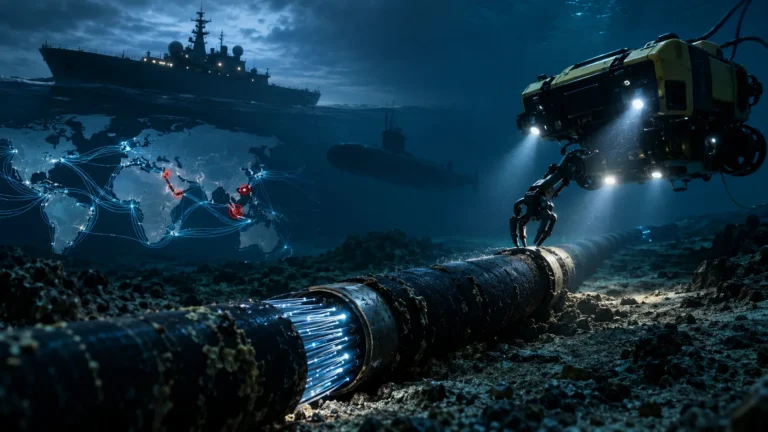
The Clarion-Clipperton Zone (CCZ): The CCZ is the epicenter of the ISA’s jurisdiction. Stretching across 1.7 million square miles of the Pacific, it holds the highest concentration of polymetallic nodules. Companies are currently operating massive surface ships connected by kilometers of umbilical cables to heavy, tank-like tracked vehicles that drive along the abyssal plain, vacuuming up the nodules and pumping them to the surface.
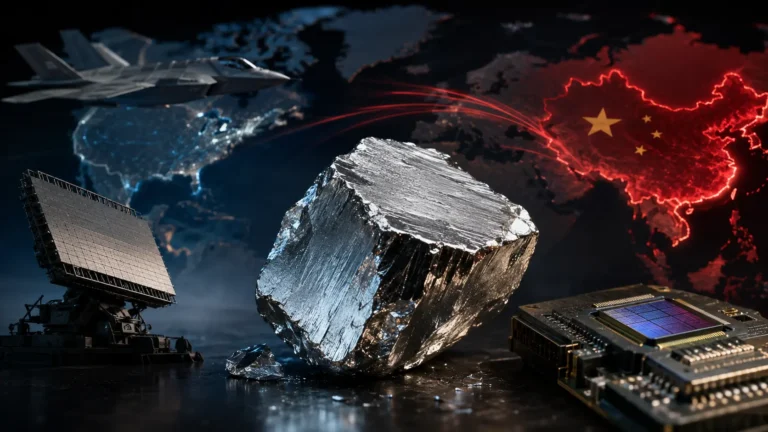
China’s Strategic Dominance: China views the ISA as a critical geopolitical venue. Beijing currently holds five ISA exploration contracts—more than any other nation. China’s state-owned enterprises (like China Minmetals) are aggressively testing subsea mining vehicles. By operating strictly within the ISA framework, China is ensuring that even if terrestrial mines are sanctioned or depleted, its EV battery manufacturing monopoly will remain fueled by the ocean floor.
The U.S. Corporate Workaround: Because the United States is not a member of the ISA, American companies cannot apply for contracts. To access the CCZ, U.S. defense and mining contractors must establish foreign subsidiaries in ISA member countries (like the UK or Pacific Island nations) to secure a sponsor. The Pentagon has repeatedly warned that America’s failure to ratify UNCLOS is a severe, self-inflicted strategic vulnerability in the critical minerals race.
Economic & Strategic Impact
If the ISA successfully finalizes the exploitation regulations, it will introduce a massive supply shock to the global commodity markets.
The sheer volume of cobalt and nickel resting in the CCZ dwarfs terrestrial reserves. Currently, automakers are attempting to engineer cobalt out of their batteries (shifting to LFP chemistries) precisely because land-based cobalt is expensive and ethically tainted. A flood of cheap, deep-sea cobalt could fundamentally reverse this trend, making energy-dense NMC (Nickel-Manganese-Cobalt) batteries drastically cheaper to produce, accelerating EV parity with internal combustion engines.
However, the financial mechanism of the ISA introduces a novel economic concept: the “Common Heritage” royalty. Mining companies will not keep all their profits. The ISA will collect royalties from every tonne of metal extracted and distribute that money to developing nations, particularly landlocked countries that lack maritime access. Designing this complex, global taxation and redistribution formula is one of the primary reasons the Mining Code has taken a decade to draft.
Advantages
- Geopolitical Neutrality: By regulating the seabed under a unified international treaty, the ISA prevents imperialistic “land grabs” and naval conflicts over oceanic resources.
- Equitable Wealth Distribution: The ISA is the only organization in the world legally mandated to distribute the financial profits of resource extraction to developing nations.
- High-Grade Ores: Ocean nodules are effectively multi-metal ores. A single nodule contains high concentrations of four critical battery metals, whereas terrestrial mines typically require separate, massive operations for copper, nickel, and cobalt.
Limitations
- Enforcement Capabilities: The ISA is an administrative body in Jamaica, not a global police force. It relies entirely on the “Sponsoring State” (the country that sponsors the mining company) to actually enforce the environmental rules in the middle of the ocean.
- Scientific Blindspots: Regulating the deep ocean is nearly impossible because humanity knows more about the surface of Mars than the abyssal plain. Writing environmental thresholds for ecosystems that have never been fully mapped or understood is highly controversial.
- Institutional Conflict of Interest: Critics argue the ISA has a structural conflict. It is tasked with protecting the marine environment, but it generates its own operating revenue by issuing mining licenses, heavily incentivizing the organization to greenlight extraction.
Common Misconceptions
Misconception: The United Nations can veto the ISA’s decisions.
Reality: The ISA is an autonomous organization. While it was created by a UN convention (UNCLOS), it operates independently. The UN General Assembly cannot overrule the ISA Council’s decisions regarding mining contracts.
Misconception: Deep-sea mining is already happening commercially.
Reality: As of mid-2026, zero commercial mining (exploitation) has been approved in international waters. All current activity in the CCZ is strictly for testing equipment and gathering scientific baseline data under “exploration” contracts.
Misconception: The US blocked deep-sea mining.
Reality: The United States has absolutely no say in the ISA. The US Senate has refused to ratify UNCLOS since 1982, citing concerns over giving an international body the power to tax American companies. The US is a mere “observer” in Kingston.
What Most People Miss
The threat of National Waters Bypass.
While the media focuses intensely on the ISA and international waters, they miss the reality of Exclusive Economic Zones (EEZs). The ISA only controls the seabed beyond 200 nautical miles from a country’s shore.
A sovereign nation has total control over its own EEZ. In 2024, Norway became the first country to formally open its national waters to commercial deep-sea mining exploration, bypassing the ISA entirely. If the ISA imposes environmental rules that are too strict, or royalty taxes that are too high, mining companies will simply abandon the international CCZ and sign bilateral deals directly with island nations (like the Cook Islands) to mine within their private, under-regulated national waters.
Comparison Table
| Feature | Terrestrial Mining | Deep-Sea Nodule Mining (ISA Regulated) |
| Jurisdiction | Sovereign National Governments | International Seabed Authority (ISA) |
| Environmental Impact | Deforestation, toxic tailings, water pollution | Benthic ecosystem destruction, sediment plumes |
| Social Impact | High risk of displacement, child labor (DRC) | Zero human displacement or child labor |
| Ore Composition | Single primary metal per mine | Multi-metal (Ni, Co, Cu, Mn in one nodule) |
| Financial Beneficiary | Host Country & Mining Corporation | Corporation + “Common Heritage” Global Fund |
| Regulatory Maturity | Centuries of established law | “Mining Code” still under final negotiation |
Case Study
Situation: The Metals Company (TMC), a Canadian-based deep-sea mining firm, spent hundreds of millions of dollars developing subsea collection vehicles and mapping a massive nodule claim in the CCZ. However, they could not begin commercial extraction because the ISA had spent over a decade debating the final exploitation regulations (the Mining Code) without finalizing them.
Challenge: TMC needed to force the ISA to act or risk running out of venture capital. Under international law, a private company cannot force the ISA’s hand; only a sovereign member state can.
Solution (The Nauru Trigger): TMC partnered with the small Pacific island nation of Nauru, acting as their sponsoring state. In 2021, Nauru formally invoked the “two-year rule” (Section 1, Paragraph 15). This obscure legal mechanism legally compelled the ISA to finalize the Mining Code within 24 months.
Outcome: The trigger threw the ISA into chaos. The deadline passed in July 2023 without a finalized code. Consequently, the ISA entered a fraught legal gray area where it must now “consider and provisionally approve” a plan of work based on existing draft regulations. Through 2025 and 2026, the ISA Assembly became a geopolitical battleground, with TMC pushing to submit its commercial application while a growing coalition of European and Latin American states pushed for a moratorium.
Lessons Learned: The case study highlights the extreme fragility of international maritime law. A single, micro-island nation, backed by a well-funded corporation, successfully utilized a treaty loophole to force the entire global community to accelerate the timeline for industrializing the ocean floor.
Future Outlook
Next 12–24 Months
The ultimate stress test of the ISA. The election of Secretary-General Leticia Carvalho in late 2025 indicated a desire for deeper scientific scrutiny, but the legal pressure from contractors to submit commercial exploitation applications in 2026 is absolute. The ISA Council will likely face its first formal commercial mining application. The ensuing vote will be historic: approving it will trigger massive lawsuits from environmental NGOs, while denying it could prompt contractors to sue the ISA for breaching UNCLOS obligations.
Next 3–5 Years
The shift to Commercial Extraction and Plume Monitoring. If the initial licenses are granted, the late 2020s will witness the first true commercial-scale mining ships operating in the CCZ. The global focus will shift entirely to monitoring. Autonomous underwater vehicles (AUVs) and independent scientific bodies will track the sediment plumes generated by the mining tractors. If the plumes spread further than the ISA’s models predicted, causing widespread ecological suffocation, it will trigger an immediate diplomatic crisis and potential emergency injunctions.
Next 10 Years
The expansion beyond nodules to Seafloor Massive Sulfides (SMS) and Cobalt-Rich Crusts. Nodules sitting in the mud are just Phase 1. By the 2030s, the ISA will begin drafting specialized regulations for mining active hydrothermal vents (which hold massive copper and gold deposits) and scraping the sides of underwater mountains (seamounts) for crusts. This Phase 2 extraction is vastly more destructive, as it requires physical drilling and grinding of the bedrock, setting up a far more severe environmental battle than the current nodule debate.
Most Likely Scenario
The ISA will finalize a highly restrictive, heavily taxed version of the Mining Code. Deep-sea mining will commence, but at a much slower, highly regulated pace than corporations desire. The US will remain economically sidelined, forcing American automakers to buy battery metals extracted from the international seabed by Chinese and European vessels, ultimately leading to renewed, frantic bipartisan calls in Washington to finally ratify UNCLOS.
Key Takeaways
- The International Seabed Authority (ISA) is the autonomous global body responsible for regulating all mining activities on the ocean floor beyond national borders.
- The ISA was created under the 1982 UN Convention on the Law of the Sea (UNCLOS) to ensure the deep ocean remains the “common heritage of mankind.”
- The primary battleground is the Clarion-Clipperton Zone (CCZ) in the Pacific, which holds billions of tonnes of polymetallic nodules rich in critical EV battery metals (nickel, cobalt, copper, manganese).
- The ISA is currently locked in a diplomatic crisis attempting to finalize the “Mining Code,” the commercial regulations forced upon them by a legal 2-year loophole triggered by Nauru in 2021.
- The United States is not a member of the ISA because it has never ratified UNCLOS, severely limiting its strategic influence over the future of the deep-sea supply chain.
- The ISA faces an irreconcilable mandate: authorize the extraction of metals required for the green energy transition while preventing the irreversible destruction of the deep-ocean ecosystem.
Glossary
Benthic Zone: The ecological region at the lowest level of a body of water, including the sediment surface and some sub-surface layers, where the nodule mining takes place.
Clarion-Clipperton Zone (CCZ): A massive abyssal plain in the Pacific Ocean containing the highest known concentration of polymetallic nodules, and the focal point of ISA exploration contracts.
Mining Code: The comprehensive set of rules, regulations, and procedures currently being drafted by the ISA to regulate prospecting, exploration, and the future commercial exploitation of marine minerals.
Polymetallic Nodules: Potato-sized rock concretions on the sea bottom formed of concentric layers of iron and manganese hydroxides around a core, rich in critical battery metals.
The Area: The legal term defined by UNCLOS for the seabed and ocean floor, and the subsoil thereof, beyond the limits of national jurisdiction.
UNCLOS (United Nations Convention on the Law of the Sea): The international agreement that establishes a legal framework for all marine and maritime activities, signed in 1982.
Frequently Asked Questions
Can any company just sail out and start mining?
No. Under international law, a private company must be “sponsored” by a country that is a member state of the ISA. The country applies for the contract on behalf of the company and takes on legal liability for the company’s actions at sea.
Why doesn’t the United States just join the ISA?
To join the ISA, a country must ratify the UNCLOS treaty. The US Senate has refused to ratify UNCLOS for decades, largely due to concerns from conservative lawmakers that the ISA’s royalty mechanism amounts to an international tax that infringes on US sovereignty.
Will deep-sea mining destroy the ocean?
It will unequivocally destroy the localized benthic ecosystems where the machines drive. The scientific debate is entirely about the scale of the damage. Mining companies argue the damage is confined and acceptable compared to rainforest destruction; scientists warn the stirred-up sediment plumes could travel hundreds of miles, suffocating undiscovered deep-sea life.
Who gets the money from the ISA royalties?
The ISA’s mandate is to distribute financial benefits to all mankind, with particular emphasis on developing countries and landlocked states that cannot mine the ocean themselves. The exact formula for this distribution is one of the most hotly contested parts of the unfinished Mining Code.
What happens if a mining company breaks the rules?
The “Sponsoring State” is primarily responsible for monitoring and penalizing its own company. However, the ISA also has the authority to suspend or terminate contracts, and legal disputes can be brought before the Seabed Disputes Chamber of the International Tribunal for the Law of the Sea (ITLOS).
Sources
[1] International Seabed Authority (ISA): Official Documentation and Mandate overview under UNCLOS (2026 Update)
[2] High Seas Alliance: Deep Sea Mining and the 2-Year Rule Loophole
[3] Center for Strategic and International Studies (CSIS): The Strategic Importance of the ISA and US Non-Ratification of UNCLOS
[4] Reuters: Leticia Carvalho elected Secretary-General of the International Seabed Authority (July 2025)
[5] World Economic Forum: The Geopolitics of Critical Minerals and the Clarion-Clipperton Zone (2026)