
AT A GLANCE
- Concept: Autonomous Systems: Independent networks use gateway protocols to negotiate data routing pathways globally.
- Concept: Public Peering: ISPs exchange traffic through shared Ethernet switches to reduce transit costs.
- Concept: Private Cross-Connects: Direct fiber cables bypass shared infrastructure for dedicated, high-capacity data transfer.
- Concept: Asymmetric Traffic: Tier-1 networks weaponize routing imbalances to force cloud providers into paid transit agreements.
HOW IT WORKS
The internet is not a single cloud. It is a fractured collection of thousands of independent networks called Autonomous Systems. These networks must physically connect to exchange data.
They meet inside massive, carrier-neutral data centers known as Internet Exchange Points (IXPs). Companies like Equinix and Digital Realty operate these heavily fortified facilities. Inside, thousands of miles of yellow fiber optic cables connect different server cages.
To dictate how data flows across these cables, routers use the Border Gateway Protocol (BGP). BGP acts as the mathematical air traffic controller of the internet. It calculates the most efficient path for a data packet to reach its final destination.
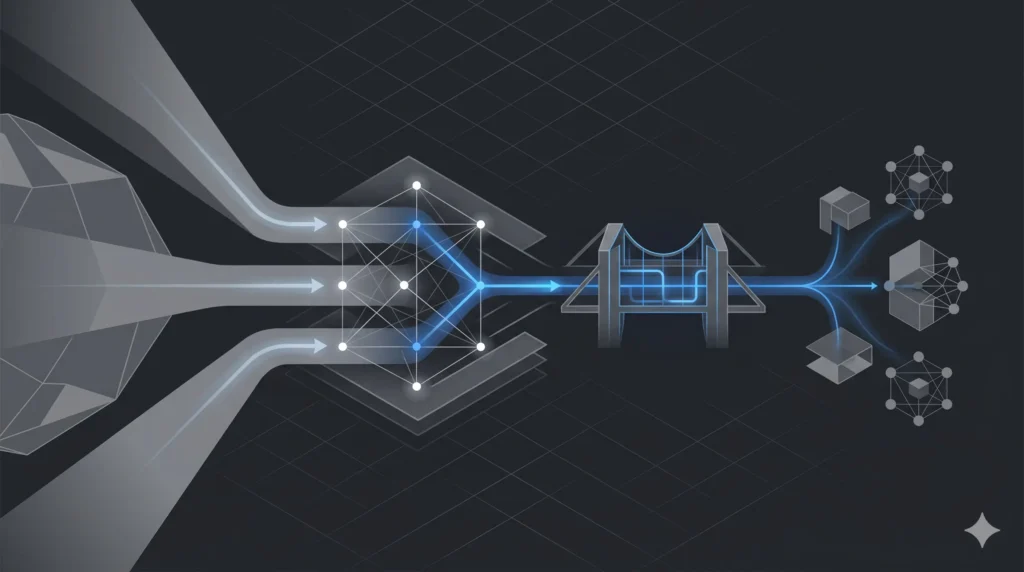
When networks connect at an IXP, they establish peering sessions. In public peering, dozens of networks plug into a massive shared Ethernet switch to exchange traffic freely.
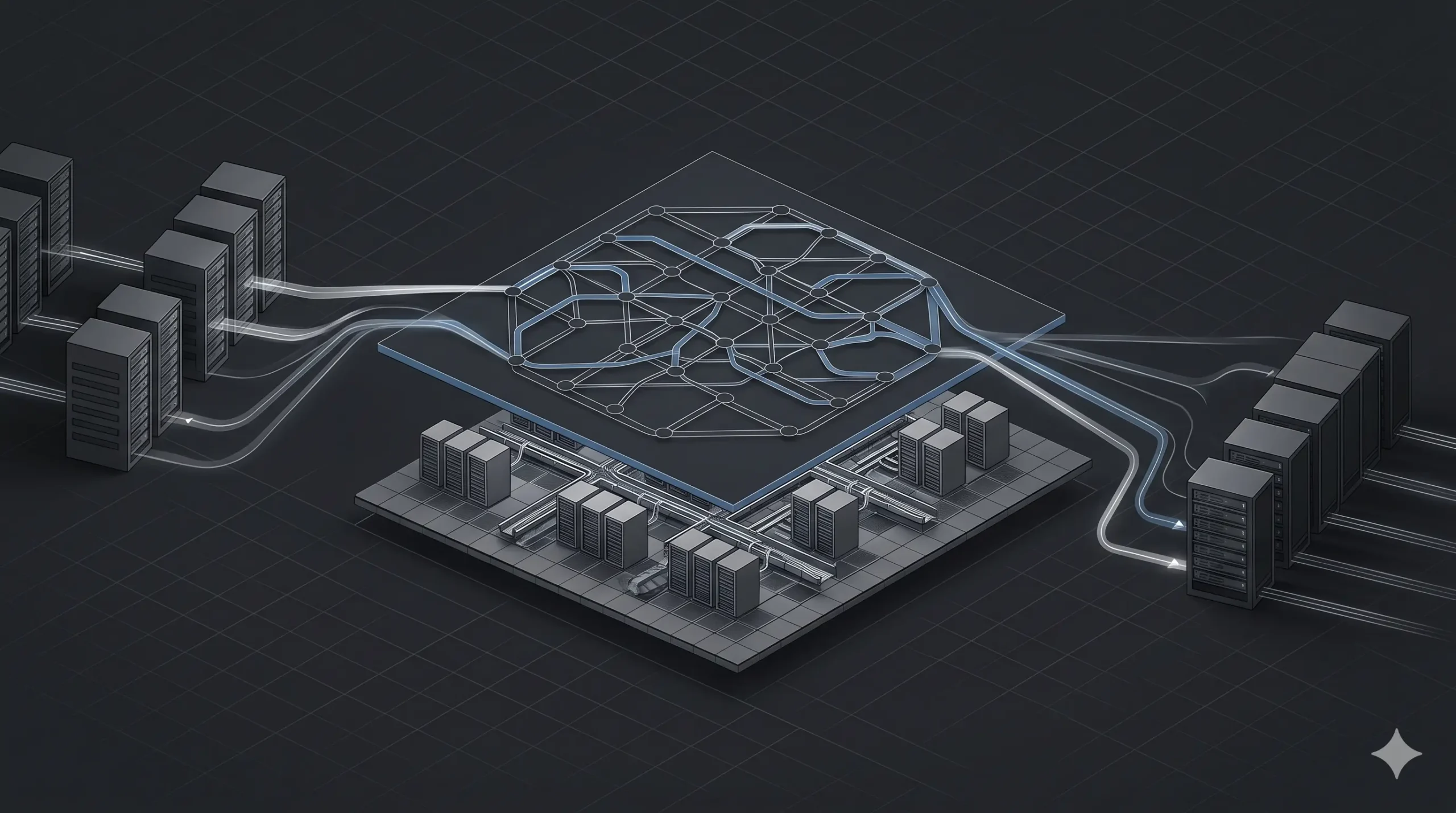
However, when traffic volumes reach terabits per second, public switches create unacceptable latency. Massive networks physically bypass the shared switch entirely. They run a direct, dedicated fiber cable from one server cage to another, establishing a highly localized private peering matrix.
WHY IT MATTERS NOW
This physical routing architecture dictates the economics of global cloud computing. Every millisecond of latency costs enterprise platforms millions of dollars in lost transaction speed.
To eliminate latency, cloud providers like Amazon Web Services and Microsoft Azure must push their servers as close to the end user as possible. They lease massive footprints inside carrier-neutral IXPs. This physical proximity allows them to plug directly into the local telecom networks that serve consumer homes.
This convergence creates intense data gravity. Financial exchanges, content delivery networks, and enterprise databases all cluster inside the exact same physical buildings. The IXP becomes a high-density localized toll booth for global digital commerce.
The owners of these facilities command absolute real estate monopolies. Equinix and Digital Realty charge massive monthly recurring fees simply for the physical fiber cross-connects between cages. The cost of the physical yellow cable often exceeds the cost of the bandwidth flowing through it.
WHAT MOST PEOPLE MISS
Wikipedia and academic textbooks portray internet peering as a democratic, settlement-free exchange of data. They assume networks trade traffic freely because it benefits mutual connectivity.
The hidden reality is weaponized traffic asymmetry. Content providers push massive outbound data streams, while tier-1 residential internet service providers mostly pull data in.
Because the traffic ratio is heavily asymmetrical, the tier-1 ISP derives no financial benefit from free public peering. To extract revenue, the tier-1 ISP intentionally allows its public IXP ports to congest.
This artificial bottleneck forces the cloud provider to purchase highly expensive, dedicated private transit links simply to reach the ISP’s residential customers.
THE TRAJECTORY
Next 12–36 Months: Hyperscale cloud providers will aggressively expand their edge node footprints into secondary regional IXPs. They will bypass major coastal routing hubs to localize peering matrices directly inside tier-two cities, stripping structural latency from AI inference workloads.
Next Five Years: The explosion of AI-generated video and real-time multimodal data will shatter the capacity of traditional BGP software routing. IXP operators will deploy programmable optical switching fabrics. These systems will route light pulses physically using micro-mirrors, bypassing electronic routing delays entirely.
Next Ten Years: Subsea cable consortiums will terminate their transoceanic fibers directly inside massive inland peering data centers, bypassing traditional coastal landing stations. This structural shift will consolidate international data transit and domestic peering into single, continent-scale mega-facilities.
What Could Go Wrong: BGP relies entirely on absolute trust. It lacks structural cryptographic authentication. If a malicious actor inside a major IXP broadcasts a false BGP path announcement, they can instantly hijack global traffic, routing sensitive enterprise data through hostile sovereign territory before anyone detects the reroute.
Most Likely Outcome: The internet will rapidly centralize around a dozen hyper-dense physical facilities. Tier-1 ISPs and hyperscalers will abandon public peering entirely. Global data transit will operate almost exclusively through opaque, paid private cross-connect agreements governed by strict financial traffic ratios.
KEY TERMS
- Border Gateway Protocol (BGP): The exterior routing protocol that mathematically determines the most efficient path for data traveling across different independent networks.
- Internet Exchange Point (IXP): A physical, carrier-neutral data center where multiple internet service providers and content networks interconnect their infrastructure.
- Autonomous System (AS): A massive, independent IP network or group of networks operated by a single entity with a unified routing policy.
- Private Peering: A direct, dedicated fiber-optic cross-connect between two specific networks that bypasses shared public switching infrastructure.
- Hot-Potato Routing: A BGP traffic engineering tactic where a network hands off data to a peering partner at the earliest possible exit point to minimize internal transit costs.
SOURCES
- Cisco Systems — Border Gateway Protocol (BGP) Best Path Selection Algorithm
- Equinix — The Global Interconnection Index (GXI) Report
- Internet Society — Understanding the Economics of Internet Peering and Transit
- PeeringDB — Interconnection Database and Public Peering Matrix