Advertisement
)
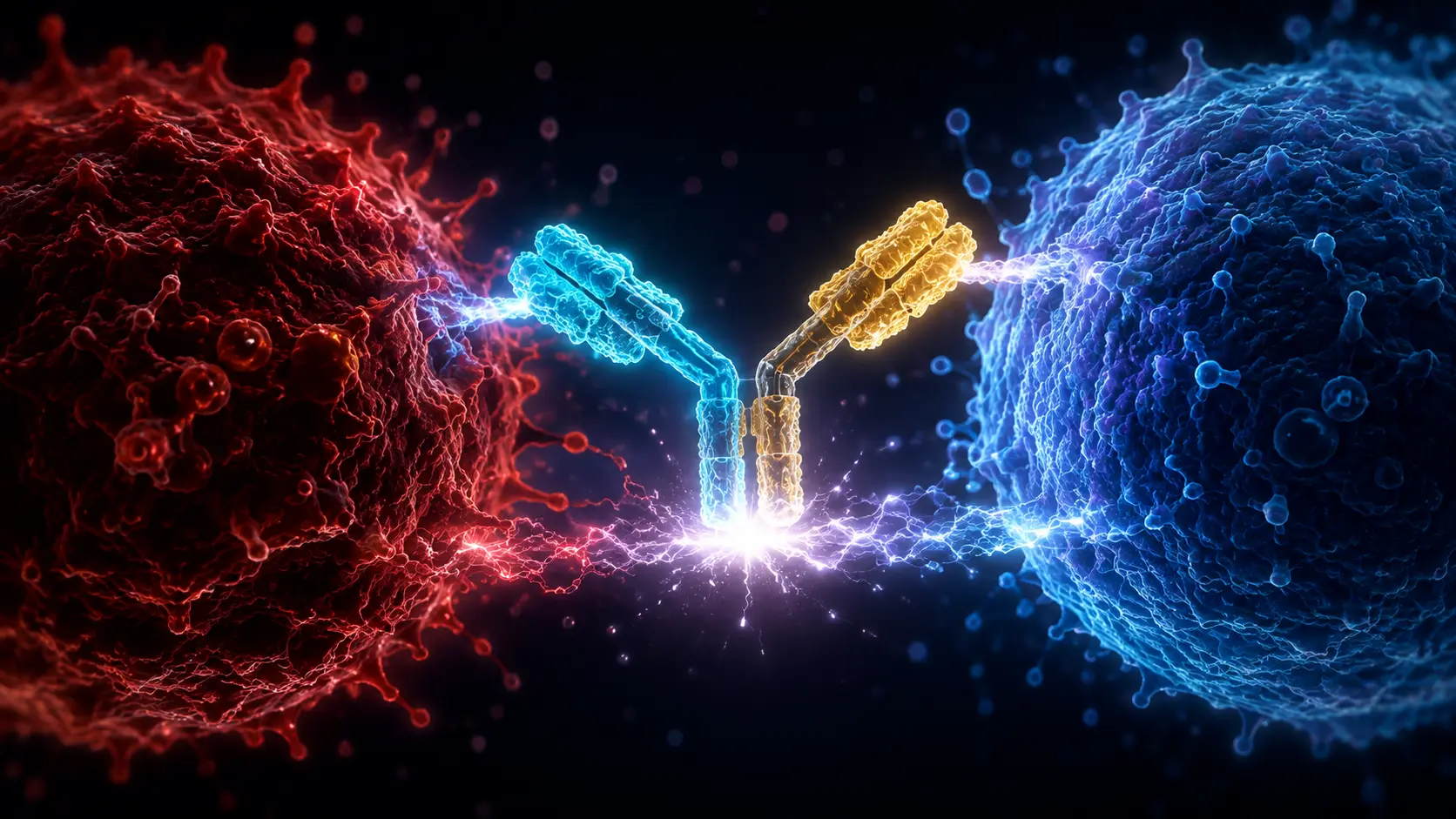

For the last twenty years, oncology has relied on the sniper rifle approach. Monoclonal antibodies (mAbs) are biological drugs designed to hunt down and bind to one specific protein on a cancer cell, effectively painting a target on the tumor for the immune system. But cancer is an evolutionary master of survival. If you block one pathway, the tumor simply mutates, downregulates the target protein, or builds a chemical wall to exhaust the immune system. When oncologists tried combining two different sniper rifles—giving patients two separate monoclonal drugs—the results were often overwhelmed by severe, compounding toxic side effects and astronomical financial costs.
To solve this, bioengineers stopped trying to fire two separate bullets and instead redesigned the bullet itself. Enter the Bispecific Antibody (BsAb). By genetically engineering a single molecule to have two different “hands,” scientists created a drug that can grab a tumor cell with one hand, grab a deadly T-cell with the other, and physically slam them together. Why should you care right now? Because in 2026, the clinical data definitively proved that this dual-targeting mechanism outperforms standard cancer therapies. We have entered the post-monoclonal era of medicine, where hacking the spatial geometry of the human immune system is curing previously untouchable cancers.
What is a Bispecific Antibody?
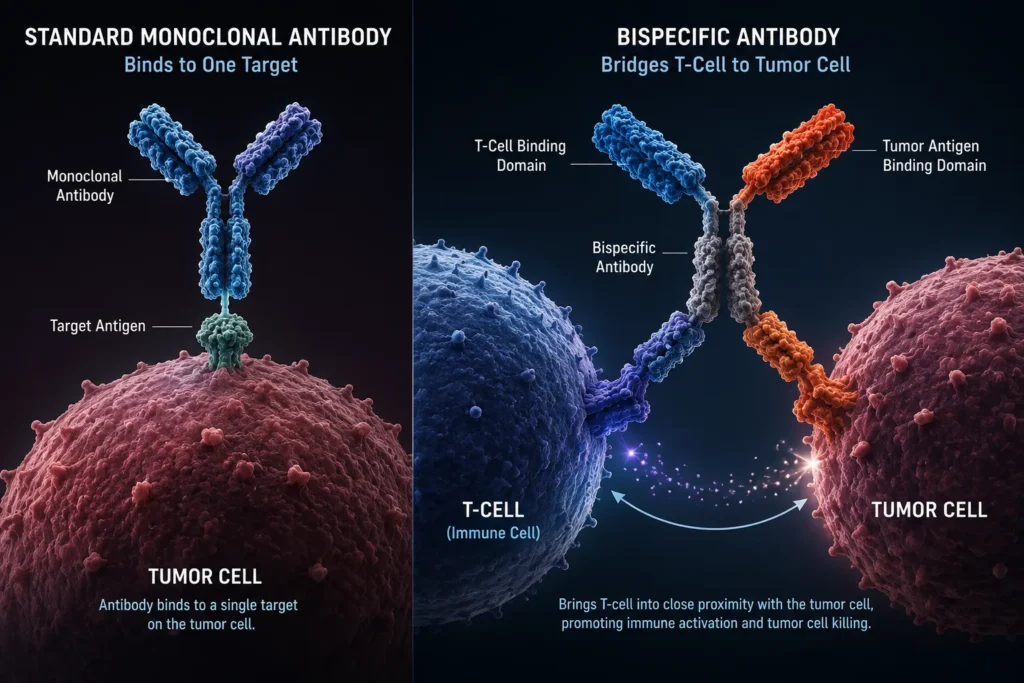
A bispecific antibody is an engineered, artificial protein that can simultaneously bind to two different antigens or two different epitopes on the same antigen. Unlike natural monoclonal antibodies which only target one specific protein, bispecifics use dual-targeting to bridge different cells together (like T-cells and tumor cells) or block multiple disease pathways simultaneously.
At a Glance
- Concept: Engineering a Y-shaped antibody where the left arm recognizes “Target A” and the right arm recognizes “Target B,” forcing a physical interaction between the two.
- Why it matters: It prevents tumor escape. If a tumor tries to hide from the immune system, a bispecific antibody can strip away its cloaking device while simultaneously cutting off the blood vessels feeding it.
- Who uses it: Leading biopharmaceutical companies (Summit Therapeutics, Akeso, Amgen, Johnson & Johnson) pushing the boundaries of immuno-oncology.
- Biggest takeaway: It is not just about blocking two things; it is about proximity. By physically tethering an immune cell directly to a cancer cell, bispecifics bypass the need for the immune system to “find” the tumor on its own.
In Simple Words
Imagine a bank robber hiding inside a crowded building.
A traditional monoclonal antibody acts like a police radio broadcasting the robber’s location. It attaches to the robber and sends out a signal. The problem is, the heavily armed SWAT team (your immune system’s T-cells) still has to navigate the building, find the robber, and figure out how to bypass the robber’s defenses before taking the shot. Often, the T-cells get exhausted or lost along the way.
A bispecific antibody acts like a pair of biological handcuffs.
One half of the handcuff snaps onto the bank robber. The other half of the handcuff snaps directly onto a SWAT team officer. The drug physically drags the officer straight to the robber, locks them together face-to-face, and forces the officer to pull the trigger. Because the two are physically tethered, the robber cannot escape, and the immune cell doesn’t have to search. The targeted destruction is immediate and unavoidable.
Why This Matters
The commercial dominance of traditional monoclonal antibodies—the best-selling drug class in history—is officially under threat.
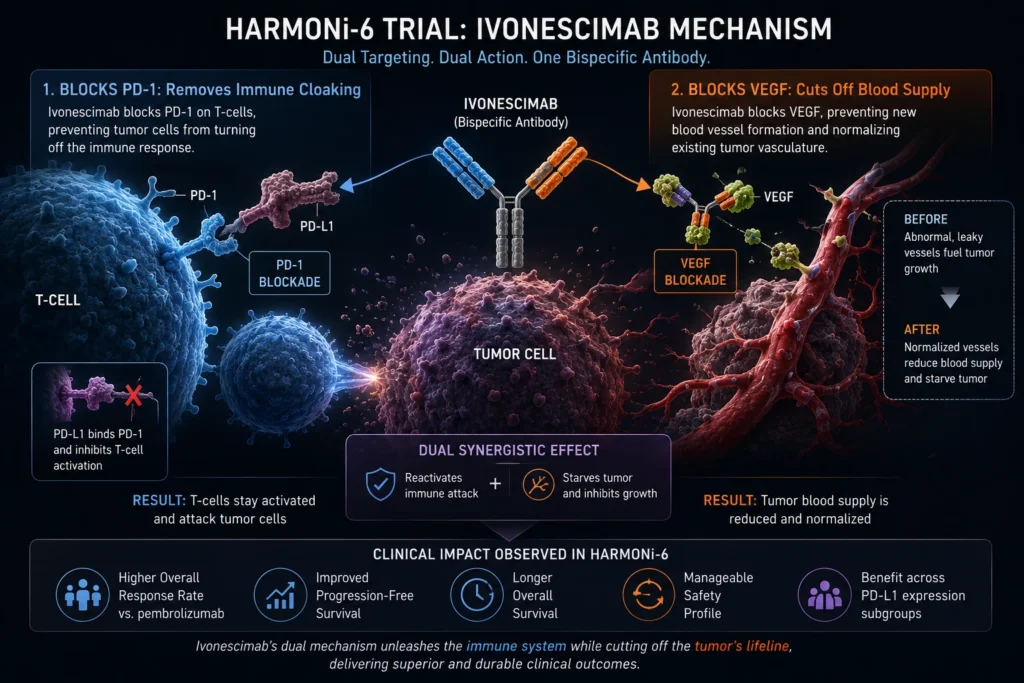
For a decade, the gold standard for treating solid tumors was the PD-1 inhibitor (like Keytruda/pembrolizumab), which removes the “brakes” from the immune system. However, tumors eventually adapt. The inflection point occurred in mid-2026 with the HARMONi-6 Phase III clinical trial results. The trial tested ivonescimab, a bispecific antibody targeting both PD-1 (immune cloaking) and VEGF (tumor blood supply).
The results were a seismic shock to the industry: ivonescimab combined with chemotherapy achieved a massive, statistically significant Overall Survival (OS) benefit (Hazard Ratio 0.66) compared to the standard anti-PD-1 therapy plus chemotherapy in first-line non-small cell lung cancer (NSCLC). For biotech investors and pharma executives, this was the ultimate validation. It proved that a single bispecific molecule could dethrone the most lucrative monoclonal antibodies on Earth, triggering a frantic M&A race as legacy pharmaceutical giants scrambled to acquire bispecific pipelines.
T-Cell Engagers vs. Dual-Pathway Blockers
Bispecifics fall into two primary strategic categories based on their mechanism of action:
- T-Cell Engagers (TCEs): These are the “handcuffs.” One arm binds to a tumor antigen, and the other binds to CD3 on a T-cell. TCEs have achieved miraculous results in blood cancers (like multiple myeloma and leukemia) but struggle in solid tumors because T-cells have a hard time penetrating dense tumor tissue.
- Dual-Pathway Blockers: Instead of grabbing a T-cell, these antibodies simultaneously shut down two different survival mechanisms. The PD-1/VEGF bispecifics fall into this category. They boost the immune system (anti-PD-1) while starving the tumor of blood vessels (anti-VEGF), cutting off the tumor’s oxygen and food supply.
The overarching goal is to achieve synergy: ensuring that $1 + 1 = 3$.
How Bispecific Antibodies Work
Engineering a single protein to execute two complex tasks simultaneously requires mastering molecular geometry. Here is the first-principles breakdown.
1. The Fundamental Problem: Tumor Escape and Toxicity
If you give a patient two separate monoclonal antibodies, the drugs float independently in the bloodstream. To effectively hit both targets on a tumor, you need high concentrations of both drugs, which drastically increases the risk of systemic toxicity. Furthermore, if a tumor mutates and loses one of the targets, the combination therapy fails.
2. The Insufficiency of Simple Cocktails
A cocktail of two drugs cannot force spatial proximity. Even if both drugs reach the tumor, they cannot physically drag an immune cell into the tumor microenvironment.
3. The Core Mechanism: The Asymmetric Fab Architecture
A standard antibody looks like the letter “Y”. The two top arms are called the Fab (Fragment antigen-binding) regions. In nature, both arms are identical. In a bispecific antibody, scientists genetically engineer the arms to be asymmetrical. The left Fab region is programmed to bind to Antigen A. The right Fab region is programmed to bind to Antigen B.
4. Technical Depth: Overcoming Steric Hindrance
The greatest engineering challenge in designing bispecifics is Steric Hindrance. Proteins are massive, bulky 3D structures. If the two targets on the cancer cell are too close together, the left arm of the antibody might physically block the right arm from attaching (like two people trying to fit through a door at the same time). Bioengineers must meticulously adjust the flexible “linker” regions of the antibody to ensure both arms have enough spatial geometry to bind their targets simultaneously without colliding.
5. Real-World Consequences: The Immunological Synapse
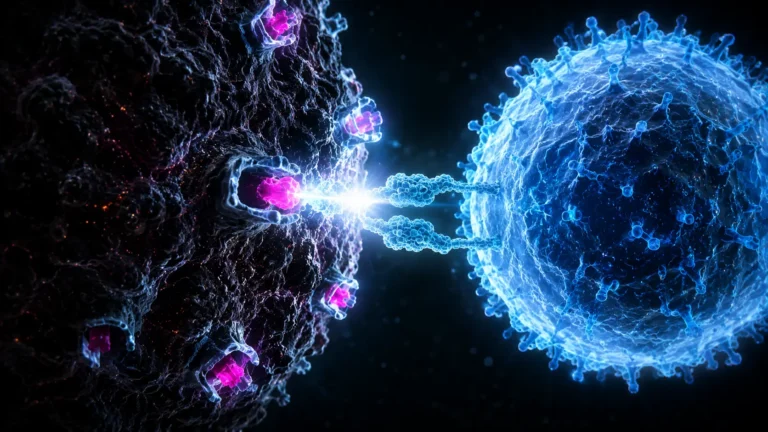
When a T-Cell Engager (TCE) successfully binds without steric hindrance, it pulls the T-cell within nanometers of the cancer cell. This forced, extreme proximity triggers the formation of an Immunological Synapse. The T-cell is artificially activated—bypassing the body’s normal, slow antigen-presentation process—and instantly releases lethal perforin and granzyme toxins, punching holes in the cancer cell membrane and destroying it from the outside in.
Clinical Applications of Bispecific Antibodies
Bispecifics have moved from theoretical biochemistry to front-line oncology treatment protocols.
Blood Cancers (Multiple Myeloma & Lymphoma): This is where bispecifics first proved their dominance. Drugs like teclistamab (targeting BCMA on myeloma cells and CD3 on T-cells) have achieved deep, durable remissions in patients whose blood cancers had become completely resistant to multiple lines of chemotherapy and bone marrow transplants.
The PD-(L)1/VEGF Revolution: The recent success of ivonescimab has established a new beachhead in solid tumors. By combining anti-PD-1 (releasing the immune system’s brakes) and anti-VEGF (stopping the tumor from growing new blood vessels) into a single, cooperative molecule, the drug achieves deeper tissue penetration and synergistic efficacy that simple drug cocktails failed to replicate.
Autoimmune and Inflammatory Diseases: While oncology dominates the headlines, bispecifics are actively entering the autoimmune space. By targeting two different inflammatory cytokines (e.g., IL-17 and IL-23) simultaneously, bispecifics can shut down complex inflammatory loops in diseases like severe psoriasis or rheumatoid arthritis much faster and more completely than single-target biologic drugs.
Economic & Strategic Impact
The transition to dual-targeting formats has triggered the Bispecific Antibody-Drug Conjugate (BsADC) arms race.
Traditional Antibody-Drug Conjugates (ADCs) use a monoclonal antibody to deliver a toxic chemotherapy payload directly to a cancer cell. The problem? If the cancer cell downregulates that specific target, the drug bounces off, and the patient relapses.
The industry is currently merging bispecifics with ADCs to create BsADCs. These next-generation drugs have two different targeting arms and a toxic payload. By requiring the drug to bind to two different targets before releasing the poison, BsADCs drastically increase tumor specificity, heavily reducing “on-target, off-tumor” toxicity (accidentally poisoning healthy tissue). The massive licensing deals signed in late 2025 and 2026 reflect a pharmaceutical industry betting billions that the BsADC will be the ultimate, highly selective weapon against heterogeneous solid tumors.
Advantages
- Forced Proximity: Bridges immune cells directly to cancer cells, guaranteeing targeted destruction without relying on the immune system to “find” the tumor naturally.
- Synergistic Efficacy: Can simultaneously block two different survival pathways (e.g., blood supply and immune cloaking), offering exponentially better results than single-target mAbs.
- Prevents Resistance: Tumors easily mutate to hide one protein. It is mathematically vastly more difficult for a tumor to mutate and hide two different proteins simultaneously, making bispecifics highly resilient to cancer evolution.
- Lower Toxicity: Because the drug is a single molecule, it requires a lower dosage volume compared to giving a patient two separate monoclonal drug infusions.
Limitations
- Pharmacokinetic Complexity: Bispecifics are massive, complex Frankenstein proteins. Because they are not naturally occurring, the human body often clears them from the bloodstream too quickly (short half-life), or the immune system recognizes them as foreign invaders and attacks the drug itself.
- Solid Tumor Penetration: While they work flawlessly in liquid blood cancers, dragging a T-cell into a dense, solid tumor (like pancreatic or lung cancer) is incredibly difficult. The physical bulk of the bispecific molecule makes deep tissue penetration a severe challenge.
- Manufacturing Bottlenecks: Forcing a cell to grow an asymmetric Y-shaped antibody (instead of a symmetrical one) often leads to “mispairing,” where the cell builds broken or useless antibodies. The purification process to separate the good bispecifics from the broken ones is astronomically expensive.
Common Misconceptions
Misconception: Bispecific antibodies are just two different drugs mixed in a single IV bag.
Reality: They are a single, genetically engineered molecule. The physical linkage between the two targeting arms is the entire point; it allows the drug to physically bridge two distinct cells or receptors that would normally never touch.
Misconception: They only work by grabbing T-cells.
Reality: While T-cell engagers (TCEs) are famous, many bispecifics never touch a T-cell. Drugs like ivonescimab work by targeting PD-1 and VEGF—binding to the tumor and the surrounding blood vessels to orchestrate starvation and immune exposure.
Misconception: Bispecifics will make CAR-T cell therapy obsolete.
Reality: They are complementary. CAR-T involves taking a patient’s T-cells out of their body, genetically modifying them, and putting them back in—a $400,000 process that takes weeks. Bispecifics are “off-the-shelf” drugs that can be injected immediately. Bispecifics are preferred for rapid, accessible treatment, while CAR-T is reserved for highly customized, deep cellular reprogramming.
What Most People Miss
The strategic exploitation of Avidity over Affinity.
Affinity is how hard one arm of the antibody grips a target. Avidity is the combined gripping strength of multiple arms.
What most people miss is that bioengineers intentionally design the arms of a bispecific antibody to have low individual affinity. Why? If the arms are too sticky, they will grab onto healthy cells that only express one of the targets (causing toxic side effects). But because the cancer cell expresses both targets, the two weak arms bind simultaneously. This combined “Avidity” creates an unbreakable lock. By relying on avidity, the drug completely ignores healthy cells and exclusively attacks the dual-expressing tumor cells, drastically widening the therapeutic safety window.
Comparison Table
| Feature | Monoclonal Antibody (mAb) | Bispecific Antibody (BsAb) | CAR-T Cell Therapy |
| Targeting Capability | Single antigen | Dual antigens simultaneously | Single or dual (Genetically edited cell) |
| Mechanism of Action | Flags tumor for immune system | Physically tethers immune cell to tumor | Engineered living cell attacks tumor |
| Availability | Off-the-shelf (Immediate) | Off-the-shelf (Immediate) | Custom-built (Takes 3-4 weeks) |
| Manufacturing Cost | Moderate | High (Complex purification) | Astronomical ($300k+ per patient) |
| Solid Tumor Efficacy | Moderate | High (Demonstrated Phase III OS benefit) | Poor (Struggles with tissue penetration) |
Case Study
Situation: The treatment of advanced non-small cell lung cancer (NSCLC) had plateaued. The standard of care was pembrolizumab (a PD-1 monoclonal antibody) combined with chemotherapy. While effective for some, the majority of patients eventually developed resistance and relapsed because the tumor utilized alternative pathways, like overproducing VEGF, to grow new blood vessels and survive.
Challenge: Administering an anti-PD-1 drug and an anti-VEGF drug as two separate infusions compounded toxicity, increased costs, and failed to deliver the spatial, synergistic cooperative binding required to outpace the tumor’s aggressive mutation rate.
Solution (The HARMONi-6 Trial): Akeso and Summit Therapeutics deployed ivonescimab, a first-in-class bispecific antibody designed to target both PD-1 and VEGF within a single, tetravalent molecule. By designing the drug to cooperatively bind both targets, it directed the therapeutic payload specifically into the tumor microenvironment rather than healthy tissue.
Outcome: In May 2026, the Phase III trial results shocked the oncology world. Ivonescimab combined with chemotherapy demonstrated a statistically significant improvement in Overall Survival (OS) compared to the standard anti-PD-1 plus chemotherapy, posting a Hazard Ratio of 0.66. The 24-month OS rate jumped to 64.7% for the bispecific group, compared to 48.6% for the monoclonal group.
Lessons Learned: The trial provided the ultimate clinical validation for dual-targeting mechanisms in solid tumors. It proved that bispecific architecture does not just offer logistical convenience; it delivers fundamentally superior, clinically meaningful extensions of human life by simultaneously choking off tumor angiogenesis (blood supply) and disabling immune evasion.
Future Outlook
Next 12–24 Months
The explosion of Bispecific Antibody-Drug Conjugates (BsADCs). The massive success of dual-targeting will accelerate the integration of cytotoxic payloads. Over the next two years, we will see clinical readouts for drugs like JSKN027 (a PD-L1/VEGFR2 BsADC). By combining the hyper-specificity of a bispecific antibody with the lethal payload of an ADC, pharmaceutical companies will widen the therapeutic window, delivering lethal doses of chemotherapy exclusively to drug-resistant solid tumors while leaving healthy organs untouched.
Next 3–5 Years
The leap to Trispecific and Multispecific Antibodies. If two arms are better than one, three are better than two. By the late 2020s, the industry will commercialize Trispecific antibodies. These molecules will grab a cancer cell, grab a T-cell, and use the third arm to grab a co-stimulatory receptor (like CD28). This third arm acts as a biological “turbo boost,” preventing the T-cell from becoming exhausted and ensuring it fights the tumor relentlessly until the cancer is entirely eradicated.
Next 10 Years
The Commoditization of Spatial Immunology. By the mid-2030s, the traditional single-target monoclonal antibody will be largely relegated to history for complex diseases. Bispecifics and multispecifics will dominate not just oncology, but neurology (dragging drugs across the Blood-Brain Barrier to treat Alzheimer’s) and virology. The ability to design complex, multi-armed proteins that hack the spatial relationships of human cells will become the foundational programming language of modern medicine.
Most Likely Scenario
The 2026 clinical validation of PD-1/VEGF bispecifics marks the tipping point. As manufacturing techniques mature and purification costs plummet, the bispecific format will systematically replace standard combination therapies. For investors and clinicians, the future of oncology is definitively multi-targeted, physically tethered, and highly synergistic.
Key Takeaways
- Bispecific antibodies (BsAbs) are engineered proteins with two distinct arms, allowing them to bind to two different disease targets at the exact same time.
- T-Cell Engagers (TCEs) are a type of bispecific that grabs a cancer cell and a T-cell, physically dragging them together to force the immune system to destroy the tumor.
- In 2026, the bispecific ivonescimab (PD-1/VEGF) proved it could beat standard monoclonal antibodies (PD-1) in a Phase III lung cancer trial, marking a historic shift in oncology.
- Bispecifics overcome cancer resistance by requiring the tumor to mutate two different proteins simultaneously to escape—a mathematical improbability.
- The primary engineering challenge is “Steric Hindrance”—designing the massive protein so the two arms don’t bump into each other when trying to grab their targets.
- The industry is rapidly pivoting toward Bispecific Antibody-Drug Conjugates (BsADCs), attaching toxic chemotherapy payloads to the dual-targeting antibodies for unmatched precision.
Glossary
Antibody-Drug Conjugate (ADC): A targeted cancer therapy where a toxic chemotherapy drug is attached to an antibody, delivering the poison directly to the cancer cell.
Avidity: The accumulated, combined strength of multiple binding interactions. Bispecifics use weak individual arms that form an unbreakable bond only when both targets are present (avidity), improving safety.
Epitope: The specific, microscopic physical site on an antigen where an antibody attaches.
Immunological Synapse: The highly organized, physical junction that forms between a T-cell and a target (cancer) cell, allowing the T-cell to precisely inject lethal toxins.
Steric Hindrance: A physical phenomenon where the sheer bulk and 3D shape of a molecule prevents it from interacting with its target.
T-Cell Engager (TCE): A specialized bispecific antibody designed explicitly to bridge a T-cell (via the CD3 receptor) directly to a tumor cell.
Frequently Asked Questions
Are bispecific antibodies chemotherapy?
No. Traditional chemotherapy is a toxic chemical that kills any fast-dividing cell in the body. Bispecific antibodies are “biologics”—engineered immune proteins that train your body’s own immune system to fight the cancer, or block specific tumor survival signals.
Why don’t we just use trispecifics or quad-specifics right now?
The more arms you add to the antibody, the harder it is to manufacture. Forcing a cell to build a three-armed or four-armed protein correctly without it misfolding is incredibly difficult. Furthermore, massive proteins struggle to physically penetrate deep inside solid tumors.
Does a patient have to stay in the hospital to receive this?
Unlike CAR-T cell therapy, which requires a long hospital stay for cellular engineering, bispecific antibodies are “off-the-shelf.” They are typically administered via an intravenous (IV) infusion or a subcutaneous injection in a standard outpatient clinic.
Can bispecifics cure autoimmune diseases?
Yes. While oncology is the largest market, bispecifics are heavily researched for autoimmune conditions. By targeting two inflammatory pathways simultaneously, they can calm an overactive immune system much more effectively than older, single-target drugs.
What is “on-target, off-tumor” toxicity?
This happens when the cancer target the drug is looking for also exists on healthy organs. If the bispecific antibody binds to the healthy organ and drags a T-cell to it, the immune system will accidentally destroy healthy tissue. Engineering the drug to rely on “Avidity” helps prevent this.
Sources
[1] Summit Therapeutics: Ivonescimab with Chemotherapy Demonstrated a Statistically Significant Overall Survival Benefit Compared to Tislelizumab Plus Chemotherapy in 1L Treatment of Patients with Squamous NSCLC in the HARMONi-6 Study Conducted by Akeso in China (May 2026)
[2] ClinicalTrials.eu: Ivonescimab – Application in Therapy and Current Clinical Research (2026)
[3] Biomolecules & Therapeutics: Mechanism of Action and Pharmacokinetics of Approved Bispecific Antibodies
[4] GenScript: Bi-Specific Antibodies: Mechanisms, Advantages & Applications
[5] Precise PEG LLC: Bispecific Antibody-Drug Conjugates: Dual-Targeting Approaches to Improve Efficacy and Safety