Advertisement
)
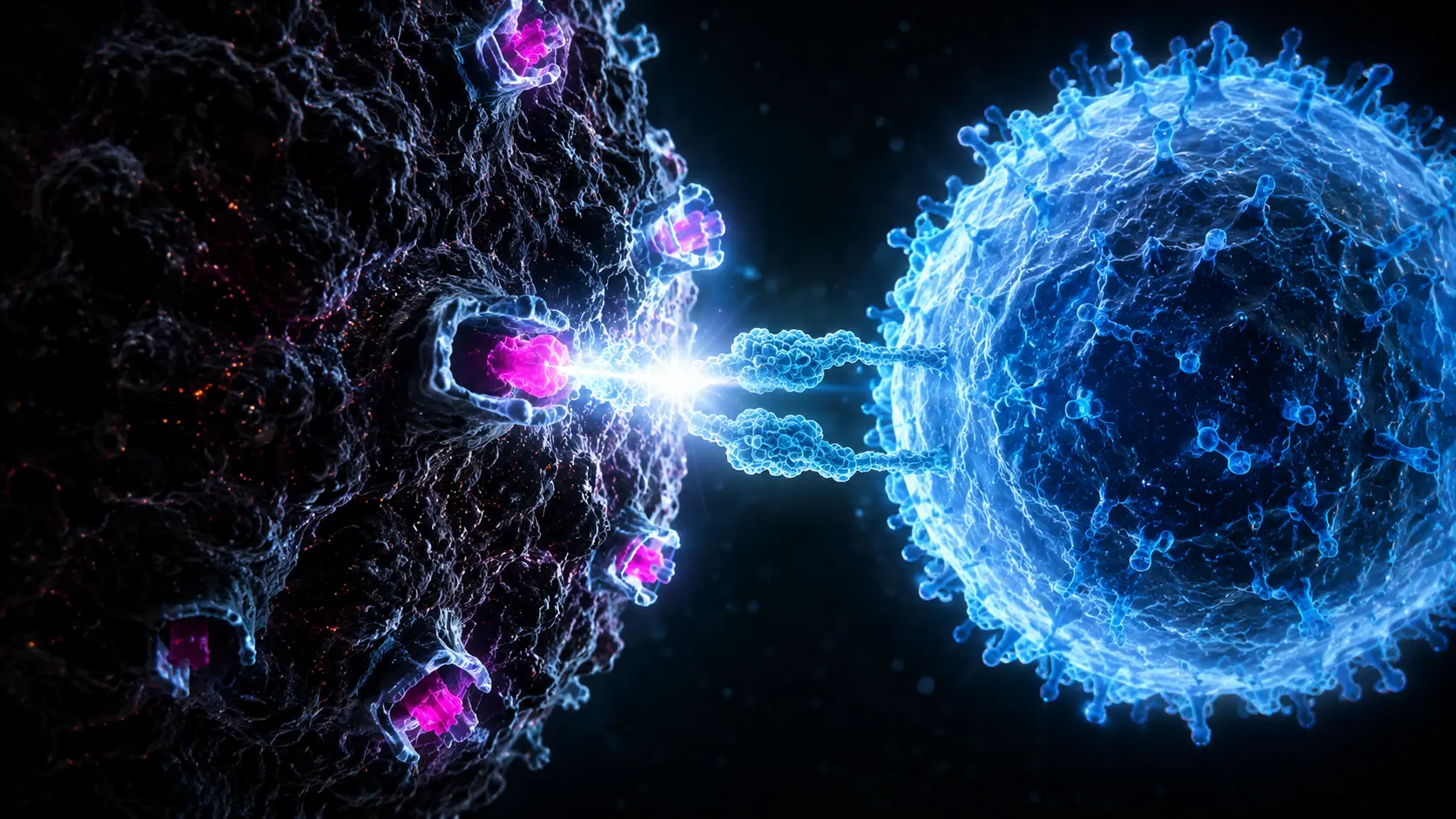

For a decade, the biotechnology sector has celebrated the miracle of CAR-T cell therapy, a genetic treatment that cures once-fatal blood cancers by reprogramming a patient’s own immune system. But there is a glaring, mathematical problem: blood cancers account for only about 10% of all human malignancies. The other 90% are solid tumors (like lung, breast, and sarcoma). In a solid tumor, the mutated cancer proteins do not sit conveniently on the outside of the cell for a drug to grab. They hide deep inside the cell, completely invisible to traditional immunotherapies.
Why should you care right now? Because scientists have finally engineered immune cells with “x-ray vision.” By utilizing T-Cell Receptor (TCR) therapy, researchers are exploiting the microscopic windows that human cells use to display their internal contents to the outside world. This breakthrough has unlocked the remaining 90% of the oncology market. Following the FDA’s historic full approval of TECELRA in 2026 for synovial sarcoma, the pharmaceutical industry is aggressively scaling a new class of living drugs. TCR-T cells are now actively hunting down tumors hiding deep within the human body, transforming genetic engineering from a niche blood-cancer treatment into a universal weapon against solid tissue disease.
What is TCR-T Cell Therapy?
T-Cell Receptor Engineered T-Cell Therapy (TCR-T) is an advanced immunotherapy where a patient’s immune cells are genetically modified to express specialized receptors. These synthetic receptors are engineered to bind to Human Leukocyte Antigen (HLA) complexes on the surface of cancer cells, allowing the immune system to detect and destroy tumors based on mutated proteins hiding inside the cell.
At a Glance
- Concept: Giving immune cells x-ray vision. It allows them to look through the outer shell of a cancer cell, identify the mutated proteins hiding inside, and execute the cell.
- Why it matters: Older genetic therapies (CAR-T) only work if the cancer protein is stuck to the outside of the cell, which is why they only work well on blood cancers. TCR-T works on solid masses, unlocking the vast majority of human cancers.
- Who uses it: Clinical oncologists, biotech giants (Adaptimmune, Immunocore), and specialized cellular manufacturing supply chains.
- Biggest takeaway: This therapy requires a perfect genetic lock-and-key fit. You cannot just give the drug to anyone with the right cancer; the patient must also have a specific genetic immune profile (HLA type) for the drug to recognize the tumor.
In Simple Words
Imagine a neighborhood where a criminal is hiding inside a brick house.
A traditional CAR-T cell is like a police officer who can only arrest people standing on their front porch. If the criminal stays inside the house, the police officer walks right past, completely blind to the threat. This is why CAR-T struggles with solid tumors: the cancer proteins stay inside.
A TCR-T cell utilizes a biological loophole. Every house in the human body has a mandatory window display (the HLA complex). The cell is forced to constantly chop up its internal garbage and display the pieces in this window for the immune system to inspect.
TCR-T therapy genetically engineers the police officer to possess specialized binoculars that can read the garbage in the window perfectly. Even though the criminal is hiding deep inside the house, the officer sees the criminal’s specific trash in the window, realizes the house is corrupt, and destroys the entire building.
Why This Matters
For Biotech Investors, Oncologists, and Pharma Executives, TCR-T solves the Intracellular Antigen Bottleneck.
The universe of potential targets for cancer therapy is heavily skewed. Less than 10% of tumor-associated antigens are expressed on the cell surface.The other 90%—including notoriously “undruggable” targets like mutant KRAS, p53, and various cancer-testis antigens (like MAGE-A4 and NY-ESO-1)—are strictly intracellular. By leveraging the natural MHC/HLA presentation pathway, TCR-T therapies expand the druggable universe by an order of magnitude. It allows the biotechnology sector to commercialize curative treatments for massive indications like non-small cell lung cancer, melanoma, and gastrointestinal solid tumors.
The Evolution from CAR-T to TCR-T Cell Therapy
The immune system is a highly regulated, lethal machine. Natural T-cells possess natural T-Cell Receptors, but tumors use genetic tricks to hide from them, effectively turning invisible.
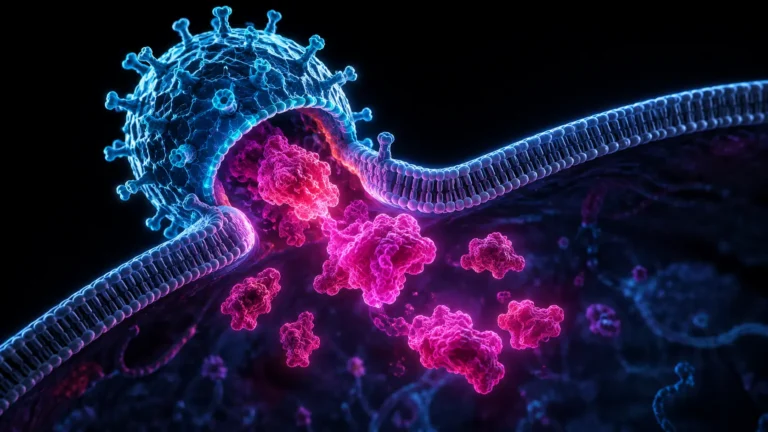
We cannot wait for the patient’s immune system to figure out the trick. TCR-T is the industrialization of immunity. Scientists extract a patient’s failing T-cells, use lentiviral vectors to permanently rewrite their DNA with an “affinity-enhanced” receptor, and multiply them into an army of billions in a bioreactor. We infuse a superhuman, mathematically perfected immune response back into a dying patient.
How TCR-T Cell Therapy Detects Solid Tumors
Detecting an intracellular mutation from the outside of a cell requires exploiting the fundamental mechanics of human tissue. Here is the first-principles breakdown of the architecture.
1. The Fundamental Problem: Surface Antigen Exhaustion
CAR-T therapies use synthetic, antibody-like hooks to grab targets on the surface of blood cancer cells. However, solid tumors are insidious. If a drug targets a surface protein, the solid tumor simply mutates and stops displaying that surface protein (antigen escape). The CAR-T cell goes blind, and the patient relapses.
2. The Core Mechanism: The HLA Display Window
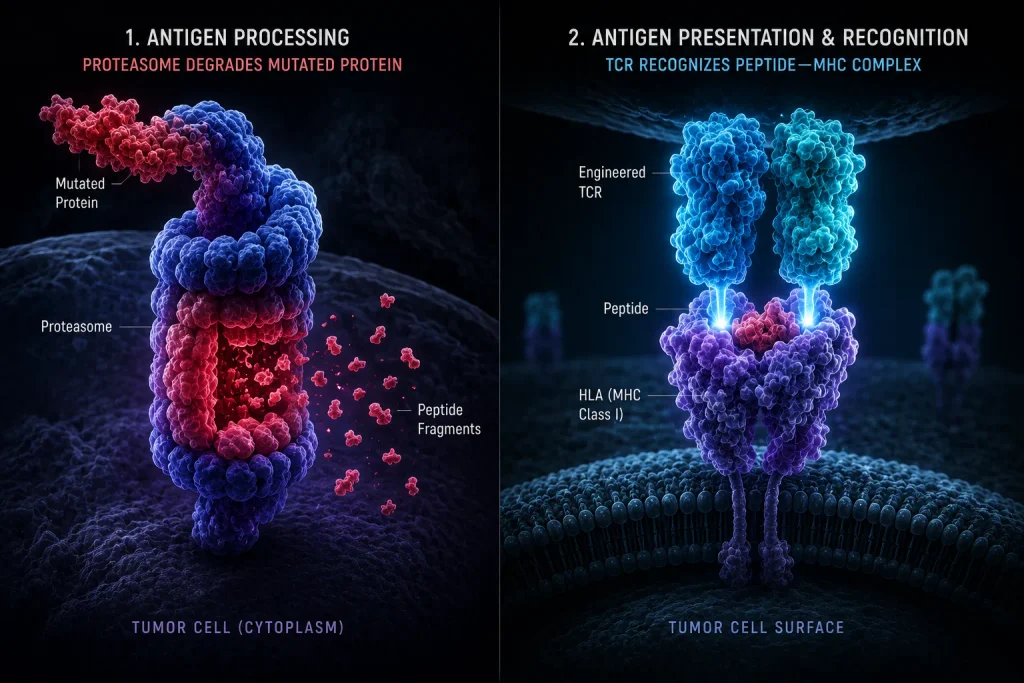
Inside every human cell is a trash disposal system called the proteasome. It chops old proteins into tiny pieces (peptides). The cell takes these peptides, binds them to a Human Leukocyte Antigen (HLA) molecule, and pushes the complex to the surface of the cell. This is the cell’s way of proving to the immune system that it is healthy. If a cell becomes cancerous, mutated proteins are chopped up and displayed in the HLA window.
3. Technical Depth: Affinity Enhancement
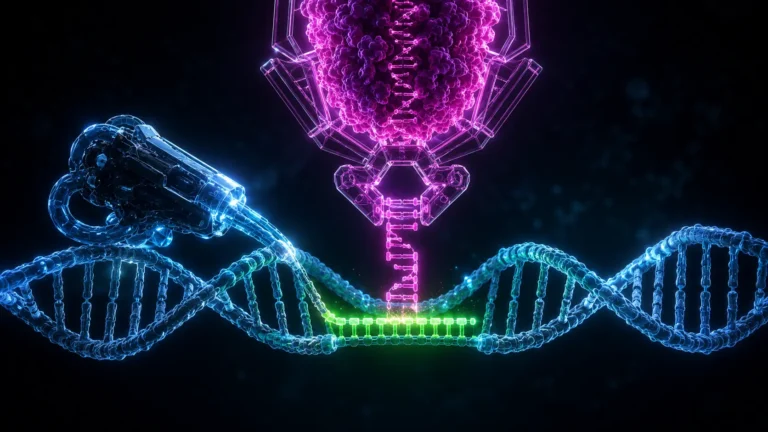
Natural T-cells often ignore these mutated peptides because the chemical bond isn’t strong enough. In TCR-T therapy, scientists use massive computer models to design a T-Cell Receptor that binds to the specific mutated HLA-peptide complex with exponential strength (affinity enhancement).They splice this super-receptor gene into a lentivirus, infect the patient’s extracted T-cells, and rewrite their DNA to express this lethal receptor.
4. Technical Depth: HLA Restriction
This is the major caveat of TCR-T. A TCR is geometrically locked not just to the cancer peptide, but to the specific shape of the patient’s HLA molecule. Because human genetics are wildly diverse, there are thousands of HLA types. The most common in Caucasian populations is HLA-A*02:01.A TCR engineered for an HLA-A02 patient is physically incapable of binding to a tumor in an HLA-A24 patient, strictly limiting the addressable market for each specific drug.
5. Real-World Consequences: Executing the Tumor
Once infused back into the patient, the engineered TCR-T cells flood the bloodstream. When they encounter the solid tumor, the enhanced receptors lock onto the HLA window displaying the cancer peptide. The T-cell unleashes a barrage of cytotoxic perforins and granzymes, punching holes in the tumor cell and inducing immediate cellular suicide (apoptosis).
Clinical Applications: TECELRA and Melanoma Approvals
TCR-T is actively saving lives in indications where traditional chemotherapy guarantees a lethal outcome.
Synovial Sarcoma (TECELRA): Synovial sarcoma is a devastating, aggressive soft-tissue cancer that frequently strikes young adults.In August 2024, the FDA granted accelerated approval to Adaptimmune’s TECELRA (afamitresgene autoleucel), marking the first TCR-T cell therapy approved for a solid tumor.By targeting the MAGE-A4 antigen, the therapy achieved profound response rates in patients who had failed all traditional chemotherapies.In June 2026, the FDA granted full approval and expanded the indication to include pediatric patients aged 12 and older, fundamentally rewriting the survival timeline for adolescents.
Targeting Melanoma and NY-ESO-1: Early triumphs in TCR-T involved targeting NY-ESO-1, a cancer-testis antigen heavily expressed in advanced melanoma. Because this protein is not expressed in healthy adult tissues (except for immune-privileged testicular tissue), TCR-T cells can aggressively hunt down melanoma metastases throughout the body without accidentally destroying the patient’s healthy vital organs.
Neoantigen Mutational Targeting: The frontier of TCR-T involves sequencing a patient’s specific tumor to find unique, random mutations (neoantigens) like KRAS G12D or TP53. Because these mutations only exist inside the tumor and nowhere else in the body, bespoke TCR-T cells can be engineered to target them. This creates a highly personalized, 1-of-1 cancer treatment with effectively zero risk of off-target toxicity.
Economic & Strategic Impact
The core strategic vulnerability of TCR-T is the Diagnostics and Manufacturing Bottleneck.
Unlike a pill that can be given to anyone, a TCR-T therapy requires a diagnostic gauntlet. First, a patient’s tumor must be biopsied to prove it expresses the target antigen (e.g., MAGE-A4).Second, a genetic blood test must prove the patient has the exact correct HLA allele (e.g., HLA-A*02:01).If a patient fails either test, the multi-million-dollar drug is useless.
Commercially, this fragments the Total Addressable Market (TAM). If a pharmaceutical company spends $1 billion developing a TCR-T drug, but it only works on the 40% of the population with that specific HLA type, the potential revenue pool is instantly halved. The commercial success of TCR-T relies on companies building vast “libraries” of different TCRs to cover the diverse genetic spectrum of the global population, requiring astronomical capital expenditure from biotech venture capital.
Advantages
- Intracellular Targeting:Expands the druggable universe by unlocking the 90% of cancer-driving proteins that do not appear on the surface of the cell.
- Deep Tumor Penetration: T-cells naturally migrate and infiltrate deep solid tissues, providing access to sprawling, metastatic tumor beds that surgical scalpels cannot reach.
- Prolonged Surveillance: Living drugs persist in the bloodstream. While some patients eventually relapse, engineered memory T-cells can theoretically survive for years, silently patrolling the body to execute returning cancer cells.
- Reduced Antigen Escape: Because the proteasome processes thousands of intracellular proteins, it is much harder for a solid tumor to completely hide its internal mutations from the HLA window without crippling its own survival mechanisms.
Limitations
- HLA Restriction:The treatment is biologically locked to specific genetic populations, creating severe commercial and demographic limitations.
- The Tumor Microenvironment (TME): Solid tumors are incredibly hostile. They create a physical and chemical fortress (the TME) that suppresses oxygen, dumps lactic acid, and secretes toxic cytokines. Even if a TCR-T cell finds the tumor, the TME often exhausts and kills the immune cell before it can execute the target.
- Autologous Manufacturing Delays: Currently, TCR-T is “autologous.” The T-cells are harvested from the dying patient, flown to a manufacturing lab, genetically engineered, grown over 3-4 weeks, and flown back. During this agonizing wait time, aggressive cancers can kill the patient before the living drug arrives.
Common Misconceptions
Misconception: TCR-T and CAR-T are essentially the same thing.
Reality: They are entirely different mechanisms. CAR-T uses a synthetic, antibody-like “claw” to grab surface proteins.TCR-T uses a natural, modified receptor to read internal peptides presented by an HLA window. CAR-T is for liquid blood; TCR-T is the key to solid tissue.
Misconception: The therapy works on any patient with the cancer.
Reality: Due to HLA restriction, it only works if the patient has a specific genetic immune profile. A drug designed for a Caucasian HLA profile may be completely ineffective in an Asian or African demographic unless specifically re-engineered.
Misconception: Engineered T-cells are harmless to the rest of the body.
Reality: Off-target toxicity is a terrifying risk. In an early trial, a TCR engineered to target the MAGE-A3 cancer protein accidentally cross-reacted with Titin, a similar-looking protein found in healthy human heart muscle. The T-cells destroyed the patients’ hearts, leading to fatal cardiac toxicity. Modern affinity enhancement requires intense computer modeling to ensure the TCR does not trigger friendly fire.
What Most People Miss
The disruptive intelligence value of Allogeneic “Off-the-Shelf” TCR-T.
The brutal 4-week manufacturing delay of autologous therapy is unacceptable for late-stage patients. What analysts overlook is the rapid advancement of “Allogeneic” manufacturing.
Using advanced gene-editing tools like CRISPR, companies are harvesting T-cells from young, ultra-healthy donors. They completely delete the donor’s natural immune identifiers (so the patient’s body won’t reject them) and splice in the cancer-hunting TCR. This creates a massive, frozen “off-the-shelf” inventory of universal living drugs. An oncologist will eventually be able to pull a frozen vial of TCR-T cells out of a hospital freezer and inject them into a dying patient on the exact same day they are diagnosed, permanently solving the supply chain bottleneck.
Comparison Table
| Feature | CAR-T Cell Therapy | TCR-T Cell Therapy |
| Primary Indication | Liquid Cancers (Leukemia, Lymphoma) | Solid Tumors (Sarcoma, Melanoma) |
| Antigen Target Location | Cell Surface Only | Intracellular (via HLA presentation) |
| Receptor Type | Synthetic Chimeric Receptor | Affinity-Enhanced Natural Receptor |
| HLA/MHC Dependency | Independent (No matching required) | Strictly Dependent (Requires HLA matching) |
| Tumor Microenvironment | Rarely an issue in the bloodstream | Major barrier (Requires armored T-cells) |
Case Study
Situation: Synovial sarcoma is a rare, aggressive soft-tissue malignancy that historically offered dismal outcomes. When the disease became metastatic and failed third-line chemotherapy, median overall survival hovered below 8 months. The tumors were heavily entrenched solid masses, completely invulnerable to traditional CAR-T blood-cancer therapies.
Challenge: Develop an immunotherapy capable of penetrating the solid tumor mass, identifying the cancer cells based on internal mutations, and destroying them without triggering lethal auto-immune attacks on the patient’s healthy connective tissue.
Solution (The SPEARHEAD-1 Trial and TECELRA): Adaptimmune Therapeutics deployed afamitresgene autoleucel (afami-cel). They identified that synovial sarcomas heavily express the MAGE-A4 intracellular antigen.They engineered an affinity-enhanced TCR designed strictly for patients expressing the HLA-A*02 allele.Patients underwent lymphodepleting chemotherapy, followed by a single infusion of their own genetically reprogrammed TCR-T cells.
Outcome: The results were historic. Across the combined cohorts of the SPEARHEAD-1 trial, patients achieved an overall response rate (ORR) nearing 44%.In August 2024, the FDA granted accelerated approval to afami-cel under the brand name TECELRA, marking the first time a TCR-T therapy was approved for a solid tumor.In June 2026, the FDA granted full approval, recognizing the profound, durable remissions achieved by the therapy, and expanding access to adolescents.
Lessons Learned: The approval of TECELRA definitively validated the HLA-presentation mechanism as a viable commercial target for solid tumors. It proved that despite the immunosuppressive tumor microenvironment, engineered T-cells could successfully infiltrate, identify, and eradicate entrenched solid masses, opening the floodgates for bespoke TCR engineering across the broader oncology landscape.
Future Outlook
Next 12–24 Months
The era of Expanded Solid Tumor Approvals. The success of TECELRA for sarcoma is the tip of the spear. Over the next two years, we will see highly anticipated Phase 2/3 readouts for TCR-T therapies targeting massive indications, specifically advanced melanoma, ovarian cancer, and non-small cell lung cancer (NSCLC). As these trials conclude, the FDA will establish standardized regulatory pathways for HLA-restricted cellular products, moving the therapy from a “last resort” for rare sarcomas into the second-line treatment protocols for mainstream solid oncology.
Next 3–5 Years
The scaling of “Armored” TCR-T Cells. To survive the brutal, toxic environment of a solid tumor, the next generation of TCR-T cells will not just carry a new receptor; they will be heavily armored. Bioengineers are splicing additional genes into the T-cells that cause them to secrete their own survival cytokines (like IL-15) or express “dominant-negative” receptors that neutralize the tumor’s toxic defense chemicals (like TGF-β). These armored living drugs will not just infiltrate the tumor; they will actively terraform the microenvironment to ensure the cancer is utterly destroyed.
Next 10 Years
The Universal Allogeneic Library. By the mid-2030s, the agonizing 4-week wait for autologous manufacturing will be obsolete. Massive biotech manufacturing hubs will maintain vast, frozen libraries of Allogeneic (off-the-shelf) TCR-T cells, gene-edited to be invisible to the host immune system. When a patient is diagnosed with cancer, an AI will sequence their tumor and their HLA type in 24 hours, select the perfect pre-manufactured TCR-T vial from the library, and cure the solid tumor within a week of detection, transforming terminal oncology into a highly optimized, outpatient logistics operation.
Most Likely Scenario
TCR-T cell therapy is the definitive answer to the solid tumor paradox. While the logistical hurdles of HLA matching and autologous manufacturing are severe, the raw biological capability to hunt cancer cells based on their internal DNA mutations is too powerful to ignore. Driven by the commercial success of early approvals, TCR-T will eventually overtake CAR-T in market capitalization, establishing engineered immunity as the standard of care for the vast majority of human cancers.
Key Takeaways
- While CAR-T therapies cure blood cancers, they are mostly useless against solid tumors (90% of cancers) because the mutated cancer proteins hide deep inside the cell.
- TCR-T cell therapy solves this by acting like “x-ray vision.” It targets the HLA complex—the biological window cells use to display chopped-up pieces of their internal proteins to the outside world.
- In August 2024, the FDA approved TECELRA (afami-cel), the first engineered TCR-T therapy for a solid tumor (synovial sarcoma).In June 2026, it received full FDA approval.
- Because the therapy targets the HLA window, it is biologically locked. A specific drug will only work on patients who possess a specific genetic immune profile (like HLA-A*02:01).
- Solid tumors actively try to suffocate immune cells. The next generation of TCR-T cells are being “armored” with extra genes to survive the toxic environment of the tumor mass.
- Currently, the patient’s own cells must be extracted and engineered in a lab over 4 weeks. The future of the industry is “off-the-shelf” (Allogeneic) cells that can be injected instantly upon diagnosis.
Glossary
Allogeneic: A medical therapy manufactured from a healthy donor’s cells that is edited to be given to any patient universally (“off-the-shelf”), avoiding the slow process of using the patient’s own cells.
Autologous: A highly personalized medical therapy where a patient’s own cells are extracted, genetically altered in a lab, and then injected back into their body.
Human Leukocyte Antigen (HLA): The human version of the Major Histocompatibility Complex (MHC). It is the molecular “window display” on the surface of a cell that holds out protein fragments for the immune system to inspect.
Lentiviral Vector: A harmless, engineered virus used by scientists to permanently insert new DNA (like a cancer-hunting receptor) into a patient’s T-cells.
Solid Tumor: A cancer that forms a distinct, solid physical mass in the body (like lung, breast, or bone cancer), making it much harder to treat than liquid blood cancers (like leukemia).
Tumor Microenvironment (TME): The extremely hostile, toxic biological environment created by a solid tumor to suffocate, exhaust, and kill invading immune cells.
Sources
National Institutes of Health (NIH): Approval of the first TCR-based cell therapy
FDA Press Announcements: FDA grants accelerated approval to afamitresgene autoleucel for unresectable or metastatic synovial sarcoma
Targeted Oncology: FDA Grants Full Approval of Afami-Cel in Synovial Sarcoma, Expands Indication to 12 and Older
PubMed: Comparing CAR and TCR engineered T cell performance as a function of tumor cell exposure
Miltenyi Biotec: TCR T Cell Therapy explained: Mechanisms and latest Research