Advertisement
)
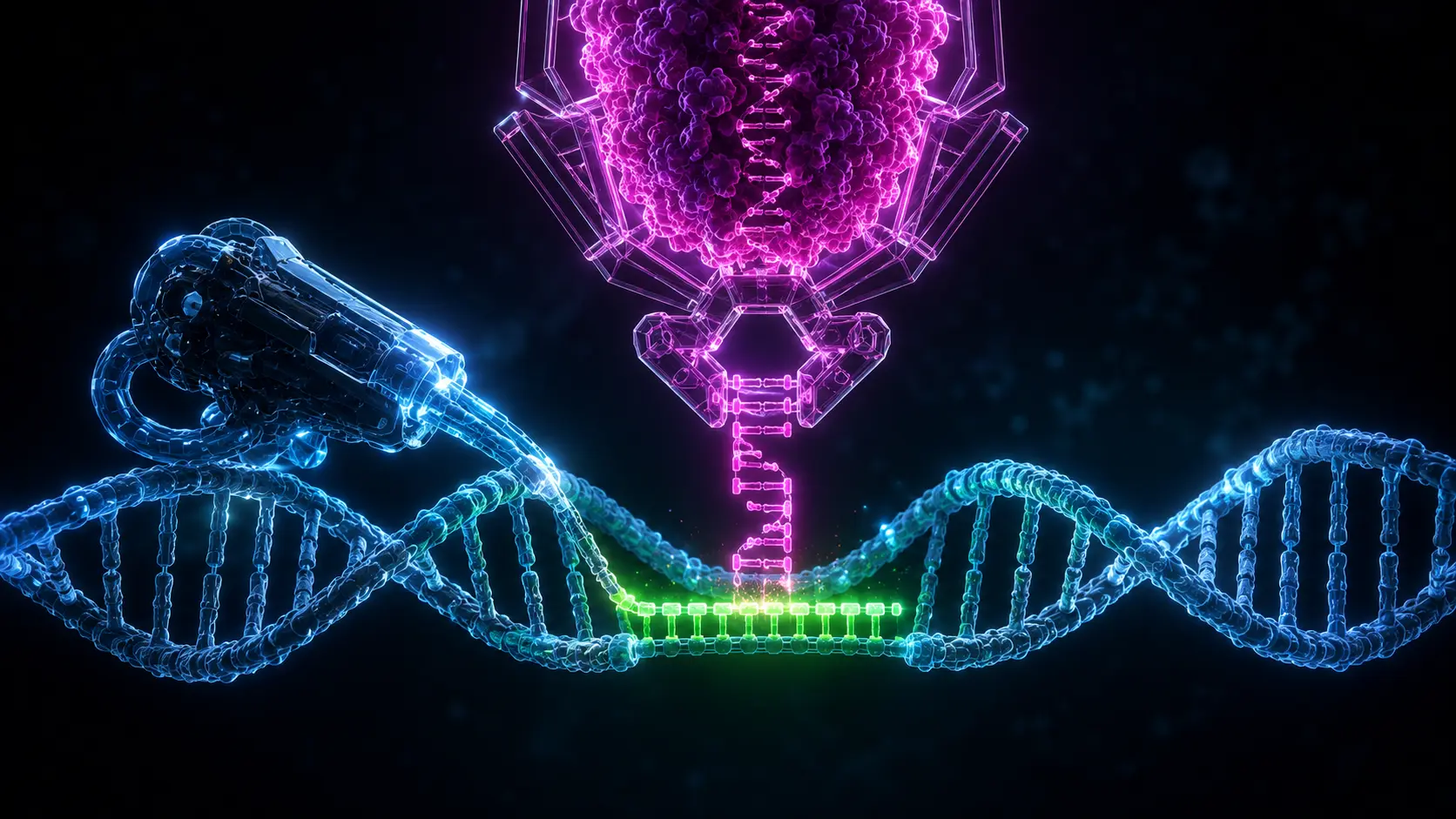

If a human is born with a devastating genetic condition like Cystic Fibrosis, editing a single letter of their DNA is useless. The entire gene is fundamentally broken and must be completely replaced. For a decade, the biotechnology industry attempted to install massive replacement genes using CRISPR-Cas9 by literally shattering the DNA double helix and hoping the cell would stitch the new, healthy gene into the wreckage. Predictably, this brute-force approach caused catastrophic chromosomal rearrangements, dangerous translocations, and toxic cellular panic, rendering it far too dangerous for complex in vivo therapeutics.
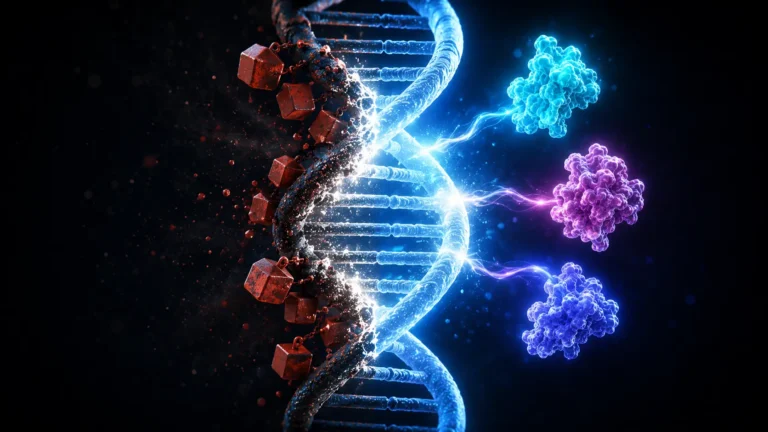
Why should you care right now? Because the genetic engineering sector has abandoned the molecular scissors and invented a molecular cargo ship. Known as PASSIGE and PASTE, these breakthrough technologies utilize a revolutionary “drag and drop” mechanism that can insert massive DNA payloads into exact genomic locations without ever breaking the DNA double helix.By utilizing prime editing to draw a microscopic “landing pad” and a viral integrase enzyme to perfectly lock the healthy gene into place, scientists have unlocked the ability to permanently cure complex recessive diseases. This marks the definitive transition from basic genetic editing to total genomic writing, fundamentally rewriting the commercial potential of living therapeutics.
What are PASSIGE and PASTE?
PASSIGE (Prime Assisted Site-Specific Integrase Gene Editing) and PASTE (Programmable Addition via Site-Specific Targeting Elements) are advanced genomic writing technologies.They utilize a Prime Editor to write a short recombinase “landing pad” into the genome without causing double-strand breaks.A site-specific integrase enzyme then seamlessly inserts a massive therapeutic DNA payload directly into that pad.
At a Glance
- Concept: A “copy and paste” software tool for human DNA. It creates a safe docking station on the chromosome and drops an entire healthy gene perfectly into place.
- Why it matters:Older CRISPR tools act like a sledgehammer, breaking both strands of DNA to jam a new gene inside, which causes dangerous mutations.PASTE/PASSIGE performs the insertion smoothly without ever breaking the DNA double helix.
- Who uses it:Prime Medicine, Bristol Myers Squibb, and advanced gene-therapy biotech companies targeting untreatable recessive genetic disorders.
- Biggest takeaway:Standard prime editors can only write very short DNA messages (under 200 letters).By teaming up with an integrase enzyme, this technology can insert payloads larger than 30,000 letters, large enough to replace almost any broken gene in the human body.
In Simple Words
Imagine you are trying to replace a faulty engine in a car.
Using Traditional CRISPR-Cas9 is like using a chainsaw to cut the car perfectly in half, dropping the new engine into the middle, and hoping the mechanics can quickly weld the entire car back together before it collapses. It is violent, chaotic, and leaves permanent scars.
Using PASSIGE or PASTE is like installing a standardized, magnetic engine mount (the landing pad) perfectly onto the chassis. You then lower the new engine (the payload) down on a crane. Because the new engine has matching magnetic locks, it clicks perfectly into the mount without you having to cut a single piece of the car’s frame. The installation is seamless, predictable, and structurally flawless.
Why This Matters
For Biotech Investors, Geneticists, and Pharma Executives, PASSIGE solves the Whole-Gene Replacement Bottleneck.
The vast majority of currently approved genetic therapies rely on “gene disruption” (breaking a mutant gene that causes disease) or ex vivo cell therapies. Curing a disease where a patient simply lacks a functioning gene—like Alpha-1 Antitrypsin Deficiency or Cystic Fibrosis—requires inserting thousands of base pairs of healthy DNA. Because traditional Homology-Directed Repair (HDR) following a CRISPR cut is incredibly inefficient in non-dividing human cells (like the liver, brain, and lungs), whole-gene replacement in vivo was mathematically unviable. By removing the reliance on the cell’s fragile internal repair pathways and utilizing an autonomous integrase enzyme, PASSIGE unlocks the multi-billion-dollar commercial market for curative, single-dose therapies targeting complex recessive diseases.
The 4 Generations of Genomic Writing: From CRISPR to PASTE
We are witnessing the fourth distinct generation of genomic engineering.
- CRISPR-Cas9 (The Scissors):Revolutionized biology by cutting DNA, but primarily useful for breaking genes or relying on chaotic cellular repair.
- Base Editors (The Pencil):Allowed scientists to erase and rewrite a single letter of DNA (e.g., turning an A into a G) without a double-strand break, but completely incapable of inserting new sentences.
- Prime Editors (The Word Processor):Fused a nickase with a reverse transcriptase to search and replace short genetic sequences (up to ~200 letters), but failed to scale to massive payloads.
- PASSIGE / PASTE (The Cargo Ship):Fuses the precision of the Word Processor with the massive payload capacity of viral integrases to seamlessly drop entire genes (30,000+ letters) anywhere in the genome.
How PASSIGE and PASTE Insert Massive DNA Payloads
Inserting a 5,000-base-pair gene into a living human cell without triggering a fatal DNA damage response requires extreme molecular choreography. Here is the first-principles breakdown of the PASTE/PASSIGE architecture.
1. The Fundamental Problem: Double-Strand Breaks (DSBs)
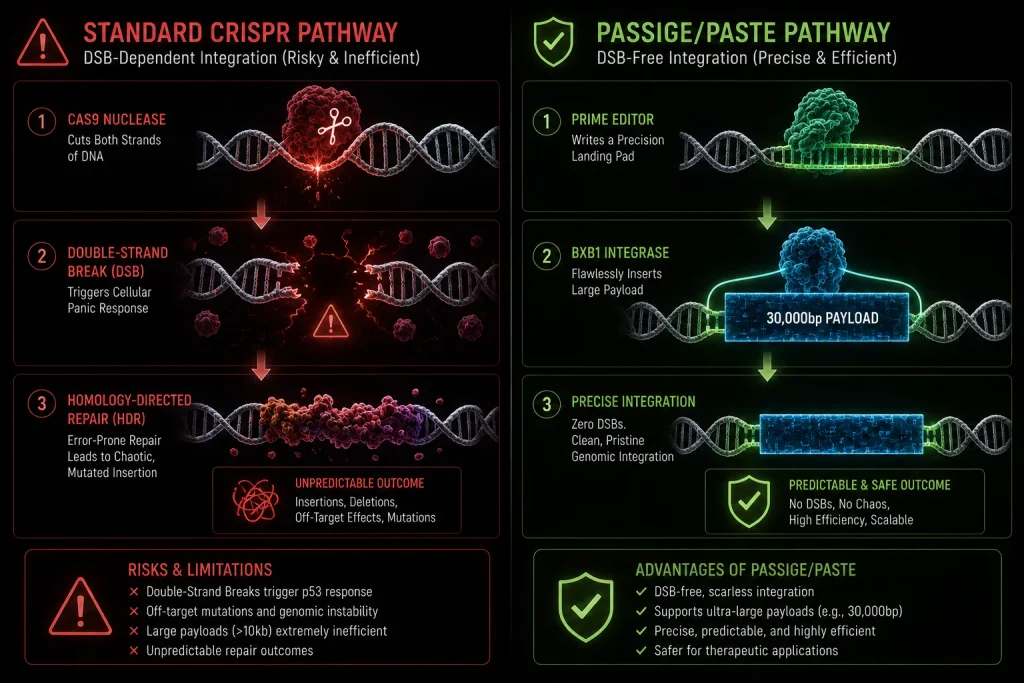
When standard CRISPR-Cas9 cuts both strands of the DNA double helix, the cell triggers a panic response.It attempts to rapidly glue the ends back together using Non-Homologous End Joining (NHEJ), which inherently inserts or deletes random letters (indels), destroying the surrounding genetic code. To insert a large gene smoothly, scientists must entirely avoid creating a DSB.
2. The Insufficiency of Basic Prime Editing
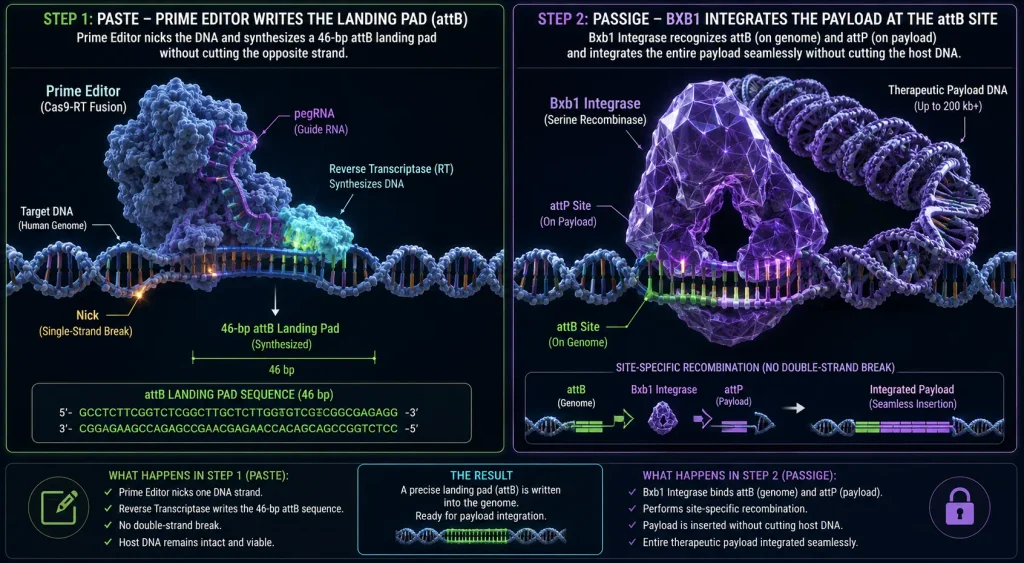
Prime Editing solves the DSB problem by using a Cas9 nickase (which only snips one of the two DNA strands) attached to a Reverse Transcriptase (RT).A highly engineered guide RNA (pegRNA) finds the target and acts as a template.The RT reads the template and writes the new DNA directly into the snipped strand.However, if the pegRNA is too long (over 200 letters), it becomes structurally unstable and the molecular complex falls off the DNA, meaning prime editing cannot insert whole genes.
3. The Core Mechanism: Recombinase Landing Pads
To insert massive payloads, scientists turned to bacteriophages (viruses that infect bacteria). These viruses use specialized enzymes called “serine integrases” to inject their massive DNA genomes perfectly into bacterial DNA.The integrase simply requires a specific recognition sequence on the host DNA (an attB site) and a matching sequence on the payload (an attP site).Because humans do not naturally possess attB sites, integrases were previously useless in human medicine.
4. Technical Depth: The Bxb1 Integrase Integration
This is the genius of PASTE and PASSIGE: they combine the two systems.
First, the Prime Editor is deployed. Because an attB landing pad is extremely short (only about 46 base pairs), the Prime Editor effortlessly writes the landing pad into the exact desired location in the human genome.
5. Real-World Consequences: Massive Payload Capacity
Once the 46-base-pair landing pad is perfectly installed, the heavy lifting begins. The system introduces the Bxb1 Integrase enzyme alongside the massive therapeutic DNA payload (which carries the matching attP site).The Bxb1 integrase binds to the landing pad, acts as a biological zipper, and perfectly locks the 30,000-base-pair healthy gene into the chromosome.The entire operation completes with astounding precision, zero double-strand breaks, and zero reliance on the cell’s chaotic internal repair mechanics.
Genomic Insertion Simulator
Standard CRISPR-Cas9 (DSB) vs. PASSIGE/PASTE (Prime Editor + Integrase)
5,000 bp
100 bp
15,000 bp
30,000+ bp
Integration Efficiency
0.0%
Chromosomal Damage (Toxicity)
0.0%
Commercial Pipeline: Prime Medicine and Cystic Fibrosis
The transition from MIT and Broad Institute laboratories to late-stage commercial pipelines is accelerating, opening previously untouchable therapeutic indications.
Cystic Fibrosis (CF) Curative Pipelines: Cystic Fibrosis is caused by thousands of different potential mutations across the massive CFTR gene. Creating a unique prime-editing drug for every possible mutation is commercially unviable. Utilizing PASSIGE, Prime Medicine (supported by the Cystic Fibrosis Foundation) is targeting an in vivo approach.Instead of fixing the unique typo, they aim to drop an entirely new, fully functional CFTR “super-exon” directly into the genome.Prime Medicine anticipates generating preclinical proof-of-concept data for this revolutionary CF approach by the end of 2026, establishing a single, universal cure regardless of the patient’s specific mutation.
Off-the-Shelf CAR-T Cell Engineering: Manufacturing autologous CAR-T cells currently relies on using random, chaotic lentiviruses to smash the Chimeric Antigen Receptor (CAR) gene into a patient’s T-cells, which can accidentally trigger cancer if the virus lands in the wrong spot. Prime Medicine, in partnership with Bristol Myers Squibb (BMS), is deploying PASSIGE to engineer next-generation immunology and oncology products.By using PASSIGE to insert the massive CAR transgene into a precisely targeted, safe genomic harbor, they guarantee uniform, highly potent T-cell therapies with effectively zero risk of insertional mutagenesis.
Synthetic Biology and Functional Genomics: Beyond human therapeutics, PASTE is radically accelerating synthetic biology. Agricultural companies and bio-manufacturing firms are using the technology to drop massive, multi-gene metabolic pathways into yeast, bacteria, and plant genomes. Because PASTE can insert payloads larger than 30 kilobases without shattering the host genome, it allows scientists to perfectly engineer drought-resistant crops or high-yield pharmaceutical-producing microbes with unprecedented speed and safety.
Economic & Strategic Impact
The core strategic vulnerability of PASTE and PASSIGE is the Intellectual Property (IP) Cross-Licensing Labyrinth.
The biotechnology sector is infamous for its crippling patent wars (e.g., the CRISPR-Cas9 battle between the Broad Institute and UC Berkeley). PASSIGE and PASTE do not rely on a single patent; they are extreme combinatorial technologies. To commercialize a PASSIGE drug, a company must secure licenses for the foundational CRISPR-Cas9 nickase, the highly specific Prime Editing patents (held heavily by Prime Medicine), the novel epegRNA and xr-pegRNA architectural patents, AND the specific serine integrase patents (such as Bxb1).
This creates a massive “royalty stacking” crisis. If a startup wants to build a PASTE therapy, they may owe double-digit percentage royalties to four different patent holding companies before they even treat a patient. Prime Medicine holds a massive strategic moat because they natively control the foundational Prime Editing IP, allowing them to aggressively out-license the PASSIGE platform while economically choking un-partnered competitors.
Advantages
- Zero Double-Strand Breaks:Completely eliminates the toxic cellular panic, massive deletions, and chromosomal translocations associated with standard CRISPR-Cas9 cutting.
- Massive Payload Size:Successfully inserts therapeutic DNA sequences exceeding 30,000 base pairs, easily accommodating the vast majority of human disease-driving genes.
- Agnostic to Cell Division: Traditional insertion (HDR) only works well in cells that are actively dividing. PASSIGE utilizes an integrase that functions perfectly in non-dividing, post-mitotic cells (like neurons in the brain or hepatocytes in the liver).
- Multiplexing and Repeatability: Once the attB landing pad is installed in a patient, it remains a permanent, universal docking station. Future therapies or upgraded genes can be hot-swapped into the exact same location with extreme efficiency.
Limitations
- The Dual-Delivery Bottleneck:A standard Adeno-Associated Virus (AAV) can only hold about 4.7 kilobases of genetic cargo. The Prime Editor, the pegRNAs, the Bxb1 integrase, and the massive therapeutic gene cannot fit into a single AAV. This forces scientists to use highly complex split-delivery systems (e.g., packing the enzymes into a Lipid Nanoparticle (LNP) and the DNA payload into an AAV). Co-delivering multiple vectors into the exact same cell inside a living human body is excruciatingly difficult.
- Incomplete Purity (Byproducts):While vastly cleaner than CRISPR, the integrase mechanism is not perfectly pure.The integration can occasionally leave behind small, unwanted vector backbone sequences (scars) at the integration site, which regulatory agencies like the FDA scrutinize heavily.
- Immunogenicity of Integrases:Bxb1 is a viral protein derived from bacteriophages. Injecting a massive dose of foreign viral enzymes into a human patient risks triggering a severe immune response, potentially clearing the edited cells before they can permanently cure the patient.
Common Misconceptions
Misconception: PASSIGE will instantly cure all genetic diseases next year.
Reality: While the math works perfectly in a petri dish, the in vivo delivery vehicles required to get these massive multi-component systems safely into a human heart or brain without triggering an immune cascade are still years away from FDA approval.
Misconception: Prime Editing and PASSIGE are exactly the same thing.
Reality: Prime Editing is a word processor that makes small typo corrections using a Reverse Transcriptase.PASSIGE is a dual-system that uses Prime Editing just to draw a landing pad, and then uses a completely separate viral Integrase enzyme to drop the massive payload.
Misconception: The integrase cuts the DNA, so it must cause a double-strand break.
Reality: While the integrase does sever the DNA to insert the payload, it acts as a molecular staple-gun. It simultaneously holds all the severed ends of the DNA together with unbreakable chemical bonds during the swap, ensuring the cell’s panic-inducing “DNA damage response” is never triggered.
What Most People Miss
The disruptive intelligence value of The Universal Genomic Safe Harbor.
When analysts evaluate PASSIGE, they focus on replacing broken genes in their original, natural location. What they miss is the power of the “Safe Harbor.”
Scientists know that certain areas of the human genome (like the AAVS1 locus or the albumin gene) can be aggressively edited without causing cancer or disrupting normal biological functions. Using PASTE/PASSIGE, scientists can drop a permanent attB landing pad directly into a Safe Harbor locus. Once that pad is established, the patient possesses a biological USB port. If the patient develops cancer, diabetes, or an autoimmune disease over the next twenty years, doctors do not need to re-edit the patient’s fragile native genes. They simply inject a new therapeutic payload equipped with an attP site. The payload automatically routes to the Safe Harbor landing pad and activates, essentially turning human genomics into an upgradable, modular software operating system.
Comparison Table
| Feature | CRISPR-Cas9 (HDR) | Basic Prime Editing | PASTE / PASSIGE |
| Primary Mechanism | Double-Strand Break (Scissor) | Nickase + Reverse Transcriptase | Prime Edit + Integrase Recombination |
| Payload Capacity | Large (Highly Toxic) | Small (<200 base pairs) | Massive (>30,000 base pairs) |
| Double-Strand Break? | Yes | No | No |
| Delivery Complexity | Moderate (Single/Dual Vector) | High (Massive Enzyme) | Extreme (Triple Vector / AAV+LNP) |
| Off-Target Risk | High (Indels, Translocations) | Extremely Low | Extremely Low |
Case Study
Situation: Prime Medicine, the biotech powerhouse founded by Prime Editing co-inventor David Liu, recognized a fundamental limitation in their flagship platform. While standard Prime Editing could brilliantly correct the point mutations responsible for diseases like Wilson Disease and Alpha-1 Antitrypsin Deficiency (AATD), it was powerless against diseases that required the complete in vivo replacement of massive genes, permanently walling off some of the most lucrative therapeutic indications.
Challenge: Develop a fully programmable, DSB-free technology capable of inserting gene-sized DNA cargos directly into the genome of a living patient to provide a one-time curative therapy for complex recessive disorders like Cystic Fibrosis.
Solution (The PASSIGE Pipeline Integration): Prime Medicine advanced the PASSIGE (Prime Assisted Site-Specific Integrase Gene Editing) platform.They engineered a hyper-efficient prime editor to safely install a precise integrase landing site. They paired this with a highly optimized serine integrase capable of seamlessly incorporating massive DNA sequences.
Outcome: By early 2026, Prime Medicine reported robust pipeline advancements, projecting preclinical proof-of-concept data for their Cystic Fibrosis PASSIGE program by year-end.Concurrently, they successfully monetized the platform by executing a strategic partnership with Bristol Myers Squibb, leveraging PASSIGE to flawlessly insert massive CAR transgenes for next-generation oncology and immunology cell therapies.
Lessons Learned: The commercial acceleration of PASSIGE validated a critical industry pivot: the future of genetic medicine is combinatorial. By fusing the extreme precision of human-engineered Prime Editors with the massive payload capacity of billion-year-old viral integrases, Prime Medicine bypassed the physical limitations of single-enzyme systems, establishing a dominant, highly defensible moat in the race for genomic writing.
Future Outlook
Next 12–24 Months
The era of Ex Vivo Commercial Validation. Because delivering massive integrase systems in vivo (into a living human body) is so difficult, the immediate horizon belongs to ex vivo cell therapies. Biotech companies will use PASTE and PASSIGE on T-cells extracted from patients in a controlled laboratory environment. By flawlessly inserting complex, multi-gene CAR constructs into exact Safe Harbor locations without breaking the T-cells’ DNA, we will see a new wave of hyper-potent, ultra-durable oncology treatments enter Phase 1 human trials, dramatically outperforming legacy lentiviral methods.
Next 3–5 Years
The scaling of Dual-Modality Delivery Vehicles (AAV+LNP). To cure diseases like Cystic Fibrosis, the technology must work in vivo inside the patient’s lungs. Over the next five years, the pharmaceutical supply chain will perfect “Dual-Modality Delivery”. Patients will receive a highly targeted Lipid Nanoparticle (LNP) containing the mRNA instructions for the Prime Editor and Integrase, followed instantly by a specialized Adeno-Associated Virus (AAV) carrying the massive 5,000-base-pair payload. Mastering the manufacturing and biodistribution of these synchronized, dual-vector payloads will be the most lucrative achievement in the biotechnology sector.
Next 10 Years
The Universal Genomic Operating System. By the mid-2030s, the concept of single-gene editing will seem archaic. Once a patient is diagnosed with a complex genetic risk profile, doctors will use PASSIGE to install a permanent landing pad into the patient’s liver. Over the course of the patient’s life, as new therapeutic genes or advanced synthetic antibodies are developed, doctors will simply inject the new payloads, snapping them instantly into the universal docking station. This will transform human genetics from a fixed, deteriorating blueprint into an endlessly upgradable biological software platform.
Most Likely Scenario
PASSIGE and PASTE represent the ultimate manifestation of genetic mastery. The crude, violent era of CRISPR-induced double-strand breaks is rapidly closing. As the delivery vehicles catch up to the sheer elegance of integrase-mediated recombination, these technologies will cement themselves as the undisputed gold standard for whole-gene replacement, establishing a permanent cure for the most tragic and unyielding diseases in the human genetic code.
Key Takeaways
- Traditional CRISPR acts like a sledgehammer, cutting both strands of the DNA double helix to insert a gene, which causes dangerous and unpredictable mutations.
- Basic Prime Editing fixes this by only snipping one strand (like a word processor), but it is physically limited to making tiny edits of fewer than 200 letters.
- PASSIGE and PASTE solve the size limit by teaming up.The Prime Editor writes a tiny 46-letter “landing pad” onto the DNA.Then, a specialized viral enzyme (an integrase) seamlessly drops a massive 30,000-letter gene perfectly onto that pad.
- Because the integrase handles the massive payload, the entire process finishes flawlessly without ever causing a dangerous double-strand DNA break.
- Prime Medicine is aggressively scaling this technology to cure diseases that require replacing entire genes, specifically targeting Cystic Fibrosis and next-generation CAR-T cell cancer therapies by 2026.
- The biggest remaining hurdle is the delivery bottleneck: packing all these complex enzymes and massive DNA payloads into delivery vehicles (like LNPs and AAVs) and getting them to all arrive at the exact same cell in the human body simultaneously.
Glossary
Bxb1 Integrase: A highly specialized enzyme originally used by bacteriophage viruses. It recognizes specific landing pads (attB and attP) and performs flawlessly precise “cut and paste” operations to insert massive DNA payloads.
Double-Strand Break (DSB): When both rails of the DNA double helix are physically severed. This causes the cell to panic and leads to chaotic, dangerous mutations. PASSIGE entirely avoids this.
Homology-Directed Repair (HDR): The slow, highly inefficient cellular repair pathway that traditional CRISPR relies upon to insert a gene after causing a DSB.
PASSIGE: Prime Assisted Site-Specific Integrase Gene Editing. The proprietary commercial platform developed by Prime Medicine that utilizes prime editors and integrases for massive payload delivery.
PASTE: Programmable Addition via Site-Specific Targeting Elements. The foundational academic technology pioneered by MIT researchers demonstrating drag-and-drop gene insertion.
pegRNA: Prime editing guide RNA. The highly engineered RNA molecule that tells the Prime Editor where to go and provides the exact genetic template (the landing pad) to write into the genome.
Sources
Nature Biotechnology: Drag-and-drop genome insertion of large sequences without double-strand DNA cleavage
CRISPR Medicine News: Large DNA Integrations With Prime Editing and Recombinases
Prime Medicine Corporate Pipeline: PASSIGE and Precise Introduction of Gene-Sized Pieces of DNA
MIT Technology Licensing Office: Programmable Addition Via Site-Specific Targeting Elements (PASTE)
New England Journal of Medicine (NEJM): Phase 1/2 clinical data with Prime Editing