Advertisement
)
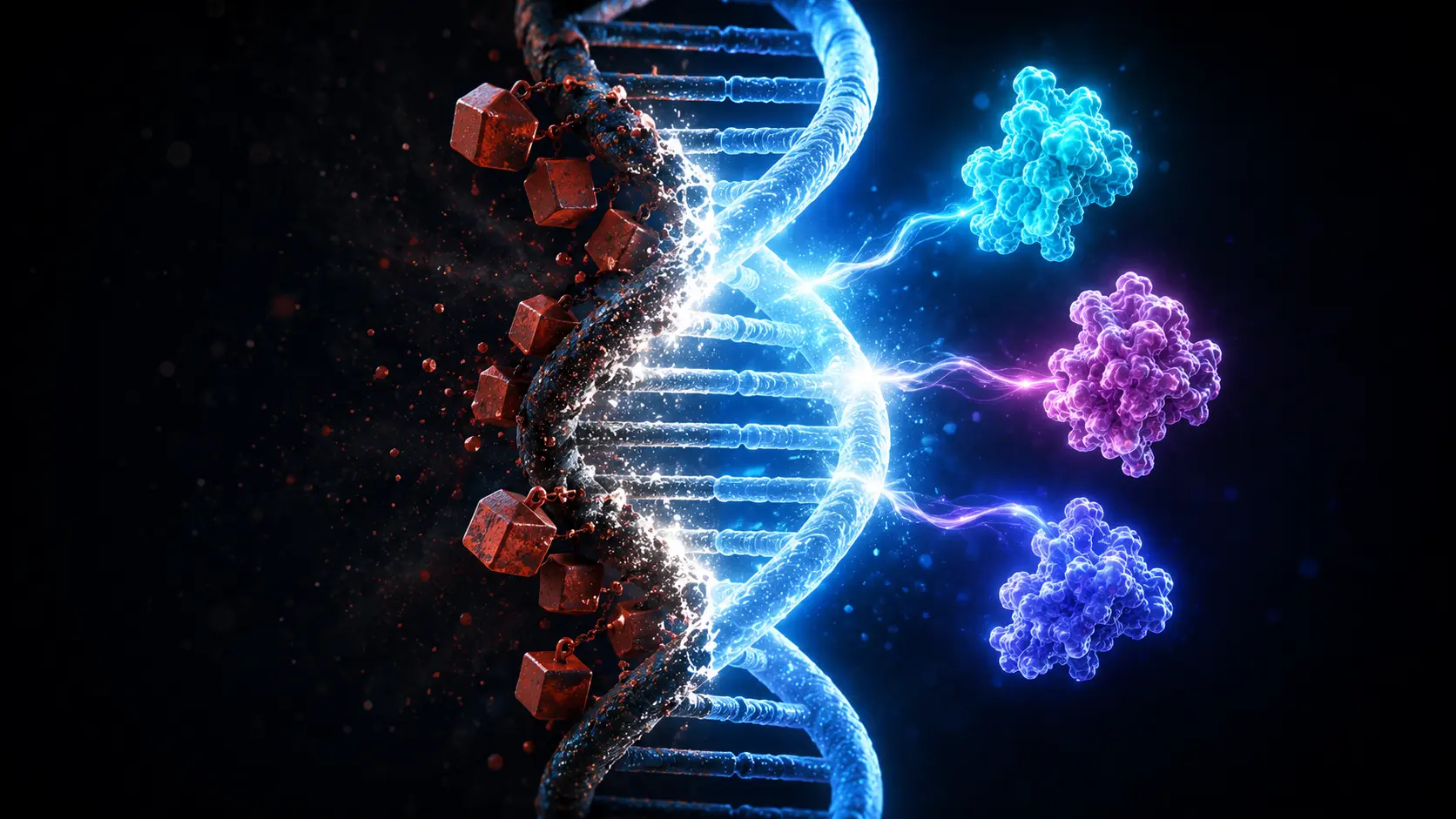

For decades, humanity viewed aging as a one-way street of inevitable physical decay—a mechanical wearing out of the body’s machinery. But modern genetics has revealed a startling truth: aging is not a hardware problem; it is a software problem. The DNA in an 80-year-old’s skin cell is exactly the same as it was when they were a newborn. What has changed is the “epigenome”—the microscopic chemical tags that tell the DNA which genes to turn on and off. Over decades, this software becomes corrupted by stress, toxins, and time, causing organs to fail.
Why should you care right now? Because biotech researchers have figured out how to reboot the software. By injecting a highly specific cocktail of genetic proteins, scientists can successfully command an aging cell to erase its corrupted data and become young again. However, there is a terrifying catch: if you run the reboot program for too long, the cell completely forgets its identity and turns into a deadly mass of cancer. To solve this, the biotechnology sector has pioneered “In Vivo Epigenetic Reprogramming.” By flashing the genetic reboot code for just a few days and then turning it off, scientists are safely rejuvenating failing human organs—reversing blindness and repairing heart tissue—without triggering cancer, crossing the threshold from science fiction to clinical reality.
What is In Vivo Epigenetic Reprogramming?
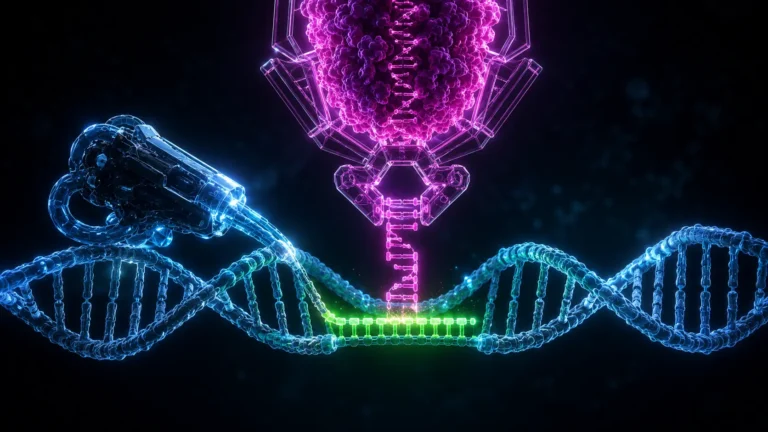
In vivo epigenetic reprogramming is an advanced genetic therapy that temporarily exposes living tissues to specific proteins known as Yamanaka factors. This transient exposure rolls back the cell’s epigenetic clock, restoring youthful function and repairing damage, while stopping short of erasing the cell’s fundamental identity or causing tumors.
At a Glance
- Concept: Acting like a factory reset for human cells, wiping away decades of chemical damage so the cell remembers how to function like it did in its youth.
- Why it matters: It proves that biological aging is not a permanent, irreversible process. It is a flexible mechanism that can be chemically driven backward.
- Who uses it: Ultra-funded biotech mega-startups (Altos Labs, Retro Biosciences), academic hubs (Harvard Medical School, Sinclair Lab), and longevity investors.
- Biggest takeaway: The secret to making this safe is time. If you expose cells to the rejuvenating proteins for 14 days, they turn into stem cells (and often tumors). If you expose them for just 5 days, they stay the same type of cell, but become biologically younger.
In Simple Words
Imagine an old, highly experienced carpenter. Over 40 years, his instruction manual has been spilled on, pages have been torn out, and notes have been scribbled over the text. He still knows he is a carpenter, but he is slow, makes mistakes, and struggles to build a cabinet.
If you use Full Reprogramming, you take the carpenter, erase his memory completely, and turn him back into a blank-slate baby. He is perfectly young, but he has no idea how to be a carpenter anymore. In the human body, a cell that forgets its job and rapidly multiplies is called cancer.
If you use Partial Epigenetic Reprogramming, you do not erase his memory. Instead, you simply hand him a pristine, brand-new copy of his original instruction manual. He retains his identity (he is still a carpenter), but he suddenly has the speed, precision, and error-free capability he possessed 40 years ago. He builds the cabinet perfectly again.
Why This Matters
For Biotech Investors, Geneticists, and Pharma Executives, transient reprogramming represents the shift from Symptom Management to Curative Reversal.
The entire trillion-dollar pharmaceutical industry is built on slowing down decay. We give statins to slow heart disease and beta-blockers to slow cellular degradation. Epigenetic reprogramming does not slow the disease; it reverses the age of the tissue to a state before the disease pathology could exist. Backed by billions of dollars in capital (with companies like Altos Labs raising $3 billion at launch), this technology threatens to render vast swaths of chronic disease management obsolete by targeting the single greatest upstream risk factor for all human morbidity: biological age.
Understanding the DNA Methylation Clock and Yamanaka Factors
To understand reprogramming, you must understand the DNA Methylation Clock.
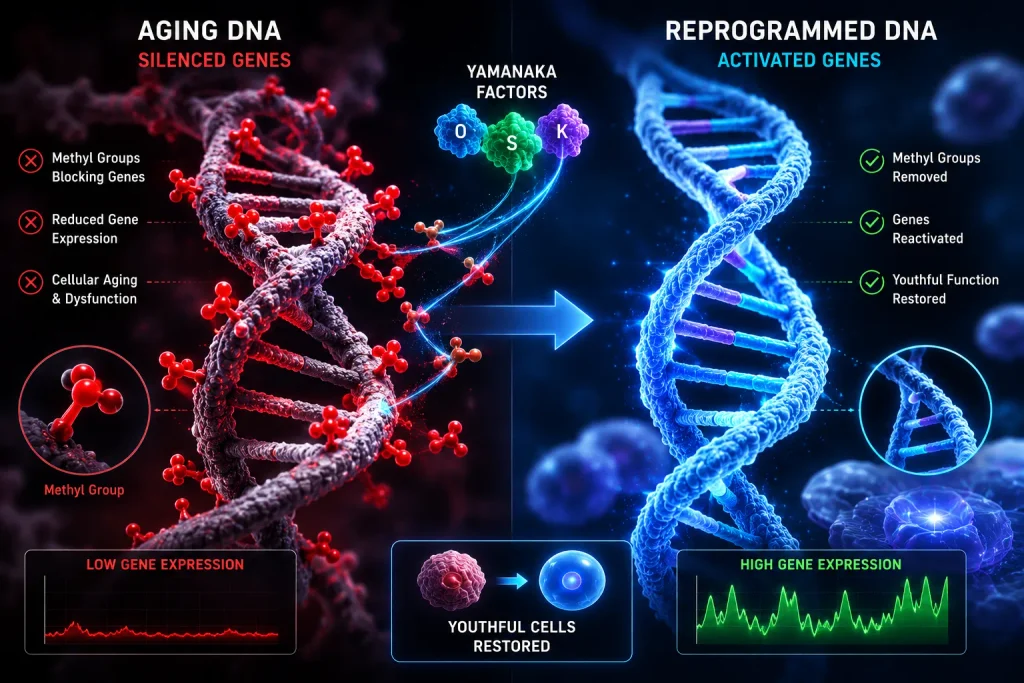
Your DNA is like a massive piano, and epigenetics are the sheet music telling the cell which keys to play. As we age, chemical “methyl groups” attach themselves to the DNA piano keys randomly, silencing good genes and turning on bad genes.
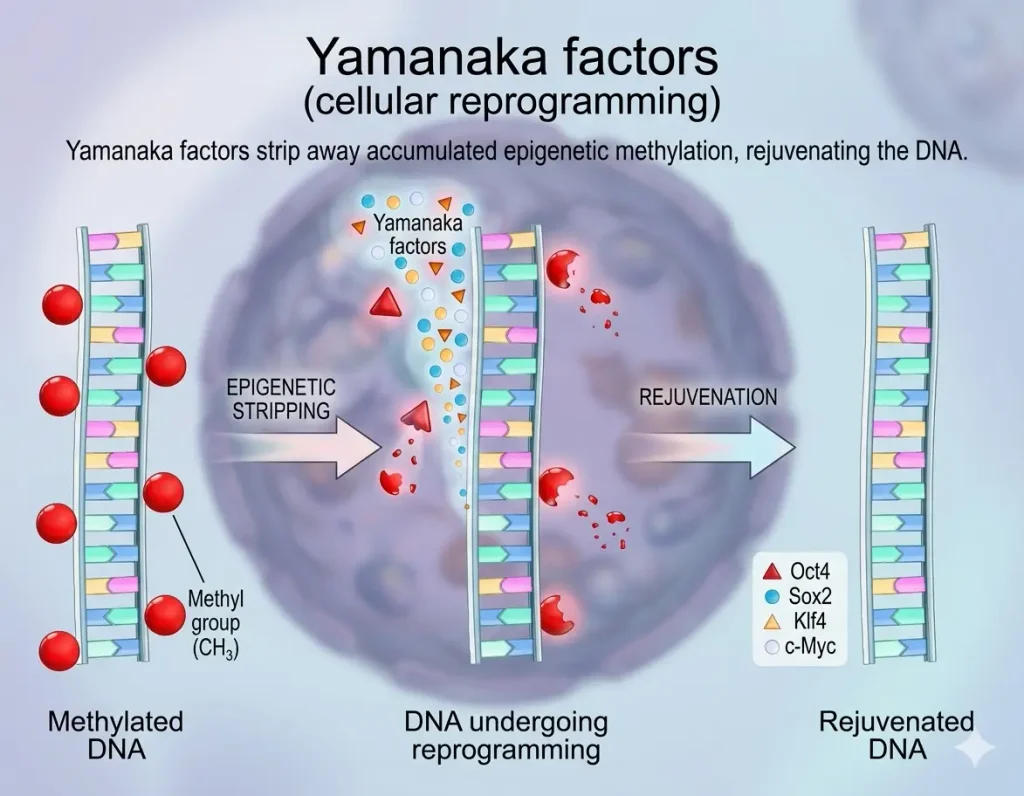
In 2006, Dr. Shinya Yamanaka won the Nobel Prize by discovering four specific proteins (Oct4, Sox2, Klf4, and c-Myc—known as the OSKM factors) that can strip these methyl groups away. Yamanaka used them in a petri dish to turn adult skin cells all the way back into embryonic stem cells. The modern breakthrough is taking those exact same proteins out of the petri dish and injecting them safely into the organs of a living, breathing organism (in vivo).
How In Vivo Epigenetic Reprogramming Works
Rewinding a cell’s biological clock without triggering uncontrolled replication is an agonizingly precise balancing act. Here is the first-principles breakdown of the architecture.
1. The Fundamental Problem: The Teratoma Trap
When researchers first tried to inject the OSKM factors into living mice to make them younger, the results were catastrophic. The cells were pushed all the way back to pluripotency (the blank-slate stem cell state). Because they forgot they were supposed to be kidney or liver cells, they began dividing uncontrollably, forming horrifying, mixed-tissue tumors called teratomas. The mice died.
2. The Core Mechanism: Partial (Transient) Reprogramming
The solution is a concept known as “Partial” or “Transient” reprogramming. The timeline of cellular rejuvenation is not linear.
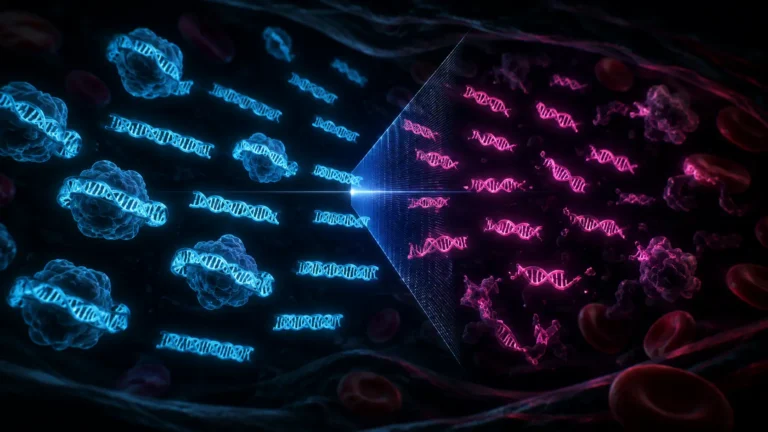
When the OSKM factors are applied, the cell begins to erase its epigenetic damage (rejuvenation) before it begins to erase its cell-type identity (dedifferentiation). By applying the factors for just a few days, scientists hit a “sweet spot.” They unplug the therapy after the aging damage is cleared, but right before the cell forgets its job.
3. Technical Depth: Dropping the c-Myc Oncogene
The original Yamanaka cocktail was OSKM (Oct4, Sox2, Klf4, c-Myc). However, c-Myc is a known oncogene—a gene that strongly promotes cancer growth. To improve the safety profile for in vivo therapies, modern longevity startups often use a truncated OSK cocktail (just Oct4, Sox2, and Klf4). While removing c-Myc makes the reprogramming process slightly slower, it drastically reduces the risk of malignant transformations.
4. Technical Delivery: LNP-mRNA Vectors
How do you flash a genetic signal and then turn it off? If you use traditional viral vectors (like AAVs), they inject permanent DNA into the cell, which would leave the OSK factors permanently turned “on” (causing cancer).
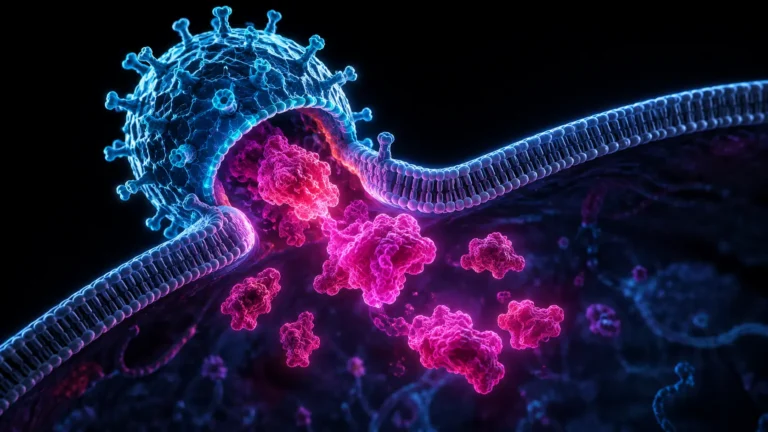
Instead, biotech firms use the exact same technology that powered the COVID-19 vaccines: Lipid Nanoparticles (LNPs) packed with messenger RNA (mRNA). The LNP delivers the mRNA instructions to build the OSK proteins into the cell. The cell builds the rejuvenating proteins for exactly 48 to 72 hours, the mRNA degrades naturally, and the reprogramming stops automatically, enforcing a perfect, safe transient pulse.
5. Real-World Consequences: Restoration of Function
When an old cell undergoes this transient pulse, its gene expression profile perfectly mirrors that of a young cell. Mitochondria (the power plants of the cell) regain their efficiency, oxidative stress plummets, and the tissue regains the ability to heal from catastrophic injuries that would normally cause permanent scarring in adults.
Clinical Applications: Optic Nerve and Tissue Rejuvenation
The transition from theoretical biology to localized, organ-specific clinical applications is progressing rapidly.
Restoring Vision (The Sinclair Lab Experiment): One of the most famous proofs-of-concept occurred at Harvard Medical School under Dr. David Sinclair. The researchers damaged the optic nerves of older mice, mimicking glaucoma. Normally, the central nervous system in adult mammals cannot regenerate. The researchers injected the OSK gene cocktail into the eyes of the mice and activated it. The cells “remembered” their youthful state, physically regrew the optic nerve, and perfectly restored vision to the blind mice without causing any tumors.
Rejuvenating the Liver and Heart: Chronic organ failure is largely driven by fibrosis (the buildup of scar tissue as cells lose their ability to divide properly). Startups are targeting the liver and the heart with transient reprogramming. By pulsing OSK factors into a failing, fibrotic liver, the hepatocytes drop their biological age, halt the scarring process, and begin regenerating healthy tissue, offering a curative alternative to highly invasive organ transplants.
Ex Vivo Cell Rejuvenation (CAR-T therapy): Before scientists attempt whole-body reprogramming in humans, they are using the technology outside the body (ex vivo). When engineering CAR-T cells to fight cancer, the immune cells often become “exhausted” and die before finishing the job. By pulling a patient’s immune cells out, giving them a transient pulse of Yamanaka factors in a lab to restore their youthful aggression, and then injecting them back into the patient, oncologists can drastically increase the lethality and lifespan of the cancer-hunting cells.
Economic & Strategic Impact
The core strategic value of in vivo reprogramming is the Decoupling of Aging from Chronological Time.
Historically, chronological age (how many years you have been alive) and biological age (how degraded your cells are) were permanently linked. If you were 80, your cells functioned like an 80-year-old’s.
Epigenetic reprogramming severs this link. If a therapeutic pulse can chemically reset a patient’s biological age back to 40, the economic implications are staggering. It fundamentally rewrites actuarial tables, life insurance models, and healthcare expenditure forecasts. A population that remains biologically 40 while chronologically 80 does not suffer from Alzheimer’s, osteoarthritis, or late-stage heart failure, potentially erasing trillions of dollars of end-of-life palliative care costs from the global economy.
Advantages
- True Reversal, Not Slowing: It physically reverses the biological methylation clock, repairing the root cause of age-related cellular dysfunction rather than just managing downstream symptoms.
- Maintains Tissue Architecture: Because partial reprogramming stops before pluripotency is reached, complex organs (like the brain or heart) retain their precise structural and functional networks.
- Broad Efficacy: Because epigenetic degradation is a universal mechanism of aging, a single therapeutic platform (OSK factors) can theoretically treat a vast array of distinct diseases, from glaucoma to liver failure.
Limitations
- The Dosage Tightrope: The line between successful rejuvenation and triggering a deadly teratoma tumor is terrifyingly thin. If the LNP-mRNA dose is slightly too high, or if it lingers in a specific organ for just a few days too long, the patient will develop systemic cancer.
- Delivery Bottlenecks: Delivering mRNA to the liver is easy; delivering it to the brain, heart, or skeletal muscle requires highly advanced, targeted delivery vehicles that currently struggle to achieve uniform penetration across dense human organs.
- Transient Benefits: Rejuvenation is not permanent. Once the biological clock is rolled back, it immediately begins ticking forward again. Patients would theoretically require regular, lifelong “booster” pulses to maintain their youthful cellular state.
Common Misconceptions
Misconception: Reprogramming extends the telomeres of the DNA.
Reality: While there is some cross-talk, epigenetic reprogramming primarily deals with the methylation patterns (the chemical tags on the DNA), not the physical length of the telomeres at the ends of the chromosomes.
Misconception: The therapy involves injecting stem cells into the patient.
Reality: No external cells are injected. The therapy relies entirely on gene-delivery vectors (like mRNA or AAVs) to instruct the patient’s own existing cells to heal themselves from the inside out.
Misconception: We will soon have an injection that makes you live forever.
Reality: While individual tissues (like the eye) have been successfully rejuvenated in mice, achieving safe, synchronized, whole-body rejuvenation in a massive organism like a human without triggering a single microscopic tumor cell is a multi-decade regulatory and safety nightmare.
What Most People Miss
The disruptive intelligence value of Small Molecule Reprogramming.
Using gene therapy (LNP-mRNA or viral vectors) to deliver OSK factors is expensive, difficult to manufacture, and hard to deliver to the brain. What most analysts miss is the aggressive pivot toward chemical reprogramming.
Researchers are actively screening millions of chemical compounds to find traditional, swallowable pills (“small molecules”) that trigger the exact same epigenetic changes as the Yamanaka gene therapies. If scientists can replicate the OSK cascade using a daily oral pill rather than a complex intravenous gene therapy, the cost of systemic rejuvenation will drop from millions of dollars per patient to the price of a standard aspirin, instantly democratizing the greatest medical breakthrough of the century.
Comparison Table
| Feature | Standard Medicine | Full Reprogramming (iPSCs) | Partial In Vivo Reprogramming |
| Mechanism | Manages symptoms | Continuous OSKM expression | Transient OSK pulse |
| Biological Age | Continues aging | Reversed to embryonic zero | Reversed to a youthful adult state |
| Cell Identity | Maintained | Erased (Blank slate) | Maintained (Perfect function) |
| Cancer / Tumor Risk | Low | Extremely High (Teratomas) | Very Low (if perfectly dosed) |
| Current Use Case | Hospital standard | Lab research / Petri dishes | Cutting-edge clinical trials |
Case Study
Situation: The scientific community accepted that Yamanaka factors could rewind the biological clock, but deploying them in living mammals was considered a death sentence due to the immediate formation of teratomas (tumors).
Challenge: Prove that the timeline of cellular reprogramming could be decoupled—demonstrating that cells erase their age before they erase their identity, creating a safe therapeutic window.
Solution (The Salk Institute Breakthrough): In a landmark study published by Juan Carlos Izpisua Belmonte and researchers at the Salk Institute, scientists genetically engineered mice with a “kill switch” attached to the OSKM factors. They turned the rejuvenating genes on for just two days, then forced them off for five days, creating a continuous, cyclic, partial pulse.
Outcome: The results redefined biology. The mice did not develop teratomas or cancer. Instead, their cellular epigenetic marks reverted to a younger state. Their cardiovascular systems improved, their muscles healed faster, and the mice afflicted with a rapid-aging disease (progeria) lived 30% longer than the control group.
Lessons Learned: The cyclic protocol validated that biological age is highly fluid and uniquely separated from cellular identity. By strictly enforcing the temporal boundary of the OSKM expression, researchers established the exact pharmacological blueprint required to safely translate epigenetic age-reversal from isolated petri dishes into living, breathing, complex mammalian systems.
Future Outlook
Next 12–24 Months
The era of Ocular and Localized Clinical Trials. The first human applications of partial reprogramming will explicitly avoid systemic, whole-body delivery due to safety risks. Companies will launch Phase 1 trials focusing strictly on the eye (to treat non-arteritic anterior ischemic optic neuropathy or glaucoma) or the inner ear (to treat hearing loss). Because these organs are highly enclosed, the risk of the reprogramming agent leaking into the bloodstream and causing tumors elsewhere is minimized, allowing the FDA to cautiously evaluate the efficacy of age-reversal in humans.
Next 3–5 Years
The scaling of Ex Vivo Rejuvenation Clinics. Before attempting to reprogram the liver or heart inside a patient, the industry will commercialize ex vivo rejuvenation. A patient’s failing blood stem cells or immune cells will be drawn out of their arm, placed in a bioreactor, pulsed with Yamanaka factors to shed 20 years of biological age, thoroughly screened to ensure zero cells turned into cancer, and then re-infused into the patient. This will provide profound upgrades to the human immune system with absolute, validated safety.
Next 10 Years
The Systemic LNP Optimization and Preventative Medicine. By the mid-2030s, the targeting capabilities of Lipid Nanoparticles will reach extreme precision. Bioengineers will design LNPs that only open when they detect the specific chemical signature of an old, dying heart cell. Patients will receive routine, annual IV infusions of these highly targeted LNPs. The nanoparticles will hunt down the most degraded tissues in the body, execute a 48-hour localized genetic reset, and vanish, transforming global healthcare from reactive trauma surgery into proactive, continuous epigenetic maintenance.
Most Likely Scenario
In Vivo Epigenetic Reprogramming is the most profound medical technology currently in existence. While the regulatory hurdles regarding cancer risks are immense, the financial and societal incentives to cure the root cause of aging guarantee relentless capital investment. The technology will inevitably transition from specialized genetic injections into ubiquitous small-molecule pharmaceuticals, establishing biological age reversal as a standard pillar of 21st-century medicine.
Key Takeaways
- Biological aging is caused by “epigenetic” damage—chemical tags on the DNA that become corrupted over time, making cells forget how to function.
- Scientists discovered four proteins (Yamanaka factors) that can erase this damage, acting like a factory reset that turns old cells back into young stem cells.
- If you leave these proteins turned on inside a living animal, the cells completely forget their identity and form deadly cancer tumors (teratomas).
- “Partial Reprogramming” solves this by turning the proteins on for only a few days. The cell sheds its age but stops before it loses its identity. An old heart cell safely becomes a young heart cell.
- To ensure the proteins turn off in time, companies use the same LNP-mRNA technology as COVID-19 vaccines. The mRNA builds the proteins, fixes the cell, and naturally degrades after 48 hours.
- This breakthrough has already been used to successfully regrow damaged optic nerves and cure blindness in mice, proving that tissue regeneration in adults is possible.
Glossary
DNA Methylation Clock: The biological tracking system that uses chemical tags (methyl groups) on DNA to accurately determine the true biological age and degradation level of a cell.
Epigenetics: The software layer of the genome. It does not change the underlying DNA code, but dictates which genes are turned on or off.
In Vivo: Medical procedures or experiments that take place directly inside a living organism, rather than in a laboratory petri dish (in vitro).
Lipid Nanoparticle (LNP): A microscopic bubble of fat used to safely transport fragile genetic instructions (mRNA) into a patient’s cells.
Pluripotency: The “blank slate” state of a stem cell, where it has the potential to turn into any type of cell in the human body.
Teratoma: A horrifying, chaotic tumor made up of a random mixture of different tissue types (hair, teeth, bone) caused when cells lose their identity and replicate uncontrollably.
Yamanaka Factors (OSKM): Four specific transcription factors (Oct4, Sox2, Klf4, c-Myc) capable of reprogramming an adult cell back into an embryonic state.
Sources
Cell: In Vivo Amelioration of Age-Associated Hallmarks by Partial Reprogramming
Nature: Reprogramming to recover youthful epigenetic information and restore vision
Altos Labs: Rejuvenation of human cells and tissues through epigenetic reprogramming
The Salk Institute for Biological Studies: Reversing the aging process in mice
Harvard Medical School (Sinclair Lab): Loss of epigenetic information as a cause of mammalian aging