Advertisement
)
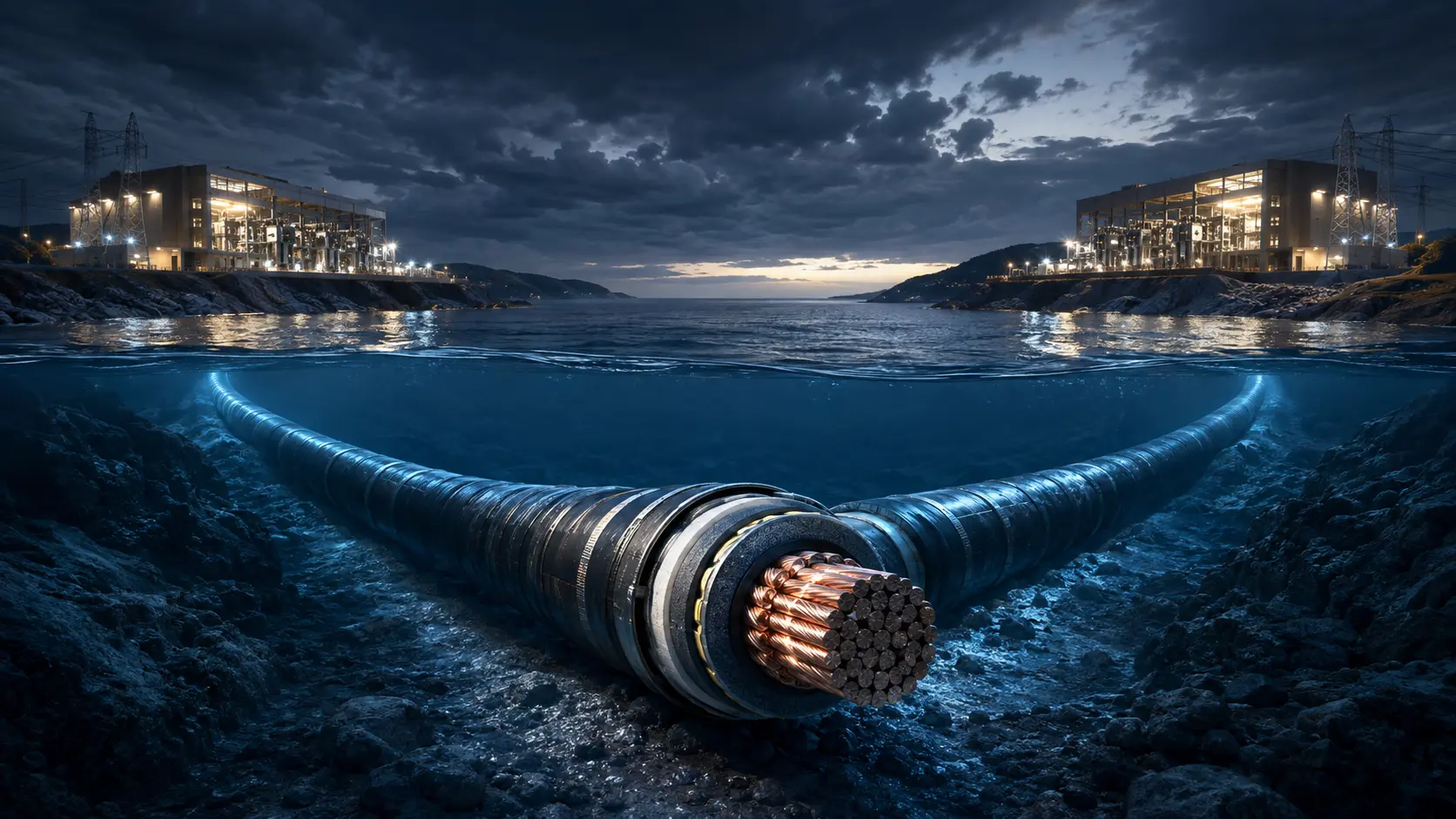

The global transition to renewable energy is bottlenecked by a stubborn geographic reality: nature does not generate power where humans actually need it. The howling, relentless winds of the North Sea represent a virtually infinite supply of clean energy, but the massive steel mills, data centers, and urban populations that require that power are hundreds of miles away in the landlocked heartlands of Europe. Furthermore, the wind might blow furiously in Scotland while the sun shines brightly in France, but traditional electrical grids stop at the national border. Without a physical way to share this energy, millions of megawatts of clean power are routinely wasted (curtailed) while neighboring countries simultaneously burn coal to keep their lights on.
To solve this, civil engineers are undertaking some of the most colossal infrastructure projects in human history. Why should you care right now? Because the bottom of the ocean is becoming a massive, interconnected electrical superhighway. By laying specialized High-Voltage Direct Current (HVDC) cables across the seafloor, nations are physically fusing their power grids together. These multi-billion-dollar interconnectors allow the UK to buy Norwegian hydropower in the middle of the night, and Norway to buy British wind power the next morning. It is a fundamental rewiring of geopolitics, shifting national security away from who controls the oil pipelines to who controls the subsea electricity valves.
What are Subsea HVDC Interconnectors?
Subsea High-Voltage Direct Current (HVDC) interconnectors are specialized, high-capacity electrical transmission cables laid across the ocean floor to connect the disparate power grids of different nations or landmasses. By converting standard alternating current (AC) to direct current (DC), they bypass the severe capacitive power losses inherent in underwater AC cables, allowing multi-gigawatt power trading over extreme distances with near-zero energy loss.
At a Glance
- Concept: A massive, heavily armored extension cord buried under the ocean that allows two completely separate countries to plug their power grids into each other.
- Why it matters: It solves the intermittency of renewable energy. If the wind stops blowing in the UK, they can instantly import hydro-electricity from Norway through the cable, preventing a blackout without turning on a gas plant.
- Who uses it: Transmission System Operators (TSOs) across Europe (National Grid, Statnett, TenneT) and aggressive infrastructure developers pushing links between Australia and Asia.
- Biggest takeaway: You cannot use standard AC power lines underwater for long distances; the water interacts with the cable to drain the power. HVDC converts the power to direct current, allowing it to travel thousands of miles under the sea without losing strength.
In Simple Words
Imagine you have a giant water hose (a power line) stretching for a hundred miles. If you pulse the water pressure on and off rapidly (Alternating Current, AC), the hose constantly expands and contracts. If you bury that pulsating hose underwater, the surrounding ocean acts like a heavy blanket, making it so hard for the hose to expand that eventually, no water makes it out the other end.
A Subsea HVDC Interconnector changes the physics. Instead of pulsing the water, it uses a massive pump at the shoreline to convert the flow into one smooth, constant, high-pressure stream (Direct Current, DC).
Because the stream is constant, the hose doesn’t expand and contract. It simply shoots the water effortlessly through the dark, freezing ocean for hundreds of miles. When the smooth stream reaches the other country, a second massive factory converts the smooth flow back into a pulsating flow so it can be distributed to people’s homes. This allows countries to trade massive amounts of electricity across the sea without losing it all along the way.
Why This Matters
For Utility Executives and Macro Economists, subsea interconnectors are the ultimate arbitrage engines.
Electricity prices fluctuate wildly based on weather. At noon on a windy Sunday, electricity in the UK might be practically free due to excess wind generation. At the exact same time, a heatwave in France might drive their power prices through the roof. An HVDC interconnector allows a grid operator to buy the cheap British wind power, shoot it under the English Channel, and sell it into the French market at a massive premium. These cables generate staggering revenues simply by balancing the pricing disparities of neighboring nations, making them highly coveted, multi-billion-dollar infrastructure investments that routinely pay for themselves within a decade.
Ending Energy Isolationism with Subsea Power Grids
The rise of the subsea interconnector marks the end of Energy Isolationism.
For a century, national security dictated that a country must generate 100% of its own electricity inside its own borders. Relying on a foreign nation for grid stability was considered a catastrophic vulnerability. The climate crisis has forcibly retired this doctrine. Because wind and solar are deeply unpredictable, achieving a zero-carbon grid requires geographic diversity. A localized storm might halt solar production in one state, but it is statistically impossible for the wind to stop blowing across the entirety of Northern Europe simultaneously. HVDC interconnectors pool this meteorological diversity, turning the weather patterns of a dozen different countries into a single, unified, highly resilient synthetic baseload.
How Subsea HVDC Interconnectors Work
Shooting gigawatts of power through the crushing, corrosive depths of the ocean requires mastering advanced power electronics and complex cable metallurgy. Here is the first-principles breakdown of the architecture.
1. The Fundamental Problem: Capacitive Charging Currents
Standard power grids run on High-Voltage Alternating Current (HVAC). However, an HVAC cable surrounded by seawater inherently forms a massive capacitor. As the AC voltage alternates (50 or 60 times a second), the cable continuously charges and discharges this capacitor. Over long subsea distances (typically beyond 80–100 km), this “charging current” becomes so massive that it consumes the entire carrying capacity of the cable. The power goes in, but nothing usable comes out.
2. The Core Mechanism: High-Voltage Direct Current (HVDC)
Direct Current (DC) does not alternate; the voltage remains constant. Therefore, there is zero continuous charging current. This eliminates the distance limitation entirely. An HVDC cable can transmit power thousands of kilometers underwater with resistive losses of only ~3% per 1,000 km, preserving the vast majority of the harvested renewable energy.
3. Technical Depth: Voltage Source Converters (VSC)
Because the national grid runs on AC, the power must be converted before it enters the ocean and after it leaves. This is achieved using massive onshore or offshore Converter Stations.
Modern interconnectors rely on Voltage Source Converters (VSC). These facilities use thousands of high-power, solid-state silicon switches—specifically Insulated-Gate Bipolar Transistors (IGBTs). Unlike legacy thyristor-based systems (LCCs) that require a strong, existing AC grid to function, VSC-HVDC can autonomously generate its own AC voltage waveform. This gives the VSC “Black Start” capability; it can pump power onto a completely dead grid and single-handedly restart a nation’s electrical network after a blackout.
4. Cable Metallurgy and Protection
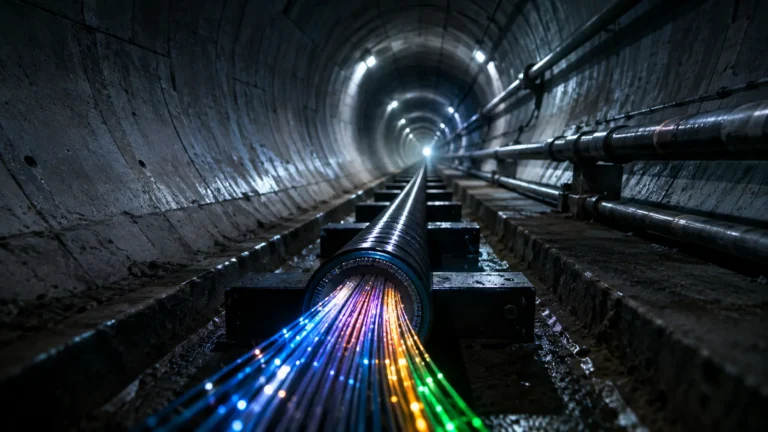
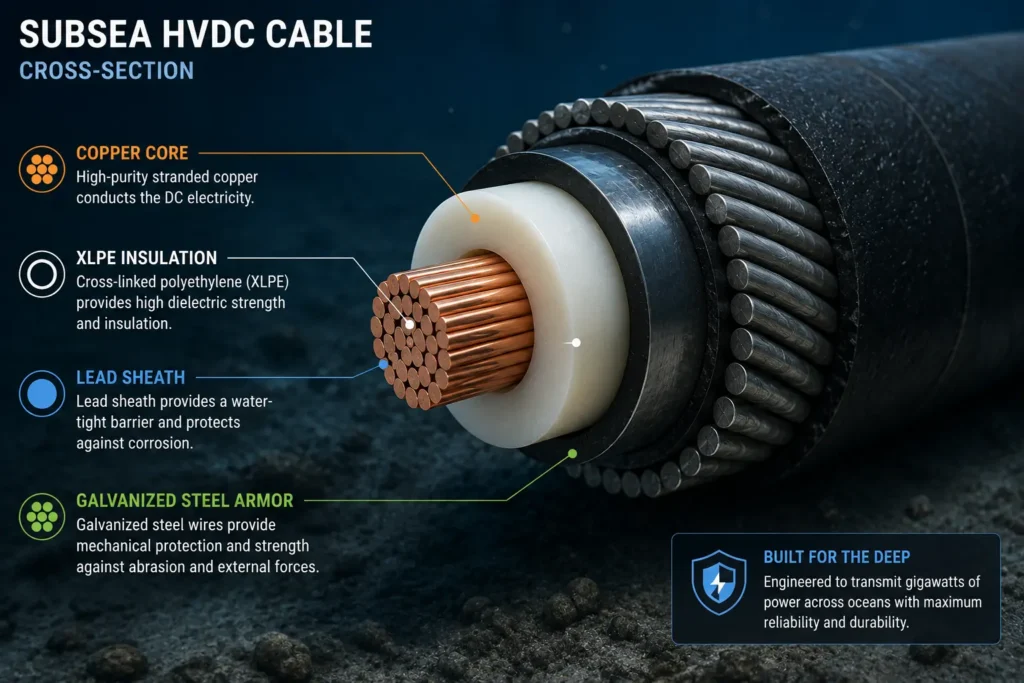
The physical cable is a marvel of engineering. It contains a central core of tightly bundled, ultra-pure copper or aluminum conductors. This core is wrapped in a highly specialized, cross-linked polyethylene (XLPE) or Mass Impregnated (MI) insulation layer capable of containing voltages up to 600,000 Volts (600 kV). The entire assembly is sheathed in layers of lead to block moisture, and wrapped in heavy galvanized steel armor wire to protect it from being severed by dragging ship anchors or commercial fishing trawlers.
5. Real-World Consequences: Bi-Directional Power Flow
VSC-HVDC interconnectors are fully bi-directional. A central algorithmic controller monitors the electricity prices and grid frequencies on both sides of the ocean. In milliseconds, the IGBT valves can reverse their polarity. A cable that was exporting 1.4 Gigawatts to Germany at 2:00 PM can instantly flip and begin importing 1.4 Gigawatts from Germany at 2:01 PM, constantly balancing the multinational grid in real-time.
Active Deployments of Subsea HVDC Cables
The deployment of subsea interconnectors has transformed the North Sea into the most advanced, highly meshed energy trading hub on the planet.
The North Sea Link (UK-Norway): Spanning a staggering 720 kilometers (447 miles) across the seabed, the North Sea Link is an engineering behemoth connecting Blyth in the UK to Kvilldal in Norway. It acts as a massive geographic battery swap. When UK winds are blowing strongly, the cable exports excess British wind power to Norway, allowing Norway to shut down its hydroelectric dams and conserve its reservoir water. When the wind dies in the UK, the cable reverses; Norway opens its dams and exports firm, reliable hydropower back to Britain, ensuring grid stability without burning a single ounce of natural gas.
Viking Link (UK-Denmark): Stretching 765 kilometers, Viking Link holds the record as the world’s longest land and subsea HVDC interconnector. Operating at 1.4 GW, it taps directly into Denmark’s massive wind infrastructure. Like the North Sea Link, its primary commercial driver is price arbitrage, constantly hunting for the cheapest megawatt across the two sovereign grids and smoothing out the deep, localized price spikes caused by volatile European weather patterns.
Offshore Wind “Energy Islands”: The architecture is evolving from point-to-point connections into multi-national hubs. Nations like Belgium and Denmark are designing artificial “Energy Islands” in the middle of the North Sea. Instead of each offshore wind farm running its own small cable to shore, dozens of wind farms will route their AC power to this central island. A massive VSC converter station on the island will pool the power, convert it to HVDC, and shoot it down multi-gigawatt interconnectors directly into the grids of the UK, Germany, and the Netherlands simultaneously, serving as a massive offshore traffic cop for renewable energy.
Economic & Strategic Impact
The proliferation of subsea interconnectors fundamentally alters the Geopolitics of Energy Curtailment.
Curtailment—paying a wind farm to shut off because the local grid cannot handle the power—destroys the financial returns of renewable energy projects. By physically linking grids, TSOs drastically reduce curtailment rates. If the local grid is full, the power is simply exported.
This creates a highly lucrative dynamic for the owners of the interconnector. They generate revenue through “congestion rent”—profiting from the price difference between the exporting and importing markets. As these cables prove their ability to generate hundreds of millions of euros annually in trading arbitrage, private equity and specialized infrastructure funds are aggressively entering the market, shifting the funding of national grid expansion away from taxpayer subsidies and into the hands of ruthless, yield-hungry private capital.
Advantages
- Zero Capacitive Loss: Allows the transmission of multi-gigawatt power loads across thousands of kilometers of ocean without the debilitating power drain associated with traditional underwater AC cables.
- Grid Stabilization: Modern Voltage Source Converters (VSC) actively inject synthetic inertia and reactive power, stabilizing the connected national AC grids and providing critical “Black Start” capabilities to rescue failing networks.
- Maximized Renewable Utilization: Connects areas of massive renewable generation (like offshore wind farms) directly to distant, high-demand industrial centers, virtually eliminating the need to curtail (throw away) clean energy.
- Market Integration: Drives down consumer electricity prices by allowing grid operators to instantly import cheaper power from a neighboring country whenever domestic power prices spike.
Limitations
- Colossal Capital Expenditure (CapEx): HVDC interconnectors are some of the most expensive infrastructure projects on Earth. The specialized cable alone can cost millions of dollars per mile, and the massive VSC converter stations require immense footprints and bespoke power electronics, pushing total project costs well over $2 billion.
- Vulnerability to Sabotage: Subsea cables are highly exposed soft targets. They rest largely undefended on the ocean floor and can be easily severed by hostile submarine drones, specialized naval operations, or carelessly dragging commercial ship anchors, triggering sudden, massive power shortfalls in the importing nation.
- Single Point of Failure Risks: If a 1.4 GW interconnector suddenly trips offline due to a fault, the importing country’s grid instantly loses the equivalent power of a massive nuclear reactor. To survive this shock, the national grid must maintain expensive, fast-acting backup generation (spinning reserve) on standby at all times.
Common Misconceptions
Misconception: The power travels all the way across the ocean as alternating current (AC).
Reality: While the national grids on land run on AC, the interconnector acts as a tollbooth. The massive onshore converter stations forcibly translate the power into direct current (DC) before it enters the water, and translate it back to AC when it reaches the other shore.
Misconception: These cables are massive, unbendable pipes.
Reality: Despite carrying enough energy to power millions of homes, the actual conductive core of the cable is surprisingly small (often just a few inches thick). The vast majority of the cable’s bulk consists of heavy steel armor, waterproofing lead sheaths, and thick XLPE insulation required to protect the core from the crushing pressure of the deep ocean.
Misconception: We can easily network all these subsea cables together like the internet.
Reality: Currently, almost all HVDC cables are strictly “point-to-point” (Country A to Country B). Building a true “meshed” DC grid with multiple offshore hubs connecting seamlessly is an incredibly complex engineering challenge. It requires the invention of ultra-fast “HVDC Circuit Breakers” capable of isolating a short-circuit fault in milliseconds before the massive DC voltage collapses the entire multinational network.
What Most People Miss
The hidden logistical bottleneck of Cable Laying Vessels (CLVs).
Most economic models focus heavily on the cost of the copper and the VSC converter stations. What most investors entirely miss is the severe, artificial scarcity of the maritime fleet required to actually put the cable in the water.
There are only a handful of specialized Cable Laying Vessels (CLVs) globally capable of handling the immense weight and tension of deep-water HVDC installations. These massive ships are booked years in advance. A nation could have the funding secured and the cable manufactured, but if a CLV is not available, the project stalls. As global demand for interconnectors and offshore wind farms skyrockets simultaneously, securing a spot on a CLV’s schedule has become the definitive, unyielding chokepoint dictating the timeline of the entire global energy transition.
Comparison Table
| Feature | Subsea HVAC (Alternating Current) | Subsea HVDC (Direct Current) |
| Distance Limit | Short (Max ~80-120 km) | Virtually Unlimited (>1,000 km) |
| Capacitive Power Loss | Extreme (Drains power into ocean) | Zero (No continuous charging) |
| Onshore Station Cost | Very Low (Standard substations) | Extremely High (VSC Converter Stations) |
| Cable Size/Cost | Thick (Requires 3 heavy phase cables) | Slim (Requires only 2 DC cables) |
| Primary Use Case | Near-shore wind farms | Transoceanic multinational grid links |
Case Study
Situation: The United Kingdom, possessing world-class offshore wind resources, frequently generated more power than its domestic grid could absorb, leading to high curtailment rates. Conversely, Denmark possessed massive wind generation but lacked the geographic diversity to smooth out sudden drops in wind speed, forcing reliance on backup fossil fuels.
Challenge: Establish a physical electrical connection spanning an unprecedented 765 kilometers across the North Sea to link the two distinct national grids, enabling seamless, bi-directional power trading to maximize renewable utilization.
Solution (The Viking Link Deployment): National Grid (UK) and Energinet (Denmark) executed a joint venture to construct the Viking Link. The project utilized state-of-the-art Voltage Source Converter (VSC) technology provided by Siemens Energy and specialized mass-impregnated (MI) HVDC cables operating at 525 kV.
Outcome: Commissioned in late 2023, Viking Link became the longest subsea electricity interconnector in the world. It successfully enabled the continuous transmission of 1.4 Gigawatts of power. The interconnector established a flawless arbitrage corridor; it autonomously exported excess UK wind to Denmark during high-generation periods and imported cheaper Danish power during domestic shortfalls, drastically lowering wholesale electricity prices and saving millions of tons in carbon emissions annually.
Lessons Learned: The massive scale of Viking Link proved that geographic distance is no longer an insurmountable barrier to electrical grid integration. It validated that VSC-HVDC architecture is robust enough to span continent-sized oceanic gaps with minimal transmission loss, firmly establishing subsea interconnectors as the highest-yield, most critical infrastructure investments of the 21st-century energy transition.
Future Outlook
Next 12–24 Months
The era of Multi-Purpose Interconnectors (MPIs). The days of strictly point-to-point connections are ending. Over the next two years, the industry will pivot toward Multi-Purpose Interconnectors. Instead of running a cable from the UK directly to the Netherlands, the cable will detour to hook into a massive offshore wind farm sitting in the middle of the North Sea. The wind farm will feed its power directly into the interconnector, which can then dynamically route that wind power to either the UK or the Netherlands depending on which country needs it most, maximizing the utility of a single subsea trench.
Next 3–5 Years
The scaling of HVDC Circuit Breakers and Meshed Grids. By the late 2020s, the technological holy grail of DC transmission—the ultra-fast HVDC circuit breaker—will reach commercial maturity. These specialized devices can sever a massive DC fault current in under 5 milliseconds. This breakthrough will allow TSOs to move beyond point-to-point lines and build true “meshed” offshore DC grids, connecting multiple countries and multiple wind farms into a giant subsea ring. If one segment of the ring is severed by an anchor, the circuit breakers will instantly isolate the damage, allowing the rest of the multinational grid to continue trading power flawlessly.
Next 10 Years
The Transcontinental Super-Grid (The Australia-Asia Link). By the mid-2030s, the ambition of HVDC interconnectors will scale from regional to continental. Mega-projects like the SunCable (aiming to connect massive solar farms in the Australian outback directly to Singapore via a 4,200 km subsea cable) will transition from theoretical blueprints to operational reality. These transcontinental links will fundamentally divorce energy production from energy consumption, allowing densely populated, cloudy Asian metropolises to run entirely on the relentless, scorching sunlight of uninhabited deserts thousands of miles across the ocean.
Most Likely Scenario
Subsea HVDC interconnectors are the physical manifestation of a unified global economy. As sovereign nations recognize that localized grid isolation leads to extreme pricing volatility and blackout risks, the political resistance to energy integration will collapse. The seabed will become a densely woven web of ultra-high-voltage arteries, ensuring that no megawatt of renewable energy is ever wasted simply because the wind blew on the wrong side of a national border.
Key Takeaways
- Subsea HVDC interconnectors are massive cables that allow different countries to trade gigawatts of electricity across the ocean floor, preventing blackouts and balancing prices.
- Traditional Alternating Current (AC) cables lose all their power to “capacitive charging” if laid underwater for more than 100 kilometers.
- By converting the power to Direct Current (DC), HVDC cables can shoot electricity thousands of miles underwater with near-zero energy loss.
- This conversion requires massive, multi-billion-dollar Voltage Source Converter (VSC) stations onshore, which use solid-state transistors to actively stabilize the connected national grids.
- Interconnectors are the ultimate arbitrage tool; they allow a grid operator to buy cheap, excess wind power from a neighboring country and sell it domestically, making massive profits.
- The primary bottleneck to building more of these vital cables is a severe global shortage of the specialized maritime Cable Laying Vessels (CLVs) required to safely install them on the seabed.
Glossary
Black Start: The capability of a power station (or an HVDC converter) to restore a dead, blacked-out electrical grid to operation without relying on external power networks.
Capacitive Charging Current: A physical phenomenon where an underwater AC cable continuously absorbs and discharges power just to keep itself energized, effectively draining all usable electricity over long distances.
Curtailment: The wasteful process of paying a wind or solar farm to shut off and stop producing energy because the local grid is full and cannot safely absorb the electricity.
High-Voltage Direct Current (HVDC): A highly efficient method of transmitting massive amounts of electrical power over long distances using a constant, non-alternating voltage, standard for subsea cables.
Multi-Purpose Interconnector (MPI): A next-generation subsea cable that not only connects two countries but also directly hooks into offshore wind farms in the middle of the ocean to route their power dynamically.
Voltage Source Converter (VSC): A massive onshore facility that converts AC power to DC power (and vice versa) using advanced solid-state transistors (IGBTs), granting it the ability to actively stabilize a struggling power grid.
Sources
National Grid Group: What are electricity interconnectors?
Hitachi Energy: HVDC – High Voltage Direct Current
Siemens Energy: HVDC PLUS (Voltage Sourced Converter)
Power Technology: Viking Link: world’s longest land and subsea interconnector completed
TenneT: Offshore Grid and Interconnectors
SunCable: The Australia-Asia PowerLink (AAPowerLink)