Advertisement
)

At a Glance
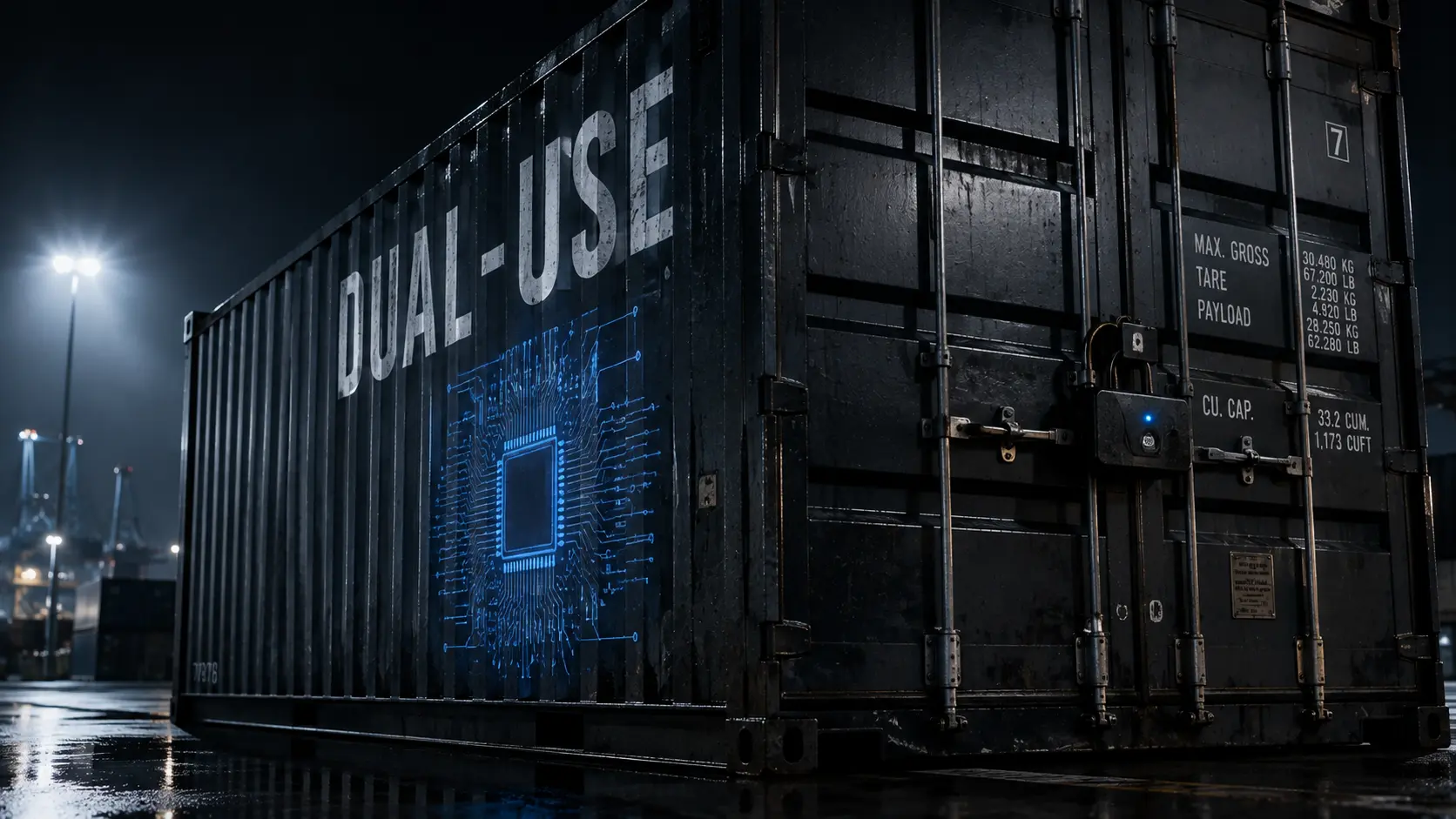
- Concept: A multilateral export control regime that standardizes which technologies possess both civilian and military applications (dual-use), requiring participating states to strictly regulate their export.
- Why it matters: Advanced technology is the new nuclear weapon. The same semiconductor used to render video games can be used to train an AI algorithm to fly a hypersonic missile. The Wassenaar Arrangement is the global rulebook designed to keep this technology out of the hands of hostile states and terrorist organizations.
- Who uses it: 42 participating states, including the United States, European Union members, Japan, India, and notably, Russia. The rules are implemented by global defense contractors, semiconductor foundries, and cybersecurity firms.
- Biggest takeaway: The treaty is currently paralyzed. Because decisions require unanimous consensus, Russia has effectively vetoed new restrictions to secure its own supply chains. This has forced the US and its allies to bypass the treaty entirely, triggering a messy, unilateral tech war defined by extraterritorial laws like the Foreign Direct Product Rule (FDPR).
In Simple Words
Imagine a group of 42 rival gunsmiths who agree to a basic set of rules: they will sell hunting rifles to the public, but they will all agree never to sell machine guns to known criminals. If one gunsmith breaks the rule, the criminals get armed, and the whole system fails.
This was easy to manage when weapons were obvious—like tanks and missiles.
Today, the most dangerous weapons are invisible. A sophisticated piece of software could be used to protect a bank from hackers (a civilian use) or it could be used to shut down an enemy country’s power grid (a military use). A microchip could power a smart refrigerator, or it could guide a drone strike.
The Wassenaar Arrangement is the agreement where these 42 countries sit down and decide exactly which microchips, lasers, and software programs are too dangerous to sell freely on the open market. They create a massive “Do Not Sell Without Permission” list. However, because the agreement is voluntary and requires every country to agree, a single country can block a new rule, making it incredibly difficult to control the bleeding edge of modern technology.
Why This Matters
We are in the midst of a semiconductor and artificial intelligence Cold War.
Global supremacy in the 21st century relies on capturing the commanding heights of computing power. To stunt China’s military modernization, the United States has sought to completely sever Beijing’s access to extreme ultraviolet (EUV) lithography machines, advanced AI accelerators, and quantum computing hardware.
Under normal circumstances, the United States would propose placing these items on the Wassenaar Arrangement’s restricted list. But because the geopolitical world has fractured, the system of multilateral consensus has broken down. For corporate supply chain directors and macro strategists, understanding Wassenaar is critical because its failure is the exact reason global trade is devolving into a chaotic web of unilateral sanctions, secondary embargoes, and highly punitive extraterritorial enforcement actions.
The Big Picture
The Wassenaar Arrangement was born in 1996 from the ashes of the Cold War.
During the Soviet era, Western allies used an organization called CoCom (Coordinating Committee for Multilateral Export Controls) to strictly embargo technology transfers to the Eastern Bloc. When the Soviet Union collapsed, CoCom was dissolved. The world believed the era of great power competition was over. The Wassenaar Arrangement was established in a spirit of transparency and trust, inviting former adversaries—including Russia—to participate.
Unlike CoCom, Wassenaar has no enforcement mechanism and no “undercutting” rule (meaning if one member denies an export license to a buyer, another member can theoretically swoop in and approve it). Its fundamental architecture assumed that all 42 members shared the same definition of global security. As of 2026, that assumption has catastrophically failed, forcing the Western alliance to architect a “Wassenaar Minus One” shadow regime.
HOW THE WASSENAAR ARRANGEMENT WORKS
Categorizing the vast spectrum of human technological achievement into legally enforceable export controls requires an immensely complex taxonomy. Here is the first-principles breakdown.
1. The Fundamental Problem: The Dual-Use Dilemma
You cannot ban the export of computers without plunging the global economy into a depression. However, you cannot freely export supercomputers without giving adversaries the tools to simulate nuclear detonations. This is the dual-use dilemma: technologies that have entirely legitimate commercial applications but possess profound military capabilities.
2. The Insufficiency of Unilateral Embargoes
If the United States unilaterally bans the export of an advanced sensor to a hostile nation, the policy achieves nothing if that hostile nation can simply buy an identical sensor from a supplier in France or Japan. Tech containment is mathematically impossible unless the countries controlling 100 percent of the global manufacturing capacity for that technology adhere to the exact same export list.
3. The Core Mechanism: The Control Lists
The Wassenaar Arrangement creates global standardization through two master documents:
- The Munitions List: Covers 22 categories of explicitly military hardware (tanks, artillery, warships).
- The Basic List (Dual-Use Goods): Covers 9 highly specific categories of civilian technology with military crossover. These categories include Special Materials (1), Materials Processing (2), Electronics (3), Computers (4), Telecommunications and Information Security (5), Sensors and Lasers (6), Navigation and Avionics (7), Marine (8), and Aerospace and Propulsion (9).
4. Technical Depth: Category 5 and Cryptography
The most fiercely debated section of the Basic List is Category 5, which covers “Information Security.” This dictates the export of cryptography. Because unbreakable encryption is vital for banking, but also vital for hiding terrorist communications, Wassenaar sets exact mathematical thresholds. If a software algorithm uses a symmetric key length greater than 56 bits, it triggers export controls. Similar thresholds are strictly defined for “intrusion software” (spyware used to exploit computer networks).
5. Real-World Consequences: The Consensus Veto and FDPR
To add a new technology to the Basic List, all 42 members must agree. Following the 2022 invasion of Ukraine, Russia used its membership to veto proposals that would restrict its access to advanced tech. To circumvent this, the US weaponized the Foreign Direct Product Rule (FDPR). The FDPR states that if a foreign company uses even a fraction of US-origin technology or software to build a product (like a microchip), the US claims jurisdiction over that product forever. This allowed the US to effectively force global compliance without needing Russia’s permission at the Wassenaar plenary.
Real-World Applications
The failure of consensus at Wassenaar has driven nations to implement export controls through alternative, minilateral avenues.
Advanced Semiconductor Manufacturing: The most glaring example occurred with Extreme Ultraviolet (EUV) and Deep Ultraviolet (DUV) lithography equipment. Manufactured by ASML in the Netherlands and Nikon/Tokyo Electron in Japan, these machines are required to make AI chips. Because a Wassenaar consensus was impossible, the US brokered a trilateral agreement directly with Japan and the Netherlands to harmonize export restrictions outside of the formal treaty, effectively cutting off China’s domestic chipmaking roadmap.
Intrusion Software and Cyber Mercenaries: The Wassenaar Arrangement successfully updated its lists to include “intrusion software” to stop the proliferation of cyber weapons (like the Pegasus spyware created by the NSO Group). However, implementation was highly fragmented. While European nations strictly regulated cybersecurity researchers, critics argued the broad wording hindered “white hat” hackers from sharing vulnerability data across borders, proving how difficult it is to regulate code compared to physical weapons.
Quantum Computing Thresholds: Recognizing that quantum computers will eventually break modern encryption, several Wassenaar nations decided they could no longer wait for the annual plenary meetings. In 2024 and 2025, countries like Spain, the UK, and Canada implemented synchronized, unilateral export controls on quantum computers containing more than 34 qubits and specific error rates, bypassing the formal Wassenaar process entirely.
Economic & Strategic Impact
The circumvention of the Wassenaar Arrangement is resulting in the violent bifurcation of global technology supply chains.
Because the US must rely on the extraterritorial FDPR instead of multilateral consensus, compliance costs for global tech firms have skyrocketed. A factory in Vietnam or Malaysia must now aggressively audit its entire Bill of Materials (BOM) to determine if any American electronic design automation (EDA) software was used in its production lines. If so, they must comply with US export laws, even if they have zero American employees or physical footprint in the US.
Strategically, this forces targeted nations (namely China and Russia) to accelerate “de-Americanization.” By relentlessly designing American IP out of their supply chains, they aim to immunize themselves from the FDPR. If they succeed, the US will lose its primary mechanism for tech containment, while the Wassenaar Arrangement remains entirely hollowed out.
Advantages
- Global Harmonization: When Wassenaar functions correctly, it ensures a level playing field. If an American company is forbidden from selling a lucrative technology to an adversary, Wassenaar ensures European and Asian competitors are equally forbidden from undercutting them and stealing the contract.
- Prevents Destabilizing Accumulations: By requiring members to report transfers of conventional arms and dual-use goods, it provides intelligence agencies with a transparent map of which nations are quietly hoarding specific military capabilities.
- Legitimacy: Export controls routed through Wassenaar carry the diplomatic legitimacy of a 42-nation international consensus, rather than appearing as a unilateral act of economic warfare by a single superpower.
Limitations
- The Consensus Trap: Operating on unanimous consent gives hostile actors (like Russia) the ability to permanently paralyze the institution, preventing the control lists from keeping pace with the exponential speed of AI and quantum advancements.
- No Enforcement Mechanism: Wassenaar is not a binding international treaty. It relies entirely on the political will of individual member states to write the agreed-upon lists into their own domestic laws and enforce them with their own customs agents.
- Focus on Hardware over Software: The regime was designed for physical goods (tanks, lasers, aerospace parts). It struggles immensely to regulate intangible technology transfers, such as open-source code sharing, cloud computing access, or academic research collaboration.
Common Misconceptions
Misconception: The Wassenaar Arrangement is a United Nations treaty.
Reality: It is completely separate from the UN. It is an exclusive, voluntary club headquartered in Vienna. Not every country is allowed to join; members must be producers of sensitive industrial equipment and adhere to strict non-proliferation policies to be granted entry.
Misconception: If an item is on the Wassenaar list, you cannot sell it internationally.
Reality: Being on the list does not mean the item is universally banned. It simply means the exporting company must apply for a specific license from their home government before selling it. The government then reviews the end-user to ensure the item is not going to a military target.
Misconception: China is breaking the Wassenaar Arrangement.
Reality: China is not, and never has been, a participating state in the Wassenaar Arrangement. Because they are outside the regime, they are not bound by its rules, making them a primary target of the controls rather than a participant.
What Most People Miss
The quiet emergence of the “Wassenaar Minus One” Strategy.
Throughout 2024 and 2025, trade policy lawyers realized that formally expelling Russia from Wassenaar was impossible because expulsion requires unanimous consent (which Russia would veto).
Instead, the United States and the European Union began architecting a shadow regime. Through forums like the US-EU Trade and Technology Council (TTC), allied nations have begun meeting separately to agree on the technological standards that should be in Wassenaar. They reach a consensus without Russia, and then each participating nation unilaterally writes those exact restrictions into their domestic laws on the exact same day. This coordinated “minilateralism” achieves the goals of Wassenaar while leaving the actual, formal institution to slowly rot from irrelevance.
Comparison Table
| Feature | CoCom (Cold War Era) | Wassenaar Arrangement | Minilateralism / FDPR |
| Primary Target | Soviet Union & Eastern Bloc | Global destabilizing actors | China, Russia, Iran |
| Enforcement Power | Binding (Members had veto power over each other’s exports) | Voluntary (National discretion, no undercutting rules) | Extraterritorial (US dictates global compliance via IP) |
| Decision Making | Multilateral Consensus | Multilateral Consensus (Currently Paralyzed) | Plurilateral or Unilateral |
| Pace of Updates | Slow | Extremely Slow | Extremely Fast (Ad-hoc) |
| Primary Mechanism | Total Embargoes | Dual-Use Licensing Lists | Direct Product Restrictions & Choke points |
Case Study
Situation: By late 2023, the rapid rise of Generative AI revealed a critical vulnerability. Advanced logic chips (like the NVIDIA H100) were being used by the Chinese military to enhance strategic modeling and autonomous weapons. The US needed to cut off the supply of the equipment used to manufacture these chips.
Challenge: The most critical semiconductor manufacturing equipment was produced outside the US, specifically by ASML in the Netherlands and Tokyo Electron in Japan. The US could not force these countries to stop selling to China via the Wassenaar Arrangement because the consensus mechanism was effectively frozen.
Solution (The Minilateral Bypass): The US pivoted to intense, direct diplomatic pressure outside the Wassenaar framework. By threatening to apply the Foreign Direct Product Rule (FDPR)—which would legally prohibit ASML from using any US parts in their machines unless they complied—the US forced a trilateral agreement. In 2024, the Netherlands and Japan agreed to update their own domestic export control lists to restrict Deep Ultraviolet (DUV) lithography machines and advanced etching tools.
Outcome: The US successfully throttled the flow of advanced semiconductor manufacturing equipment to China. However, the action bypassed the formal multilateral system entirely. By 2025 and 2026, the European Union updated its own Dual-Use Control List based on these ad-hoc agreements, effectively acknowledging that the Wassenaar Arrangement was no longer the primary vehicle for high-stakes technology containment.
Lessons Learned: In an era of great power competition, voluntary multilateral treaties are too fragile to survive bad-faith actors with veto power. The future of export controls relies on “chokepoint minilateralism”—where a small handful of nations who possess monopoly control over a specific technology form an exclusive, fast-moving cartel to dictate global trade terms.
Future Outlook
Next 12–24 Months
The focus will shift aggressively to Cloud Computing Access. Export controls currently regulate physical microchips, but Chinese entities are bypassing these controls by simply renting processing power on US-based cloud servers (Infrastructure-as-a-Service). We will see the US Commerce Department implement “Know Your Customer” (KYC) mandates for cloud hyperscalers (like AWS and Azure), essentially treating server access as a virtual dual-use good that requires strict monitoring and export licensing.
Next 3–5 Years
The formalization of the “Tech-10” Alliance. The messy, ad-hoc “Wassenaar Minus One” agreements will coalesce into a formalized, highly exclusive plurilateral regime. This new alliance will likely consist of the US, the UK, the EU, Japan, South Korea, Taiwan, and a few other advanced democracies. It will abandon the 42-nation consensus model of Wassenaar in favor of rapid, agile agreements focused strictly on quantum tech, biotechnology, and advanced AI hardware, leaving Wassenaar as a hollow shell that only governs legacy conventional arms.
Next 10 Years
The Splinternet of Hardware. By the late 2030s, the aggressive use of extraterritorial export controls will result in two completely decoupled technological ecosystems. One ecosystem will be built on US, European, and Japanese intellectual property; the other will be an entirely indigenized Chinese and Russian stack (often relying on RISC-V open-source architectures to evade US FDPR). The concept of a single, globalized standard for technology will end, making multinational corporate compliance arguably the most complex and expensive sector in international business.
Most Likely Scenario
The Wassenaar Arrangement will not be officially dismantled; it will simply be ignored. Diplomatic momentum will permanently shift to targeted, sector-specific coalitions. The concept of “dual-use” will expand to include almost all foundational software and AI models, blurring the line between civilian commerce and military strategy until nearly all cross-border technology transfers are treated as matters of national security.
Key Takeaways
- The Wassenaar Arrangement is a 42-nation, voluntary treaty designed to control the export of conventional weapons and dual-use technologies (items with both civilian and military applications).
- The treaty’s Dual-Use Basic List defines the parameters for highly sensitive global exports, including telecommunications, cryptography, sensors, and aerospace components.
- Because the arrangement requires unanimous consensus, Russia’s membership has effectively paralyzed the treaty, blocking the addition of new technologies to the control list.
- To bypass this paralysis, the United States has weaponized the Foreign Direct Product Rule (FDPR) to extraterritorially ban foreign-made products that rely on American intellectual property.
- In 2024 and 2025, allied nations adopted a “Wassenaar Minus One” strategy, bypassing the formal treaty to unilaterally harmonize export controls on quantum computing and semiconductor manufacturing.
- The breakdown of Wassenaar signals the end of broad multilateral technology treaties in favor of fast-moving, aggressive “minilateral” pacts among allied technology superpowers.
Glossary
CoCom (Coordinating Committee for Multilateral Export Controls): The strict, Cold War-era predecessor to Wassenaar, used by Western allies to embargo technology from the Soviet Union.
Dual-Use Goods: Products, software, or technology that possess entirely legitimate commercial civilian applications but can also be used to develop weapons or military systems (e.g., advanced microchips or cryptography).
Foreign Direct Product Rule (FDPR): A powerful US legal provision that applies US export controls to items manufactured entirely in a foreign country, provided the manufacturing process relies on US-origin software, blueprints, or tooling.
Intrusion Software: Malicious code designed to exploit vulnerabilities in computer networks to extract data. The addition of this to the Wassenaar list was highly controversial due to its impact on cybersecurity researchers.
Minilateralism: A diplomatic approach where a small, exclusive group of countries (rather than a massive, 42-nation multilateral group) coordinates to solve a specific issue, allowing for faster and more decisive action.
Wassenaar Arrangement: The 42-member multilateral export control regime established in 1996 in Wassenaar, Netherlands, aimed at promoting transparency and responsibility in transfers of conventional arms and dual-use technologies.
Frequently Asked Questions
Does the Wassenaar Arrangement ban technology exports?
No. It does not ban exports outright. It simply creates a standardized list of sensitive items. If a company wants to export an item on that list, they must apply for a specific license from their home government, which can approve or deny the request based on national security.
Is China a member of the Wassenaar Arrangement?
No. China is not a participating state. The Wassenaar Arrangement was largely designed to prevent sensitive technology from flowing into nations that lack transparent export controls or threaten regional stability, making China a primary target of the regulations rather than a member.
Why doesn’t the US just kick Russia out of the treaty?
The treaty’s charter contains no legal mechanism for expelling a member state. Any change to the rules—including an attempt to create an expulsion mechanism—requires unanimous consensus, which Russia would immediately veto.
What happens if a company violates these export controls?
Because Wassenaar is not a treaty with international police, enforcement happens at the domestic level. If an American or European company violates the rules, they face devastating fines, criminal prosecution for executives, and placement on “Entity Lists” that effectively cut them off from the global financial system.
How does Wassenaar affect software and open-source code?
This is a massive point of friction. Wassenaar regulates the export of software (like encryption algorithms or intrusion tools). However, controlling intangible technology transfers—like uploading code to GitHub or sharing research in an academic email—is incredibly difficult to enforce compared to shipping physical boxes of microchips.
Sources
- Center for Strategic and International Studies (CSIS): Rethinking the Wassenaar Minus One Strategy (November 2024)
- European Commission: 2025 Update of the EU Control List of Dual-Use Items (September 2025)
- Federal Register: Foreign-Produced Direct Product Rule Additions and Refinements (December 2024)
- Peterson Institute for International Economics (PIIE): New technology restrictions against Russia could also target China
- Andersen Institute: FDPR: Extraterritorial Control and Its Global Impact (April 2026)