Advertisement
)

To feed eight billion people, humanity relies on a single, century-old industrial process that is quietly poisoning the planet’s waterways and consuming up to 2 percent of all global energy. The Haber-Bosch process pulls nitrogen out of thin air and crushes it into synthetic chemical fertilizer, forcing crops like corn and wheat to grow. However, applying this chemical fertilizer to fields is incredibly inefficient; millions of tons run off into rivers, creating massive oceanic dead zones, or volatilize into the atmosphere as nitrous oxide—a greenhouse gas 300 times more potent than carbon dioxide.
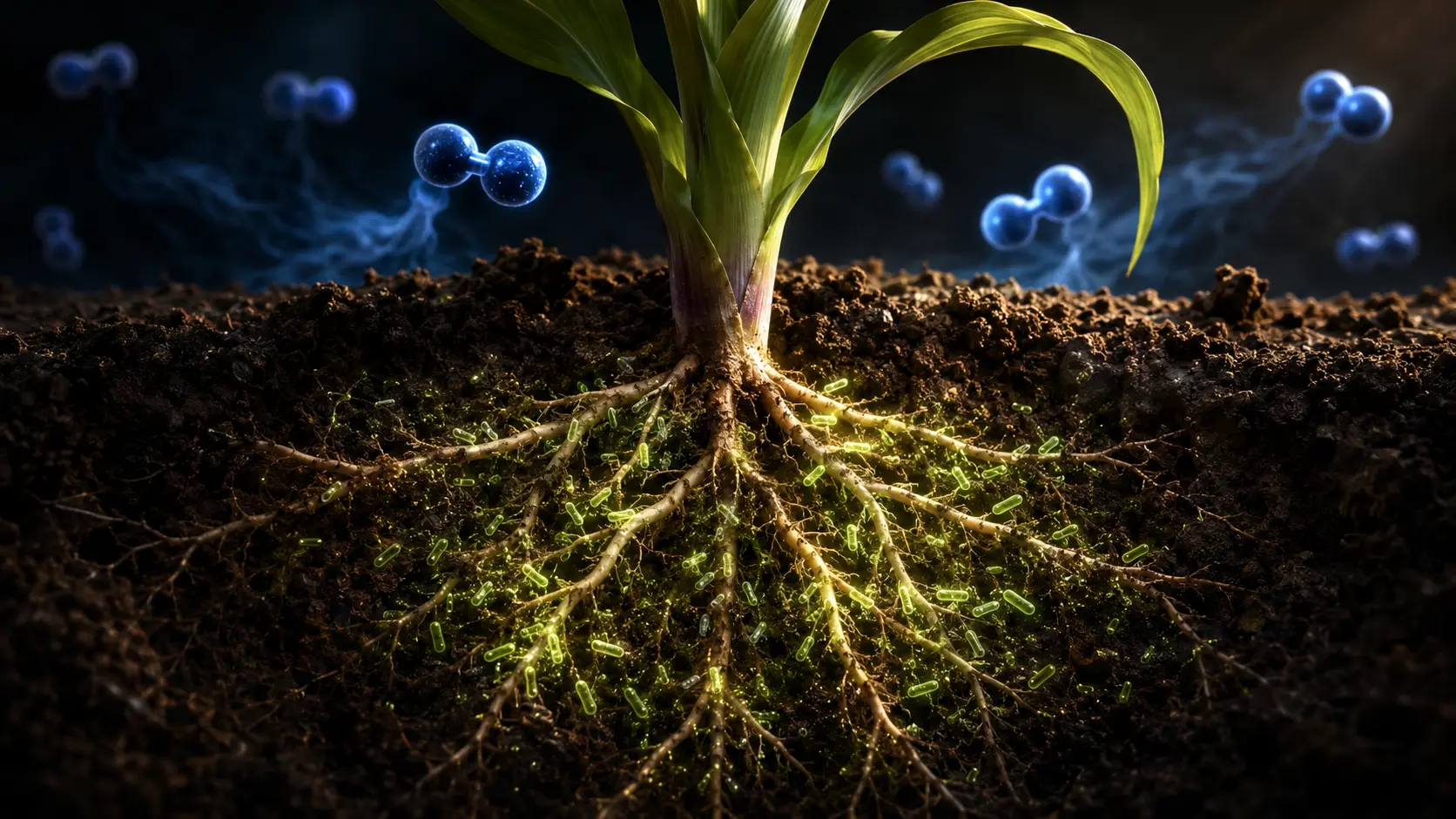
Why should you care right now? Because biotechnology has found a way to bypass the chemical factory entirely. Using advanced gene editing, synthetic biologists are reprogramming the DNA of microscopic soil bacteria. These engineered microbes attach directly to the roots of crops and pull nitrogen straight from the air, feeding the plant perfectly on demand. This breakthrough threatens to obliterate the multi-billion dollar synthetic fertilizer industry, offering agriculture its first highly scalable, zero-emission alternative that fundamentally rewrites the biological limits of the global food supply.
What are Nitrogen-Fixing Microbes?
Nitrogen-fixing microbes are microorganisms optimized through synthetic biology and microbial engineering to fix atmospheric nitrogen and associate with plant roots. They enable nitrogen conversion in the rhizosphere and root colonization, providing a continuous supply of natural fertilizer directly to the plant and drastically reducing the reliance on synthetic chemicals.
At a Glance
- Concept: Reprogramming the DNA of common soil bacteria so they continuously convert atmospheric nitrogen into usable ammonia for crops that cannot naturally do it themselves (like corn, wheat, and rice).
- Why it matters: Synthetic fertilizers are inefficient; they wash away in the rain. Engineered microbes live directly on the root, delivering nitrogen in sync with plant demand and virtually eliminating toxic agricultural runoff.
- Who uses it: Mega-farms and agricultural conglomerates, supplied by AgTech innovators like Pivot Bio, Ginkgo Bioworks, and BioConsortia.
- Biggest takeaway: The synthetic biology in agriculture market is projected to reach $11.86 billion by 2026. The core engineering challenge is preventing the bacteria from “shutting off” their nitrogen production when they sense chemical fertilizers already present in the soil.
In Simple Words
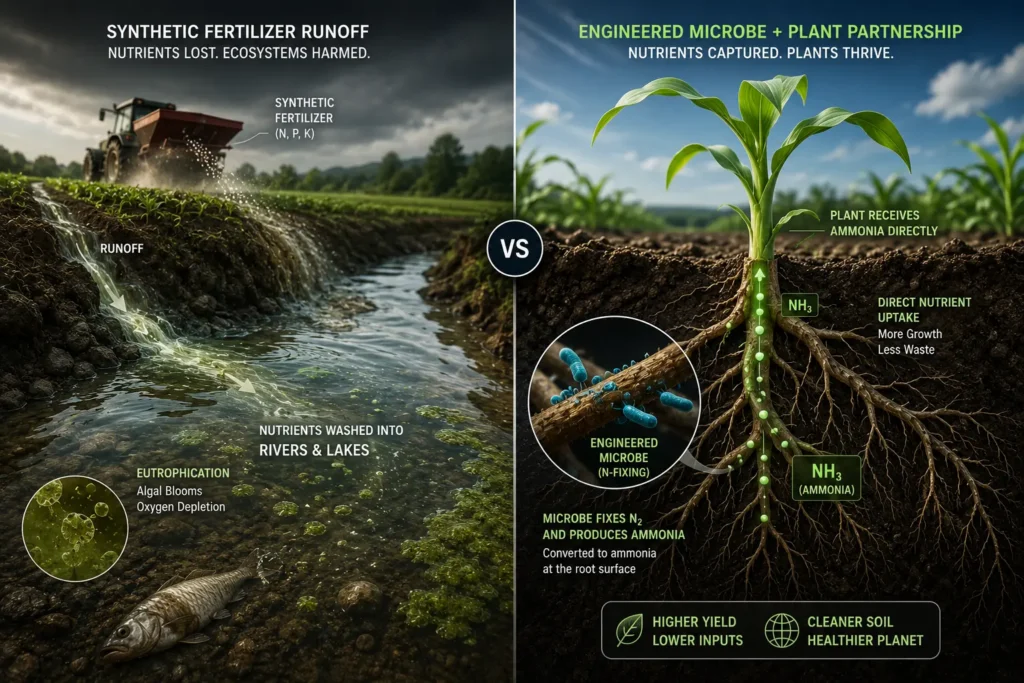
Imagine trying to feed a houseplant by standing across the room and throwing a bucket of plant food at it. A small amount of food lands in the pot, but the majority splashes onto the floor, creating a mess that you have to clean up. This is how modern farming works: tractors spray millions of gallons of synthetic nitrogen onto fields, but a massive portion washes away into the rivers before the plant can eat it.
Nitrogen-Fixing Microbes change the delivery system. Instead of throwing food from across the room, scientists designed a microscopic “chef” that lives directly inside the plant’s pot.
Certain plants, like soybeans, already have these natural chefs living on their roots. But our most important food crops—corn and wheat—do not. Synthetic biology takes a safe soil bacterium and rewrites its DNA, essentially teaching it how to cook. When you plant a corn seed coated in these engineered bacteria, the microbes grow alongside the roots. They pull invisible nitrogen gas out of the air, turn it into liquid ammonia, and feed it directly into the plant root exactly when the plant is hungry. There is no excess, no runoff, and no wasted energy.
Why This Matters
The global agricultural supply chain is highly vulnerable to geopolitical energy shocks. Because synthetic nitrogen fertilizer is manufactured using massive amounts of natural gas, any disruption in the fossil fuel market instantly triggers a global food pricing crisis.
For AgTech Investors and ESG Funds, engineered biologicals represent the ultimate decoupling of agriculture from fossil fuels. It tackles “Scope 3” agricultural emissions head-on. By improving crop productivity and resilience, synthetic biology supports sustainable farming practices and reduces reliance on chemical inputs, playing a vital role in maintaining long-term global food security. The companies that successfully scale these seed coatings and liquid microbial treatments are not just selling a green alternative; they are selling absolute supply chain resilience to the global farming sector.
The Strategic Landscape of Synthetic Biology in Agriculture
The quest to rewrite the fertilizer rulebook is driving intense M&A and joint venture activity among biotech giants.
In the late 2010s and early 2020s, the first wave of commercial products proved the biological concept was viable. However, the strategic landscape consolidated heavily as major agricultural incumbents realized the difficulty of scaling biological manufacturing. For example, Ginkgo Bioworks absorbed Joyn Bio (its joint venture with Bayer) in 2022, centralizing the R&D function for advanced biologicals while allowing Bayer to focus exclusively on downstream commercialization. The current industry race is no longer just about editing the microbe’s DNA; it is about extending the shelf-life of the live bacteria so it can survive sitting in a hot warehouse for two years before a farmer plants it.
How Engineered Nitrogen-Fixing Microbes Work
Forcing a bacterium to expend massive amounts of energy to feed a plant requires overriding billions of years of evolutionary self-preservation. Here is the first-principles breakdown of the synthetic biology at play.
1. The Fundamental Problem: The Oxygen and Energy Barrier
Nitrogen gas constitutes 78% of the Earth’s atmosphere, but its atoms are locked together by a notoriously unbreakable triple bond. Nitrogen-fixing bacteria generate an enzyme called nitrogenase, sometimes referred to as the “fixer” because it carries out this nitrogen fixation. Breaking this bond requires immense cellular energy (16 ATP molecules). More critically, the nitrogenase enzyme functions only within these bacteria and only in low-oxygen environments.
2. The Insufficiency of Natural Symbiosis
In nature, legumes such as beans and peas naturally form root nodules, specialized structures that create the oxygen-poor conditions these bacteria require. Wheat and most other crops lack these nodules, which is why synthetic nitrogen fertilizer is widely used. If you simply apply natural bacteria to a cornfield, the oxygen in the soil disables the nitrogenase enzyme, and the bacteria stop working.
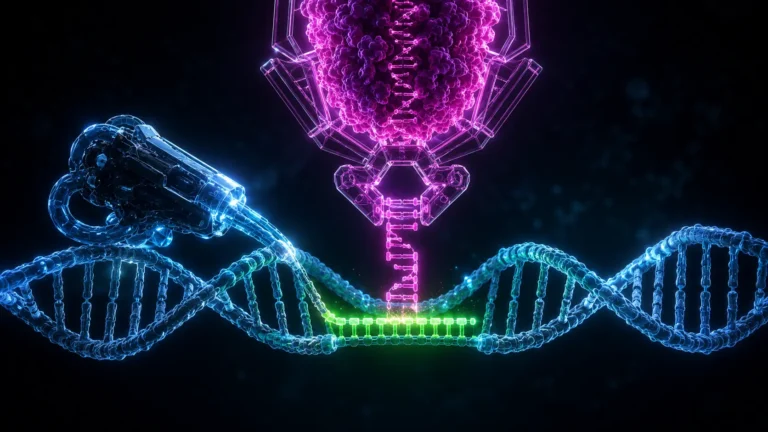
3. The Core Mechanism: CRISPR Recombineering
To solve this, synthetic biologists utilize tools like Cas9 recombineering to create scarless deletions and insertions in target microbes. They specifically target resilient soil bacteria that already thrive around cereal crops. For instance, recent genomic sequencing of Klebsiella variicola isolated from maize and sorghum revealed that these strains lack human/animal virulence genes, opening the path for using them safely in agricultural applications.
4. Technical Depth: Disabling the Nitrogenase Shutoff
The nitrogenase enzyme is a complex machine consisting of an Fe protein (NifH) and a MoFe protein complex (NifDK). Bacteria are inherently lazy; if they detect even a small amount of nitrogen already in the soil, they trigger a “nitrogenase shutoff” to save energy. This shutoff is mediated by ADP-ribosylation of the Fe protein under nitrogen-excess conditions, which disrupts its interaction with the MoFe protein and abolishes activity. Using CRISPR, scientists edit the bacteria’s genome to delete these regulatory feedback loops (like the DraT cascade). The result is a “blind” microbe that constantly synthesizes ammonia, completely unaware that it is overproducing it.
The biological nitrogen fixation process forced by the engineered nitrogenase complex is defined by the rigorous enzymatic reduction:
N₂ + 8H⁺ + 8e⁻ + 16 ATP → 2NH₃ + H₂ + 16 ADP + 16 Pᵢ
5. Real-World Consequences: Root Colonization
Once applied to the seed or soil, these engineered nitrogen-fixing microbes associate with plant roots, enabling nitrogen conversion directly in the rhizosphere. Because the microbes deliver nitrogen directly to roots in sync with plant demand, they drastically reduce the leaching, runoff, and volatilization losses associated with traditional fertilizers.
Commercial Applications of Biological Fertilizers
The deployment of synthetic biology in agriculture is actively replacing traditional chemical workflows across millions of acres.
Seed-Applied Microbial Treatments: The logistical holy grail for biologicals is treating the seed long before it reaches the farmer. In December 2024, BioConsortia introduced “Always-N,” a seed-applied microbial nitrogen-fixing treatment designed to reduce synthetic fertilizer use while maintaining yields in crops like corn and wheat. Crucially, this product features over two years of shelf life and on-seed stability, solving the massive supply chain degradation problem that plagued early biologicals.
In-Furrow Liquid Application: For massive commercial farms, engineered microbes are delivered in liquid form directly into the furrow (the trench where the seed is planted) using standard tractor equipment. This ensures immediate colonization of the rhizosphere the moment the seed begins to germinate, guaranteeing that the plant has continuous access to ammonia during its most critical early growth stages.
Climate-Resilient Agriculture: A continuous supply of nitrogen helps maintain yields when synthetic nitrogen becomes chemically unavailable due to extreme weather. Heavy rains wash chemical fertilizers away, and severe droughts prevent dry fertilizer from dissolving into the soil. Because engineered microbes live physically attached to the root, they offer a weatherproof solution, maintaining cellular nutrient delivery regardless of sudden climate volatility.
Economic & Strategic Impact
The primary economic battleground for synthetic biology is the Nitrogen Substitution Ratio.
The first wave of commercial products successfully established a foothold, but to truly deliver on their promise and achieve massive global scale, these nitrogen-fixing bugs need to “up their game”. The industry benchmark, as articulated by leading biotech executives, is a solution that can consistently replace 30% or 40% of synthetic fertilizer.
For AgTech investors, the mathematical threshold is clear. If an engineered microbe can only replace 10% of a farmer’s synthetic fertilizer, the margin of savings does not justify the cost of the biological product. However, if a microbe consistently achieves a 40% substitution rate without dropping the crop yield, it fundamentally breaks the pricing power of legacy chemical giants (like Yara and Nutrien), shifting billions of dollars of agricultural CapEx from fossil-fuel-based chemicals toward patented, proprietary biological software.
Advantages
- Zero Scope 3 Emissions: Eliminates the natural gas combustion required to manufacture synthetic fertilizer, and ends the release of toxic nitrous oxide from soil volatilization.
- Prevents Eutrophication: Microbes produce ammonia in microscopic amounts directly at the root, completely eliminating the excess agricultural runoff that destroys rivers and creates oceanic dead zones.
- Yield Protection: Proprietary gene-edited microbes continue fixing nitrogen even in the presence of other fertilizer sources, providing a consistent nutritional baseline that protects crop yield potential.
Limitations
- Shelf-Life Instability: Living bacteria are fragile. Many early biological offerings only promised a shelf-life of two months. If the microbes die in the jug due to poor temperature control before reaching the field, they offer zero value to the farmer.
- Soil Type Variability: Agricultural soil is a highly competitive, hostile microscopic battlefield. An engineered bacterium that performs flawlessly in the loamy soils of Iowa may be completely outcompeted and killed by native bacteria in the sandy soils of Brazil.
- Regulatory Scrutiny: Because these products rely on releasing genetically modified, living organisms directly into the open environment, they face intense, prolonged regulatory approval processes across different global jurisdictions.
Common Misconceptions
Misconception: These microbes replace the need for fertilizer entirely.
Reality: Currently, no commercial microbe can provide 100% of a corn plant’s massive nitrogen requirement. They are designed to supplement traditional farming, aiming to replace roughly a third of the synthetic load while maintaining current yields.
Misconception: Synthetic biology in agriculture is just about GMO seeds.
Reality: The market encompasses much more than just modifying the plant’s DNA. The synthetic biology in agriculture market consists of sales of engineered microbes, synthetic enzymes, biofertilizers, and biosensors. Often, the fastest route to market is altering the soil bacteria rather than editing the highly regulated crop itself.
Misconception: Engineered bacteria will mutate and become dangerous human pathogens.
Reality: Bioengineers meticulously screen their base organisms. They isolate specific strains (like recent isolates of Klebsiella variicola) that are explicitly proven to lack human/animal virulence genes, ensuring absolute biological safety before they ever introduce CRISPR modifications.
What Most People Miss
The strategic shift toward Chassis Organism Standardization.
In early biotech, companies tried to find a magic, undiscovered microbe in the wild that naturally possessed great traits. That era is over. What the industry is doing now is developing a “Synthetic Biology Toolbox” for highly reliable, standardized soil bacteria (like Azotobacter vinelandii and Pseudomonas stutzeri).
By treating these specific microbes as a universal “chassis” (like a blank computer motherboard), scientists can reliably install multiple different software programs (genes) into the same bug. Today, they install a nitrogen-fixing gene. Tomorrow, using the exact same chassis, they will install a polyketide synthase (PKS) gene to make the microbe secrete natural pesticides. This standardization radically accelerates the R&D pipeline for all future agricultural biologicals.
Comparison Table
| Feature | Haber-Bosch Synthetic Fertilizer | Natural Legume Symbiosis | Engineered Nitrogen-Fixing Microbes |
| Nitrogen Source | Atmospheric N_2 (Industrial Factory) | Atmospheric N_2 (Root Nodules) | Atmospheric N_2 (Rhizosphere) |
| Energy Required | Fossil Fuels (Extreme Heat/Pressure) | Plant Sugars | Plant Sugars / Root Exudates |
| Application Scope | Universal (All Crops) | Restricted to Legumes (Soy, Peas) | Universal (Corn, Wheat, Rice) |
| Runoff / Leaching | Extreme (Massive environmental cost) | Near Zero | Near Zero (On-demand delivery) |
| Feedback Inhibition | N/A | High (Stops fixing if N is present) | Disabled (Fixes continuously) |
Case Study
Situation: Corn growers operating in a highly volatile fertilizer market faced surging prices for synthetic nitrogen due to geopolitical supply chain shocks. Simultaneously, they faced increasing environmental pressure to reduce agricultural runoff.
Challenge: Adopting alternative biological fertilizers historically carried a massive risk of yield penalty. Farmers could not afford to drop their synthetic nitrogen application if it meant harvesting less corn per acre at the end of the season.
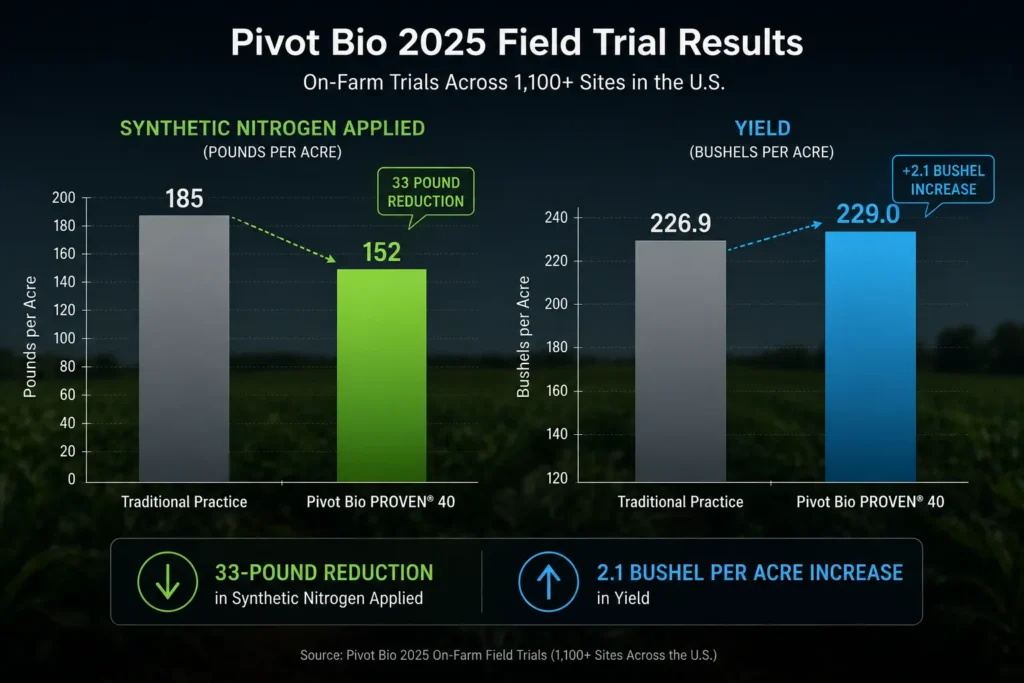
Solution (The 2025 PROVEN G3 Deployment): Pivot Bio, a leading agtech company, deployed PROVEN G3—their proprietary gene-edited microbe designed to continuously fix nitrogen even in the presence of other fertilizer sources. They instituted rigorous best management practices across 134 field trials involving 129 growers nationwide during the 2025 season.
Outcome: The field performance data revealed that corn producers using the engineered microbes successfully replaced an average of 33 pounds of traditional synthetic nitrogen per acre. Despite the reduction in chemicals, the growers achieved a 2.1 bushel-per-acre yield advantage compared to standard practices. Overall economic and yield win rates exceeded 90 percent.
Lessons Learned: The case study provided definitive commercial validation that gene-edited biologicals can serve as a cost-effective, weatherproof part of a modern crop nutrition strategy. It proved that delivering nutrition directly at the root, precisely when the plant’s yield potential establishment is most critical, mathematically outcompetes the brute-force application of synthetic chemicals.
Future Outlook
Next 12–24 Months
The era of Multi-Trait Seed Coatings. As companies like BioConsortia prove the viability of on-seed stability exceeding two years, the industry will shift from liquid furrows to universal seed coatings. In the next 24 months, we will see the commercialization of “stacked” biological seeds. A single corn seed will be coated with a synthetic biology cocktail: one engineered microbe to fix nitrogen, a second microbe engineered to solubilize trapped phosphorus in the soil, and a third engineered to secrete antifungal compounds, turning the seed itself into a self-sustaining micro-ecosystem.
Next 3–5 Years
The achievement of the 40% Substitution Threshold. The technical arms race spearheaded by massive joint ventures (like Ginkgo Bioworks and Bayer) is hyper-focused on efficacy across highly diverse soil types. By the late 2020s, advanced CRISPR screening will yield microbial strains robust enough to consistently replace 30% to 40% of synthetic fertilizer on a global scale. This milestone will trigger mass adoption, as regulatory bodies in Europe and North America will likely begin mandating biological substitution minimums to meet national climate and waterway protection goals.
Next 10 Years
The transition to Direct Plant Engineering (DNA-Edited Crops). While engineering the soil bacteria is the fastest path to market today, the ultimate decade-long goal is bypassing the microbe entirely. Scientists are currently using CRISPR to directly edit the hexaploid genome of wheat and corn. Recent trials have shown that DNA-edited wheat can secrete specific compounds (like apigenin) to aggressively promote natural soil bacterial nitrogen fixation. By the 2030s, crops will be genetically programmed to either host nitrogenase internally or perfectly command the native microbiome, entirely erasing the global reliance on Haber-Bosch chemical factories.
Most Likely Scenario
Synthetic biology in agriculture is executing the exact same disruption curve that renewable energy forced upon the coal industry. Engineered nitrogen-fixing microbes are rapidly transitioning from an experimental ESG curiosity into a strictly superior, cost-saving agronomic standard. The companies that command the intellectual property of these engineered biological chassis will quietly dictate the economic margins of the 21st-century food supply.
Key Takeaways
- Engineered nitrogen-fixing microbes use synthetic biology to pull nitrogen from the air and deliver it directly to crop roots, reducing the need for synthetic fertilizers.
- Natural nitrogen fixation is driven by the nitrogenase enzyme, which is highly sensitive to oxygen and natively restricted to legumes like soybeans.
- CRISPR technology is used to delete the natural “shutoff” switch inside soil bacteria (like Klebsiella variicola), forcing them to continuously produce ammonia even in heavily fertilized soils.
- These biologicals eliminate the catastrophic environmental runoff and Scope 3 greenhouse gas emissions associated with the fossil-fuel-driven Haber-Bosch chemical process.
- Recent 2025 field data from Pivot Bio confirmed that engineered microbes can reliably replace 33 pounds of synthetic nitrogen per acre while actually increasing crop yields.
- The primary commercial hurdle for the industry is ensuring the live bacteria have a long enough shelf-life (two-plus years) to survive the global agricultural supply chain before being planted.
Glossary
CRISPR-Cas9: A revolutionary gene-editing technology that allows scientists to make precise, targeted changes to the DNA of an organism, used here to modify bacterial behavior.
Eutrophication: The environmental destruction of waterways caused by excess synthetic fertilizer runoff, which creates massive algae blooms that deplete oxygen and kill marine life.
Haber-Bosch Process: The energy-intensive industrial process invented in the early 20th century that combines atmospheric nitrogen and hydrogen gas under extreme heat and pressure to create synthetic ammonia fertilizer.
Nitrogenase: The highly complex, oxygen-sensitive enzyme complex produced by certain bacteria that breaks the triple bond of atmospheric nitrogen gas (N_2) to convert it into usable ammonia (NH_3).
Rhizosphere: The microscopic layer of soil immediately surrounding plant roots, characterized by high biological activity and the primary site where engineered microbes colonize and operate.
Synthetic Biology: An interdisciplinary branch of science that involves redesigning organisms for useful purposes by engineering them to have new abilities, essentially treating DNA like programmable software code.
Sources
Research and Markets: Synthetic Biology in Agriculture Market Report 2026
AgFunderNews: Inside Ginkgo and Bayer’s quest to rewrite the fertilizer rulebook: The race to create next-gen nitrogen-fixing biologicals (November 2025)
Pivot Bio Press Release: Pivot Bio Releases 2025 Field Performance Data Demonstrating Consistent Yield Gains and Synthetic Nitrogen Displacement (February 2026)
Pivot Bio Press Release: Pivot Bio Releases 2025 Field Performance Data… (February 2026)
Research and Markets: Synthetic Biology in Agriculture Market Global Report 2026
ScienceDaily: CRISPR wheat that makes its own fertilizer (November 2025)
PMC – NIH: A Synthetic Biology Toolbox for Nitrogen-Fixing Soil Microbes
Patents (WO2021221690A1): Modified bacterial strains for improved fixation of nitrogen
ACS Publications: Synthetic Biology Toolbox for Nitrogen-Fixing Soil Microbes (November 2023)