Advertisement
)

AT A GLANCE
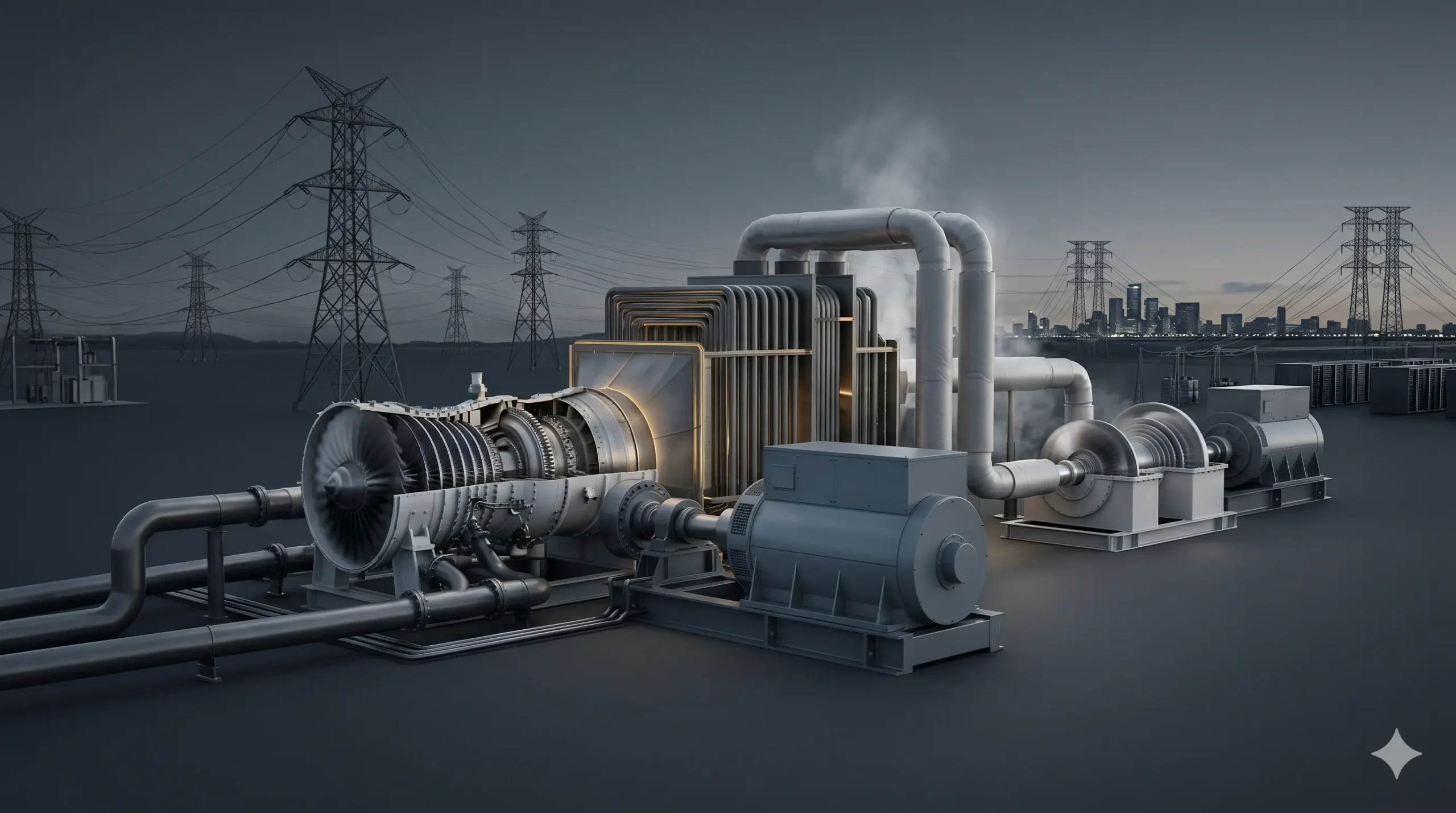
- Concept: Brayton Cycle: A compressor-combustor sequence expands ignited natural gas to rotate a high-speed primary generator.
- Concept: Heat Recovery: A massive internal radiator captures 600-degree exhaust to boil pressurized demineralized water.
- Concept: Rankine Cycle: High-pressure steam expands through a secondary turbine to produce additional electrical generation.
- Concept: Thermal Creep: Extreme temperature fluctuations cause permanent metallurgical deformation in turbine blades over time.
HOW IT WORKS
Combined cycle gas turbines unify two distinct thermodynamic loops to maximize fuel efficiency. The process begins with the Brayton cycle. A massive compressor pulls in ambient air, pressurizes it, and forces it into a combustion chamber where it mixes with natural gas.
Ignition creates a high-velocity, high-temperature gas stream that expands through a primary turbine. This physical expansion spins a generator shaft to produce electricity. In a simple cycle plant, the exhaust vents directly into the atmosphere, wasting roughly half the latent thermal energy.
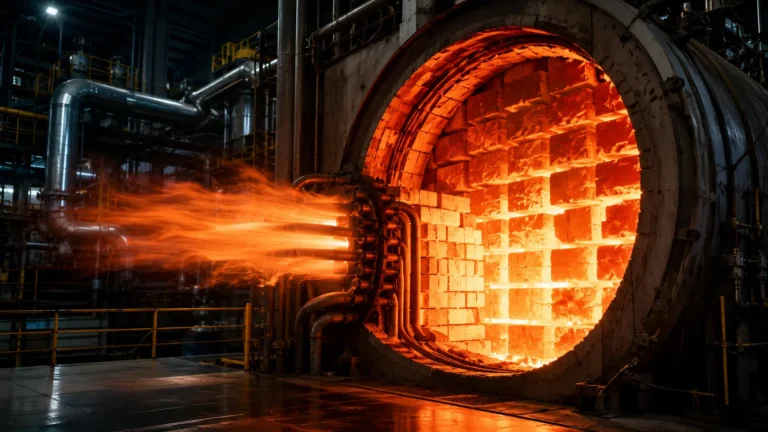
The combined cycle architecture intercepts this waste heat. The 600°C exhaust gas enters a Heat Recovery Steam Generator (HRSG). This multi-stage heat exchanger operates as a massive vertical radiator, passing the scorching gas over thousands of finned steel tubes filled with demineralized water.
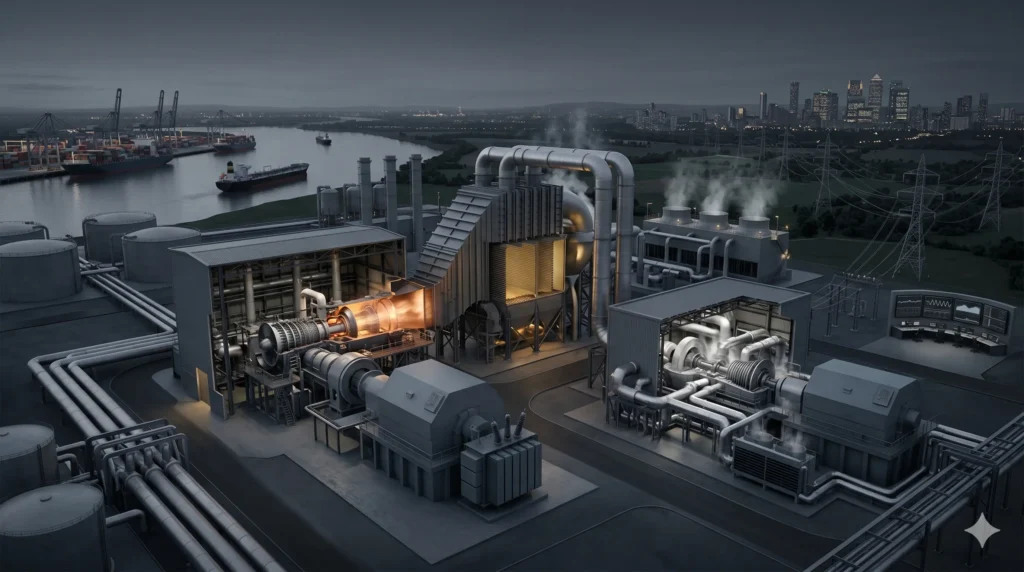
The HRSG converts the water into superheated steam, initiating the Rankine cycle. The steam expands through a secondary turbine, extracting a second phase of mechanical work. This dual-extraction cascade pushes the total thermal efficiency of the plant past 60 percent.
The theoretical maximum efficiency obeys the Carnot theorem based on the temperature limits of the heat reservoirs:
Carnot Maximum Thermal Efficiency
ηmax
=
1
–
Tc
Th
ηmax
Maximum Efficiency The absolute physical limit of energy conversion for the turbine cascade, represented as a fraction (e.g., 0.62 = 62%).
Tc
Cold Sink Temperature The temperature of the external environment or cooling water where waste heat is rejected. (Must be calculated in absolute Kelvin).
Th
Hot Source Temperature The extreme internal temperature of the ignited natural gas driving the primary turbine. (Must be calculated in absolute Kelvin).
The Thermodynamic Consequence: The equation proves that to extract more mechanical work, engineers must mathematically shrink the fraction on the right. They do this by lowering the cold exhaust temperature (Tc) or dramatically increasing the burning hot source temperature (Th), constantly pushing the physical limits of nickel-superalloy metallurgy.
WHY IT MATTERS NOW
Modern electrical grids operate under constant stress from the rapid integration of intermittent solar and wind capacity. When weather conditions shift, gigawatts of renewable energy drop off the network instantly. Grid operators rely on natural gas turbines to fill this massive supply void.
Heavy industry and data centers demand absolute baseload reliability. Artificial intelligence training clusters draw hundreds of megawatts continuously, refusing to tolerate millisecond voltage drops. Combined cycle plants provide the deep rotational inertia necessary to keep the grid frequency stabilized at precisely 60 Hertz.
Major equipment manufacturers like General Electric, Siemens Energy, and Mitsubishi Power engineer multi-shaft configurations to meet this demand. In a multi-shaft plant, the gas turbine and steam turbine spin separate generators. This architecture allows operators to run the primary gas turbine independently if the steam loop requires maintenance, ensuring continuous grid dispatch capability.
Economic survival for utility companies depends entirely on optimizing the HRSG efficiency. Extracting every possible megawatt from the secondary steam cycle by optimizing multi-tier pressure gradients allows operators to bid lower prices into wholesale electricity markets. A plant that maximizes its thermal extraction outcompetes older units, capturing higher run-times and superior capital returns.
WHAT MOST PEOPLE MISS
Energy analysts frequently treat natural gas plants as simple dispatchable batteries that operators can switch on and off at will. They demand that utility companies ramp combined cycle units aggressively to perfectly mirror the erratic outputs of local solar farms.
They ignore the brutal physical limits of metallurgical thermal creep. When operators inject cold natural gas and ignite it to rapidly restart a turbine, the sudden temperature spike causes severe thermal shock. Frequent, aggressive restarts permanently warp the internal nickel-superalloys, accelerating physical failure and adding millions of dollars to the facility’s baseline operating expenses.
THE TRAJECTORY
Next 12–36 Months: Utility operators will install advanced sensor networks and machine learning control systems inside HRSG units to monitor real-time thermal stress. This digital integration will allow slightly faster ramp rates while strictly managing the boundaries of metallurgical fatigue.
Next Five Years: Turbines will increasingly blend hydrogen gas with natural gas supplies to reduce carbon emissions. Manufacturers will upgrade combustion nozzles and metallurgical coatings to manage the higher burning temperatures and distinct flame velocities of hydrogen molecules.
Next Ten Years: Combined cycle plants will physically integrate with massive carbon capture and storage architectures. The parasitic electrical load required to run amine-based carbon extraction will lower net plant output, fundamentally altering the economics of wholesale power markets.
What Could Go Wrong: A localized disruption in natural gas pipeline pressure during a severe winter freeze can cause fuel starvation. If the primary Brayton cycle trips, the secondary Rankine cycle instantly loses its heat source, cascading into a sudden, multi-gigawatt grid blackout.
Most Likely Outcome: Combined cycle infrastructure will remain the non-negotiable backbone of global civilization. As intermittent renewables expand, the financial value of these plants will shift from sheer megawatt volume to the premium pricing of rapid, reliable grid stabilization services.
KEY TERMS
- Brayton Cycle: The thermodynamic process mapping the compression, combustion, and expansion of a gas to generate mechanical work.
- Rankine Cycle: The thermodynamic sequence of boiling a pressurized liquid into a vapor to spin a turbine before condensing it back into a liquid.
- Heat Recovery Steam Generator (HRSG): A large heat exchanger that recovers exhaust heat from a gas turbine to produce steam for a secondary turbine.
- Thermal Creep: The slow, permanent physical deformation of solid metals exposed to severe, continuous high-temperature stress over time.
- Baseload Power: The minimum continuous amount of electricity required to meet the constant demands of an electrical grid.
SOURCES
- North American Electric Reliability Corporation (NERC) — Baseload Generation and Grid Frequency Stability Assessments
- General Electric Gas Power — Advanced HA-Class Gas Turbine and Combined Cycle Architecture
- U.S. Energy Information Administration (EIA) — Natural Gas Combined-Cycle Plant Heat Rates and Thermal Efficiencies
- American Society of Mechanical Engineers (ASME) — Metallurgical Creep and Thermal Fatigue in Power Generation Turbines