
AT A GLANCE
- Dielectric Strength: Pressurized SF6 gas blocks electricity three times better than standard air.
- Arc Extinction: Specialized interrupters physically blast apart superheated plasma during a circuit fault.
- Urban Density: Gas insulation shrinks electrical substation footprints by up to ninety percent.
- The Climate Paradox: SF6 is the most potent greenhouse gas known to human civilization.
HOW IT WORKS
High-voltage electricity constantly wants to jump to the ground. When a massive transmission line faults, the grid must break the circuit instantly.
Physically pulling two high-voltage metal contacts apart creates an immediate crisis. The electricity jumps the gap, ionizing the surrounding air into a superheated plasma arc. This arc burns hotter than the surface of the sun, destroying equipment and melting steel.
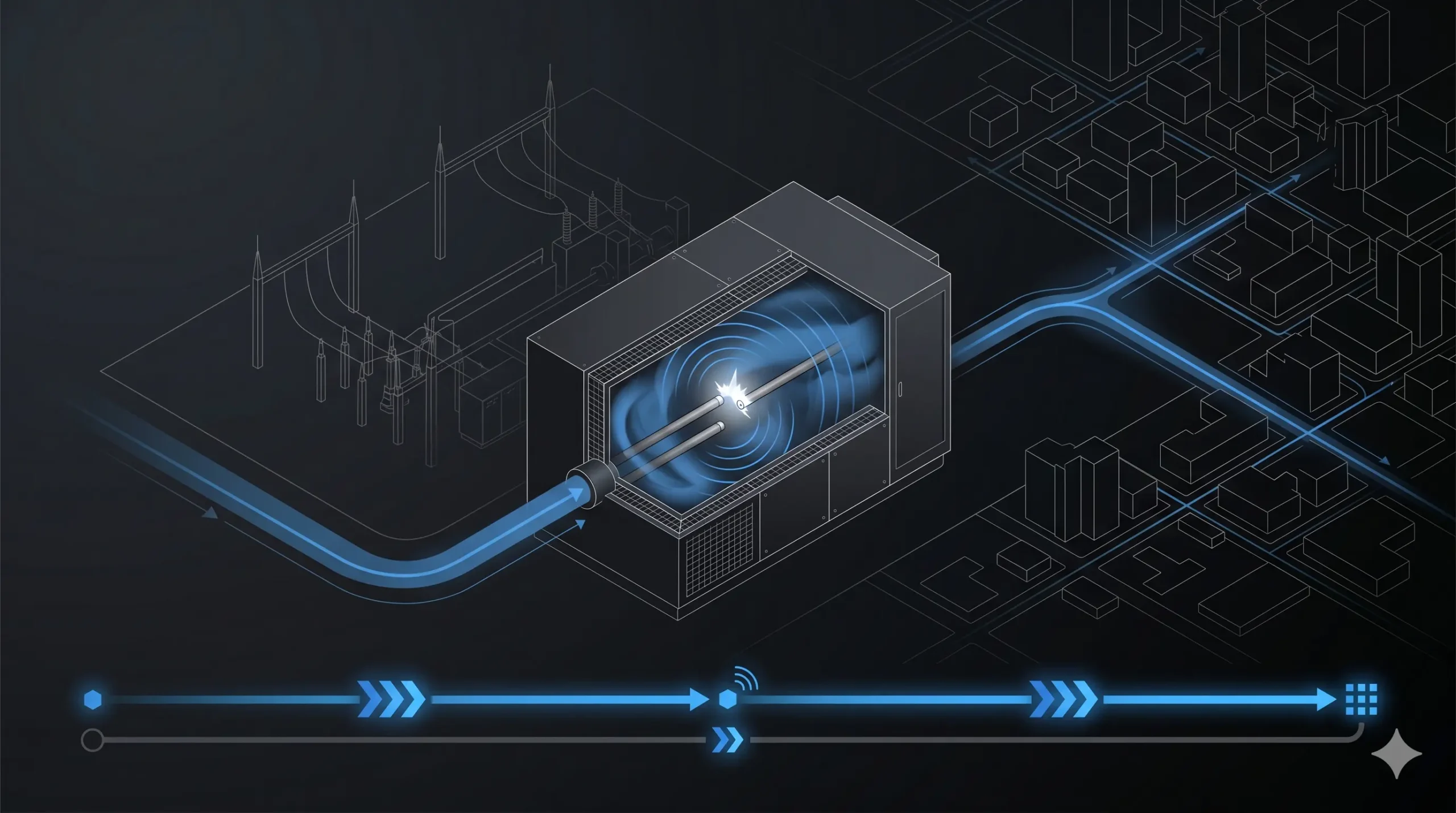
Gas-insulated switchgear (GIS) solves this using physics. Engineers seal the conductive copper busbars inside a grounded aluminum pipe. They pump this pipe full of pressurized sulfur hexafluoride (SF6) gas.
SF6 possesses extreme dielectric strength. Its heavy fluorine atoms aggressively capture free electrons. When a switch opens and an arc tries to form, the SF6 molecules absorb the kinetic energy. They physically choke the plasma out in milliseconds.
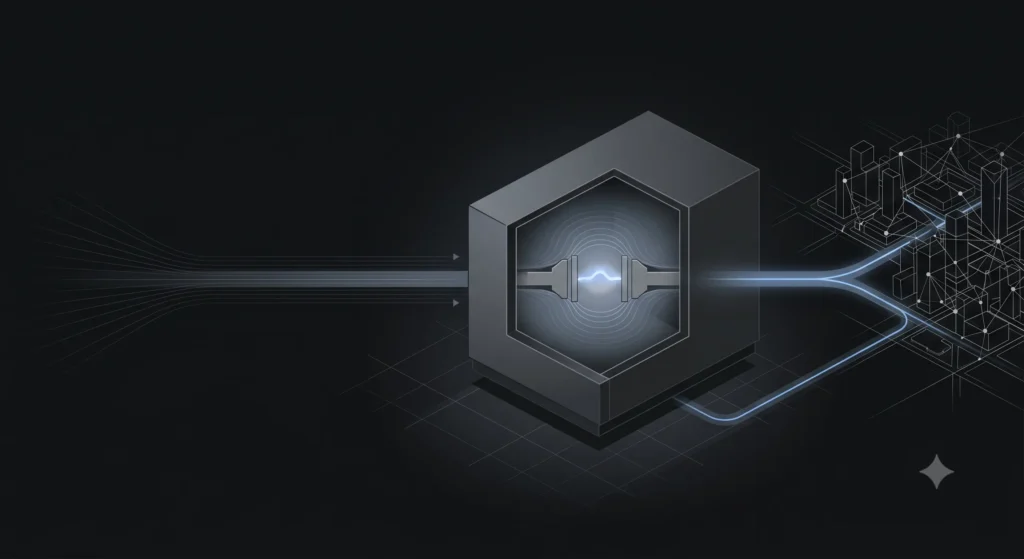
Modern systems pair this gas with vacuum interrupters. The actual mechanical separation happens inside a perfectly sealed vacuum bottle. With no oxygen or gas to ionize, the arc struggles to form at all. The surrounding SF6 then provides the absolute insulation barrier to the outside world.
WHY IT MATTERS NOW
Urban power demand is accelerating at an unprecedented rate. Data centers, electric vehicle charging hubs, and electrified manufacturing require massive infusions of high-voltage baseload power directly into densely populated cities.
You cannot build traditional air-insulated substations in Manhattan or central London. They require acres of open land to ensure the high-voltage lines stay far enough apart to prevent ambient arcing.
GIS shrinks this footprint by ninety percent. You can place a 400-kilovolt GIS substation inside the basement of a commercial skyscraper. It operates silently and securely, entirely hidden from the public.
However, the global energy transition just triggered a massive industrial bottleneck. Regulators across Europe and North America recently mandated the total phase-out of SF6 due to its severe global warming potential. One pound of SF6 traps as much heat as twenty-three thousand pounds of carbon dioxide.
Grid operators now face an impossible engineering deadline. Major manufacturers like Siemens Energy and ABB must invent, test, and deploy completely new gas mixtures using fluoroketones or clean air. They must do this while simultaneously upgrading aging grid infrastructure to handle the sudden surge in renewable energy loads.
WHAT MOST PEOPLE MISS
Environmental advocates celebrate the ban on SF6 as an easy climate victory. They ignore the brutal physical reality of high-voltage electrical engineering.
You cannot simply swap a new gas into an old machine. SF6 replacement gases require entirely new physical dimensions, higher operating pressures, and different thermodynamic cooling systems. Every single new switchgear design must undergo years of brutal short-circuit testing to meet strict IEEE C37 standards.
This creates a severe supply chain gridlock. As governments force utilities to adopt untested, SF6-free technology, production pipelines at major foundries slow to a crawl. The green mandate ironically delays the deployment of the exact grid infrastructure required to connect new wind and solar farms to the cities that need them most.
THE TRAJECTORY
Next 12–36 Months: Utility companies will hoard legacy SF6 switchgear to secure their immediate expansion projects before manufacturing bans take full effect. Wait times for heavy high-voltage equipment will stretch past thirty months, inflating the capital costs of new urban development.
Next Five Years: Major manufacturers will fully commercialize alternative gas mixtures, like 3M’s Novec insulating gases. These new systems will require slightly larger physical enclosures to maintain the same arc-quenching rating, reversing a fraction of the urban density gains achieved by legacy SF6 models.
Next Ten Years: Vacuum interrupter technology will scale to handle ultra-high voltages exceeding 400 kilovolts. This eliminates the need for any chemical arc-quenching gas entirely. Substations will rely on pure mechanical vacuums surrounded by pressurized dry air.
What Could Go Wrong: Alternative gas mixtures often condense into liquids at extremely low temperatures. If a severe winter storm hits a major metropolitan grid, the new gas could liquefy inside the switchgear. This would instantly destroy the dielectric insulation and trigger a catastrophic cascading blackout.
Most Likely Outcome: The utility industry will bifurcate based on physics. Lower-voltage municipal grids will successfully transition to clean air and vacuum technologies. Ultra-high-voltage transmission networks will win emergency regulatory exemptions, continuing to use SF6 for another decade because breaking a million-volt arc currently offers no other safe alternative.
KEY TERMS
- Dielectric Strength: The maximum electrical voltage a specific material can withstand before it physically breaks down and conducts current.
- Arc Flash: A sudden, explosive release of superheated plasma that occurs when high-voltage electric current jumps across an air gap.
- Vacuum Interrupter: A specialized mechanical switch operating inside a perfectly sealed vacuum chamber to prevent plasma arcs from forming during circuit breaks.
- Fluoroketones: A class of synthetic chemical compounds currently engineered to replace SF6 in high-voltage applications with a significantly lower environmental impact.
- Baseload Power: The absolute minimum amount of continuous electrical energy required to keep a regional power grid stable at any given time.
SOURCES
- IEEE Standards Association — IEEE C37.122 Standard for Gas-Insulated Substations
- Environmental Protection Agency (EPA) — SF6 Emission Reduction Partnership for Electric Power Systems
- Cigré (International Council on Large Electric Systems) — Alternatives to SF6 for Switchgear and Voltage Transformers
- European Commission — F-gas Regulation and the Phase-out of SF6 in Electrical Switchgear