Advertisement
)
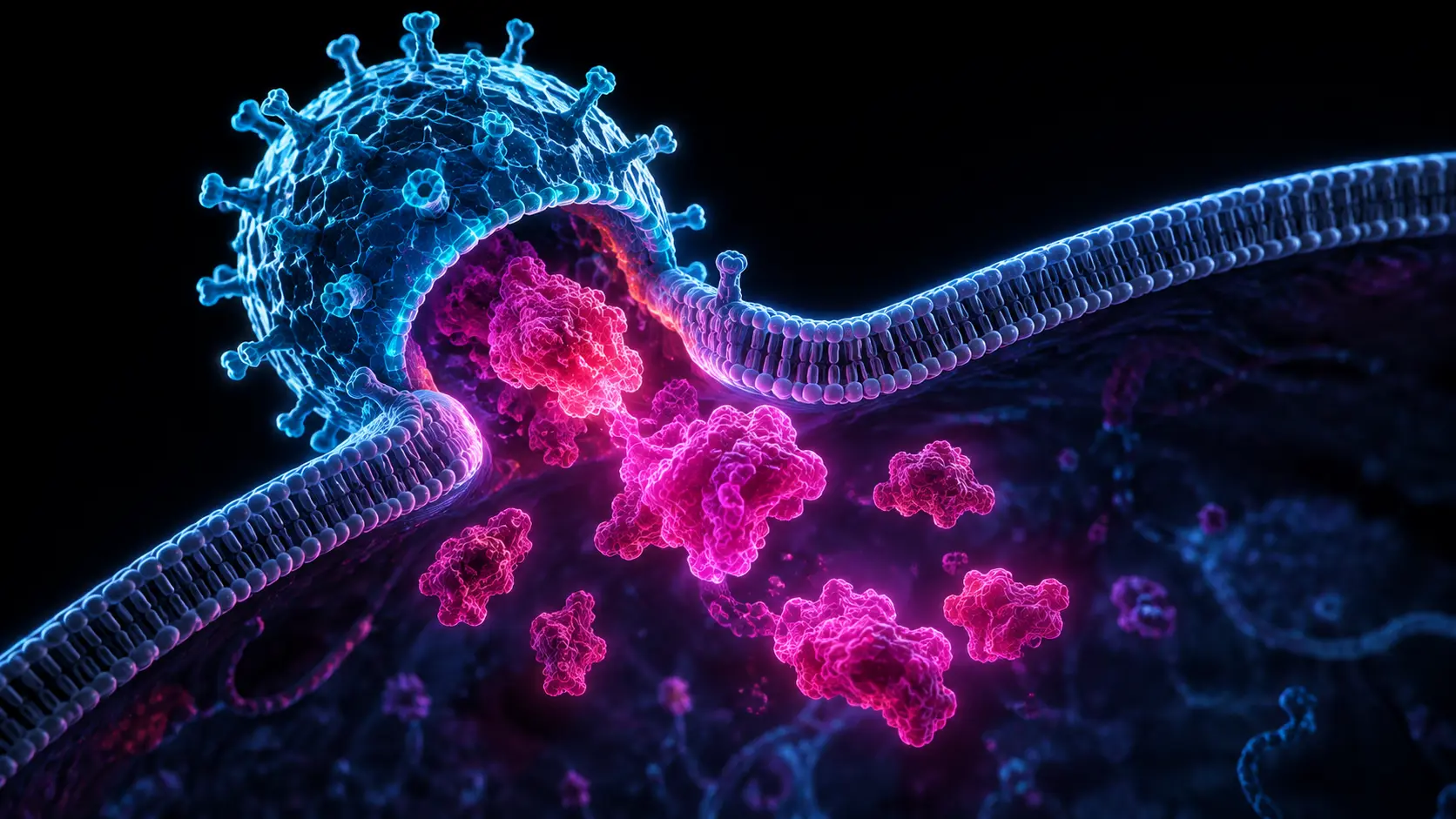

The artificial intelligence boom has allowed scientists to design breathtaking, miraculous cures for genetic diseases. Technologies like CRISPR, Base Editing, and Prime Editing can perfectly rewrite human DNA to cure blindness, stop sickle cell anemia, and halt muscular dystrophy. But a miracle cure is useless if you cannot get it inside the patient’s cells. For decades, the “delivery problem” has been the agonizing bottleneck of modern medicine. To deliver these cures, doctors have relied on hollowed-out viruses (which are dangerous and trigger the immune system) or fat bubbles (which are safe but often end up lost in the liver).
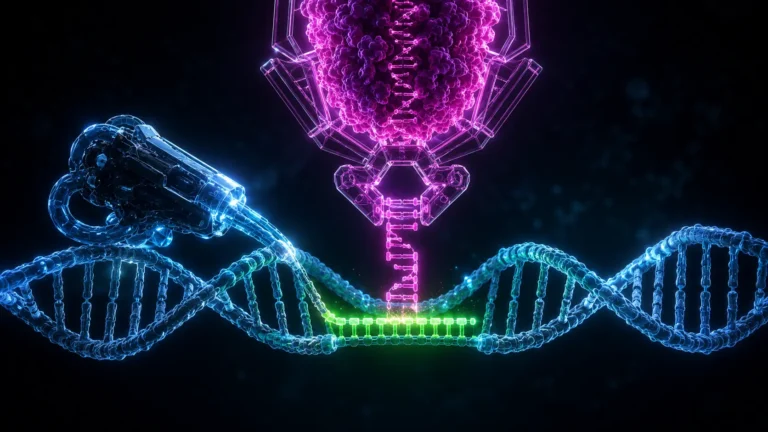
Why should you care right now? Because biotechnology has officially mastered the art of the Trojan Horse. By deploying a breakthrough known as Engineered Virus-Like Particles (eVLPs), researchers have stripped the virus of its danger while keeping its genius. These microscopic vehicles look and move exactly like highly infectious viruses, effortlessly slipping past cellular defenses. But when they open up, they do not release a viral infection; they release a massive, pre-assembled genetic editing machine that fixes the patient’s DNA and then vanishes without a trace. This “hit-and-run” delivery system is poised to unlock the full potential of gene therapy, transforming science fiction into standard outpatient medicine.
What are Engineered Virus-Like Particles (eVLPs)?
Engineered Virus-Like Particles (eVLPs) are synthetic, non-infectious protein shells designed to mimic the architecture of natural viruses. They are completely devoid of viral genetic material. Instead, they are hollow vehicles engineered to package, transport, and deliver massive therapeutic payloads—such as pre-assembled CRISPR ribonucleoprotein (RNP) complexes—directly into specific human cells.
At a Glance
- Concept: Building a microscopic, hollow spaceship that looks exactly like a virus on the outside, but carries a pure medical cure on the inside instead of a viral infection.
- Why it matters: Traditional viral gene therapies force the patient’s body to permanently manufacture CRISPR proteins, which can accidentally slice up healthy DNA years later. eVLPs deliver a temporary crew of proteins that do the job and die off within hours.
- Who uses it: Cutting-edge gene therapy companies, David Liu’s lab at the Broad Institute, and biotech startups focusing on ultra-precise in vivo (inside the body) genetic editing.
- Biggest takeaway: Unlike Lipid Nanoparticles (fat bubbles) which generally get trapped in the liver, scientists can engineer the outside of an eVLP with specific “keys” to unlock and enter almost any specific organ in the body, including the brain and the eyes.
In Simple Words
Imagine you have a highly secure bank vault, and you need to get a team of mechanics inside to fix the safe.
If you use a Lipid Nanoparticle (LNP), it is like putting the mechanics in a generic delivery van. The bank guards don’t recognize the van, so they usually redirect it to the loading dock (the liver) instead of the vault.
If you use a Viral Vector (AAV), it is like sending the mechanics in an armored bank truck. The guards let it in perfectly. However, the truck carries a terrible side effect: it permanently drops off a blueprint instructing the bank to keep building new mechanics forever. Eventually, the bank is overrun with mechanics who start accidentally breaking healthy safes.
If you use an Engineered Virus-Like Particle (eVLP), you use the exact same trusted armored bank truck, so it gets through the front door easily. But the truck is completely hollowed out. It drops off the mechanics, they fix the safe, and then the mechanics leave. No permanent blueprints are left behind. The job is done perfectly, cleanly, and safely.
Why This Matters
For Biotech Investors, Geneticists, and Pharma Executives, eVLPs solve the Cargo Capacity Limit of advanced gene therapies.
Early gene therapies used small enzymes (like standard CRISPR-Cas9). Today’s most advanced cures—like Prime Editors—are massive, Frankenstein-like protein complexes. They are physically too large to fit inside the standard viral vectors (AAVs) currently approved by the FDA. Pharmaceutical companies were forced to split these massive cures in half, load them into two separate viruses, and hope both viruses successfully infected the exact same cell simultaneously—a logistical nightmare with terrible success rates. eVLPs possess a vastly larger internal volume. They can comfortably package and deliver the massive, fully assembled Prime Editor proteins in a single shot, fundamentally unlocking the commercial viability of the next generation of genetic medicine.
The Evolution of eVLP Gene Therapy
The evolution of eVLPs represents the ultimate convergence of virology and synthetic biology.
Nature spent billions of years optimizing viruses for one specific task: crossing a cell membrane. Rather than trying to invent a completely new synthetic delivery vehicle from scratch (which takes decades of trial and error), bioengineers decided to simply hijack nature’s homework. By borrowing the structural architecture of retroviruses (like HIV or MLV) but aggressively editing their interior scaffolding using advanced directed evolution, scientists created a hybrid class of therapeutics. It possesses the evolutionary perfection of a virus on the outside, and the absolute mathematical precision of synthetic biology on the inside.
How Engineered Virus-Like Particles (eVLPs) Work
Transforming a dangerous virus into a hollow, high-capacity delivery drone requires profound manipulation of viral proteins. Here is the first-principles breakdown of the architecture.
1. The Fundamental Problem: Viral DNA Toxicity
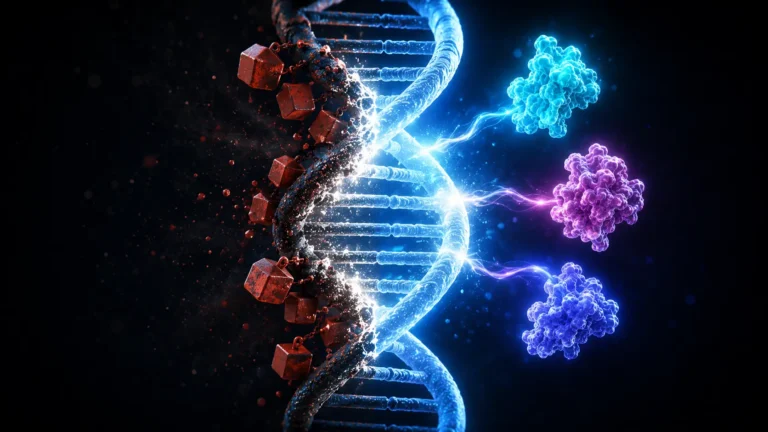
When a standard viral vector (AAV or Lentivirus) enters a cell, it deposits viral DNA. This DNA instructs the cell to manufacture the CRISPR editing proteins. Because the viral DNA often integrates permanently into the patient’s genome, the cell never stops making CRISPR. Over months and years, this permanent presence drastically increases the risk of “off-target edits”—the CRISPR protein gets bored and accidentally starts slicing up healthy DNA, potentially causing cancer.
2. The Core Mechanism: Gag Polyprotein Scaffolding
eVLPs abandon viral DNA entirely. Instead, scientists focus on a viral structural protein called “Gag.” When expressed in a laboratory cell, thousands of Gag proteins naturally self-assemble into a hollow, spherical shell (the viral capsid).
Engineers genetically fuse the actual CRISPR editing proteins (the therapeutic payload) directly to these Gag proteins. As the shell forms, it naturally pulls the CRISPR proteins inside, perfectly packaging the payload without involving any viral genetic material.
3. Technical Depth: Membrane Fusion vs. Endosomal Escape
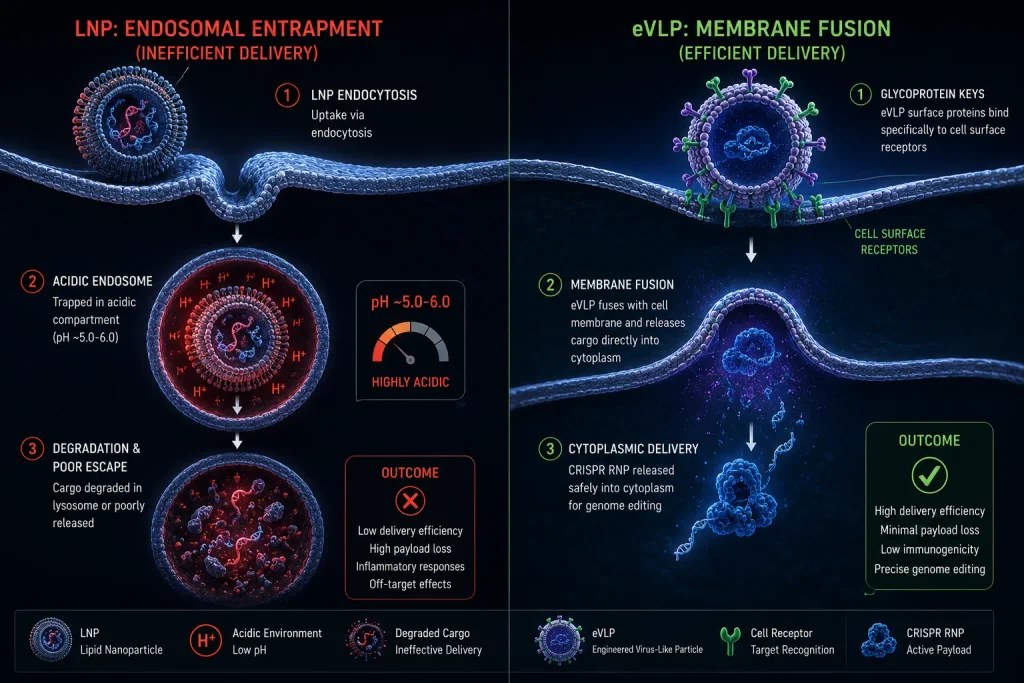
When a non-viral Lipid Nanoparticle (LNP) enters a cell, the cell swallows it into a digestive bubble called an endosome. The LNP often gets trapped and destroyed by acid before it can release its cure.
eVLPs bypass this trap. They are coated in specific viral envelope glycoproteins (like VSV-G). These glycoproteins act as molecular keys. When they touch the target cell, they force the eVLP’s membrane to instantly fuse with the cell’s membrane, dumping the CRISPR payload directly into the cytoplasm, completely avoiding the acidic endosomal trap.
4. Bypassing the Nuclear Bottleneck: Ribonucleoproteins (RNPs)
Traditional vectors deliver DNA, which must travel into the nucleus, be transcribed into mRNA, and then translated into a protein before the cure works.
eVLPs deliver Ribonucleoproteins (RNPs)—fully assembled, fully active protein complexes. The moment the eVLP dumps the RNP into the cell, the protein immediately begins editing the target DNA. Because the RNP is a protein, not a piece of DNA, it naturally degrades and vanishes from the cell within 24 to 48 hours. This “hit-and-run” dynamic restricts the editing window, virtually eliminating the risk of long-term off-target mutations.
5. Real-World Consequences: Library-Based Directed Evolution
The initial versions of eVLPs were highly inefficient; the CRISPR proteins would get stuck inside the shell and fail to release. To fix this, researchers (most notably at the Broad Institute) deployed “directed evolution.” They created millions of slightly mutated versions of the eVLP architecture and raced them against each other in a lab. By isolating the “winners” that successfully released their cargo, they iterated through generations (v1 to v5) until they achieved an eVLP architecture with near-perfect packaging density and cargo release efficiency.
Clinical Applications: Ocular, CNS, and In Vivo CAR-T
The theoretical superiority of the “hit-and-run” architecture is aggressively translating into preclinical and early clinical triumphs.
Restoring Vision in Genetic Blindness: The human eye is a highly insulated, delicate organ (immune-privileged). Injecting viral vectors into the eye often triggers severe, blinding inflammation. Researchers successfully deployed eVLPs loaded with Base Editors to target a specific mutation causing genetic blindness in mice. Because the eVLPs contained no viral DNA, they did not trigger the massive immune response associated with AAVs. The eVLPs successfully penetrated the retinal cells, edited the defective gene, and restored visual function without causing long-term cellular damage.
In Vivo Central Nervous System (CNS) Editing: Delivering drugs into the brain is exceptionally difficult due to the Blood-Brain Barrier (BBB). While LNPs struggle immensely to target neurological tissue, scientists can swap the glycoproteins on the outside of an eVLP to specifically target brain cells. In preclinical trials, eVLPs successfully delivered gene-editing cargo directly into the brains of live subjects. Because the proteins degrade within 24 hours, the risk of permanently altering the patient’s neurology with uncontrolled off-target mutations—a massive concern for FDA regulators evaluating brain therapies—is functionally eliminated.
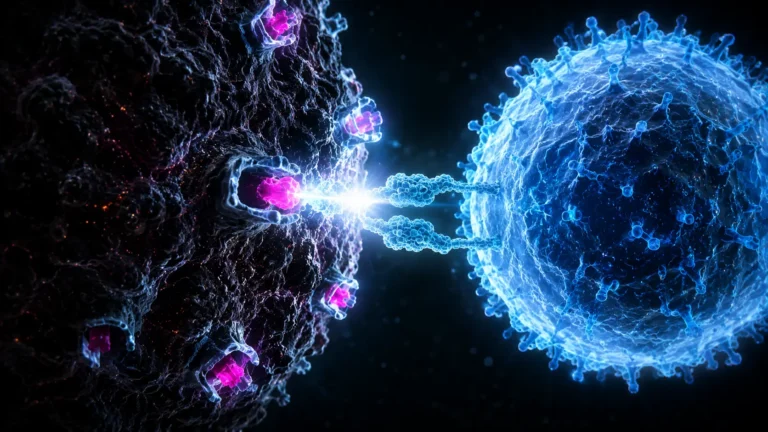
Targeted Oncology and T-Cell Engineering: Currently, CAR-T cell therapy requires extracting a patient’s immune cells, taking them to a million-dollar lab facility to be genetically engineered with viral vectors, and injecting them back into the patient weeks later. eVLPs offer the potential for in vivo CAR-T. By engineering the outside of the eVLP to only lock onto circulating T-cells, doctors could inject the eVLP directly into the patient’s arm. The eVLP would hunt down the T-cells inside the body, drop the RNP payload, and instantly program the T-cells to attack cancer, condensing a month-long, million-dollar hospital stay into a simple outpatient injection.
Economic & Strategic Impact
The core strategic value of eVLPs is the Elimination of the Multi-Dosing Penalty.
With traditional Viral Vectors (AAVs), a patient can only receive the gene therapy once. Because the vector is a virus, the patient’s body builds permanent antibodies against it after the first injection. If the first dose doesn’t cure the disease completely, or if the cure fades over a decade, doctors cannot give the patient a second dose; the immune system will instantly destroy the virus before it works.
Because eVLPs are essentially empty protein shells delivering short-lived RNPs, their immunogenic footprint is fundamentally different. While still a challenge, advanced eVLPs are being engineered to allow for “redosing.” If a pharmaceutical company can develop a gene therapy that can be administered multiple times over a patient’s life to perfectly titrate the cure, the economic valuation of that drug pipeline increases exponentially, breaking the restrictive “one-and-done” commercial model of modern gene therapy.
Advantages
- Massive Cargo Capacity: Easily accommodates the massive, complex proteins required for Prime Editing and large Base Editors that physically cannot fit inside an FDA-approved AAV vector.
- Zero Viral Integration Risk: Because they deliver protein complexes (RNPs) instead of viral DNA, it is biologically impossible for the eVLP to accidentally insert permanent, cancer-causing viral DNA into the patient’s genome.
- Hit-and-Run Safety: The editing proteins do their job and degrade within 48 hours, virtually eliminating the risk of long-term, off-target genetic mutations.
- Tissue Tropism Tunability: Engineers can easily swap the “glycoprotein keys” on the outside of the shell, creating a highly modular platform capable of targeting almost any specific organ in the human body.
Limitations
- Systemic Biodistribution: While eVLPs are incredible at targeted, localized injections (like injecting directly into the eye or the brain), getting them to travel efficiently through the bloodstream to reach diffuse, whole-body targets (like skeletal muscle for muscular dystrophy) remains highly inefficient compared to standard viral vectors.
- Complex Manufacturing CapEx: Manufacturing hollow protein shells that are perfectly loaded with massive, complex CRISPR proteins is an agonizingly difficult biomanufacturing process. Scaling this from a petri dish to commercial, clinical-grade production runs requires entirely new, unvalidated purification techniques.
- Transient Immune Responses: While they do not trigger the permanent, violent anti-DNA immune responses of AAVs, the protein shell of the eVLP itself is still foreign material. Repeated, high-dose injections can still trigger neutralizing antibodies, complicating long-term redosing strategies.
Common Misconceptions
Misconception: eVLPs are just viruses with the bad parts taken out.
Reality: They are entirely synthetic creations. They don’t start as a dangerous virus that is later “cleaned up.” They are built from scratch in a lab by coercing specific structural proteins (like Gag) to assemble themselves around a medical payload.
Misconception: eVLPs alter the patient’s DNA forever.
Reality: The eVLP itself does not alter anything; it vanishes in hours. The cargo (the CRISPR protein) it drops off makes a permanent, precise edit to the patient’s DNA, and then the protein vanishes.
Misconception: Lipid Nanoparticles (LNPs) are obsolete now.
Reality: LNPs remain the absolute gold standard for vaccines and liver-targeted therapies because they are incredibly cheap and easy to manufacture by the billions. eVLPs are strictly reserved for complex, non-liver targets and massive payloads where LNPs structurally fail.
What Most People Miss
The disruptive intelligence value of Multiplexed Payload Packaging.
When analyzing eVLPs, most observers focus on delivering a single cure for a single disease. What they miss is the modular, cavernous interior volume of the particle.
Because the interior is not strictly bound by the geometric constraints of a tightly wound viral genome, bioengineers can pack multiple, entirely different therapeutic payloads into a single eVLP. For example, a single particle could be loaded with a CRISPR-Cas9 enzyme to cut a defective gene, a Base Editor to rewrite a second gene, and a specific signaling protein to alter the cell’s metabolic state—all delivered simultaneously. This “multiplexed” capability allows for the treatment of polygenic diseases (diseases caused by multiple broken genes interacting), an avenue of medicine that is physically impossible using traditional delivery methods.
Comparison Table
| Feature | Viral Vectors (e.g., AAV) | Lipid Nanoparticles (LNP) | Engineered Virus-Like Particles (eVLP) |
| Payload Type | Viral DNA | mRNA / siRNA | Ribonucleoproteins (RNP) / mRNA |
| Cargo Capacity | Very Small (< 4.7 kb) | Massive | Massive |
| Cell Entry Efficiency | Excellent | Poor (Trapped in Endosomes) | Excellent (Membrane Fusion) |
| Off-Target Risk | High (Permanent expression) | Low (Transient) | Extremely Low (Hit-and-Run) |
| Targeting Modularity | Moderate | Poor (Liver-biased) | Excellent (Swappable Glycoproteins) |
| Redosing Potential | Very Poor | Excellent | Moderate to Good |
Case Study
Situation: David Liu’s laboratory at the Broad Institute invented Base Editors and Prime Editors—revolutionary genetic tools capable of executing flawless “search-and-replace” edits on human DNA without making dangerous double-strand cuts. However, these new editors were massive molecular machines, far too large to fit inside the standard Adeno-Associated Virus (AAV) delivery vehicles relied upon by the FDA and the pharmaceutical industry.
Challenge: Develop a delivery vehicle capable of carrying these massive protein complexes, delivering them efficiently in vivo without triggering lethal immune responses, and ensuring the proteins degraded rapidly to prevent off-target mutations.
Solution (The “v5” eVLP Evolution): The researchers turned to Virus-Like Particles. Early versions failed because the massive Prime Editors stayed glued to the inside of the eVLP shell. Using library-based directed evolution, the team relentlessly mutated the structural Gag proteins and the protease cleavage sites. They engineered a “v5” (fifth generation) eVLP that perfectly orchestrated the packaging and the precise release of the payload the moment it entered the target cell.
Outcome: The optimized v5 eVLPs were loaded with Base Editors and injected into live animal models to target genetic blindness. The eVLPs successfully navigated into the delicate retinal tissue, performed the therapeutic edits with over 60% efficiency, and vanished. The procedure resulted in substantial rescue of visual function with virtually zero detectable off-target mutations and minimal immunogenicity, establishing a flawless proof-of-concept.
Lessons Learned: The breakthrough validated that delivery vehicles must evolve in tandem with genetic payloads. By applying the rigorous optimization protocols of synthetic biology to the structural casing of retroviruses, the industry proved that the “delivery bottleneck” can be engineered out of existence, opening the door for Prime Editing to enter human clinical trials.
Future Outlook
Next 12–24 Months
The era of Ocular and CNS Clinical Pipelines. Over the next two years, the immediate commercialization of eVLPs will be tightly focused on immune-privileged, highly localized organs. Companies will aggressively file Investigational New Drug (IND) applications to launch Phase 1 human clinical trials using eVLPs to treat rare forms of genetic blindness and localized neurodegenerative diseases. Because the injections are local and the proteins degrade instantly, the FDA will look favorably upon the safety profile, establishing the regulatory blueprint for how “hit-and-run” protein delivery is evaluated.
Next 3–5 Years
The scaling of In Vivo Immune Engineering. As targeting efficiency improves, the holy grail of oncology will be realized: in vivo CAR-T cell creation. Startups will deploy eVLPs engineered with specific CD4 or CD8 receptor keys. Instead of extracting blood from a cancer patient, doctors will inject the eVLPs into the patient’s bloodstream. The particles will ignore healthy tissue, lock onto the patient’s T-cells, dump their genetic payload, and reprogram the immune system to fight cancer directly inside the patient’s body, plunging the cost of cellular immunotherapy from $500,000 to a fraction of the price.
Next 10 Years
The Systemic Muscle and Heart Penetration. By the mid-2030s, the final frontier of delivery will be conquered: massive, whole-body distribution. Evolving the glycoproteins on the outside of the eVLP will allow the particles to effortlessly cross the endothelial barriers of the bloodstream and penetrate dense, hard-to-reach tissues like the heart and skeletal muscle. This will allow for the delivery of massive Prime Editors to treat systemic, multi-organ genetic diseases like Duchenne Muscular Dystrophy (DMD) in a single, perfectly safe infusion.
Most Likely Scenario
Engineered Virus-Like Particles represent the necessary and inevitable maturation of genetic medicine. While Lipid Nanoparticles will continue to dominate cheap, systemic vaccine deployment, eVLPs will monopolize the premium, high-precision curative market. By successfully domesticating the virus—stripping it of its infectious danger while harnessing its evolutionary perfection for cellular entry—the biotechnology sector has permanently secured the delivery architecture required to cure the incurable.
Key Takeaways
- Traditional gene therapy uses viruses to deliver cures, but viruses are dangerous because they leave behind permanent viral DNA that can accidentally cause mutations or cancer years later.
- Engineered Virus-Like Particles (eVLPs) are hollow, artificial shells that look exactly like viruses on the outside, allowing them to easily sneak past a cell’s defenses.
- Because they are completely hollow, they contain zero viral DNA and cannot cause an infection.
- Instead of DNA, scientists pack eVLPs with fully-built “Ribonucleoprotein” (RNP) cures. These proteins instantly fix the patient’s broken genes and then safely degrade and vanish within 24 hours.
- This “hit-and-run” method is the only way to safely deliver massive, cutting-edge cures (like Prime Editors) that are physically too big to fit inside traditional FDA-approved viruses.
- Engineers can swap the chemical “keys” on the outside of the eVLP, allowing them to perfectly target specific organs like the brain, the eyes, or specific immune cells.
Glossary
Adeno-Associated Virus (AAV): The traditional, most common viral vector used in gene therapy today. It is highly efficient but has a tiny cargo capacity and carries long-term off-target risks.
Base Editor / Prime Editor: Advanced, massive CRISPR protein complexes that act as molecular word processors, executing highly precise “search-and-replace” edits on human DNA without making dangerous double-strand cuts.
Directed Evolution: A laboratory process where scientists create millions of slightly mutated versions of a protein (like an eVLP shell) and “race” them to find the most efficient version.
Endosomal Escape: The difficult process of a delivery vehicle (like an LNP) breaking out of the cell’s acidic “stomach” bubble before it gets digested. eVLPs bypass this entirely via membrane fusion.
Hit-and-Run Delivery: The strategy of delivering a short-lived protein cure that does its job and vanishes within 48 hours, eliminating the risk of long-term genetic accidents.
Ribonucleoprotein (RNP): A fully assembled, active protein-and-RNA complex (the actual “cure”) loaded directly into the eVLP, rather than delivering DNA and hoping the cell builds the cure itself.
Sources
Cell: Engineered virus-like particles for efficient in vivo delivery of therapeutic proteins
Nature Biotechnology: Delivery of CRISPR-Cas9 ribonucleoproteins using engineered virus-like particles
The Broad Institute (David Liu Lab): Engineered Virus-Like Particles (eVLPs) for In Vivo Gene Editing
Science: In vivo prime editing of a metabolic liver disease in mice using eVLPs
MIT Technology Review: The Next Generation of Gene Therapy Delivery Vehicles