
AT A GLANCE
- Crushing Depth: At 10,000 feet, ambient seawater exerts roughly 4,450 pounds per square inch (psi) of constant hydrostatic pressure.
- Reservoir Force: Subsea oil reservoirs blast upward with kinetic pressures exceeding 20,000 psi.
- Shear Force: Modern blind shear rams require over 1.5 million pounds of hydraulic cutting force to sever a heavy-wall drill pipe.
- The Redundancy Shift: Post-2010 regulations now mandate dual blind shear rams on all ultra-deepwater stacks.
HOW IT WORKS (The Mechanism)
The ocean is heavy. Water crushes everything. At 10,000 feet down, the blowout preventer (BOP) sits in freezing darkness. It acts as the final gate between an explosive oil reservoir and the surface.
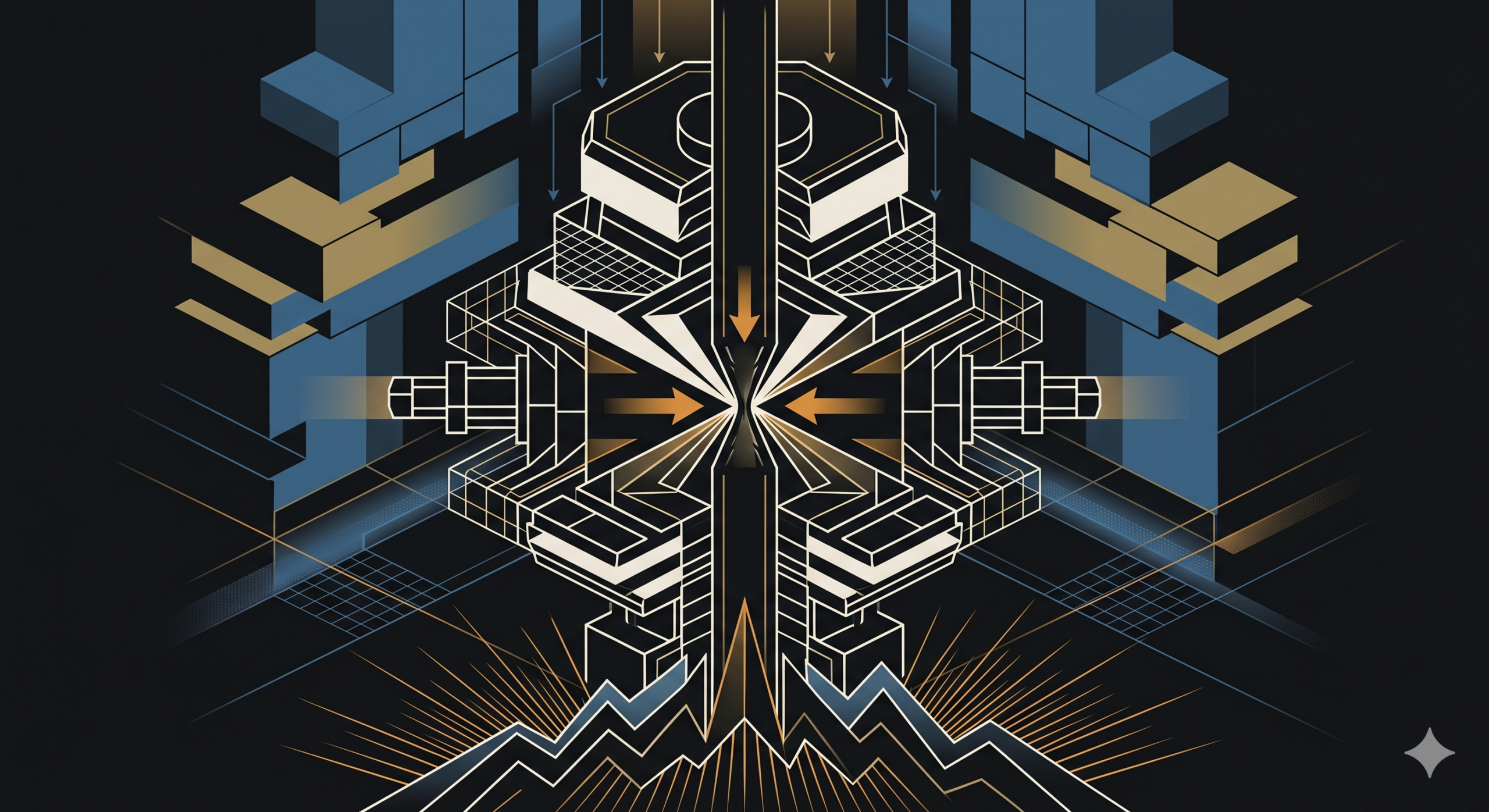
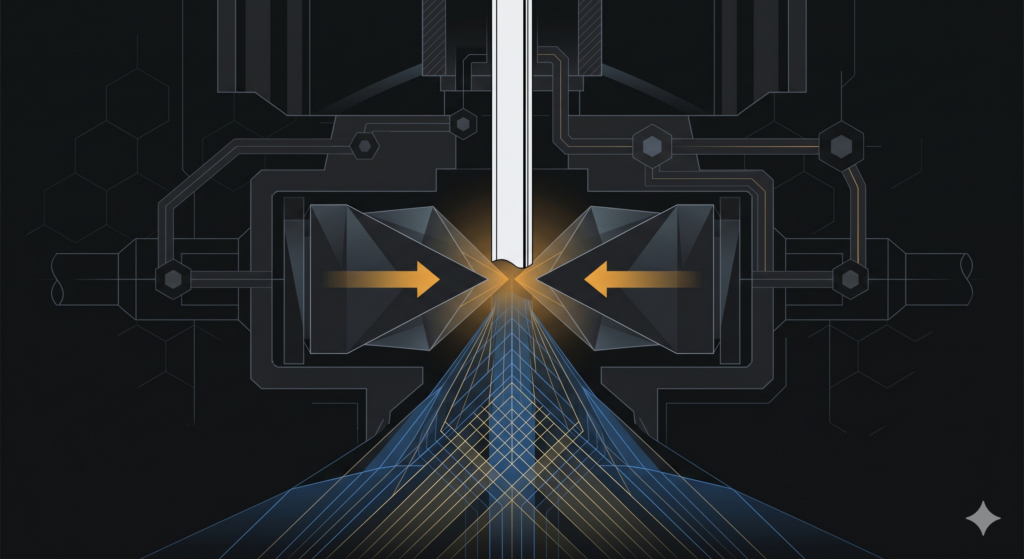
The system uses stacked steel valves. Engineers call them rams. When a well kicks, operators trigger the blind shear ram. This operates as a massive guillotine. High-pressure nitrogen gas sits inside accumulator bottles. The gas rapidly expands. It drives hydraulic fluid into heavy steel pistons. The pistons slam two titanium-laced blades together. They slice completely through the steel drill pipe. They seal the hole shut instantly. The ocean pressure fights this process. The hydraulic force must simultaneously overpower both the upward explosive oil and the inward crushing seawater.
WHY IT MATTERS NOW (The Human Impact)
The global energy market requires constant physical expansion to survive. The easy reserves are gone. Energy supermajors now drill in 12,000 feet of water off the coasts of Guyana and Brazil. If a BOP fails at this depth, the economic and operational damage permanently alters corporate trajectories. In 2010, the Macondo blowout cost BP over $65 billion. Today, insurance risk modelers price ultra-deepwater premiums entirely on the mathematical reliability of these specific shear rams. A single mechanical failure bankrupts operators. It paralyzes regional drilling permits. It directly spikes global crude prices.
WHAT MOST PEOPLE MISS
Mainstream media assumes a BOP functions as an absolute fail-safe. It operates highly conditionally. The blind shear ram can only cut the hollow, central section of the drill pipe. It cannot cut the thick steel connection joints where two pipes meet. If the explosive reservoir pressure pushes the pipe upward, the thick joint aligns perfectly with the shear blades. The guillotine hits solid steel. It jams. The well remains fully open. Additionally, the extreme cold near the seabed physically shrinks the nitrogen gas inside the hydraulic accumulators. The system loses kinetic potential energy before the blades even begin to move.
THE TRAJECTORY (What Happens Next)
Over the next 24 months, manufacturers will aggressively deploy acoustic telemetry systems and solid-state subsea batteries. This completely bypasses the vulnerability of severed physical communication cables, allowing autonomous AI-driven trigger mechanisms to close the rams even if the surface rig disconnects entirely.
KEY TERMS
- Blind Shear Ram: This specialized hydraulic valve uses heavy steel blades to cut the drill pipe and seal the wellbore completely.
- Hydrostatic Pressure: A resting column of ocean water exerts this massive, constant physical weight.
- Accumulator: This high-pressure subsea vessel stores compressed nitrogen gas to provide emergency kinetic energy for hydraulic operations.
- Tool Joint: Two individual segments of drill pipe join together at this thickened, heavily threaded steel connection point.
- Kick: Pressurized formation fluids violently breach the wellbore during this uncontrolled event.
SOURCES
- Bureau of Safety and Environmental Enforcement (BSEE) – “Blowout Preventer Systems and Well Control Rule” (2024).
- Society of Petroleum Engineers (SPE) – “Subsea Accumulator Sizing and Thermal Effects” (2025).
- American Petroleum Institute (API) – “Standard 53: Well Control Equipment Systems for Drilling Wells” (2024).
- National Academy of Engineering – “Macondo Well Deepwater Horizon Blowout: Lessons for Improving Offshore Drilling Safety” (2012).
RELATED TOPICS
- Read Next: The RTGS Architecture: Inside the FedWire Liquidity Matrix
- Read Next: The Separative Work Unit (SWU): The Kinetic Math of Uranium Enrichment Cascades
- Read Next: The Cis-Lunar Orbital Mechanics: The Industrial Real Estate War for Lagrange Points
- Read Next: The Dark Fleet Matrix: Tokenized Commodity Routing and AIS Spoofing