Advertisement
)

AT A GLANCE
- Concept: Liquid Core: The uranium fuel physically dissolves into a liquid fluoride or chloride salt mixture.
- Concept: The Freeze Plug: A pipe blocked by a frozen chunk of this exact same reactive salt.
- Concept: Active Cooling: External fans continuously blow cold air onto the pipe to keep the plug solid.
- Concept: Passive Drainage: If power fails, the cooling stops, the plug melts, and the core falls safely away.
HOW THE FREEZE VALVE WORKS
Legacy nuclear reactors use solid uranium fuel rods submerged in high-pressure water. If the water pumps fail, the solid rods heat up, melt through their zirconium cladding, and cause a catastrophic physical meltdown. Molten Salt Reactors (MSRs) entirely eliminate this physical risk by dissolving the uranium directly into a liquid halide salt, such as lithium fluoride or sodium chloride.
Because the fuel already exists in a liquid state, it cannot melt down. The engineering challenge shifts from preventing a meltdown to managing the extreme radiolytic chemistry of the liquid salt. The liquid core circulates through the primary reactor loop at temperatures exceeding 600°C, sustaining the nuclear fission chain reaction.
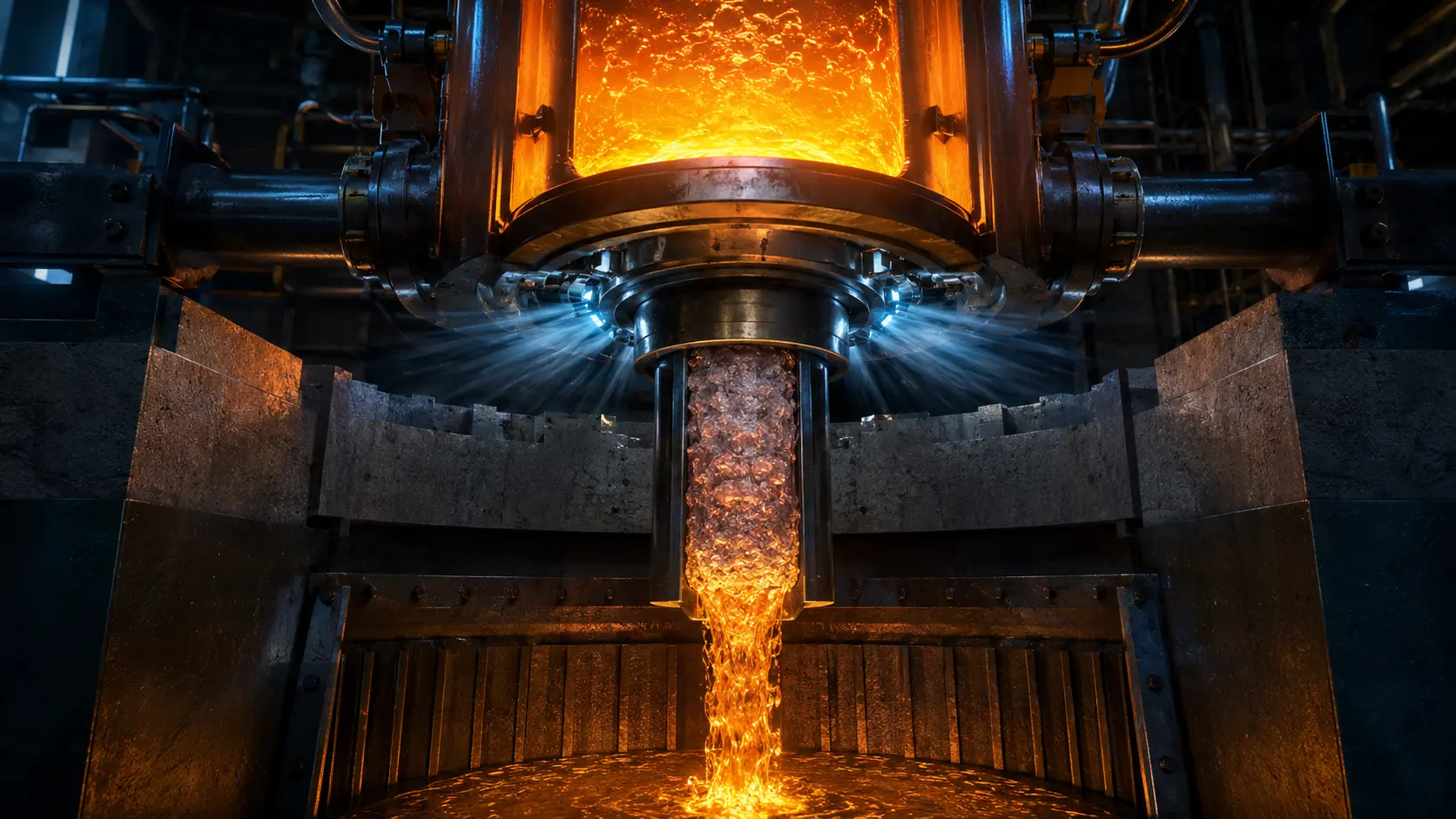
At the lowest physical point of this primary loop sits the freeze-valve matrix. This valve contains no moving mechanical parts, metal gates, or electronic switches. It consists solely of a narrow drain pipe completely blocked by a solid plug of the exact same halide salt mixture used in the core.
To maintain the plug, operators wrap the drain pipe in a dedicated cooling jacket. Continuous electrical fans blow cold gas across the jacket, artificially depressing the local temperature and freezing the salt into a solid barrier. The intense radiolytic heat from the reactor core constantly attempts to melt this plug, but the active cooling system fights it in a perpetual thermodynamic stalemate.
WHY IT MATTERS NOW
Global data center energy demand is mathematically breaking the existing electrical grid. Hyperscalers require constant, zero-emission baseload power that wind and solar physically cannot provide without impossible amounts of battery storage. This absolute constraint forces the technology industry to aggressively finance next-generation nuclear infrastructure.
The Nuclear Regulatory Commission (NRC) historically evaluates reactors based on their active safety systems, requiring massive backup diesel generators and redundant water pumps. MSRs utilize the freeze-valve to prove absolute passive safety. If a catastrophic earthquake severs all electrical power to the plant, the cooling fans blowing on the freeze plug instantly stop.
Without the active cooling, the thermal energy from the hot liquid core quickly overwhelms the drain pipe. The solid salt plug melts within minutes. Gravity then pulls the entire liquid core down the drain and into specialized, geometrically isolated dump tanks located deep underground.
These dump tanks feature a high surface-area-to-volume ratio lined with neutron-absorbing materials. The geometry mathematically prevents the liquid uranium from sustaining a fission chain reaction. The core naturally cools through passive thermal convection, requiring zero human intervention, zero backup power, and zero water to prevent a radioactive disaster.
WHAT MOST PEOPLE MISS
Energy commentators assume the freeze valve is a simple, foolproof block of ice. They entirely miss the brutal radiolytic chemistry occurring at the boundary layer between the liquid core and the solid plug. As the uranium fissions, it generates intense gamma radiation that physically breaks the chemical bonds of the halide salts, creating highly corrosive free fluorine or chlorine gas.
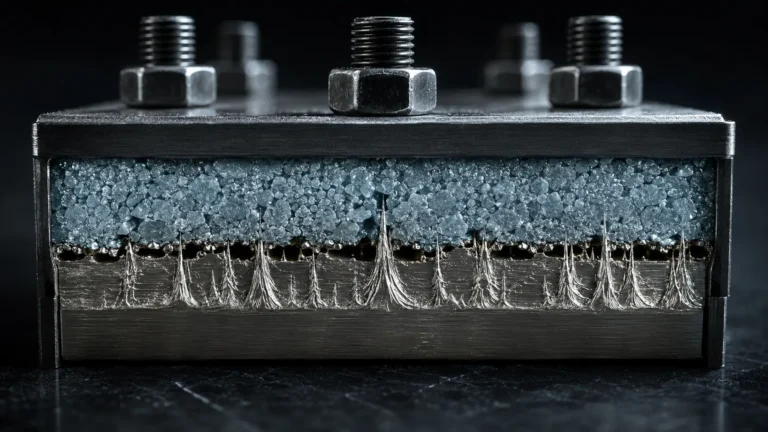
If the cooling jacket freezes the plug too aggressively, these trapped radiolytic gases create micro-fractures in the solid salt matrix, weakening its structural integrity over time. Operators must precisely calibrate the thermal gradient so the very top layer of the plug remains slightly slushy. This allows the highly radioactive gas bubbles to naturally escape back up into the core, preserving the mechanical strength of the primary safety barrier without letting the liquid uranium slip through.
THE TRAJECTORY
Next 12–36 Months: Advanced nuclear startups will execute physical freeze-valve qualification tests for federal regulators using non-radioactive surrogate salts. These tests will establish the baseline thermal response times required to secure commercial construction licenses.
Next Five Years: The commercialization of multi-chemistry drain matrices. Engineers will design composite freeze plugs using layered salts with staggered melting points. This will allow the reactor to dynamically vent excess pressure during minor temperature spikes without completely draining the entire primary core.
Next Ten Years: The deployment of completely autonomous, uncrewed micro-reactors. Industrial mining operators and military forward operating bases will deploy factory-built MSRs. The absolute physical certainty of the freeze-valve will allow these facilities to run for decades without on-site human operators or emergency response teams.
What Could Go Wrong: Severe corrosion of the catch basin piping. The liquid halide salts are aggressively caustic at high temperatures. If the specialized nickel alloys lining the drain pipe degrade over years of neutron bombardment, the molten fuel could chemically eat through the pipe walls during an emergency drain, missing the sub-critical catch basin entirely.
Most Likely Outcome: The freeze-valve will become the mandatory architectural standard for all advanced liquid-fueled nuclear reactors. The thermodynamic elegance of relying on gravity and physics rather than electronic sensors provides the only viable path to securing public trust and rapid regulatory approval.
KEY TERMS
- Term: Molten Salt Reactor (MSR): A nuclear fission system where the primary coolant and the nuclear fuel itself exist together as a high-temperature liquid salt mixture.
- Term: Freeze Valve: A passive safety mechanism using a block of frozen coolant to plug a drain line, engineered to melt if active cooling systems fail.
- Term: Radiolytic Chemistry: The chemical alteration of materials caused by exposure to intense ionizing radiation, frequently breaking molecular bonds in reactor coolants.
- Term: Sub-Critical Geometry: The physical design of a containment vessel that mathematically prevents nuclear fuel from achieving the density required to sustain a chain reaction.
- Term: Halide Salt: A chemical compound formed from halogens like fluorine or chlorine, used in MSRs for its ability to dissolve uranium and transfer massive amounts of heat.
SOURCES
- Oak Ridge National Laboratory (ORNL) — Molten Salt Reactor Experiment: Design and Operating Experience of the Freeze Valve
- Idaho National Laboratory (INL) — Passive Safety Systems and Thermal Hydraulics in Liquid-Fueled Nuclear Reactors
- International Atomic Energy Agency (IAEA) — Status of Molten Salt Reactor Technology and Radiolytic Halide Chemistry
- Department of Energy (DOE) — Advanced Reactor Demonstration Program: MSR Licensing and Catch Basin Architecture