Advertisement
)

AT A GLANCE
- Concept: Reversible Rusting: The battery discharges by oxidizing metallic iron and charges by reversing the reaction.
- Concept: Alkaline Electrolyte: A liquid potassium hydroxide bath facilitates the movement of hydroxyl ions between electrodes.
- Concept: Air-Breathing Cathode: The battery physically inhales ambient oxygen during discharge and exhales it during charging.
- Concept: Long-Duration Storage: The heavy iron chemistry provides continuous, cheap electrical output for up to 100 hours.
HOW AN IRON-AIR BATTERY WORKS
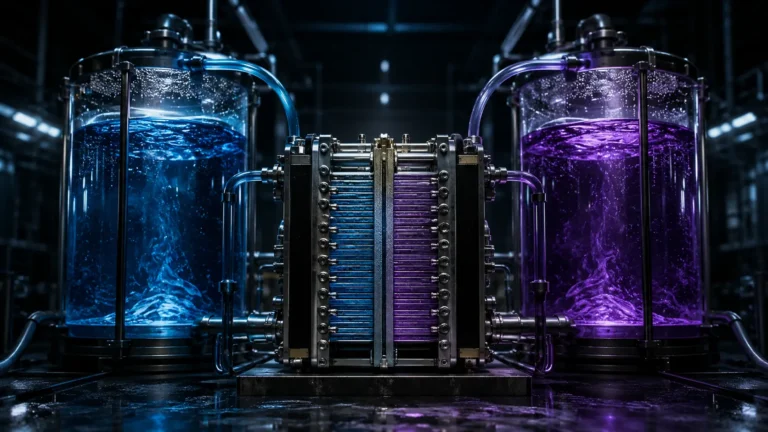
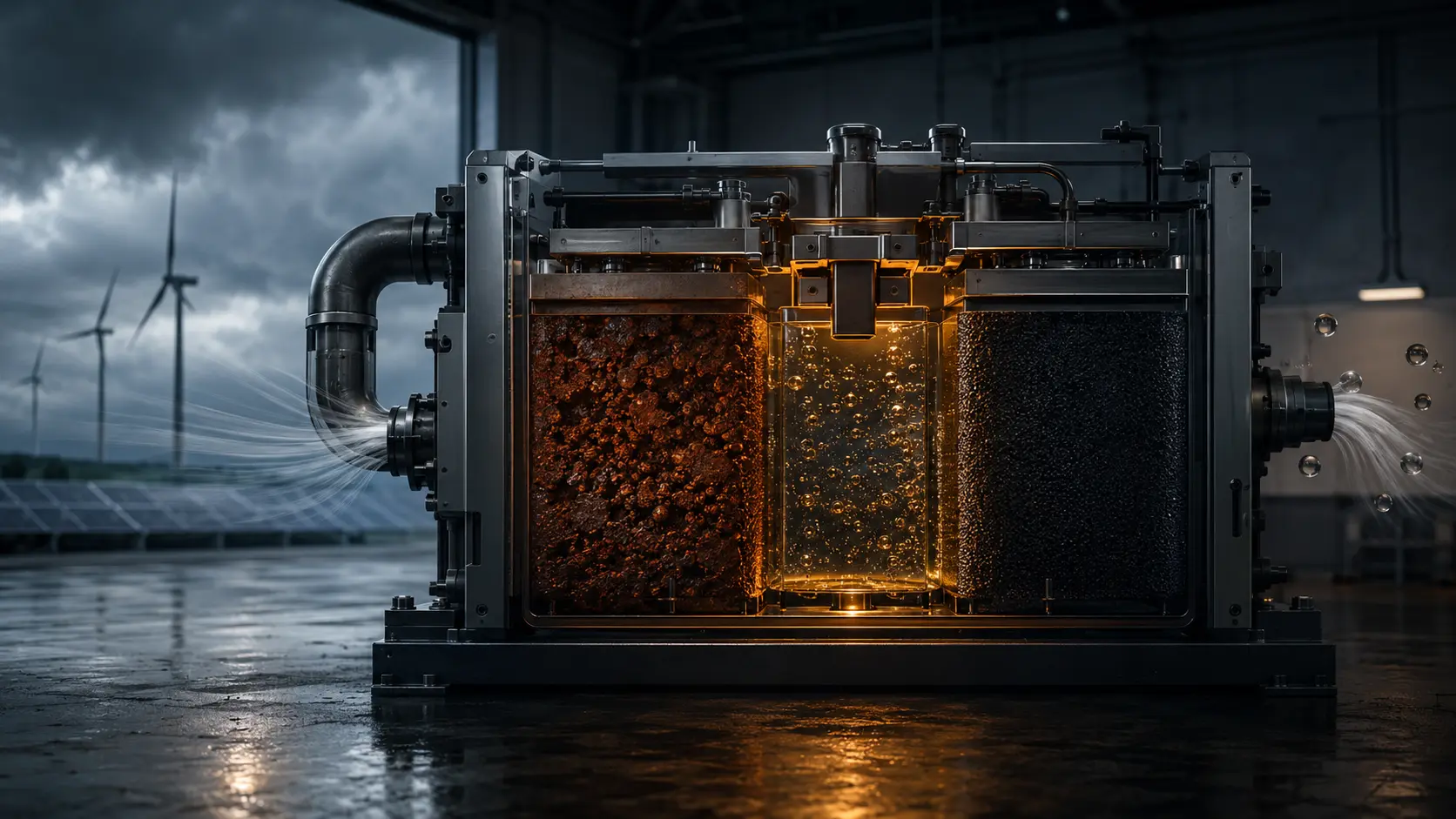
Lithium-ion batteries store energy by physically moving ions back and forth between two solid electrodes. Iron-air batteries rely on an entirely different thermodynamic mechanism known as metal-air chemistry. The system consists of a porous iron anode and a specialized carbon-based air cathode, submerged in a highly conductive liquid alkaline electrolyte like potassium hydroxide.
When the electrical grid requires power, the battery physically inhales ambient oxygen from the surrounding atmosphere through its cathode. The oxygen molecules react with water inside the liquid electrolyte to form negatively charged hydroxyl ions. These ions travel across the alkaline bath to the iron anode, where they chemically bond with the solid iron atoms.
This bonding process oxidizes the iron, converting the pure metal into iron hydroxide—a reaction chemically identical to the natural formation of rust. As the iron rusts, it mathematically releases electrons into the external circuit, providing a continuous flow of electricity to the grid. Because the heavy iron anode holds massive amounts of potential chemical energy, this rusting process can sustain continuous electrical output for 100 consecutive hours.
To recharge the system, operators push external electrical current back into the battery. This electrical force rips the hydroxyl ions away from the rusted iron anode, converting the iron hydroxide back into pure metallic iron. The released ions travel back to the cathode, recombine into pure oxygen gas, and vent harmlessly back into the atmosphere, perfectly resetting the chemical loop.
WHY IT MATTERS NOW
The global transition to renewable energy faces a severe mathematical vulnerability known as the multi-day intermittency gap. Solar and wind infrastructure routinely experience periods of prolonged stagnation, such as multi-day winter storms or extended wind lulls. Utility operators currently rely exclusively on natural gas peaker plants to keep the grid operational during these long-duration weather anomalies.
Standard lithium-ion battery mega-packs successfully handle short-duration grid balancing, absorbing excess afternoon solar power to discharge during the evening peak. However, scaling lithium-ion to cover a 100-hour grid deficit is financially impossible due to the sheer material cost of refined lithium, nickel, and cobalt. The grid requires a chemical storage medium that costs a fraction of a penny per watt-hour to store massive volumes of reserve energy economically.
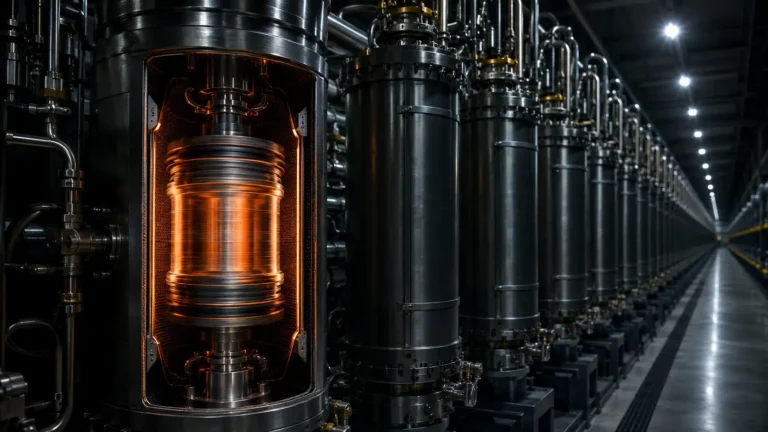
Iron is the most heavily mined, globally abundant, and cheapest industrial metal on Earth. Energy storage companies like Form Energy are aggressively building commercial-scale iron-air gigafactories to exploit this absolute cost advantage. By utilizing basic iron pellets, water, and ambient air, these manufacturers strip thousands of dollars of exotic material costs out of the battery assembly line.
This extreme capital efficiency allows utilities to construct massive iron-air storage farms physically adjacent to existing wind and solar installations. When a major winter front stalls wind generation for three days, the iron-air batteries slowly discharge their stored rust-cycle energy, maintaining continuous baseload power. This physical capability permanently breaks the electrical grid’s structural reliance on fossil fuel combustion for severe weather resilience.
WHAT MOST PEOPLE MISS
Energy analysts often assume iron-air chemistry is an exact, perfectly efficient mirror of lithium-ion technology. They completely overlook the brutal parasitic reality of the hydrogen evolution reaction (HER) that plagues the charging cycle. As the battery applies electrical current to de-rust the iron anode, the high voltage mathematically encourages the water in the liquid electrolyte to split into hydrogen and oxygen gas prematurely.
This hydrogen generation steals raw electrical energy away from the iron reduction process, severely degrading the round-trip efficiency of the battery. If a lithium-ion cell returns 90 percent of the energy put into it, an iron-air cell might only return 50 percent. Engineers must continuously suppress this parasitic hydrogen evolution using specialized bismuth or sulfide additives in the electrolyte, accepting lower round-trip efficiency in exchange for the sheer, unbeatable cheapness of multi-day capacity.
THE TRAJECTORY
Next 12–36 Months: Major American utility providers will activate the first megawatt-scale iron-air pilot plants on the commercial grid. These installations will serve strictly as capacity reserves, replacing retiring coal plants to prove the 100-hour discharge physics under real-world winter load conditions.
Next Five Years: The integration of dynamic round-trip efficiency algorithms. Grid operators will deploy specialized software that perfectly times iron-air charging cycles with extreme negative pricing events in wholesale electricity markets. By exclusively charging the batteries when excess solar power is completely free, operators will mathematically negate the financial penalty of the battery’s low round-trip chemical efficiency.
Next Ten Years: The widespread geographic decoupling of baseload generation. Heavy industries, such as green steel refineries and aluminum smelters, will install massive iron-air farms directly on-site. This architecture guarantees these facilities a continuous, multi-day supply of uninterrupted renewable power, entirely isolating their operations from regional grid failures or transmission congestion.
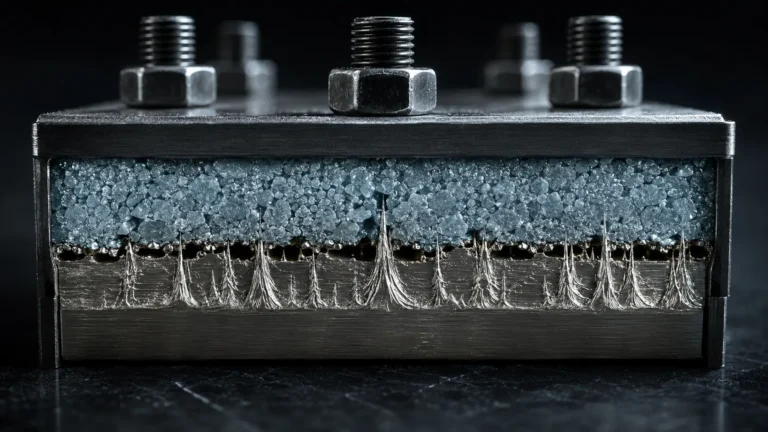
What Could Go Wrong: Severe electrolyte carbonation. Because the battery breathes ambient air, it constantly ingests atmospheric carbon dioxide alongside oxygen. This CO2 chemically reacts with the potassium hydroxide electrolyte, slowly forming solid potassium carbonate crystals that physically block the cathode pores, eventually strangling the battery’s ability to breathe and killing its electrical output.
Most Likely Outcome: Iron-air chemistry will establish itself as the dominant infrastructure for long-duration energy storage. The basic physics of rusting iron provide the only cost-structure capable of mathematically supporting a heavily renewable, civilization-scale electrical grid through multi-day weather anomalies.
KEY TERMS
- Metal-Air Battery: An electrochemical cell that uses a solid metal anode and ambient atmospheric oxygen as the cathode to generate electricity.
- Parasitic Reaction: An unwanted secondary chemical reaction within a battery that consumes electrical energy and physically degrades the primary storage mechanism.
- Hydrogen Evolution Reaction (HER): The chemical splitting of liquid water into hydrogen gas during battery charging, which wastes energy and reduces overall efficiency.
- Round-Trip Efficiency: The mathematical ratio measuring the total amount of usable electricity a battery outputs compared to the total energy required to charge it.
- Potassium Hydroxide: A highly conductive, alkaline liquid chemical compound used universally as the electrolyte bath in advanced metal-air battery systems.
SOURCES
- Joule — The Kinetics of Iron Oxidation and Hydrogen Evolution in Alkaline Metal-Air Batteries
- National Renewable Energy Laboratory (NREL) — Long-Duration Energy Storage Economics and Iron-Air Commercialization
- Electrochemical Society (ECS) — Suppressing Parasitic Hydrogen Evolution in Reversible Iron Electrodes
- Department of Energy (DOE) — The Role of Multi-Day Storage in Deep Grid Decarbonization Pathways